Quick answer
Box elder bugs in Boise are heat-seeking overwintering pests that swarm south and west walls from September through November before pushing into wall voids for winter. Stopping them takes three layers: seal any gap larger than 1/16 inch, knock down visible clusters with soapy water, and get a 90-day professional perimeter down before the fall surge starts. Green Guard's $49 first visit creates that kill zone before bugs cluster on your siding. Call (208) 297-7947 to book before the swarm hits.
Key Takeaways
- Box elder bugs are heat-seeking, so they cluster on the south and west walls that hold the most afternoon sun before pushing into wall voids for winter
- The fall swarm hits Boise homes September through November, with the heaviest push in mid-October
- Sealing gaps larger than 1/16 inch around windows, doors, soffit vents, and utility entries matters more than spraying alone
- A 90-day professional barrier booked in late July or August covers the entire fall surge on a single visit
- Green Guard's quarterly service starts with a $49 first visit, then $119 per quarter for homes up to 2,500 sq ft, with a free re-service guarantee
In this article

What Are Box Elder Bugs, and Why Are They in Boise?
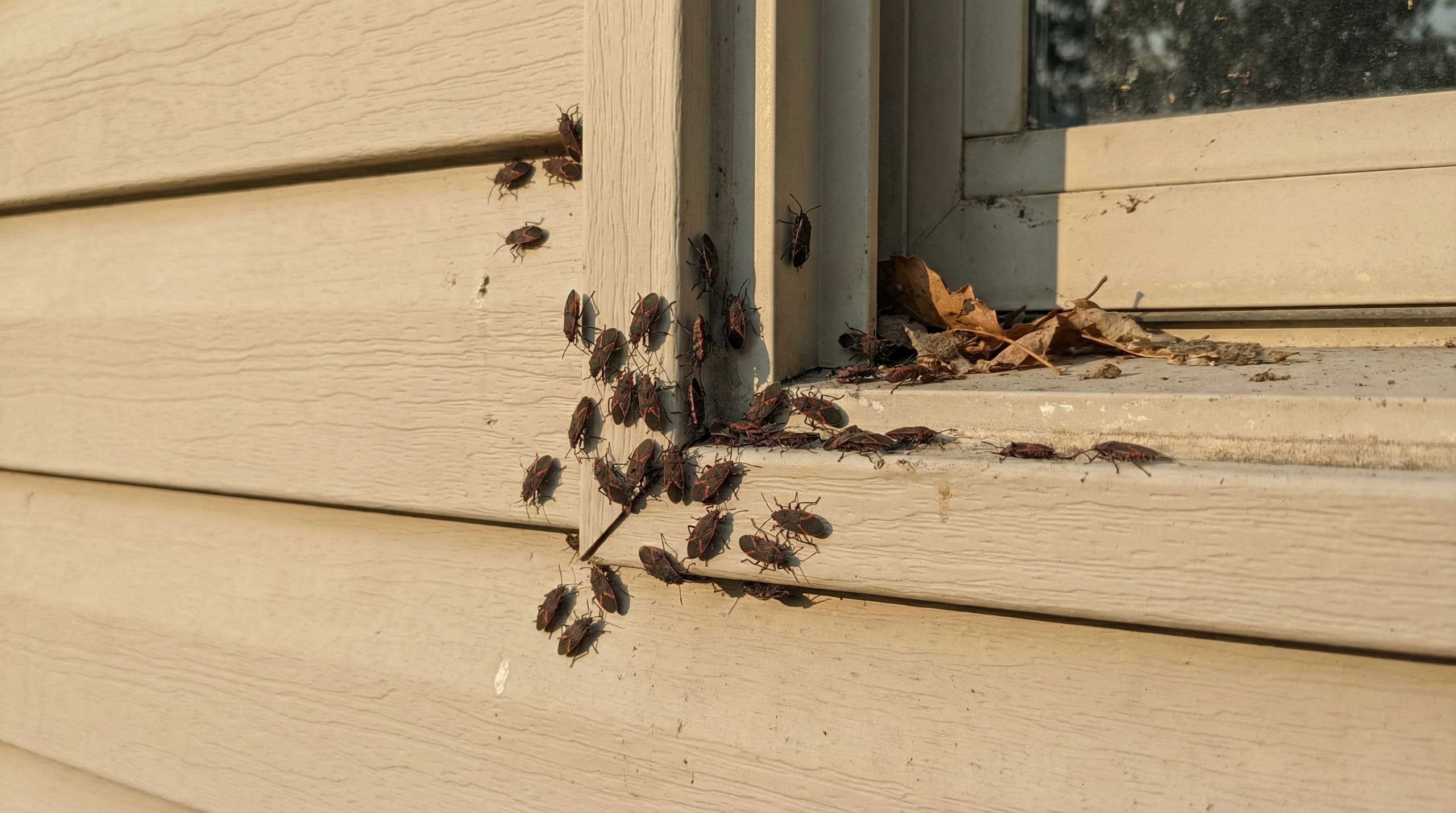
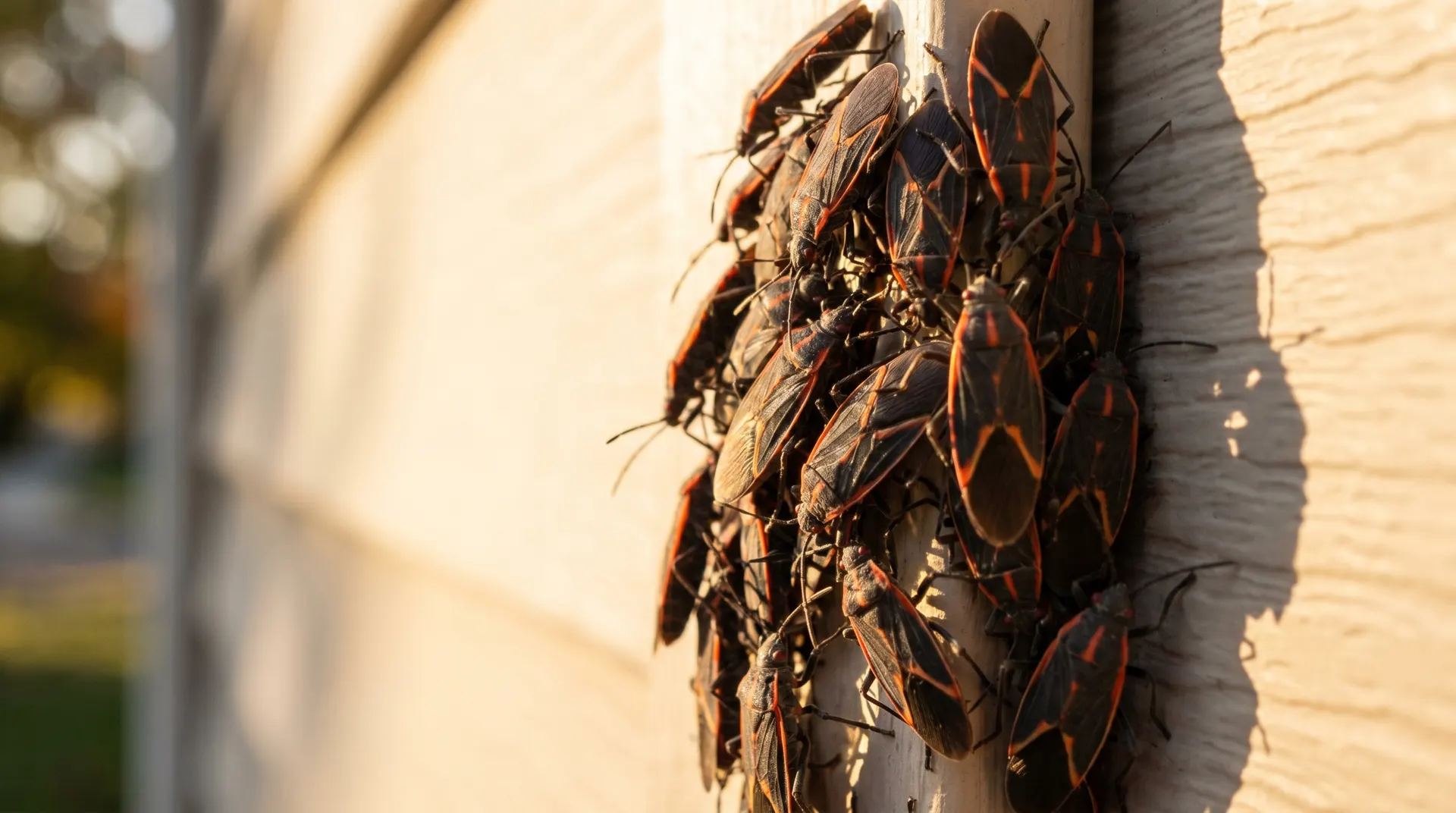
Box elder bugs (Boisea trivittata) are black-bodied insects about 1/2 inch long with three bright red or orange lines behind the head and red-veined wings. They feed on the seeds of box elder, silver maple, and ash trees, then swarm the sun-facing walls of nearby homes each fall looking for a warm crack to spend winter. In Boise, that fall swarm runs September through November, with the biggest push in mid-October.
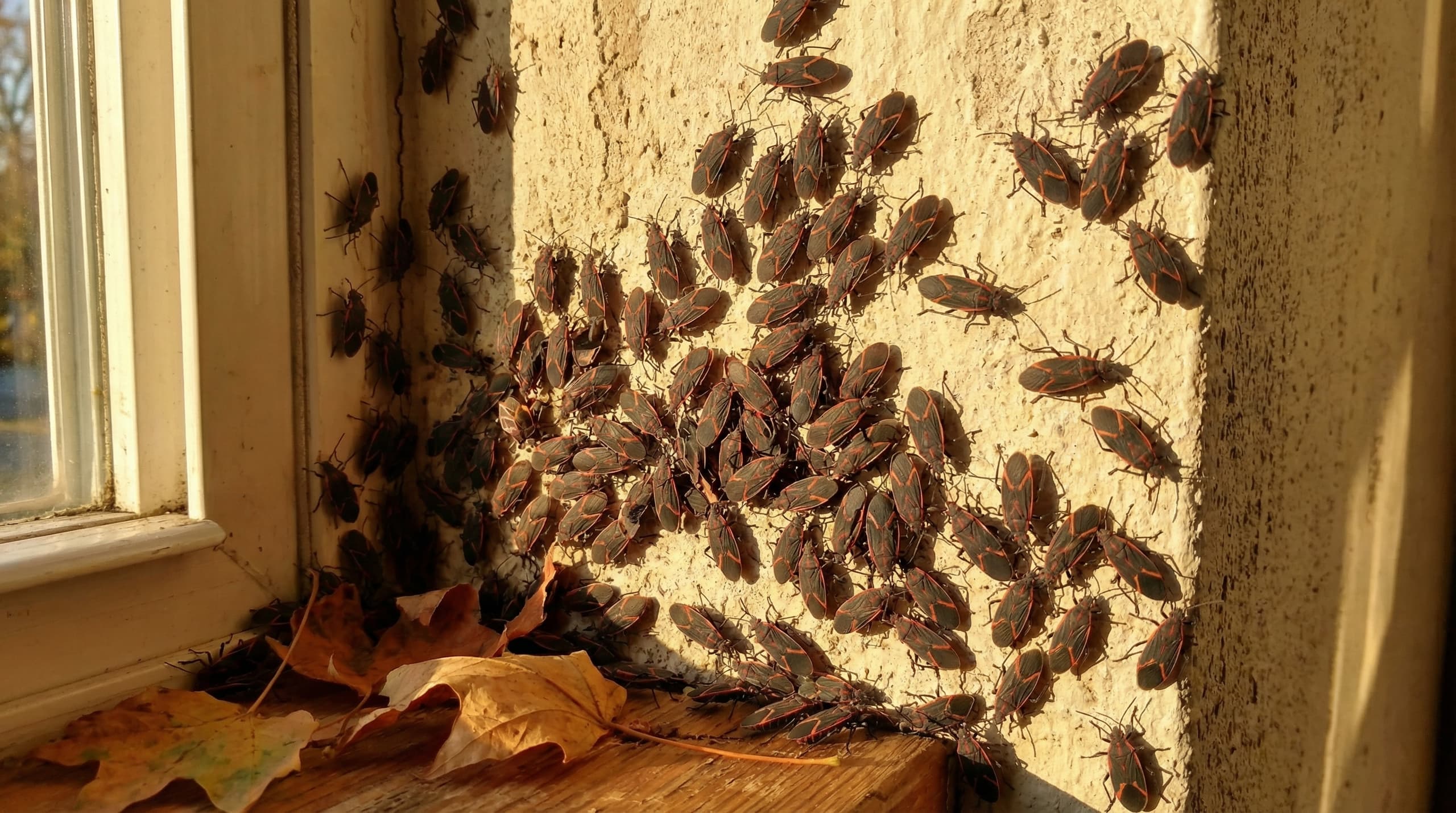
They don't bite. They don't sting. They don't damage wood or fabric. But they show up by the hundreds on siding, they push into wall voids through gaps as small as 1/16 inch, and once they're inside, they come out on warm winter days and appear on south-facing windows all season.
Stopping them takes three layers: seal, knock down, and barrier. Seal every gap larger than 1/16 inch around windows, doors, and vents. Knock down visible clusters with soapy water or a shop vac. Then put down a 90-day professional perimeter that kills arriving bugs before they cluster. That's the plan for every Boise home within 100 feet of a host tree.
Green Guard handles the barrier layer with a $49 first visit, then $119 per quarter for homes up to 2,500 square feet. Call (208) 297-7947 to get a tech out before the swarm starts.
| Treatment Layer | What It Does | Cost |
|---|---|---|
| Sealing entry points | Stops bugs from pushing inside through gaps larger than 1/16 inch | $0 to $200 in materials (DIY) |
| Soapy water spray | Kills visible clusters on contact (one tablespoon dish soap per quart of water) | Under $5 |
| Shop vac with soap in canister | Removes bugs from siding without crushing or staining | $0 if you own a shop vac |
| Professional perimeter barrier | 90-day residual that creates a kill zone before the fall swarm arrives | $49 first visit, $119 to $159 per quarter |
| Interior crack-and-crevice | Targets bugs already in wall voids and trim work from previous years | Included in subscription visits, $200 one-time |
August 2026 Status: The Boise Fall Swarm Is About to Start
As of August 2026, the nymphs that hatched in June and July across Boise, Meridian, Eagle, and the rest of the Treasure Valley have matured into the fall generation of adults. They're black with red markings, half an inch long, and they're still up in the host trees feeding on maple and ash seeds. That's about to change.
The move to warm walls starts around the first cool night in late August or early September. Once overnight lows drop into the 50s and afternoon highs stay in the 80s, adults leave the trees and start scouting for overwintering sites. Since 2010, we've watched the first heavy clusters land on sun-warmed south and west walls in September. Peak home invasion runs from late September through mid-October.
That gives you a two-week window right now to get ahead of it. Seal entry points this weekend. Book a barrier treatment for the last week of August or first week of September so the residual is fresh when bugs start landing on siding. Wait until October and the bugs are already piled on the wall, and some of them have already pushed inside.
Quick ID: Is That a Box Elder Bug?
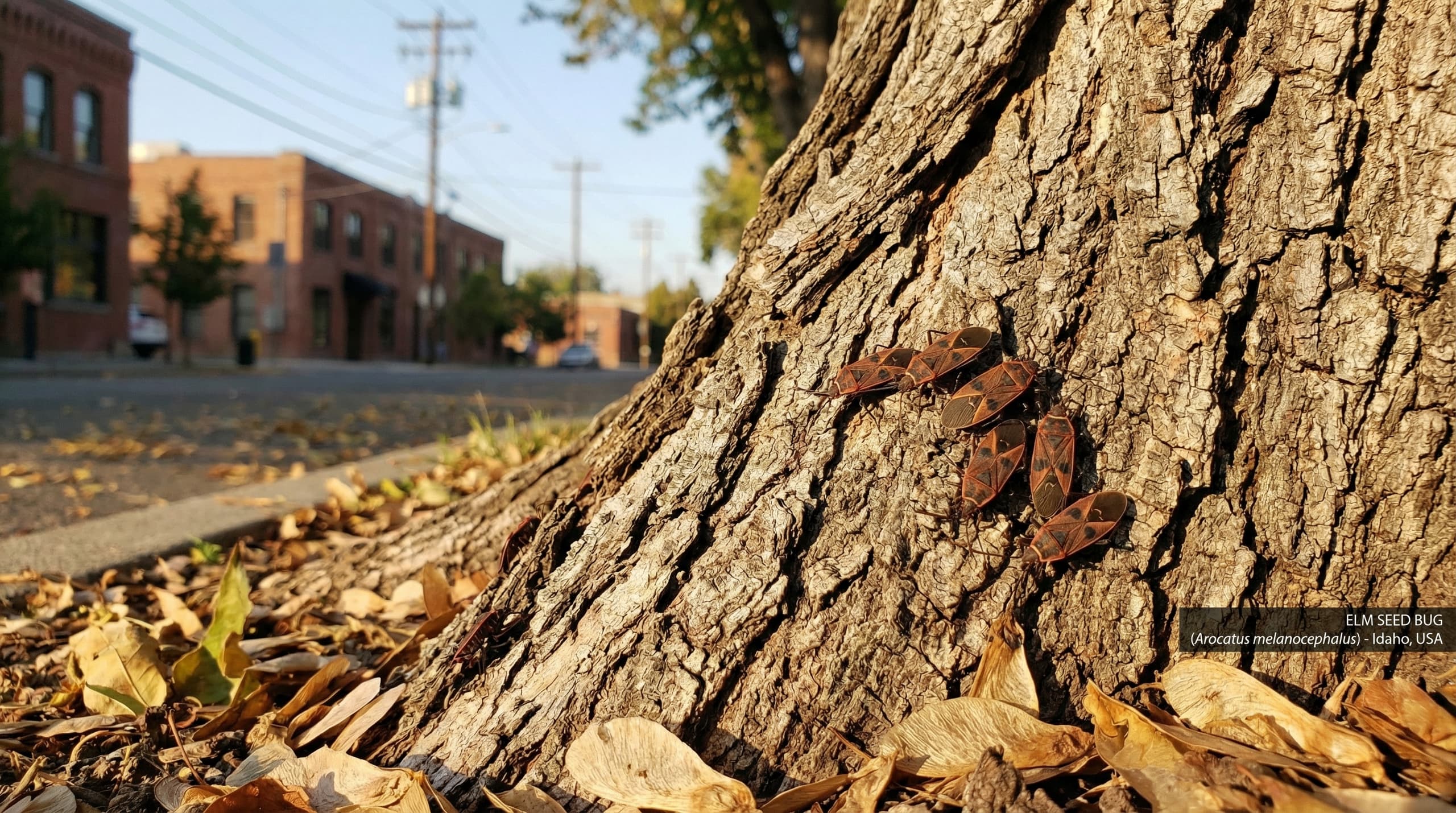
Use this table before you start treating. Most people confuse box elder bugs with elm seed bugs (the summer rust-brown invader) or stink bugs. The size and color give it away once you look closely.
| Feature | Boxelder Bug |
|---|---|
| Size | About 1/2 inch long as an adult, larger than an elm seed bug |
| Color | Solid black body with three bright red or orange lines behind the head |
| Wing pattern | Red veins on the wings outline a diamond when folded |
| Nymphs | Bright red, smaller, no wings; turn darker as they age |
| Smell | Faintly unpleasant only when crushed; weaker than elm seed bugs or stink bugs |
| Peak season | Visible on host trees April through August, then home invasion September through November |
| Host trees | Box elder, silver maple, big leaf maple, ash |
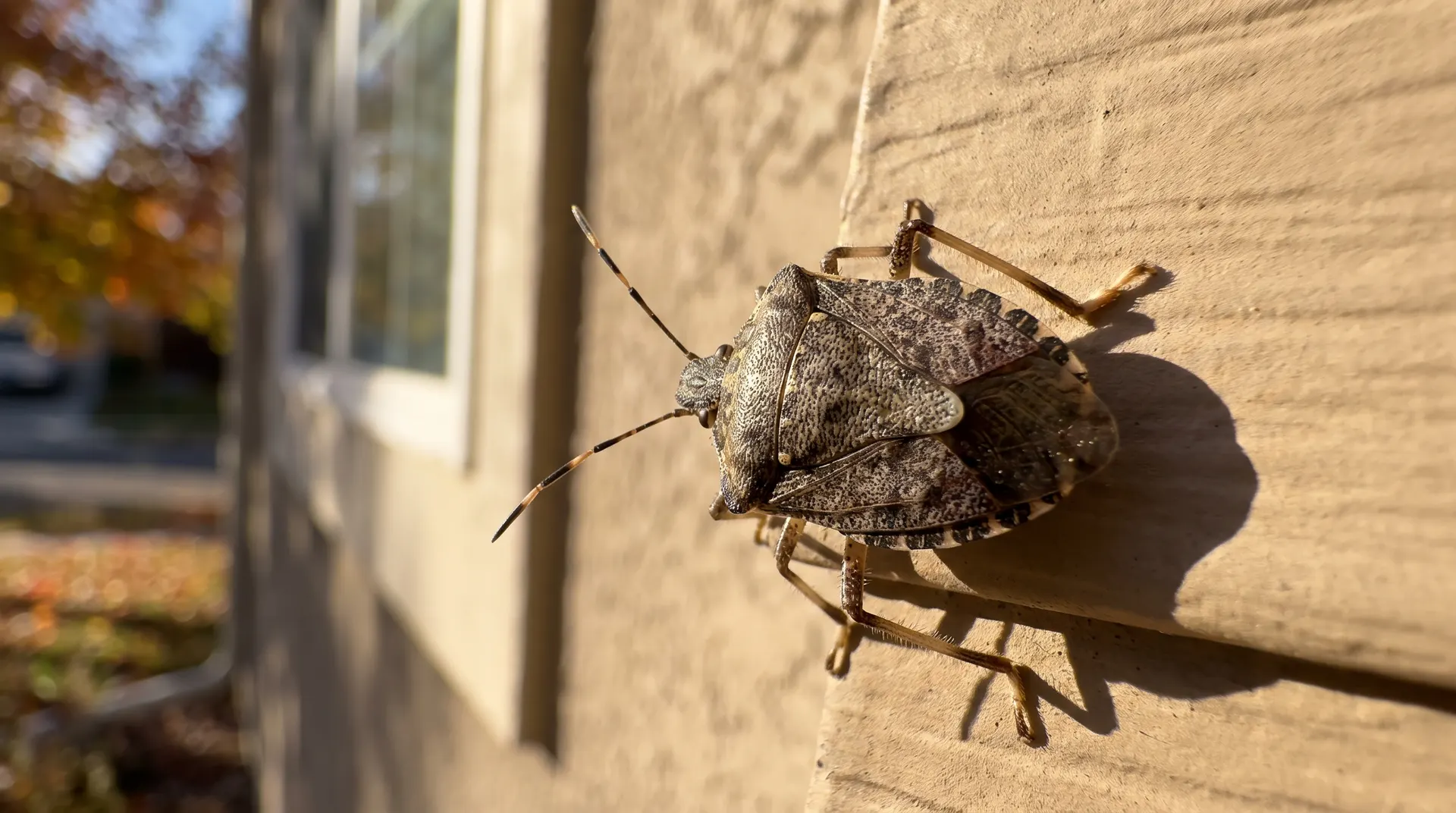
If the bugs are smaller (about 1/3 inch) and rust-brown instead of black, you're looking at elm seed bugs, which peak in June and July and need a different timing strategy. If the body is shield-shaped and greenish-brown, check our stink bug guide.
Year-Round Box Elder Bug Lifecycle in Idaho
Understanding the calendar explains why timing matters. Box elder bugs produce one generation per year in Idaho, and the behavior shifts by season.
- Spring (April to May). Overwintering adults emerge from wall voids, tree cracks, and protected outdoor spots. They fly to host trees and start feeding on seeds and new growth.
- Early summer (June). Females lay clusters of red eggs on host trees, in bark crevices, and on nearby leaf litter.
- Mid summer (July). Nymphs hatch bright red and feed alongside adults. Populations grow on host trees. Some adults cluster on sunny walls when afternoons hit the upper 80s.
- Late summer (August). Nymphs mature into the fall generation of adults. Total population peaks. The first small home clusters show up on south and west walls. This is where we are right now in 2026.
- Fall (September to November). Adults seek overwintering sites. This is the big invasion window. They cluster by the hundreds on sunny walls, then push through gaps into wall voids, attics, and crawl spaces.
- Winter (December to February). Adults sit dormant in your walls. On warm sunny days, some emerge indoors and appear on south-facing windows. They don't reproduce inside.
Why Do Box Elder Bugs Cluster on Sun-Facing Walls?
Box elder bugs cluster on south and west walls because they're cold-blooded and heat-seeking. After a summer of feeding on seeds up in maple and box elder trees, the fall generation has one job left: find a warm crack to spend winter. They pick your house by temperature, not by anything you did or didn't do.
South and west walls hold the most afternoon heat. On a September afternoon in Boise, a light-colored south wall can be 15 to 20 degrees warmer than the shaded north side. Bugs land on those warm walls, warm up their bodies, then start crawling in every direction looking for a gap that leads somewhere protected. Once one bug finds a good crack, chemical cues and body heat draw more.
That's why you see 50 bugs on one side of the house and zero on the other. The bugs are following heat, and they're doing it on autopilot. A bare, weathered fascia board on a sunny south wall can pull in far more bugs than a shaded north wall on the same house.
Two things you can use here. First, sealing effort should be concentrated on the south and west walls. That's where 80 percent of the entries happen. Second, a professional barrier is most effective when it's applied to those same warm walls before the bugs start landing. Once they're crawling on the siding, some percentage will already have pushed inside before the residual gets them.
How to Seal Entry Points Before the Fall Move-In
Sealing is the single highest-return action on this list. Box elder bugs fit through any gap bigger than 1/16 inch, which is smaller than most weatherstripping leaves open. Walk your house with a flashlight on a sunny morning and check every spot below.
- Window frames and screens. Run a bead of clear silicone where the frame meets the siding. Replace any screen with a tear bigger than a pencil tip.
- Door sweeps and thresholds. If you can see daylight under a closed door, bugs are getting in. A $15 sweep from the hardware store fixes it in 10 minutes.
- Soffit, gable, and dryer vents. Cover with 16-mesh hardware cloth. Foam alone shrinks and falls out within a season.
- Utility penetrations. Pipes, conduit, AC line sets, cable entries. Seal with caulk or expanding foam plus a metal collar.
- Foundation cracks and weep holes. Caulk hairline cracks. Cover weep holes with proper weep-hole covers (don't fully seal them or you'll trap moisture).
- Window AC units are a highway. Foam-tape the gap around the unit before September.
When Exterior Barrier Spray Stops Them (And When It Won't)
A 90-day professional perimeter spray works as a knockdown barrier. Bugs that land on treated siding, foundation, or the first three feet of soil pick up a lethal dose within a few minutes. On a home with moderate pressure and no host tree overhead, a single quarterly visit handles the entire fall window. The bugs never make it inside because the wall itself kills them first.
Where the spray falls short: bugs that fly straight to a second-story soffit vent or an upper eave and slip through without touching the treated band. Ground-based barriers cover the first eight feet reliably. Anything above that depends on wind, product drift, and how heavy the eave sweep was. Roughly 5 to 10 percent of a heavy population bypasses a barrier that way.
Two situations where spray alone is not enough on its own:
- Homes within 100 feet of a mature host tree. A big box elder or silver maple can drop hundreds of bugs per day onto your roof at peak season. Even a 90-day residual gets overwhelmed. These properties usually need bimonthly service through fall or a heavier eave-focused application.
- Homes with bugs already in the wall voids. Once they've overwintered inside from a previous year, exterior treatment won't reach them. Interior crack-and-crevice work at baseboards, window trim, and attic access is what gets those.
- Homes where sealing hasn't been done. Barrier plus wide-open soffit vents is a losing setup. The spray kills the ones that walk. Caulk and hardware cloth stop the ones that fly straight in.
How Do I Get Rid of a Box Elder Bug Infestation?
Getting rid of an active box elder bug infestation is a two-step problem: clear what's already on and in your house right now, and stop the next wave from arriving. Plenty of homeowners handle a light box elder bug season with sealing plus a hose nozzle and soapy water. That works if your population is small and the trees nearby aren't loaded. Three signs you've crossed into "call a pro" territory:
- Counts of 50 or more on a single wall. You won't outpace that with a spray bottle. The next wave replaces what you killed within a day.
- Bugs already getting inside. Once they're in the wall voids, exterior knockdown alone doesn't reach them. Interior crack-and-crevice treatment matters here.
- Annual repeat from the same trees. If last fall was bad and your neighbor still has a 40-foot box elder, you need a barrier that's there for the entire fall window, not a weekend project.
What Does Box Elder Bug Treatment Cost in Boise?
Here's the straight-up pricing for box elder bug control across Boise, Meridian, Eagle, Nampa, and the rest of the Treasure Valley. There are no add-on fees for "fall pest" treatments at Green Guard. Box elder bugs are covered as part of every general pest control visit alongside ants, spiders, wasps, earwigs, and the other 20-plus pests we treat.
| Plan | What You Get | Price |
|---|---|---|
| First visit (subscription start) | Full property walk, ID, exterior barrier, interior on request | $49 to start |
| Quarterly (4 visits per year) | Year-round coverage including the full fall surge | $119 to $159 per visit |
| Bimonthly (6 visits per year) | Heavier pressure properties; more frequent perimeter refresh | $99 to $139 per visit |
| One-time treatment | Single visit with a 30-day warranty (no subscription) | $200 to $250 |
Quarterly is the realistic plan for any Boise home within 100 feet of a host tree. A first year of quarterly visits costs about the same as two one-time treatments and includes our free re-service guarantee. If pests come back between scheduled visits, we come back free. That guarantee matters most for an overwintering pest like this one, because populations bounce back fast if you only treat once.
When to Call Green Guard (And What the $49 First Visit Actually Does)
Call us at (208) 297-7947 if you're seeing more than a dozen box elder bugs on one wall, if any are showing up inside, if last fall was rough and you want to get ahead of it, or if you want one visit to cover box elder bugs, ants, spiders, wasps, and the rest in a single pass. The exterior barrier on the $49 first visit creates a kill zone before they cluster on your siding, which is the whole game with an overwintering pest.
The first visit covers a full property walk, identification of every entry point we can find, exterior barrier spray on south and west walls (where pressure hits hardest), eave sweep where needed, and a recommendation on whether quarterly or bimonthly fits your pressure level. We're locally owned in Boise, 4.9 stars across 170+ Google reviews, and we've protected 2,500+ Treasure Valley families.
For the broader picture, our Idaho pest calendar walks through every overwintering pest hitting Boise homes right now. If your bugs are shield-shaped and greenish, check our stink bug guide. If they're rust-brown and smaller, see our elm seed bug guide. Same neighborhood, different bug, different timing.
Frequently Asked Questions
Why do I suddenly have box elder bugs?
Quick answerTwo reasons.
First, box elder bug populations move in waves tied to warm summers and heavy seed crops on nearby maple, ash, or box elder trees. A hot Boise summer produces a bigger fall generation. Second, if a mature host tree in your yard or on a neighbor's lot has grown taller in the last few years, you're now in a heavier pressure zone than you used to be. The bugs return to the same houses year after year because they follow heat cues to the same warm walls.
Is there a way to permanently get rid of box elder bugs?
Quick answerNot fully.
As long as there's a host tree (box elder, silver maple, or ash) within a few blocks of your home, some bugs will keep arriving each fall. What works is permanent suppression: seal every entry point larger than 1/16 inch and run a professional quarterly barrier so arriving bugs get killed before they push inside. That takes the count from hundreds to a handful. Removing a nearby host tree helps but rarely eliminates the problem because bugs fly several blocks between yards.
Why shouldn't you squish a box elder bug?
Quick answerThree reasons.
Crushed bugs release a mild defensive odor that lingers on fabric and hard surfaces. Their body fluids leave a red-orange stain on light siding, curtains, carpet, and painted walls that's hard to get out. And dead bugs on the wall attract other pests (dermestid beetles, spiders) that come to feed on the carcasses. Vacuum them into a shop vac with soapy water in the canister instead and empty it outside.
How do I get rid of a box elder bug infestation?
Quick answerWork in three layers.
Seal any gap larger than 1/16 inch around windows, doors, soffit vents, dryer vents, and utility penetrations (that stops future arrivals). Vacuum visible clusters into a shop vac with soapy water in the canister (that removes what's already on the wall). And get a 90-day professional perimeter barrier on your foundation, siding, and eaves (that kills the next wave before they cluster). Green Guard's $49 first visit sets up all three layers at once.
When should I treat for box elder bugs in Idaho?
Quick answerLate July through August is the ideal window.
Our 90-day exterior barrier goes down before the fall generation matures and starts scouting for overwintering sites. A quarterly visit booked in August covers all of September, October, and most of November (the entire home invasion window) on one pass. Treatment in October still helps, but bugs have already arrived on the siding and some are inside the walls.
Are box elder bugs harmful to people, pets, or homes?
Quick answerNo.
Box elder bugs don't bite, don't sting, don't transmit disease, and don't cause structural damage to wood or fabric. They feed on seeds from host trees, not your home. The real problems are nuisance (large counts indoors are stressful), red-orange staining on light siding and curtains when crushed, and a mild unpleasant odor when disturbed. Crushed bugs on tile or hardwood are also a trip hazard.
How much does box elder bug treatment cost in Boise?
Quick answerGreen Guard's first visit is $49 when you start a subscription plan.
Quarterly service runs $119 for homes up to 2,500 square feet, $139 for 2,501 to 4,000 square feet, and $159 for 4,001 to 5,500 square feet. A one-time treatment is $200 to $250 with a 30-day warranty. Box elder bug control is included in every quarterly visit alongside ants, spiders, wasps, and other Idaho pests. The free re-service guarantee covers callbacks between scheduled visits.