Quick answer
As of June 2026, elm seed bugs in Idaho (Arocatus melanocephalus) are at peak emergence across the Treasure Valley. They're tiny (about 1/3 inch), rust-brown, and pile up on sunny walls before slipping inside through gaps as small as 1/16 inch. They don't bite or damage your home. Control is about suppression, not eradication. Seal entry points and run a professional perimeter treatment. Green Guard handles elm seed bug pressure as part of every quarterly visit. Start with a $49 first service.
Key Takeaways
- Peak invasion window in Boise runs mid-June through July, with a second push in September and October
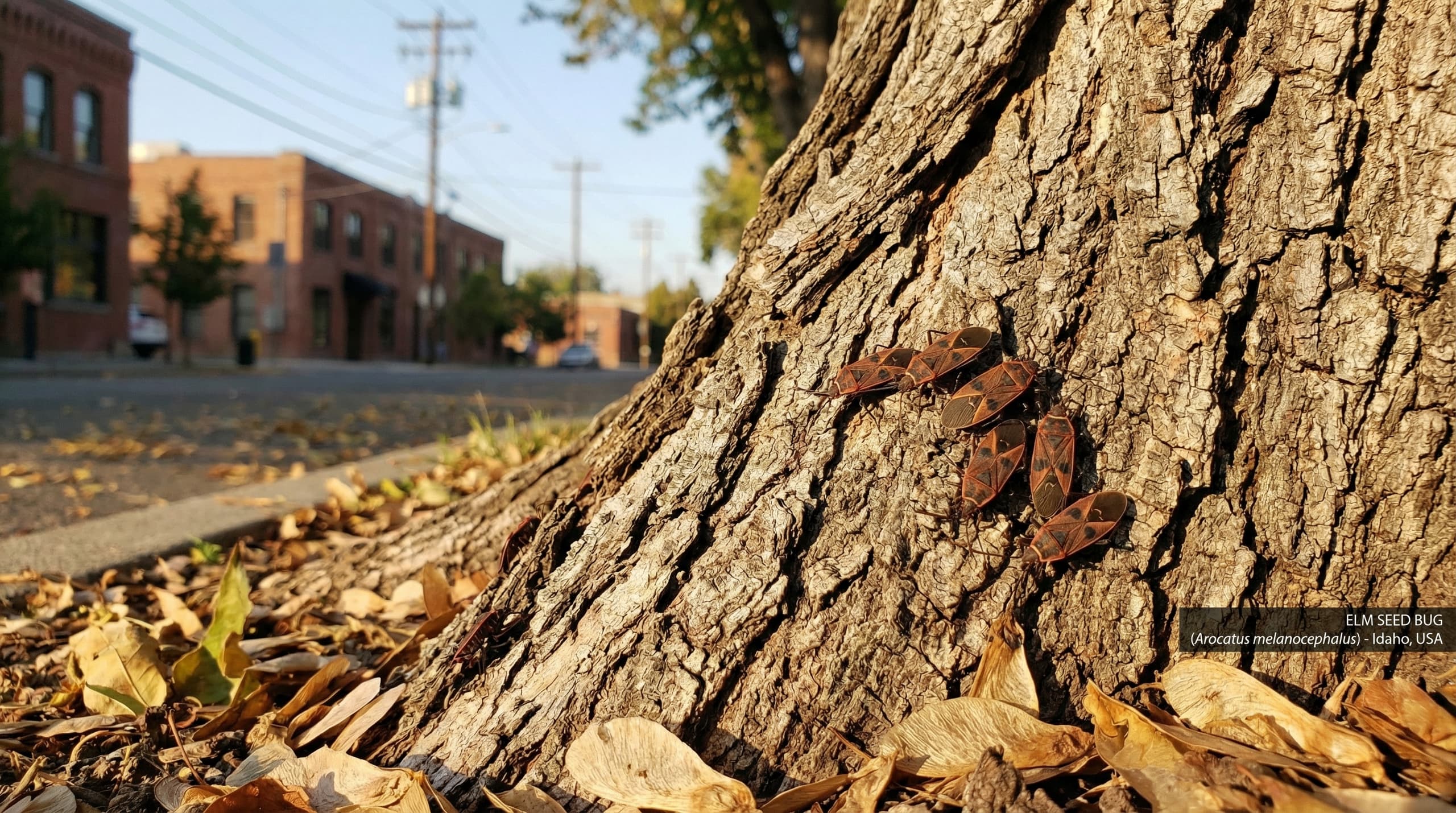
- Elm seed bugs are about 1/3 inch, smaller than box elder bugs, and rust-brown with a black triangle behind the head
- They don't bite, don't damage wood, and don't carry disease. They're a nuisance pest with a pungent defensive smell
- They fit through gaps as small as 1/16 inch, so weatherstripping and caulking matter more than spraying alone
- Eradication isn't realistic for an established yard. Suppression with sealing plus a professional perimeter is the win
In this article

June 2026 Update: Elm Seed Bugs Are at Peak Right Now
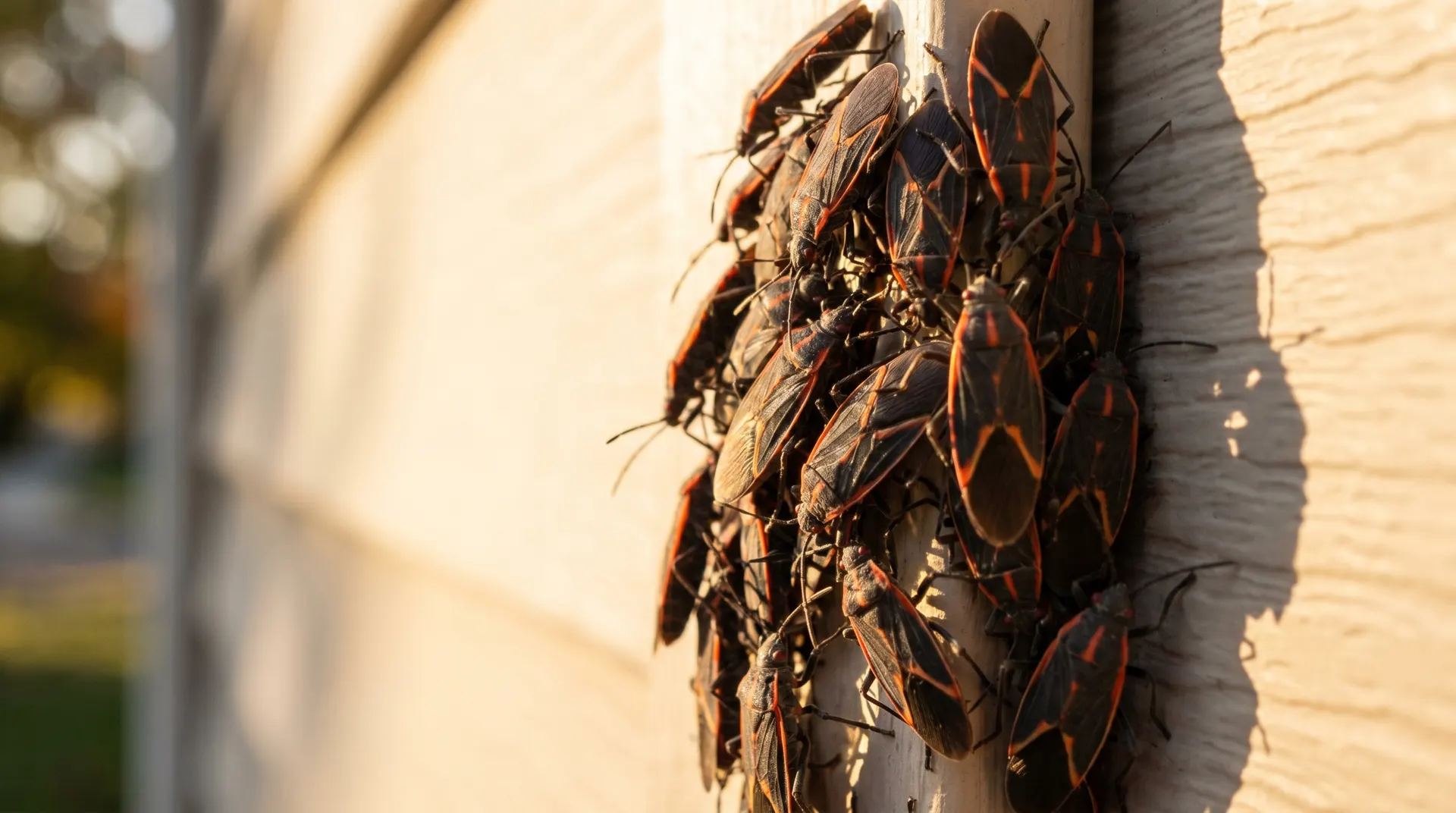
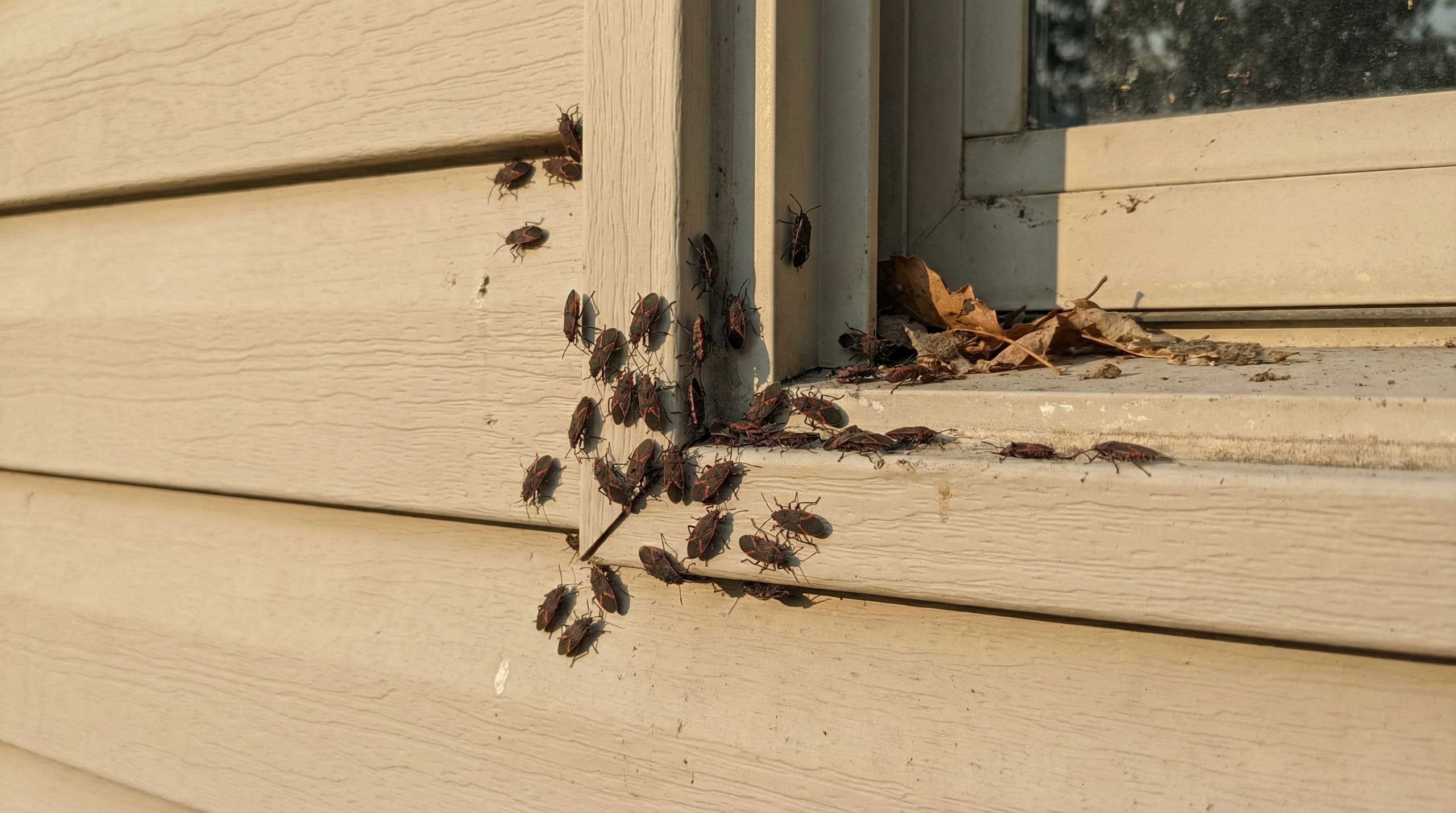
If your siding is covered in tiny rust-brown bugs this week, you're not alone. As of June 2026, elm seed bug emergence is at peak across the Treasure Valley. Pressure runs heaviest around mature Siberian elms, which means older Boise neighborhoods (the North End, the Bench, parts of Garden City) plus established lots in Eagle and Caldwell where elms went in decades ago.
Pressure climbs hard once daytime highs push into the mid-80s. That's where we are right now. Homes near the Boise River corridor and along the Foothills get hit first because the cooler walls there feel like air conditioning to a bug that just spent a hot afternoon on a sunny trunk.
Here's the short version of what to do this week, then we'll go deep on the why. Seal anything bigger than a credit card edge around windows, doors, vents, and utility penetrations. Don't crush them indoors (the smell sticks). Vacuum any that get in and empty the canister outside. If they're piling up on the south or west wall by the dozens, call us at (208) 297-7947. The $49 first visit gets a barrier down before the next wave.
Quick ID: Is That an Elm Seed Bug?
Use this table to confirm what you're looking at before you do anything else. In June and July, "those weird bugs on the wall" are usually elm seed bugs, not box elder bugs or stink bugs.
| Feature | Elm Seed Bug |
|---|---|
| Size | About 1/3 inch (8 mm), smaller than a pencil eraser |
| Color | Dark rust-brown body with a black triangular mark behind the head |
| Wing pattern | Darker wing tips form a diamond shape when folded |
| Smell | Pungent, bitter almond or cherry-pit odor when disturbed or crushed |
| Peak season | Mid-June through July (heat-driven) and again September through October (overwintering) |
| Where you'll see them | Sunny exterior walls, window screens, around doors, on light fixtures, inside on windowsills |
| Food source | Seeds of elm trees, especially Siberian elm (the dominant elm in the Treasure Valley) |
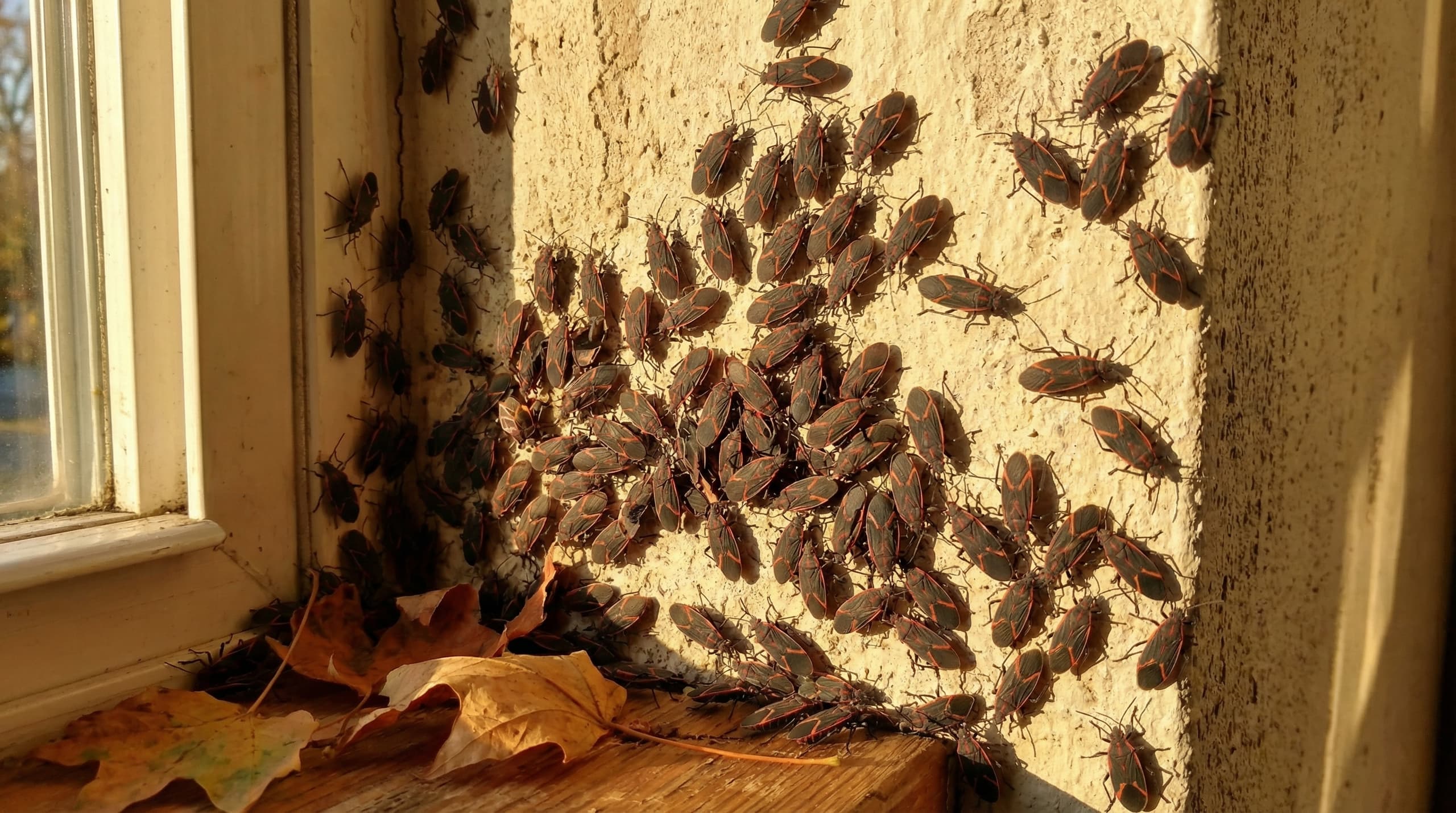
If your bugs match four or more of those rows, you've got elm seed bugs. If they're bigger and have bright red-orange markings instead of rust, you're looking at box elder bugs (a closely related nuisance pest with a fall-only peak).
Why Boise Is Getting Hit So Hard This Summer
Three reasons your house is on the menu right now. Mature Siberian elms feed the local population. Dry June heat pushes the bugs off the trees and onto your walls. And they fly well, so a heavy yard down the street becomes your problem within days.
The trees. Boise planted Siberian elms aggressively from the 1950s through the 1970s for fast shade. A lot of those trees are still standing in the North End, the Bench, the Vista neighborhood, around Garden City, and across older parts of Eagle and Caldwell. Elm seed bugs feed on elm seeds. The bigger your neighborhood elm canopy, the bigger the local population.
The heat. Once afternoons hit the mid-80s, the bugs leave the trees and move to anything cool and shaded. Your south wall in the morning sun is too hot. Your north wall, your eaves, the gap under your window AC unit. Those are exactly the spots they pile up. By July, a single home in a heavy-pressure neighborhood can have hundreds to thousands.
How they spread. Elm seed bugs were first confirmed in Idaho in 2012, one of the first US detections, per University of Idaho Extension. They reproduce fast, fly well, and overwinter inside structures. That means a neighbor with a heavy population this summer is your problem next spring. This is why we treat elm seed bug control as a neighborhood-level pressure issue, not a one-house issue.
Elm Seed Bug vs Box Elder Bug: How to Tell Them Apart
Short answer. They're not the same bug. Elm seed bugs are smaller, browner, smellier, and they peak in summer. Box elder bugs are bigger, blacker with red markings, and they peak in the fall.
Most homeowners assume any clustering bug is a box elder bug because that's the one people have heard of. In Boise, summer pressure is almost always elm seed bugs. Fall pressure is usually a mix. The two have similar overwintering behavior (they both want into your walls), but the timing and the smell give them away.
If you want a full side-by-side with photos and treatment differences, we wrote that comparison in our box elder bug guide for Boise. The short version. Same general control approach (seal plus perimeter), but the timing of your treatments shifts based on which one is dominant on your property.
What Is on Your Boise Wall From June to November
Elm seed bugs are the first of the clustering bugs to reach Boise walls each year, and the order after them is predictable. If you know which bug is next, you know when to get ready.
- June and July: elm seed bugs. Rust-brown, about 1/3 inch, and driven onto the walls by the heat.
- August: box elder bugs mature in the host trees. The nymphs become the fall generation, and the adults are about to move to the walls.
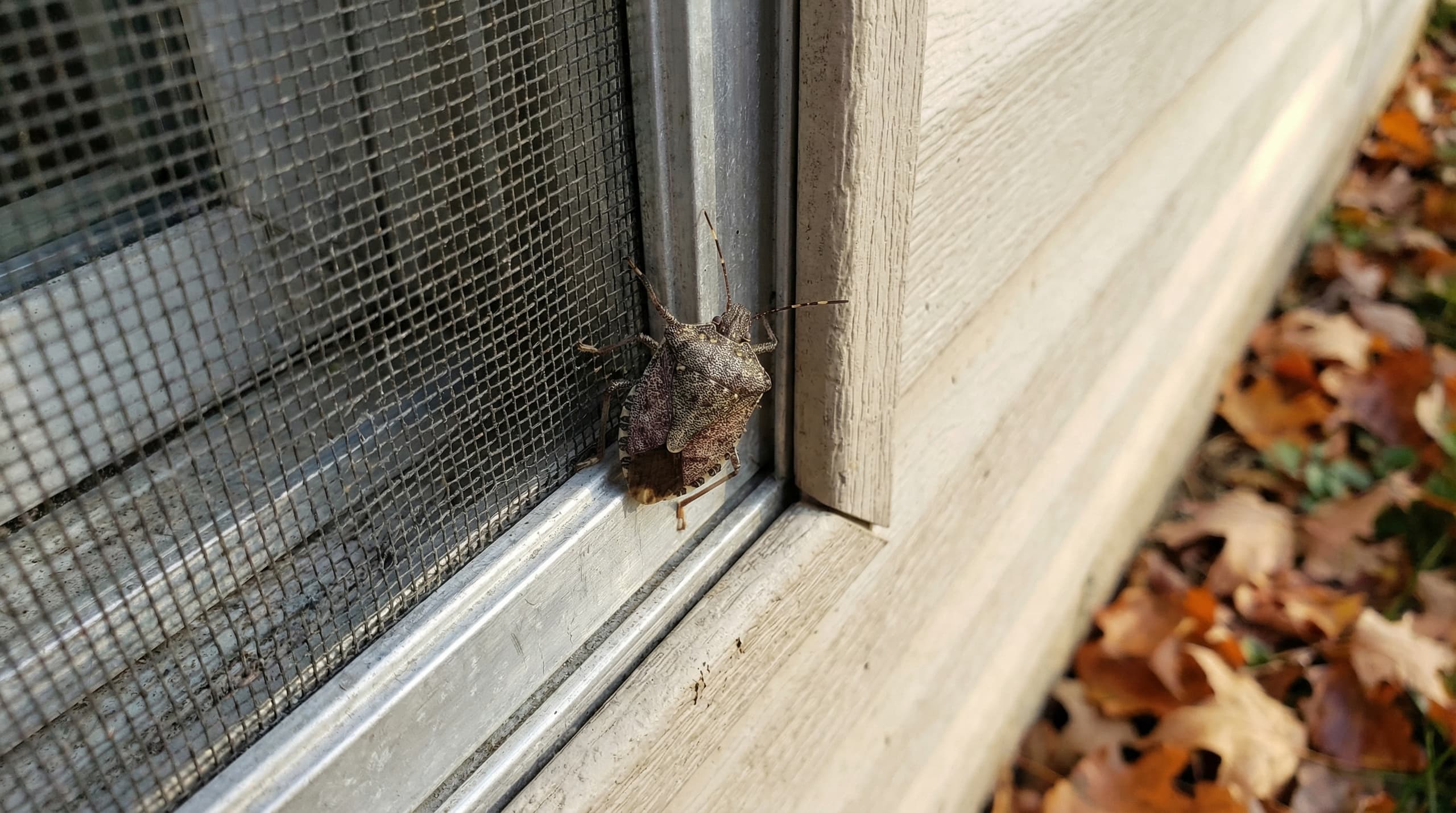
- Mid-September: stink bugs. When overnight lows in the Treasure Valley drop below 50 degrees, stink bugs start scouting warm walls for cracks, and October is their worst month.
- September through November: the big box elder bug move-in. The first heavy clusters usually land on sun-warmed south and west walls in September. They cluster by the hundreds on sunny walls, then push through gaps into wall voids, attics, and crawl spaces.
All of these show up on the same warm walls looking for shelter, and all of them release a smell when crushed. Box elder bugs return to the same houses year after year because the host trees are not moving. Our box elder bug guide and stink bug guide cover the fall half of this calendar.
One more look-alike in the Boise foothills near pines is the western conifer seed bug. It is longer and narrower than a stink bug, with flared back legs.
Do Elm Seed Bugs Bite or Damage Your Home?
No. Elm seed bugs don't bite humans or pets, they don't chew wood, they don't eat food in your pantry, and they don't transmit any known disease. Their mouthparts are built for sucking sap from elm seeds, not skin.
The actual problems are the smell and the volume. When you crush one (or when your dog steps on a pile), it releases a defensive compound that smells like bitter almond or cherry pit. It lingers on fabric, carpet, and inside vacuum canisters. The other problem is psychological. Walking into a kitchen with 200 bugs on the window blinds is rough, even though none of them can hurt you.
One thing to watch is the staining. Their droppings can leave small marks on light-colored siding and curtains. The marks are tiny, but they accumulate over a heavy summer. That's a cosmetic issue, not structural.
How Do I Keep Elm Seed Bugs Out of My House?
Sealing is more important than spraying for this pest. Elm seed bugs fit through any gap larger than 1/16 inch, which is way smaller than what most weatherstripping leaves open. Walk your house with a flashlight on a sunny morning and check these spots.
- Window frames and screens. Run a bead of clear silicone where the frame meets the siding. Replace any screen with a tear bigger than a pencil tip.
- Door sweeps and thresholds. If you can see daylight under a closed door, bugs are getting in. A $15 sweep from the hardware store fixes it in 10 minutes.
- Soffit, gable, and dryer vents. Cover with 16-mesh hardware cloth. Foam alone shrinks and falls out.
- Utility penetrations. Pipes, conduit, AC line sets, cable entries. Seal with caulk or expanding foam plus a metal collar.
- Foundation cracks and weep holes. Caulk hairline cracks. Cover weep holes with proper weep-hole covers (don't fully seal them or you'll trap moisture).
- Window AC units are a highway. Foam-tape the gap around the unit before the bugs find it.
What Kills Elm Seed Bugs Naturally? (Vinegar, Soap, and What Actually Works)
Honestly, no natural spray solves an elm seed bug problem at the population scale we see in the Treasure Valley. A few things knock down small clusters on contact, and they're worth knowing.
- Soapy water in a spray bottle. One tablespoon of dish soap per quart of water. Spray directly on a cluster on the siding. Kills on contact by breaking down their waxy coating. Works for what you can see. Does nothing for the next wave.
- White vinegar. Often suggested online. In practice it's a weak knockdown that mostly just smells. Soapy water works better.
- Shop vac with soapy water in the canister. Vacuum bugs off the wall directly into the soap. Stops them from crawling back out. Empty outside.
- Diatomaceous earth around entry points. Food-grade DE in cracks and under door thresholds. Slow but persistent. Reapply after rain.
- Trim Siberian elms back from the house. Doesn't reduce the bug count, but it reduces the seed rain that feeds the next generation right next to your foundation.
Why DIY Isn't Enough (and What Professional Treatment Actually Does)
DIY handles what you can see. The bugs you can see are a tiny fraction of the population on a heavy-pressure property. A professional treatment does three things a hardware store spray can't.
First, a longer-residual barrier. Our perimeter spray sticks to siding, foundation, and the first three feet of ground for about 90 days. Anything that lands or crawls across that band picks up a lethal dose. Hardware store concentrates break down in days.
Second, eave and entry-point treatment. Most homeowners can't safely reach a second-story eave with a sprayer. That's where elm seed bugs cluster heaviest, and that's where the residual matters most. Our techs spray from the ground up to about 8 feet on a quarterly visit, and we'll hit eaves and soffits when a property is under heavy pressure.
Third, suppression, not eradication. Here's the honest part. No one can wipe out an elm seed bug population in your neighborhood. The trees aren't going anywhere. The bugs travel from yard to yard. What we can do is keep the count low enough that you don't notice them. That's the goal of a quarterly plan. A barrier that's always working, so the few that get past it are the only ones you ever see.
Our quarterly service runs $119 for homes up to 2,500 square feet ($139 for 2,501 to 4,000, $159 for 4,001 to 5,500). The first visit is $49 when you start a subscription. If pests come back between visits, we come back free. That's the whole pitch.
What to Do If They're Already Inside Right Now
If bugs are already in the house, work in this order. Don't skip steps.
- Vacuum, don't crush. Use a wand attachment. Crushing releases the defensive odor and stains light fabric.
- Empty the canister outside immediately. A vacuum full of elm seed bugs smells like rancid almonds within an hour.
- Hit windowsills with soapy water. Most indoor bugs end up on windowsills following light. Wipe them down daily for a week.
- Seal the indoor side of the worst window or door. A temporary bead of removable caulk buys you days while you fix the outside.
- Schedule an interior crack-and-crevice treatment for the worst rooms. We can knock down what's hiding in wall voids and trim work.
When to Call Green Guard
Call us at (208) 297-7947 if you're seeing more than 20 elm seed bugs on a single wall, if they're showing up inside daily, if you're near a mature Siberian elm and last summer was rough, or if you just want this handled before the second wave hits in September.
The $49 first visit covers a full property walk, identification of every entry point we find, exterior barrier spray, eave sweep where needed, and a recommendation for whether you need quarterly or bimonthly service to stay ahead of pressure. We treat the whole pest spectrum (ants, spiders, wasps, earwigs, box elder bugs, and elm seed bugs) on the same visit, so you're not paying separately for each one.
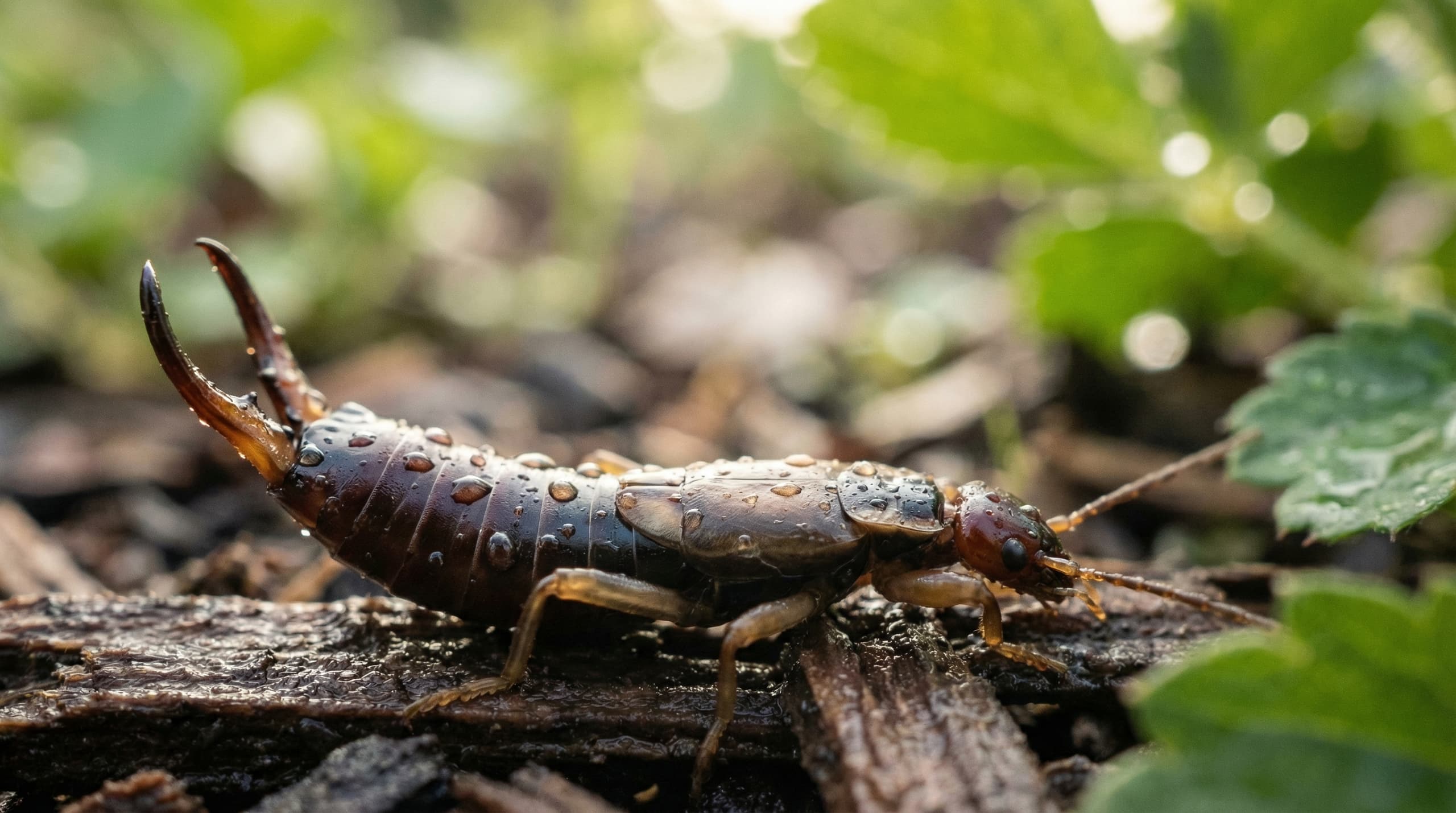
If you want to plan the full year of pest pressure ahead of time, our year-round Idaho pest calendar walks through what shows up when. And if you're also dealing with earwigs in the yard right now (June is their month too), read our earwig control guide for Boise.
Frequently Asked Questions
When are elm seed bugs worst in Boise?
Quick answerElm seed bugs hit peak emergence from mid-June through late July in the Treasure Valley, with a second push from early September through mid-October as they look for overwintering sites.
Pressure spikes once daytime highs cross 85 degrees. As of June 2026, we're right in the peak window. Homes near mature Siberian elms in older neighborhoods are seeing the heaviest counts.
Do elm seed bugs bite or damage homes?
Quick answerNo.
Elm seed bugs don't bite humans or pets, don't chew wood or fabric, don't eat stored food, and don't transmit any known disease. Their only issues are the pungent defensive odor they release when crushed and their tendency to invade in overwhelming numbers. They can leave small staining droppings on light siding, but that's cosmetic, not structural.
How do I keep elm seed bugs out of my house?
Quick answerSeal every gap larger than 1/16 inch.
Focus on window frames, door sweeps, soffit and gable vents, dryer vents, and utility penetrations. Replace torn screens. Cover weep holes with proper covers (don't fully seal them). For an established Boise property near mature elms, sealing plus a quarterly professional perimeter barrier is the realistic plan. Spraying alone without sealing rarely solves it.
What kills elm seed bugs naturally?
Quick answerSoapy water in a spray bottle (one tablespoon of dish soap per quart of water) kills on contact by breaking down their waxy coating.
Vacuuming them directly into a shop vac with soapy water in the canister also works for visible clusters. White vinegar is often suggested online, but it's a weak knockdown in practice. None of these solve a population-level problem on a property under heavy elm seed bug pressure. They're tools for what you can see, not the next wave.
Are elm seed bugs the same as box elder bugs?
Quick answerNo, they're different species with different timing.
Elm seed bugs are smaller (about 1/3 inch), rust-brown with a black triangle behind the head, and peak in June and July. Box elder bugs are larger (about 1/2 inch), black with bright red-orange markings, and peak in the fall. Both invade homes for overwintering, but elm seed bugs also invade during summer heat, which box elder bugs don't.
How much does professional elm seed bug treatment cost in Boise?
Quick answerGreen Guard's first visit is $49 when you start a subscription plan.
Quarterly service runs $119 for homes up to 2,500 square feet, $139 for 2,501 to 4,000 square feet, and $159 for 4,001 to 5,500 square feet. Elm seed bug control is included in every quarterly visit alongside ants, spiders, wasps, earwigs, and other common Idaho pests. The free re-service guarantee covers callbacks between scheduled visits.
Which bugs pile up on Boise walls from June through November?
Quick answerIn order: elm seed bugs in June and July, box elder bugs maturing in the host trees in August, the first heavy box elder bug clusters on south and west walls in September, stink bugs from mid-September once overnight lows drop below 50 degrees (October is their worst month), and the big box elder bug move-in from September through November.
All of them look for warm walls and release a smell when crushed.
Is a rust-brown bug on my wall an elm seed bug or something else?
Quick answerA rust-brown bug about 1/3 inch long with a black triangle behind the head is an elm seed bug.
A larger black bug (about 1/2 inch) with red or orange markings is a box elder bug. A shield-shaped, greenish-brown bug is a stink bug. A longer, narrower bug with flared back legs is a western conifer seed bug, which is common in the Boise foothills near pines.