
Quick answer
A new home pest inspection in Boise should cover five entry points (garage door seals, attic access, basement window wells, utility penetrations, crawl space vents) and the four pests most common in Treasure Valley homes: spiders in the garage, silverfish in bathrooms, mice in the attic, and ants in the kitchen. As of July 2026, Green Guard's $49 first service covers the full inspection plus initial treatment in one visit, so you skip the standalone $100 to $200 inspection fee entirely. Call (208) 297-7947 to schedule during your move-in week.
Key Takeaways
- Peak Boise closing season runs July through August. Book pest service before your moving truck arrives, not after.
- Check five spots first: garage door bottom seal, attic access hatch, basement window wells, utility penetrations, and crawl space vents.
- The four most common new-home pests in the Valley are garage spiders, bathroom silverfish, attic mice, and kitchen ants. All four show up in the first 60 days.
- Homes backing an irrigation canal face extra mosquito and ant pressure. Ask your inspector to flag lateral proximity on the report.
- A standalone real-estate pest inspection runs $100 to $200 in Boise. Green Guard's $49 first service is the inspection plus the first treatment, combined.
In this article

Why Boise Move-In Season Is Prime Pest Season
A good new home pest inspection in Boise starts with timing. Peak Treasure Valley real estate closing runs July through August, which lines up perfectly with peak pest activity across the region. Ants are still expanding colonies, wasps are at maximum size, and spider egg sacs are hatching in garages across Meridian, Eagle, and Kuna. If you're closing this summer, the pests in your new home are more active than they'll be all year.
Standard home inspectors aren't looking for any of that. They're checking your furnace, your roof, and your electrical panel. They may note a wasp nest under the eave if it's obvious, but they don't inspect for carpenter ant galleries, black widow harborage, or the tiny utility gaps that let mice pour in every fall.
That leaves buyers with a decision. Pay $100 to $200 for a standalone pest inspection, or bundle the walkthrough into your first pest treatment. Green Guard's $49 initial service does both in one visit. We inspect every foundation seam and pest hot spot, then treat the perimeter and interior on the same trip. You skip the second appointment entirely.
The rest of this guide covers the five areas every new Boise homeowner should check, the four pests most likely to show up in the first 60 days, and how to time your first service so you're protected before the moving truck backs into the driveway.
5 Areas Every New Boise Homeowner Should Check Before Move-In
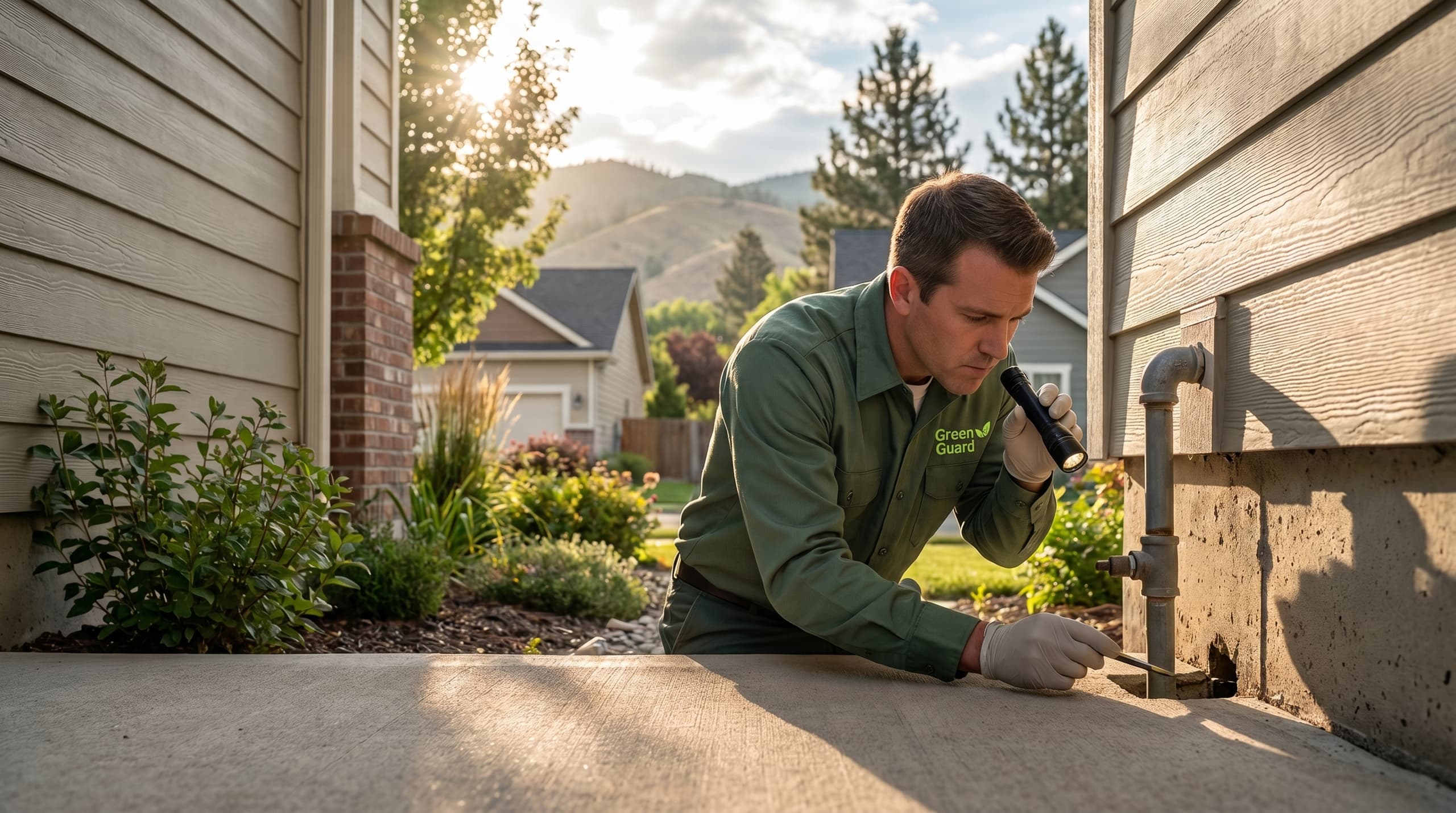
These five spots account for the majority of pest entry in Treasure Valley homes. Walk them yourself during your final walkthrough. Your Green Guard tech checks and treats all of them except the attic hatch on the first visit. That one is yours to check.
- Garage door bottom seal. Squat down and look for daylight along the rubber sweep at both corners. A quarter-inch gap is all a mouse or a black widow needs. Boise garages heat up in August, and pests use that warm air current like a highway.
- Attic access hatch. Push the hatch up and look at the trim seal around the frame. Most builders don't gasket it. In older Boise North End homes, mouse droppings on top of the hatch cover are common, because the attic has been rodent territory for years.
- Basement window wells. Check the metal wells around basement windows for leaves, spider webs, and dead insects. Uncovered wells collect debris that attracts spiders, and the recessed corner is a black widow favorite. Also verify the caulk line around the window frame itself.
- Utility penetrations. Walk the exterior and find every spot where a pipe, wire, or vent enters the wall. AC line sets, gas lines, hose bibs, and cable entries are the top four. Any gap wider than a pencil is a rodent freeway. Steel wool plus foam sealant fixes it in under an hour.
- Crawl space vents. If your new home has a crawl space (common in Boise Bench and Garden City), check every foundation vent for torn or missing screens. Voles and mice pull screens down in a single winter. Replace with 1/4-inch hardware cloth before the moving truck arrives.
The 4 Most Common Pests in New Boise Homes
In our first 60 days of service on new-purchase homes across the Treasure Valley, these four pests show up more than any others. Knowing where to look shortens the fix.
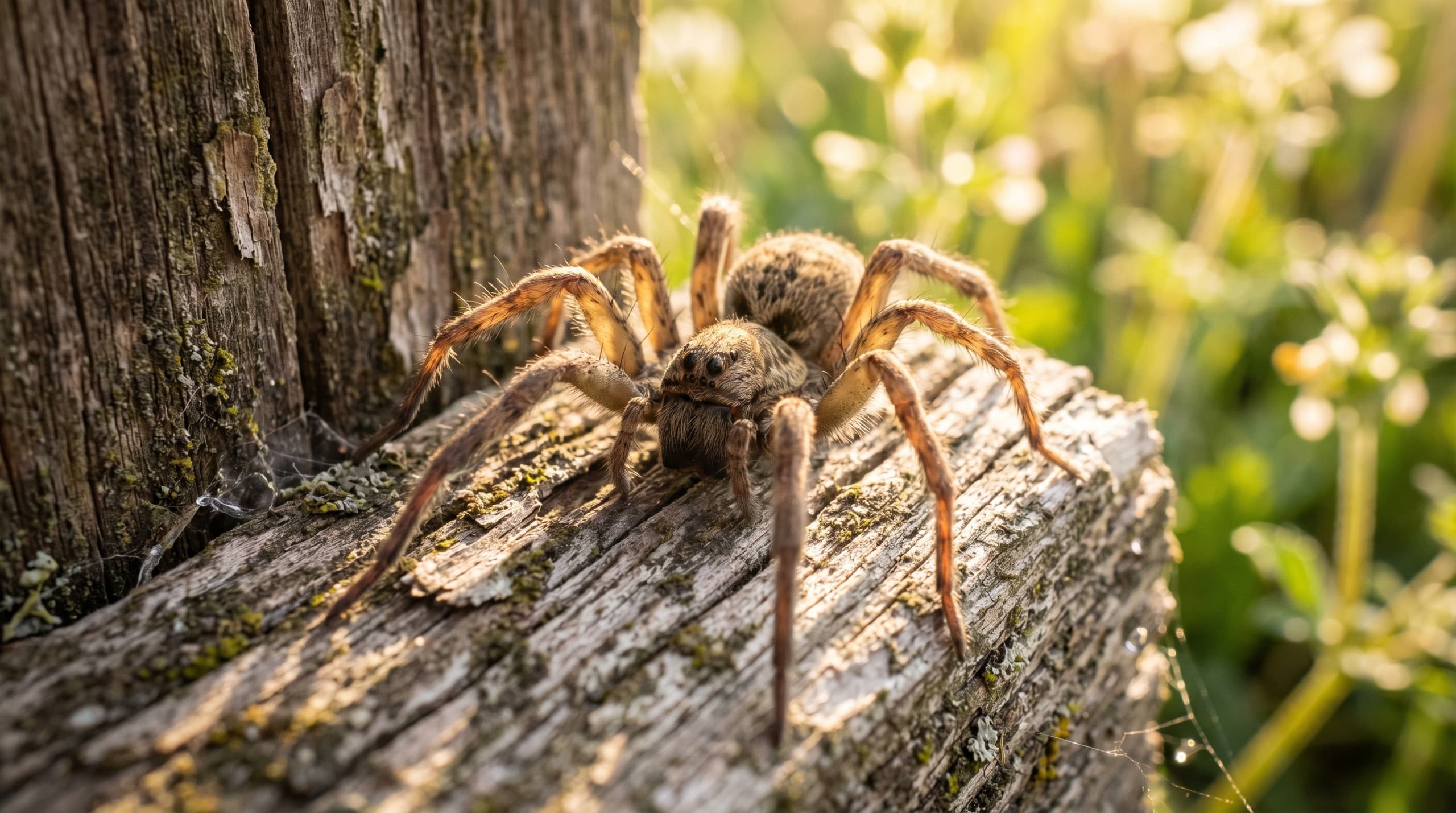
- Spiders in the garage. Hobo spiders and black widows love new construction garages because the drywall dust, cardboard boxes, and undisturbed corners are perfect habitat. Look above the garage door tracks, behind stored bins, and along the base of the wall behind the water heater. For deeper spider prevention, see our Boise spring spider control guide.
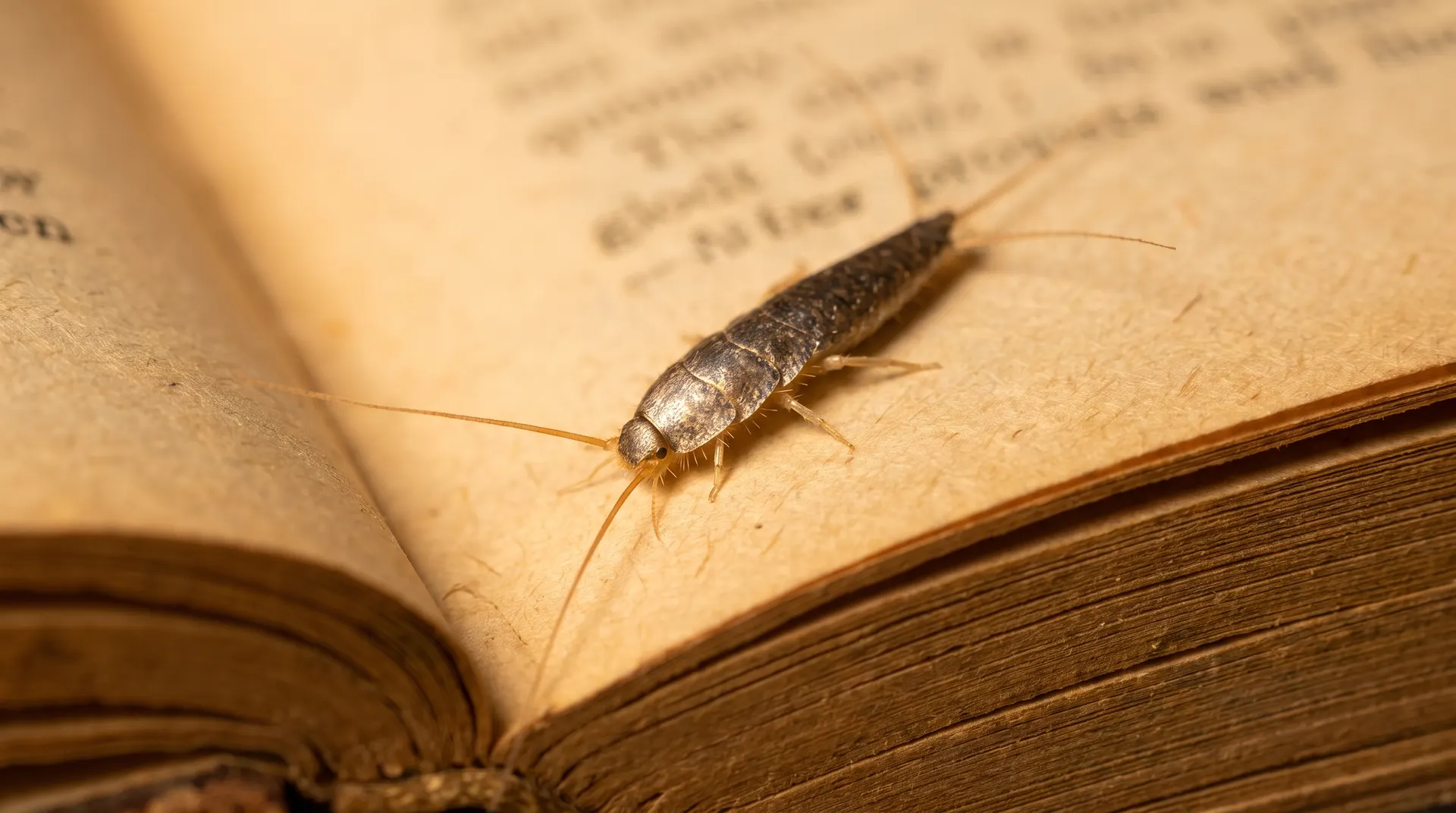
- Silverfish in bathrooms. New homes hold construction moisture in drywall for months after closing. Silverfish thrive in that humidity. Check under bathroom sinks, behind the toilet base, and inside the vanity cabinet. If you see one, there are more. Our Boise silverfish control post covers the full treatment approach.
- Mice in the attic. Fall closings are the worst for this, but summer buyers get hit by early October. Mice enter through soffit gaps, gable vents, and the utility chase around the bathroom exhaust fan. Listen for scratching in the ceiling at night. Our rodent control guide for Boise walks through exclusion and trapping.
- Ants in the kitchen. Odorous house ants and pavement ants find sugar spills, pet food, and drips under the dishwasher within days of move-in. They trail along the caulk line behind the sink or under the baseboard behind the fridge. First treatment plus sealed food storage stops the trail cold.
Homes Backing an Irrigation Canal Get Extra Pressure
The Treasure Valley runs on a lateral canal system. Farmers Union, Ridenbaugh, New York, Settlers, and dozens of smaller laterals crisscross Meridian, Eagle, Kuna, and the Boise Bench. If your new home backs, sides, or fronts a canal or lateral, you inherit two extra pest problems: mosquitoes and ants.
Mosquito pressure spikes because standing water in the canal edge grows larvae from May through September. Ants get worse because moist canal-side soil supports much larger pavement ant and odorous house ant colonies than dry lots. Expect both every summer on a canal-side lot.
If your inspector didn't note canal proximity on the report, add it yourself. Then ask about the seasonal mosquito add-on when you set up service. Standard quarterly treatment handles the ants. Mosquito control is a separate barrier spray around the yard perimeter that lasts about 30 days per treatment.
Why the $49 First Service Beats a Standalone New Home Pest Inspection in Boise
A standalone real-estate pest inspection in the Boise area runs $100 to $200. You get a written report, photos, and a list of recommendations. Then you still have to hire a pest control company to actually treat what the inspector found. Two appointments, two bills, and a gap of days or weeks between them.
Green Guard's $49 initial service collapses that into a single visit. Here's what happens on the trip:
- Full walkthrough of the entry areas above except the attic hatch, plus the interior kitchen, bathrooms, and garage.
- Species identification for anything active. If we spot black widow egg sacs, ant trails, or rodent droppings, you get told exactly what it is.
- Full exterior perimeter barrier treatment (3 feet high, 3 feet out from the foundation) with organic-based, hospital-grade products safe once dry.
- Interior baseboard and crack-crevice treatment on request, plus spider web and wasp nest removal from eaves.
- Copper mesh in any obvious rodent gaps we see. Anything bigger is a builder warranty repair or your own weekend seal-up project.
- Quarterly service enrollment starting at $119 per treatment for homes up to 2,500 square feet. First quarterly visit lands 90 days after the initial. For more on what actually happens on day one, see what to expect from your first pest control service.
What Pest Control Costs for a New Boise Home
| Plan | Home size | Price |
|---|---|---|
| Initial Service with a quarterly or bimonthly plan | Any home size | $49 |
| Quarterly Service | Up to 2,500 sq ft | $119 |
| 2,501 to 4,000 sq ft | $139 | |
| 4,001 to 5,500 sq ft | $159 | |
| Bimonthly Service | Up to 2,500 sq ft | $99 |
| 2,501 to 4,000 sq ft | $119 | |
| 4,001 to 5,500 sq ft | $139 | |
| One-Time Service | Up to 2,500 sq ft | $200 |
| 2,501 to 4,000 sq ft | $225 | |
| 4,001 to 5,500 sq ft | $250 |
Why New Construction Homes Have More Pest Problems (Not Fewer)
Buyers assume a brand-new home in a Meridian or Kuna subdivision comes pest-free. That assumption costs money. New construction actually creates pest pressure for several reasons at once:
- Disturbed soil relocates colonies. Bulldozers displace ant nests, vole burrows, and rodent populations that were living in the soil. Those displaced pests move into the new structure because it's the warmest, driest thing around.
- Incomplete sealing. Framers and finish carpenters leave gaps at utility penetrations, foundation-siding junctions, and garage-to-house transitions. Missing caulk is common on new homes in their first year.
- Landscaping installed too close. Fresh sod, bark mulch, and shrubs planted within a foot of the foundation create instant pest habitat right against the siding. Move mulch back 12 inches minimum.
- Construction debris in the crawl. Wood scraps, cardboard, and drywall pieces left behind attract silverfish, spiders, and rodents. Pull it all out before you move in.
- Warranty exclusions. Almost every builder warranty specifically excludes pest damage. Any problem you discover after the warranty period is on you. Schedule your first pest inspection well before the warranty expires so you can document issues.
Your Move-In Week Pest Control Plan
The empty window between closing and moving furniture in is the best time all year to treat a home. Here's the sequence we recommend to every new Boise homeowner:
- Day of closing. Call (208) 297-7947 and book the $49 initial service for the same week. Same-day service is often available.
- Before movers arrive. Green Guard tech does the walkthrough and first treatment on the empty home. Interior spray gets into baseboards and behind appliances that will never be that accessible again.
- Move-in day. Products are dry and safe within 30 to 60 minutes of application, so nothing changes about your move-in plan. Set up furniture normally.
- First 30 days. Monitor for activity. Any pest that pushes through gets a free re-service (that's the guarantee). Most homes go quiet within 24 to 48 hours of the initial treatment.
- 90 days out. First quarterly treatment lands automatically. Products last about 90 days under normal conditions, so the timing keeps the barrier continuous.
Negotiating Pest Issues With Sellers and Builders
If a pest inspection turns up problems before closing, you have leverage. How much depends on what's found and what the market is doing.
Minor evidence: A few spider webs, occasional ants, or a wasp nest under the eave usually isn't worth negotiating. Plan to handle it with your first pest service after closing. Green Guard's $49 initial covers all three.
Active infestation: Request treatment before closing, or a credit toward professional treatment. Get a written quote to document the cost. In competitive Boise markets, sellers sometimes push back. A credit is often the easier win.
Structural damage: Carpenter ant galleries or extensive rodent damage in framing is serious. Request professional repair estimates and negotiate completion before closing. Walking away from a badly damaged home is sometimes the right call.
Conducive conditions: Moisture issues, wood-to-soil contact, or grade problems create ongoing pest pressure. Ask for correction before closing, or factor the fix into your offer.
Your agent can advise on strategy given current market conditions. In balanced markets, pest findings give you real negotiation room. In hot markets, buyers often absorb minor issues to keep the deal alive.
Ready to Protect Your New Boise Home?
The best time to schedule your first pest treatment is the week you close, ideally before the moving truck arrives. Green Guard's $49 initial service handles the inspection, treatment, and enrollment in one visit. No separate inspection fee, no second appointment, no gap in coverage.
Call (208) 297-7947 to book. Same-day service is often available in Boise, Meridian, Eagle, Nampa, Caldwell, Star, and Kuna. Or request a quote online and we'll follow up the next business day.
Locally owned in Boise. Chamber member in Boise Metro, Meridian, and Nampa. 4.9 stars across 170+ Google reviews. 2,500+ Treasure Valley families protected. Free re-service guarantee between quarterly treatments.
Frequently Asked Questions
Do I need a pest inspection when buying a home in Boise?
Quick answerIdaho doesn't legally require a pest inspection to buy a home, but you should still get one.
Standard home inspectors don't check for carpenter ant galleries, rodent entry points, or black widow harborage. A dedicated inspection catches those issues before they become expensive repairs. Green Guard's $49 first service bundles the inspection with your first treatment, which is cheaper than the $100 to $200 standalone inspection fee most Boise pest companies charge.
What pests are common in Boise homes?
Quick answerThe four pests most common in new Boise homes are garage spiders (hobo spiders and black widows), bathroom silverfish, attic mice, and kitchen ants (usually odorous house ants or pavement ants).
Homes near irrigation canals also face heavy mosquito pressure from May through September. Roaches are less common here than in warmer states, but they show up in older apartment buildings.
How long after moving in should I get pest control in Boise?
Quick answerSchedule pest control for the same week you close, ideally before the moving truck arrives.
An empty home gets a more thorough interior treatment along baseboards and behind appliances that get blocked forever after move-in. Same-day service is often available in Boise, Meridian, Eagle, Nampa, Caldwell, Star, and Kuna.
How much does a pest inspection cost in Boise?
Quick answerA standalone real-estate pest inspection in the Boise area runs $100 to $200 depending on home size.
That fee gets you a written report and recommendations, but you still have to hire a pest company to treat anything found. Green Guard's $49 initial service combines the inspection and first treatment into a single visit, which most new buyers find cheaper and faster than the two-step approach.
What is the difference between a termite inspection and a pest inspection?
Quick answerA termite inspection specifically looks for termites and wood-destroying organisms, usually required by lenders for VA loans and some FHA loans.
A general pest inspection covers all common pests including ants, spiders, rodents, and cockroaches. Termites are rare in Idaho, so most Boise buyers don't need a termite-specific inspection. The larger wood-destroying insect concern here is carpenter ants, which a general pest inspection covers.
Are there cockroaches in Boise, Idaho?
Quick answerRoaches are less common in Boise than in warmer states like Arizona or Texas, but German cockroaches do show up in older apartment buildings, restaurants, and multi-family housing.
Single-family homes rarely see them unless brought in through infested boxes or used appliances. If you see a roach in a new Boise home, call us right away because early treatment prevents a full infestation. Roaches aren't a typical Green Guard service, so a technician assesses the job and quotes it before any work.