Quick answer
Idaho's common rodents include house mice (small, gray, most common indoors), deer mice (bicolored, carry hantavirus), Norway rats (large, brown, burrow near foundations), and voles (outdoor, damage lawns). Identification matters: deer mice require special handling due to hantavirus risk. Green Guard's rodent control starts with a $49 first visit on a quarterly or bimonthly plan, with free re-service between visits.
Key Takeaways
- House mice are the most common indoor rodent: small, gray, with droppings the size of rice grains
- Deer mice (bicolored, with white undersides) carry hantavirus, so clean up their droppings wet and never sweep them
- Norway rats are large burrowing rodents found near foundations and sewer lines
- Voles damage lawns and landscaping but rarely enter homes. Look for surface runway damage
- Proper identification is crucial for effective control and safety protocols
In this article
Why Rodent Identification Matters
Not all rodents are created equal. Different species have different behaviors, pose different health risks, and require different control strategies. Proper identification is the first step to effective rodent management in your Idaho home or property.
This guide covers the most common rodents encountered in the Treasure Valley: house mice, deer mice, Norway rats, roof rats, and voles. Understanding which rodent you're dealing with helps ensure safe, effective control.
House Mice: Idaho's Most Common Indoor Rodent
The house mouse (Mus musculus) is the most frequently encountered rodent in Boise-area homes. These adaptable creatures have lived alongside humans for thousands of years and thrive in modern homes.
Identification Characteristics
- Size: Small, 2.5 to 3.5 inches body length, plus tail
- Color: Uniform gray or gray-brown, lighter belly
- Ears: Large, prominent ears relative to body size
- Tail: Long (equal to body length), scaly, sparsely haired
- Droppings: 1/8 to 1/4 inch, rod-shaped with pointed ends (rice grain size)
- Feet: Small prints; hind feet about 3/8 inch
House Mouse Behavior
Understanding house mouse behavior aids in control:
- Excellent climbers (can access upper floors and attics)
- Curious explorers (investigate new objects in their territory)
- Produce 40-100 droppings per day, which indicates activity levels
- Can squeeze through holes the size of a dime (1/4 inch)
- Reproduce rapidly: one pair can produce 60+ offspring per year
- Prefer seeds and grains but eat almost anything
Deer Mice: The Hantavirus Carrier
Deer mice (Peromyscus maniculatus) are common in Idaho's foothills and rural areas and are the primary carrier of hantavirus, a potentially fatal respiratory disease. Proper identification is critical because deer mouse infestations require special safety protocols.
Identification Characteristics
- Size: Similar to house mice, 2.5 to 4 inches body length
- Color: Bicolored (brown/tan on top, sharply contrasting white belly and feet)
- Tail: Bicolored (dark on top, white below), covered with fine hair
- Eyes: Large, prominent dark eyes
- Ears: Large, may have light fur inside
- Habitat: More common in rural areas, garages, sheds, and outbuildings
Deer Mouse vs House Mouse: Key Differences
These two species are often confused. Key differences:
Color Pattern
House Mouse: Uniform gray throughout | Deer Mouse: Sharp contrast between brown back and white belly
Tail
House Mouse: Scaly, nearly hairless | Deer Mouse: Finely haired, bicolored
Feet
House Mouse: Gray/pink | Deer Mouse: Distinctly white
Habitat Preference
House Mouse: Urban, suburban homes | Deer Mouse: Rural, outbuildings, foothills
Norway Rats: Large Burrowing Rats
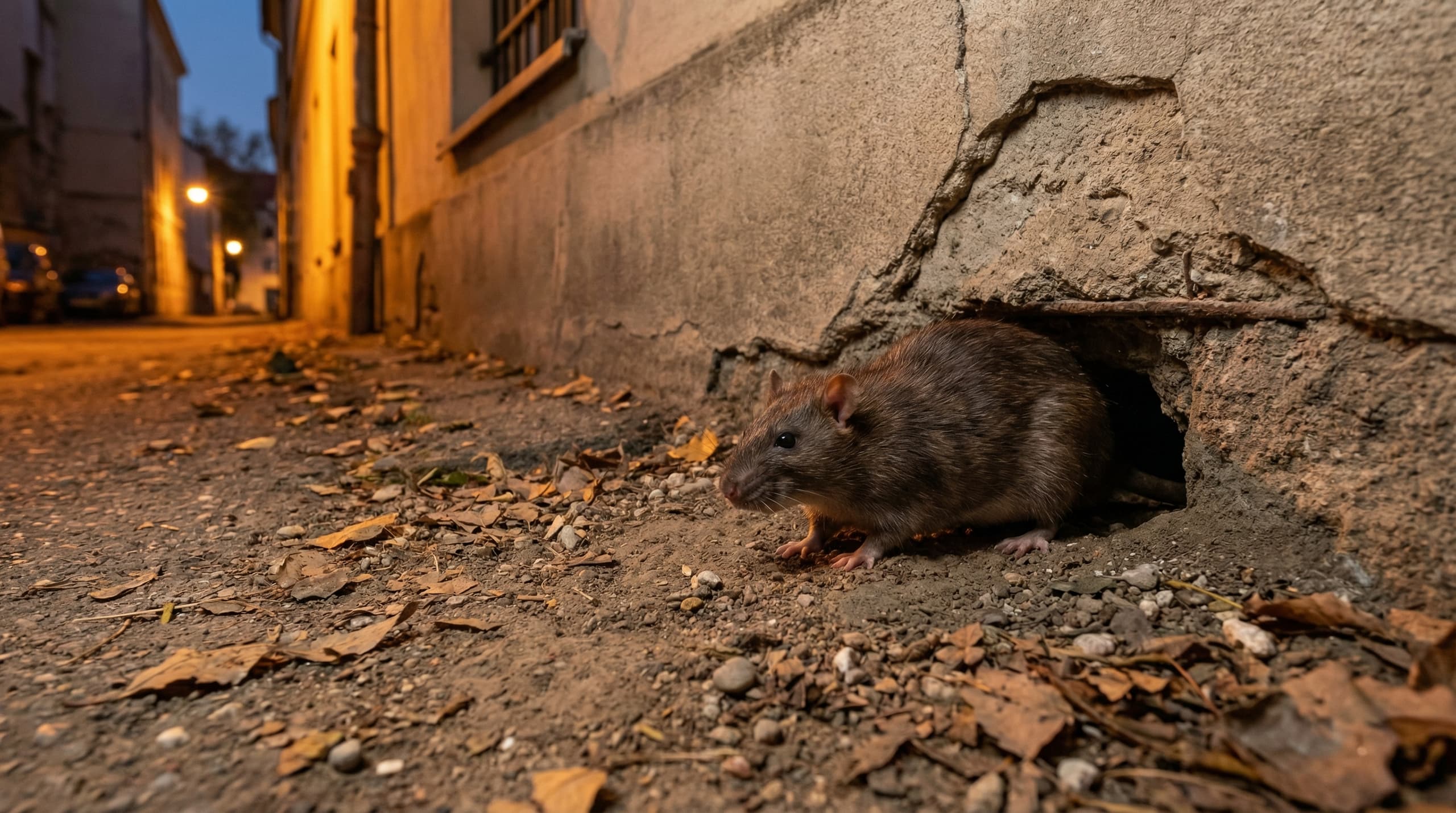
Norway rats (Rattus norvegicus), also called brown rats or sewer rats, are the larger rat species found in Idaho. They're ground-dwelling burrowers commonly found near foundations, in basements, and along sewer lines.
Identification Characteristics
- Size: Large, 7 to 9 inches body length, plus 6 to 8 inch tail
- Weight: 10 to 17 ounces, significantly larger than mice
- Color: Brown or gray-brown with lighter gray belly
- Tail: Shorter than body, thick, scaly
- Ears: Small relative to body size, close-set
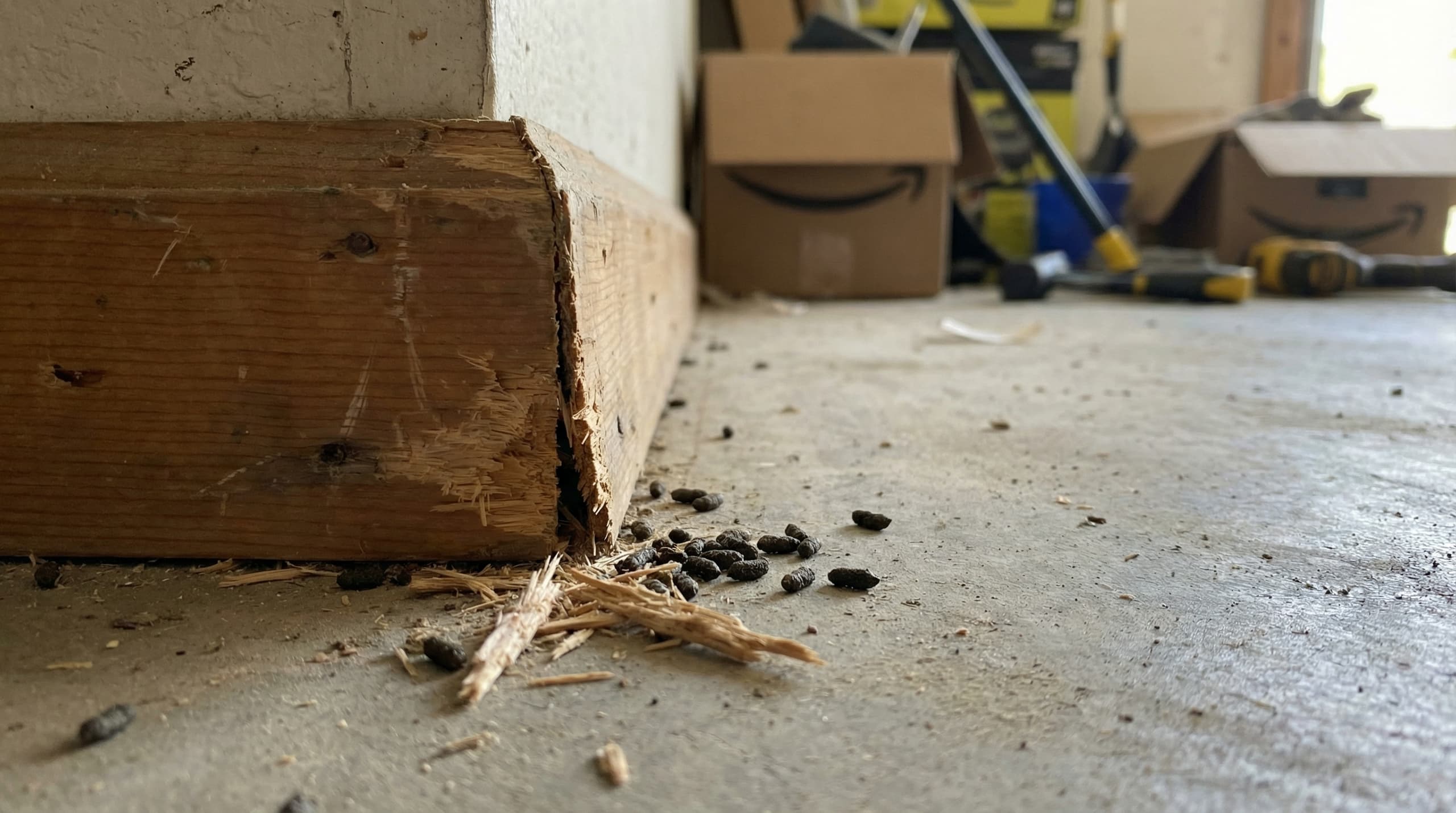
- Droppings: 1/2 to 3/4 inch, blunt ends, capsule-shaped
Signs of Norway Rats
Norway rats leave distinctive evidence of their presence:
- Burrow holes along foundations, 2-3 inches in diameter
- Greasy rub marks along walls and baseboards (body oils)
- Large droppings: much bigger than mouse droppings
- Gnaw marks on wood, plastic, and even soft metals
- Sounds: scratching and gnawing in walls, especially at night
- Damaged food packaging with large tooth marks
Roof Rats: Climbing Rats in Idaho
Roof rats (Rattus rattus) are less common in Idaho than Norway rats but are found in some areas. As their name suggests, they prefer elevated areas: attics, rafters, and upper floors.
Identification Characteristics
- Size: Slightly smaller than Norway rats, 6 to 8 inches body
- Color: Black to dark brown with gray belly
- Tail: Longer than body, thin and uniform
- Ears: Large and prominent, nearly hairless
- Snout: Pointed (Norway rats have blunt snouts)
- Build: Sleek and agile (Norway rats are heavy and stocky)
Voles: The Lawn Destroyers
Voles (meadow mice) are outdoor rodents that rarely enter homes but cause extensive damage to lawns, landscaping, and gardens throughout the Treasure Valley. They create visible runway systems in grass and gnaw bark from trees and shrubs. Homeowners sometimes confuse voles with pocket gophers, which also damage lawns but leave different mound patterns and damage signatures.
Identification Characteristics
- Size: Small and stocky, 4 to 5 inches total (short tail)
- Color: Gray-brown to dark brown
- Tail: Very short (only about 1 inch)
- Ears: Small, nearly hidden in fur
- Eyes: Small, beady
- Body: Compact, rounded (looks different from mice)
Signs of Vole Activity
Vole damage is distinctive and usually visible in lawns and landscaping:
- Surface runways: 1 to 2 inch wide trails in grass, visible when snow melts
- Bark damage: Gnawing at base of trees and shrubs (girdling)
- Small burrow holes: About 1.5 inches diameter in lawn
- Root damage: Plants dying for no apparent reason
- Golf ball-sized holes near plants and along edges
Evidence Comparison: Mice vs Rats
Not sure whether you have mice or rats? Compare the evidence:
Droppings Size
Mice: 1/8 to 1/4 inch (rice grain) | Rats: 1/2 to 3/4 inch (olive pit)
Gnaw Marks
Mice: Small, 1/16 inch | Rats: Large, 1/8 inch or more
Entry Holes
Mice: Dime-sized (1/4 inch) | Rats: Quarter-sized or larger
Tracks
Mice: 3/8 inch or less | Rats: 3/4 to 1 inch
Behavioral Differences That Affect Control
Mice and rats behave very differently, and understanding these differences explains why control strategies need to match the species.
Mice are curious. They investigate new objects in their environment, which means traps usually start catching mice within hours of placement. They nibble small amounts from many food sources and may maintain several nest sites. They are excellent climbers and can access upper floors and attics easily. One pair can produce 60 or more offspring per year.
Rats are cautious. They actively avoid new objects for days or even weeks, a behavior called neophobia. They follow the same paths consistently, leaving greasy rub marks along walls. Norway rats prefer ground level, while roof rats are agile climbers. Rats eat larger amounts from fewer sources and typically maintain one main burrow.
When to Call a Professional
Rodent infestations grow fast and carry real health risks. If you are finding droppings regularly, hearing scratching in the walls at night, or have actually spotted a rodent, there are almost certainly more you have not seen. Deer mice are an especially urgent concern because of hantavirus. Never vacuum or sweep their droppings yourself.
Professional rodent control goes beyond just setting traps. It includes locked bait stations and finding the entry points rodents used to get in. Our techs plug the obvious gaps with copper mesh. Bigger repairs are a job for you or a handyman.
Frequently Asked Questions
What is the most common rodent in Boise homes?
Quick answerThe house mouse is the most common indoor rodent in the Treasure Valley.
They're small, gray, and can squeeze through holes the size of a dime. They produce 40-100 droppings per day and reproduce rapidly. One pair can produce over 60 offspring annually.
How do I know if I have mice or rats?
Quick answerThe easiest way is droppings: mouse droppings are rice-grain sized (1/8 to 1/4 inch); rat droppings are olive-pit sized (1/2 to 3/4 inch).
Entry holes also differ: mice need only dime-sized holes, while rats need quarter-sized or larger.
Are deer mice dangerous?
Quick answerYes.
Deer mice are the primary carriers of hantavirus, a potentially fatal respiratory disease. Never vacuum or sweep deer mouse droppings. If you suspect deer mice (look for bicolored brown/white coloring), call us for control. Clean up the droppings yourself with gloves, a mask, and a bleach soak, never dry.
How do voles differ from mice?
Quick answerVoles have very short tails, small ears hidden in fur, and stocky bodies.
They look quite different from mice. They live outdoors, create visible runway systems in lawns, and rarely enter homes. They cause landscape damage rather than household infestations.
How much does rodent control cost in Boise?
Quick answerProfessional rodent control from Green Guard starts with a $49 initial service.
This includes inspection, treatment, and copper mesh in the obvious entry gaps. Quarterly plans at $119 provide ongoing protection and monitoring.
Can mice and rats live in the same house?
Quick answerGenerally no.
Rats prey on mice, so mice avoid areas where rats are present. If you have rats, you are unlikely to also have mice in the same area. However, you might have mice in one part of a building and rats in another if there is enough separation between them.
Which is worse, mice or rats?
Quick answerBoth cause problems, but rats generally indicate a more serious situation.
Rats are larger, consume more food, cause more structural damage, and are harder to control because of their cautious behavior around traps. However, mice reproduce faster and can overrun a home more quickly. Either way, professional treatment is the most reliable solution.