
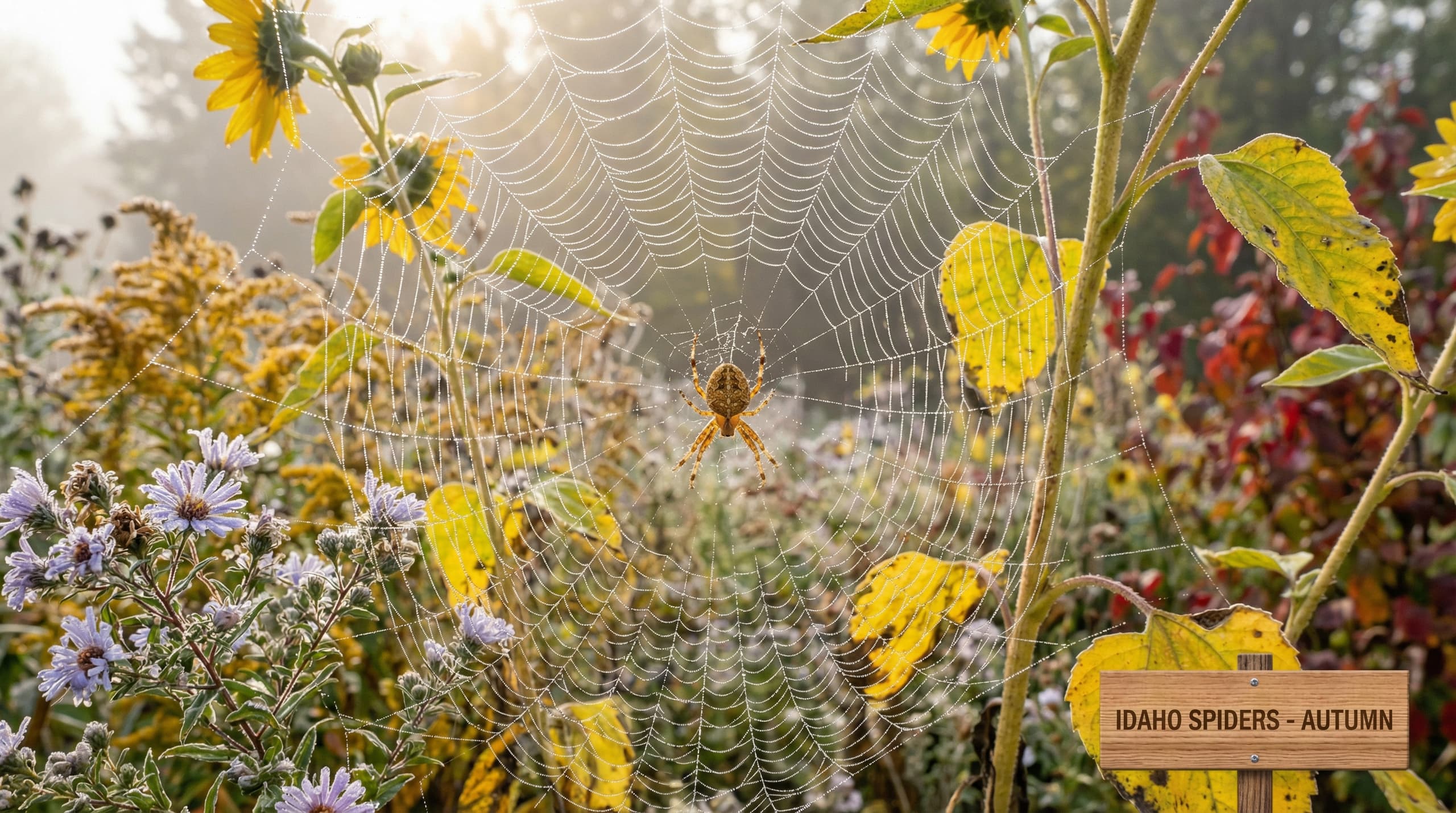

Key Takeaways
- 1September spider activity peaks as males seek mates and all spiders follow prey indoors
- 2Black widows remain active through September - exercise caution in garages, sheds, and dark areas
- 3Hobo spiders are most visible in fall during their mating season
- 4Spiders that establish in fall will remain in your home through winter
- 5Professional fall treatment ($119) reduces spider populations before winter settling. Call (208) 297-7947.
Why You See More Spiders in September
If you've noticed more spiders in your Idaho home during September, there are biological reasons for the increase:
Male spiders, which typically stay hidden in webs or hunting grounds, become active wanderers in fall as they search for mates. This mate-seeking behavior brings them out into open areas - including your living spaces. Additionally, as prey insects move indoors seeking shelter from cooling temperatures, spiders follow their food source.
The spiders you see in September aren't new arrivals - they've likely been in or near your home for months. They're simply more visible now due to increased activity.
Common Idaho Spiders Active in September
Black widows remain dangerous through September. Always wear gloves when reaching into dark areas, moving stored items, or handling firewood. Shake out shoes and clothing stored in garages.
Black Widows (Dangerous)
- Identification: Shiny black body, red hourglass on abdomen underside
- September activity: Still active; seeking warm shelter as nights cool
- Locations: Garages, sheds, woodpiles, irrigation boxes, undisturbed outdoor areas
- Danger: Medically significant bite; painful and potentially dangerous
- Behavior: Not aggressive but will bite if pressed against skin
Hobo Spiders
Hobo spiders are the most common spider we receive calls about in September. Their fast movement and ground-level activity makes them very noticeable. They're not as dangerous as once believed but can still bite.
- Identification: Brown, herringbone pattern on abdomen, funnel-shaped webs
- September activity: Peak activity during fall mating season
- Locations: Ground level, basements, window wells, crawl spaces
- Danger: Previously thought dangerous; now considered minor medical significance
- Behavior: Fast runners, often seen darting across floors
Wolf Spiders
- Identification: Large (up to 1.5 inch), hairy, brown with patterns
- September activity: Moving indoors as temperatures drop
- Locations: Ground level, often seen running across floors
- Danger: May bite if handled; painful but not medically significant
- Behavior: Active hunters, don't build webs, fast runners
Common House Spiders
- Identification: Small to medium, brown, bulbous abdomen
- September activity: Web-building in corners and undisturbed areas
- Locations: Corners, behind furniture, window frames, basements
- Danger: Harmless, rarely bite
- Behavior: Build messy cobwebs, remain in webs waiting for prey
How Spiders Enter Your Home
Understanding how spiders get inside helps with prevention:
- Gaps around doors - Worn weatherstripping and door sweeps
- Window frames - Gaps and damaged screens
- Foundation cracks - Especially at ground level
- Utility penetrations - Around pipes, wires, and cables
- Garage doors - Often the largest opening to your home
- Brought in on items - Firewood, boxes, plants, holiday decorations
September Spider Prevention
Reduce spider populations with these September tasks:
Exterior Prevention
- Remove webs - Knock down webs and egg sacs around your home's exterior
- Reduce lighting - Switch to yellow bulbs that attract fewer insects (spider prey)
- Clear vegetation - Trim plants away from your home's foundation
- Move woodpiles - Store at least 20 feet from your home
- Reduce clutter - Clear debris that provides spider harborage
- Seal entry points - Caulk gaps and cracks around foundation and utilities
Interior Prevention
- Vacuum regularly - Removes spiders, webs, and egg sacs
- Reduce clutter - Especially in basements, garages, and storage areas
- Check stored items - Inspect boxes before bringing inside
- Use sticky traps - Monitor for spider activity in high-risk areas
- Seal interior gaps - Around baseboards, pipes, and utility entries
- Control prey insects - Fewer insects means fewer spiders
Professional September Spider Treatment
September spider treatment is part of our fall quarterly service - $119 if you're already on our plan, or $49 to start a new plan. We remove webs, treat entry points, and provide ongoing protection. Call (208) 297-7947.
September is an ideal time for professional spider control:
- Web removal - Complete removal of webs and egg sacs
- Perimeter treatment - Barrier that eliminates spiders before they enter
- Entry point treatment - Targeted treatment where spiders enter
- Interior treatment - As needed for active infestations
- Egg sac elimination - Prevents hundreds of spiderlings from emerging
- Ongoing protection - Quarterly service maintains spider-free living
Spider Safety Tips for Fall
Protect yourself during peak spider season:
- Shake out shoes - Especially those stored in garages or closets
- Check clothing - Before putting on items stored in garage
- Wear gloves - When handling firewood, boxes, or working in garages
- Look before reaching - Into dark corners, boxes, or storage areas
- Keep beds clear - Move beds away from walls, keep bedding off floors
- Use flashlight - When entering dark storage areas or basements
Need Professional Help?
Get Same-Day Pest Control in Boise
Our local experts are standing by. Guaranteed results or we re-treat for free.