
Spiders & Scorpions
Brown Recluse Spider
Loxosceles reclusa
IdentificationHow to Identify Brown Recluse Spider
Quick Answer
Brown recluse spiders are identified by the distinctive dark violin-shaped marking on their cephalothorax (head region), with the neck of the violin pointing toward the abdomen. They're uniformly tan to dark brown with no stripes on their legs.
Full identification notes
Crucially, they have only 6 eyes arranged in 3 pairs (most spiders have 8). Body size is about the size of a quarter with legs extended.
Free
Re-Service Between Visits
4.9/5
Google Rating
9 to 5
Office Hours, Mon to Fri
Brown Recluse Spider Behavior & Habits
Understanding how brown recluse spider behave helps prevent infestations
True to their name, brown recluses are reclusive and shy.
More about their habits
They hide in dark, undisturbed areas and only bite when trapped against skin. That usually happens when someone slips on stored clothing or shoes without checking first. They're nocturnal hunters that don't spin webs to catch prey, and they can survive months without food or water.
Brown Recluse Spider Risks & Dangers
What brown recluse spider can do to your health and property
Health Risks
Brown recluse venom is necrotic, meaning it can destroy tissue around the bite site.
Property Damage
No property damage.
Full health and property details
Health Risks
While most bites heal without serious complications, some develop into necrotic lesions that require medical treatment. Severe reactions can cause systemic symptoms. Bites often aren't felt initially, making identification difficult.
Property Damage
The concern is entirely health-related.
Signs of Brown Recluse Spider Infestation
Look for these indicators in your home
Signs You Have Brown Recluse Spider
What homeowners spot first
- Tan to brown spider with violin marking on back
- Spider found in stored boxes, clothing, or shoes
- Irregular, messy webs in corners (retreat webs, not prey webs)
More signs to look for
- Sightings in closets, attics, or storage areas
- Spider with noticeably long legs relative to body
Brown Recluse Spider in Boise & the Treasure Valley
Here's the good news for Treasure Valley homeowners: brown recluse spiders aren't established in Idaho.
More on what we see locally
The few that show up here arrive as hitchhikers in moving boxes, furniture, and shipments from the Midwest or South. In nearly every Boise, Meridian, or Eagle call we've taken for a suspected brown recluse, the spider turned out to be a hobo spider or another harmless look-alike. If you've recently moved here from a known brown recluse state, though, it's worth having any suspect spider checked before you assume.
How We Handle Brown Recluse Spider
What our approach looks like
If you've confirmed a brown recluse in your Boise home, we treat it as a serious job.
Our full approach
We apply residual barrier treatments to cracks, crevices, and hiding spots, and place sticky traps that catch wandering spiders and show where they are active. We also walk you through habitat changes that cut off their hiding places. Because these spiders can survive months in low-traffic areas, full control can take several months of follow-up.
How to Prevent Brown Recluse Spider
Steps you can take to reduce the risk of infestation
- Shake out stored clothing and shoes before wearing
- Use plastic storage containers instead of cardboard boxes
- Keep clothing and bedding off floors
More prevention steps
- Reduce clutter in closets and storage areas
- Seal cracks around doors, windows, and foundations
- Use gloves when handling stored items or firewood
- Install door sweeps and repair window screens
Brown Recluse Spider Questions Answered
Common questions about identification, prevention, and treatment
Call (208) 297-7947Are brown recluse spiders common in Idaho?
Quick answerNo.
Brown recluses aren't established in Idaho. Their native range is the Midwest and South. They do occasionally arrive in boxes, furniture, or shipments from those regions, but most "brown recluse" sightings in Boise are actually hobo spiders or other harmless look-alikes.
How can I tell if it's really a brown recluse?
Quick answerLook for: 1) The violin-shaped marking on the back (not abdomen), 2) Uniform tan-brown color with no stripes on legs, 3) Only 6 eyes in 3 pairs (requires close inspection).
If in doubt, capture it safely and have a professional identify it.
What should I do if I'm bitten?
Quick answerClean the bite area, apply ice, and seek medical attention, especially if the bite area becomes red, swollen, or develops a blister.
If possible, capture the spider for identification. Most bites heal without complications, but medical monitoring is a smart call.
Similar Pests
Learn about other pests in this category
Related Guides
Expert articles related to brown recluse spider in Idaho
 Pest Identification
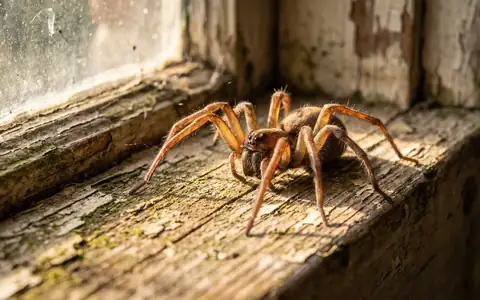
No Brown Recluse Spiders in Idaho: What You Found This Fall
Read Article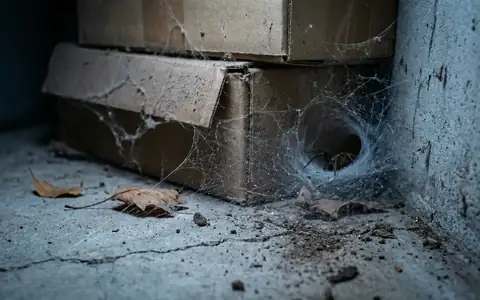 Seasonal Guide
How to Keep Spiders Out of Your Garage This Fall in Idaho
Read Article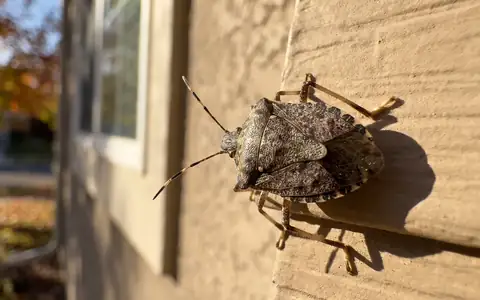 Seasonal Guide
Stink Bugs in Idaho: Why the Fall Invasion Is Worse Than You Think and How to Stop Them Before They Get Inside (2026 August Update)
Read Article
Think You Have Brown Recluse Spider?
Call and we'll talk through your options. We usually get out within 24 to 48 hours.
Quarterly plans starting at
$119/quarter
- No-Obligation Quote
- Locally Owned
- Free Re-Service Between Visits
Our Pest Control Services
Complete pest protection. Professional solutions for every pest problem, on a quarterly plan or a one-time visit.
General Pest ControlLearn More
Year-round protection packages
Ant ControlLearn More
Carpenter & pavement ants
Spider ManagementLearn More
Black widows & hobo spiders
Rodent ControlLearn More
Mice, rats & voles
Wasp & HornetLearn More
Nest removal & prevention
Mosquito & OutdoorLearn More
Mosquitos, ticks & fleas
Eco-FriendlyLearn More
Pet & kid safe options
CommercialLearn More
Business & warehouse
Proudly Serving the Treasure Valley
Local technicians from the Treasure Valley, in Boise, Meridian, and surrounding communities.
Pest Control Resources
Expert tips & guides. Local pest knowledge from Boise's trusted exterminators