

Key Takeaways
- 1Most house spiders in Boise are harmless and beneficial - they eat pest insects
- 2Wolf spiders are large but harmless - they're commonly confused with dangerous species
- 3Cellar spiders (daddy-long-legs) are completely harmless and great pest controllers
- 4Jumping spiders are curious and harmless - they may appear to "watch" you
- 5Black widows are the only truly dangerous spider in Idaho
The Truth About House Spiders
When most people find a spider in their home, their first instinct is fear. But here's the reality: the vast majority of spiders in Boise homes are completely harmless and actually beneficial - they're eating the pest insects you don't want in your home.
This guide helps you identify common house spiders in the Treasure Valley, understand which are harmless (most of them), and know which warrant actual concern (really just one - the black widow).
Cellar Spiders (Daddy-Long-Legs)
Despite the myth, cellar spiders are not "the most venomous spider" with fangs too small to bite. This is completely false. They have very weak venom that's harmless to humans and rarely bite. They're excellent at eating other insects, including other spiders.
Cellar spiders are among the most common spiders in Boise homes and are completely harmless to humans.
Identification
- Size: Small body (about 1/4 inch) with very long, thin legs
- Color: Pale gray to tan
- Body: Small and somewhat transparent
- Web: Messy, irregular webs, usually in corners and ceilings
- Behavior: When disturbed, vibrate rapidly in their web
- Location: Basements, cellars, garages, corners of rooms
Wolf Spiders: Big But Harmless
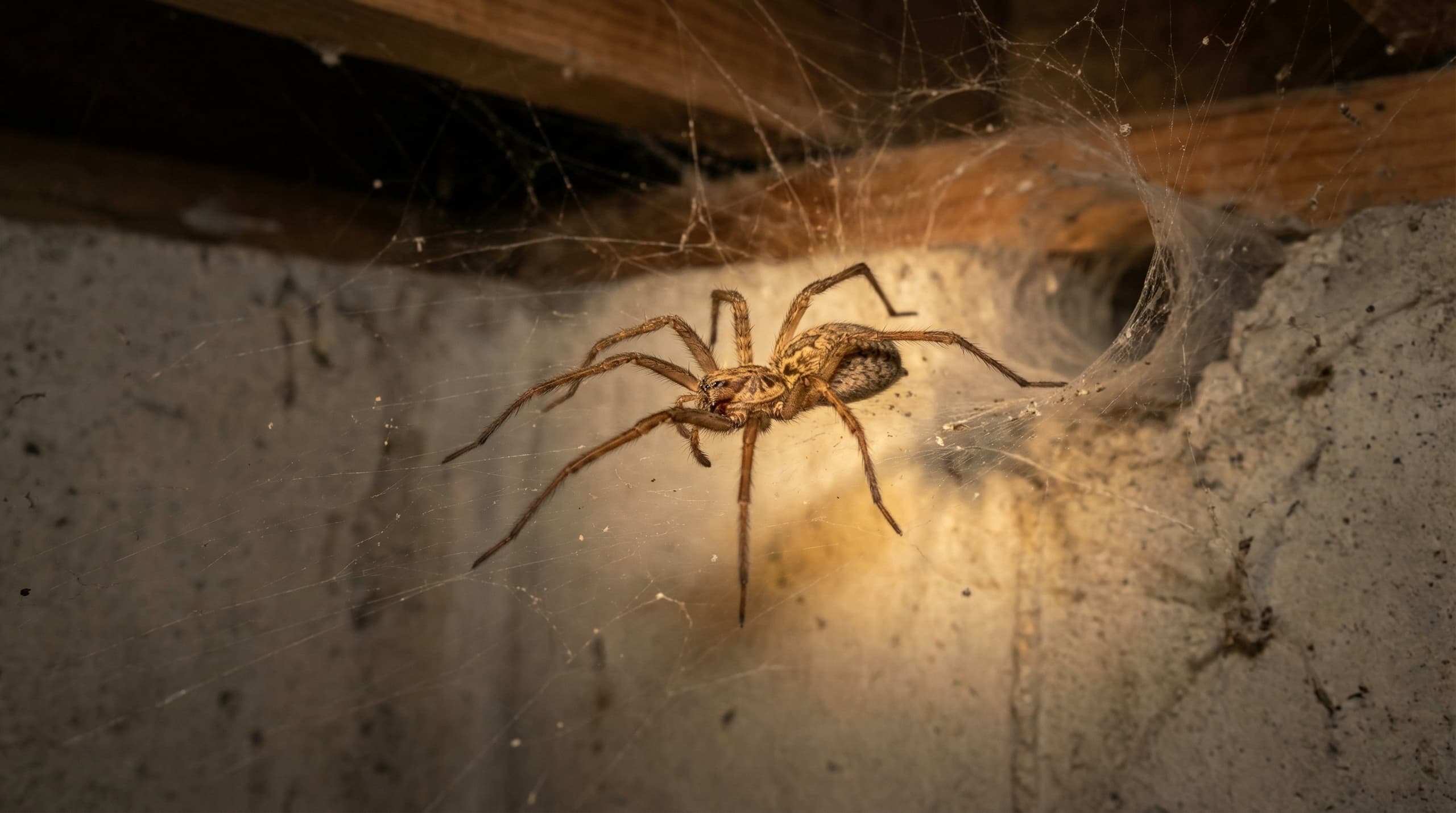
Wolf spiders are the most commonly misidentified spider in Idaho - their size often leads people to assume they're dangerous. They're not.
Identification
- Size: Large, 1/2 to 2 inches including legs
- Color: Brown, gray, or tan with darker stripes or patterns
- Body: Hairy, robust
- Eyes: Two large eyes visible on top of head
- Web: Do NOT build webs to catch prey
- Behavior: Active hunters that chase down prey; fast runners
- Note: Females carry egg sacs and babies on their backs
Why Wolf Spiders Enter Homes
Wolf spiders are beneficial predators that eat cockroaches, crickets, and other pests. Their bite is no worse than a bee sting and only occurs if handled. Consider relocating them outside rather than killing them.
Wolf spiders commonly enter homes in fall:
- Seeking warmth as temperatures drop
- Following prey (other insects) indoors
- Looking for shelter for winter
- More commonly seen at night (nocturnal hunters)
Jumping Spiders: Curious and Harmless
Jumping spiders are considered by many to be "cute" spiders. They're curious and may approach and watch humans. Their excellent vision makes them effective pest hunters, and they pose no threat to people.
Jumping spiders are small, fascinating spiders that often seem to "watch" you with their large front eyes.
Identification
- Size: Small, 1/8 to 3/4 inch
- Color: Variable - often black, brown, or gray with white or colored markings
- Eyes: Very large, forward-facing eyes (best vision of any spider)
- Body: Compact, fuzzy
- Behavior: Move in short, quick jumps; often turn to "look" at you
- Web: Don't build webs to catch prey; use silk only for shelter
Orb Weavers: The Classic Web-Builders
Orb weavers build the classic, circular spiral webs often seen in gardens and around porch lights.
Identification
- Size: Variable, many are quite large (up to 1 inch body)
- Color: Varies by species - often brown, orange, or yellow patterns
- Abdomen: Often large and round
- Web: Distinctive circular/spiral pattern, rebuilt daily or frequently
- Location: Outdoors - gardens, porches, around lights
- Behavior: Wait in center of web or hide nearby
Orb Weaver Behavior
Understanding orb weavers:
- Rarely come indoors - they need space for their webs
- Often build webs near porch lights (attracts prey)
- Not aggressive - will drop from web and run if disturbed
- Webs can be impressive - up to 2 feet in diameter
- Completely harmless to humans; beneficial pest controllers
Grass Spiders (Funnel Web Spiders)
Grass spiders look similar to hobo spiders but have longer, more visible spinnerets and striped legs. If in doubt about identification, capture the spider safely and have it identified by a professional.
Grass spiders build funnel-shaped webs in grass and shrubs. They're often confused with the more concerning hobo spider.
Identification
- Size: Medium, about 1/2 to 3/4 inch body
- Color: Brown with two dark stripes down the back
- Spinnerets: Long, visible spinnerets extending from rear
- Web: Funnel-shaped sheet web with tubular retreat
- Location: Grass, shrubs, ground-level vegetation
- Behavior: Extremely fast; flee when disturbed
Spiders That Warrant Concern
In Idaho, only one spider poses significant danger:
Black Widow
- Identification: Shiny black body with red hourglass on underside
- Location: Dark, undisturbed areas - garages, sheds, irrigation boxes
- Danger: Venomous bite requires medical attention
- Action: Do not approach; call professional for removal
Hobo Spider (Debated)
- Identification: Brown with chevron pattern, solid-colored legs
- Location: Ground level - basements, window wells
- Danger: Medical significance is debated; treat bites seriously
- Action: Worth avoiding; professional identification recommended
When to Call a Professional
Professional spider control works by eliminating spiders AND their food sources. By reducing the insect population around your home, we make it less attractive to spiders. Treatment starts at just $49, with quarterly service at $119 for ongoing protection.
While most house spiders are harmless, consider professional help when:
- You find a black widow - Professional removal is safest
- You have spider anxiety - Peace of mind has value
- Spiders appear in large numbers - Indicates abundant prey (other pest issue)
- You can't identify a spider - Better safe than sorry
- Spiders are in bedrooms or nurseries - Areas where accidental contact is concerning
Need Professional Help?
Get Same-Day Pest Control in Boise
Our local experts are standing by. Guaranteed results or we re-treat for free.