

Key Takeaways
- 1Brown recluse spiders are NOT native to Idaho and are extremely rare in the Pacific Northwest
- 2Wolf spiders are common in Idaho - large, hairy, and harmless to humans
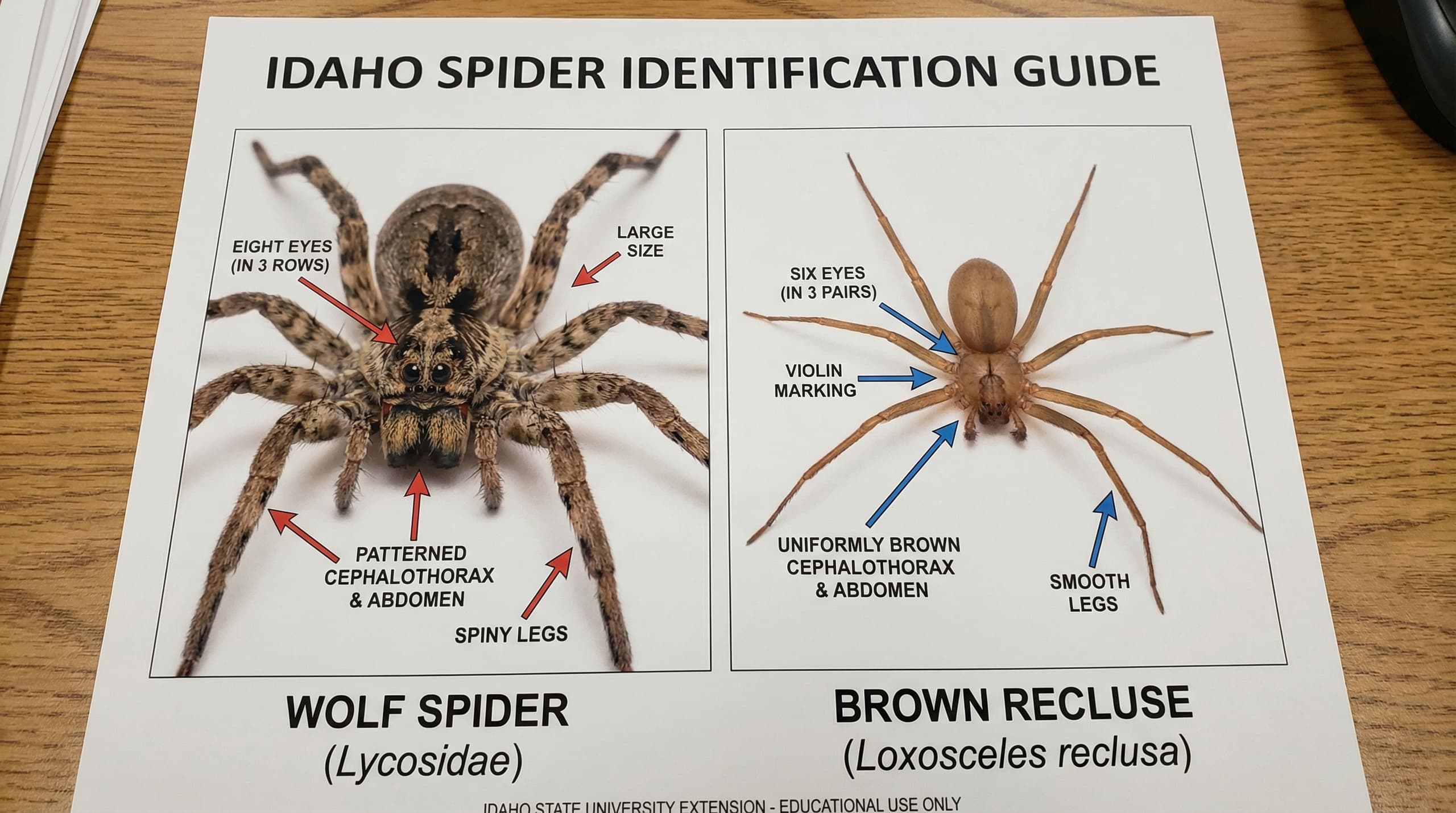
- 3Wolf spiders have eight eyes in three rows; brown recluses have only six eyes in three pairs
- 4Brown recluses have a distinctive violin or fiddle shape on their head; wolf spiders do not
- 5If you see a large brown spider in Idaho, it's almost certainly a wolf spider
The Brown Recluse Myth in Idaho
One of the most common calls pest control companies receive in Idaho is from homeowners convinced they've found a brown recluse spider. The concern is understandable - brown recluse bites can cause serious necrotic wounds. However, here's the truth: brown recluse spiders are NOT found in Idaho.
Brown recluses are native to the south-central and southeastern United States - states like Missouri, Arkansas, Oklahoma, Kansas, and Texas. While isolated specimens may occasionally hitchhike to other states in moving boxes or luggage, established populations don't exist in Idaho or anywhere in the Pacific Northwest.
So what are those large brown spiders Idaho residents keep finding? Almost always, they're wolf spiders - harmless, beneficial predators that are extremely common throughout the Treasure Valley.
Wolf Spider Identification
A quick way to identify wolf spiders: shine a flashlight at them at night. Their large eyes reflect light brilliantly, creating an "eye shine" effect similar to cat eyes.
Wolf spiders are among the most common spiders in Idaho. Despite their intimidating size, they're completely harmless to humans and actually beneficial - they hunt and eat many pest insects.
Physical Characteristics
- Size: Large, 1/2 to 2 inches including legs
- Color: Brown, gray, or tan with darker stripes or mottling
- Body: Hairy, robust body and legs
- Eyes: Eight eyes in three rows - two large eyes on top, four small eyes below, two medium eyes above
- Web: Wolf spiders do NOT build webs to catch prey
- Behavior: Active hunters that chase down prey; fast runners
Wolf Spider Behavior in Idaho
Understanding wolf spider behavior helps explain why they're so commonly encountered:
- Active hunters that roam looking for prey - they don't wait in webs
- Often enter homes in fall seeking warmth or following prey
- Primarily nocturnal, hiding during the day
- Female wolf spiders carry egg sacs attached to their spinnerets
- Mothers carry hatched spiderlings on their backs - can look alarming!
- Not aggressive; will run from humans rather than bite
Brown Recluse Identification (For Comparison)
Even though brown recluses aren't found in Idaho, understanding their appearance helps confirm that the spider you found is something else:
Physical Characteristics
- Size: Smaller than wolf spiders, 1/4 to 3/4 inch body (1.5 inches with legs)
- Color: Uniform light to medium brown - no stripes or mottling
- Body: Smooth, not hairy, with thin legs
- Eyes: Only SIX eyes arranged in three pairs (most spiders have eight)
- Marking: Dark violin or fiddle shape on the head (cephalothorax) - handle points toward abdomen
- Web: Builds irregular, messy webs in undisturbed areas
Quick Comparison: Wolf Spider vs Brown Recluse
Use this quick comparison to identify your spider:
SIZE
Wolf Spider: Large (1/2 to 2 inches) | Brown Recluse: Small (1/4 to 3/4 inch body)
BODY
Wolf Spider: Hairy, striped/mottled | Brown Recluse: Smooth, uniform brown
EYES
Wolf Spider: 8 eyes, two very large | Brown Recluse: 6 eyes in pairs
MARKING
Wolf Spider: Stripes on body | Brown Recluse: Violin shape on head
WEBS
Wolf Spider: Does not build webs | Brown Recluse: Irregular webs
FOUND IN IDAHO?
Wolf Spider: YES - very common | Brown Recluse: NO - not native
Don't Forget the Hobo Spider
If you're concerned about a brown spider in your Idaho home, the most likely candidates are wolf spider (harmless), hobo spider (potentially concerning), or grass spider (harmless). Brown recluse is extremely unlikely.
Another spider commonly confused with the brown recluse in Idaho is the hobo spider. Unlike the brown recluse, hobo spiders ARE found in Idaho and are considered potentially medically significant:
- Appearance: Brown with chevron pattern on abdomen, solid-colored legs
- Size: About 1 to 2 inches including legs
- Habitat: Ground level - basements, window wells, crawl spaces
- Web: Funnel-shaped sheet webs
- Bite: Potentially causes tissue damage (debated in medical literature)
Why Are These Spiders Confused?
Several factors lead to misidentification:
- Color similarity: Both are brown (but wolf spiders have stripes/patterns)
- Fear factor: Large spiders trigger anxiety, leading to assumption of danger
- Media coverage: Brown recluse horror stories are widely shared
- Size perception: Fear makes spiders appear larger; wolf spiders seem "too big to be harmless"
- Limited spider knowledge: Most people can't identify common spider species
Are Wolf Spider Bites Dangerous?
Wolf spiders are beneficial predators that eat cockroaches, crickets, and other pest insects. While you may not want them in your bedroom, they're doing you a favor by patrolling your home for pests.
Wolf spiders can bite if handled or accidentally pressed against skin, but they're not aggressive and bites are rare:
- Bites are comparable to a bee sting - localized pain and swelling
- Not medically significant for most people
- No necrotic (tissue-destroying) properties
- Symptoms typically resolve in a few days without treatment
- Allergic reactions are possible but rare
When to Call a Professional
Professional pest control eliminates spiders AND their food sources. By reducing insects around your home, we make it less attractive to spiders. Treatment starts at just $49, with quarterly protection at $119.
While wolf spiders are harmless, there are situations where professional pest control is warranted:
- Frequent spider sightings - Indicates a larger pest problem (spiders follow prey)
- Spiders in bedrooms or living areas - Where accidental bites are more likely
- You can't identify the spider - Better safe than sorry with venomous species
- Black widows present - Idaho's truly dangerous spider requires professional removal
- Spider anxiety - Peace of mind is valuable; professional treatment reduces population
Need Professional Help?
Get Same-Day Pest Control in Boise
Our local experts are standing by. Guaranteed results or we re-treat for free.