Quick answer
Seven ant species cause almost every ant problem in Boise homes. Odorous house ants (the tiny ones that smell like rotten coconut when crushed) are the most common indoors. Carpenter ants (big and black, 6 to 13 mm) are the most destructive. Pavement ants build dirt mounds in driveway cracks across Treasure Valley subdivisions. Field, harvester, pharaoh, and thief ants round out the list. Identify the species first; treatment changes a lot depending on which one you have.
Key Takeaways
- Odorous house ants are Idaho's #1 indoor invader. Crush one on white paper, smell it, done.
- Carpenter ants are the only species in this guide that destroy wood, and they need professional treatment fast.
- Pavement ants live under slabs and concrete cracks. Spraying the trail does nothing. Bait the colony.
- Field ants and harvester ants are outdoor species you almost never see indoors. Treatment is optional unless they're in a play area.
- Pharaoh and thief ants are rare in Boise single-family homes but show up in apartments and heated commercial buildings.
- Most DIY ant sprays scatter the colony into two or three new colonies. Use the smell test and bait, or call a pro.
In this article

The 7 Idaho Ants You Actually Need to Know
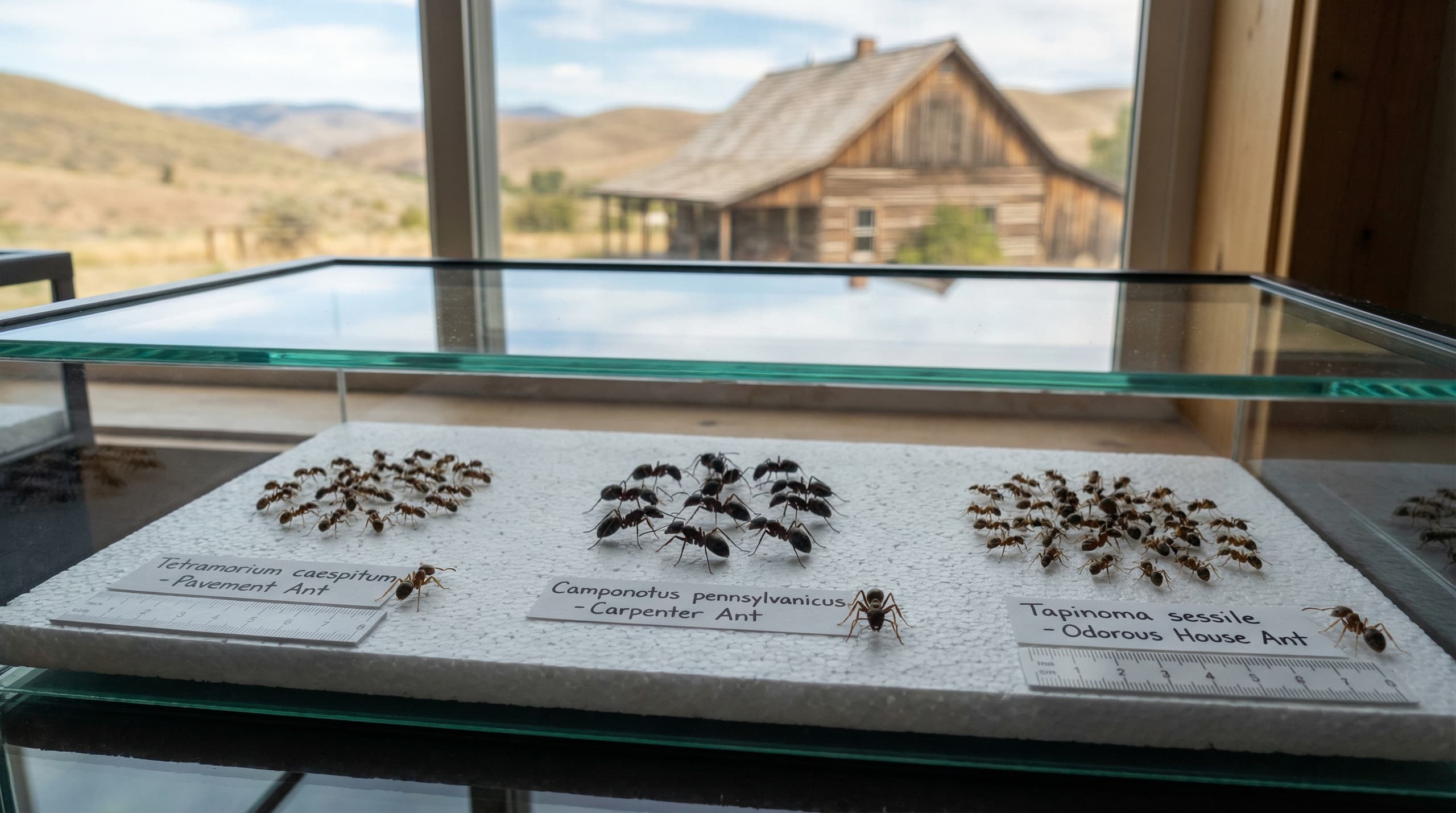
Seven ant species cause almost every ant problem we treat in the Treasure Valley. The other 20 or so that technically live in Idaho rarely make it indoors. Below is the 30-second ID matrix. Use it to narrow down what you have, then jump to that species' section for behavior, where they nest, and what actually kills them.
Sizes are worker-ant lengths in millimeters. A standard staple is about 13 mm wide, so a carpenter ant is roughly the length of one staple.
| Species | Size | Color | Where You See Them | Tell-Tale Sign |
|---|---|---|---|---|
| Odorous house ant | 1.5 to 3.2 mm | Dark brown / black | Boise kitchens, bathrooms, edges of counters | Smells like rotten coconut when crushed |
| Pavement ant | 2.5 to 4 mm | Dark brown / black | Driveway and sidewalk cracks, slab foundations | Tiny dirt mounds between concrete joints |
| Carpenter ant | 6 to 13 mm | Black or red and black | Window frames, baseboards, deck posts, at night | Sawdust-like frass piles below wood |
| Field ant | 4 to 8 mm | Red and black | Lawns, gardens, mulch beds, edges of patios | Low soil mounds in turf, rarely indoors |
| Harvester ant | 5 to 10 mm | Reddish orange | Foothills yards, pastures, gravel driveways | Flat, vegetation-free mound the size of a pizza |
| Pharaoh ant | 1.5 to 2 mm | Yellow / amber | Apartments, hospitals, heated commercial buildings | Tiny yellow trails on warm interior walls |
| Thief ant | 1.3 to 1.8 mm | Pale yellow / tan | Inside cabinets, near other ant nests | Often mistaken for pharaoh ants, but even smaller |
As of June 2026, our technicians are running peak ant season across Boise, Meridian, Eagle, Nampa, and Emmett. Odorous house ants are by far the most common call right now. Carpenter ants are second, and pavement ants are climbing fast as newer subdivisions age and slab cracks open up. For a deeper read on why kitchens get hit first in spring, see why ants invade Boise kitchens in spring.
Odorous House Ants: The #1 Boise Kitchen Invader
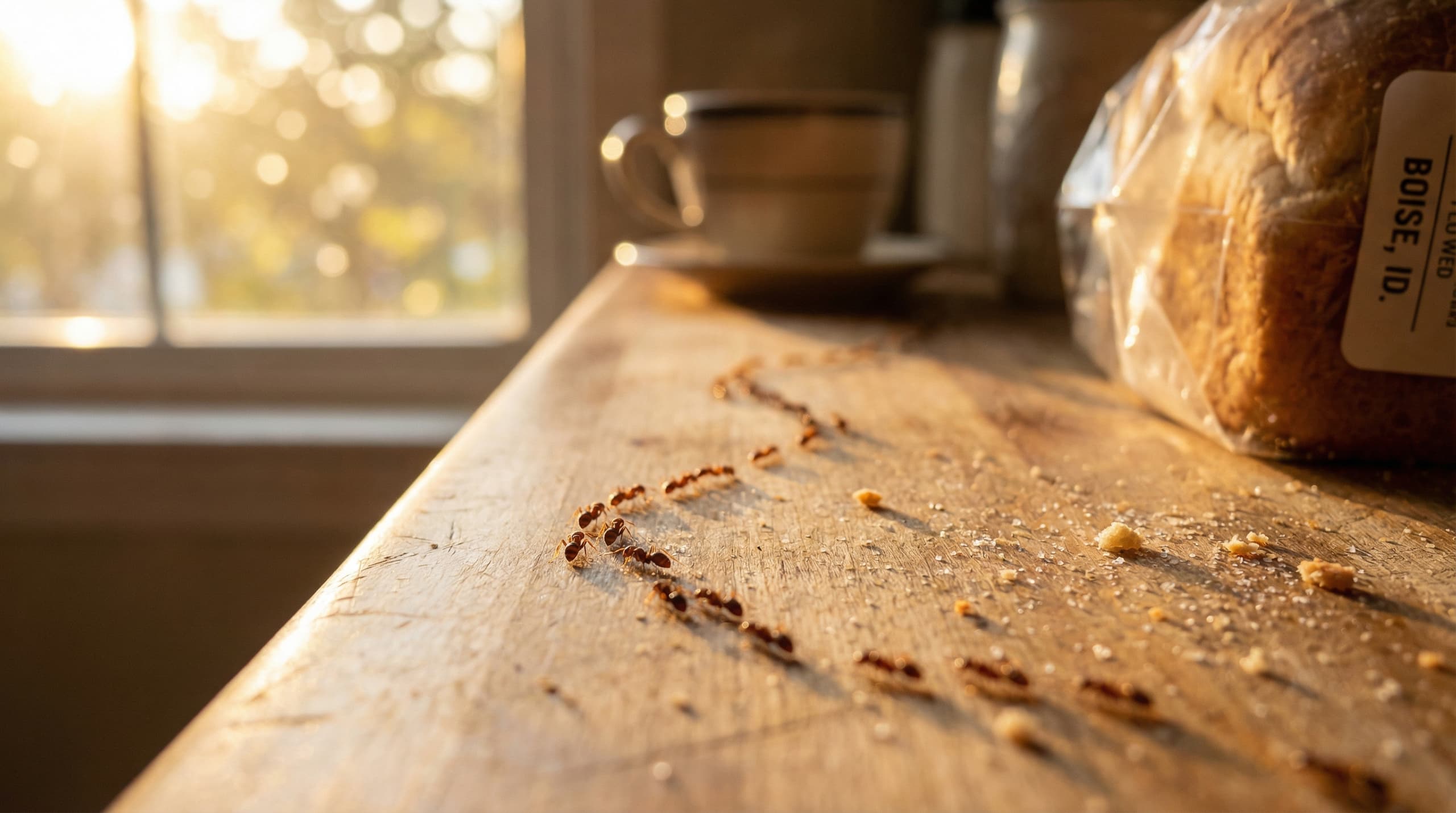
Odorous house ants are tiny dark-brown ants, 1.5 to 3.2 mm long, that smell like rotten coconut when crushed and form long edge-hugging trails along Boise countertops, baseboards, and bathroom plumbing. They are by far the most common ant problem we treat indoors across the Treasure Valley.
Scientifically they are Tapinoma sessile. The smell comes from a chemical called methylheptenone they release when squished. It is the easiest single-test ID in Idaho pest control.
How to ID an odorous house ant in 10 seconds:
- Size: 1.5 to 3.2 mm, about the thickness of a pencil tip
- Color: Uniform dark brown to black, slightly shiny
- Waist: Single node, but it is hidden under the abdomen (looks waist-less from above)
- Smell test: Crush one, sniff. Rotten coconut or blue cheese means positive ID
- Trail behavior: Long, persistent trails along edges and corners, not random wandering
Pavement Ants: The Concrete-Crack Specialists
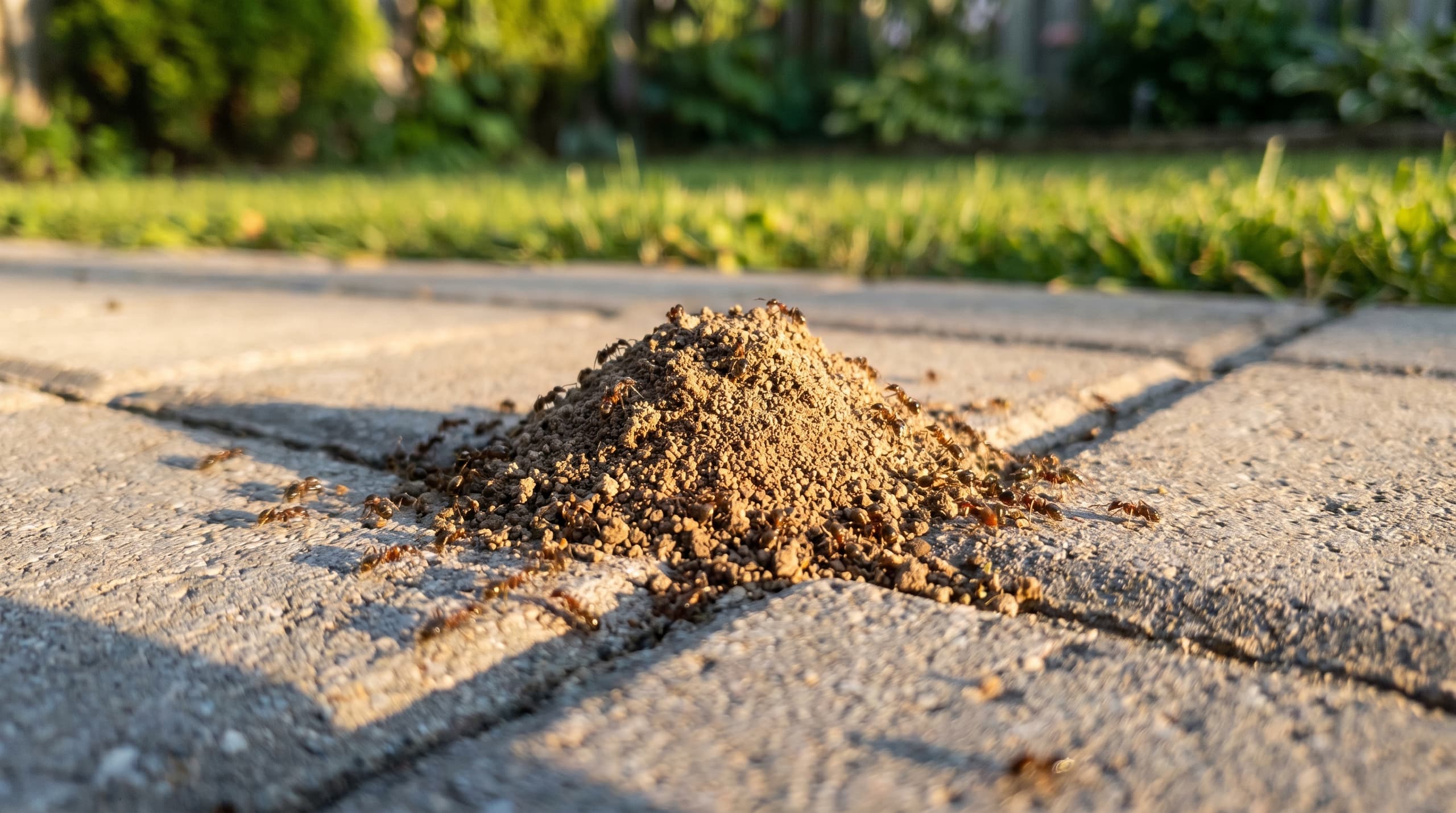
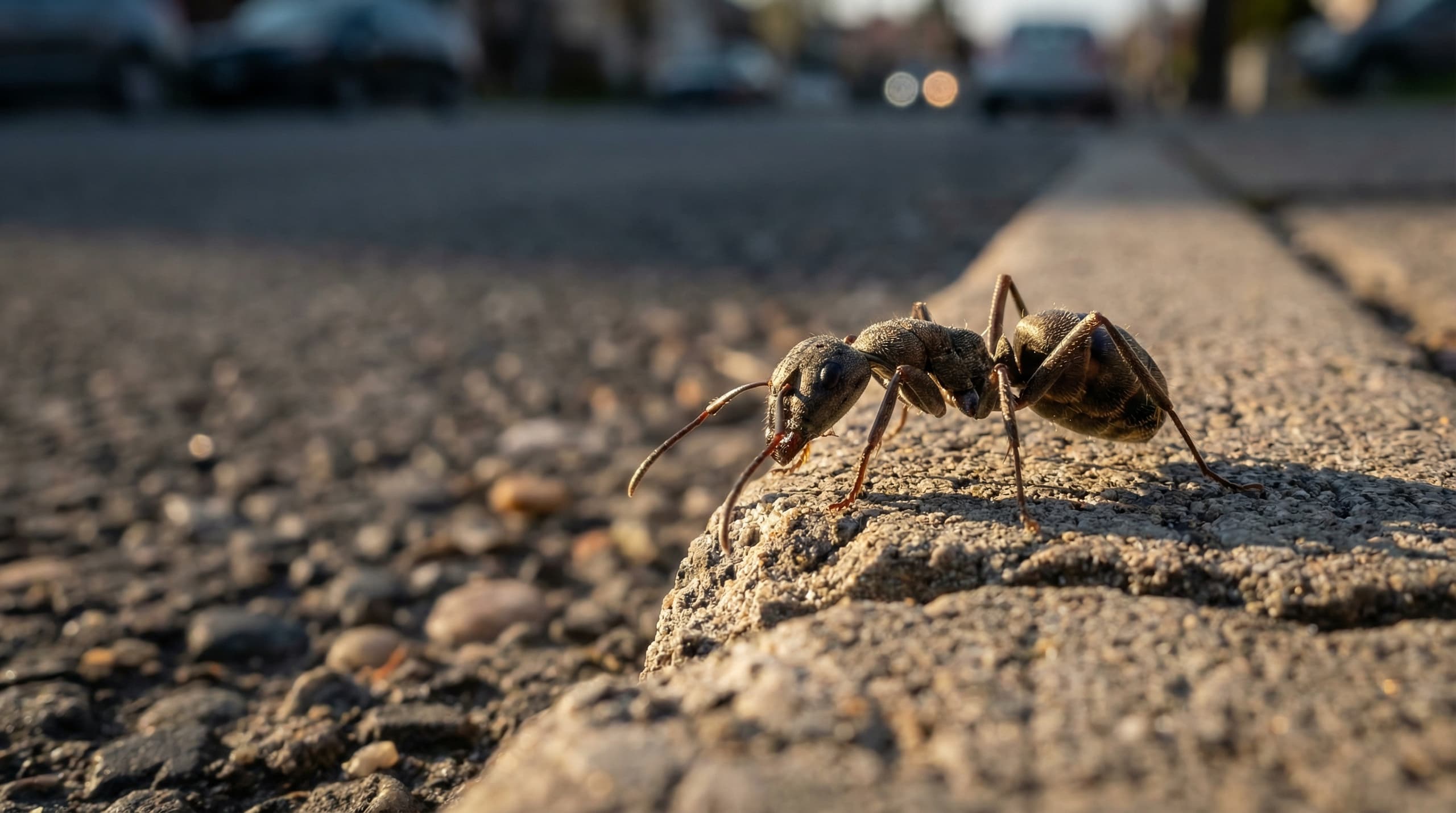
Pavement ants are small dark-brown ants, 2.5 to 4 mm long, that build tiny dirt mounds between cracks in sidewalks, driveways, and slab foundations across Treasure Valley subdivisions. They are the most common ant in new construction zones in Meridian, Eagle, Star, and south Boise.
The species in our area is Tetramorium immigrans (recently reclassified from T. caespitum). Under magnification, you can see distinct parallel grooves on the head and thorax. Field workers nest in soil under concrete and enter homes through expansion joints where slab meets wall.
Where you actually find them in Boise:
- Driveway cracks with small piles of fine soil pushed up between the joints
- Garage floors near the slab edge, especially in subdivisions built since 2015
- Kitchen baseboards when the slab settles and a hairline gap opens at the wall
- Patio pavers and walkways where sand-set joints have washed out. For the full breakdown, see our guide on ants in patio pavers in Boise
- Around bath traps where the plumbing penetrates the slab
Carpenter Ants: The Only Idaho Ant That Destroys Wood
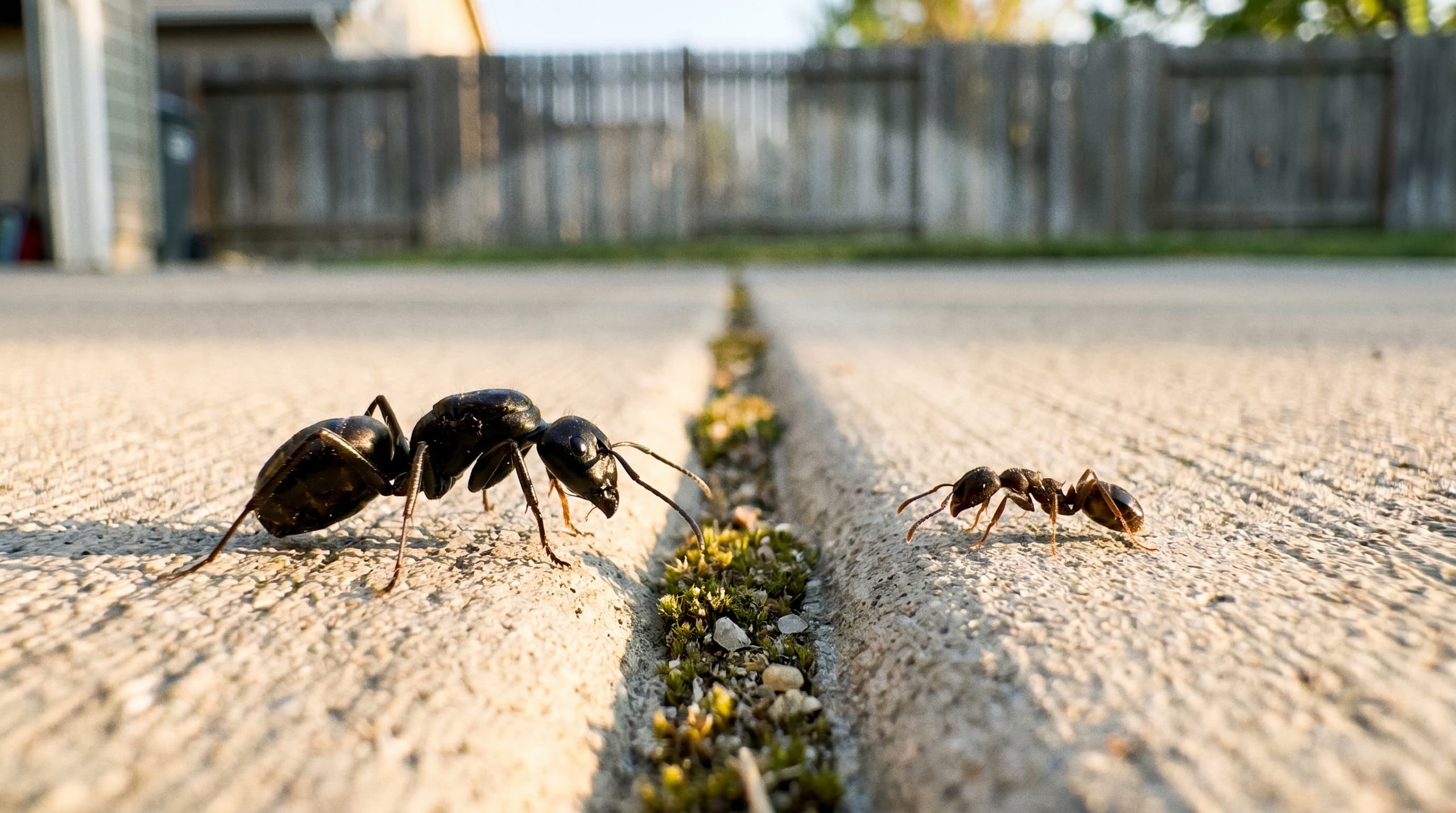
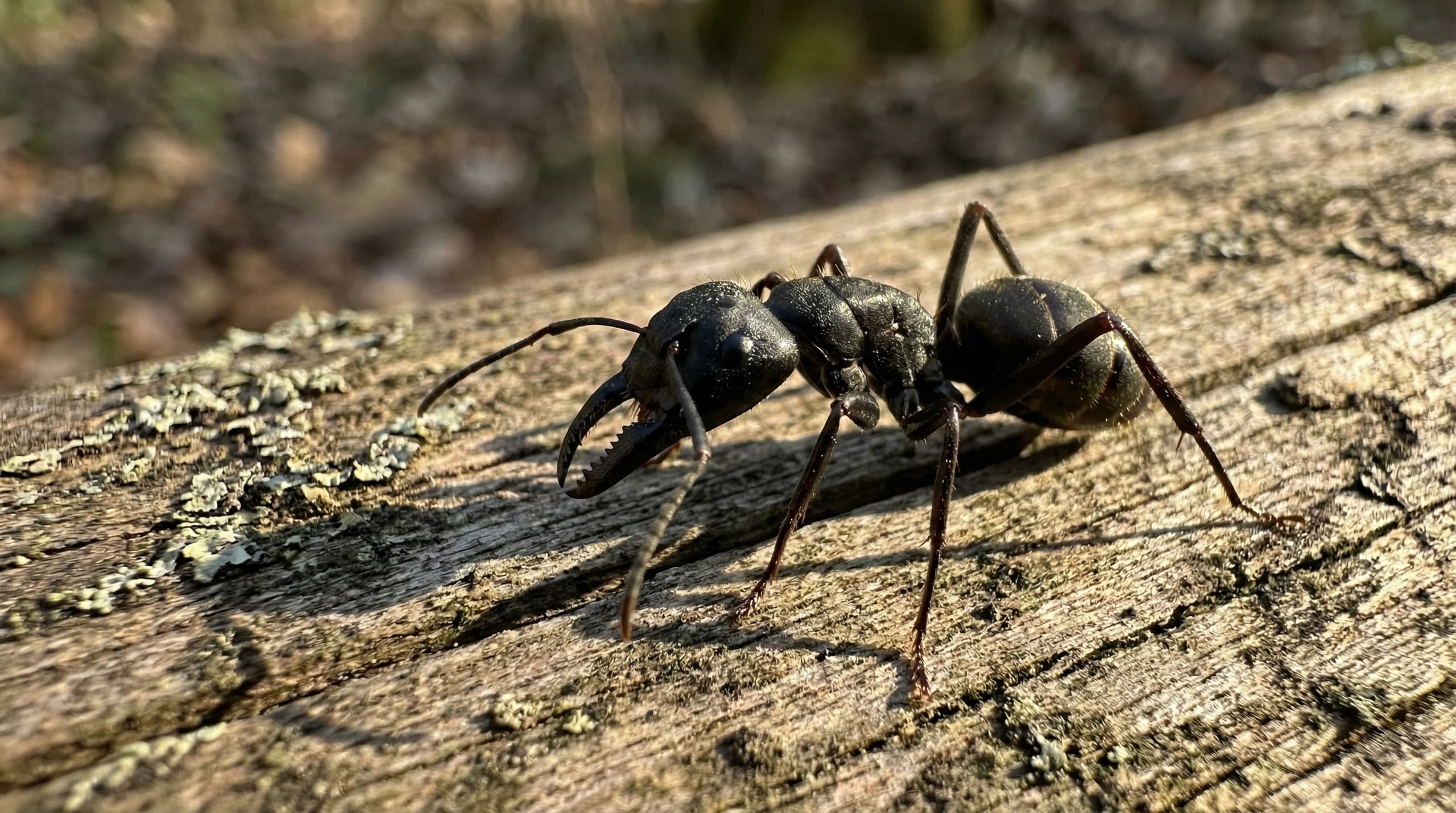
Carpenter ants are large black (or red and black) ants, 6 to 13 mm long, with a single waist node and a smooth, evenly rounded thorax, often spotted at night near baseboards, window frames, and deck posts in Idaho homes. They are the only ant in this guide that actually damages structural wood.
Several Camponotus species live in Idaho. The big black ones (C. pennsylvanicus and C. modoc) are most common in Boise homes. They do not eat the wood. They hollow it out to make galleries for the colony, leaving piles of "frass" (a mix of sawdust and dead ant parts) below the entry hole.
Signs you have a carpenter ant problem, not just a sighting:
- Frass piles under window sills, baseboards, or beam ends. Looks like coarse sawdust with insect parts mixed in
- Rustling sounds in walls or ceilings, especially after dark
- Winged swarmers indoors in spring. These are the reproductive ants leaving an established colony to start new ones
- Sightings at night. Carpenter ants are nocturnal. A flashlight check at 11 PM tells you a lot more than a daytime inspection
- Damp wood nearby. They almost always start in wood that has been wet at some point. Think leaking gutters, deck ledger boards, or window frames behind failing caulk
Field Ants: The Outdoor Lookalike Everyone Thinks Is a Carpenter Ant
Field ants are medium-sized red-and-black ants, 4 to 8 mm long, that build low soil mounds in Boise lawns, mulch beds, and patio edges, and look almost identical to carpenter ants until you check the thorax shape. They are the most common outdoor "big ant" most homeowners see in the Valley.
Field ants are Formica species, the same genus as thatching ants. They almost never come inside on their own. If you are seeing big red-and-black ants in a kitchen, those are far more likely carpenter ants. The lookalike confusion is the main reason this species is in the guide.
The thorax test (Formica vs. Camponotus):
- Carpenter ant thorax: smooth, evenly rounded curve from front to back, like a half-moon
- Field ant thorax: uneven, with a clear dip or notch in the middle of the curve
- Color clue: Field ants are usually two-toned (red head and thorax, black abdomen). Carpenter ants in Idaho are mostly solid black, though one species is bicolored
Harvester Ants: The Foothills Ant With the Worst Sting
Harvester ants are large reddish-orange ants, 5 to 10 mm long, that build flat, vegetation-free mounds the size of a pizza in Foothills yards, pastures, and gravel driveways across the Treasure Valley. Their sting is the most painful of any Idaho ant. Bee-sting class, sometimes worse.
The species you are most likely seeing in our area is the western harvester ant (Pogonomyrmex occidentalis). They almost never enter homes, but their nests can be a real problem for kids, dogs, and bare feet. Worker ants will travel 50+ feet from the mound to forage.
How to spot a harvester ant nest:
- Cleared circle: a 2 to 4 foot ring of bare ground around the mound, completely free of grass and weeds
- Central hole: one main entrance, usually with a small pile of pebbles or seed husks around it
- Foraging trails: visible trails of single-file ants heading out across lawns or driveways
- Active hours: most active in morning and late afternoon. Less active in the hottest part of summer days
Pharaoh Ants: Rare in Boise Houses, Common in Apartments
Pharaoh ants are tiny yellowish-amber ants, just 1.5 to 2 mm long, that show up almost exclusively in heated commercial buildings, hospitals, apartments, and warm interior plumbing chases. They are uncommon in Boise single-family homes but a serious problem when they do appear.
Pharaoh ants (Monomorium pharaonis) are a tropical species that survives in Idaho only inside heated buildings. They cannot overwinter outside in the Treasure Valley. If you see tiny yellow ants in a Boise house, they almost certainly came in with packaging, used furniture, or moved from a neighboring unit.
Why they are a special problem:
- Multiple queens, multiple nests: a single building can have dozens of connected colonies behind drywall, in pipe insulation, and inside electrical outlets
- Bait selectivity is everything: the wrong bait causes budding. A pharaoh colony hit with the wrong product can split into 4 or 5 new colonies the same week
- Sanitation risk: they have been documented carrying salmonella and strep on hospital surfaces. This is the one ant where finding any indoors is worth treating immediately
Thief Ants: The Smallest Ants You'll Find in an Idaho Cabinet
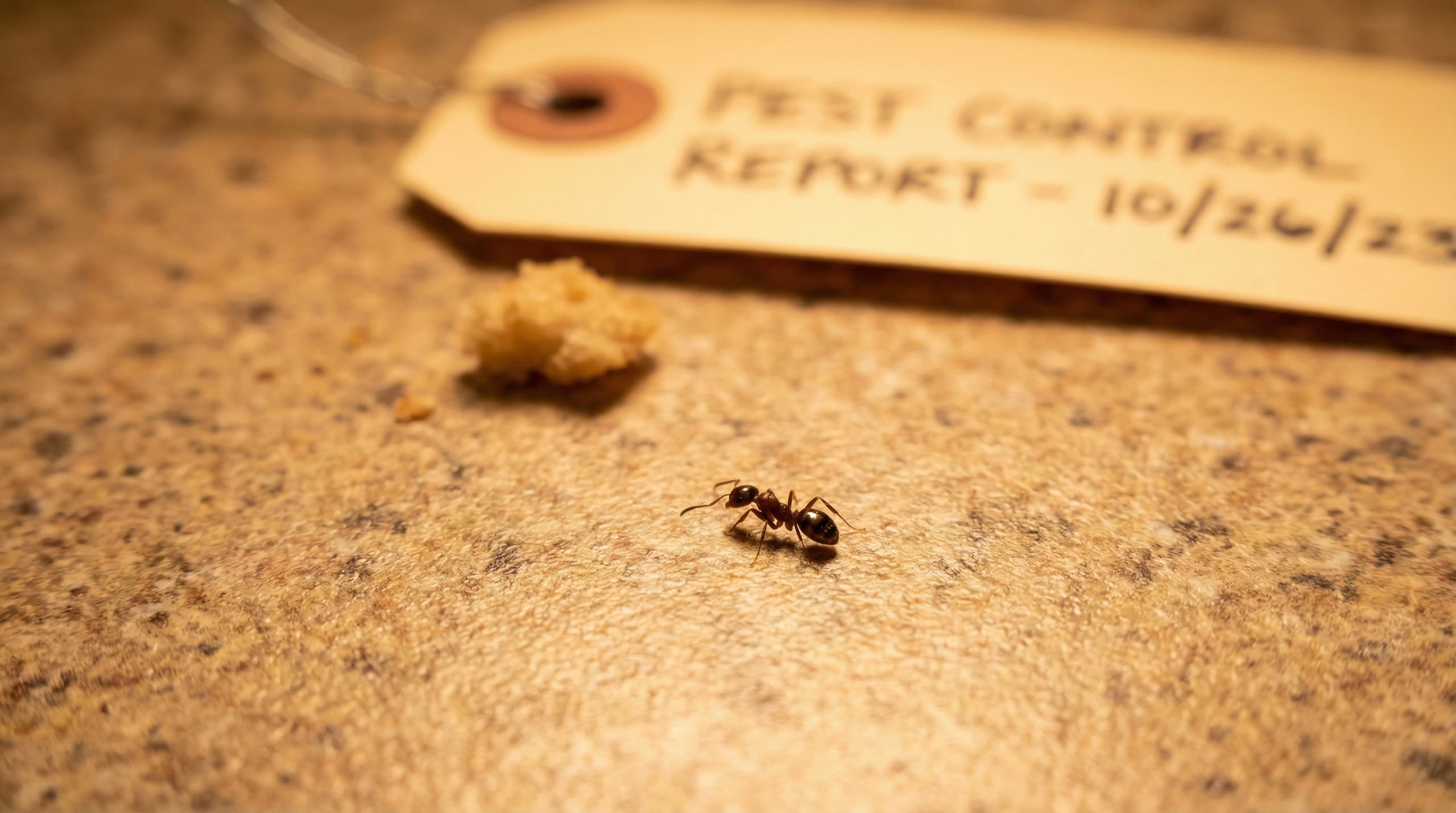
Thief ants are the smallest ants in Idaho homes, only 1.3 to 1.8 mm long and pale yellow to light brown, easily mistaken for pharaoh ants but distinguished by a two-segmented antennal club and a habit of nesting next to other ant colonies to steal their food and brood.
Thief ants (Solenopsis molesta) are native to the western U.S. and pop up regularly in Boise kitchens, especially in older homes with cracked grout or pantry shelving against an exterior wall. Most people miss them entirely because they are so small they look like dust moving.
Thief ant vs. pharaoh ant (under magnification):
- Antennal club: thief ants have a 2-segment club at the antenna tip. Pharaoh ants have a 3-segment club
- Color: thief ants are slightly darker, more tan than yellow
- Habitat: thief ants will live outdoors in Idaho. Pharaoh ants will not
- Diet preference: thief ants love greasy, oily, and protein-rich foods. Bacon grease, peanut butter, pet food. Pharaoh ants prefer sweets
Why DIY Sprays Fail Differently for Each Species
Hardware store ant sprays kill the visible ants and almost nothing else. For three of the seven species on this list, spraying actually makes the infestation worse by triggering colony budding. Here is what fails, and why, species by species.
This is the section most homeowners skip and most regret. After 10 years treating ants across the Treasure Valley, we can tell within five minutes of walking into a Boise home whether DIY made the problem twice as hard to solve.
- Odorous house ants: spraying scatters multi-queen colonies into satellite colonies. Use slow-acting sweet bait so workers carry it home
- Pavement ants: spraying the trail does nothing because the queen lives under the slab. Bait at the trail entry point, not at the foragers
- Carpenter ants: DIY rarely reaches the nest behind drywall or in a wall void. By the time you see foragers, you have a structural problem. Professional only
- Field ants: mostly harmless, and they rarely come inside. You still don't want mounds by the foundation or in a play area. Our perimeter barrier keeps them from moving closer
- Harvester ants: granular bait works, but the sting risk during DIY treatment is real. Worth a pro visit if there are kids or pets
- Pharaoh ants: spraying is the #1 mistake. It triggers immediate budding. Bait selection is technical and species-specific
- Thief ants: sweet bait fails because they prefer protein and grease. Most consumer ant baits are sugar-based, which is why DIY rarely works on this species
When to Stop Trying and Call Green Guard
Some ant situations are not DIY situations. If you see any of these in your Treasure Valley home, the cheapest path is to call us, not buy another can of spray.
Call (208) 297-7947 or start with our $49 first treatment if you see any of the following:
- Large black ants indoors at night (likely carpenter ants)
- Winged ants emerging inside in spring (a swarm event from an established colony)
- Sawdust-like piles below window sills, baseboards, or deck framing
- Persistent trails that come back within 48 hours of DIY treatment (colony budding)
- Ants in a commercial kitchen, daycare, or medical office
- Tiny yellow ants in an apartment or condo (possible pharaoh ants)
- Any harvester ant mound where kids or pets play
Ant Prevention Basics for Boise Homeowners
Once the colony is gone, these basics keep new colonies from setting up shop. None of these are revolutionary. They just work, and our techs have watched them work across 2,500+ Treasure Valley homes.
- Caulk visible cracks around the foundation, slab joints, and door thresholds. Pavement ants find every gap
- Fix the slow leak under the kitchen sink. Wet wood is what brings carpenter ants in
- Move firewood and mulch piles at least 3 feet away from the house wall
- Trim shrubs back so branches do not touch siding. Branches are ant highways
- Clean the trash can lid and the recycling bin monthly. Sugar residue is a beacon
- Run a quarterly exterior barrier treatment from April through October. The Valley's peak ant pressure runs from late March through early October
Frequently Asked Questions
What is the most common ant in Boise homes?
Quick answerOdorous house ants are by far the most common ant in Boise homes.
They are tiny (1.5 to 3.2 mm), dark brown to black, and smell like rotten coconut when crushed. They form long trails along countertop edges and baseboards and are active March through October in the Treasure Valley.
How do I know if I have carpenter ants or just big regular ants?
Quick answerCarpenter ants are 6 to 13 mm long with a smooth, evenly rounded thorax (no dip or notch in the curve) and a single waist node.
If you see large black ants indoors at night, sawdust-like frass below wood, or winged ants in spring, those are carpenter ants and they need professional treatment. Field ants and thatching ants look similar but stay outdoors and rarely cause structural damage.
Why do ants keep coming back after I spray them?
Quick answerMost hardware store ant sprays only kill the visible foragers, not the queen.
For odorous house ants, pavement ants, and pharaoh ants, the spray actually triggers "colony budding," where the stressed colony splits into two or three new colonies. This is why DIY sprays often make the problem worse within a week. Professional baits work because the foragers carry them back to the queen.
Are there fire ants or red imported fire ants in Idaho?
Quick answerNo.
Red imported fire ants do not live in Idaho. Our climate is too cold for them to establish colonies. If you've been stung by a small red ant in the Treasure Valley, it was almost certainly a western harvester ant. The sting is painful but the species is very different biology.
How much does professional ant control cost in Boise?
Quick answerGreen Guard's initial ant treatment starts at $49 when you sign up for ongoing quarterly protection.
Quarterly visits run $119 for homes up to 2,500 sq ft, $139 for 2,501 to 4,000 sq ft, and $159 for 4,001 to 5,500 sq ft. The first visit includes inspection, species ID, interior and exterior treatment, and a free re-service guarantee between scheduled visits.
What month do ants come out in Idaho?
Quick answerIn the Treasure Valley, ant activity starts in mid-March as soil temperatures climb above 50 degrees Fahrenheit.
Foraging peaks from late April through July. Carpenter ant swarmers usually emerge inside heated homes between late March and mid-May. Pavement ants are the first to show up in driveway cracks, often by early April.