

Key Takeaways
- 1Store all food in airtight containers - including pet food and pantry staples
- 2Clean counters and floors daily - even tiny crumbs attract scout ants
- 3Seal gaps around pipes, windows, and where cabinets meet walls
- 4Fix leaky faucets and pipes - ants need water as much as food
- 5Take out garbage daily and keep bins sealed with tight lids
- 6Professional quarterly treatment at $119 provides the most reliable long-term protection
Why Kitchens Are Ant Magnets
Your kitchen offers everything ants need to survive: food, water, and shelter. In the Treasure Valley, we see ant activity in kitchens year-round, with peak invasions from March through October when colonies are most active.
The most common kitchen invaders in Boise homes are odorous house ants (they smell like rotten coconut when crushed), pavement ants (small black ants that create trails along counters), and occasionally carpenter ants (large black ants that may indicate structural issues).
Understanding what attracts ants helps you create an environment they will avoid. A single scout ant that finds food in your kitchen will leave a pheromone trail that brings hundreds more within hours. This is why seeing even one ant should prompt immediate action.
Idaho homes face unique challenges due to our dry climate. Ants are especially motivated to find water sources indoors, making kitchens prime targets. During hot summer months, ant activity increases dramatically as colonies expand and foragers range farther from nests searching for resources.
Food Storage: Your First Line of Defense
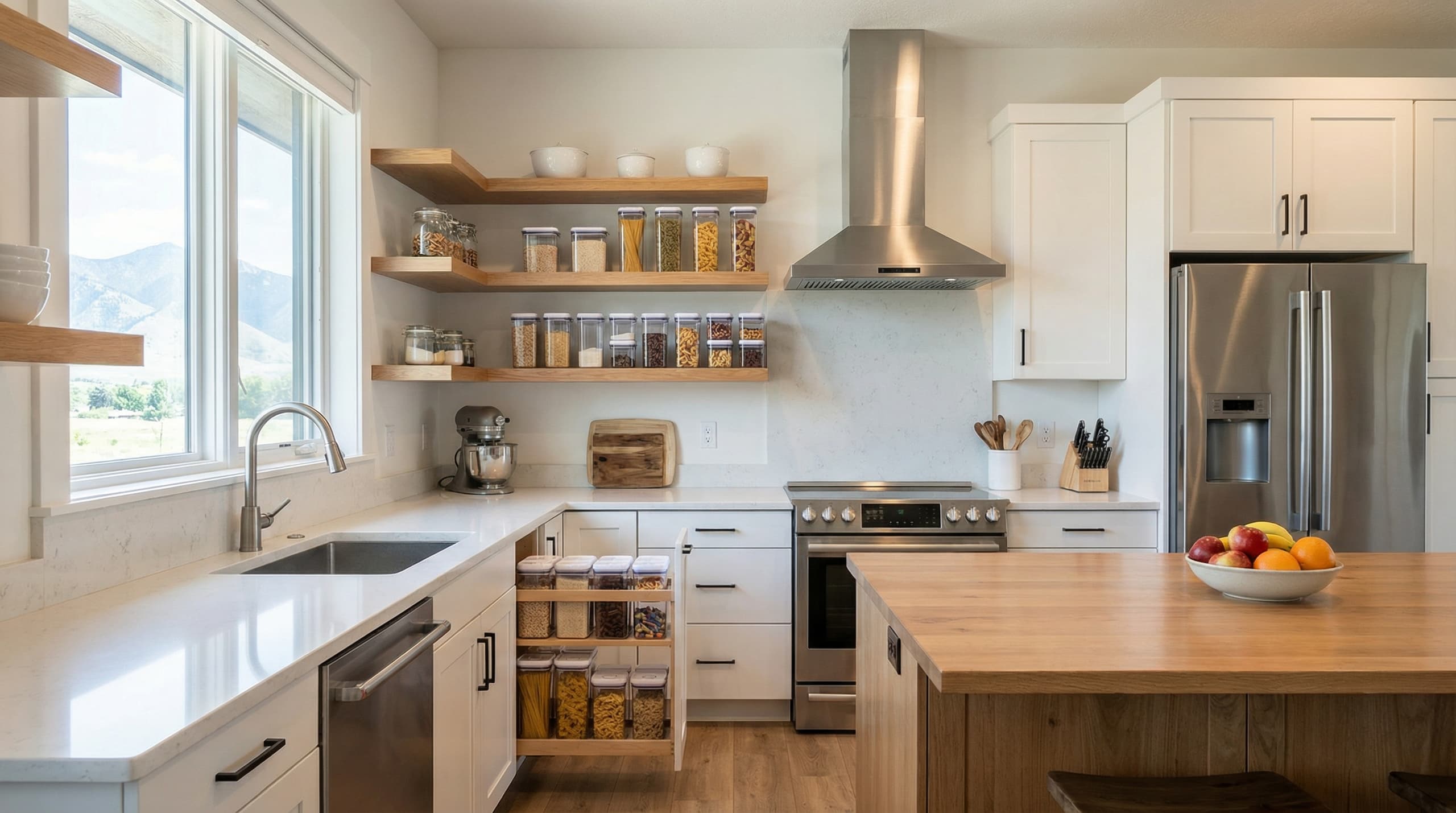
Invest in a set of matching airtight containers for your pantry. Not only do they prevent pest access, but they also keep food fresher longer and make your pantry more organized.
Proper food storage eliminates the primary reason ants enter your kitchen. Even foods you might not consider attractive to ants - like flour, cereal, and coffee - can draw them in. Ants have incredibly sensitive chemical receptors that detect food particles invisible to humans.
The key is creating an impenetrable barrier between food and foraging ants. This means rethinking how you store everything in your kitchen, from pantry staples to fresh produce.
- Transfer pantry items to airtight containers - Glass or thick plastic containers with rubber seals work best. Mason jars are excellent and affordable.
- Store fruit in the refrigerator - Fruit bowls on counters are ant magnets, especially in summer when fruit ripens and releases attractant odors.
- Seal pet food between feedings - Do not leave pet bowls out 24/7. Store kibble and treats in sealed containers with locking lids.
- Keep sugar and honey in sealed containers - These high-sugar items are irresistible to ants. Consider refrigerating honey.
- Store bread in airtight containers or the freezer - Bread bags do not stop determined ants.
- Secure cooking oils and syrups - Residue on bottle exteriors attracts ants. Wipe containers after each use.
Daily Cleaning Habits That Prevent Ants
Consistent cleaning removes the food traces that attract ants. Even microscopic residues can draw scout ants into your kitchen. Think of cleaning as erasing the road map ants use to navigate to food sources.
When you clean with the right products, you destroy their chemical communication system and force scouts to start from scratch looking for food.
- Wipe counters after every meal preparation - Use a vinegar-water solution (50/50 mix) which disrupts pheromone trails and has mild antimicrobial properties.
- Sweep or vacuum floors daily - Pay special attention to under the stove, refrigerator, and dining table where crumbs accumulate.
- Clean dirty dishes immediately - Do not leave dishes in the sink overnight. Rinse all dishes before placing in the dishwasher.
- Wipe down stovetops and appliance surfaces - Grease splatters and food residue attract ants. Clean behind countertop appliances weekly.
- Clean inside cabinets monthly - Spilled sugar, flour, and crumbs accumulate over time in cabinet corners.
- Empty and clean the garbage disposal - Food residue in disposals attracts ants. Run ice cubes and citrus peels through weekly.
- Wipe down cabinet fronts and handles - Sticky residue from cooking transfers to these surfaces.
Seal Common Kitchen Entry Points
Use clear silicone caulk for visible areas. For larger gaps, stuff copper mesh into holes before caulking - ants cannot chew through copper mesh like they can steel wool.
Ants enter through surprisingly small openings - gaps as small as 1/16 inch are large enough for most ant species. A thorough inspection and sealing of entry points is essential for long-term prevention.
Most kitchen entry points are where different building materials meet: where pipes penetrate walls, where cabinets attach to walls, and around window and door frames.
- Gaps around plumbing pipes - Check under the sink where pipes enter the wall. Use expanding foam for larger gaps and caulk for smaller cracks.
- Window and door frames - Inspect weatherstripping and caulk around kitchen windows. Replace worn weatherstripping annually.
- Where cabinets meet walls - Small gaps often exist at the top and bottom of cabinets. These are hidden highways for ants.
- Around electrical outlets - Remove covers and seal gaps with fire-rated caulk. This is a commonly overlooked entry point.
- Cracks in tile grout or baseboards - Re-grout or caulk any visible cracks. Pay attention to where tile meets cabinets.
- Around range hood vents - The ductwork connection to exterior walls often has gaps.
- Under the sink - Where the cabinet floor meets the wall is often poorly sealed.
Control Moisture to Discourage Ants
Ants need water to survive, and your kitchen provides multiple water sources. In Idaho's dry climate, this makes kitchens even more attractive to foraging ants. Eliminating moisture removes one of the three essential resources ants seek.
Many ant species are more attracted to water than food, especially during dry spells. Addressing moisture issues is often the key to stopping persistent ant problems.
- Fix dripping faucets immediately - Even slow drips provide enough water for ant colonies. A drip every few seconds adds up to significant water availability.
- Repair leaky pipes under sinks - Check for moisture and water damage regularly. Feel pipes and look for mineral deposits indicating slow leaks.
- Use your range exhaust fan - Reduces humidity from cooking. Run for 10-15 minutes after cooking to remove moisture.
- Empty and dry sink basins at night - Do not leave standing water in sinks. Wipe sinks dry before bed.
- Wipe condensation from cold surfaces - Water glasses and ice dispensers create moisture attractants.
- Check dishwasher seals - Worn door gaskets can allow moisture to escape, attracting ants.
- Address signs of water damage - Soft spots, discoloration, or musty odors indicate moisture problems.
Natural Deterrents and DIY Methods
Natural deterrents have significant limitations. They may temporarily repel foraging ants but will not eliminate an established colony. For active infestations, professional treatment is necessary.
While natural deterrents will not solve an established ant problem, they can supplement other prevention methods and help deter scout ants. These methods work best as part of a comprehensive strategy, not standalone solutions.
Many homeowners prefer starting with natural approaches. Understanding what works - and what does not - helps you make informed decisions.
- Vinegar cleaning solution - A 50/50 mix of white vinegar and water disrupts pheromone trails when used for regular cleaning.
- Peppermint oil - A few drops mixed with water and sprayed along baseboards may deter ants temporarily. Refresh weekly.
- Cinnamon - Sprinkled at entry points can disrupt ant trails, but needs frequent reapplication.
- Citrus peels - Placed near entry points may deter some ant species. Replace when dried out.
- Diatomaceous earth (food grade) - Applied in dry areas, this damages ant exoskeletons. Loses effectiveness when wet.
- Coffee grounds - Some homeowners report success placing used grounds near entry points.
When to Call a Professional
Green Guard quarterly pest control service starts at just $49 for your first treatment, then $119 per quarter. This provides year-round protection against ants and 30+ other common Idaho pests. We guarantee our results - if pests return between services, so do we at no extra charge. We also offer free re-service if problems occur between regular treatments.
Sometimes prevention is not enough, or you are dealing with an established colony that DIY methods cannot eliminate. Knowing when to call for professional help saves time, money, and frustration.
Call Green Guard Pest Control at (208) 297-7947 right away if you experience any of the following situations:
- You see ants daily despite thorough cleaning efforts - Indicates a nearby colony that needs professional treatment with commercial-grade products.
- Large black ants appear (carpenter ants) - May signal structural damage requiring immediate attention. Carpenter ants can cause thousands in damage.
- Ant trails reappear within days of cleaning - The colony is too close or too large for DIY methods to control.
- You find ants in multiple rooms - The infestation has spread beyond the kitchen and may indicate multiple entry points or nesting sites.
- Spring ant swarms appear (flying ants indoors) - Flying ants indicate a mature colony nearby, possibly in your walls.
- DIY treatments make the problem worse - Some ant species "bud" when disturbed, creating multiple colonies from one.
- You have recurring seasonal invasions - Annual ant problems indicate conditions that attract ants year after year.
Need Professional Help?
Get Same-Day Pest Control in Boise
Our local experts are standing by. Guaranteed results or we re-treat for free.