Quick answer
August and September are the most dangerous months for wasps in Boise, not spring. Yellow jacket colonies now hold 1,000 to 5,000 workers, natural food is drying up, and the colony scavenges hard to feed a final wave of new queens. That is when Treasure Valley families get stung. Never disturb a mature nest on your own. Call Green Guard at (208) 297-7947, and same-day wasp removal is often available.
Key Takeaways
- August and September are peak wasp aggression season in Boise, driven by huge colonies and shrinking food supply
- Yellow jacket colonies in the Treasure Valley can hit 1,000 to 5,000 workers by late August
- Food scarcity in late summer is why wasps swarm picnics, trash cans, and pet food more aggressively than they did in June
- Never DIY a mature yellowjacket nest. A single failed spray can trigger dozens of stings
- Same-day wasp removal is often available in Boise, Meridian, Eagle, Nampa, and Kuna: (208) 297-7947
In this article

Why Late Summer Is the Most Dangerous Wasp Season in Boise
August and September are the most dangerous months of the year for wasps in the Treasure Valley. Not spring. Not July. Right now. Colonies in Boise, Meridian, Eagle, Nampa, and Kuna are at their absolute biggest, and the food supply that fed them all summer is drying up fast.
Here is what is really happening in your yard this week. Paper wasp colonies are topped out at 20 to 75 workers. Western yellow jacket colonies are running 1,000 to 5,000 workers strong. Wild insect prey is thinning out. Overripe fruit is falling. The colony has one final job left before the first hard frost kills everyone but next year's queens: raise a batch of new reproductive queens and males.
That mission makes them mean. Late summer wasps switch from hunting caterpillars to scavenging protein and sugar wherever they can find it. Your grill. Your kid's popsicle. The pet bowl on the back patio. And every worker defends the nest like it is the last thing she will ever do, because for most of them, it is.
Since 2010, we've watched summer wasps get meaner as the season goes on. Not because more nests appear (they were built in April) but because the ones that were there all along are finally big enough, hungry enough, and defensive enough to hurt someone. Our call and web request log shows the summer climb: we logged 52 calls and online requests where the pest was recorded as wasps from July to September 2026, up from 28 from April to June 2026.
What Month Are Wasps Most Aggressive in Idaho?
Wasps in Idaho are at peak aggression in late August and September. That is when western yellow jacket colonies hit their maximum size of 1,000 to 5,000 workers, and it is also when their natural food supply collapses. Hungry wasps defending a huge colony are the ones that put people in urgent care.
Aggression is not random. It follows a predictable curve tied to colony size and food availability. Here is the short version for the Treasure Valley:
- April and May. Very low aggression. Solo queens are building starter nests and cannot afford to fight anyone. Perfect knockdown window.
- June. Low. The first 5 to 15 workers are alive and will defend the nest if bumped, but they are still small in number.
- July. Moderate. Colonies of 100 to 500 workers exist. Nests near doorways start to feel dangerous, but wild prey is still plentiful.
- Late August. High. Colony peaks. Food gets short. This is when unsolicited stings start happening at picnics, garbage cans, and hummingbird feeders.
- September. Highest. New queens hatch, workers scavenge desperately, and any disturbance triggers a mass defensive response. This is the worst month to mess with a nest.
- October. Dropping. First hard frost kills the workers and the old queen. New queens fly off to overwinter alone.
The Yellow Jacket Food Scarcity Trigger
The main reason late summer wasps feel so much more aggressive than June wasps is not a personality change. It is math. A yellow jacket colony that reached 3,000 workers by August needs a huge and constant flow of protein to feed the last round of brood. When wild insects thin out (and by mid-August in the Treasure Valley they always do), that colony sends every free worker out looking for anything that will fit in her jaws.
That is why yellow jackets suddenly show up at your BBQ, your open beer, your kid's juice pouch, and the trash bins outside every Boise restaurant patio in late August. It also explains why they are so willing to sting. In June, a worker on prey patrol will fly away if you swat at her. In September, she is guarding the colony's last chance to reproduce, and she has thousands of sisters ready to back her up if anything goes wrong.
Two behaviors get worse fast in this window:
- Scavenging near people. Workers ignore the 10-foot personal space bubble they respected in June and land right on your food.
- Group defense. One stung yellow jacket releases a pheromone that pulls in every worker within 20 feet. That is how a single sting turns into a dozen.
- Ground-nest defense. Late-season yellow jackets defend the entry hole to their underground nest from a much wider radius. Lawn mowers, weed eaters, and even foot traffic within 10 feet can set them off.
How Big Are Boise Wasp Nests Right Now?
A Boise wasp nest that was a walnut in April is a basketball in August. Here is the year-so-far timeline for the Treasure Valley, based on average soil and air temps we have tracked this season:
Late March to mid-April: Queens emerged and scouted. You might have seen a single wasp hovering around your eaves.
Mid-April to May: Solo queens built starter nests of 6 to 10 cells. Golf-ball sized. Ideal knockdown window that most homeowners missed.
June: First 5 to 15 workers emerged. Colony became self-sustaining. The queen stopped leaving the nest.
July: Colony hit 100 to 500 workers for yellow jackets, 20 to 40 for paper wasps. Growth curve went vertical.
Right now (August): Paper wasp nests are softball to grapefruit sized with 20 to 75 workers. Yellow jacket colonies hidden in walls, attic voids, or ground holes are running 1,000 to 3,000+ workers. This is where you are today.
September: Colonies peak. New queens hatch. Aggression maxes out.
October: First hard frost usually hits Boise between October 10 and October 25. Workers die. Queens overwinter under bark, in wood piles, and in attic corners. Then the cycle restarts.
Paper Wasps vs. Yellow Jackets: Which Wasps Are in Your Boise Yard?
The two wasp species you will encounter most in Boise are paper wasps and western yellow jackets. They look different, nest in different places, and require completely different late-summer responses. Knowing which one you have changes everything about how safe DIY is (or is not).
Paper Wasps in August
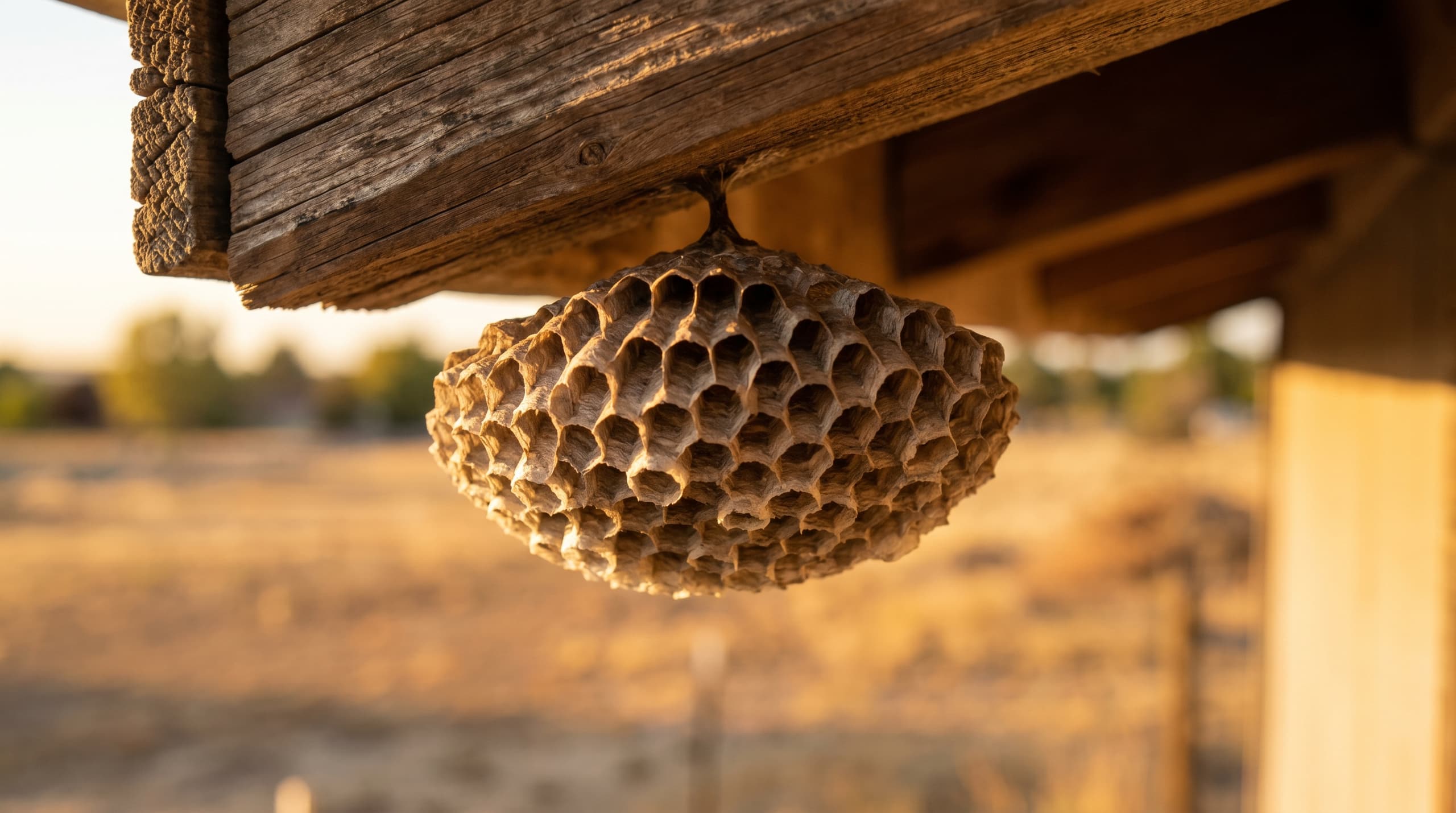
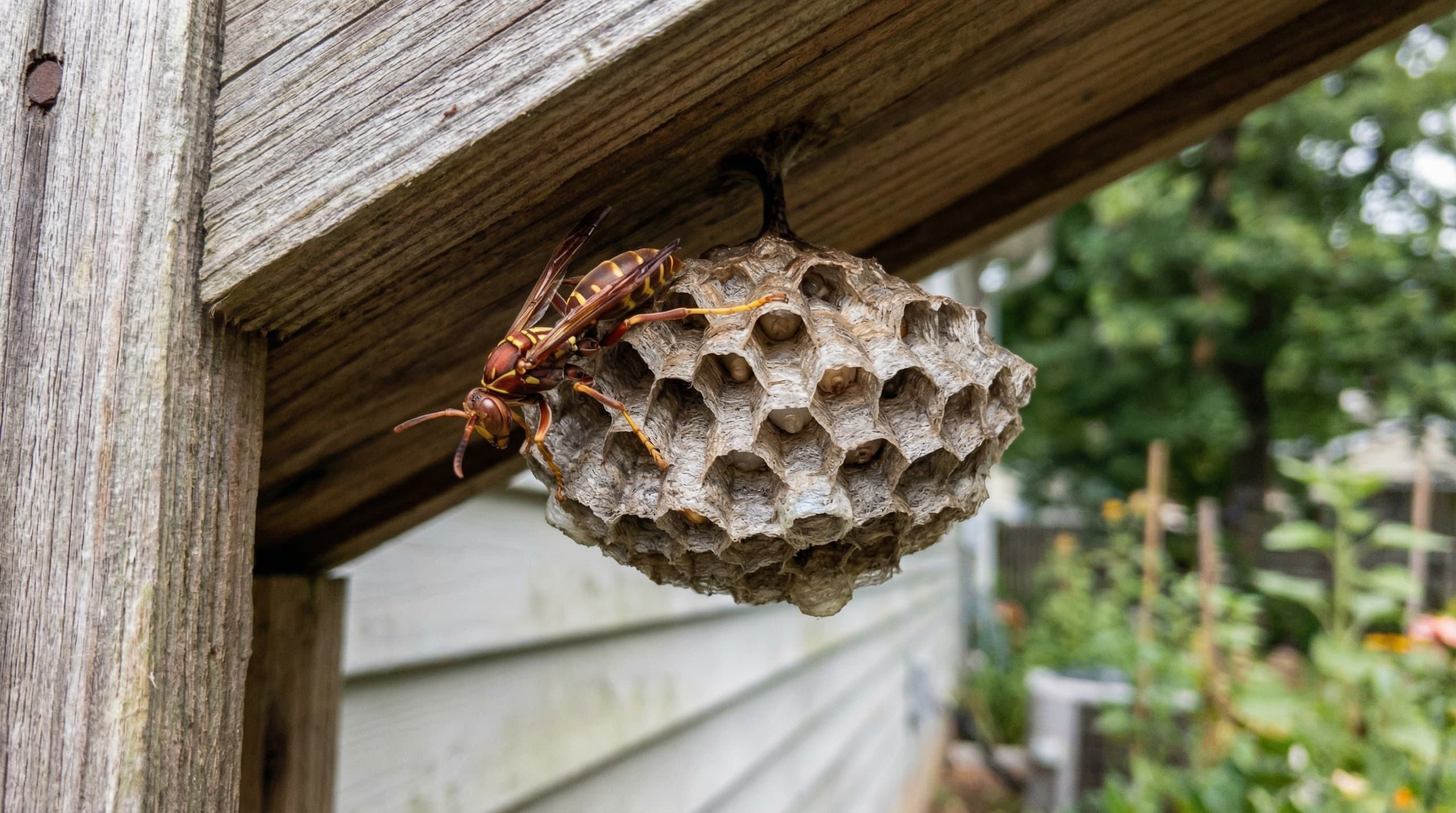
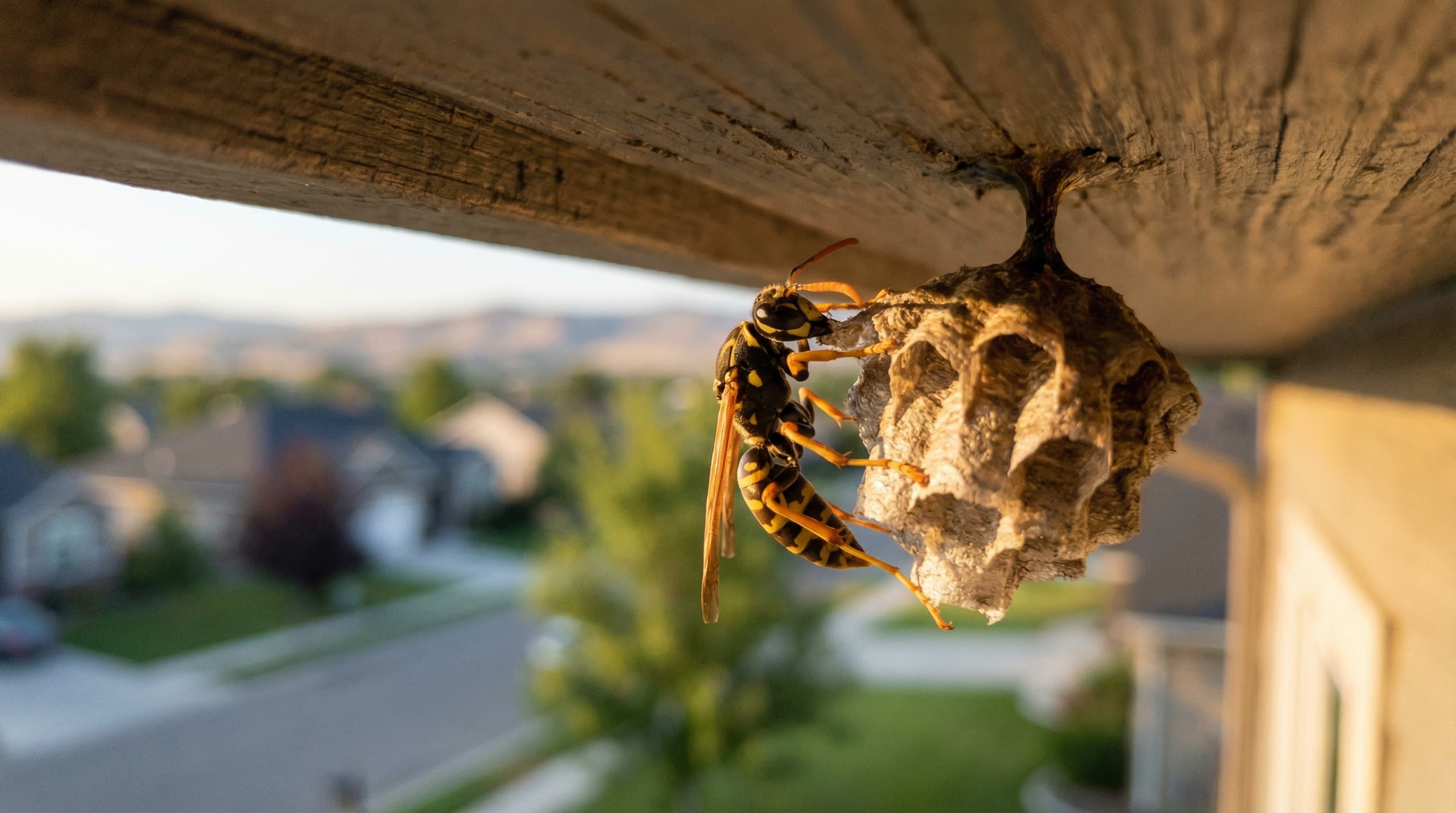
Paper wasps are the ones hanging from Boise eaves, porch ceilings, deck rails, and fence posts right now. Their nests are open, umbrella-shaped combs where you can see individual cells from below. They are brown or reddish-brown with yellow markings, and their long legs dangle when they fly.
Paper wasps are less aggressive than yellow jackets, but a mature August colony of 40 to 75 workers is nothing like the shy 5-worker version you saw in May. Bump the nest and every worker deploys within seconds. In the North End, East End, and older Boise neighborhoods with wide covered porches, paper wasps are the top August complaint we get.
Western Yellow Jackets in August
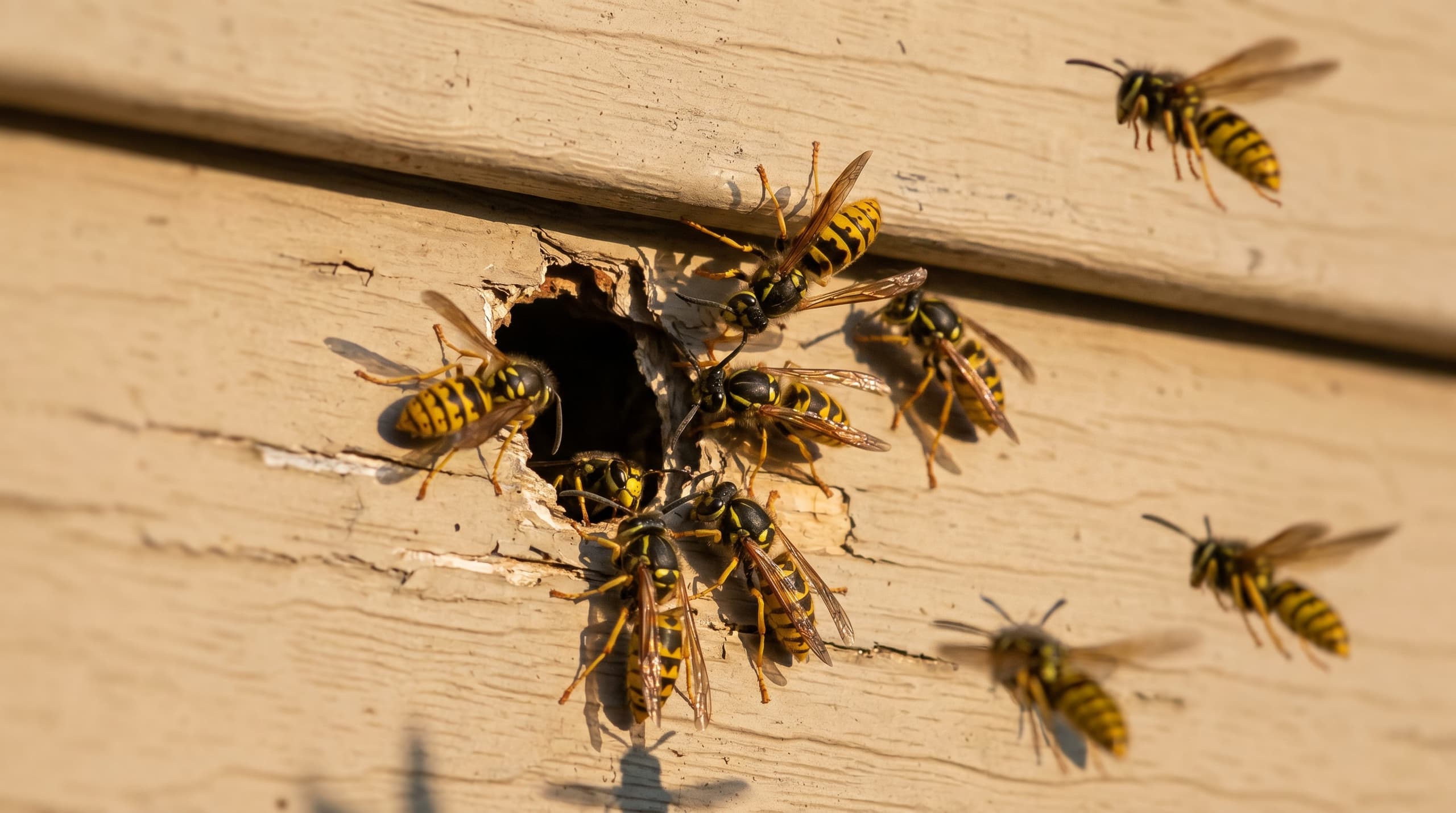
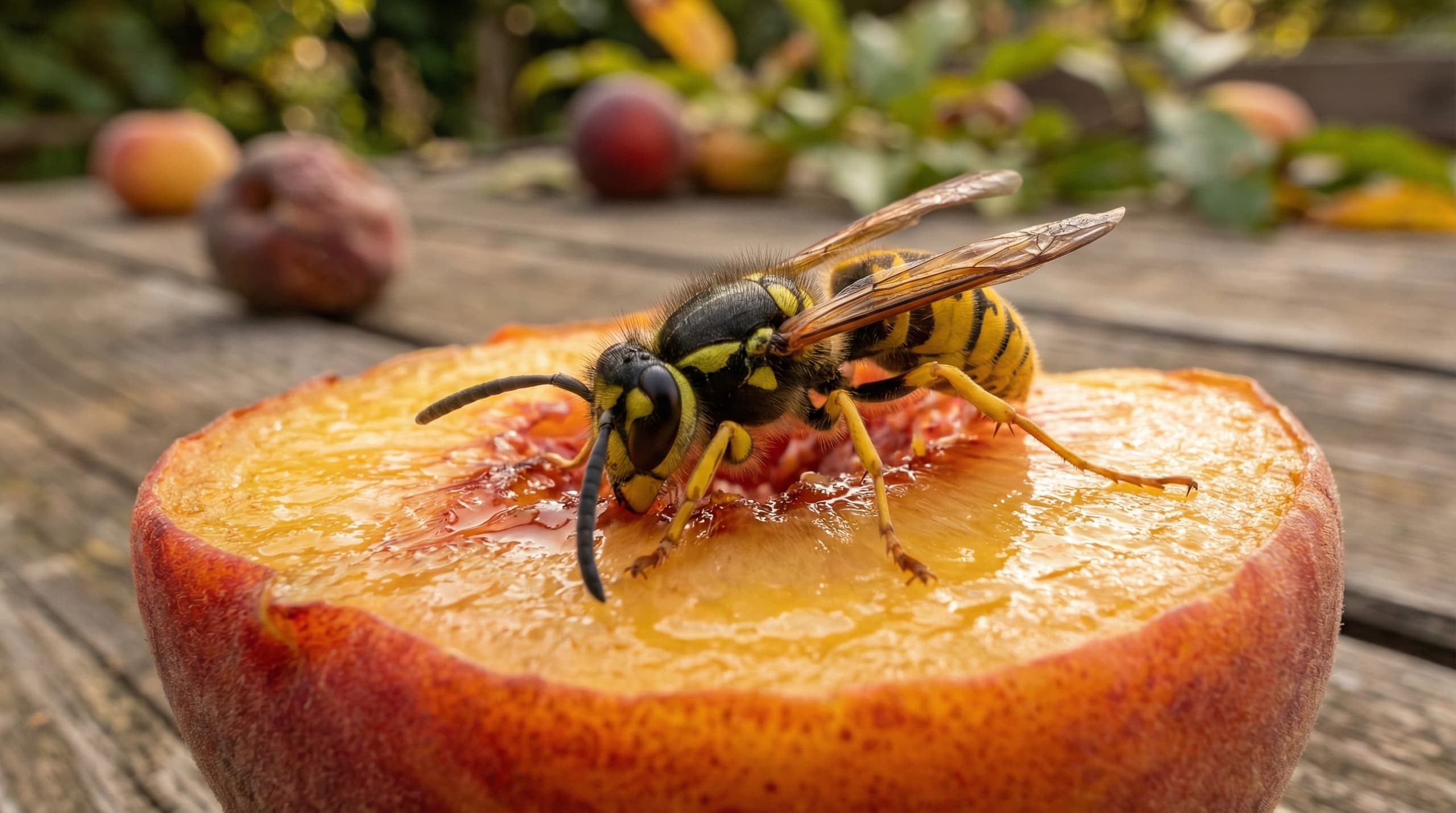
Western yellow jackets are the aggressive ones, and August is their month. Compact bodies, bright yellow and black bands, legs tucked under in flight (paper wasps dangle theirs). The critical difference is where they nest: yellow jackets usually pick underground holes, wall voids, and attic corners. Old rodent burrows, gaps under sidewalks, holes in your lawn. You may not know the nest is there until you mow over the entrance or lean a ladder against the siding.
A single underground yellow jacket colony in south Boise or Meridian can hold 1,000 to 5,000 workers by late August. They are drawn to protein (grilled meat, pet food) and sugar (soda, fallen fruit), which is why they crash every Treasure Valley BBQ from mid-July through late September.
In southeast Boise and Harris Ranch, yellow jackets are especially common. Open spaces, manicured landscaping, and irrigated yards give them exactly what they need: soft ground for nesting and plenty of prey. Our technicians also see heavy yellow jacket activity in Eagle, Meridian, and Nampa neighborhoods near the Boise River and irrigation canals.
Bald-Faced Hornets, Mud Daubers, and Killer Wasps in Boise
Bald-faced hornets (actually a large aerial yellow jacket) build football-shaped, enclosed gray paper nests in trees and on buildings. Black with white face markings. Extremely defensive. If you see one of these nests hanging from a Boise tree branch, stay 20 feet away and call a pro. Our bald-faced hornet guide for Idaho covers the whole species.
Mud daubers are solitary wasps that build small mud tubes in garages, sheds, and under eaves. They rarely sting and actually help control black widow spider populations. You can knock down old tubes with no risk.
People often ask about "killer wasps" in Boise. The good news: Idaho does not have Asian giant hornets (the so-called murder hornets). The species that actually put Treasure Valley residents in urgent care are western yellow jackets, German yellow jackets, and bald-faced hornets. All three peak in August and September.
For a full ID breakdown of every stinging insect in Idaho, see our wasp, bee, and hornet identification guide.
What to Do If You Find a Wasp Nest Right Now
The short answer: back away, mark it, and book same-day service. A wasp nest you found in August is not the same problem you would have found in April, and the DIY playbook that worked in May will get you stung this month.
Here is the response order our technicians use when a Boise family calls us this time of year:
- Note the exact spot without getting closer than 15 feet. Take a photo from a distance. You want to know the location so a technician can find it fast, not so you can inspect it yourself.
- Clear the area of kids, pets, and food. Pull toys, pet bowls, and grills out of the sting radius. If the nest is on the house, close doors and windows on that side.
- Do not spray, poke, hose, or set anything on fire. All of those trigger the pheromone alarm response that pulls in every worker within 20 feet. This is the single most common way a nest becomes a hospital visit.
- Same-day service is often available. Green Guard covers Boise, Meridian, Eagle, Nampa, Kuna, Star, and Caldwell for same-day wasp removal. Phone: (208) 297-7947.
- If someone has already been stung multiple times, or is showing swelling, dizziness, or trouble breathing, skip the pest control call and get to an ER. Then call us after.
When Should You Call an Exterminator for Wasps?
In August and September, the answer is almost always yes. Once colonies pass the summer growth curve, DIY is a bad bet for anything larger than a fist or in a hard-to-reach spot. If anyone in your household has a known sting allergy, the answer is always yes, no matter the size.
Here are the scenarios where it makes sense to call a pro this time of year:
- The nest is bigger than a softball. A softball-sized paper wasp nest in August holds 40 to 75 defensive workers. A basketball-sized yellow jacket nest can hold thousands. This is not the year to try it yourself.
- It is in a high-traffic area. Above the front door, next to the patio, near a play set, by the mailbox. Even a "small" paper wasp nest in the wrong spot is a sting waiting to happen once colonies mature.
- You see wasps streaming in and out of the ground or your walls. That is yellow jackets, and store-bought spray will not reach the colony. You need professional equipment. Our guide to yellow jacket nests in walls and the ground explains why DIY backfires here.
- Someone in your home is allergic to stings. About 3 percent of adults have insect sting allergies. A single sting can trigger anaphylaxis. Do not risk it.
- You already tried and failed. Store-bought sprays often kill the surface wasps but miss the queen and the deep brood. The colony gets angry and rebuilds. If your first attempt did not work, stop and call us.
- You have multiple nests on your property. More than one nest usually means conditions around your home are attracting scouts. A quarterly perimeter treatment stops the pattern.
DIY Wasp Removal (and Why WD-40 Is Not the Answer)
Small, visible paper wasp nests in accessible spots are still DIY-able in August, but the margin for error is thinner than it was in May. Everything else deserves a professional this time of year.
When DIY still works in August: A paper wasp nest smaller than 2 inches, in a spot you can reach without a ladder, with no one in the house who is allergic. Wait until after dark (all workers are back on the nest and less active). Use a labeled wasp jet spray from the maximum distance the label allows, usually 15 to 20 feet. Spray thoroughly, back away, wait 24 hours, then knock the nest down. Our wasp nest identification guide helps you know what you are looking at before you spray.
When DIY fails hard: Store-bought sprays cannot penetrate underground yellow jacket nests or wall voids. You kill the wasps you can see, but the queen and hundreds or thousands of workers deep in the nest survive. Worse, the alarm pheromones from a failed spray attempt draw in every worker within 20 feet. It's a common story: a homeowner sprays a yellow jacket hole in the lawn, gets stung, and calls us to finish the job.
About WD-40 and other kitchen "hacks": Yes, WD-40 (and dish soap, gasoline, boiling water, and vacuum tricks) can kill some wasps on contact because they suffocate the insect. No, none of those are safe or effective on a mature nest. WD-40 is flammable, it will not reach a queen inside a nest, and spraying it into a wall void or ground hole is a great way to end up hospitalized. If a mature wasp problem was solvable with a $6 can of shop spray, we would not be in business. For prevention tips that actually work, see the prevention sections below.
Wasp Prevention: What Still Works in August (and What to Plan for Spring)
You cannot un-build the colonies that are already active in August. What you can do is cut your sting risk this month and set yourself up so next April is easier. Here is what still works right now.
- Seal your outdoor trash and recycling. Protein scraps and sugary residue pull yellow jackets in from a full block away. Rinse soda cans and meat trays before they go in the bin. This is the highest-impact August move.
- Keep pet food and water bowls indoors between meals. A wet dog bowl on the back patio is a yellow jacket landing pad in August.
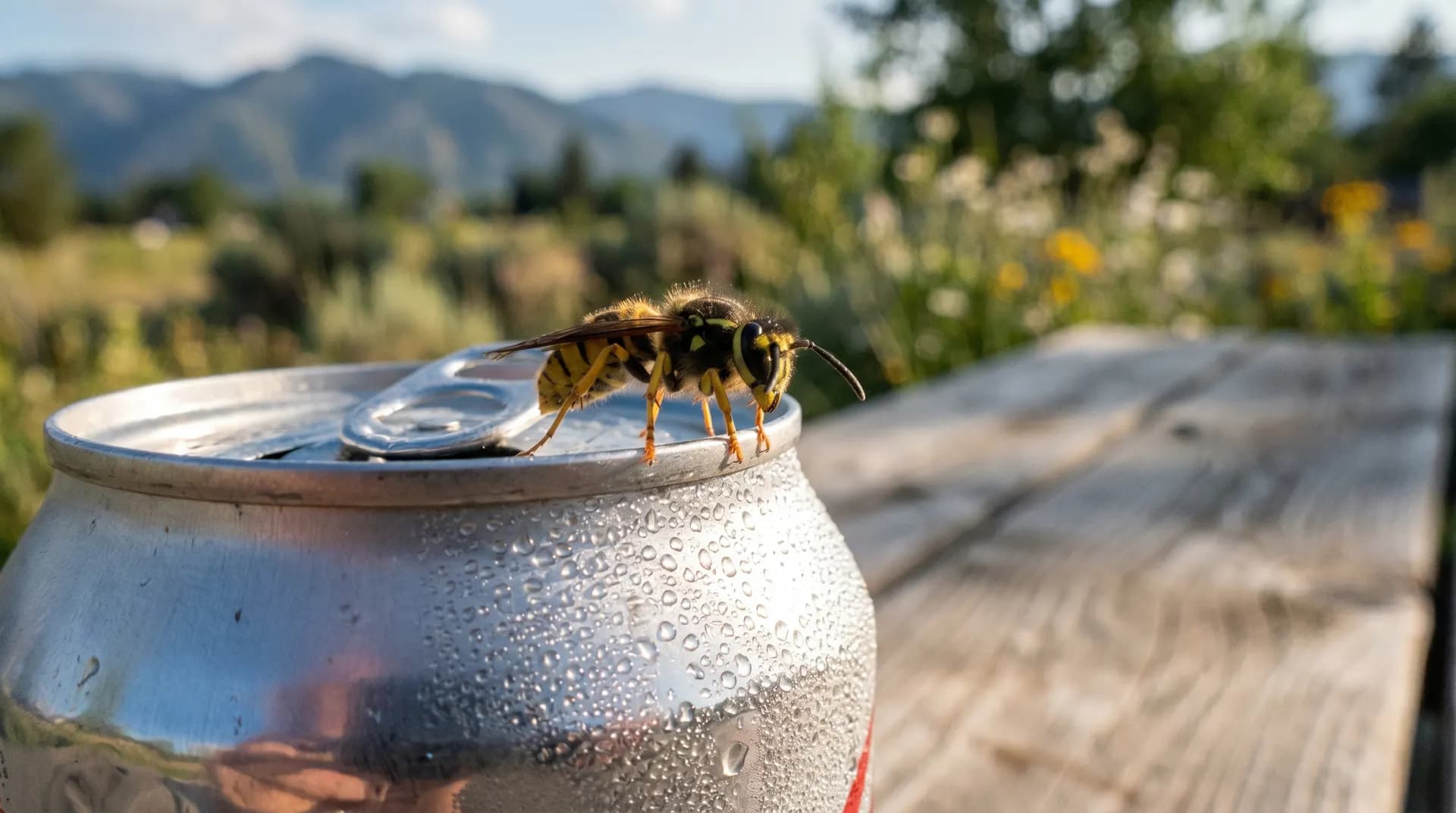
- Cover food and drinks at every outdoor meal. Cans especially. Wasps crawl into open cans of soda and beer, then sting the inside of a mouth or throat when someone takes a drink. Use straws and lidded cups from Labor Day through the first hard frost.
- Avoid perfumes and sweet-scented sunscreen at yard parties. Boise's dry August air carries floral and fruit scents surprisingly far, and hungry wasps investigate every one.
- Book a fall perimeter treatment. A late-August or September Green Guard visit knocks down nests you can see, treats the eaves and fence lines where paper wasps love to build, and helps stop overwintering queens from picking your soffit as their winter hiding spot.
- Mark April on your calendar. Next year, a 15-minute weekly walk around your house between April 1 and May 15 is the cheapest wasp control you will ever do. Knock down walnut-sized starter nests with a broom before workers ever emerge.
More Food and Drink Habits That Keep Scouts Away
Protein draws wasps in spring and sugar draws them in August and September. These habits cover the sugar side.
- Wipe up sugary spills right away. A small puddle of juice on the patio brings in scouts within an hour on a hot day.
- Pick up fruit daily if you have producing trees. Apples, plums, pears, and grapes turn into wasp magnets in September when fruit hits the ground and ferments.
- Move hummingbird feeders to the far side of the yard, away from doors, decks, and patio furniture. Sugar water draws wasps just as it draws hummingbirds.
- Rinse the rim of the garbage cans every few days and keep the lids tight. It cuts the smell that pulls wasps in from a block away.
Next Spring: Inspect Early and Hang Decoys
Every wasp on your property in August traces back to a single queen who picked your eave 4 to 5 months earlier. Overwintering queens emerge from mid-March to late April in Boise, so that is the window to stop a nest before it starts.
- Inspect in early March. Walk the eaves, doorframes, soffit returns, and the garage with a flashlight. Look for last year's abandoned nests and any new starter cells about the size of a thimble.
- Knock down and bag old nests. Wasps do not reuse them, but a new queen will happily build right next to one.
- Check the stored items you forgot about all winter. Grills, kid playsets, lawnmower handles, and the inside of patio umbrellas are common nest sites in Meridian and Kuna backyards.
- Hang fake wasp nests between mid-March and late April. Wasps are territorial and tend to avoid building near what looks like an existing colony. Hang one on each side of the house and one near each common entry door, under eaves and over the back patio.
- Replace decoys every spring. UV light and Treasure Valley summer heat fade the colors within a season.
How Green Guard Handles Wasp Control in Boise
Green Guard Pest Control has protected 2,500+ Treasure Valley families from wasps, yellow jackets, and hornets. That is why wasp calls climb through the summer. Here is what happens when you call.
Our technicians inspect your full property for active nests, hidden ground and wall-void colonies, and the conditions that pull scouts in. We remove nests using professional protective gear and equipment that reaches into wall voids and underground colonies (something no store-bought spray can do). Then we apply a residual barrier treatment to eaves, fence lines, and other common nesting spots.
The products are organic-based and hospital-grade, safe for kids and pets once dry (about 30 to 60 minutes). The barrier lasts about 90 days and discourages queens from picking your house as a winter hiding spot in October. On our quarterly plan, we re-treat every season so you never end up in another August like this one. Learn more on our wasp and hornet removal service page.
Just $49 to get started. That initial visit covers full inspection, nest removal, and barrier treatment. Quarterly plans run $119 per treatment for homes up to 2,500 sq ft, $139 up to 4,000 sq ft, and $159 up to 5,500 sq ft. And if wasps come back between visits, we come back free. That is our re-service guarantee.
Same-day service is often available. If you found a mature nest this morning, do not sit with it until Monday. Call (208) 297-7947 now and a locally owned Boise team will get you on the schedule right away.
Frequently Asked Questions
What month are wasps most aggressive in Boise?
Quick answerLate August and September.
That is when western yellow jacket colonies reach their maximum size of 1,000 to 5,000 workers and natural insect prey starts dropping off. The colony sends every free worker out to scavenge, and any disturbance triggers a group defensive response.
How much do exterminators charge to get rid of wasps in Boise?
Quick answerGreen Guard's initial wasp treatment is $49, which includes property inspection, nest removal, and barrier treatment.
Quarterly protection plans run $119 per visit for homes up to 2,500 sq ft, $139 up to 4,000 sq ft, and $159 up to 5,500 sq ft, and include free re-service if wasps come back between treatments. A one-time visit without a subscription starts at $200. Most local Boise exterminators charge $150 to $400 for a single wasp removal call, especially for hidden yellow jacket nests in walls or the ground.
What does WD-40 do to wasps?
Quick answerWD-40 will suffocate the individual wasps it hits, which is why it shows up on DIY hack videos.
It is not a real wasp control product. It is flammable, it does not penetrate underground or wall-void nests, and spraying it into a mature colony triggers the alarm pheromone response that pulls in every worker within 20 feet. In August, a WD-40 attempt on a yellow jacket nest is a classic trip to urgent care. Use a labeled wasp jet spray for small paper wasp nests you can reach safely, and call a professional for anything else.
What are the killer wasps in Boise?
Quick answerIdaho does not have Asian giant hornets (the so-called murder hornets).
The wasps that actually put Treasure Valley residents in urgent care are western yellow jackets, German yellow jackets, and bald-faced hornets. All three build large colonies, defend nests aggressively, and peak in August and September. Western yellow jackets nest underground and cause the most stings statewide. German yellow jackets nest in wall voids and attic spaces. Bald-faced hornets build football-shaped gray nests in trees.
When should you call an exterminator for wasps?
Quick answerCall a professional in August or September if the nest is bigger than a fist, underground, inside a wall, in a high-traffic spot like a front porch or play area, or if anyone in your household has a sting allergy.
Also call if a DIY spray attempt already failed. Once a colony has hundreds or thousands of workers, the risk of multiple stings during removal is real and the cost of DIY failure is much higher than the price of a professional visit.
Does Green Guard offer same-day wasp removal in the Treasure Valley?
Quick answerYes.
Same-day service is often available when you call (208) 297-7947. We cover Boise, Meridian, Eagle, Nampa, Caldwell, Kuna, Star, Middleton, Garden City, and surrounding Treasure Valley cities. If a mature yellow jacket or paper wasp nest just turned up on your property today, do not wait through the weekend for it to keep growing.
When is wasp season in the Treasure Valley?
Quick answerWasps are active from April through October in Boise, Meridian, and the rest of the Treasure Valley.
Peak activity and aggression hit in August and September when colonies are at maximum size. Prevention work should start in mid-March before queens pick nesting sites.
Do fake wasp nest decoys really work?
Quick answerDecoys help when you hang them by mid-April, before queens pick a nesting site.
Wasps are territorial and tend to avoid building near what looks like an existing colony. Hang several around the eaves and doorways, and replace them every spring because UV fade weakens the visual signal.
Sources
Green Guard call and web request log, Jul to Sep 2026; Green Guard call and web request log, Apr to Jun 2026