Quick answer
For wasp nest removal in Boise, only attempt DIY if it's a paper wasp nest under 2 inches, in plain sight (not in a wall or underground), and you have no allergy. Treat at dusk with protective clothing and a long-range wasp spray, then wait 24 hours before knocking it down. Call Green Guard at (208) 297-7947 for yellow jackets, hornets, wall-void nests, or anything bigger than a tennis ball. April and May removals are the cheapest and safest because nests are tiny.
Key Takeaways
- Only DIY a wasp nest if it's a small paper wasp nest (under 2 inches), out in the open, and no one in the home is allergic. Everything else needs a pro.
- Yellow jackets, bald-faced hornets, and any nest inside a wall void or underground are non-negotiable professional jobs because the colony you can see is a fraction of what's actually there.
- Spring nests in April and May are walnut-sized with a single queen and zero defensive workers. Removing one now takes 30 seconds. Removing the same nest in August can mean 5,000 angry yellow jackets.
- Pro removal in Boise starts at $49 for our subscription customers. That's less than the cost of a hooded suit, two cans of pro-grade spray, and the ER copay if the DIY job goes sideways.
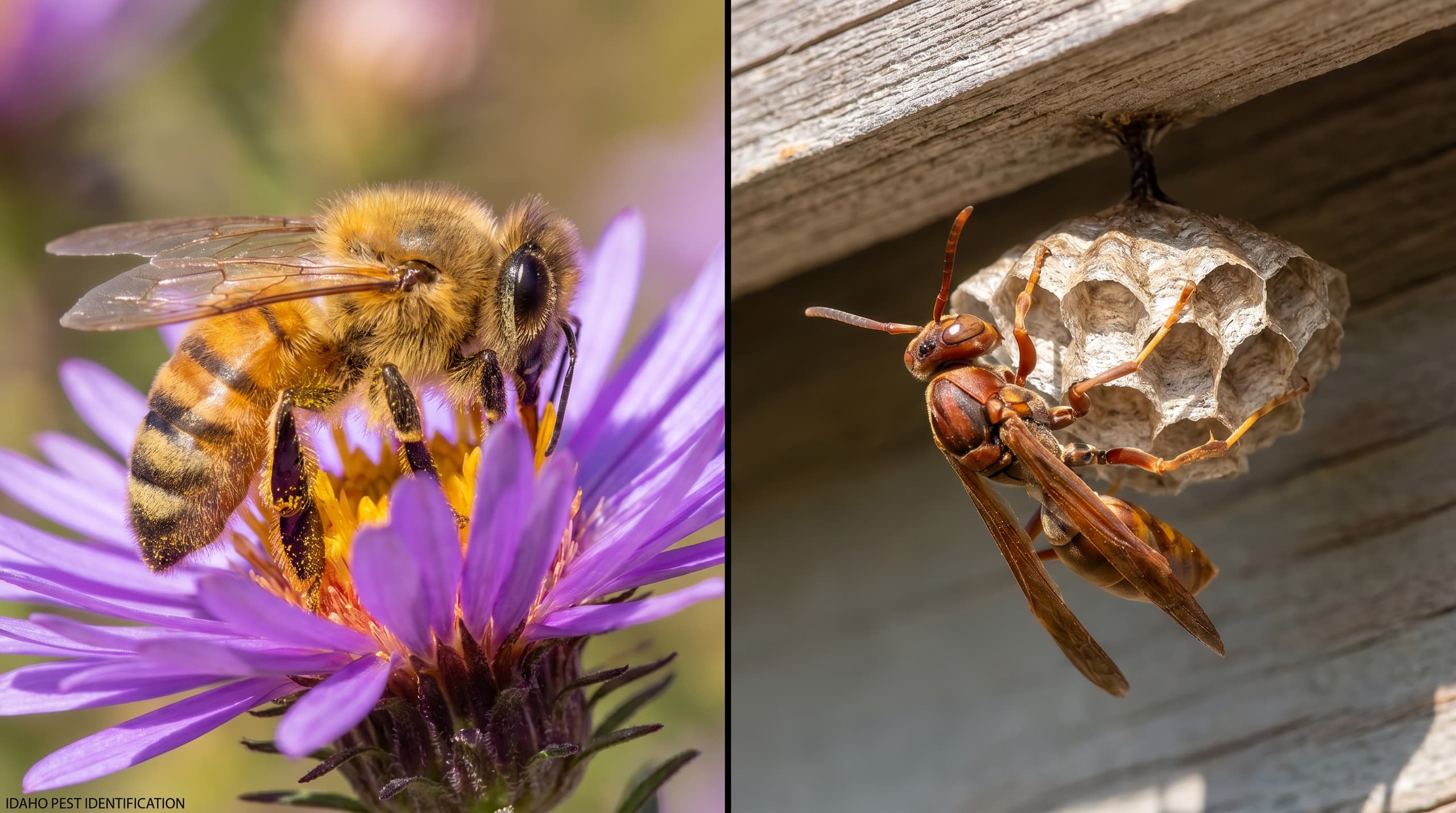
- Green Guard does not handle honeybee colonies. If you suspect honeybees instead of wasps, call a local beekeeper for relocation.
In this article

The Honest Answer to 'Can I Remove This Wasp Nest Myself?'
Most Boise homeowners should not remove a wasp nest themselves. A small paper wasp nest under 2 inches, in plain sight, with no one in the home allergic to stings, can be a safe DIY job if you treat it at dusk with proper gear. Anything else (yellow jackets, hornets, wall-void nests, ground nests, or anything bigger than a tennis ball) is a professional job because the visible nest is rarely the whole colony.
That's the honest version. We've been treating wasps across the Treasure Valley for over 10 years, and the most common call we get is from someone who tried to spray a nest, got stung, and now needs us to finish the job anyway. The $49 we charge to start service is almost always cheaper than the gear plus the ER copay.
This guide tells you exactly when DIY is reasonable, exactly how to do it safely if it is, and exactly when to put the spray can down and call (208) 297-7947 instead.
The 30-Second DIY Wasp Nest Risk Check
Before you do anything, run through this checklist. If you answer NO to any of these five questions, stop and call a pro.
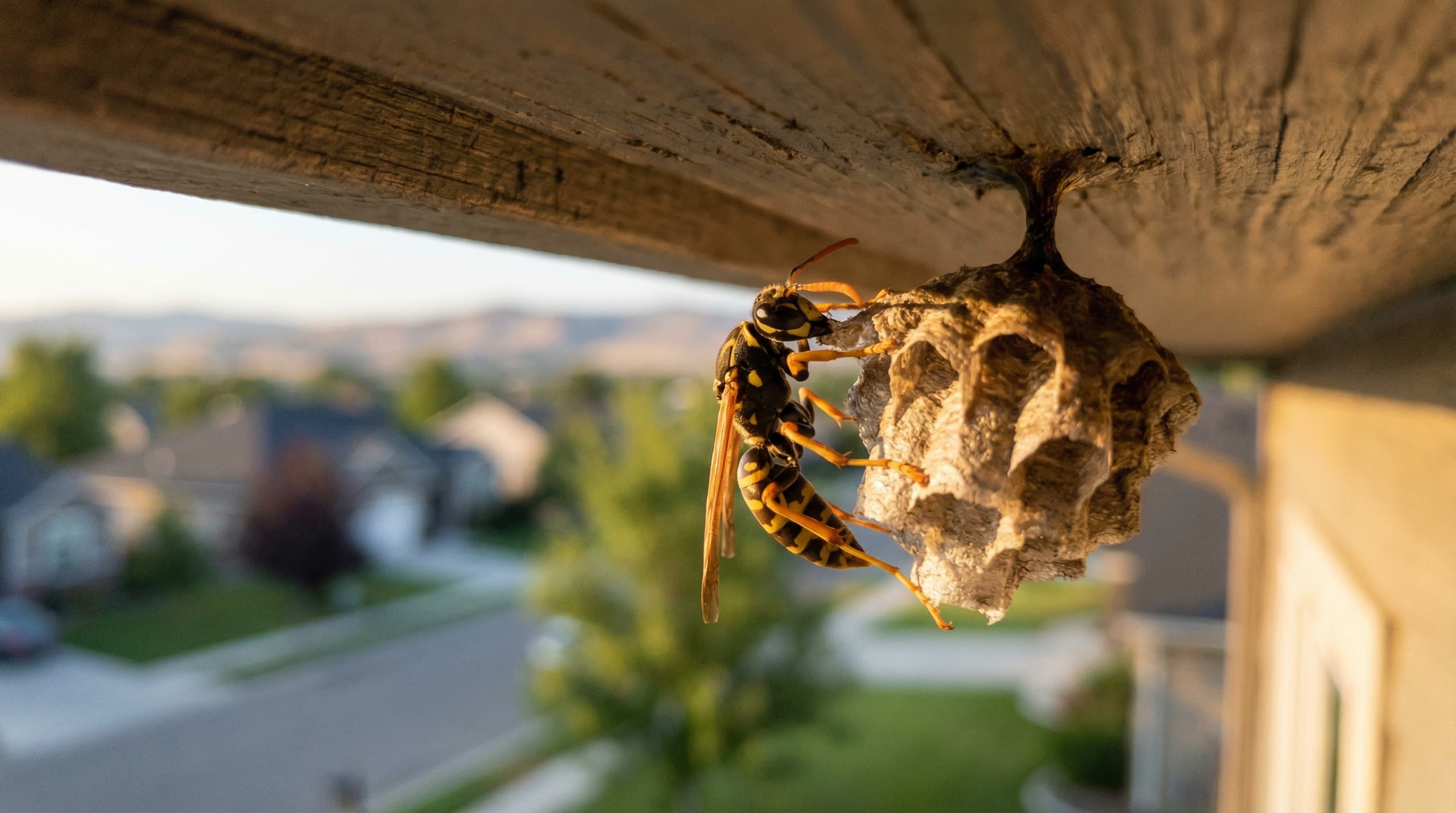
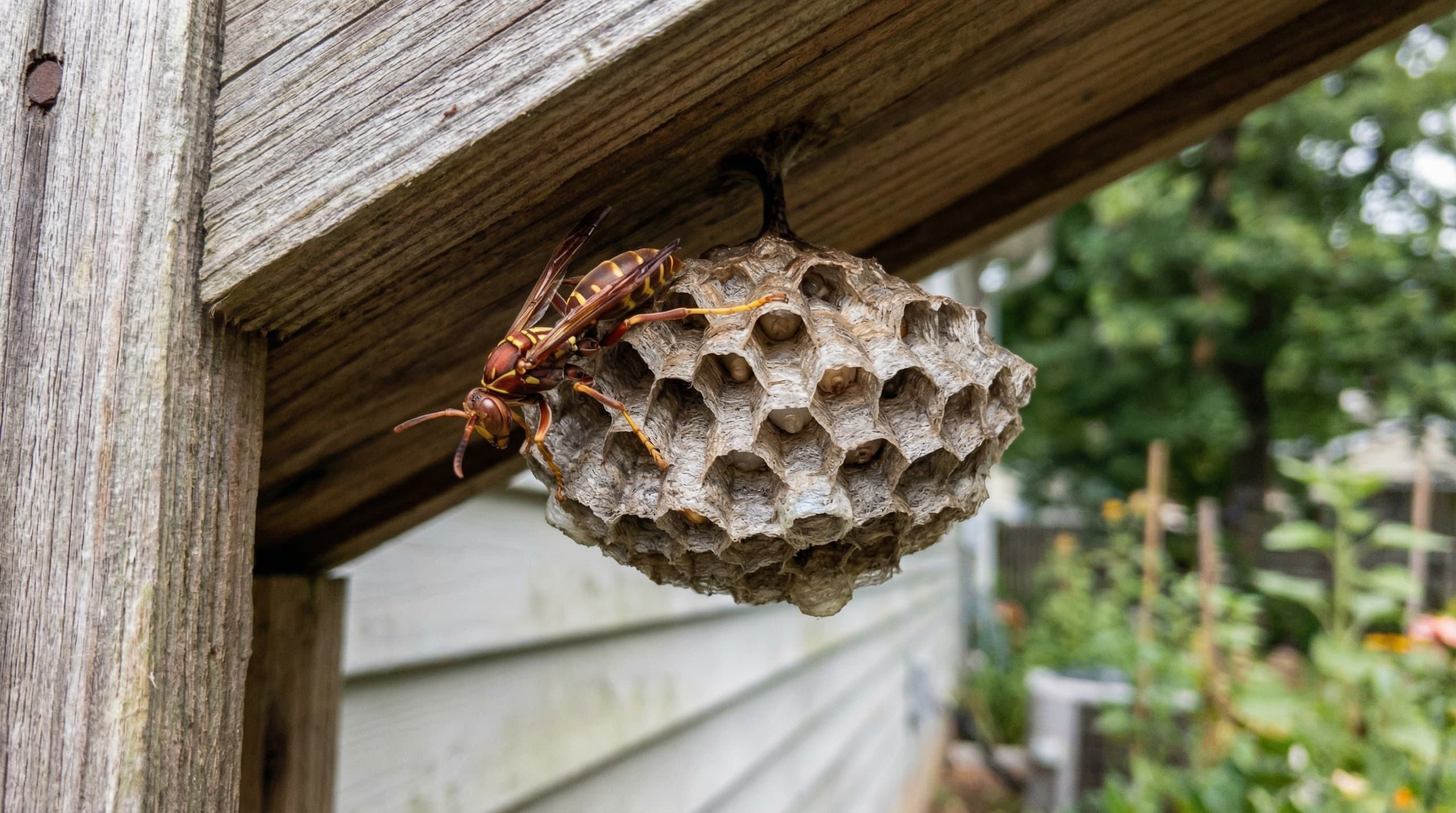
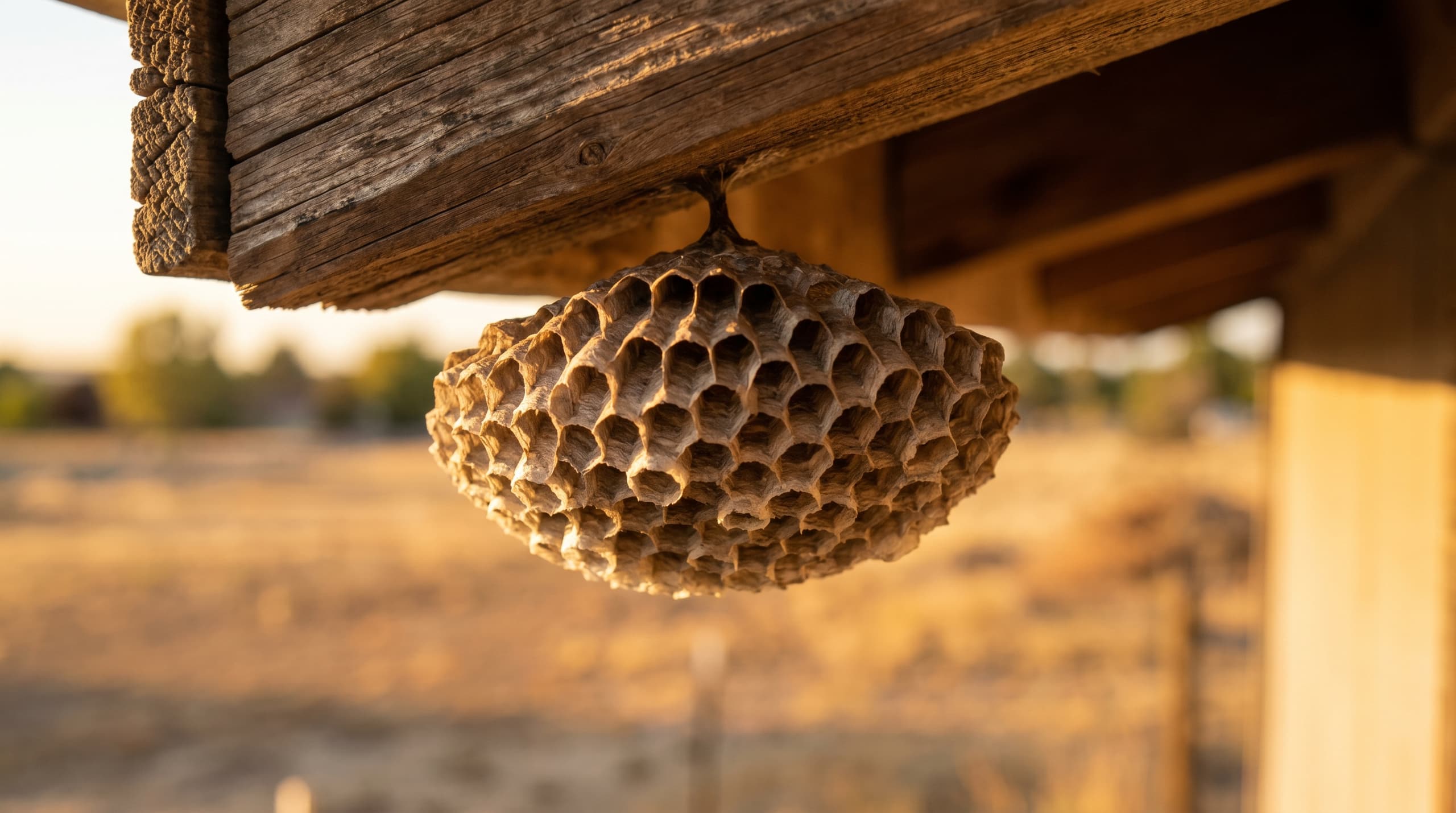
- Is it a paper wasp nest? Open umbrella-shaped nest with visible cells, hanging from a single stalk. NOT a gray football, NOT a hole in the ground, NOT a stream of wasps coming out of your siding.
- Is it smaller than 2 inches across? Roughly walnut to golf ball sized. If it's bigger than a tennis ball, you're already past DIY range.
- Can you see the entire nest in plain view? Under an eave, on a fence, on a deck rail. NOT behind siding, NOT in a wall, NOT in a soffit, NOT in the ground.
- Is no one in the home allergic to stings? If anyone has had a serious reaction to a sting in the past, do not even consider DIY.
- Do you have an escape route? A clear, flat path back to a door you can close behind you. No stairs you might trip on, no garden hose to tangle in.
Wasp Nest Comparison Table: DIY-Safe or Pro?
Here's the quick reference. If you're not 100% sure what species you're looking at, check the five nest types below or read our wasp vs bee vs hornet ID guide before you do anything else.
| Nest Type | Size | Location | DIY-Safe? | What To Do |
|---|---|---|---|---|
| Paper wasp (umbrella) | Under 2 in | Eave, fence, deck | Maybe | Follow DIY steps below, or call a pro |
| Paper wasp (umbrella) | 2 to 4 in | Anywhere | NO | Call (208) 297-7947 |
| Paper wasp | Any size | Out of reach (above 8 ft) | NO | Pro |
| Yellow jacket | Any size | Underground hole | NEVER | Pro, same day if possible |
| Yellow jacket | Any size | Wall void or attic | NEVER | Pro |
| Bald-faced hornet (gray football) | Any size | Tree, eave, anywhere | NEVER | Pro |
| Mud dauber (mud tubes) | Any size | Anywhere | YES | Scrape off with a putty knife |
| Honeybee swarm | Any size | Anywhere | NEVER | Call a local beekeeper, not us |
Which Wasp Nest Do You Have? The Five Types in the Treasure Valley
Look at three things from 20 feet away: shape, location, and color. An open umbrella of gray cells under an eave is a paper wasp. A big gray football hanging in a tree is a bald-faced hornet. A steady stream of wasps going in and out of a hole in the lawn, siding, or wall is a yellow jacket. A cluster of hardened mud tubes on a garage wall is a mud dauber. A larger brownish paper nest inside a hollow tree or attic (rare in Idaho) is a European hornet.
| Nest Type | Location | Shape | Color | Size (mid-July) | Danger Level |
|---|---|---|---|---|---|
| Paper Wasp | South-facing eaves, deck rails, doorframes | Open umbrella, cells visible | Gray, tan | 2 to 4 inches (20 to 75 wasps) | Moderate |
| Yellow Jacket | In the ground, wall voids, attic corners | Enclosed paper (usually hidden) | Gray, tan | Basketball-sized or larger, 800-plus workers | High |
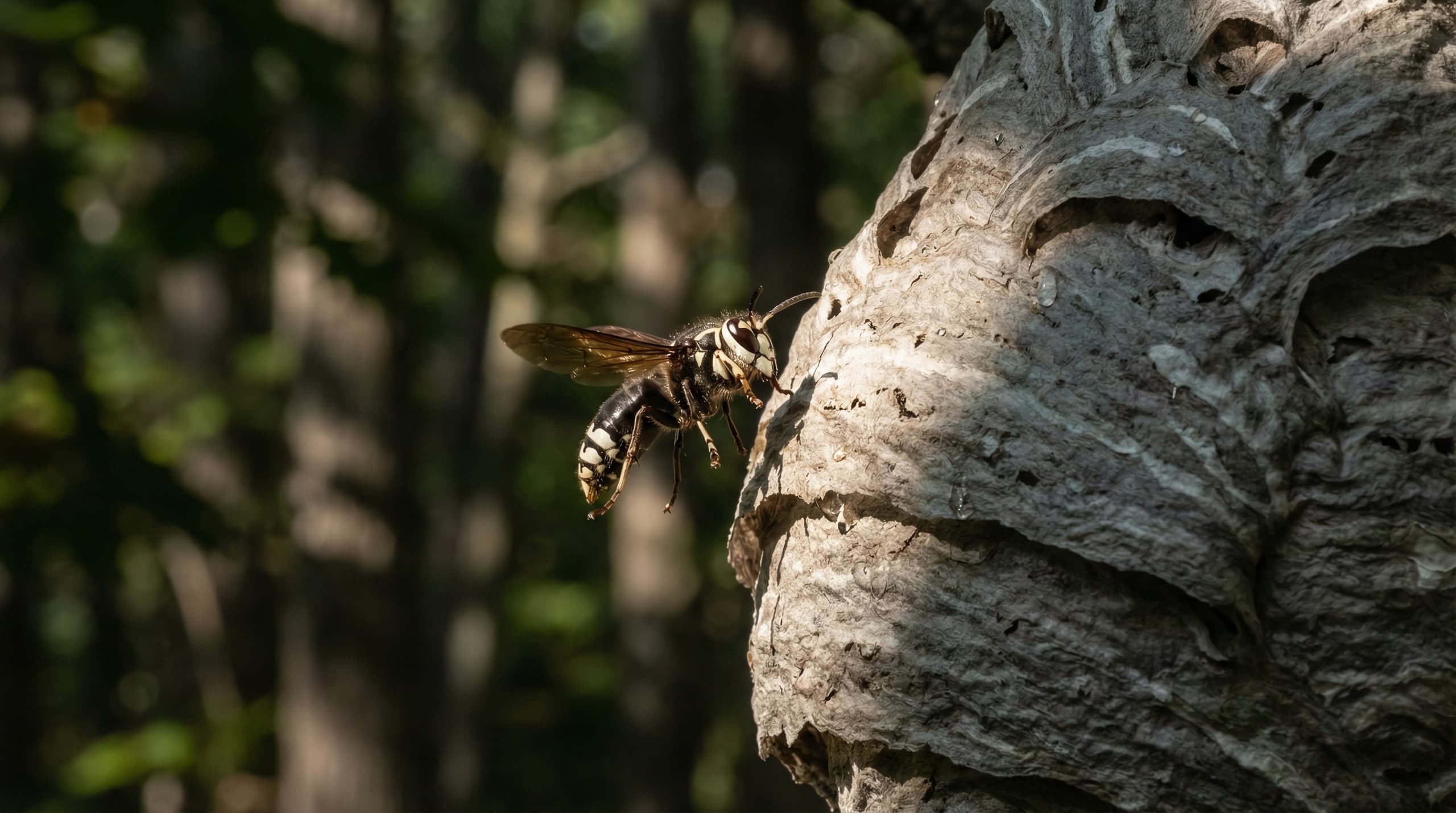
| Bald-Faced Hornet | Cottonwoods, maples, tall shrubs, eaves | Football, teardrop | Gray, textured paper | Football-sized (200 to 500 hornets) | High |
| Mud Dauber | Garage corners, sheds, under eaves | Hardened clay tubes side-by-side | Brown, tan, red | 1 to 2 inches per tube (solitary) | Low |
| European Hornet | Hollow trees, attic voids, barn eaves | Enclosed, layered paper | Brownish, reddish | Basketball-plus (100 to 400 hornets) | High |
If your nest matches any of the "high" rows, call (208) 297-7947 instead of reaching for a hardware store can. Here is what we see on service calls for each type.
- Paper wasps: slender brown or reddish-brown wasps with yellow markings and legs that dangle in flight. Meridian and Nampa see the most, especially newer subdivisions with south-facing garages, plus doorframes on the Boise Bench and in Garden City. They stay calm until the nest is disturbed. See our paper wasps in Idaho guide.
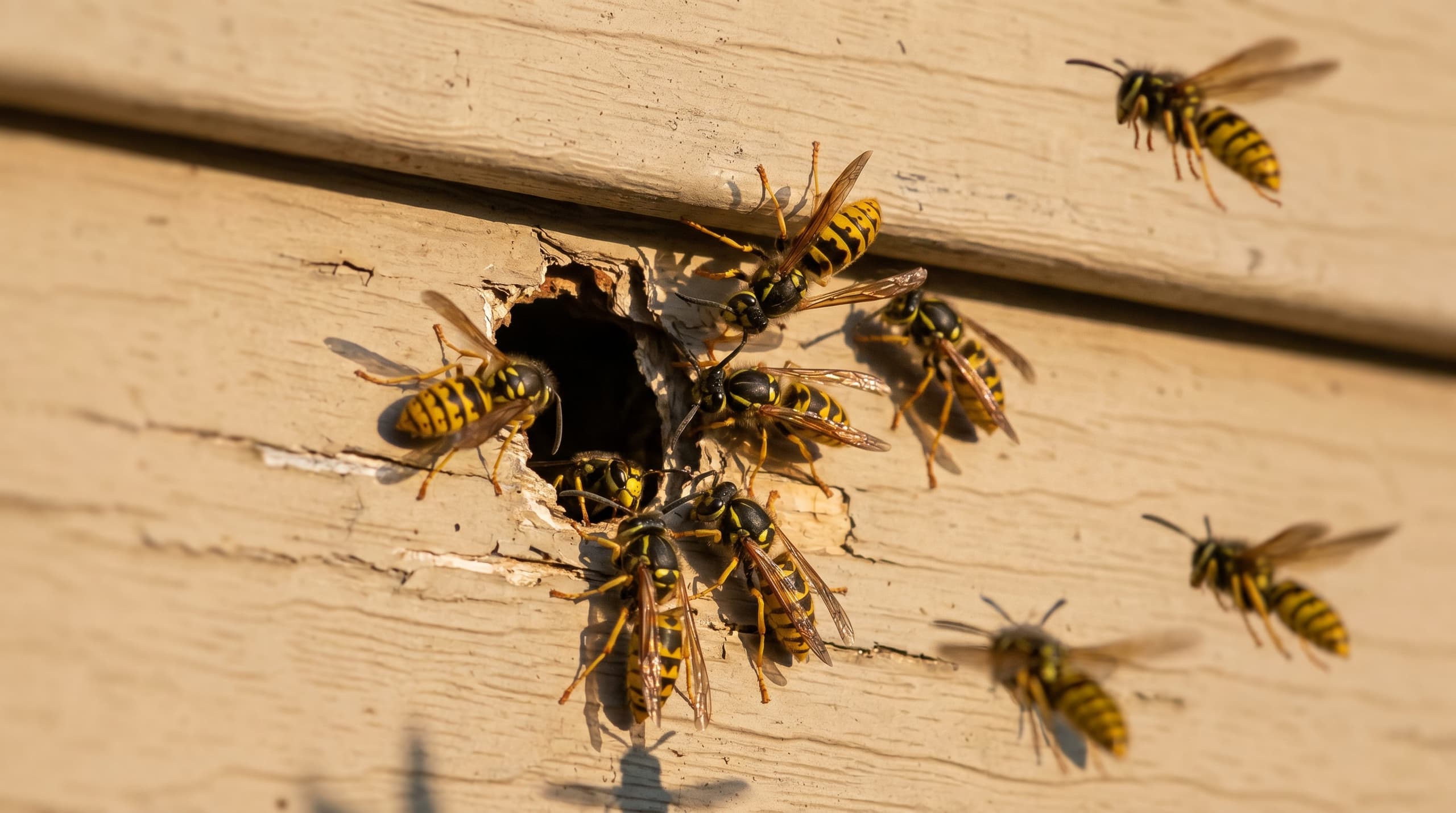
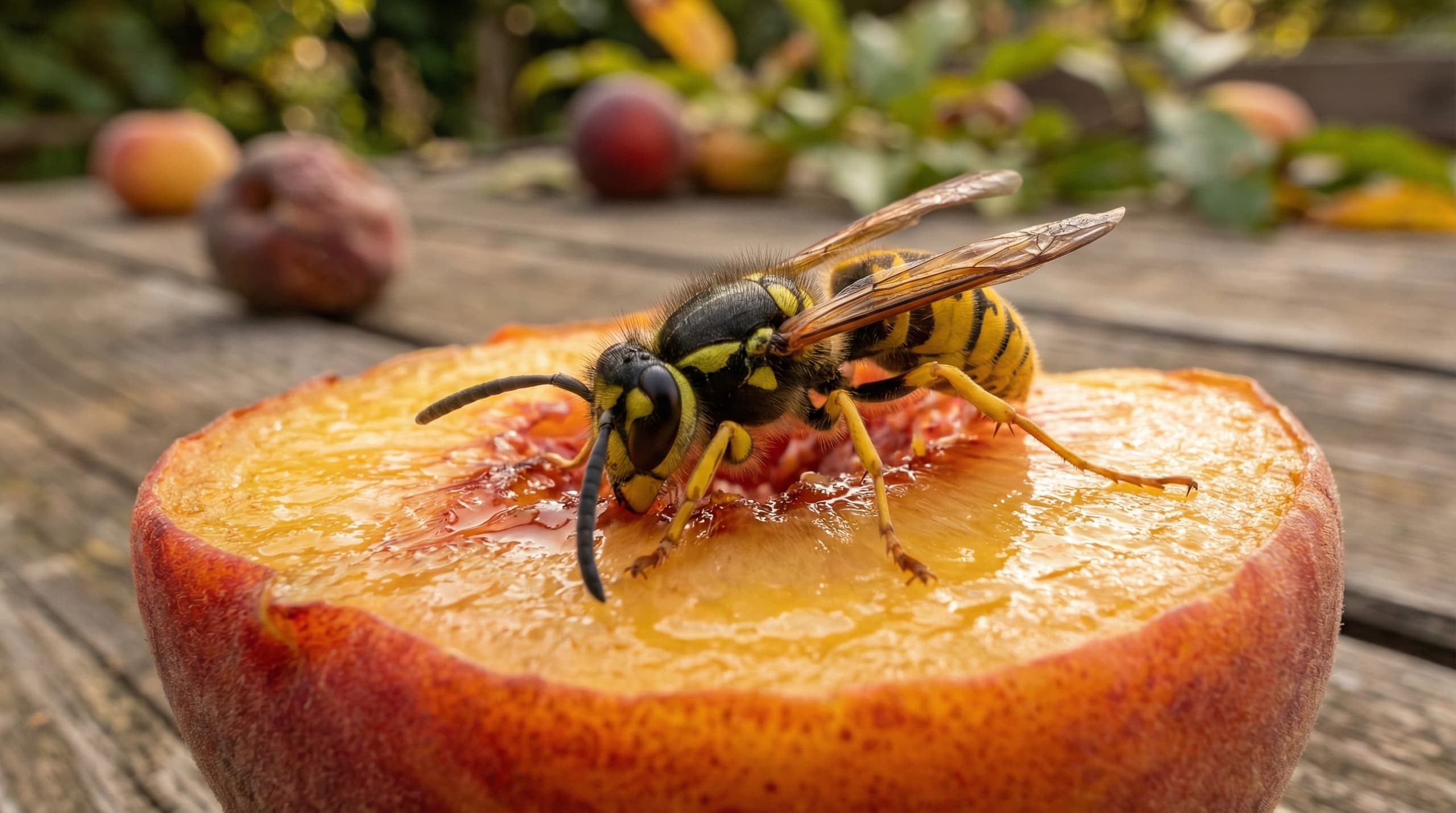
- Yellow jackets: smooth, shiny black-and-yellow wasps about 1/2 inch long. The nest is usually hidden and the entrance is a hole about the size of a quarter. Colonies run 800 to 1,500 workers in mid-July and grow to 3,000 to 5,000 by late August. Hotspots are North End alleys, Eagle foothills lawns, wall voids in older Boise Bench and Vista homes, and ground nests near irrigation lines in Meridian and Kuna yards.
- Bald-faced hornets: black with a white face, larger than a yellow jacket. Nests hang 8 to 15 feet up in cottonwoods along the Boise River, in mature maples in Eagle and Hidden Springs, and occasionally on the gable end of two-story North End homes. They defend the nest aggressively within 15 to 20 feet. See our bald-faced hornet guide.
- Mud daubers: solitary wasps with a thread-thin waist and no colony to defend, so they rarely sting. They hunt spiders, including black widows, to stock their nests. Knock the tubes down after dark with a putty knife, or ask us to clear them on a quarterly eave sweep. See our mud daubers in Idaho guide.
- European hornets: brown and yellow, roughly 1 to 1.5 inches long, and active at dusk, so you may see them flying at porch lights. We get a handful of calls each year, mostly from older Boise properties with hollow trees, barn eaves in Nampa and Caldwell, and attic voids in older homes.
Step-by-Step: DIY Removal of a Small Paper Wasp Nest
You passed the checklist. The nest is a small paper wasp nest in the open, under 2 inches, and you've got an escape route. Here's how to do this without getting stung.
- Wait until dusk or just before dawn. Wasps don't fly in low light or low temperatures. In Boise during April and May, the sweet spot is right around 8:30 to 9:30 PM. All the workers are inside the nest and slow.
- Cover every inch of skin. Long pants tucked into socks, long-sleeve shirt tucked into pants, gloves, hood, and eye protection. A hooded sweatshirt with the strings cinched works in a pinch. Wasps will go for any exposed gap.
- Use a long-range wasp spray, not a regular bug killer. The cans labeled for hornets and wasps spray a stream 15 to 20 feet. Stand at the maximum distance, aim at the nest's stalk, and soak it for 5 to 10 seconds.
- Walk away calmly. Do NOT run. Wasps detect motion and vibration. Walk back to your escape door at a normal pace and close it behind you.
- Wait 24 hours before knocking the nest down. Stragglers will return overnight. Once 24 hours have passed, scrape the nest into a sealed plastic bag and throw it out.
- Spray the spot again with the empty nest gone. A second light spray on the surface where the nest was attached helps deter a new queen from rebuilding in the same spot.
Five Wasp Situations You Should Never DIY
These are the situations where the visible nest is the smaller part of the problem. Trying to handle them yourself is how people end up in the emergency room.
- Yellow jacket ground nests. What looks like a small hole in your lawn is the entrance to a chamber that can hold thousands of wasps. Western yellow jackets are the dominant species in the Treasure Valley, and by mid-summer a single Boise colony can top 5,000 workers. Any vibration (a lawnmower, a footstep) triggers a swarm. Read our yellow jacket ID guide if you're not sure.
- Anything in a wall void or soffit. If you see wasps coming out of a hole in your siding, fascia, or vent, do not seal the hole. They will chew through drywall to find a new exit, and that exit is usually inside your house. This needs a pro with the right dust formulation. See our full breakdown of yellow jacket nests in walls and the ground in Boise for what works and what backfires.
- Bald-faced hornets (the gray football). Big, papery, enclosed nest in a tree or under an eave? That's a bald-faced hornet colony of 400 to 700 hornets that will pursue you for over 100 feet. Spray cans don't penetrate the outer paper layer fast enough.
- Anything above 8 feet up. Even if it's a small paper wasp nest, doing this from a ladder is how serious injuries happen. A single sting on the ladder, you flinch, and you're on the ground.
- Multi-tier or unusually large nests. A paper wasp nest that's gone past golf-ball size means you've already missed the early-spring window. The colony has workers, and your spray can isn't going to clear them all before the survivors come for you.
What Professional Wasp Nest Removal Looks Like in Boise
When we come out for a wasp nest in Eagle, Meridian, Nampa, or anywhere across the Treasure Valley, here's the actual process.
Evening or early-morning treatment. Same logic as the DIY version, just with better gear. Our techs schedule wasp jobs for the cooler parts of the day so the colony is calm and contained.
Full PPE. Bee suit with a sealed hood, double gloves, boots taped to pants. We're not doing this in jeans and a t-shirt. The gear is what makes the difference.
Dust vs. spray decision. This is the part homeowners can't replicate. For a paper wasp nest in the open, our organic-based pyrethrin spray works fast. For a yellow jacket ground nest or a wall-void colony, we use a residual dust that the wasps walk through and spread to the queen. Picking the wrong product doesn't kill the colony, it just makes it angrier.
Nest removal. Once the colony is dead, we knock down the nest where we can reach it. For wall-void jobs, the dust needs time to work through the colony, so there's no set return visit. If you still see activity, call and we come back free. When the activity stops, sealing the entry hole is a job for you or a handyman.
Free re-service guarantee. If wasps come back to a treated spot within your service window, we come back free. That's the part the DIY route can't offer.
Why April and May Are the Cheapest Months for Wasp Removal
As of April 2026, wasp queens across Boise are scouting nest sites right now. Soil temperatures hit 50°F in the Treasure Valley several weeks ago, and overwintered queens are out of hiding and starting to build.
Here's what that means for your wallet. A queen building alone in April has no workers defending her. Her starter nest is the size of a walnut. Removing that nest takes a tech under 5 minutes. By August, the same nest might house 5,000 yellow jackets, take an hour to treat safely, and need a follow-up visit. The job and the risk both grow with the colony.
For a deeper dive on what's happening in Boise yards right now, see our spring wasp control guide. The short version: every wasp nest you might see in July started as a single queen this month. Spotting and treating it now is the easiest pest control job of the year.
DIY Cost vs. Professional Removal: The Real Math
People assume DIY is cheaper. Let's actually price it out for a Boise homeowner.
- Two cans of pro-grade wasp spray: $14 to $20
- Hooded protective suit (if you don't already own one): $35 to $80
- Heavy gloves and eye protection: $20
- Your time (planning, waiting for dusk, treatment, removal, second visit): 2 to 3 hours
- Risk of a sting requiring an ER visit: ER copays in Idaho run $150 to $400 for an in-network visit, much higher if a reaction needs epinephrine
What If It's Honeybees, Not Wasps?
Quick but important note. Green Guard does not treat honeybee colonies. Honeybees are pollinators in serious decline and Idaho law treats them differently than pest insects.
How to tell the difference fast. Honeybees are fuzzy, golden brown, and about 1/2 inch long. They almost always nest inside a hollow space (a wall void, a hollow tree, an old chimney) and the entrance hole has bees calmly coming and going, not zipping around aggressively. If you can see honeycomb (gold or yellow wax), it's bees, not wasps.
If you've got honeybees, contact a local beekeeper for relocation. They'll often remove a swarm or established colony for free or cheap because the bees are valuable.
When You're Ready, We're Ready
Wasps in Boise don't wait. Every day in April and May that you delay turns a 5-minute job into a much bigger one.
If you've got a small paper wasp nest in the open and you want to handle it yourself, follow the steps above and stay safe. If you've got anything else (a yellow jacket nest, a hornet football, a wall-void colony, a nest you can't reach, or a household member with a sting allergy), call us.
Green Guard Pest Control. Family-owned, local, and the same wasp spray we use is safe to use around kids and pets once dry.
Call (208) 297-7947 or start with our $49 initial treatment. Free re-service if wasps come back within your plan. 4.9 stars across 170+ Google reviews from your Treasure Valley neighbors.
Frequently Asked Questions
How much does wasp nest removal cost in Boise?
Quick answerFor Green Guard subscription customers, the initial service is $49 and includes wasp nest removal as part of the visit.
One-time wasp removals start at $200. Quarterly prevention plans start at $119 per treatment and include re-service if wasps return between visits. Most other Boise companies charge $150 to $400 for a single wasp removal.
What's the best time of day to remove a wasp nest?
Quick answerDusk or just before dawn, when temperatures drop and wasps are inside the nest.
In Boise during April and May, that's roughly 8:30 to 9:30 PM. Wasps don't fly well in low light or cool temperatures, so the colony is contained and slow to react.
Can I just spray a wasp nest with a garden hose?
Quick answerNo.
Water makes wasps furious without killing them. The same goes for fire, gasoline, and vacuums. Use a wasp-specific spray rated for 15 to 20 feet of range, or call a pro. We get callbacks every season from homeowners who tried the hose trick and made the problem worse.
What should I do if I find a wasp nest inside my wall?
Quick answerDo not seal the entry hole.
Wasps will chew through drywall to find a new exit, often into your living space. Call a professional immediately. Wall-void wasp nests need a residual dust formulation that homeowners can't buy, and the colony has to be confirmed dead before the entry point is sealed.
Will wasps come back to the same spot next year?
Quick answerThe original colony dies in winter, but the location can attract new queens the following spring if it's still sheltered and undisturbed.
Removing old empty nests in late fall and addressing entry points (gaps under eaves, deck-rail joints, soffit cracks) cuts the odds significantly. Quarterly service applies a residual exterior treatment that deters new queens from settling in.
Do you remove honeybees too?
Quick answerNo.
Green Guard treats wasps, hornets, and yellow jackets, but we do not handle honeybee colonies. Honeybees are pollinators in decline and need to be relocated by a beekeeper, not exterminated. Contact a local beekeeper for honeybee removal.
What does a yellow jacket nest look like?
Quick answerYellow jacket nests are enclosed gray paper nests, but you rarely see the paper itself because most of the colonies we treat in Boise are hidden underground, in wall voids, or under siding.
What you actually see is a steady stream of shiny black-and-yellow wasps disappearing into a hole about the size of a quarter in the lawn, at the base of a foundation, or in a soffit gap.
How big do wasp nests get by July in the Treasure Valley?
Quick answerBy mid-July, paper wasp nests hold 20 to 75 wasps, yellow jacket colonies hit 800 to 1,500 workers, bald-faced hornet nests house 200 to 500 hornets, and European hornet colonies reach 100 to 400.
Yellow jackets and bald-faced hornets are still growing. They typically double or triple in size by late August, which is why treating a July nest is much easier than treating the same nest six weeks later.
What is the difference between a hornet nest and a wasp nest?
Quick answerHornets are a subset of wasps.
In the Treasure Valley, "hornet nest" usually means a bald-faced hornet (enclosed football-shaped gray paper nest hanging from a tree) or a European hornet (brownish nest inside a hollow tree or attic). "Wasp nest" is the catch-all people use for paper wasp umbrellas under eaves, yellow jacket holes in the ground, and mud dauber clay tubes in garages. The nest shape tells you the species, which tells you the danger level.
How can I tell what kind of wasp nest I have without getting close?
Quick answerStand at least 20 feet back and check three things: shape, location, and color.
An open umbrella of visible cells under an eave is a paper wasp. A gray football hanging in a tree is a bald-faced hornet. A steady stream of wasps going in and out of a hole in the lawn or wall is a yellow jacket. Hardened mud tubes on a garage wall are mud daubers. A larger brownish nest inside a hollow tree is a European hornet.
What kills wasp nests instantly?
Quick answerFor a small exposed paper wasp nest, a commercial wasp spray with a 15 to 20 foot jet knocks down active wasps in under a minute when applied at dusk from the labeled distance.
Full yellow jacket and bald-faced hornet colonies are enclosed nests with 500 to 1,500 workers, so they call for professional treatment: a residual product placed into the void reaches the queen and the whole colony, and the colony is gone within 24 to 48 hours. Call (208) 297-7947 for same-day removal.