Quick answer
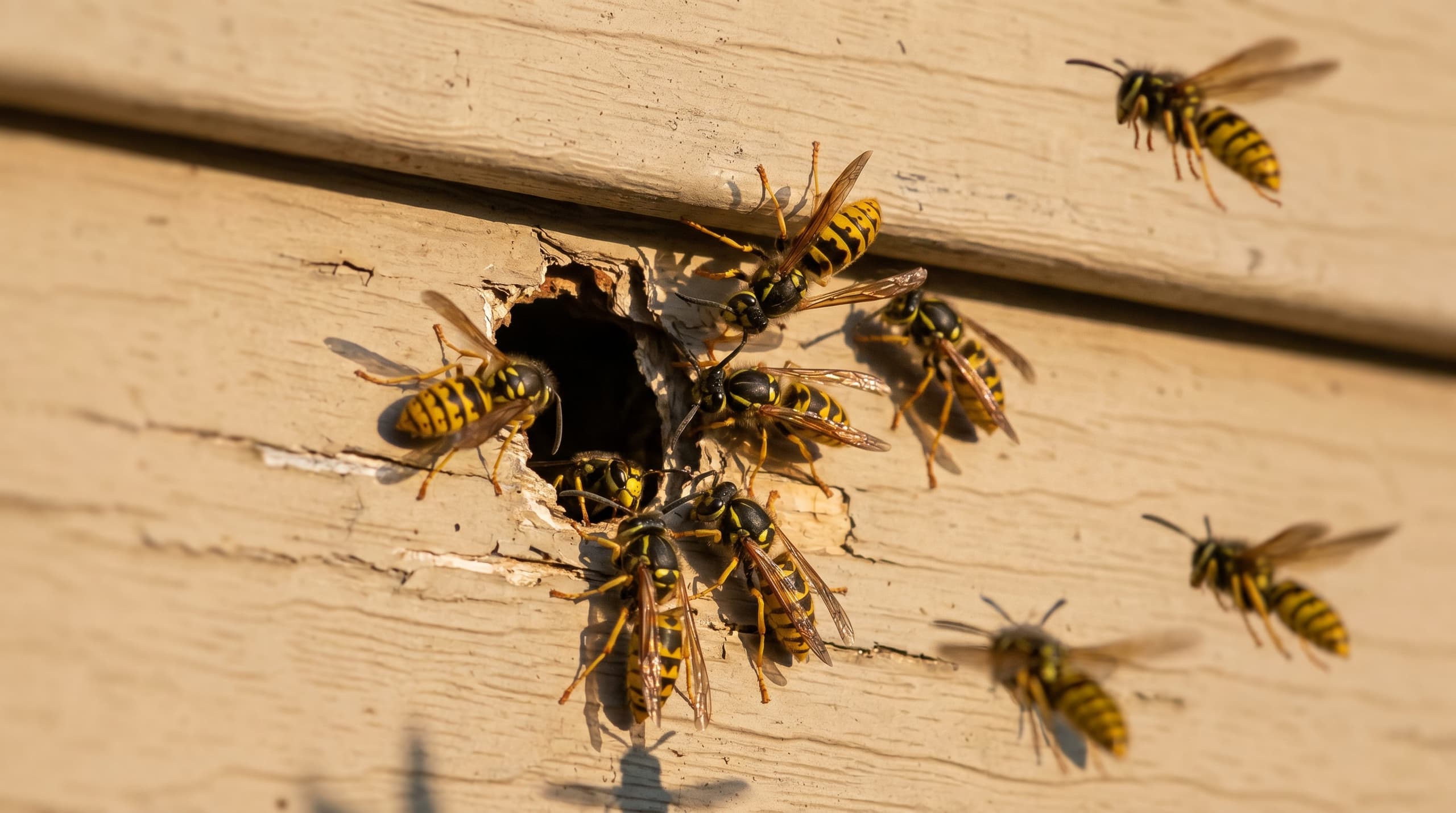
A yellow jacket nest in a wall means workers are flying in and out of a single hole in your siding, soffit, or eave, and the colony itself is hidden in the wall void behind it. Never plug the entry. Trapped yellow jackets chew through drywall and come out inside your living space. Over-the-counter wasp spray kills foragers but leaves the queen alive, and the surviving colony gets more aggressive. Ground nests in old rodent burrows are the same story underground. Call Green Guard at (208) 297-7947 for same-day service in Boise, Eagle, Meridian, and Nampa.
Key Takeaways
- Never plug, caulk, or expanding-foam a yellow jacket entry hole. Trapped wasps chew through drywall into your living space.
- Over-the-counter wasp spray fails on yellow jackets because it only kills foragers at the entry. The queen and brood inside are untouched.
- Western yellow jackets (Vespula pensylvanica) are the dominant species in the Treasure Valley and they nest in wall voids, soffits, and old rodent burrows in lawns.
- An April starter nest with one queen becomes hundreds of workers by August and 2,000 to 5,000 by September. Cost and risk both grow with the colony.
- Pros use a residual dust at the entry point so returning workers carry it back to the queen. Same-day service in Boise is often available when you call (208) 297-7947.
In this article

What a Yellow Jacket Nest in a Wall Actually Means
A yellow jacket nest in a wall means workers are flying in and out of one hole in your siding, soffit, eave, or vent, and the colony itself is hidden in the wall void behind it. The hole is the entrance. The nest is the football-shaped paper structure inside, sometimes 18 inches across by late summer, packed with brood, workers, and a queen.
This is not a small problem you can spray and forget. The visible hole is the easy part. Everything that matters is in the wall, and the wrong move turns yellow jackets into a problem that ends up inside your house.
As of April 2026, queens across Boise are scouting nest sites right now. Soil temperatures hit 50°F in the Treasure Valley a few weeks ago, and overwintered queens are out and building. The same biology applies to ground nests in your lawn (more on that below), and the same rules apply: don't plug, don't spray, don't ignore.
Green Guard has treated wasps across the Treasure Valley for over 10 years and 2,500+ families. Wall and ground nests turn up every summer in Boise, Eagle, Meridian, and Nampa. This guide is the version of the conversation we have on the phone before our tech rolls out.
Five Things You Must Never Do With a Yellow Jacket Nest
If you take nothing else from this guide, take these five rules.
- Never plug, caulk, or foam the entry hole. Yellow jackets trapped behind drywall will chew through it to find a new exit. We've seen them come out through ceiling fan housings, can lights, and baseboards into a living room. A pet store $4 tube of caulk turns a $200 problem into a $5,000 one.
- Never spray over-the-counter wasp killer into the hole. The aerosol kills foragers near the entry, but the queen and 90% of the colony are deeper in the void. Survivors get more aggressive, look for a new exit, and the next time you walk past the wall they swarm.
- Never run a lawnmower or string trimmer near a hole in the lawn. Vibration triggers yellow jacket ground nests like a doorbell. Hitting a nest with a mower can mean dozens of stings before you make it inside.
- Never burn, flood, or shop-vac a nest. Fire causes house fires. Water makes them angrier. Shop-vacs sling furious wasps right back at you the moment you turn it off. These are myths that put people in the ER.
- Never assume an allergic person can be 'careful' around a nest. A yellow jacket sting near the airway is a 911 call. If anyone in the home has had a previous reaction to any sting, treat the nest as a medical hazard and call a pro before anyone else goes in the yard.
Wall-Void Nest vs. Ground Nest: How to Tell Which You Have
Yellow jackets in the Treasure Valley nest in two main spots. The treatment is similar, but the signs are different. Knowing which you've got helps you describe it accurately when you call us.
- Wall-void nest signs: A steady stream of yellow jackets going in and out of a single hole in siding, fascia, soffit, dryer vent, or roof eave. You may hear a faint papery rustling inside the wall on a warm afternoon. The hole itself is often tiny, about a quarter inch, and you'll only notice it because of the traffic.
- Ground-nest signs: A steady stream of yellow jackets entering and leaving a hole in the lawn, in a rock wall, under a deck, or at the base of a fence post. The hole is usually about an inch wide. By August it's surrounded by a cleared patch where grass has been worn away.
- Either type: A noticeable yellow jacket presence within 30 to 50 feet of one location. Workers fly in a fast, straight line to and from the entrance, like a tiny highway.
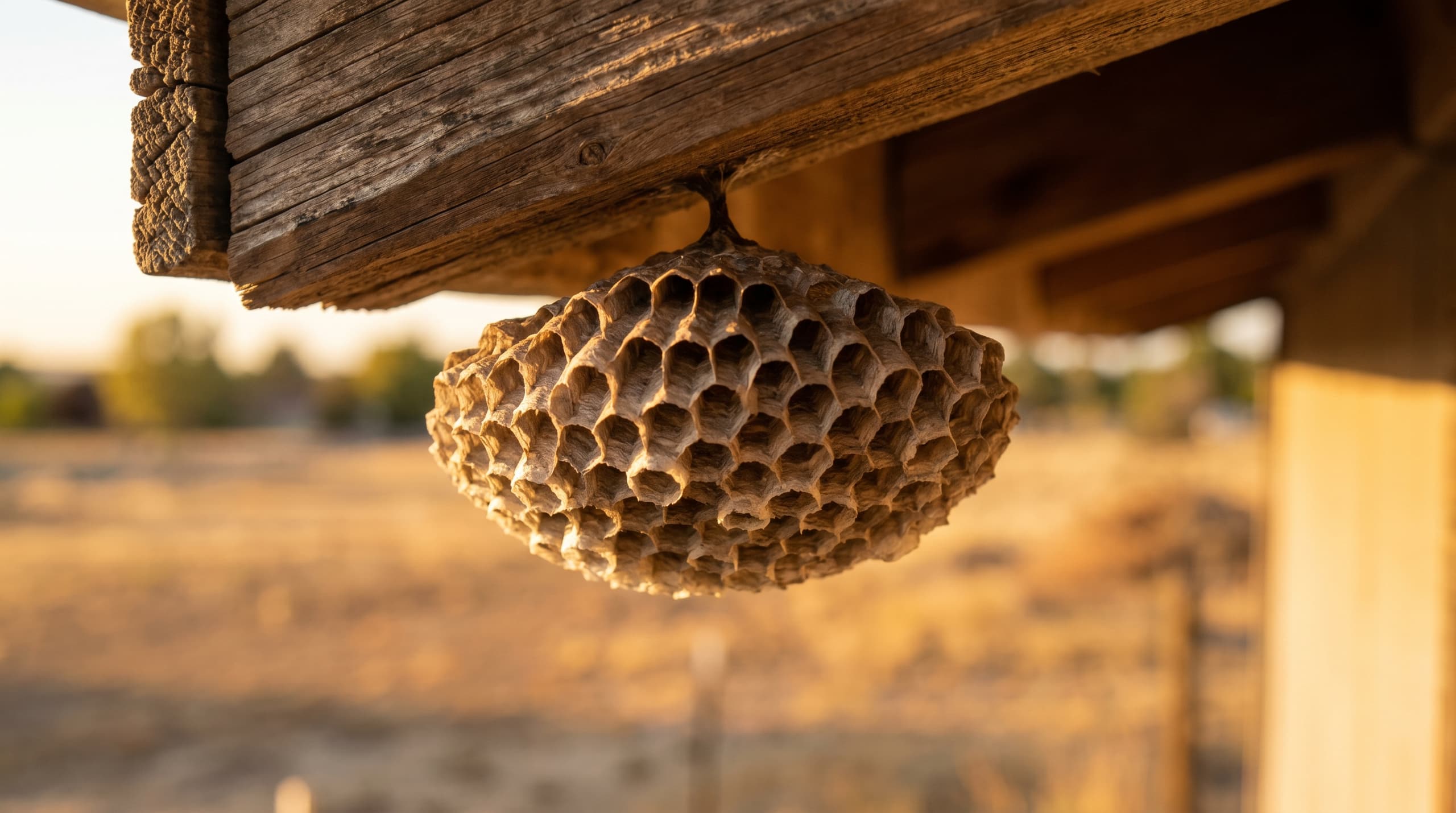
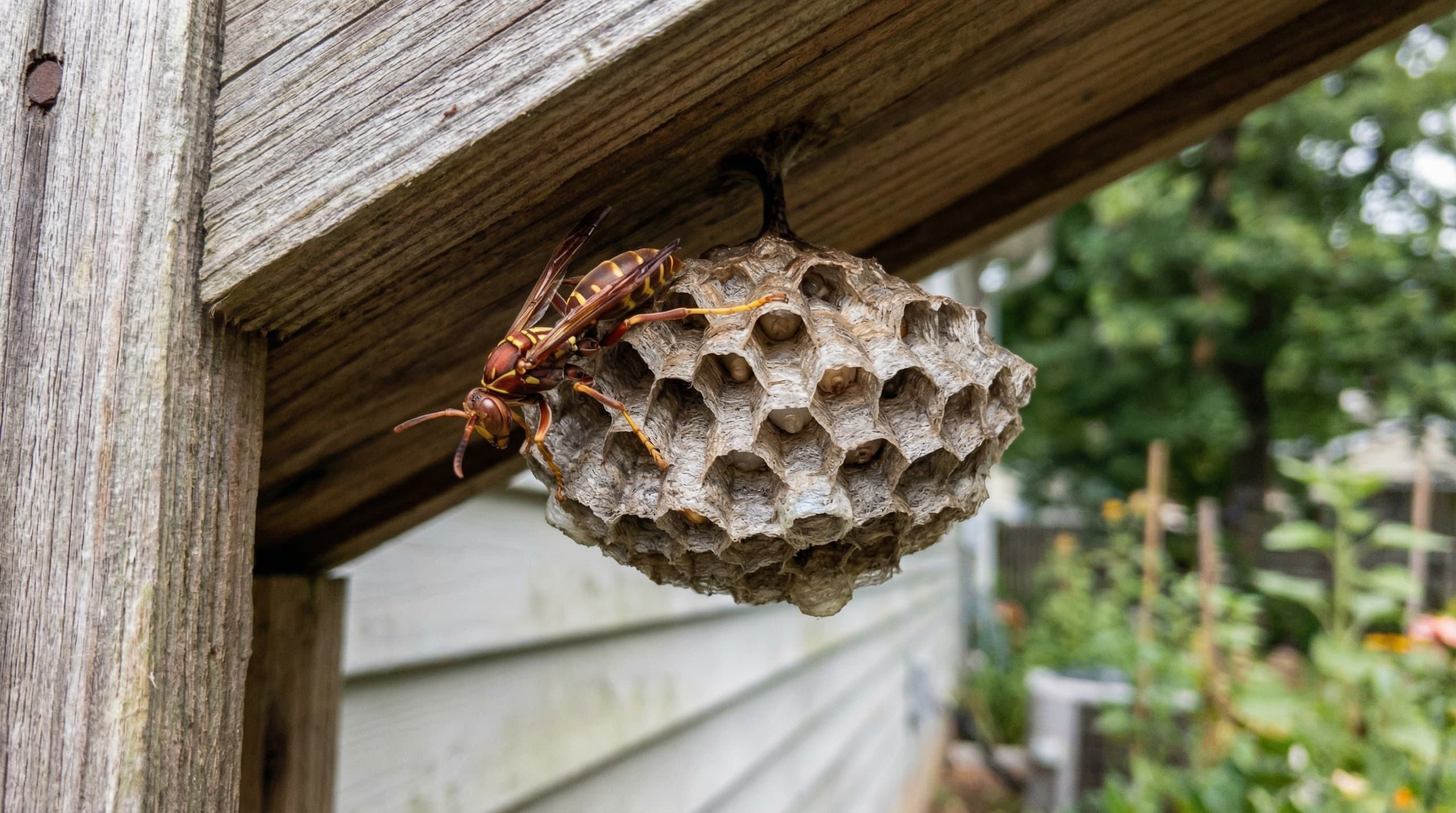
- What it's NOT: A gray football-shaped nest hanging from a tree or eave (that's a bald-faced hornet). An open umbrella-shaped nest with visible cells (that's a paper wasp). A few wasps drinking from your soda (that's foragers, not a nearby nest).
Yellow Jacket vs. Paper Wasp vs. Bald-Faced Hornet
People mix these up constantly, and the wrong ID changes the right response. Here's the quick reference. For a deeper look, the identification list below and our wasp, bee, and hornet ID guide have full breakdowns.
| Feature | Yellow Jacket | Paper Wasp | Bald-Faced Hornet |
|---|---|---|---|
| Body | 1/2 in, bright yellow and black, smooth | 3/4 in, slim, often reddish-brown or yellow | 3/4 in, black with white face and markings |
| Nest type | Hidden paper football, often unseen | Open umbrella shape with visible cells | Gray paper football, fully enclosed |
| Nest location | Wall voids, soffits, ground holes | Eaves, fences, decks, in plain view | Trees, eaves, occasionally shrubs |
| Colony size by August | 1,000 to 5,000+ | 20 to 100 | 400 to 700 |
| Aggression | Very high near nest, attacks vibration | Moderate, mostly defensive | Very high, will pursue 100+ feet |
| Repeat sting? | Yes, multiple times | Yes | Yes |
| DIY-safe? | Never | Sometimes (small open nests under 2 in) | Never |
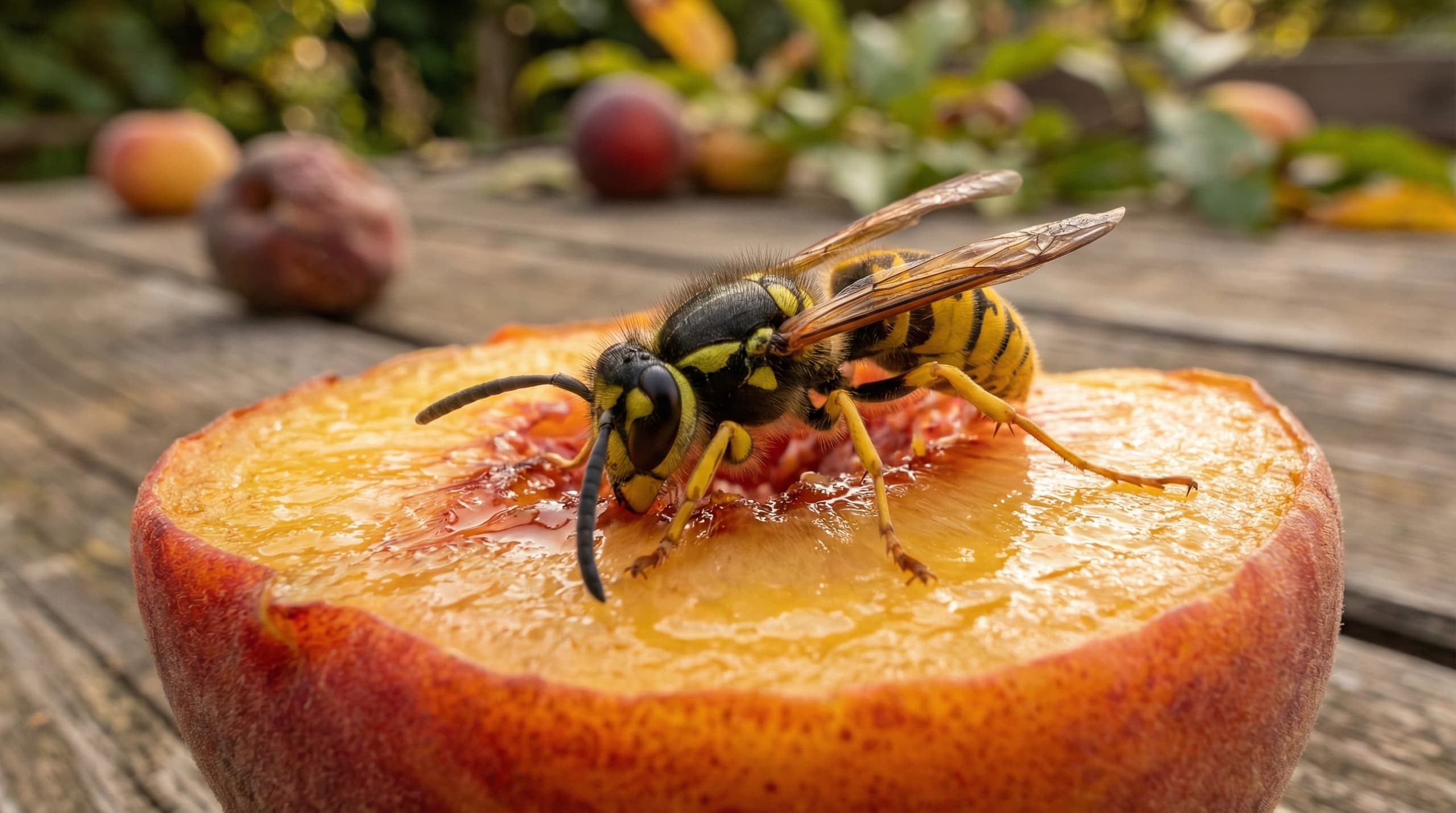
How to Identify a Yellow Jacket
Yellow jackets are one of the most troublesome stinging insects in Idaho. These are the features that separate a yellow jacket from the look-alikes in the table above.
- Size: about 1/2 inch long.
- Color: bright yellow and black banding.
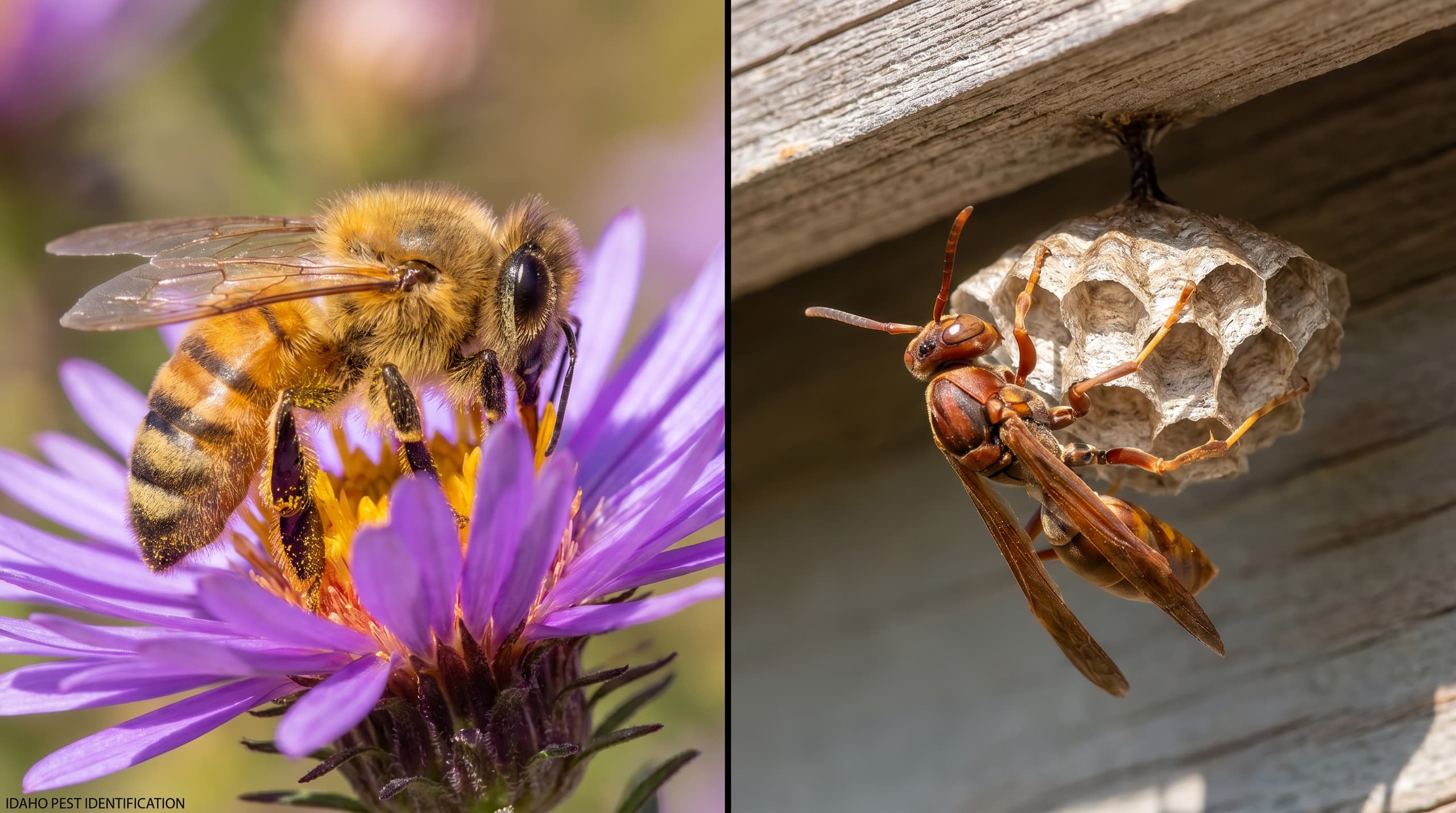
- Body: smooth, shiny, and hairless. Honeybees are fuzzy.
- Waist: narrow and defined between the thorax and abdomen.
- Wings: fold lengthwise when at rest.
- Behavior: fast, direct flight, and they hover near food and faces.
Why Over-the-Counter Wasp Spray Backfires on Yellow Jackets
Over-the-counter wasp spray fails on yellow jackets because it only kills the foragers at the entry. The queen, the brood, and most of the workforce are 12 to 36 inches deeper inside the wall void or burrow. The aerosol can't reach them. The colony survives, regroups, and gets more aggressive.
Here's what we see when a homeowner has tried the spray-can approach before calling us.
- Foragers die at the hole. Maybe 30 to 100 wasps. Looks like the job is done. Within a day, traffic at the hole picks back up.
- The queen keeps laying eggs. She's protected deep inside the nest. Aerosol doesn't penetrate paper combs filled with brood.
- Surviving workers go into defense mode. Alarm pheromones from the dead foragers signal threat. The colony shifts toward attack readiness.
- Wasps look for a new exit. If the original hole is now treated, they push through gaps in drywall, vents, or trim. This is the situation that puts yellow jackets inside the house.
- Within a week, you have the same nest, angrier. Now the colony has had a near-miss event and reacts to anything that gets close.
What Green Guard Does Differently
Professional yellow jacket treatment uses a residual dust, not an aerosol spray. The mechanism is the part that homeowners can't replicate.
Dust applied at the entry point. Our tech puffs a fine residual insecticide dust around the outside of the entry hole. It stays put. Returning workers walk through it as they enter and leave.
The wasps carry the dust to the queen. Yellow jackets groom each other constantly inside the nest. Within 24 to 48 hours, the dust spreads through the colony, including to the queen and brood. The whole colony collapses, not just the foragers.
The entry hole stays open during treatment. This is critical and the opposite of what most homeowners want to do. An open hole means workers keep cycling through the dust. A plugged hole means the dust stops working and the colony tries to chew a new exit.
Give the dust time to work. It has to spread through the colony, so there's no set return visit. If you still see activity, call and we come back free, any time you ask. Once the colony is dead, sealing the hole is a job for you or a handyman, along with any siding, soffit, or vent repairs that keep next year's queens from picking the same spot.
Free re-service guarantee. If yellow jackets come back to a treated location within your service window, we come back free. No second charge, no argument.
Why an April Nest Becomes a September Emergency
Yellow jacket colonies follow a brutal exponential curve. The same nest you ignore in April becomes an entirely different problem by Labor Day.
- April: A single overwintered queen. She's started a tiny paper nest the size of a walnut. No workers yet. Treatment takes 5 minutes.
- May to early June: First 10 to 50 workers emerge. The queen stops foraging and stays inside laying eggs. The nest is now grapefruit-sized.
- July: 200 to 800 workers. Foraging intensifies. This is when most homeowners first notice the traffic at a wall vent or lawn hole.
- August: 1,000 to 3,000 workers. Colony peak is approaching. Yellow jackets are everywhere at picnics and trash cans. Defensive zone around the nest hits 30 feet.
- September: Up to 5,000 workers in a mature Treasure Valley colony. New queens are being produced. This is peak sting season in Idaho. Most ER visits for stings happen this month.
What Attracts Yellow Jackets to Your Yard
Yellow jackets want protein (meat, pet food) in early summer and sugars (fruit, drinks, garbage) in late summer. Open garbage cans, fallen fruit, outdoor pet food, and picnic foods all draw them in. Good sanitation reduces the attraction, and treating the nest removes the source.
In late summer, check cans and cups before you drink at outdoor gatherings. A sting in the mouth or throat is a medical emergency, so call 911 right away.
What a Yellow Jacket Sting Can Do
When one yellow jacket stings, it releases an alarm pheromone that recruits other workers, and each wasp can sting more than once. Reactions range from mild to life-threatening. For first-aid steps, see our wasp sting first aid guide.
- Normal reaction: pain, redness, and swelling at the sting site that resolve in hours to days.
- Large local reaction: extensive swelling beyond the sting site that may last a week.
- Mild allergic reaction: hives or itching beyond the sting site.
- Anaphylaxis: difficulty breathing, throat swelling, or dizziness. Call 911 immediately.
Safety With Kids, Pets, and Allergies When You Find a Nest
The moment you confirm a yellow jacket nest in your wall or yard, the calculus changes if you've got kids, pets, or anyone with a sting allergy in the household. Some quick rules.
- Mark off the danger zone. Yellow jackets defend a 20 to 30 foot radius around an active nest. Move the kids' play area, the dog run, and the BBQ outside that zone until treatment is done.
- Tell the kids what the hole is and not to go near it. A common kid sting situation is curiosity at a lawn hole. A clear conversation works better than hoping they don't notice.
- Keep dogs on a leash near the nest. Dogs that snap at flying yellow jackets get stung in the mouth or throat. Throat stings on a small dog are an emergency vet trip.
- Know your allergy plan. If anyone in the household has had a previous sting reaction, confirm an EpiPen is current and accessible. Anaphylaxis from yellow jacket stings can develop within minutes.
- Call the same day, not 'when you get a chance.' Same-day service in Boise is often available. The cost of waiting is measured in stings, not dollars.
Why the Treasure Valley Has More Yellow Jacket Nests Than Most Places
Western yellow jackets (Vespula pensylvanica) are the dominant species across Idaho and the Pacific Northwest. The Treasure Valley gives them an unusually good environment, which is why they cause so much trouble here.
Lots of rodent burrows. Yellow jacket queens love to take over abandoned vole and ground squirrel tunnels. Boise's foothills neighborhoods, plus rural edges in Eagle, Star, and Kuna, have heavy rodent activity. That's prime real estate for ground nests.
Irrigation keeps soil soft. Pressurized irrigation across most Valley subdivisions keeps lawns soft and easy to tunnel. Dry, hard-packed soil is harder for queens to expand into. Most Treasure Valley yards are the opposite.
Older housing stock with siding gaps. Boise's North End and Bench, plus the older parts of Nampa and Caldwell, have plenty of homes with original wood siding, weathered soffits, and gaps around dryer vents. Every gap is a potential wall-void nest site.
Long warm season. Our summers run hot and dry from June through September. Yellow jacket colonies hit larger sizes here than they would in cooler or wetter regions. By late August, a healthy Boise colony often pushes past 3,000 workers.
When You Spot the Hole, Call Us
Yellow jacket nests don't get smaller. Every day from April through September, the colony in your wall or yard adds workers and gets harder to treat safely. The cheapest, safest, fastest version of this problem is the one you call us about today.
If you've already plugged a hole or sprayed and now there are wasps showing up inside, this is exactly the situation we handle. Tell us what you did, where the entry is, and whether anyone in the home has a sting allergy. Same-day service is often available.
For paper wasp questions or general nest ID, see our Boise wasp nest removal and identification guide.
Green Guard Pest Control. Family-owned, local, 4.9 stars across 170+ Google reviews from your Treasure Valley neighbors. Hospital-grade products that are safe for kids and pets once dry.
Call (208) 297-7947 or start with our $49 initial treatment. Free re-service if yellow jackets come back within your plan. Visit our wasp and hornet removal service page for the full process.
Frequently Asked Questions
How fast can yellow jackets chew through drywall into my house?
Quick answerFaster than most people expect.
If the original entry hole is plugged and the colony is healthy, workers can break through standard 1/2 inch drywall in a few hours to a day. They follow gaps around outlets, light fixtures, and ceiling fans because those are the path of least resistance. This is the single biggest reason we tell homeowners not to seal the entry.
Will the yellow jackets just leave on their own?
Quick answerThe colony dies in late fall when freezing temperatures hit, but the workers do not relocate.
From April through October the nest grows non-stop. Waiting it out means living with a 1,000 to 5,000 wasp colony 20 feet from your back door through the most aggressive months of the year. New queens may also pick the same spot the following spring if it's not addressed.
Can my dog or cat get stung if there's a ground nest in the yard?
Quick answerYes, and stings to the mouth or throat from a snapping dog are an emergency vet trip.
Yellow jacket ground nests are vibration-triggered, so a dog running across the lawn or a cat batting at a low-flying worker can set off a defensive swarm. Until the nest is treated, keep pets on leash within 30 feet of the entry hole and watch for swelling, drooling, or trouble breathing if a sting happens.
How much does professional yellow jacket nest removal cost in Boise?
Quick answerFor Green Guard subscription customers, the initial service is $49 and includes nest treatment as part of the visit.
One-time wasp and yellow jacket removals start at $200. Quarterly prevention plans start at $119 per treatment for homes up to 2,500 sq ft and include free re-service if yellow jackets return between scheduled visits.
What if it turns out to be honeybees in my wall, not yellow jackets?
Quick answerGreen Guard does not treat honeybee colonies.
Honeybees are fuzzy, golden brown, and you'll usually see honeycomb (gold or yellow wax) at the entry. They come and go calmly rather than zipping in straight lines. If you suspect honeybees, contact a local beekeeper for live relocation. For yellow jackets, paper wasps, or bald-faced hornets, call us at (208) 297-7947.
Is same-day yellow jacket service available in Boise?
Quick answerYes, same-day service is often available.
We cover Boise, Eagle, Meridian, Nampa, Caldwell, Kuna, Star, Garden City, and the rest of the Treasure Valley. We usually get out within 24 to 48 hours.
Why are yellow jackets so aggressive?
Quick answerYellow jackets aggressively defend their colony.
When threatened, they release alarm pheromones that recruit other workers to attack. Unlike honeybees that die after stinging, yellow jackets can sting repeatedly, making their defense particularly dangerous. They are most aggressive in late summer when colonies are largest.
What attracts yellow jackets to my yard?
Quick answerYellow jackets are attracted to protein (meat, pet food) in early summer and sugars (fruit, drinks, garbage) in late summer.
Open garbage cans, fallen fruit, outdoor pet food, and picnic foods all attract them. Good sanitation reduces the attraction, and treating the nest removes the source.