
Occasional Invaders
Clover Mites
Bryobia praetiosa
IdentificationHow to Identify Clover Mites
Quick Answer
Clover mites are tiny, oval mites with a characteristic reddish-brown color. Their front legs are much longer than other legs, giving them a distinctive appearance.
Full identification notes
They're so small they look like moving specks, and they leave a red stain when crushed.
Free
Re-Service Between Visits
4.9/5
Google Rating
9 to 5
Office Hours, Mon to Fri
Clover Mites Behavior & Habits
Understanding how clover mites behave helps prevent infestations
Clover mites feed on grass, clover, and plants.
More about their habits
They don't bite or feed on blood. In spring and fall, they climb walls and enter homes through tiny cracks, and thousands can invade at once. They're attracted to sunny, south-facing walls.
Clover Mites Risks & Dangers
What clover mites can do to your health and property
Health Risks
Clover mites don't bite humans or pets and don't transmit diseases.
Property Damage
When crushed, clover mites leave rusty-red stains on walls, curtains, furniture, and floors.
Full health and property details
Health Risks
They're completely harmless.
Property Damage
These stains are their body fluids and can be difficult to remove.
Signs of Clover Mites Infestation
Look for these indicators in your home
Signs You Have Clover Mites
What homeowners spot first
- Tiny reddish specks on sunny windowsills
- Masses of mites on south-facing walls
- Red stains on walls or curtains
More signs to look for
- Mites visible on window screens
- Dust-like clusters along window frames or weatherstripping
Clover Mites in Boise & the Treasure Valley
Clover mites are a classic spring and fall caller in the Treasure Valley, with most of our calls landing in April-May and again in September-October.
More on what we see locally
New Boise and Meridian subdivisions get hit hardest because the sod is laid right up to the stem wall and the south-facing stucco bakes in the afternoon sun. If your lawn is well-fertilized and touches the foundation, you'll see them on the sunny side of the house first.
How We Handle Clover Mites
What our approach looks like
Clover mite control relies heavily on the bare zone concept.
Our full approach
Removing grass from a strip around the foundation creates a barrier they won't cross. We combine that with a perimeter treatment before invasion season, and sealing gaps around windows and doors on your end helps keep them out.
How to Prevent Clover Mites
Steps you can take to reduce the risk of infestation
- Create 18-24 inch bare zone around foundation
- Remove grass touching the building
- Use pea gravel or mulch in foundation zone
More prevention steps
- Seal cracks around windows and doors
- Keep vegetation trimmed away from home
Clover Mites Questions Answered
Common questions about identification, prevention, and treatment
Call (208) 297-7947Do clover mites bite?
Quick answerNo.
Clover mites feed only on plants. They don't bite humans, pets, or damage household items. The red stain they leave when crushed is often mistaken for blood, but it's actually their body fluids.
Why are they only on one side of my house?
Quick answerClover mites are attracted to sunny, warm surfaces.
South and west-facing walls absorb the most heat, attracting mites from the lawn. Shaded walls rarely have clover mite problems.
How do I remove clover mite stains?
Quick answerDon't crush clover mites.
Vacuum them instead to prevent staining. For existing stains, try gentle cleaning solutions on a test area first. Some stains are permanent on porous surfaces.
Similar Pests
Learn about other pests in this category
Related Guides
Expert articles related to clover mites in Idaho
 Prevention Tips
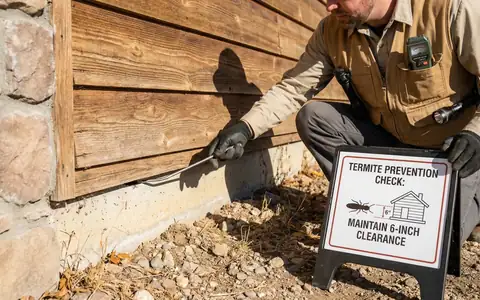
How to Protect Your Home from Termites in Boise (2026 Guide)
Read Article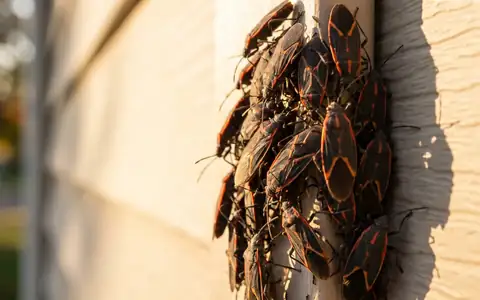 Pest Identification
Box Elder Bugs in Boise: How to Stop the Fall Swarm Before They Move Into Your Home (2026 Update)
Read Article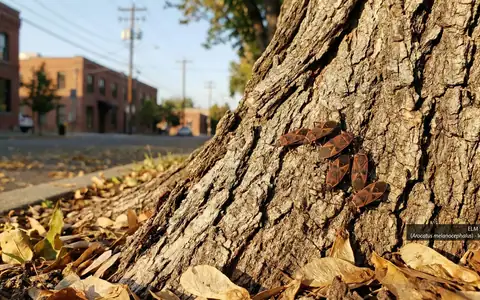 Pest Identification
Elm Seed Bugs in Idaho (June 2026 Update): Why Boise Homes Are Covered Right Now and How to Stop the Invasion
Read Article
Think You Have Clover Mites?
Call and we'll talk through your options. We usually get out within 24 to 48 hours.
Quarterly plans starting at
$119/quarter
- No-Obligation Quote
- Locally Owned
- Free Re-Service Between Visits
Our Pest Control Services
Complete pest protection. Professional solutions for every pest problem, on a quarterly plan or a one-time visit.
General Pest ControlLearn More
Year-round protection packages
Ant ControlLearn More
Carpenter & pavement ants
Spider ManagementLearn More
Black widows & hobo spiders
Rodent ControlLearn More
Mice, rats & voles
Wasp & HornetLearn More
Nest removal & prevention
Mosquito & OutdoorLearn More
Mosquitos, ticks & fleas
Eco-FriendlyLearn More
Pet & kid safe options
CommercialLearn More
Business & warehouse
Proudly Serving the Treasure Valley
Local technicians from the Treasure Valley, in Boise, Meridian, and surrounding communities.
Pest Control Resources
Expert tips & guides. Local pest knowledge from Boise's trusted exterminators