
Occasional Invaders
Earwigs
Forficula auricularia
IdentificationHow to Identify Earwigs
Quick Answer
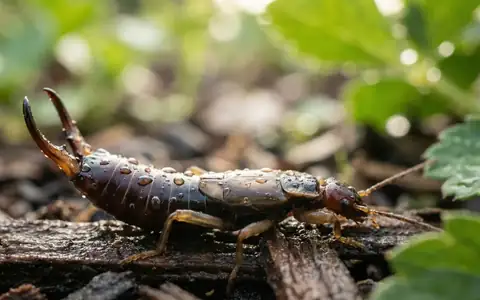
Earwigs are easy to spot once you've seen one. Long, flat, reddish-brown bodies (about half an inch to an inch) with a pair of curved pincers at the tail.
Full identification notes
The pincers look menacing, but they're mostly for defense and mating. Earwigs have wings folded under short covers but almost never fly.
Free
Re-Service Between Visits
4.9/5
Google Rating
9 to 5
Office Hours, Mon to Fri
Earwigs Behavior & Habits
Understanding how earwigs behave helps prevent infestations
Earwigs are nocturnal.
More about their habits
They hide in dark, damp spots all day and forage after sundown. They slip into homes through door gaps, weep holes, and foundation cracks when the yard dries out or the heat spikes. They're omnivores, eating plants, soft-bodied bugs, and decaying mulch. And no, they don't crawl into ears. That's a myth.
Earwigs Risks & Dangers
What earwigs can do to your health and property
Health Risks
Earwigs aren't dangerous.
Property Damage
Indoors, earwigs don't damage anything structural.
Full health and property details
Health Risks
The pincers look scary but rarely break skin, and they don't bite or spread disease. The "crawls into your ear" story is a folk tale, not a fact.
Property Damage
Outside, they can chew seedlings, hostas, marigolds, and ripening fruit, which is why Boise gardeners notice them first in the vegetable beds.
Signs of Earwigs Infestation
Look for these indicators in your home
Signs You Have Earwigs
What homeowners spot first
- Long, flat bugs with rear pincers showing up in bathrooms, basements, or laundry rooms
- Dozens of earwigs clustered under doormats, potted plants, or stepping stones
- Chewed edges on seedlings, marigolds, hostas, or ripening strawberries
More signs to look for
- Earwigs falling out of bath towels, garden gloves, or folded patio umbrellas
- Streaks of dark frass in mulch beds or along the bottom of garage door weatherstripping
Earwigs in Boise & the Treasure Valley
Earwigs are one of the most common July and August calls we get across the Treasure Valley.
More on what we see locally
Foothills neighborhoods like the Boise Bench, Hidden Springs, and parts of Eagle near the river see the worst of it. Heavy bark mulch, daily drip irrigation, and dry summer heat push them off the lawn and toward the foundation. We also see steady earwig problems in Meridian and Star yards with newer landscaping, where fresh mulch and shaded plantings stay damp under the surface even when the top layer looks bone-dry.
How We Handle Earwigs
What our approach looks like
Earwig control is really habitat work plus a tight perimeter.
Our full approach
We treat a 3-foot barrier around the foundation, hit weep holes and door thresholds, and dust mulch beds and rockwork where they cluster. Most homes see numbers drop within a week. New customers start at $49 for the first service.
How to Prevent Earwigs
Steps you can take to reduce the risk of infestation
- Pull bark mulch back at least 6 inches from the foundation, especially on the shaded side of the house
- Run drip irrigation early in the day so the soil at the foundation dries before sundown
- Add door sweeps on garage and exterior doors (earwigs walk in under the gap)
More prevention steps
- Seal weep holes, hose bib gaps, and foundation cracks larger than a credit card edge
- Swap white porch bulbs for yellow LEDs (earwigs and the bugs they eat both follow white light)
- Keep a dry gravel or rock band 12 inches wide right against the foundation
Earwigs Questions Answered
Common questions about identification, prevention, and treatment
Call (208) 297-7947Do earwigs really crawl into ears?
Quick answerNo.
It's a folk tale, not a fact. Earwigs have no interest in humans, and there are zero documented cases of them nesting in ears. The name comes from the ear-shaped hindwing they fold under those short wing covers.
Why am I suddenly seeing earwigs in my Boise house in July?
Quick answerSummer heat dries out their hiding spots.
When the lawn, mulch, and rockwork bake out in July and August, earwigs migrate toward the foundation looking for moisture and end up coming in through door sweeps, weep holes, and bathroom vents. Most of our July earwig calls are exactly this pattern.
How do I get rid of earwigs without using harsh chemicals?
Quick answerCut the moisture and habitat first.
Pull mulch back at least 6 inches from the foundation, fix any drip irrigation that's soaking the wall, and add door sweeps on garage and exterior doors. We pair those steps with our organic-based perimeter treatment so the bugs that are already there don't make it inside.
Similar Pests
Learn about other pests in this category
Related Guides
Expert articles related to earwigs in Idaho
 Local Guide
Earwig Control in Boise: When They Show Up and How to Stop Them
Read Article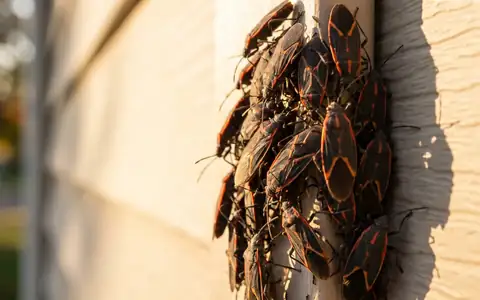 Pest Identification
Box Elder Bugs in Boise: How to Stop the Fall Swarm Before They Move Into Your Home (2026 Update)
Read Article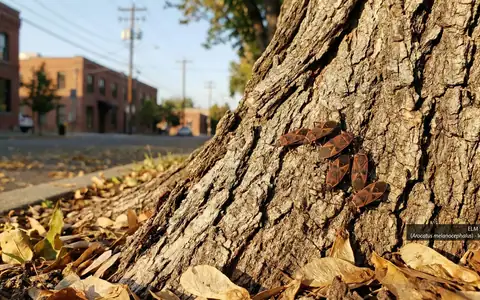 Pest Identification
Elm Seed Bugs in Idaho (June 2026 Update): Why Boise Homes Are Covered Right Now and How to Stop the Invasion
Read Article
Think You Have Earwigs?
Call and we'll talk through your options. We usually get out within 24 to 48 hours.
Quarterly plans starting at
$119/quarter
- No-Obligation Quote
- Locally Owned
- Free Re-Service Between Visits
Our Pest Control Services
Complete pest protection. Professional solutions for every pest problem, on a quarterly plan or a one-time visit.
General Pest ControlLearn More
Year-round protection packages
Ant ControlLearn More
Carpenter & pavement ants
Spider ManagementLearn More
Black widows & hobo spiders
Rodent ControlLearn More
Mice, rats & voles
Wasp & HornetLearn More
Nest removal & prevention
Mosquito & OutdoorLearn More
Mosquitos, ticks & fleas
Eco-FriendlyLearn More
Pet & kid safe options
CommercialLearn More
Business & warehouse
Proudly Serving the Treasure Valley
Local technicians from the Treasure Valley, in Boise, Meridian, and surrounding communities.
Pest Control Resources
Expert tips & guides. Local pest knowledge from Boise's trusted exterminators