
Occasional Invaders
Crickets
Acheta domesticus (house), Gryllus spp. (field)
IdentificationHow to Identify Crickets
Quick Answer
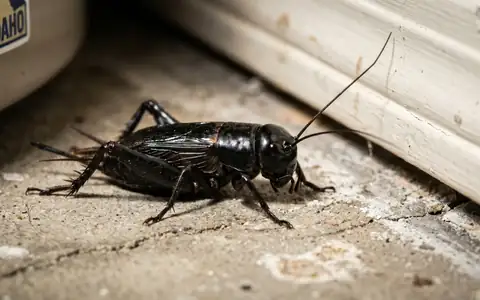
Crickets have cylindrical bodies, long antennae, and enlarged hind legs for jumping. House crickets are yellowish-brown with three dark bands on the head.
Full identification notes
Field crickets are larger and darker (brown to black). Camel crickets (cave crickets) are tan, humpbacked, and don't chirp.
Free
Re-Service Between Visits
4.9/5
Google Rating
9 to 5
Office Hours, Mon to Fri
Crickets Behavior & Habits
Understanding how crickets behave helps prevent infestations
Male crickets chirp by rubbing their wings together to attract mates.
More about their habits
They're nocturnal and attracted to lights. Crickets eat plant material and occasionally fabric, paper, or other organic materials. Large populations can become a nuisance with constant chirping.
Crickets Risks & Dangers
What crickets can do to your health and property
Health Risks
Crickets don't bite or transmit diseases.
Property Damage
Crickets may chew on fabric, paper, or food items.
Full health and property details
Health Risks
They're harmless to humans though their constant chirping can be extremely annoying.
Property Damage
Large infestations can damage stored items. Their droppings can stain surfaces.
Signs of Crickets Infestation
Look for these indicators in your home
Signs You Have Crickets
What homeowners spot first
- Chirping sounds at night
- Jumping insects near lights
- Chewed fabric or paper
More signs to look for
- Dead crickets on floors and windowsills
- Cricket droppings (small black pellets)
Crickets in Boise & the Treasure Valley
Cricket calls in the Treasure Valley pile up from August through October, once nights cool and porch lights start pulling them up to the house.
More on what we see locally
The garage door bottom seal is the #1 entry point we find, with siding gaps under exterior fixtures a close second. We see the heaviest pressure in rural-edge neighborhoods like Kuna, Star, Middleton, and west Caldwell where homes back up to fields, and around golf-course communities on the Eagle and south Meridian sides. Mormon crickets occasionally swarm elsewhere in Idaho, but we rarely see them in the Valley.
How We Handle Crickets
What our approach looks like
We hit the exterior perimeter to stop crickets at the wall, treat harborage spots like landscape beds and the garage door track, and clean up any indoor stragglers.
Our full approach
Most homeowners see results in 24-48 hours, and we'll point out the porch lights or door sweeps that are pulling them in. Your first visit is $49 with quarterly service.
How to Prevent Crickets
Steps you can take to reduce the risk of infestation
- Reduce outdoor lighting or use yellow bulbs
- Seal cracks around doors and windows
- Keep vegetation trimmed away from home
More prevention steps
- Remove debris that provides harborage
- Store firewood away from house
- Reduce moisture around foundation
Crickets Questions Answered
Common questions about identification, prevention, and treatment
Call (208) 297-7947Why do crickets chirp at night?
Quick answerMale crickets chirp to attract females, and the chirping speeds up as it warms outside.
You can actually estimate the temperature from a cricket: count chirps in 14 seconds and add 40 for a rough Fahrenheit reading.
How do I stop the chirping?
Quick answerFind and remove the cricket (they're often near the sound source) or treat infested areas.
Reducing outdoor populations through perimeter treatment prevents them from entering. A single cricket can be nearly impossible to locate by sound alone.
Do crickets cause damage?
Quick answerLarge populations can damage fabrics (especially with perspiration stains), paper, and some food items.
A few crickets cause minimal damage. The main issue is usually the noise, not damage.
Similar Pests
Learn about other pests in this category
Related Guides
Expert articles related to crickets in Idaho
 Local Guide
Cricket Control in Boise: How to Stop the Chirping in Your Basement, Garage, and Yard (2026 Idaho Guide)
Read Article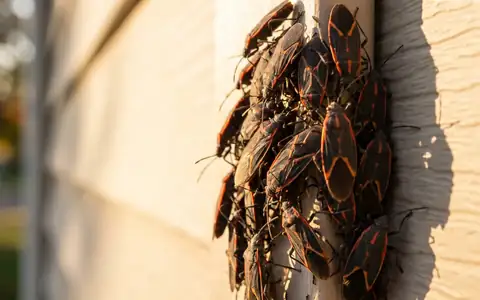 Pest Identification
Box Elder Bugs in Boise: How to Stop the Fall Swarm Before They Move Into Your Home (2026 Update)
Read Article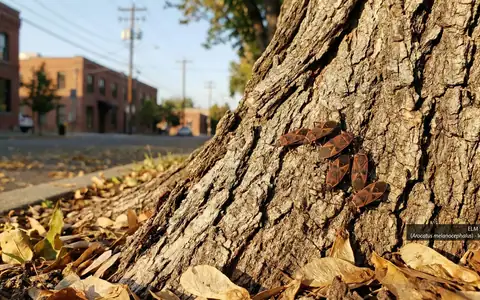 Pest Identification
Elm Seed Bugs in Idaho (June 2026 Update): Why Boise Homes Are Covered Right Now and How to Stop the Invasion
Read Article
Think You Have Crickets?
Call and we'll talk through your options. We usually get out within 24 to 48 hours.
Quarterly plans starting at
$119/quarter
- No-Obligation Quote
- Locally Owned
- Free Re-Service Between Visits
Our Pest Control Services
Complete pest protection. Professional solutions for every pest problem, on a quarterly plan or a one-time visit.
General Pest ControlLearn More
Year-round protection packages
Ant ControlLearn More
Carpenter & pavement ants
Spider ManagementLearn More
Black widows & hobo spiders
Rodent ControlLearn More
Mice, rats & voles
Wasp & HornetLearn More
Nest removal & prevention
Mosquito & OutdoorLearn More
Mosquitos, ticks & fleas
Eco-FriendlyLearn More
Pet & kid safe options
CommercialLearn More
Business & warehouse
Proudly Serving the Treasure Valley
Local technicians from the Treasure Valley, in Boise, Meridian, and surrounding communities.
Pest Control Resources
Expert tips & guides. Local pest knowledge from Boise's trusted exterminators