
Occasional Invaders
Millipedes
Diplopoda class
IdentificationHow to Identify Millipedes
Quick Answer
Millipedes have cylindrical, segmented bodies with two pairs of legs per segment (unlike centipedes' one pair). They curl into a spiral when disturbed.
Full identification notes
They move slowly and cannot bite. Most are dark brown or black with a hard, shiny exoskeleton.
Free
Re-Service Between Visits
4.9/5
Google Rating
9 to 5
Office Hours, Mon to Fri
Millipedes Behavior & Habits
Understanding how millipedes behave helps prevent infestations
Millipedes are detritivores that eat decaying plant material and are typically found outdoors in mulch, leaf litter, and soil.
More about their habits
They invade homes in fall seeking moisture or shelter, or when populations explode after wet conditions. They cannot survive long indoors due to low humidity.
Millipedes Risks & Dangers
What millipedes can do to your health and property
Health Risks
Millipedes don't bite or sting.
Property Damage
No property damage.
Full health and property details
Health Risks
Some species secrete defensive fluids that can cause minor skin irritation or staining but aren't dangerous.
Property Damage
They don't eat wood, fabric, or food. They're purely a nuisance when they invade in large numbers and die indoors.
Signs of Millipedes Infestation
Look for these indicators in your home
Signs You Have Millipedes
What homeowners spot first
- Slow-moving, curling creatures near foundations
- Dead millipedes on basement or garage floors
- Mass migrations during wet weather
More signs to look for
- Concentrations under mulch or debris near home
Millipedes in Boise & the Treasure Valley
Millipedes are common fall invaders in the Boise area, especially in neighborhoods with mature landscaping and heavy mulch use.
More on what we see locally
They often invade en masse after wet weather in late summer and early fall. Basement apartments and ground-floor units are most affected.
How We Handle Millipedes
What our approach looks like
Millipede control focuses on exterior treatment and habitat modification.
Our full approach
We apply barrier treatments around the foundation, treat mulch beds and hiding areas, and recommend landscaping changes to reduce moisture near the home. Interior treatment removes current invaders and deters entry.
How to Prevent Millipedes
Steps you can take to reduce the risk of infestation
- Reduce mulch depth (keep under 2 inches)
- Create dry zone (gravel strip) next to foundation
- Remove leaf litter and debris near home
More prevention steps
- Fix moisture issues in basement/crawlspace
- Seal cracks in foundation
- Reduce outdoor lighting that attracts them
Millipedes Questions Answered
Common questions about identification, prevention, and treatment
Call (208) 297-7947Why are there suddenly hundreds of millipedes?
Quick answerMillipede populations can explode after wet conditions increase decomposing plant material (their food).
When soil becomes saturated or conditions change, masses of millipedes migrate, often toward homes. These invasions are usually temporary.
What's the difference between millipedes and centipedes?
Quick answerMillipedes have two pairs of legs per segment, move slowly, curl when threatened, and eat decaying plants.
Centipedes have one pair of legs per segment, move quickly, don't curl, and are predators that can bite.
Will millipedes damage my home?
Quick answerNo.
Millipedes don't eat wood, fabric, food, or anything in your home. They can't survive indoors due to low humidity. They're nuisance pests only: unsightly but harmless.
Similar Pests
Learn about other pests in this category

Related Guides
Expert articles related to millipedes in Idaho
 Pest Identification
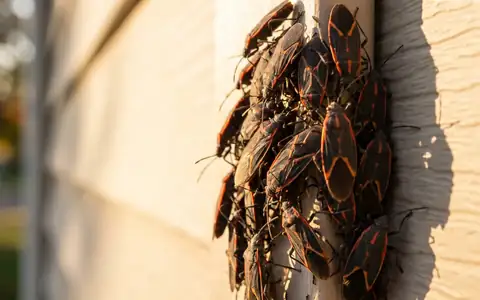
Box Elder Bugs in Boise: How to Stop the Fall Swarm Before They Move Into Your Home (2026 Update)
Read Article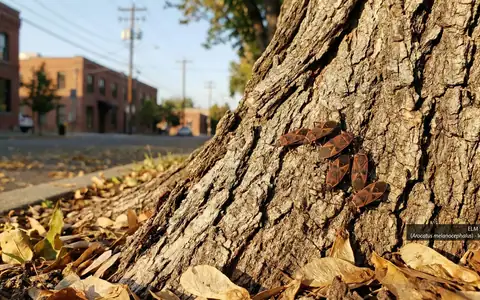 Pest Identification
Elm Seed Bugs in Idaho (June 2026 Update): Why Boise Homes Are Covered Right Now and How to Stop the Invasion
Read Article Seasonal Guide
Idaho Pest Calendar 2026: What's Invading Boise Homes Month by Month
Read Article
Think You Have Millipedes?
Call and we'll talk through your options. We usually get out within 24 to 48 hours.
Quarterly plans starting at
$119/quarter
- No-Obligation Quote
- Locally Owned
- Free Re-Service Between Visits
Our Pest Control Services
Complete pest protection. Professional solutions for every pest problem, on a quarterly plan or a one-time visit.
General Pest ControlLearn More
Year-round protection packages
Ant ControlLearn More
Carpenter & pavement ants
Spider ManagementLearn More
Black widows & hobo spiders
Rodent ControlLearn More
Mice, rats & voles
Wasp & HornetLearn More
Nest removal & prevention
Mosquito & OutdoorLearn More
Mosquitos, ticks & fleas
Eco-FriendlyLearn More
Pet & kid safe options
CommercialLearn More
Business & warehouse
Proudly Serving the Treasure Valley
Local technicians from the Treasure Valley, in Boise, Meridian, and surrounding communities.
Pest Control Resources
Expert tips & guides. Local pest knowledge from Boise's trusted exterminators