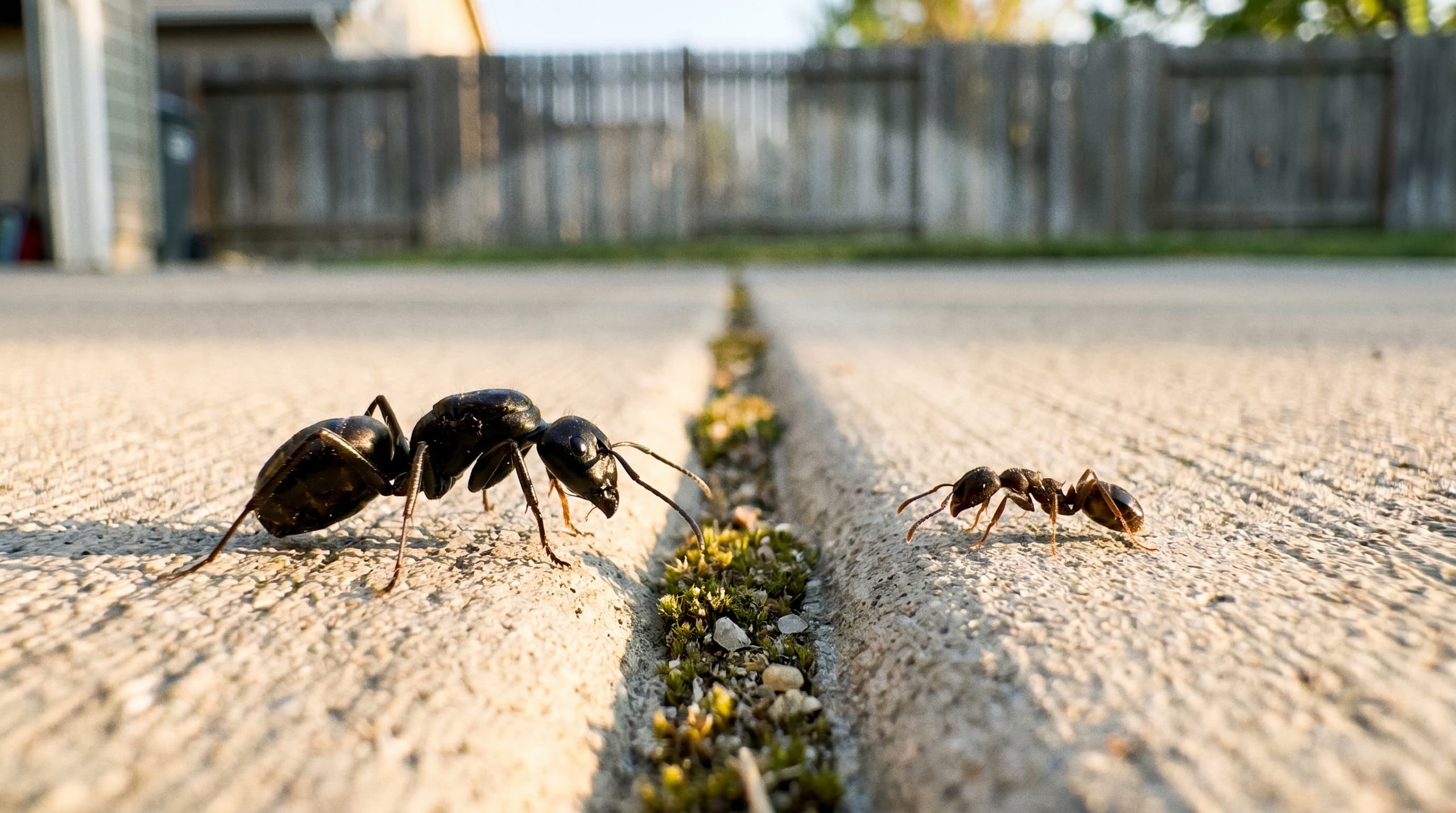
Quick answer
Carpenter ants in Idaho are large (1/4 to 1/2 inch), single-node, smooth-thoraxed, and dangerous because they hollow out wood inside walls, decks, and eaves. Pavement ants are small (1/8 inch), double-node, and have parallel grooves on the head and thorax. They nest in driveway cracks and slab edges and cause no structural damage. If the ant is bigger than a grain of rice and black, treat it as a carpenter ant until you confirm otherwise. Any winged ant indoors in May is a five-alarm signal.
Key Takeaways
- Size is the fastest tell: carpenter ants are 1/4 to 1/2 inch, pavement ants are about 1/8 inch (smaller than a grain of rice)
- Carpenter ants have one node at the waist and a smooth, rounded thorax. Pavement ants have two nodes and parallel grooves on the head and thorax
- Carpenter ants nest inside walls, eaves, deck posts, and moisture-damaged wood. Pavement ants nest in driveway cracks, slab edges, and expansion joints
- Damage potential is wildly different. Carpenter ants can cost $3,000 to $10,000+ in wood repair. Pavement ants are a nuisance, not a structural threat
- Over-the-counter sprays make carpenter ants worse by triggering colony budding. Pavement ants need bait with the right active ingredient or workers ignore it
In this article
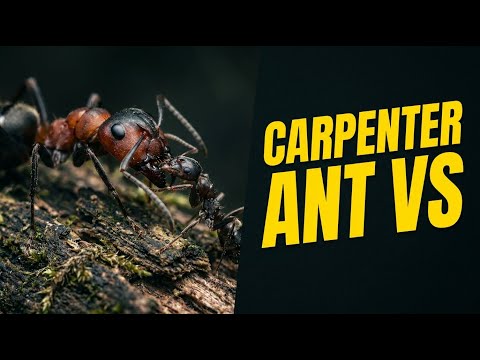
Big Black Ant or Small Dark Ant? In Boise, the Answer Changes Everything
Spring hits the Treasure Valley and ants pour out of every crack. Some are big and slow. Some are tiny and fast. They all look black-ish. Most homeowners shrug and grab a can of Raid.
That works fine if it is a pavement ant. It can make things much worse if it is a carpenter ant. Here in Idaho, those are the two species you are most likely to see indoors right now, and they need completely different treatment plans.
This guide gets you to a confident ID in under a minute. We cover the visual differences, where each species lives in Boise homes, why DIY sprays fail differently for each one, and when to stop guessing and call. If you want the wider Idaho ant lineup, the section on other Idaho ants below covers the rest. For the carpenter ant repair side of the story, see carpenter ant damage in Idaho.
Carpenter Ant vs Pavement Ant: The 30-Second Comparison
If you only have time to read one section, read this one. Hold the ant up next to a grain of rice. The grain of rice is roughly 6 millimeters. That single comparison sorts most cases on the spot.
Bigger than a grain of rice = probably carpenter. Smaller = probably pavement.
Then check the waist with a phone camera zoomed in. One node means carpenter. Two nodes means pavement. That is the whole game.
- Size: Carpenter ants run 1/4 to 1/2 inch (6 to 13 mm). Pavement ants are about 1/8 inch (2.5 to 4 mm). Carpenter ants are the largest ant most Boise homeowners will ever see indoors.
- Color: Carpenter ants are usually solid black, sometimes dark brown or two-tone red and black. Pavement ants are dark brown to nearly black, with paler legs.
- Waist nodes: Carpenter ants have one node (a single bump). Pavement ants have two nodes (two bumps) between the thorax and abdomen.
- Thorax shape: Carpenter ants have a smooth, rounded back when viewed from the side. Pavement ants have parallel grooves on the head and thorax that look like fine ridges.
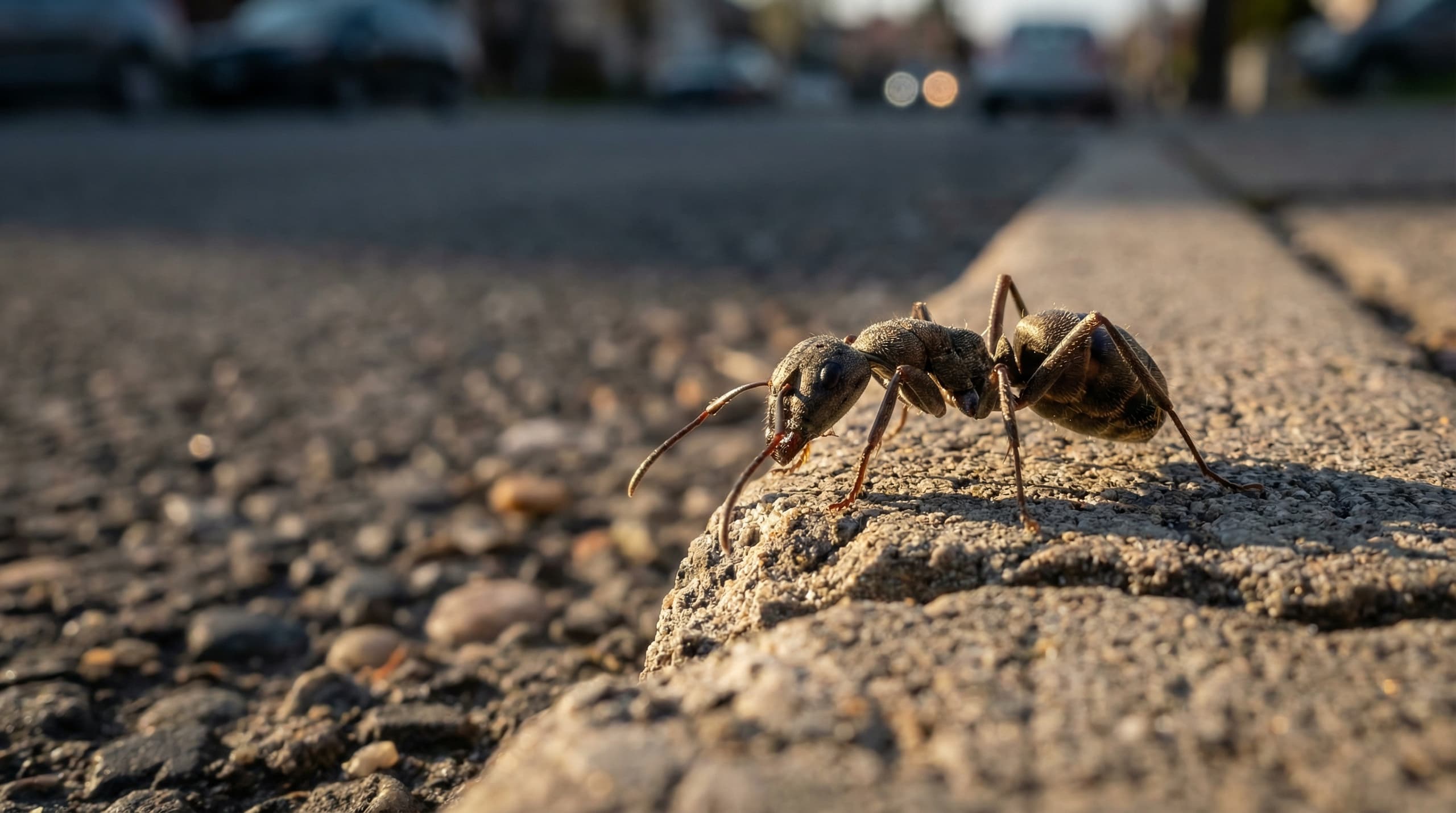
- Where you find them: Carpenter ants come from inside the structure (walls, eaves, deck posts). Pavement ants come from outside (driveway cracks, foundation seams, patios).
Visual ID: What to Actually Look For With Your Eyes
Size and node count handle most IDs, but a few extra clues help when the lighting is bad or the ant is moving fast.
Carpenter Ant Features
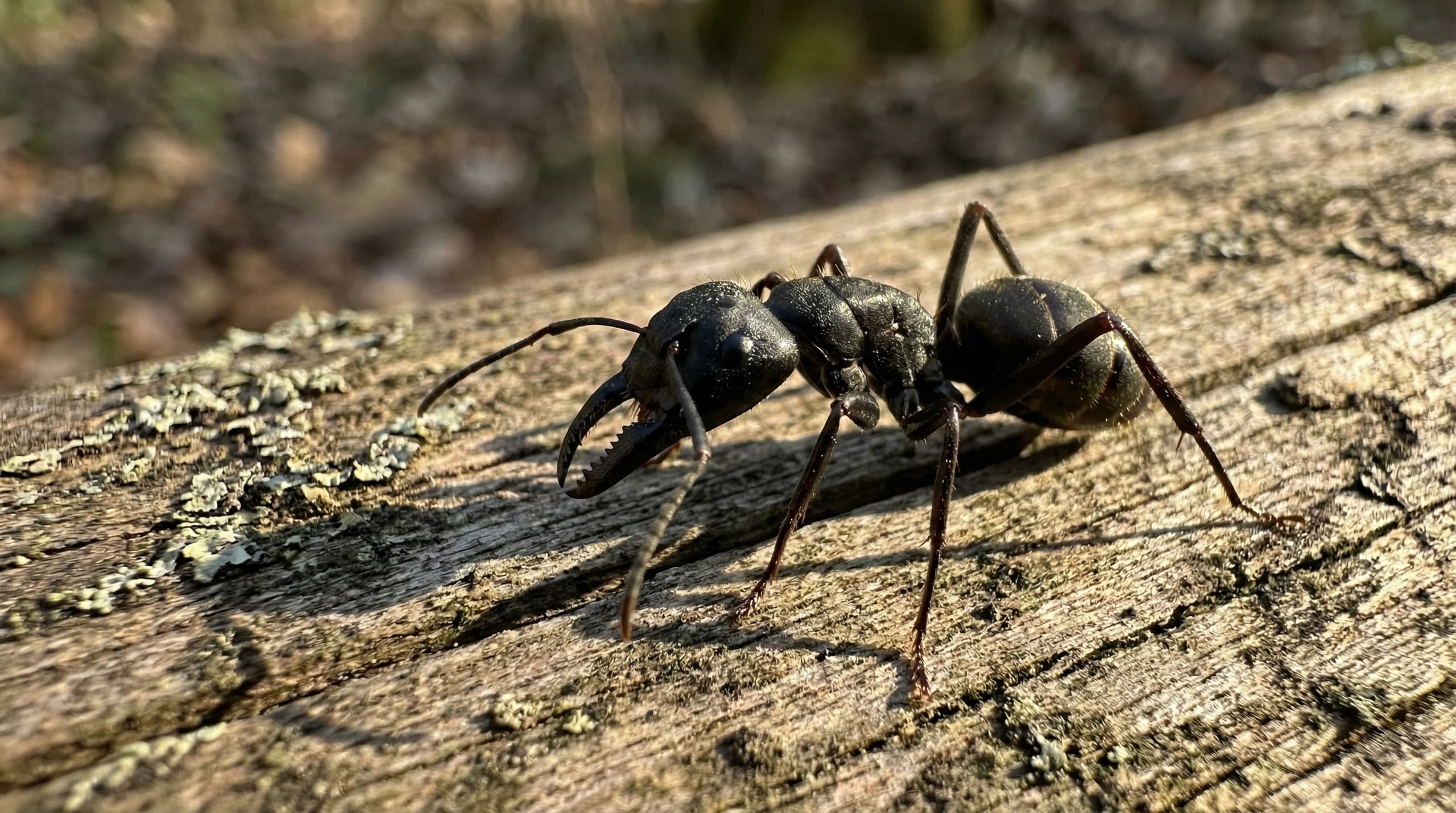
Carpenter ants are the heavy machinery of the Idaho ant world. Workers are big enough that you can read body parts with the naked eye.
- Size: 1/4 to 1/2 inch. The queens and major workers can hit 5/8 inch.
- Color: Solid black is most common in Boise. The western black carpenter ant (Camponotus modoc) dominates the Treasure Valley. You may also see two-tone reddish workers.
- Body: One node at the waist. Smoothly rounded thorax. Heart-shaped head when viewed from the front.
- Antennae: Elbowed, with a long first segment. This separates them from termites, which have straight beaded antennae.
- Wings (swarmers only): Large dark bodies, two pairs of wings, front pair longer than the back. They show up indoors in May.
Pavement Ant Features
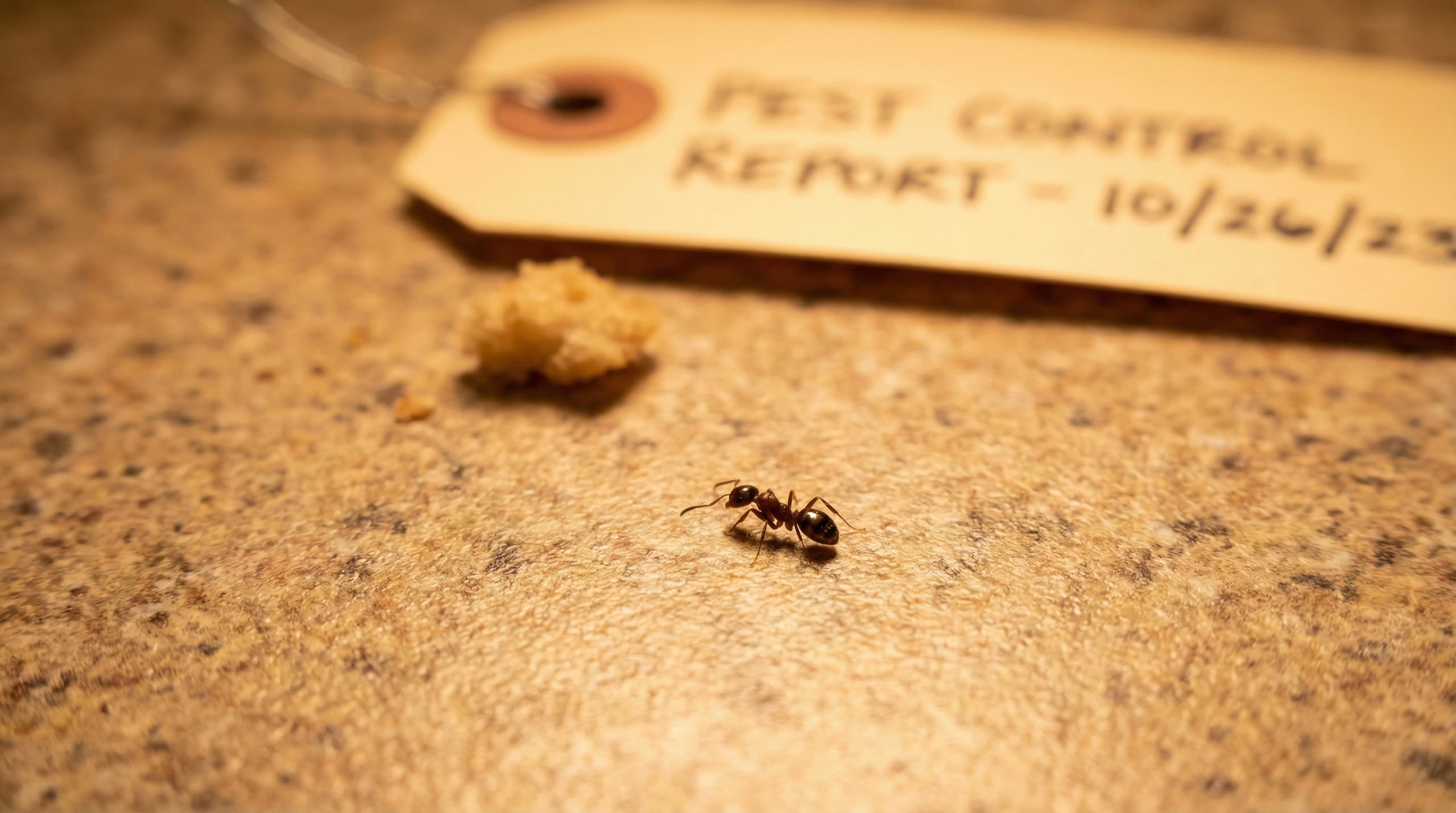
Pavement ants are small enough that the details only show under a magnifier. Most homeowners ID them by behavior and location, not body parts.
- Size: 1/8 inch (2.5 to 4 mm). Much smaller than a grain of rice.
- Color: Dark brown to almost black, with lighter brown legs and antennae.
- Body: Two nodes between thorax and abdomen. Parallel grooves running front to back along the head and thorax (you need a 10x loupe to see them clearly).
- Behavior: Slow trailing workers in long lines. Will swarm and fight other pavement ant colonies in spring (you may see clumps of dead ants on the driveway).
- Wings (swarmers only): Small dark bodies, often confused with carpenter ant swarmers but a quarter the size.
Where Each Species Lives in Treasure Valley Homes
Location is the second-best ID clue after size. The two species occupy completely different parts of your property.
Carpenter Ant Hideouts in Boise Homes
Carpenter ants want soft, moisture-damaged wood. The Treasure Valley has plenty of it because we get just enough irrigation, splash-back, and snow load to keep certain wood members damp year after year.
- Wall voids near leaks: Behind kitchen sinks, around tubs, under bathroom flooring. Any wood softened by a slow leak is a primary nest site.
- Eaves and roof rafters: Especially north-facing eaves where snow sits longer in winter. Damaged shingles or worn flashing let water in for years before anyone notices.
- Deck posts and ledger boards: The most common spot in newer subdivisions in Eagle, Meridian, and Star. Decks built tight against the siding trap moisture against the house.
- Window and door frames: Older homes in the North End and parts of Garden City have single-pane window frames that rot from the inside out. Carpenter ants love them.
- Crawlspace beams and sill plates: Anywhere ground moisture wicks into framing. Older Caldwell and Nampa homes are common targets.
- Outdoor parent colonies: Dead trees, stumps, old fence posts, landscape timbers. Most carpenter ant problems indoors start as a parent colony within 100 feet of the house.
Pavement Ant Hideouts in Boise Homes
Pavement ants live up to the name. They nest under and beside concrete, never inside the house.
- Driveway expansion joints: The number-one nest site in Meridian, Kuna, and other newer subdivisions where slab driveways dominate.
- Sidewalks and patios: The cracks between pavers and the seam where concrete meets soil.
- Slab foundations: Newer slab-on-grade homes in Star, Hidden Springs, and parts of south Boise. Workers find their way in through expansion joints and plumbing penetrations.
- Garage floor edges: The control joint that runs across the middle of most garage slabs. Look for tiny soil mounds piled on the concrete.
- Brick and stone veneer: The mortar joints near grade level. Workers tunnel into the soil behind the veneer and forage out through gaps.
Why Both Species Are Out in Force This Time of Year
As of May 2026, both species are running their spring playbook in the Treasure Valley. The reasons are different but the timing overlaps, which is why so many Boise homeowners see both at once and assume they are the same ant.
- Carpenter ant swarmers fly in May. Mature parent colonies (3 to 5+ years old) release winged reproductives indoors when the colony is established in your structure. Seeing big winged ants near a window or light fixture in May is the loudest possible alarm bell.
- Pavement ant workers emerge through driveway cracks. The first sustained 60-degree week wakes them up. Soil mounds appear on top of concrete near expansion joints almost overnight.
- Pavement ant swarms peak in late May and early June. Late afternoon, after a warm day, often after light rain or sprinkler cycles. Big clouds of small winged ants rise out of cracks and pavers.
- Pavement ant border wars. Spring is when neighboring colonies fight over territory. You may see clumps of dead ants on the driveway. Harmless on its own, but it means you have multiple colonies on the property. That's worth treating before the workers find a way inside.
- Carpenter ant foraging at night. Workers are most active after dark. If you see large black ants on the kitchen counter at 11 p.m. but nothing at noon, that is carpenter ant behavior.
The Other Idaho Ants You Might Be Looking At
Carpenter ants and pavement ants are the two you are most likely to find indoors, but seven species cause almost every ant problem we treat in the Treasure Valley. Here is the quick ID for the other five. Sizes are worker lengths in millimeters, and a standard staple is about 13 mm wide.
| Species | Size | Color | Where You See Them | Tell-Tale Sign |
|---|---|---|---|---|
| Odorous house ant | 1.5 to 3.2 mm | Dark brown to black | Boise kitchens, bathrooms, edges of counters | Smells like rotten coconut when crushed |
| Field ant | 4 to 8 mm | Red and black | Lawns, gardens, mulch beds, edges of patios | Low soil mounds in turf, rarely indoors |
| Harvester ant | 5 to 10 mm | Reddish orange | Foothills yards, pastures, gravel driveways | Flat, vegetation-free mound the size of a pizza |
| Pharaoh ant | 1.5 to 2 mm | Yellow or amber | Apartments, hospitals, heated commercial buildings | Tiny yellow trails on warm interior walls |
| Thief ant | 1.3 to 1.8 mm | Pale yellow or tan | Inside cabinets, near other ant nests | Often mistaken for pharaoh ants, but even smaller |
Odorous House Ants: The Smell Test
Odorous house ants are tiny dark-brown ants that form long, edge-hugging trails along Boise countertops, baseboards, and bathroom plumbing. They are by far the most common ant problem we treat indoors across the Treasure Valley, and the smell test settles the ID in seconds. Here is how to confirm one:
- Color. Uniform dark brown to black, slightly shiny.
- Waist. A single node, hidden under the abdomen, so they look waist-less from above.
- Smell. Crush one and sniff. Rotten coconut or blue cheese means a positive ID.
- Trail behavior. Long, persistent trails along edges and corners, not random wandering.
- Diet. They love anything sweet. If you see them around the coffee maker, the dog food bowl, or a sugar bag with a torn corner, you have found the food source. Wipe it clean before any treatment so the bait you place is the most attractive food in the kitchen.
Field Ants and Harvester Ants: The Outdoor Ants
Two other ants mostly stay outside, and one of them is the most common carpenter ant lookalike.
- Field ants. Medium-sized red-and-black ants (Formica) that build low soil mounds in lawns, mulch beds, and patio edges. The thorax test separates them from carpenter ants: a carpenter ant thorax is a smooth, evenly rounded half-moon, while a field ant thorax has a clear dip or notch in the middle. Field ants are usually two-toned, with a red head and thorax and a black abdomen. They almost never come inside on their own, so big red-and-black ants in a kitchen are far more likely to be carpenter ants.
- Field ants in the lawn. They are usually a sign of healthy soil, not a pest emergency. They eat other insects and aerate turf. If you do want them gone, a perimeter granular treatment on the property line works better than spot sprays.
- Harvester ants. The western harvester ant builds a flat, vegetation-free mound the size of a pizza in foothills yards, pastures, and gravel driveways. Look for a 2 to 4 foot ring of bare ground around one central hole, often with a small pile of pebbles or seed husks, and single-file foraging trails. They are most active in the morning and late afternoon and almost never enter homes, but their sting is the most painful of any Idaho ant.
Pharaoh Ants and Thief Ants: The Tiny Yellow Ants
Two tiny, pale ants get mixed up with each other. Pharaoh ants show up almost exclusively in heated commercial buildings, hospitals, apartments, and warm interior plumbing chases. They are a tropical species that survives in Idaho only inside heated buildings, so tiny yellow ants in a Boise house almost certainly arrived with packaging or used furniture, or moved over from a neighboring unit. Thief ants nest next to other ant colonies to steal their food and brood. They turn up regularly in Boise kitchens, especially in older homes with cracked grout or pantry shelving against an exterior wall, and they look like dust moving along the counter. Under magnification, here is how to tell them apart:
- Antennal club. Thief ants have a 2-segment club at the antenna tip. Pharaoh ants have a 3-segment club.
- Color. Thief ants are slightly darker, more tan than yellow.
- Habitat. Thief ants can live outdoors in Idaho. Pharaoh ants cannot.
- Diet. Thief ants love greasy, oily, and protein-rich foods such as bacon grease, peanut butter, and pet food, so they take protein bait. Pharaoh ants prefer sweets.
Ant Prevention Habits for Boise Homeowners
Once the colony is gone, a few simple basics keep new colonies from setting up shop.
- Fix the slow leak under the kitchen sink. Wet wood is what brings carpenter ants in.
- Move firewood and mulch piles at least 3 feet away from the house wall.
- Trim shrubs back so branches do not touch the siding. Branches are ant highways.
- Clean the trash can lid and the recycling bin regularly. Sugar residue is a beacon.
Damage: One Costs Thousands. The Other Just Annoys You.
This is the part most people get wrong. Carpenter ants and pavement ants look similar enough at a glance that homeowners treat them the same. They should not.
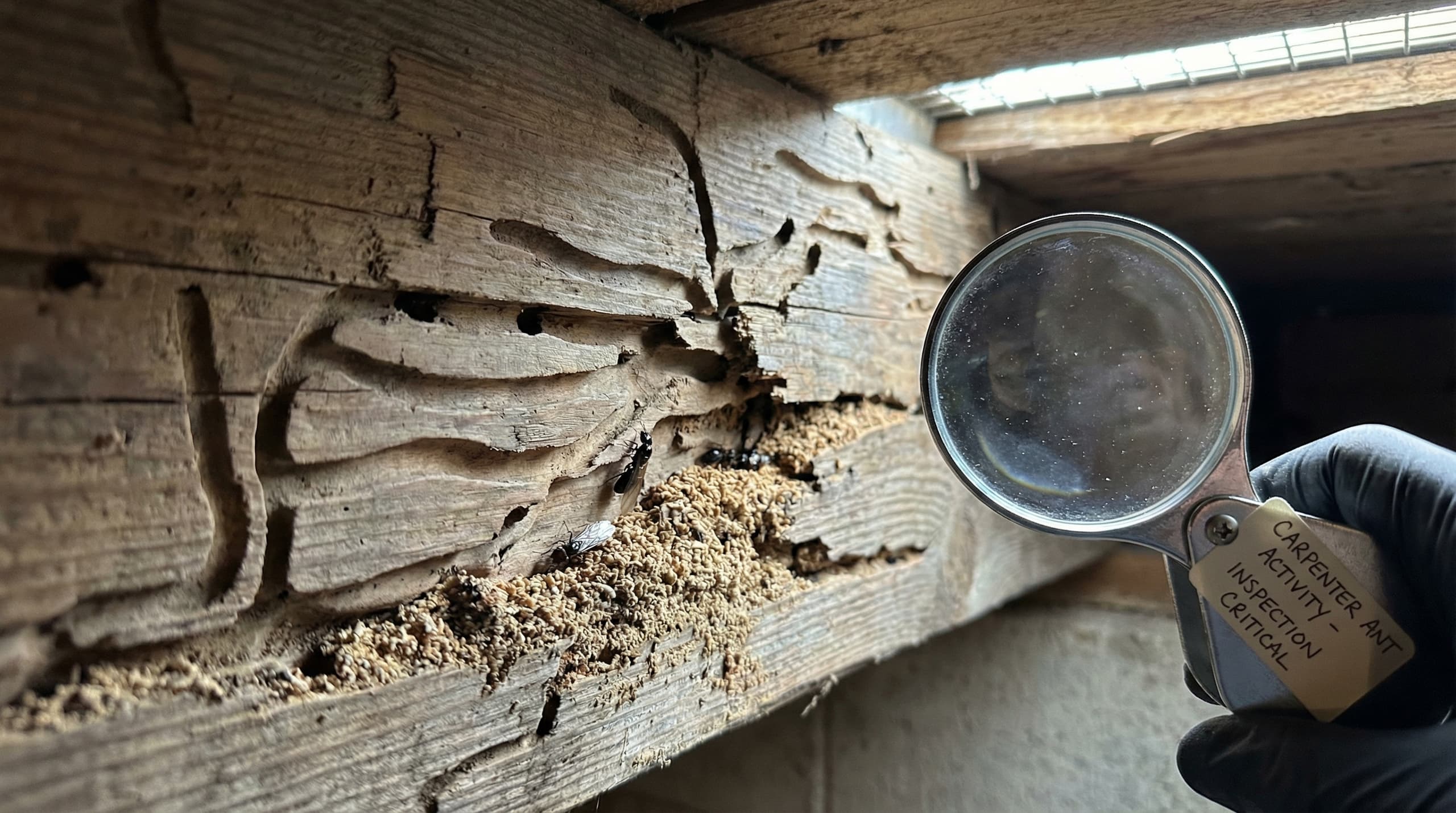
Carpenter ants excavate wood for nesting. They do not eat it (they feed on insects, honeydew, and your kitchen sugar). The galleries they leave behind weaken framing over time. A mature colony in a structural beam can compromise floor joists, wall studs, or roof rafters within 5 to 10 years. Repair bills start around $3,000 for cosmetic work and run past $10,000 for serious structural fixes.
Pavement ants do none of that. They are foragers. They steal pet food, get into pantries, and pile soil on top of the driveway. That is the full extent of the damage. Annoying, yes. Expensive, no.
The reason this matters: a $49 initial service that catches a carpenter ant problem in year two saves you tens of thousands compared to a missed problem in year seven. With pavement ants, the same service just buys peace of mind, which is also worth something but is not the same emergency.
Why DIY Sprays Fail Differently for Each Species
The single most useful piece of information in this whole post: store-bought treatments fail for carpenter ants and pavement ants in two completely different ways. If you understand why, you stop wasting money on products that make the problem worse.
Carpenter Ants: Sprays Cause Colony Budding
Repellent sprays (Raid, Ortho, Spectracide, anything you can buy at Home Depot) kill the few workers you can see. The rest of the colony senses chemical stress and splits. One nest becomes three or four satellite nests, each with its own queen, scattered deeper into your wall voids. Pest control pros call this colony budding, and it is the reason DIY carpenter ant work usually ends in a worse infestation six months later.
The right approach is non-repellent professional products that workers carry back to the colony unknowingly, plus targeted treatment of the parent nest (often outdoors, in a stump or dead tree near the house) and any satellite nests inside the structure.
Pavement Ants: Workers Ignore the Wrong Bait
Pavement ants do not bud. They take bait readily. The DIY problem here is different: most homeowners pick the wrong active ingredient and the wrong feeding cycle.
Pavement ants switch between sugar-based and protein-based feeding through the season. A bait formulated for one will get ignored if the colony is in the other phase. The active ingredient also matters. Borax-based DIY bait works but is slow. Hydramethylnon and fipronil work faster, but they are usually only available in professional formulations or specific retail products that homeowners overlook.
The result: people put down a Terro tray, see ants ignore it, conclude bait does not work, and spray instead. Spraying kills foragers and leaves the colony untouched. The trail comes back in a week.
When to Stop Guessing and Call
Some situations are clearly DIY and some are clearly not. Here is the honest list.
- Any winged ant indoors in May = call. If they are large and dark, the chance of carpenter ants is high enough that an inspection is cheap insurance.
- Sawdust-like piles near baseboards or window frames = call. That is carpenter ant frass until proven otherwise.
- Rustling sounds in the wall at night = call. Carpenter ant workers are active and audible after dark in established colonies.
- Pavement ants in two or more spots on the property = call. Multiple foraging trails usually mean multiple colonies. Bait is still the answer, but a pro will pick the right one and place it correctly the first time.
- You sprayed and the problem got worse = call now. This is almost always carpenter ant budding. Every week you wait, the satellite nests dig deeper.
- You are about to list the house = call. Visible ant activity during a showing kills offers. A treatment now plus a quarterly plan keeps the property clean through closing.
How Green Guard Treats Both Species in the Treasure Valley
We are a family-owned, local crew. Our owner runs the trucks. We have served 2,500+ Treasure Valley families, and we know how local ant species behave from season to season.
For carpenter ants, we walk the property first to find the parent colony (almost always outdoors). We treat any structural nests with non-repellent professional products that prevent budding. The exterior perimeter spray creates a barrier so the next colony does not move in. Quarterly visits keep it that way.
For pavement ants, the work is faster. We treat driveway cracks, expansion joints, and slab edges with a targeted bait matched to the current feeding cycle. Workers carry it back. The bait reaches the colony over 10 to 14 days. The quarterly perimeter spray prevents the next colony from setting up shop.
Both treatments use organic-based, hospital-grade products safe for kids and pets once dry (30 to 60 minutes). The same products you would expect to find in a school or daycare.
Pricing is simple. Just $49 to start for new subscription customers. Quarterly service runs $119 per treatment for homes up to 2,500 square feet. If pests come back between visits, we come back free. That is the re-service guarantee, and it is a big reason customers stick with us year after year.
Call (208) 297-7947 or book online. Same-day service is often available. We cover Boise, Eagle, Meridian, Nampa, Caldwell, Star, Kuna, Garden City, and Middleton.
Frequently Asked Questions
Are carpenter ants common in Boise homes?
Quick answerYes.
Carpenter ants are the most structurally damaging insect in the Treasure Valley, more common than termites in this part of Idaho. The western black carpenter ant (Camponotus modoc) dominates Boise, Eagle, Meridian, and most foothill-adjacent neighborhoods. We treat carpenter ant infestations year-round, and activity peaks in spring, when swarmers fly indoors.
Do pavement ants damage concrete or just nest in cracks?
Quick answerPavement ants do not damage concrete.
They nest in cracks that already exist from freeze-thaw cycles, settling, or street creep. The soil mounds they pile on top of the slab can clog drainage and look bad, but the ants are not the cause of the cracking. Address the concrete problem and the ants together for the best result.
I see big black ants and small black ants in the same yard. Are they related?
Quick answerProbably not.
Different size classes usually mean different species, not the same colony at different ages. In a Boise yard the big ones are likely carpenter ants nesting in wood somewhere on the property, and the small ones are likely pavement ants nesting under concrete. Two different problems, two different treatments. Worth a professional inspection to confirm.
Will store-bought spray work on either species?
Quick answerSpray makes carpenter ants worse by triggering colony budding (one nest splits into several satellite nests).
Spray on pavement ants kills visible foragers but leaves the colony intact and the trail comes back within a week. Bait is the right tool for both, but the active ingredient and feeding cycle matter. Most DIY failures come from the wrong product, not effort.
What does Green Guard's $49 initial service include for ant problems?
Quick answerFull property inspection, species identification, exterior perimeter barrier spray, treatment of any visible carpenter or pavement ant trails, eave sweeping for spider webs and wasp nests, granular treatment in landscape beds, and quarterly protection plan setup.
Same-day service is often available when you call (208) 297-7947. The $49 first service rate applies to new subscription customers.
How soon will the ants stop after a professional treatment?
Quick answerPavement ant trails usually thin out within 48 hours.
The bait takes 10 to 14 days to reach the colony as workers carry it back. Carpenter ant traffic usually drops within 24 to 48 hours too, but full colony elimination can take 30 to 60 days because we are treating multiple nest sites. Both treatments come with our free re-service guarantee, so if you are still seeing activity, we come back at no charge.
What is the most common ant in Boise homes?
Quick answerOdorous house ants are by far the most common ant in Boise homes.
They are tiny (1.5 to 3.2 mm), dark brown to black, and smell like rotten coconut when crushed. They form long trails along countertop edges and baseboards and are active March through October in the Treasure Valley.
Are there fire ants or red imported fire ants in Idaho?
Quick answerIdaho's climate is too cold for red imported fire ants to establish colonies.
A small red ant that stings you in the Treasure Valley is almost certainly a western harvester ant. The sting is painful, but the biology is very different.
What month do ants come out in Idaho?
Quick answerIn the Treasure Valley, ant activity starts in mid-March as soil temperatures climb above 50 degrees Fahrenheit.
Foraging peaks from late April through July. Carpenter ant swarmers usually emerge indoors in spring, with the heaviest flights in May, and pavement ants are the first to show up in driveway cracks, often by early April.