Quick answer
Spring ant control in Boise starts with understanding why ants invade kitchens every year. Soil temperatures hit 50°F in mid-March, waking dormant colonies that are starving for food and water. Odorous house ants and pavement ants are the two main species in the Treasure Valley. Store-bought sprays make it worse by triggering colony budding, turning one colony into several. The fix is sealing entry points, eliminating moisture, and treating the colony at its source. Green Guard's quarterly treatment starts with a $49 first service and includes a free re-service guarantee.
Key Takeaways
- Ant colonies activate when Treasure Valley soil hits 50°F, usually mid-March, with full invasion by April
- Odorous house ants (Tapinoma sessile) are Boise's #1 kitchen invader. Crush one and it smells like rotten coconut.
- Kitchens attract ants because of moisture under sinks and invisible food traces, not because your home is dirty
- Store-bought sprays trigger colony budding in odorous house ants, splitting one colony into two or three within weeks
- Quarterly professional treatment ($49 initial, $119/quarter) prevents spring invasions before they start
In this article
Why Do Ants Invade Boise Kitchens Every Spring?
Ants invade Boise kitchens in spring because warming soil wakes up starving colonies that need food and water fast. When ground temperatures hit 50°F (typically mid-March in the Treasure Valley), workers fan out aggressively. Your kitchen has everything they want. Moisture under sinks, crumbs behind appliances, and warmth when nights still dip into the 30s.
Ant control in Boise during spring starts with knowing why the trails show up. In our experience treating 2,500+ homes across Boise, Meridian, Eagle, and Nampa, the pattern tends to repeat every spring. Homeowners wake up to a trail of tiny ants on the counter and reach for a can of Raid. That's the worst move you can make (more on that below).
The real problem isn't the 50 ants you see. It's the 10,000 to 100,000 workers still in the colony underground. This guide breaks down exactly why spring triggers the invasion, which species are in your kitchen, and what actually stops them.
What Triggers Spring Ant Invasions in the Treasure Valley?
Rising soil temperature is the single trigger. Ant colonies don't die in winter. They slow down. Workers pull deep into the nest, cluster around the queen, and burn through stored food. When soil hits 50°F, the colony snaps awake.
In the Treasure Valley, that threshold hits around mid-March. By the time Boise's daytime highs consistently cross 60°F in April, it's full invasion season. Here's what makes spring uniquely bad:
- Starving colonies. Winter food reserves are spent. Workers forage more aggressively than any other time of year.
- Spring is peak egg-laying season, so the queen demands fuel. She ramps up production and the colony needs massive calories to feed developing larvae.
- March rain floods nests. Treasure Valley spring rain pushes water into underground nests, driving ants upward through foundation cracks into your home.
- Mature colonies send scouts to establish satellite nests near reliable food sources. Your kitchen qualifies.
- Natural food sources haven't recovered yet in early spring. Your pantry is the most reliable option within foraging range.
Which Ants Are Invading Your Boise Kitchen?
Two species cause over 90% of spring kitchen invasions in the Treasure Valley: odorous house ants (Tapinoma sessile) and pavement ants (Tetramorium immigrans). Knowing which one you have matters because they behave differently and respond to different treatments. When our technicians arrive at a Boise home for a spring ant call, species identification is the first step. If you are seeing larger black ants instead of the tiny ones described below, see our carpenter ant vs pavement ant guide. Those need a very different treatment plan.
Odorous House Ants: Boise's #1 Kitchen Invader
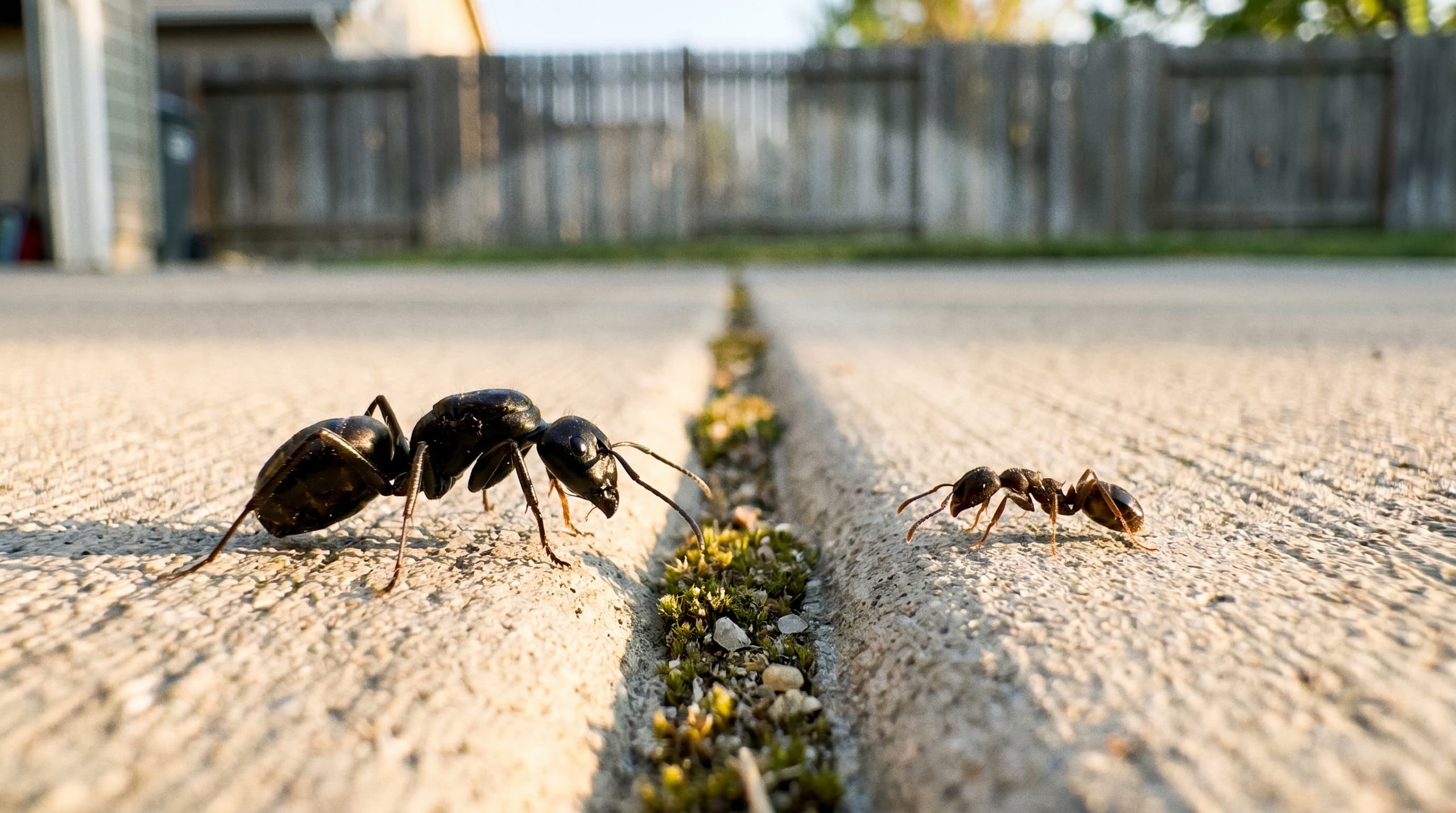
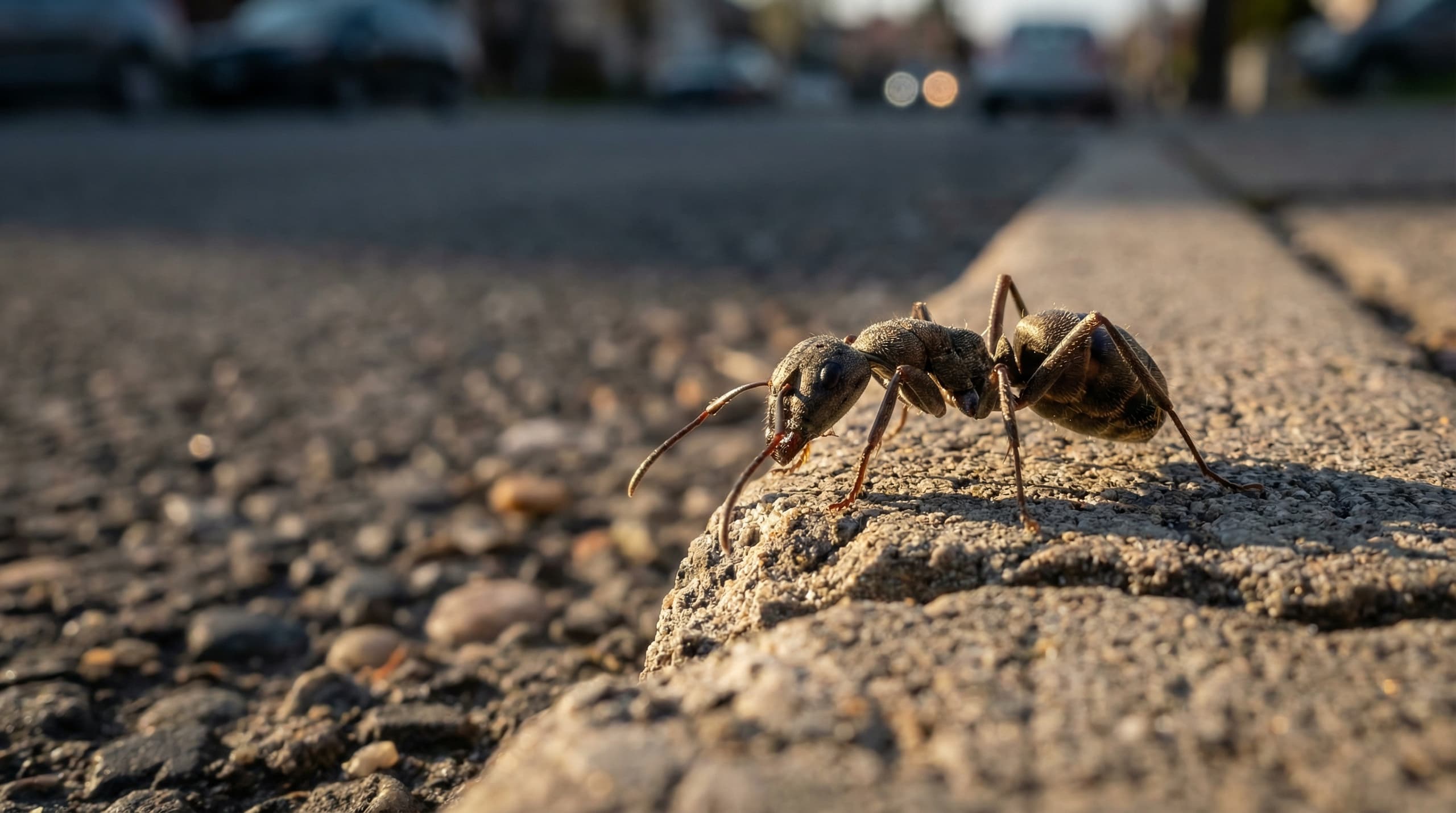
These are the tiny dark brown ants, about 1/16 to 1/8 inch, forming long trails along your countertops and baseboards. Crush one and you'll know immediately. They release a rotten coconut smell that's unmistakable. That's how they got their name.
Odorous house ants are a common kitchen pest in Boise, and in our experience, they're the toughest to eliminate without professional help. Here's why:
- A single colony can have dozens of egg-laying queens. Killing one doesn't collapse the colony.
- Colony budding is the big problem. When stressed by repellent sprays, the colony splits into multiple independent colonies. One problem becomes three.
- In urban Boise and Meridian neighborhoods, odorous house ants form connected supercolony networks with hundreds of thousands of workers spread across multiple nests.
- They nest in wall voids, under floors, behind kitchen cabinets, and outdoors under rocks and mulch. Very flexible nesters.
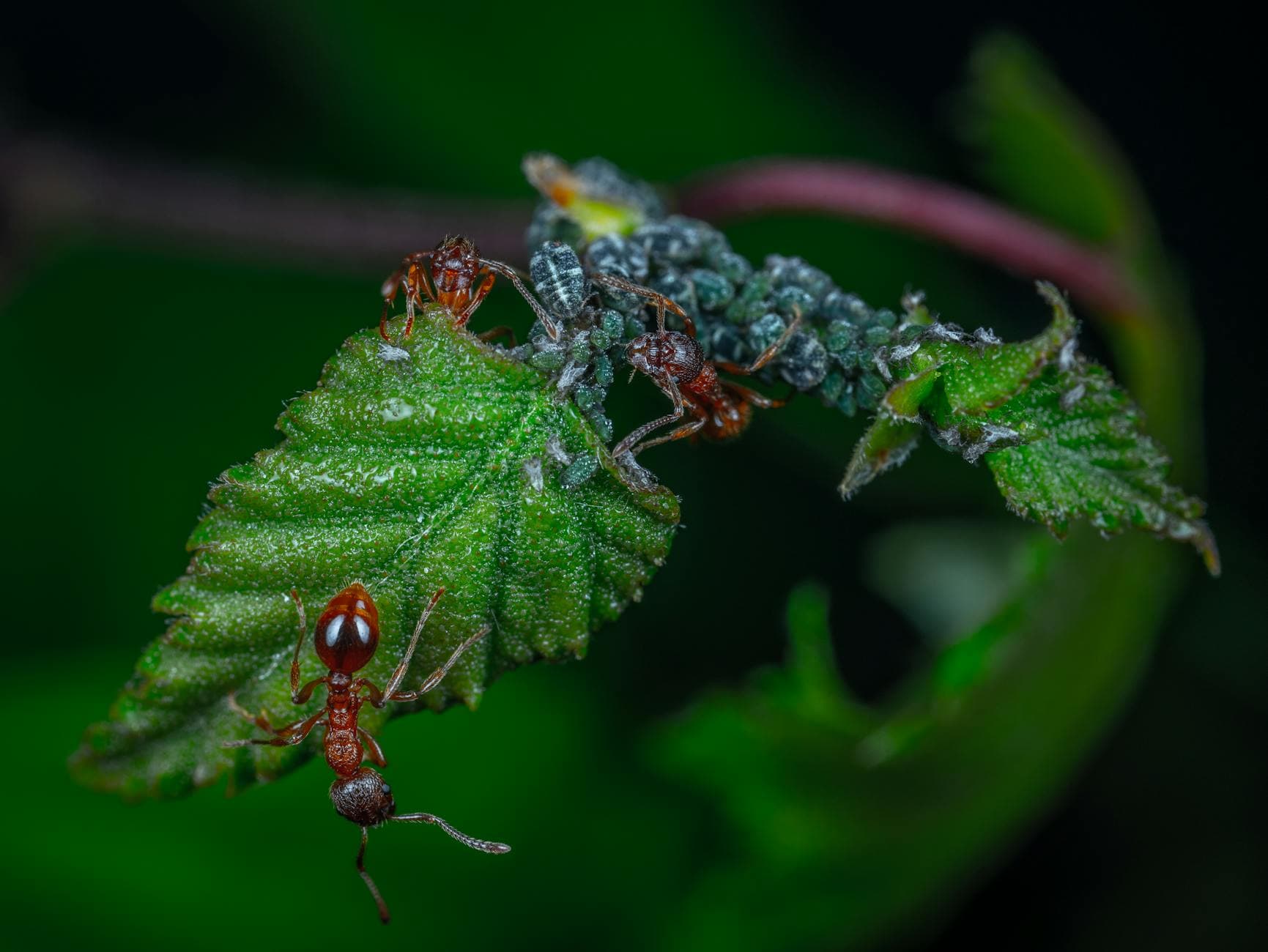
- Their diet leans heavily toward sugar, syrup, fruit juice, and honeydew from garden aphids. A single drop of honey can recruit hundreds of workers.
Pavement Ants: The Foundation Invader
Pavement ants are especially common in Meridian, Eagle, Star, and newer Boise subdivisions built on concrete slab foundations. They nest in soil beneath driveways, sidewalks, and slabs, then enter through hairline cracks in your foundation.
You'll spot them by the tiny dirt mounds in cracks of your driveway or garage floor. They're about 1/8 inch long, dark brown with parallel grooves on their head. They eat just about anything, but greasy and sweet foods are favorites.
In spring, pavement ant colonies expand fast. Workers push through foundation cracks and expansion joints. The kitchen is usually the first room hit because it's closest to slab entry points. For the other Idaho ants that get mixed up with these, see the ID table in our carpenter ant vs pavement ant guide.
Why Is Your Kitchen the #1 Target for Spring Ants?
Your kitchen combines moisture, food, warmth, and easy entry points. That's everything a starving spring colony needs in one room. In Idaho's dry spring climate, water is often a bigger draw than food. A slow drip under the sink can sustain an entire colony.
Here's exactly what pulls ants to your kitchen over every other room:
- Water sources. Sinks, dishwashers, fridge ice lines, and leaky pipes. In the Treasure Valley's dry spring, moisture is the #1 attractant.
- Crumbs behind the toaster, grease film on the stove, residue in the garbage disposal. You can't see these invisible food traces, but ants detect them from yards away.
- Your kitchen stays 68°F+ when Boise nights still drop into the 30s. It's basically a heated buffet for cold-blooded insects.
- Gaps where plumbing enters walls, unsealed spaces behind cabinets, foundation cracks directly under the sink. Entry points are everywhere.
- One scout finds food, lays a chemical trail back to the nest, and within hours hundreds of workers follow the exact same pheromone highway.
Why Don't Ants Go Away After You Wipe Them Up?
Wiping up visible ants doesn't remove the pheromone trail that guides them. That chemical highway is invisible to you but broadcasts a clear signal to the colony: "Food this way."
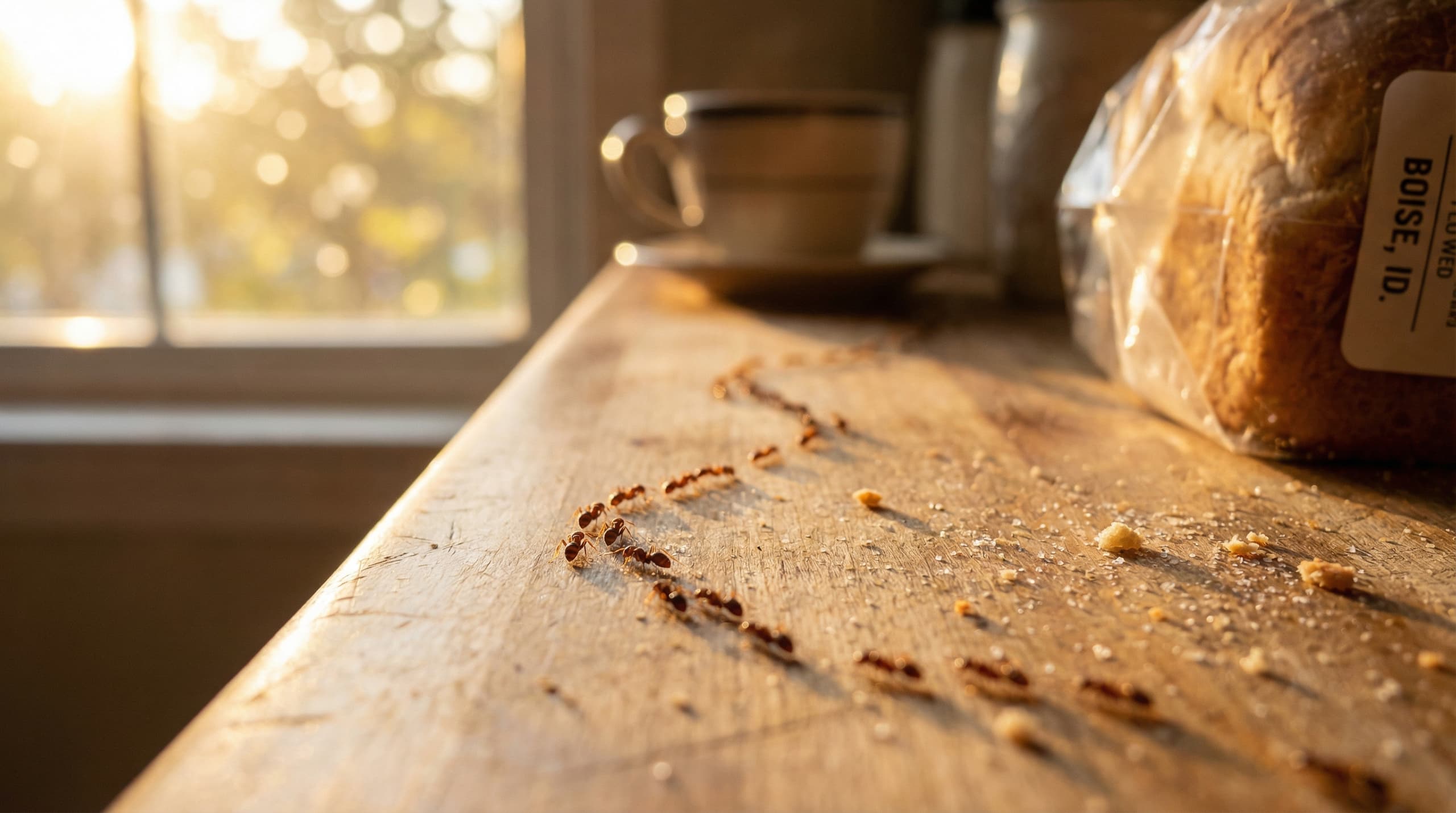
Here's how it works. A single scout ant finds a food source or water in your kitchen. On the way back to the nest, it lays down a pheromone trail. Every ant that follows reinforces the trail with more pheromone. The path gets stronger, not weaker, as more ants use it.
Standard kitchen cleaners don't break pheromone bonds. You need a 50/50 vinegar-water solution or an enzyme-based cleaner to actually destroy the chemical signal. And even then, the colony (which can have 10,000 to 100,000 workers for odorous house ants) keeps sending scouts to re-establish the route.
That's why the real fix has three parts: break the trail, seal the entry point, and eliminate the colony.
Flying Ants in Spring: What Ant Swarmers Mean
Ant swarmers are the winged males and females (future queens) that leave an established colony to mate and start new ones. When you spot flying ants inside your home, you are watching part of that cycle. It tells you a colony has matured enough (typically 2 or more years old) to produce reproductives, and if swarmers show up inside, the colony is almost certainly in your walls or right against your foundation. Swarms peak in April and May, especially in Boise's North End and Meridian's older neighborhoods, where mature trees feed carpenter ant pressure.
In the Boise area, swarming season runs from late March through early June, with the peak in April and May. A handful of conditions line up to trigger a swarm:
- Warm temperatures. Daytime highs above 70 degrees.
- High humidity. Often following spring rains.
- Calm conditions. Low wind for flight.
- Colony maturity. Only mature colonies produce swarmers.
- Time of day. Usually afternoon or early evening.
Identifying Ant Swarmers
Not all flying ants carry the same risk. Here are the three swarmers we see in the Treasure Valley, starting with the one that should get you on the phone today. For the worst case, see our guide on carpenter ant damage in Idaho homes.
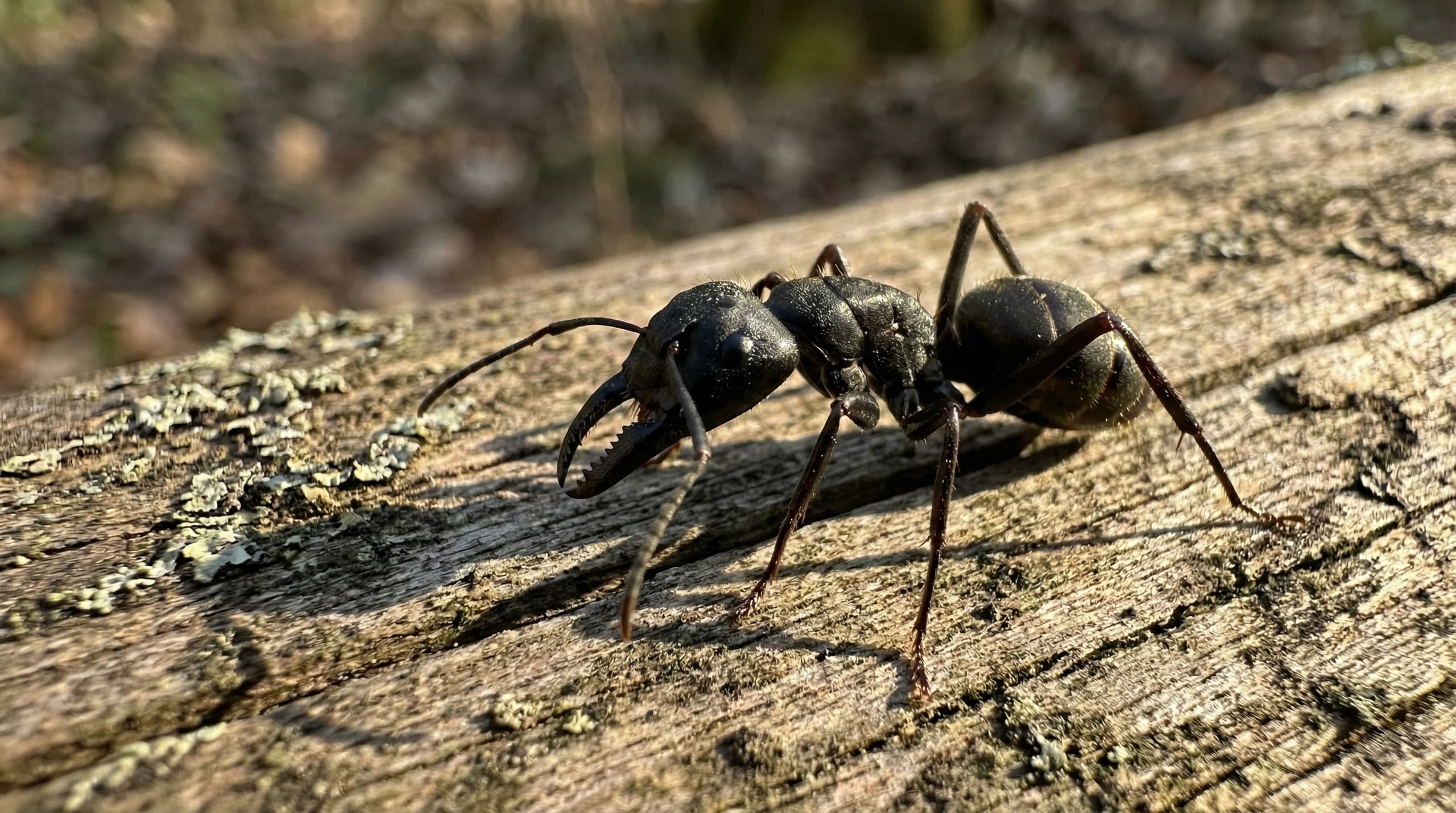
- Carpenter ant swarmers (most concerning). Large, 1/2 to 3/4 inch including wings, black and sometimes reddish, with front wings noticeably larger than the back pair, a pinched waist, elbowed antennae, and a smooth thorax. They point to a mature colony that may already be tunneling through your framing.
- Odorous house ant swarmers. Small, about 1/8 inch plus wings, dark brown to black, with a rotten coconut odor when crushed and a single node hidden by the abdomen. A nuisance pest, with colonies that may be inside walls but do not cause structural damage.
- Pavement ant swarmers. Small, about 1/8 inch plus wings, dark brown to black with lighter legs, two nodes, and a grooved thorax. They usually nest outside under concrete, stones, or pavers, so indoor swarmers often come from colonies under your foundation.
Flying Ants vs. Termites
Flying ants and termite swarmers look alike from across the room. Up close, five details tell them apart, and it matters because the treatment for each is different. Green Guard treats ants but not termites, so if your specimens turn out to be termites, we will point you to a Treasure Valley specialist.
- Waist. Ants have pinched waists. Termites have broad, straight waists.
- Antennae. Ant antennae are elbowed (bent). Termite antennae are straight and beaded.
- Wings. Ant front wings are larger than the back pair. Termite wings are equal in size.
- Wing durability. Termite wings break off easily. Ant wings stay attached.
- Body color. Most ant swarmers are dark. Termite swarmers are often lighter.
What Indoor Swarms Mean and What to Do
An indoor swarm tells you five concrete things: a mature colony exists, it is nearby (swarmers do not travel far), the problem is established rather than new, the colony is healthy, and more colonies may follow as successful mating spawns new ones across the neighborhood. If flying ants show up inside your house, work through these steps before you spray anything:
- Stay calm. Swarmers are harmless. They do not bite or sting.
- Collect specimens. Tape several to a sheet of white paper for ID.
- Note the location. Are they emerging around windows, baseboards, or foundations?
- Vacuum visible swarmers. This clears them out without pesticides.
- Leave the spray cans on the shelf. Aerosol pesticides do not reach the colony and can scatter it deeper into the walls.
- Call a professional. A same-day assessment matters, especially for carpenter ants. Call (208) 297-7947, and same-day service is often available.
How Do You Stop Spring Ants in Your Kitchen?
Start with sanitation and sealing, not spraying. These six steps work in order. Skip to chemical sprays and you'll make the problem worse. Following these steps can noticeably cut down the ants you see before we even arrive.
- Wipe trails with 50/50 vinegar-water. This breaks pheromone trails. Regular cleaning doesn't cut it. Vinegar's acidity destroys the chemical signal ants leave behind.
- Check under the kitchen sink, behind the dishwasher, and around the fridge ice line. Fix every leak. Even condensation on cold pipes attracts ants in Idaho's dry spring.
- Deep clean behind appliances. Pull out the toaster, coffee maker, and microwave. Crumbs and grease collect in spots you never see but ants always find.
- Sugar, flour, cereal, pet food, anything in an opened bag. Seal it all in airtight containers. Glass or hard plastic with tight lids. No twist ties or chip clips.
- Caulk entry points. Seal gaps where pipes enter walls, around electrical outlets near the sink, and where cabinets meet walls. Use silicone caulk for a lasting seal.
- Here's one people miss: run the garbage disposal with ice and citrus weekly. Food residue buildup in disposals is an overlooked attractant that brings ants right to the sink.
What DIY Ant Treatments Actually Make the Problem Worse?
Store-bought ant sprays are one of the biggest reasons ant problems escalate in Boise homes. Repellent sprays kill the ants you see (about 1% of the colony) while triggering a survival response in the other 99%. Here's what doesn't work and why:
- Spray-killing visible ants. Repellent sprays like Raid and Ortho trigger colony budding in odorous house ants. Within 2 to 3 weeks, one colony splits into multiple colonies in different parts of your house.
- Cinnamon, peppermint oil, and essential oils repel ants from one spot temporarily. The colony just reroutes to a different entry point. The nest keeps growing the whole time.
- Boiling water on outdoor nests only reaches the top layer. The queen and brood chambers sit deeper. The colony recovers within days and may relocate closer to your foundation.
- Borax baits can work, but concentration matters. Too strong and workers die before reaching the queen. Too weak and it doesn't affect the colony at all.
- Don't count on waiting it out. Spring colonies are expanding, not passing through. That trail will get busier every day, and satellite nests will establish closer to your kitchen.
When Should You Call a Pro for Spring Ant Control in Boise?
Call a pro when ants return within 48 hours of cleaning, appear in multiple rooms, or come back every spring. These signs mean the colony is inside your walls or under your slab, beyond the reach of any DIY method.
Here are the four signals that DIY has run its course:
- Ants return within 48 hours of cleaning. The colony is close, probably nesting inside your walls or under the foundation slab. No amount of vinegar or caulk reaches it.
- If multiple rooms have ants, the colony has likely already budded. That means a supercolony with multiple nest sites.
- Trails keep shifting to new entry points. The colony is rerouting around your barriers. It's adapting faster than you are.
- A yearly pattern means the colony survived winter in or near your home. If ants show up every spring without fail, the nest needs to be eliminated at the source, not managed on the surface.
How Does Green Guard Treat Spring Ant Invasions in Boise?
Green Guard Pest Control uses non-repellent, transfer-effect products that workers carry back to the colony, wiping out the nest from the inside. That's the opposite of store-bought sprays that scatter the colony.
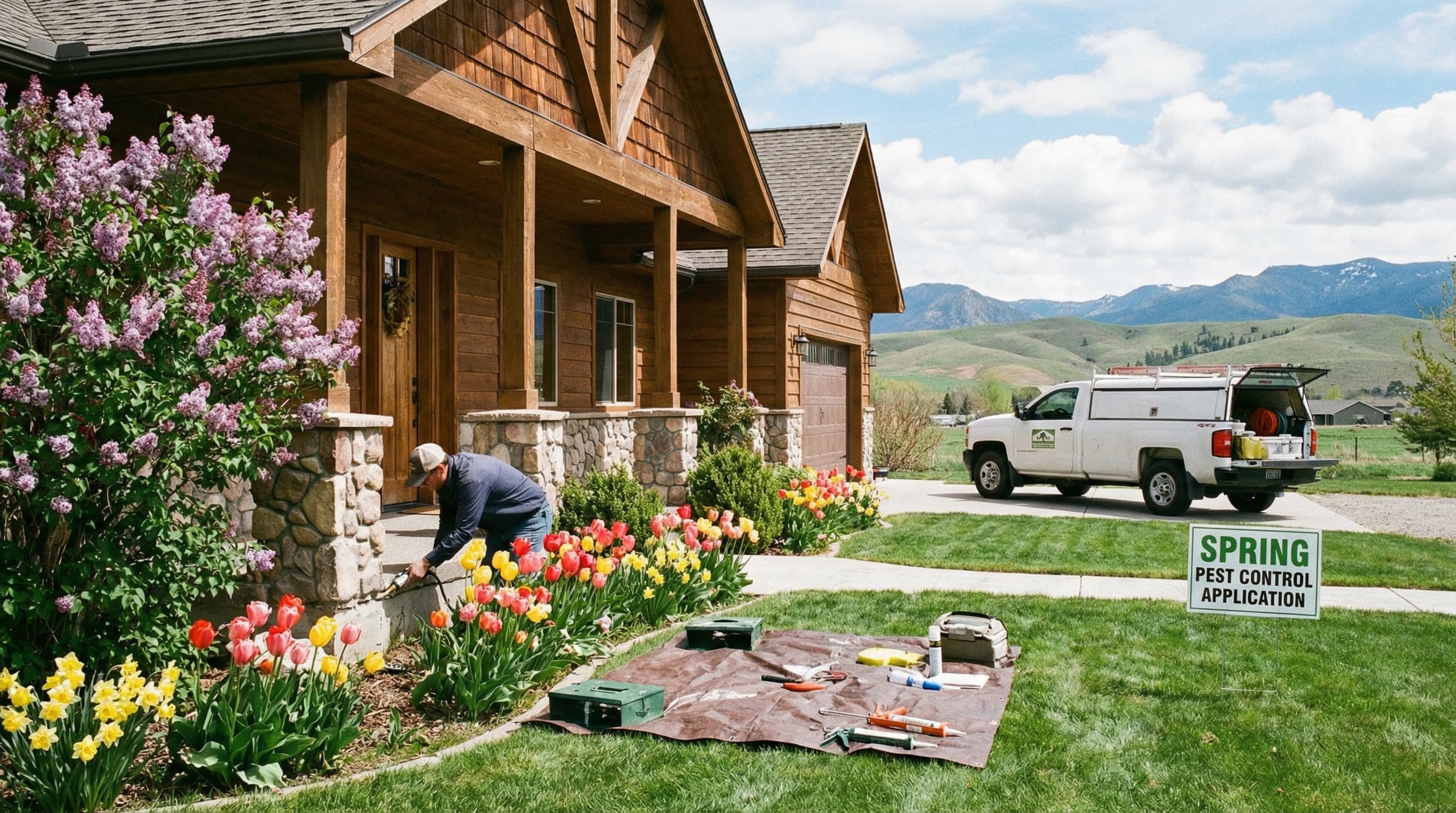
When our technicians arrive at your Boise home for spring ant control, here's the process. We start with species identification because odorous house ants and pavement ants require different approaches. Then we locate entry points and trace trails back toward the nest. We apply a targeted perimeter barrier using organic-based, hospital-grade products safe for kids and pets. Workers cross the barrier without detecting it, return to the nest, and transfer the product to nestmates and queens.
Most homes see ant traffic drop within 24 to 48 hours, but give the products 10 to 14 days to reach the colony and the queen. If you want us back sooner, just ask. Re-service is free. The perimeter barrier lasts about 90 days.
Our quarterly plans start with a $49 initial treatment, with ongoing service at $119 per quarter for homes up to 2,500 sq ft. Larger homes run $139 to $159 depending on size. And if ants come back between visits, we come back free. That's our re-service guarantee.
Ready to stop the spring invasion for good? Call our team at (208) 297-7947 or learn more about our ant control service. Same-day service is often available.
Frequently Asked Questions
Why do ants keep coming back to my Boise kitchen after I clean it?
Quick answerCleaning removes visible food but doesn't destroy the pheromone trail ants leave behind.
You need a 50/50 vinegar-water solution to break the chemical signal. In Idaho's dry climate, ants are often chasing water, not food. Check for leaks under your sink and around the dishwasher.
How long does professional ant treatment take to work?
Quick answerMost homeowners see ant traffic drop within the first day or two, but give Green Guard's non-repellent treatment 10 to 14 days to reach the colony and the queen.
The perimeter barrier keeps working for about 90 days. If ants are still around and you'd like us back sooner, just ask. Re-service is free.
How much does spring ant control cost in Boise?
Quick answerGreen Guard's quarterly plan starts with a $49 initial treatment, with ongoing treatments at $119 per quarter for homes up to 2,500 sq ft.
A one-time treatment starts at $200. A first year of quarterly prevention costs about the same as two emergency one-time treatments, and it includes free re-service between visits.
Are the tiny ants in my kitchen dangerous?
Quick answerOdorous house ants and pavement ants (the two most common kitchen ants in Boise) don't bite, sting, or cause structural damage.
They're a nuisance pest, not a health hazard. However, they contaminate food surfaces and their colonies grow fast if left untreated.
Why does spraying ants make the problem worse?
Quick answerStore-bought repellent sprays trigger colony budding in odorous house ants.
When the colony senses danger, it splits into multiple smaller colonies, each with its own queens and workers. Within 2 to 3 weeks, you've got ants in more rooms than you started with. Non-repellent professional products avoid this reaction entirely.
Are flying ants dangerous?
Quick answerFlying ants (swarmers) themselves do not bite or sting and are not directly dangerous.
They do indicate a significant ant colony nearby, and if they are carpenter ants the colony may be causing structural damage. The swarmers are the warning sign, and the colony is the problem.
Will flying ants go away on their own?
Quick answerThe swarmers will die or leave within a day or two.
Their job is to mate and start new colonies, not to live indoors. The colony that produced them stays right where it is, though. Without treatment, you will keep seeing workers and another swarm next spring.
Why am I suddenly seeing hundreds of flying ants?
Quick answerColonies release swarmers all at once in response to environmental triggers like warm temperatures, high humidity, and calm conditions.
A single mature colony may release hundreds or even thousands of swarmers over a few hours or days. The synchronized release boosts mating success across the neighborhood.
Can flying ants start a colony in my house?
Quick answerIt is possible but relatively rare.
Most swarming ants leave structures to mate and establish colonies outdoors or in new structures. Carpenter ant queens can establish colonies in suitable wood within a home, which is one more reason to have a professional treat the colony.
How do I know if it's ants or termites?
Quick answerCheck the waist and antennae.
Ants have pinched (narrow) waists and elbowed (bent) antennae. Termites have broad, straight waists and straight, beaded antennae. If you are uncertain, tape a few specimens to white paper and send us a photo. Green Guard treats ants but not termites, so if it turns out to be termites we will refer you to a Treasure Valley specialist.