Initial Treatment
Full inspection + treatment included

Serving Nampa, ID
Professional rodent control for Nampa homes. $49 to start. Family & pet safe. Free re-service guarantee.
Tap your pest problem to get started

Green Guard covers all five Nampa ZIP codes, and we're out here every week.
$49 to start
Rodent control in Nampa runs on a farm calendar, not a pest calendar. Canyon County grows more crops than any other county in Idaho, and Nampa has sugarbeets, corn, and hay ground on three sides of it. From mid-September into November those fields come out. The mice living in them lose their food and their cover in a single afternoon, and they walk toward the closest warm building. If your house sits south of Karcher Road, out past Greenhurst, or anywhere on the Lake Lowell side of town, that building is yours.
This is the busiest rodent stretch of our year in Nampa. One mouse in the pantry in late September usually means a dozen in the wall by Thanksgiving. Female house mice can have a litter every three weeks, so the gap between one mouse and a mouse problem is measured in weeks, not seasons. Not sure what you're looking at? Our Idaho rodent identification guide sorts deer mice from house mice in about a minute.
Green Guard covers all five Nampa ZIP codes, and we're out here every week. Our Nampa pest control page covers everything else we handle in town, and our Boise rodent control guide walks through what you can do yourself before the first freeze. Your first treatment is $49 for any home size with a quarterly or bimonthly plan. That covers a look for activity, locked bait stations, copper mesh in the obvious gaps, interior and exterior treatment, and the setup of your protection plan. Quarterly service starts at $119, and the free re-service guarantee means if the mice come back between visits, so do we. We usually get out within 24 to 48 hours, and same-day is often available. Call (208) 297-7947.
Sugarbeet, corn silage, and hay ground all come out between late September and early November. Deer mice that spent the summer in those rows lose cover overnight and move toward the nearest structure. Homes along the south and east edges of Nampa get hit first and hardest, especially out toward Greenhurst, Lake Lowell, and the Deer Flat refuge. We start seeing the call volume climb the same week the choppers hit the corn.
The Pioneer Irrigation District canals that run through Nampa neighborhoods stop delivering water in mid-October. When those banks and ditch lines dry out, the voles and mice living in them relocate to whatever is still green and sheltered, which is your irrigated lawn and your foundation line. Properties along Indian Creek and Mason Creek see this every single fall.
Nampa's core neighborhoods and the Sugar District are full of 1930s and 1940s bungalows with block foundations, open crawl space vents, and utility penetrations that were cut by hand. A house mouse fits through a gap the width of a pencil. In older Nampa homes we usually find between six and fifteen of those gaps on a single inspection, and the dryer vent and the water line entry are almost always two of them.
The acreages on the south side of town, out toward the dairies and along the Purple Sage and Missouri Avenue corridors, have shops, tack rooms, chicken coops, and feed bins. Norway rats are far less common in Nampa than mice, but when we do find them it's almost always tied to stored grain, spilled livestock feed, or a woodpile stacked against a shop wall.
Year-round, with a hard spike from mid-September through November as Canyon County fields are harvested and the canals shut off
Nampa is ringed by working farm ground, so the rodent population outside town is enormous and it moves all at once at harvest. Deer mice come off the fields, house mice settle into older downtown and Sugar District homes, and voles work the irrigated lawns in the newer subdivisions.
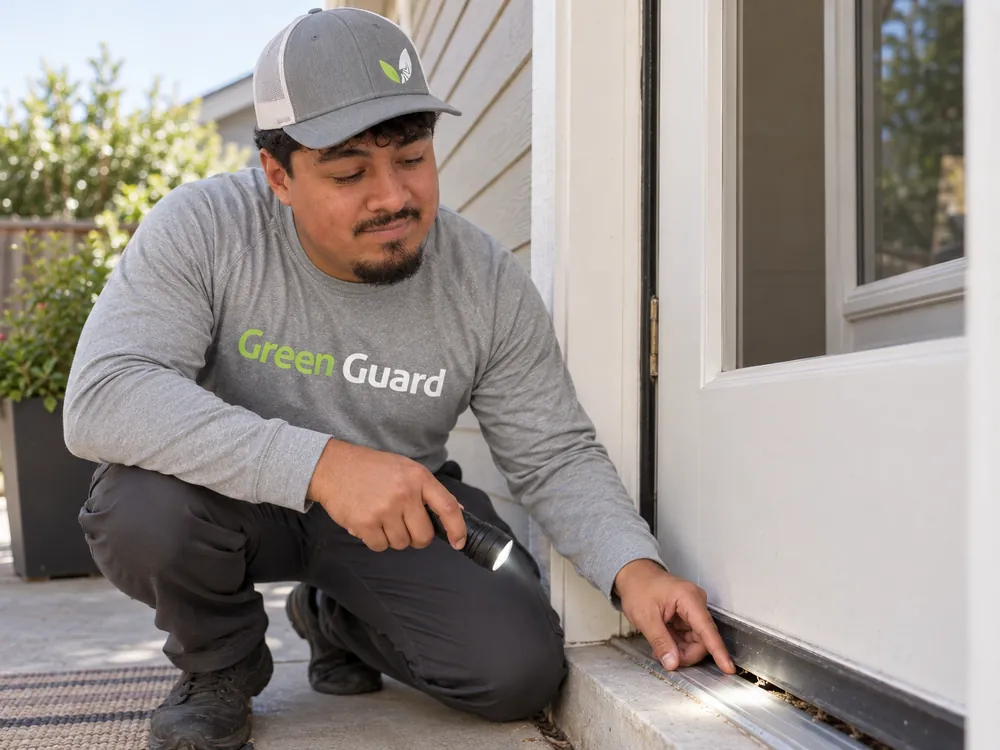
Step one
We walk the perimeter, the garage, the utility penetrations, and the foundation line looking for droppings, rub marks, and the obvious gaps mice are using.
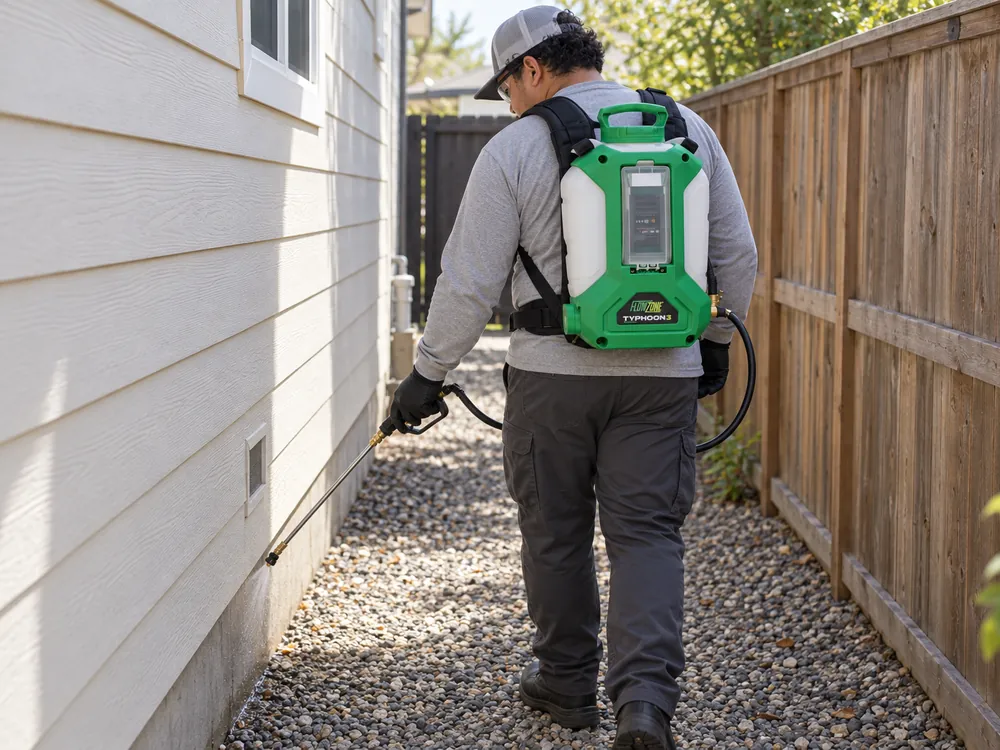
Step two
Locked, tamper-resistant bait stations go where the runways are, and stations can also go at the crawl space entrance.

Step three
We pack copper mesh into the obvious gaps.
Step four
Quarterly service keeps a treated barrier and locked bait stations on the property through the worst of it.
Dryer vents, hose bib gaps, garage door corner seals, and crawl space vents are the four we find most often on Nampa homes. Attic and crawl space work goes to a trusted specialist.
Snap traps are rare. Bait takes time to work, because mice have to find the stations and feed.
Bigger repairs, like foundation cracks or damaged vents, are a job for you or a handyman.
February is peak mouse breeding season in the Treasure Valley, so the winter visit does real work. If they come back between visits, we come back free.

"After three other companies couldn't keep ants out of our kitchen, Green Guard solved it in one visit. Six months later, still zero ants."
"I was skeptical at first, but Green Guard exceeded every expectation. They found entry points I never knew existed and haven't seen a spider since."
"After two other companies failed, Green Guard solved our ant problem in one visit. Professional, thorough, and actually effective."
Transparent pricing. No hidden fees. A 1-year agreement locks in your rate, then service continues quarter by quarter.
Full inspection + treatment included
Talk to our local office team, Monday to Friday, 9am to 5pm.
Call (208) 297-7947Quick answerBait stations work on the mice that are already there, and plugging the obvious gaps with copper mesh cuts down on the next group getting in.
Bigger repairs are a job for you or a handyman. Bait takes time to work, and if mice show up between visits, call and we'll come back free.
Quick answerHarvest.
Canyon County is Idaho's top farming county, and the sugarbeet, corn, and hay ground around Nampa comes out between late September and early November. Field mice lose food and cover at the same time and head for the nearest warm structure. Then the Pioneer Irrigation District shuts the canals off in mid-October and pushes another wave off the ditch banks. South and east Nampa feel both waves first.
Quick answerMostly mice.
Idaho doesn't have the widespread urban rat pressure you see in Portland or Seattle, and in Nampa the overwhelming majority of our rodent calls are house mice and deer mice. Norway rats do turn up, usually around feed bins, chicken coops, and shop buildings on the acreages south of town. If you're seeing droppings larger than a grain of rice, call us and we'll identify the species during the first visit.
Quick answerYour first treatment is $49 for any home size with a quarterly or bimonthly plan and a 1-year agreement that locks in your rate.
After that, quarterly service is $119 for homes up to 2,500 sq ft, $139 for 2,501 to 4,000 sq ft, and $159 for 4,001 to 5,500 sq ft. Homes over 5,500 sq ft get a custom quote. Every plan includes the free re-service guarantee, so nothing extra gets billed if we have to come back between visits. Voles and rodents living outside are usually a separate charge.
Quick answerWe keep bait inside locked, tamper-resistant stations instead of loose on the floor, and we rarely use snap traps.
Tell your technician where kids play and pets sleep, and we'll place stations with that in mind. We'll tell you how long to keep kids and pets off treated areas.
Quick answerWe usually get out within 24 to 48 hours, and same-day service is often available.
We run all five Nampa ZIP codes (83651, 83652, 83653, 83686, 83687) every week, so there's no travel fee. Our office is open Monday through Friday, 9am to 5pm, and service runs on weekdays.
Quick answerDeer mice are the main hantavirus carrier in Idaho, and they're the exact species coming off Nampa farm ground in the fall, so treat shed and garage droppings carefully.
Don't sweep or vacuum them dry. Mist them with a bleach solution (about one part bleach to ten parts water), let it sit, bag them, and air the building out. Cleanup is a job for you or a cleanup specialist, and we can set locked bait stations and plug the obvious gaps with copper mesh before the next group finds the same hole.
Quick answerMice and rats inside the home are covered by the plan, and voles and rodents living outside are usually a separate charge.
Gophers, squirrels, raccoons, skunks, bats, and other wildlife go to a specialist, and so do attic and crawl space treatments (bait stations can go at the crawl space entrance). For those, we'll connect you with a trusted specialist. Termites and bed bugs go to a specialist too.
$49 first service with a quarterly or bimonthly plan. Free re-service guarantee.
Tap your pest problem to get started
You picked Rodents.
Prefer to talk? Call (208) 297-7947
Expert tips & guides. Local pest knowledge from Boise's trusted exterminators