Quick answer
Asian lady beetles in Boise are round, orange to red beetles with a black "M" on a white patch behind the head, and they can pinch and leak a yellow fluid that stains. Box elder bugs are flat and black with red lines, rarely bite, and leave reddish droppings on curtains and walls. Both pile onto sunny walls in fall and slip into wall voids for winter, so vacuum them (don't crush them), close up gaps yourself, and get a perimeter treatment down early. Green Guard's $49 first service gets you started: call (208) 297-7947.
Key Takeaways
- Look for the black "M" or "W" on a white patch behind the head. That mark means Asian lady beetle, not a native ladybug.
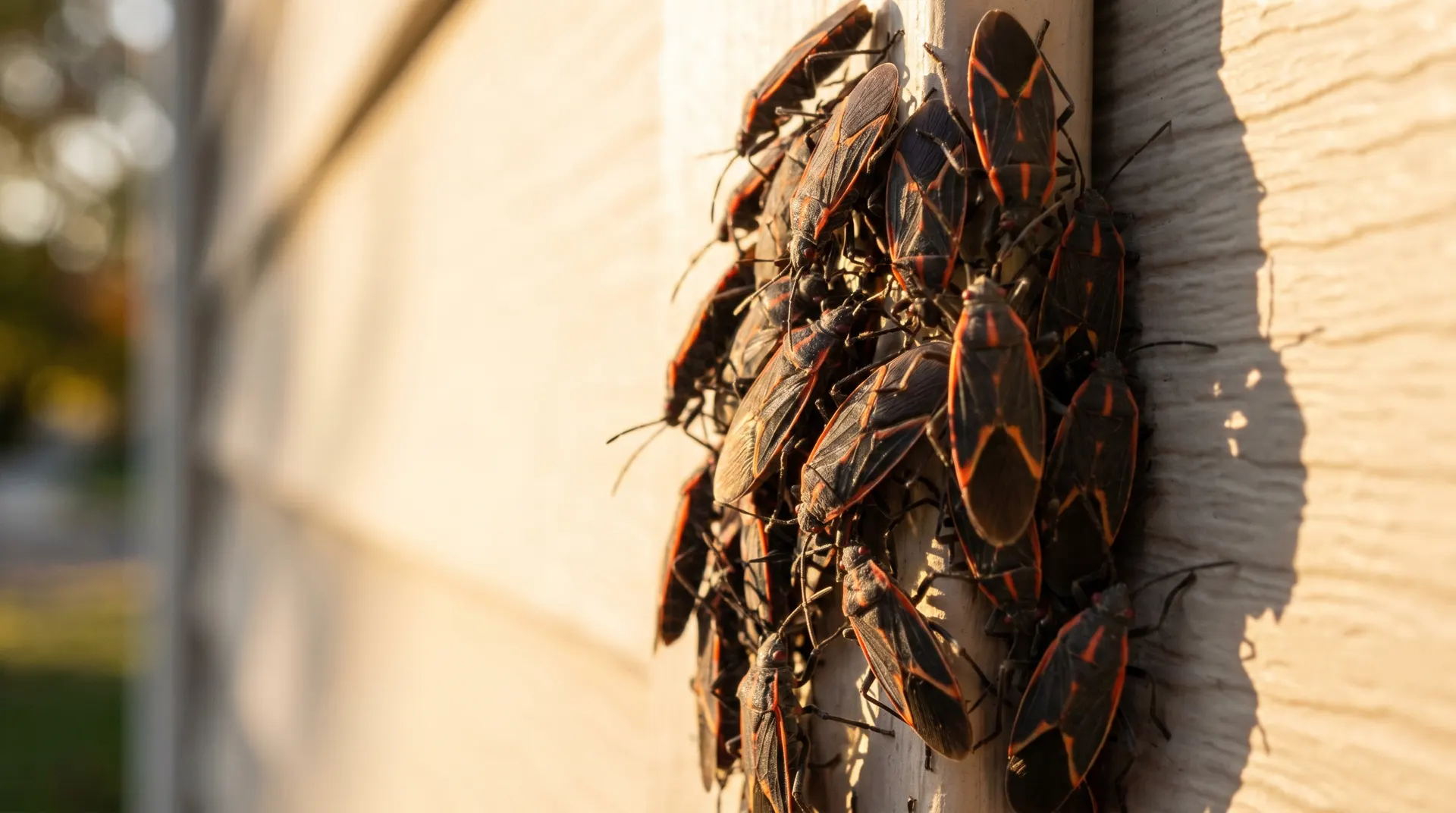
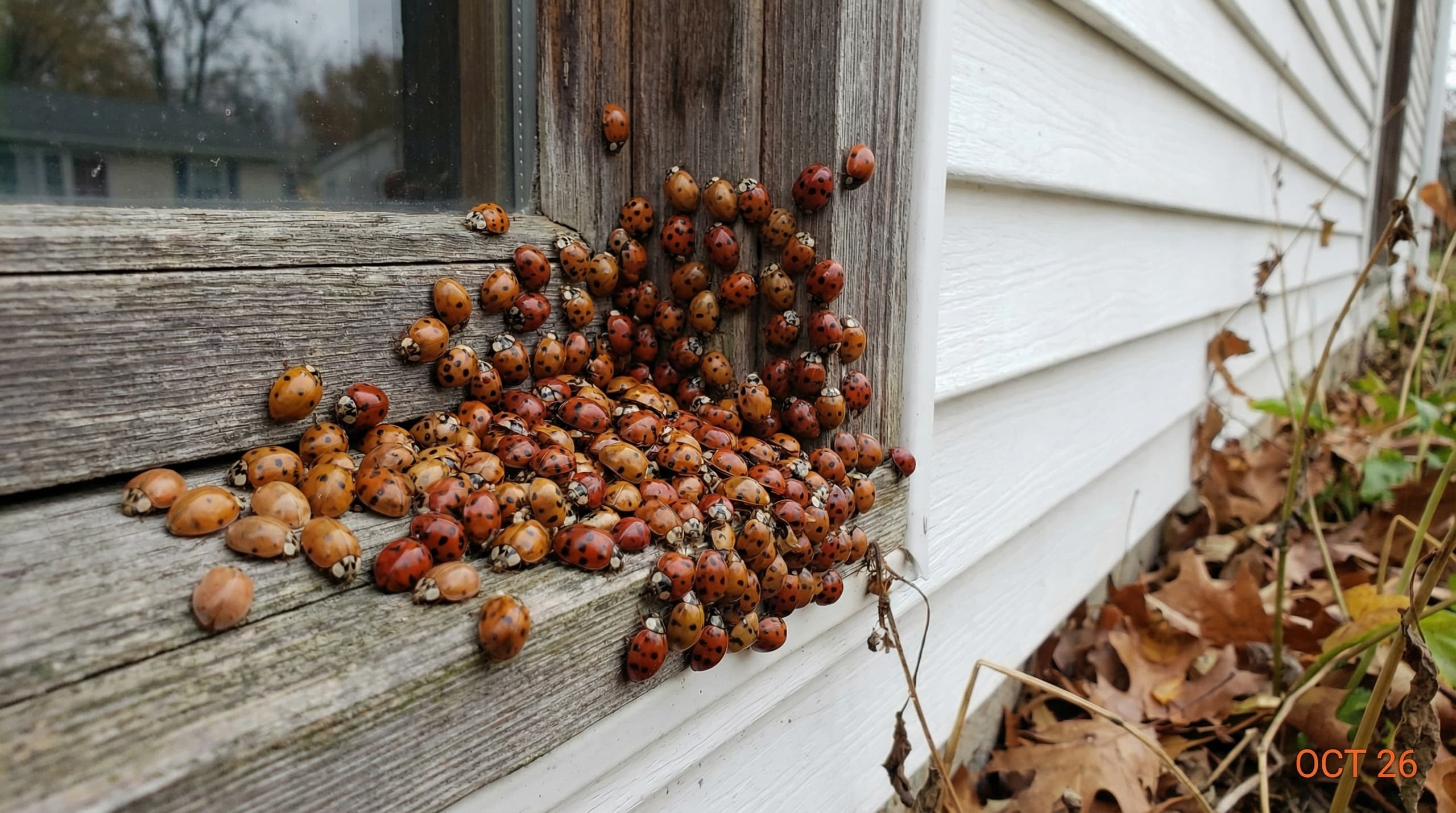
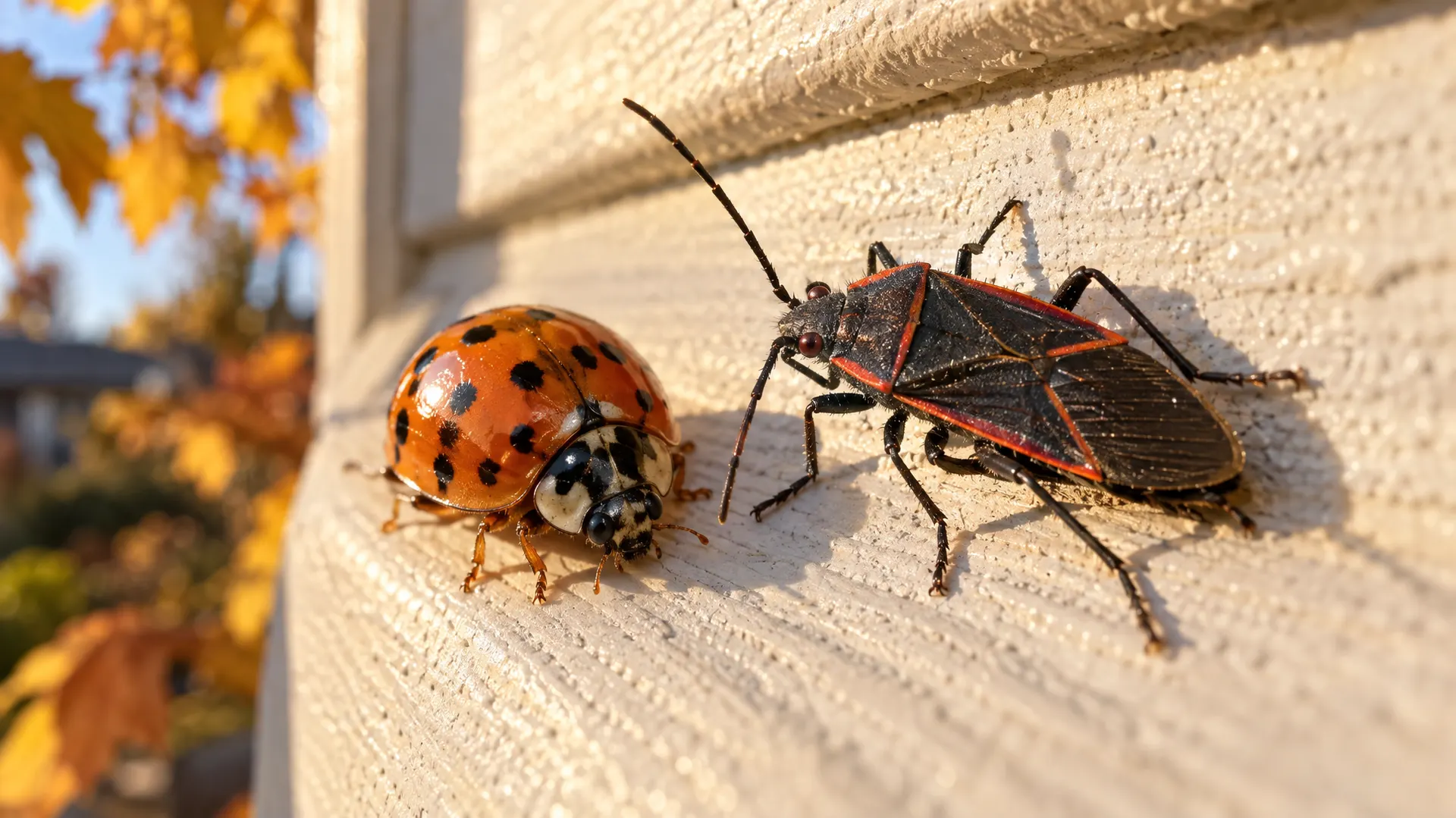
- Box elder bugs are flat and black with red lines and red wing edges. Lady beetles are round, shiny domes in orange, red or tan.
- Lady beetles can pinch and leak a yellow fluid that stains. Box elder bugs rarely bite, but their droppings spot curtains and walls.
- Both cluster on sunny south and west walls in fall, then hide in wall voids until warm days in late winter.
- Vacuum them with a stocking in the hose, close gaps as a weekend project, and book a fall perimeter treatment before they move in.
In this article
Asian Lady Beetles or Box Elder Bugs: Which Is on Your Boise Siding?
Asian lady beetles in Boise are round, shiny and orange to red, with a black "M" on a white patch behind the head. Box elder bugs are flat, black, a bit longer, and marked with red lines. Both show up on sunny walls when Treasure Valley nights turn cold, and both want to spend winter inside your walls.
Here's the thing. People lump them together as "those fall bugs," but they act differently once they're inside. One can pinch you and stain your trim yellow. The other mostly leaves reddish spots on your curtains.
Knowing which one you've got tells you how to clean up, what to expect in winter, and how worried to be. Our year-round Idaho pest calendar names October as one of the two treatment windows that matter most, right before overwintering pests settle into your walls. Fall is the time to sort it out.
Asian Lady Beetle vs. Box Elder Bug: Side by Side
The fastest tell is shape. A lady beetle is a round dome. A box elder bug is flat and oval, with wings that cross into an X on its back. Use this table to confirm what you're looking at.
| Feature | Asian Lady Beetle | Box Elder Bug |
|---|---|---|
| Shape and size | Round dome, about 1/4 inch long | Flat, oval body, about 1/2 inch long |
| Color | Tan, orange or red, with many spots or none at all | Black with red lines behind the head and red wing edges |
| Key mark | Black "M" or "W" on a white patch behind the head | Three red lines on the shield behind the head |
| Bite risk | Can pinch hard enough to break skin, though it fades fast | Rarely bites, and a light poke is the worst of it |
| Stain risk | Leaks a smelly yellow fluid that stains walls, drapes and carpet | Droppings leave reddish orange spots on fabric and paint |
| Smell | Musty and bitter, especially when disturbed | Mild odor when crushed |
| Where they cluster | High on light-colored, sunny walls, window frames and upper corners | Lower on south and west walls, rock beds and foundations near seed trees |
| What to do | Vacuum, don't crush or sweep; close gaps; fall perimeter treatment | Vacuum or soapy water outside; close gaps; fall perimeter treatment |
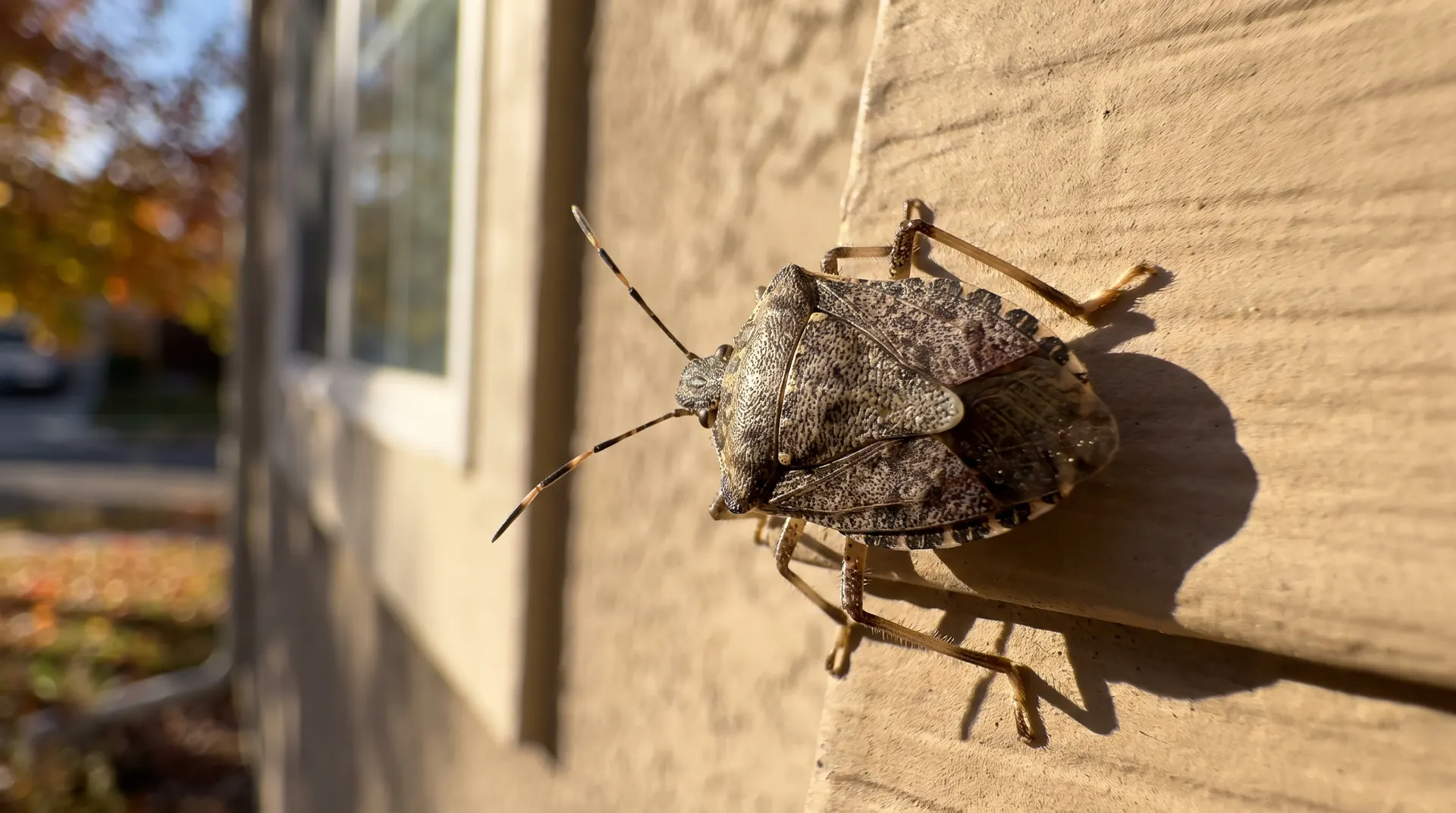
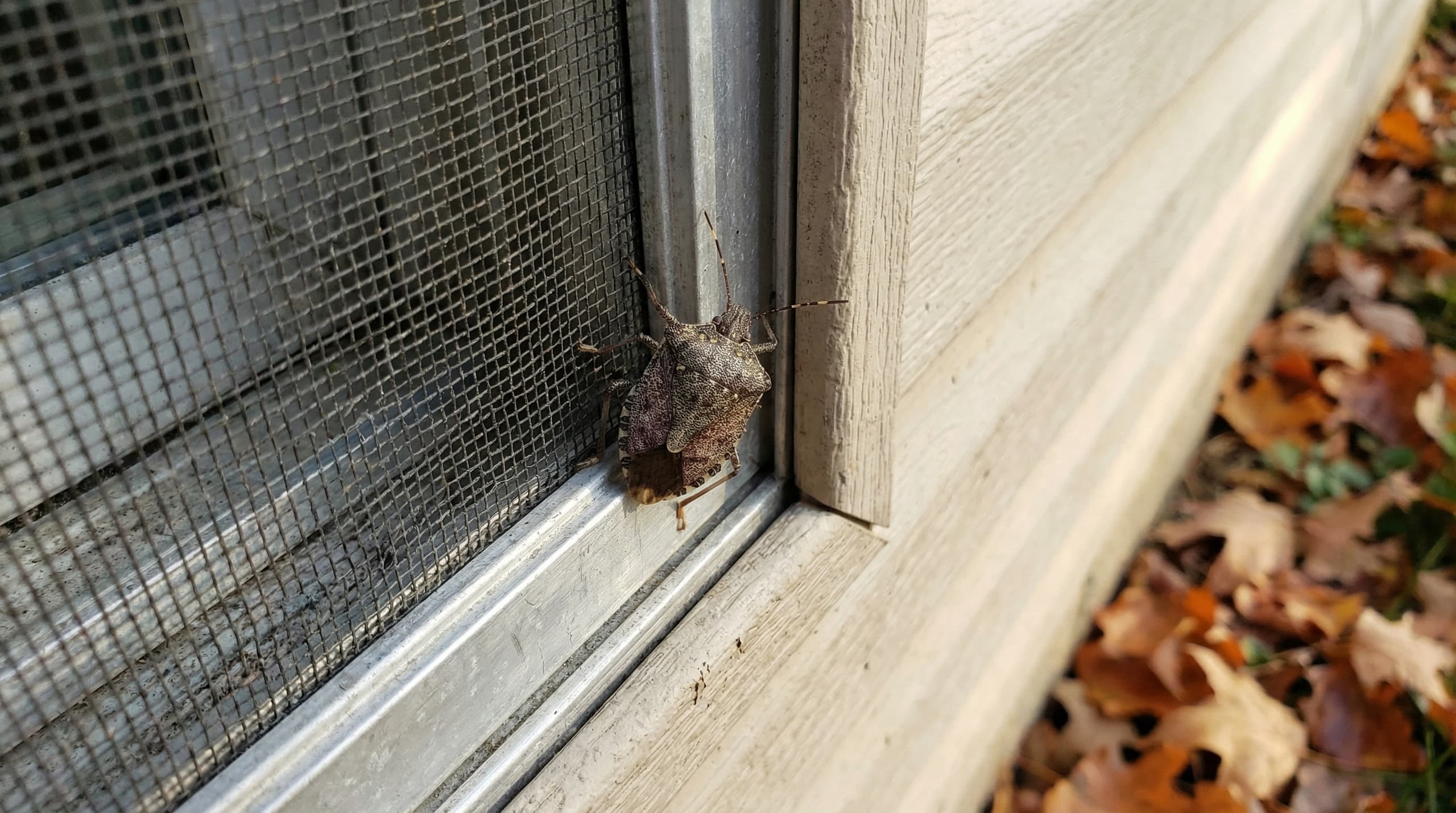
Spot a brown, shield-shaped bug in the mix? That's probably a stink bug. Our stink bug guide for Idaho covers that one.
How Do You Identify Asian Lady Beetles in Boise?
Check behind the head first. The Asian lady beetle (Harmonia axyridis) has a white or cream shield with a black mark shaped like an "M" or "W." Native ladybugs don't have that mark, and native species rarely move into houses.
Color won't help much. These beetles run from pale tan to bright orange to deep red. Some have lots of black spots. Some have none.
They were brought to North America to eat aphids on crops and trees, and they're good at it. That's the upside. The downside shows up in fall, when they gather by the dozens on the sunniest, lightest-colored walls in the neighborhood.
They also leave a scent that draws more beetles. That's why the same Boise houses get hit year after year.
How Do You Identify Box Elder Bugs?
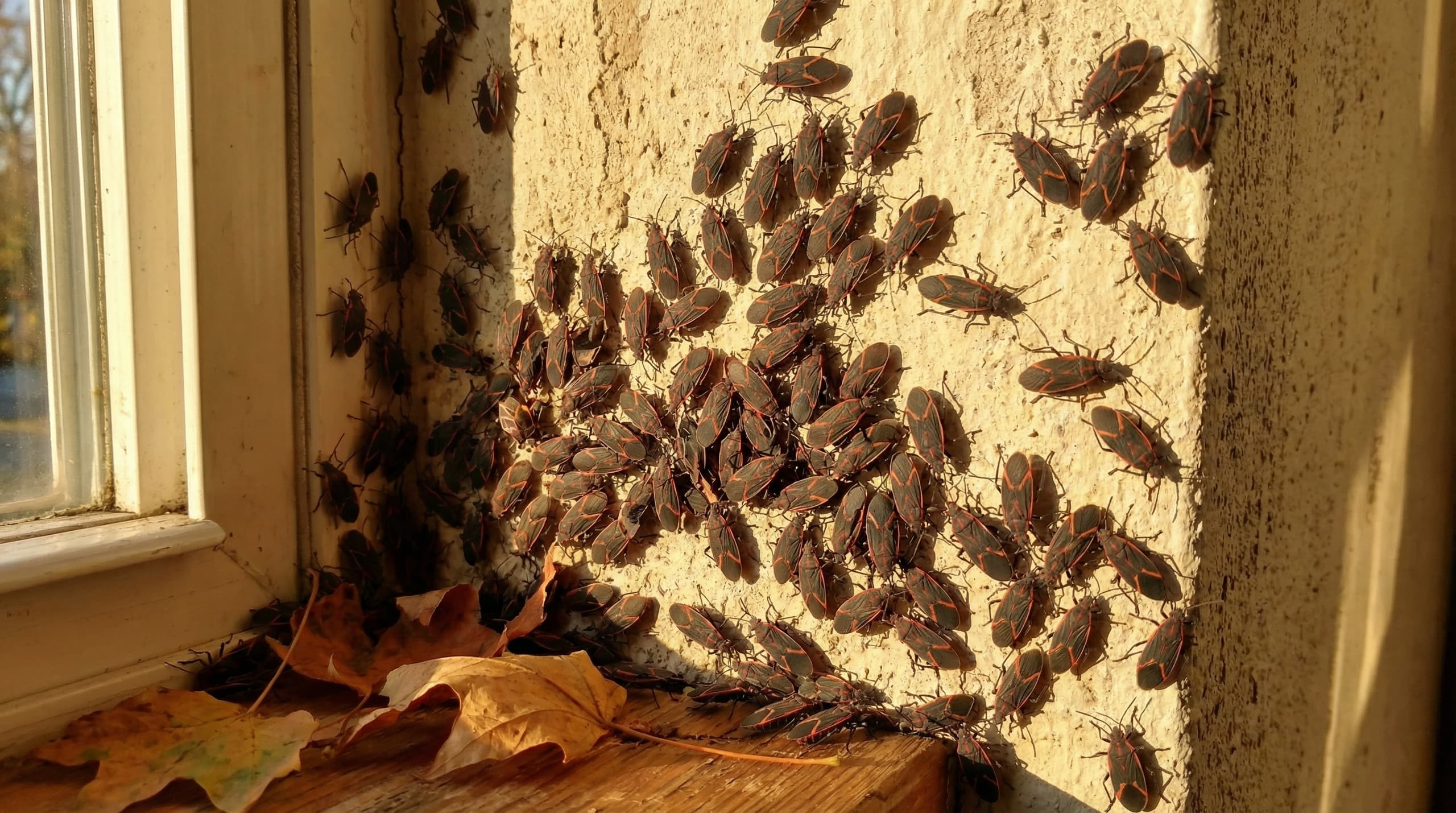
Box elder bugs (Boisea trivittata) are flat, black and about 1/2 inch long, with red lines behind the head and red edges on the wings. The young ones are smaller and bright red. You'll often see both mixed together on the same warm wall.
They feed on the seeds of box elder trees, plus some maples and ash. If one of those trees grows on your block, you'll get box elder bugs.
They don't chew wood or eat your food, and bites are rare. That doesn't mean you want hundreds of them on your siding. Once they slip into wall voids, they wander out onto windows all winter, and their droppings spot curtains. Keeping them outside is the goal. Our full box elder bug guide for Boise goes deeper on this pest.
Do Asian Lady Beetles Bite? Which Bug Does More Damage?
Yes, Asian lady beetles can bite. It's more of a pinch, and it happens when they're looking for moisture. It can break the skin, but the sting fades quickly. Box elder bugs almost never bite.
Neither one hurts your home's structure. Neither one breeds inside over winter. The real cost is the mess.
Lady beetles are worse on that front. Their yellow fluid stains light walls and fabric, and big clusters leave a lingering musty smell. Box elder bug droppings are easier to clean, but they still mark curtains and window trim.
So which is worse? For most Treasure Valley homes, the lady beetle. You still don't want either one moving in, and a fall perimeter treatment keeps both on the outside.
Why Do Lady Beetles and Box Elder Bugs Swarm Boise Homes in Fall?
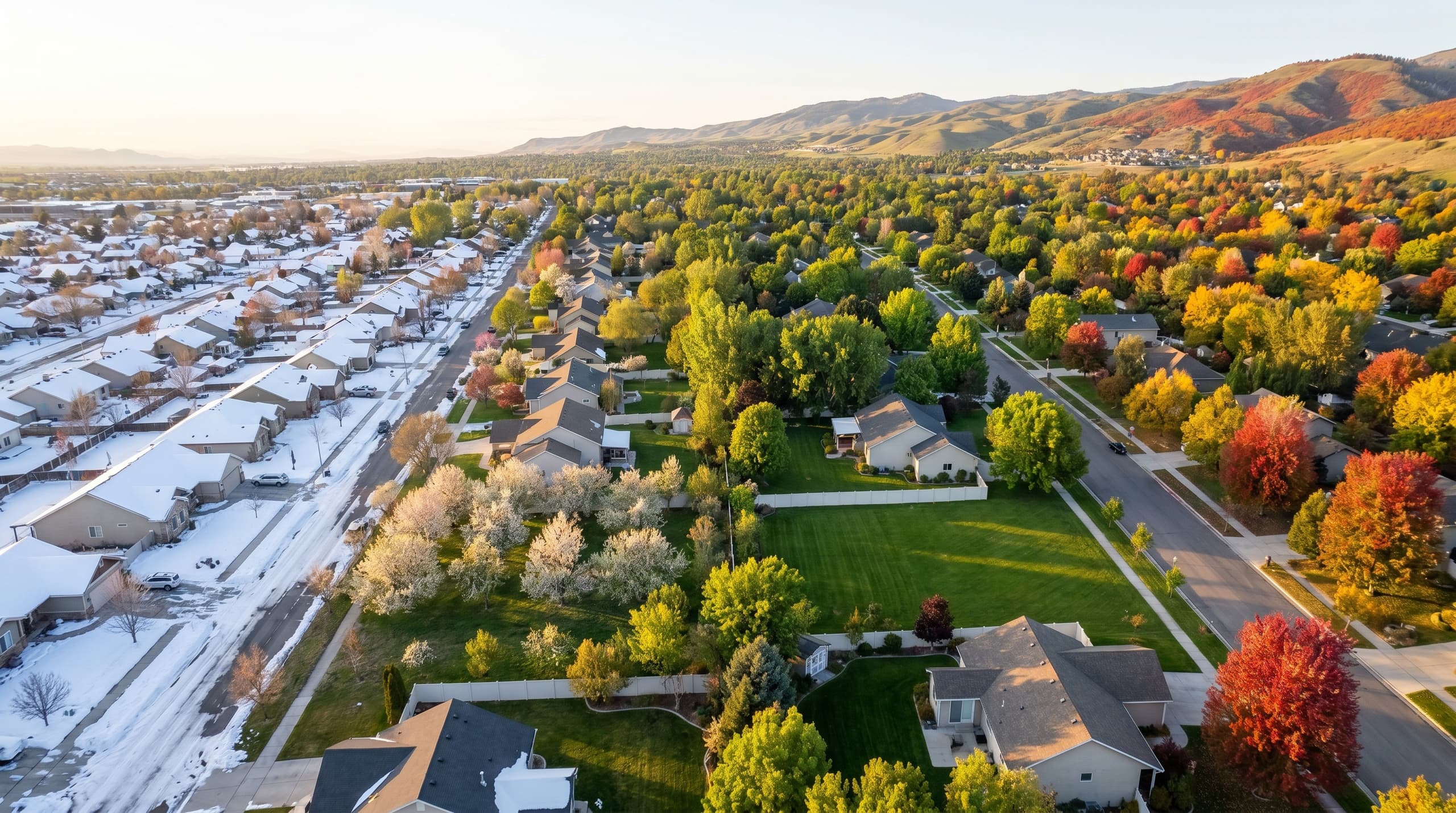
They're looking for a warm, dry place to wait out winter. When nights turn cold in late September and October, both bugs head for the warmest surfaces they can find. In the Treasure Valley, that means south and west walls that soak up afternoon sun.
From there, they crawl into gaps around windows, siding, vents and utility lines. Once inside the walls, they go quiet.
Then a warm February afternoon wakes them up. They follow the warmth toward your living space, which is why you find lady beetles on a sunny window in the middle of winter. They aren't breeding in there. They're the same bugs that got in last fall.
How Do You Get Rid of Asian Lady Beetles and Box Elder Bugs?
Vacuum the ones inside, keep the rest out, and treat the outside before they settle in. Bug bombs and indoor sprays don't fix this. The bugs you see are only the ones that wandered out of the walls.
- Vacuum, don't squish. Slip a knee-high stocking into the vacuum hose and hold it with a rubber band. The bugs collect in the stocking, and you can toss them outside.
- Spray clusters on outside walls with soapy water (a squirt of dish soap in a spray bottle). It works well on box elder bugs.
- Close up gaps as a weekend project. Caulk around window frames, fix torn screens, and add door sweeps. Small gaps let lady beetles in.
- Rake up box elder seeds under nearby trees if the trees are yours.
- Get a perimeter treatment on the outside walls in early fall, before the bugs find a way in.
How Green Guard Keeps Fall Invaders Out of Treasure Valley Homes
Our technicians treat the outside of your home where these bugs land and crawl in. That means sunny walls, window and door frames, eaves and foundation lines. We use organic-based products that are safe for kids and pets once dry.
Timing matters most. A treatment in September or early October hits the bugs while they're still on the walls. Wait until they're deep in the wall voids and you're mostly cleaning up stragglers until spring.
New customers start with our $49 first service on a quarterly or bimonthly plan. Quarterly visits start at $119* after that, every 3 months. If bugs come back between visits, so do we. Free.
Seeing orange beetles or black and red bugs on your siding right now? Call (208) 297-7947. We can usually get out within 1 to 2 days, and same-day service is often available.
* Tiered by home size. View full pricing
Frequently Asked Questions
Are Asian lady beetles the same as ladybugs?
Quick answerNo.
Asian lady beetles are a kind of lady beetle, but they aren't the native ladybugs most people grew up with. Look for the black "M" or "W" on a white patch behind the head. Native ladybugs rarely come indoors, while Asian lady beetles cluster on homes every fall.
Do Asian lady beetles bite people?
Quick answerYes, they can.
Asian lady beetles sometimes pinch when they're searching for moisture, and the bite can break the skin. It fades quickly, but the yellow fluid they release can stain, so vacuum them instead of swatting.
When do Asian lady beetles and box elder bugs show up in Boise?
Quick answerBoth gather on sunny walls in late September and October as nights cool off.
They spend winter in wall voids and wander out on warm days from February into spring. Early fall is the best time to treat the outside of your home.
Should I kill Asian lady beetles in my house?
Quick answerDon't crush them.
Vacuum them with a stocking in the hose so they don't bleed yellow fluid on your walls. The bugs indoors come from your walls, so the real fix is closing gaps and treating the outside. Green Guard handles that treatment, starting with a $49 first service. Call (208) 297-7947.