Quick answer
Stink bugs invade Treasure Valley homes September through October, with peak activity in October once overnight lows drop below 50 degrees. The invasive brown marmorated stink bug is a big part of the fall pile-up on Treasure Valley homes. The fix is not spraying inside the house. It is sealing exterior entry points and running a barrier treatment before the migration starts, ideally in August. Green Guard exterior barrier service starts with a $49 first service.
Key Takeaways
- Stink bugs push into Idaho homes when nighttime lows drop below 50 degrees, usually mid-September in the Treasure Valley.
- October is the worst month for stink bug invasion across Boise, Meridian, and Nampa.
- Brown marmorated stink bug (BMSB) is the invasive species driving the increased pressure. Green stink bugs and consperse stink bugs are the native Idaho species.
- Never crush stink bugs indoors. Vacuum them up with a shop vac and empty the canister outside.
- Exterior sealing plus a barrier treatment in August blocks them before they migrate. Waiting until you see them inside is too late.
In this article

Why Stink Bug Pressure Is Up in Idaho This Fall
University of Idaho Extension has been tracking the brown marmorated stink bug (BMSB) since it was confirmed in Ada and Canyon Counties.
Here is the short version. Stink bugs in Idaho are getting worse because the invasive BMSB now overlaps with the four or five native species we already had. Native stink bugs like the green stink bug and the consperse stink bug hang out in gardens and orchards. BMSB does that too, but it also aggressively seeks out warm structures to overwinter in. That is the pest driving the fall pile-ups on sunny walls.
Warm July nights can keep populations high through breeding season and put scouts on south-facing walls by mid-August, ahead of the usual Labor Day timing. If you wait until you see one in the kitchen, you are already two weeks behind. For the broader fall pest picture, our Idaho pest calendar covers the full timeline.
What Do Stink Bugs Look Like in Idaho?
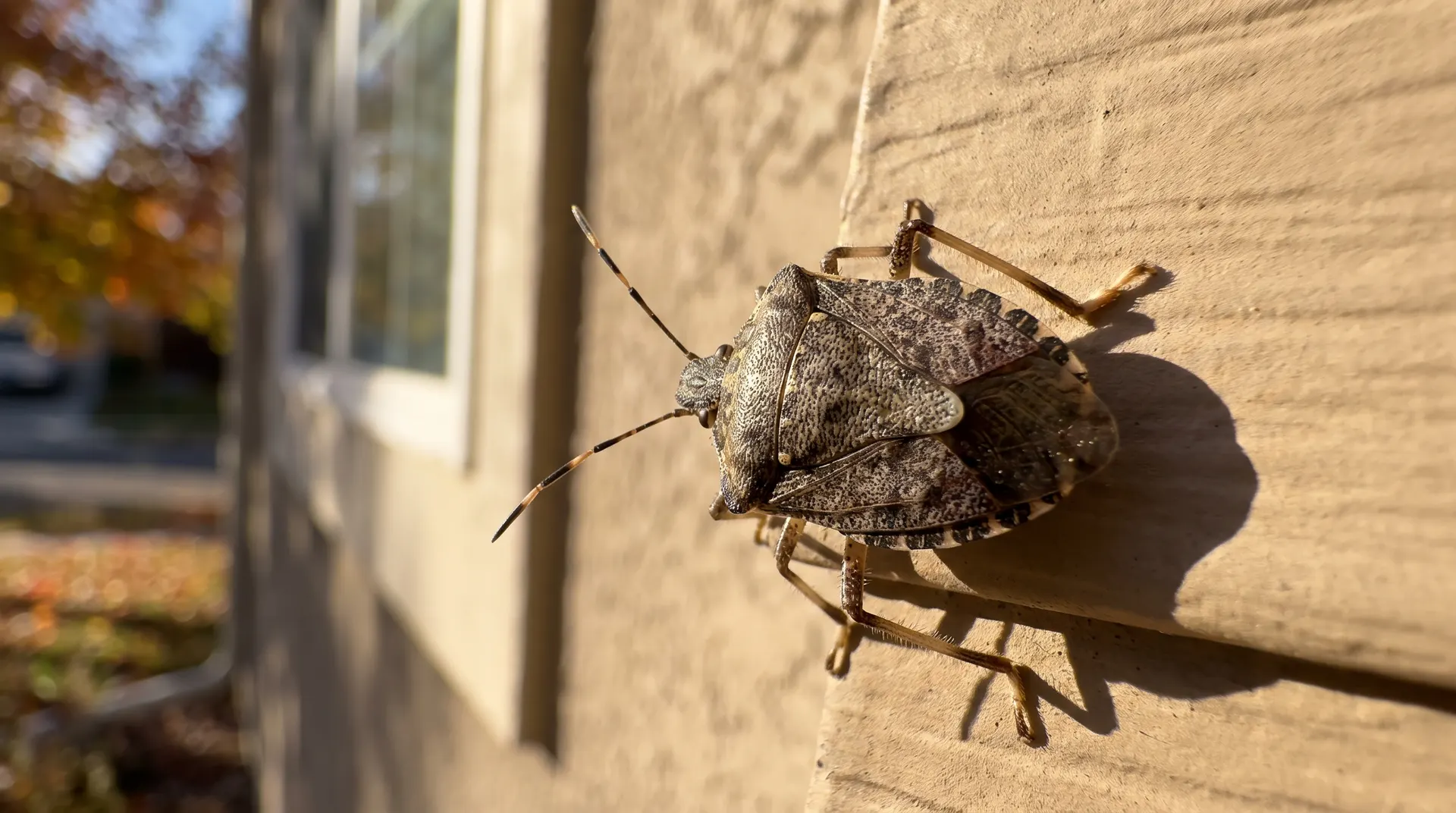
A stink bug is a shield-shaped insect about the size of a dime, with a hard back and antennae that stick out from the sides of the head. Idaho has four common species. Here is how to tell them apart at a glance.
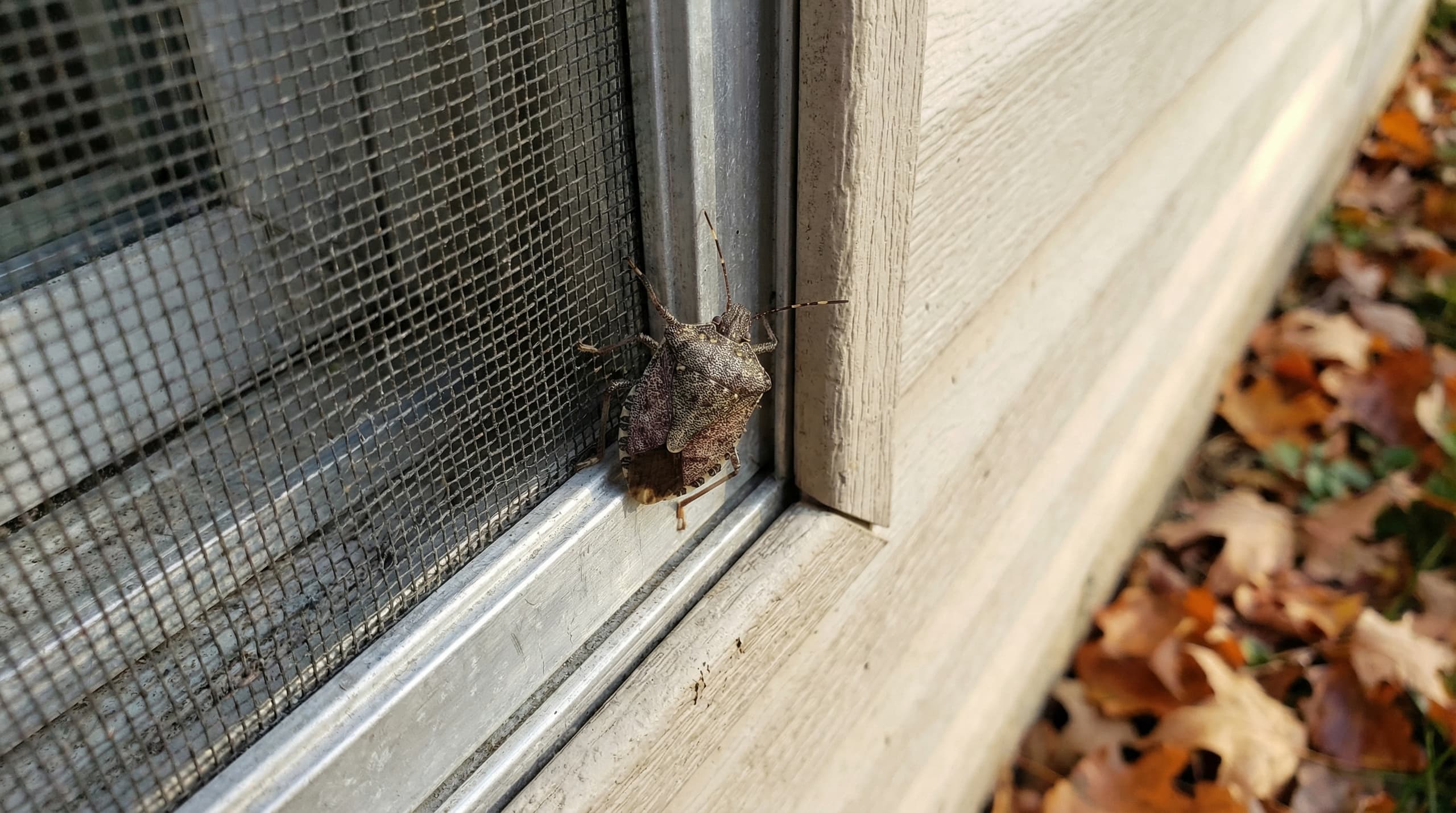
- Brown marmorated stink bug (BMSB). Mottled brown, about 5/8 inch long, with alternating light and dark bands on the antennae and the edge of the abdomen. The invasive species. This is the one crawling on your siding in October.
- Consperse stink bug. Grayish brown with tiny dark speckles, similar size to BMSB, but no white bands on the antennae. Native, most common in Idaho gardens.
- Green stink bug. Bright leafy green, shield-shaped, about 1/2 inch long. Native, feeds on tomatoes and legumes in Treasure Valley yards.
- Say stink bug. Smaller (about 3/8 inch), red and green mottled pattern on the back. Native, mostly outdoor.
What Bug Is Mistaken for a Stink Bug?
The three bugs most commonly confused with stink bugs in Idaho are western conifer seed bugs, box elder bugs, and elm seed bugs. All three show up on the same fall walls looking for warm shelter, and all three release a smell when crushed. The fix for each is the same though, so the ID matters less than most people think.
- Western conifer seed bug. Longer and narrower than a stink bug, with flared back legs. Not shield-shaped. Common in Boise foothills near pines.
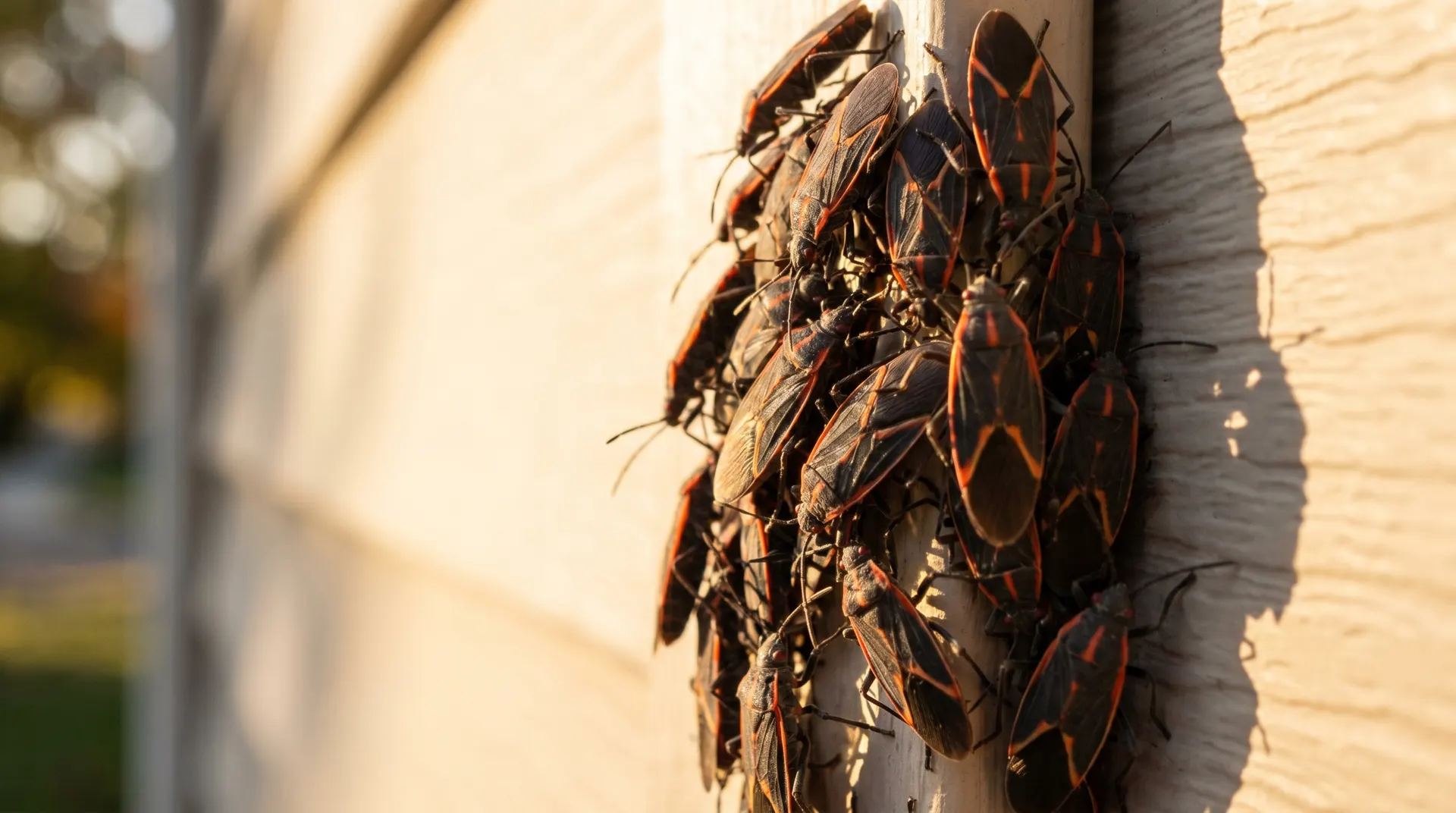
- Box elder bug. Black with red or orange markings, elongated (not shield-shaped). See our Boise box elder bug guide for the full ID.
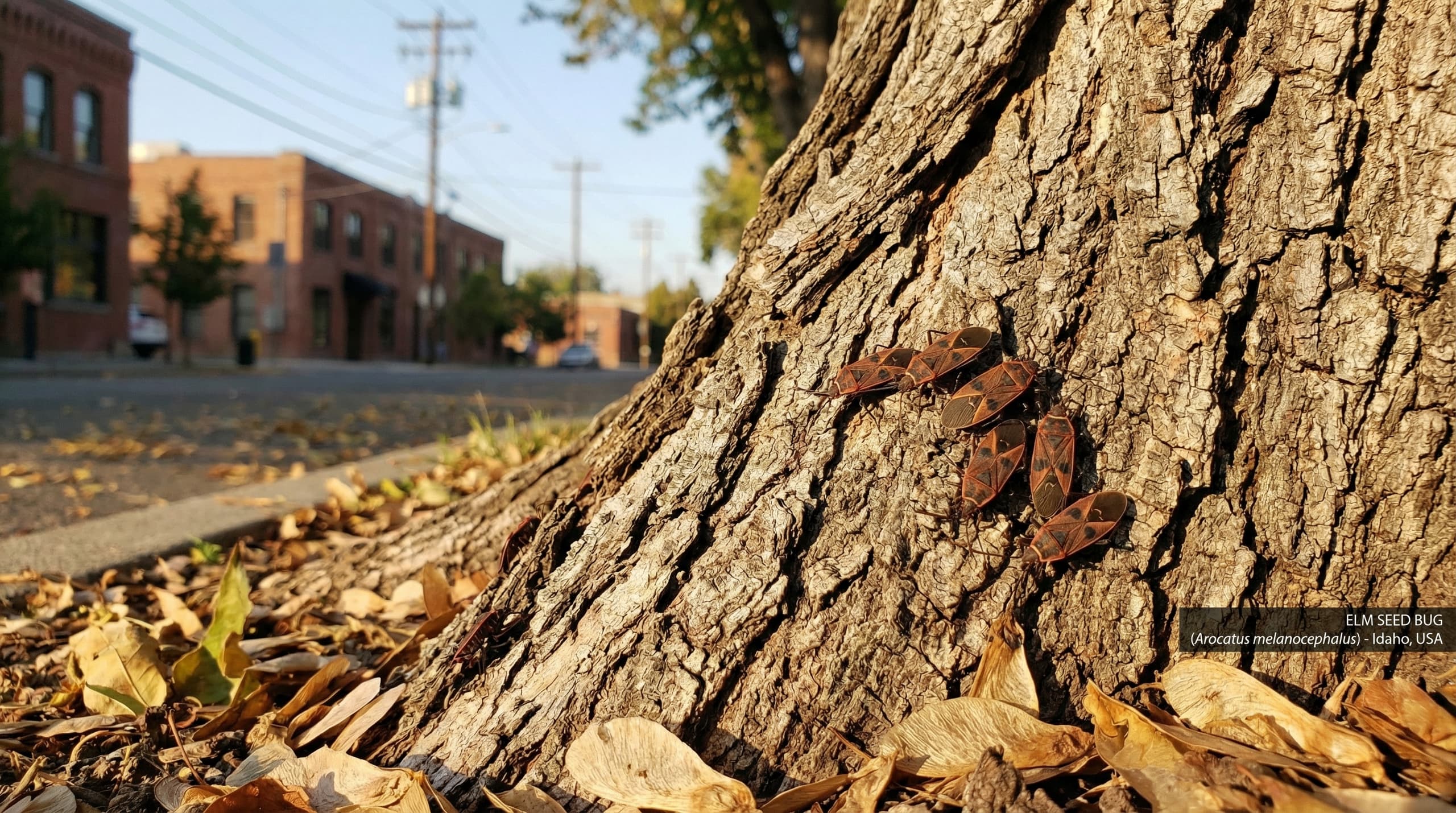
- Elm seed bug. Reddish brown, about 1/3 inch long, active in mid-summer more than fall. Full ID in our Idaho elm seed bug guide.
- Kissing bug. Extremely rare in Idaho. If you think you see one, it is almost always a BMSB or a western conifer seed bug.
Why Do Stink Bugs Invade Homes in Fall?
Stink bugs invade Idaho homes in fall because they are looking for a dry, protected place to overwinter as temperatures drop. When overnight lows in the Treasure Valley drop below 50 degrees, usually mid-September, stink bugs stop feeding and start scouting for cracks in warm structures. Your south-facing wall in the afternoon sun is exactly what they are looking for.
They do not want to eat your food, breed inside, or bite anyone. They just want to sit still in a wall void or attic until spring. That behavior is called diapause. The problem is they show up in the dozens or hundreds, they smell awful when crushed or stressed, and they emerge on warm February days thinking it is spring, which is how they end up in your bathroom sink in the middle of winter.
How Do Stink Bugs Get Inside a House?
Stink bugs get inside through gaps as small as 1/8 inch around windows, doors, siding, roof lines, and utility penetrations. They do not chew. They squeeze through openings that already exist. A house that is tight against mice is usually tight against stink bugs too. Here are the most common entry points in Treasure Valley homes:
- Window frames and screens. Torn corners on aluminum window screens and gaps between the frame and stucco or siding.
- Attic vents and gable vents. Ripped or missing screens on soffit and gable vents give them a direct highway into the attic.
- Utility penetrations. AC line sets, dryer vents, gas lines, and cable entries where the caulk has dried out and pulled away.
- Under siding overlaps. Vinyl and Hardie siding creates a gap at the bottom row that stink bugs slip behind, then work their way up.
- Door thresholds. Weather stripping that has flattened out from years of use, especially on garage service doors.
- Fascia and eave gaps. Where the roof deck meets the fascia board there is often a horizontal gap wide enough for a stink bug to walk through.
Should I Be Worried If I See a Stink Bug in My House?
Seeing one stink bug in the house is not a crisis. Stink bugs do not bite, they do not sting, they do not carry disease, they do not damage the structure, and they do not breed indoors. A single bug in the bathroom in October is normal.
What matters is what one stink bug indoors usually means. If one made it in, the wall assembly probably has open entry points and there are more where that came from. Scouts release an aggregation pheromone when they find good shelter, and that pulls in the rest of the population. In our experience, a single stink bug indoors in early October means the exterior sealing did not get done in time, and you should expect many more over the next few weeks unless you treat the exterior barrier.
What Actually Kills Stink Bugs (and What Does Not)
Here is what works and what does not. Skip the home remedies that make the problem worse.
- What works: soapy water bath. Half a cup of dish soap in a wide bowl of water. Knock stink bugs in with a stiff card. They drown in about 30 seconds. This is the best DIY method for indoor bugs.
- What works: shop vac with soapy water in the canister. Suck them up, empty outside. Fast for clusters on a windowsill or ceiling.
- What works: exterior barrier treatment. A residual product applied to siding, foundation, eaves, and around windows in August or early September kills scouts before they signal the rest of the population. This is what we do.
- What does not work: crushing them. Releases the aggregation pheromone and the smell. Attracts more, not fewer.
- What does not work: bug spray on the exterior in October. Once they are already clustered, contact spray kills a percentage but the rest are already inside the wall. Timing matters more than product choice.
- What does not work: bug bombs and foggers. We do not use these and neither should you. They cannot reach stink bugs sheltering deep in wall voids.
When to Seal Up and Treat Before the Fall Invasion
The right time to seal and treat is right now, in mid to late August. The stink bug migration into Treasure Valley homes begins in mid-September and peaks in October. Every day of exterior work you do before Labor Day gives the barrier treatment time to bond to siding and become a real perimeter defense.
Here is the sequence we walk homeowners through:
- August 15 to September 1. Walk the exterior. Caulk around windows, door frames, utility penetrations, and any fascia gaps. Repair or replace torn window and vent screens.
- September 1 to 15. Schedule the exterior barrier treatment. If you already have quarterly service, this is your normal Q3 visit. If not, the $49 initial service covers it.
- September 15 to October 15. Monitor south and west-facing walls in the afternoon. Vacuum any clusters immediately. Do not spray them, do not crush them.
- Late October. If you missed the window, treat now anyway. It will reduce the load but not eliminate what already got in.
- November through February. Vacuum any indoor stragglers as they wake up on warm days. Do not open wall voids to try to remove them.
How Green Guard Stops Stink Bugs Before They Get In
Our exterior barrier treatment is built for this exact fall push. We hit the perimeter three feet up and three feet out from the foundation, sweep the eaves and soffits with a long-reach applicator, and spot-treat around every window, door, and utility penetration. Products are organic-based, hospital-grade, and safe for kids and pets once dry (about 30 to 60 minutes).
The math on this is simple. A single one-time treatment in October costs $200 minimum and only knocks down what is already there. A quarterly plan at $119 per treatment for homes up to 2,500 square feet costs less across the whole year and stops the invasion at the wall. If pests come back between visits, we come back free.
To get on the schedule before September, call (208) 297-7947 or start with our $49 first treatment. Same-day service is often available.
Frequently Asked Questions
Should I be worried if I see a stink bug in my house?
Quick answerNo.
A single stink bug indoors is not a health or safety concern. They do not bite, sting, carry disease, or damage the structure. But one stink bug indoors in October usually signals open exterior entry points and an aggregation pheromone that will pull in more, so it is a good reason to book an exterior treatment before the population grows.
What bug is mistaken for a stink bug in Idaho?
Quick answerThe most common lookalikes in Idaho are the western conifer seed bug (longer and narrower with flared back legs), the box elder bug (elongated, black with red markings), and the elm seed bug (reddish brown, active in mid-summer).
Kissing bugs are extremely rare here, so a shield-shaped brown insect on your siding in October is almost always a brown marmorated stink bug.
What actually kills stink bugs?
Quick answerA bowl of soapy water works best for indoor stink bugs.
Knock them in with a card, they drown in about 30 seconds. A shop vac with soapy water in the canister handles larger clusters. For prevention, a professional exterior barrier treatment applied in August or early September kills scouts before they signal the rest of the population. Crushing them and using contact spray in October both make the problem worse.
What month are stink bugs the worst in Idaho?
Quick answerOctober is the worst month for stink bugs in the Treasure Valley.
Populations start pushing into homes in mid-September when overnight lows drop below 50 degrees, peak on south and west-facing walls in October, and taper off in early November. If you want to block them, treat in August and early September, not October.
How quickly can Green Guard treat a stink bug problem in my Boise home?
Quick answerSame-day service is often available.
We cover Boise, Meridian, Eagle, Nampa, Caldwell, Kuna, Star, and the surrounding Treasure Valley. The $49 initial service includes a full property inspection, exterior barrier treatment, and an eave sweep. Call (208) 297-7947 to get on the schedule before the fall push.