Quick answer
Cricket control in Boise starts with knowing which species you're dealing with: house crickets (the chirpers), field crickets (the black wanderers), or silent camel crickets in the basement. They invade Treasure Valley homes mid-July through September chasing cool, damp hiding spots. Seal door sweeps, drop your basement humidity below 50 percent, and pull mulch back from the foundation. Green Guard's quarterly perimeter service covers crickets and 30 other Idaho pests starting with a $49 first service.
Key Takeaways
- Three cricket species hit Boise homes: house crickets, field crickets, and camel crickets
- Peak indoor invasion runs mid-July through September across the Treasure Valley
- Camel crickets don't chirp but love basements, crawl spaces, and laundry rooms
- Mormon crickets make headlines in southern Idaho rangeland but rarely enter Boise homes
- Green Guard's $49 initial perimeter treatment covers crickets with no add-on fee
In this article
What Cricket Are You Hearing? Quick ID for Boise Homeowners
Three cricket species cause almost every cricket problem in Boise. Knowing which one you have changes how you stop them, because they hide in different places and respond to different fixes. Here's how to tell them apart in 30 seconds.
- House crickets (Acheta domesticus). Light tan to straw colored, about 3/4 inch long, with three dark bands across the head. These are the chirpers you hear at night in basements and garages. Males rub their wings together to call females, and the warmer the air, the faster the chirp. They will breed indoors if conditions are right.
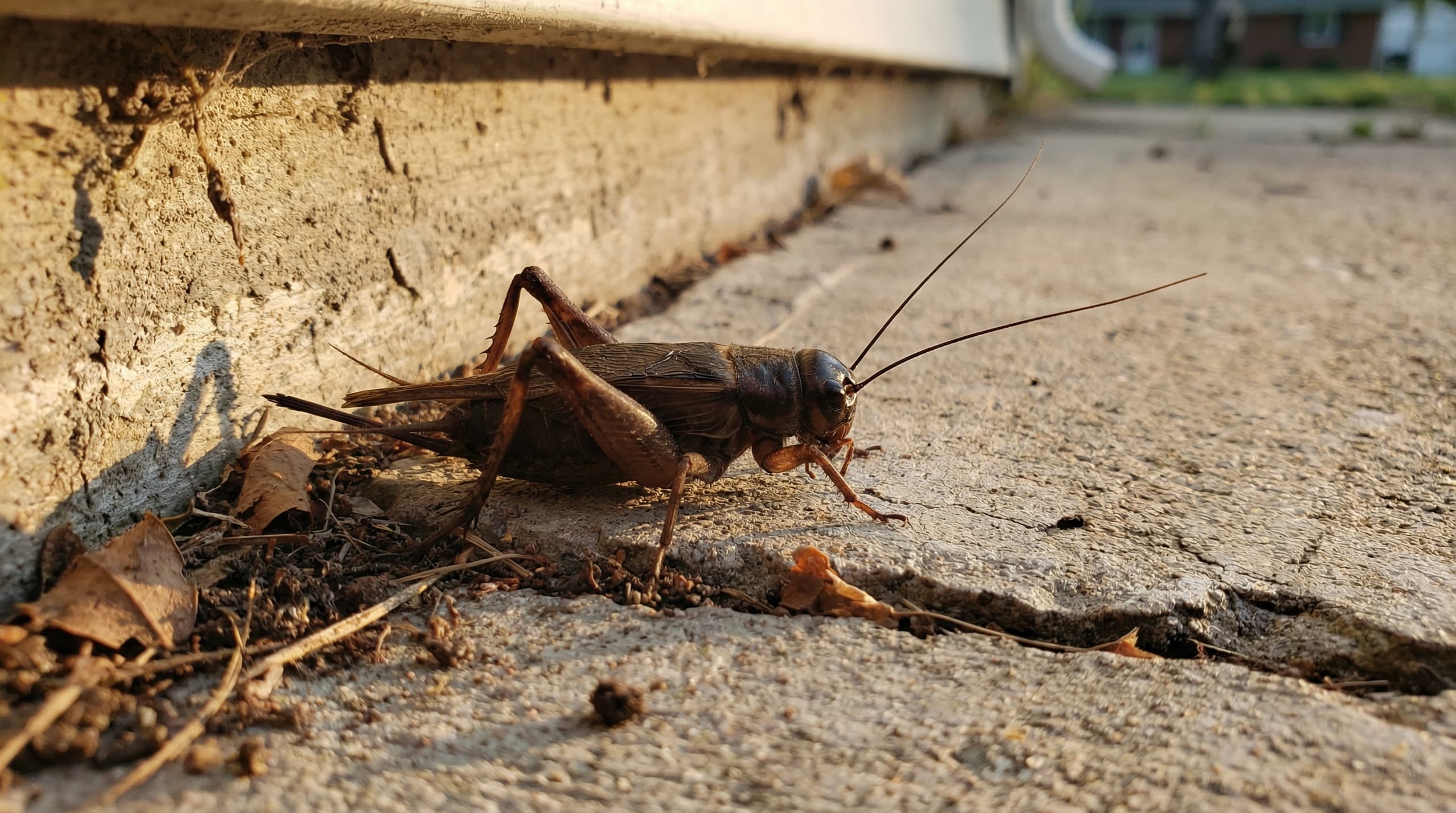
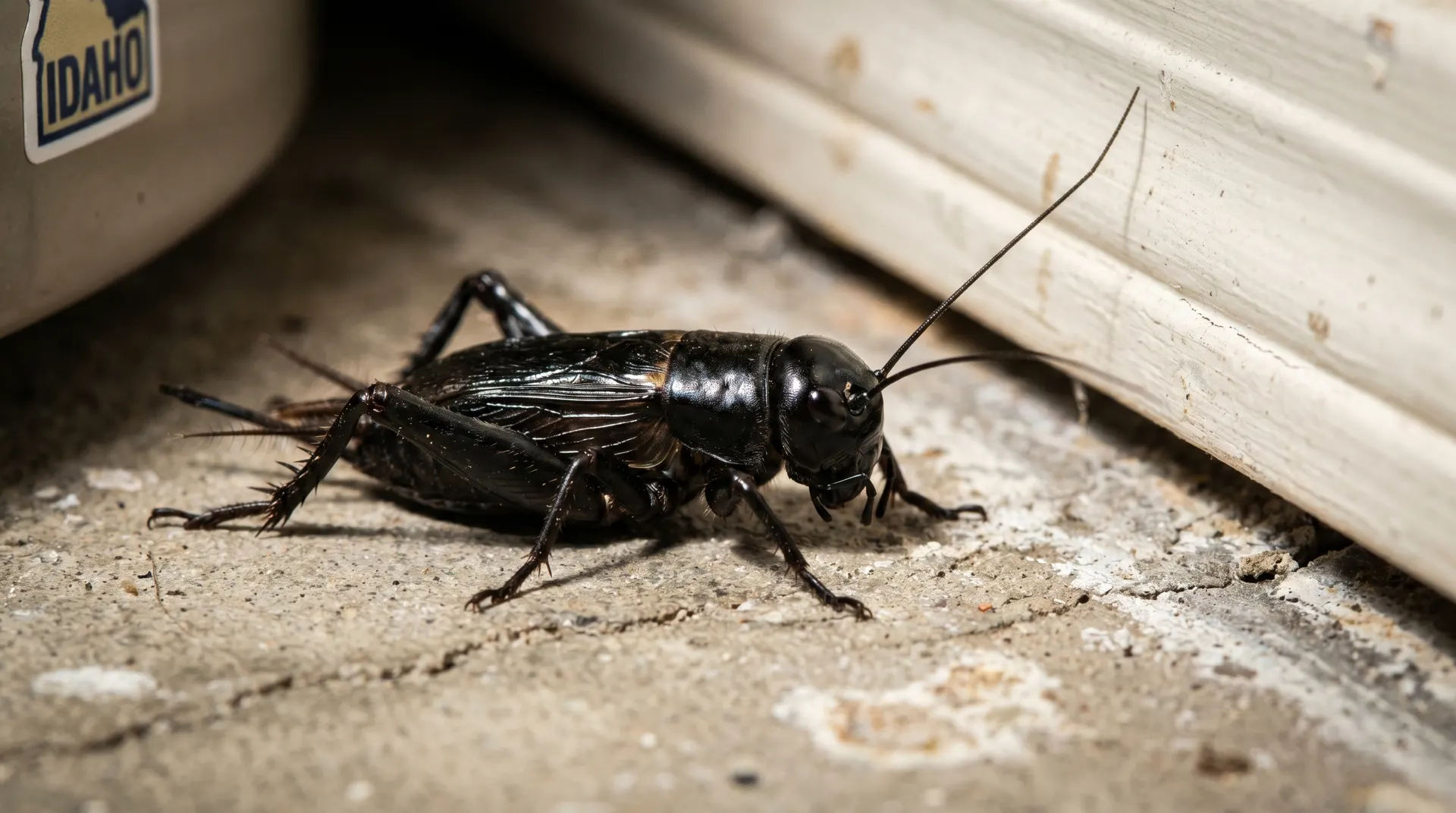
- Field crickets (Gryllus species). Glossy black, slightly bigger at up to 1 inch, with long antennae and big jumping legs. Field crickets live outside in lawns, mulch beds, and rock piles. They wander indoors by accident, usually one or two at a time. They chirp loudly outdoors but rarely settle long enough inside to start a chorus.
- Camel crickets (Ceuthophilus species). Also called cave crickets or spider crickets. Humpbacked, light brown, no wings, no chirping. They are the ones that startle Treasure Valley homeowners in basements because they jump straight at threats. Camel crickets need damp, dark spots: crawl spaces, sump pump rooms, and the back of the laundry room.
Why Do Crickets Come in My House in July?
Boise crickets come inside chasing three things: cool air, moisture, and shelter from dry, hot yards. As of June 2026, daytime highs in the Treasure Valley are already pushing into the 90s and unirrigated soil bakes down to bone dry. Your basement is 65 degrees and 55 percent humidity. To a cricket, that's an oasis.
A few Treasure Valley factors make the problem worse:
- Heavy yard irrigation. Boise sits in high desert with long waves of dry summer heat. Irrigated lawns and mulch beds create wet pockets right at your foundation. Field crickets follow that moisture line straight to the house.
- Construction lighting and porch lights. Field crickets get drawn to white lights at night. New developments in Eagle, Star, and south Meridian have a lot of bright outdoor lighting that pulls crickets toward doorways every evening.
- Older basements with weak sealing. Bench, North End, and East End homes built before the 1990s often have foundation cracks, gaps around utility penetrations, and unsealed window wells. Camel crickets find every one.
- Late summer harvest from nearby farms. If you live near Caldwell, Nampa, or south Kuna, field crickets disperse from harvested fields in August and September. Expect a spike every fall.
Where Crickets Hide in Boise Homes
The chirp echoes through drywall, so the cricket sounds like it is everywhere. It is not. Crickets pick a handful of very specific hiding spots, and once you know where to look, you can usually find them.
- Behind the water heater or furnace. Warm, dark, and almost never disturbed. Classic house cricket spot. Pull the access panel and check the burner area.
- Sump pump pits and floor drains. Damp, humid, and easy to reach from the crawl space. Camel crickets love sumps because they just need enough moisture to keep their exoskeleton from drying out.
- Garage corners and along the door track. Field crickets ride in under garage doors at night. They pile up against the back wall behind storage bins.
- Laundry rooms and utility closets. Steam from the dryer plus dropped lint plus a dark corner equals cricket habitat.
- Window wells and basement window frames. Field crickets fall into uncovered window wells and can't climb out. From there, any gap in the frame lets them inside.
- Behind the dishwasher and refrigerator. Moisture from condensation drip pans makes the back of major appliances surprisingly humid.
How to Get Rid of Crickets in Your Boise Garage and Basement
DIY cricket control in Boise works best when you tackle moisture, entry points, and food sources all at once. Hit one and the other two will undo your progress.
Start here:
- Drop basement humidity below 50 percent. A 70-pint dehumidifier in a Treasure Valley basement pulls 4 to 5 gallons of water a day in July and August. Camel crickets cannot survive long under 50 percent humidity. House cricket egg sacs dry out and fail.
- Install or replace door sweeps. Garage pedestrian doors, basement walkout doors, and any exterior door without a tight rubber sweep is an open road for field crickets. New sweeps run about $15 and take 10 minutes.
- Seal the wall-to-foundation seam. Walk your basement perimeter at night with a flashlight. Any gap where the sill plate meets the concrete foundation gets filled with caulk or expanding foam.
- Cover window wells with clear domed covers. Window wells work like cricket traps in reverse. They fall in, can't get out, then squeeze inside through the frame. A $25 plastic cover stops the whole problem.
- Pull mulch back 18 inches from the foundation. Wood mulch holds moisture and shelters field crickets right against your house. Swap to gravel in that band and you cut harborage in half.
- Switch porch and garage lights to yellow LED bulbs. Yellow bulbs attract dramatically fewer crickets than standard white. Pair with motion sensors so the lights aren't blasting cricket beacons all night.
- Vacuum up the ones you find. A shop vac handles camel crickets quickly without spreading their droppings. Empty the bag outside, not in the garage trash.
A Quick Word on Mormon Crickets
If you've Googled cricket control in Idaho, you've probably seen alarming news photos of Mormon crickets covering highways across southern Idaho. Worth knowing what's actually happening here.
Mormon crickets are not really crickets. They're shieldback katydids that swarm in semi-arid rangeland across southern Idaho, eastern Oregon, and northern Nevada. They march in massive bands, eat crops and each other, and make the news every few summers when populations peak.
Good news for Treasure Valley homeowners: Mormon crickets rarely reach Boise neighborhoods. They prefer dry sagebrush rangeland, not irrigated suburbs. Even in big outbreak years, a Boise home is very unlikely to see one. State and county weed and pest abatement programs handle rural Mormon cricket control. If you're seeing crickets in your house, it's almost certainly one of the three species above.
When DIY Isn't Enough: Professional Cricket Treatment in Boise
DIY handles light cricket pressure just fine. Heavy infestations need a perimeter approach. Since 2010, we've watched cricket season here run from midsummer until the first hard frost in October. By the time most folks call, they're already losing sleep to chirping or finding camel crickets every morning in the laundry room.
Time to bring in a pro when you're seeing any of these:
- Chirping that doesn't stop after 48 hours of dehumidifying the basement
- More than 10 camel crickets per week in the laundry, sump pit, or crawl space
- Field crickets piling up in the garage faster than vacuuming can keep up
- Two or three cricket species at once, which usually signals heavy foundation pressure
- Crickets plus earwigs, spiders, or ants, which says the whole exterior barrier is open. Our Idaho pest calendar covers the full overlap.
How Much Does Cricket Control Cost in Boise?
Professional cricket control in Boise runs less than most homeowners expect, especially compared with a single emergency service call.
Green Guard's $49 initial treatment covers your first visit, including a full property inspection, exterior barrier spray, and interior treatment on request. After that, quarterly service runs:
- $119 per visit for homes up to 2,500 sq ft
- $139 per visit for 2,501 to 4,000 sq ft
- $159 per visit for 4,001 to 5,500 sq ft
- Custom quote for homes over 5,500 sq ft
Ready to Stop the 2 a.m. Chirping?
July and August are the worst months for crickets in Boise. The longer you wait, the deeper the population digs into your basement, crawl space, and garage. A perimeter treatment this week stops the supply at the foundation.
Green Guard Pest Control serves Boise, Meridian, Eagle, Nampa, Caldwell, Kuna, and Star. Our organic-based, hospital-grade products are safe for kids and pets once dry, usually 30 to 60 minutes. Same-day service is often available.
Call (208) 297-7947 or request a quote online. Just $49 to start. If pests come back between visits, we come back free.
Frequently Asked Questions
Will an exterminator get rid of crickets?
Quick answerYes.
A professional perimeter treatment stops the supply of crickets at the foundation, which DIY rarely achieves on its own. Green Guard's $49 initial visit includes a barrier spray that lasts about 90 days and covers crickets along with 30 other common Idaho pests. Most homeowners notice chirping stops within 48 hours.
Why do crickets come in my house?
Quick answerCrickets come inside chasing cool air, moisture, and shelter from hot, dry yards.
By mid-July in Boise, lawn temperatures hit the 90s while basements stay near 65 degrees. Field crickets follow irrigated foundation beds toward the house, then squeeze in under door sweeps, through foundation cracks, and into open window wells.
How do I get rid of crickets in my garage?
Quick answerStart by installing a tight rubber sweep on the pedestrian door and sealing the gap under the main garage door.
Then drop interior humidity, swap white bulbs for yellow LED, and pull mulch back at least 18 inches from the slab. If field crickets keep showing up after that, a perimeter treatment on the exterior foundation usually solves it within a week.
Why should you not kill crickets?
Quick answerThat advice comes from cricket folklore in parts of Asia and Europe, where chirping inside the home was considered good luck.
There's no practical reason not to control crickets in an Idaho home. Camel crickets and house crickets breeding in a basement can damage stored fabric, paper, and cardboard. House crickets in wall voids also keep families awake at night with constant chirping.
Are crickets harmful to pets or kids in Idaho?
Quick answerCrickets don't bite, don't carry venom, and don't spread disease.
They're a nuisance, not a health risk. Dogs and cats sometimes hunt and eat crickets without issue, though a very large meal can cause mild stomach upset. If you're worried about indoor treatments, Green Guard uses organic-based products that are safe for kids and pets once dry, usually within 30 to 60 minutes.