Quick answer
Drain flies are the small fuzzy moth-looking bugs sitting on your Boise bathroom wall or tile. They are not fruit flies, and vinegar traps do nothing. They breed in the slime layer (biofilm) inside slow or infrequently-used drains. To get rid of them, cover each suspect drain overnight with clear packing tape to find the source, scrub that pipe with a stiff drain brush, then pour in an enzyme drain cleaner. Repeat weekly for 3 weeks. If you still see them after 2 weeks, or if they are in multiple rooms at once, call us.
Key Takeaways
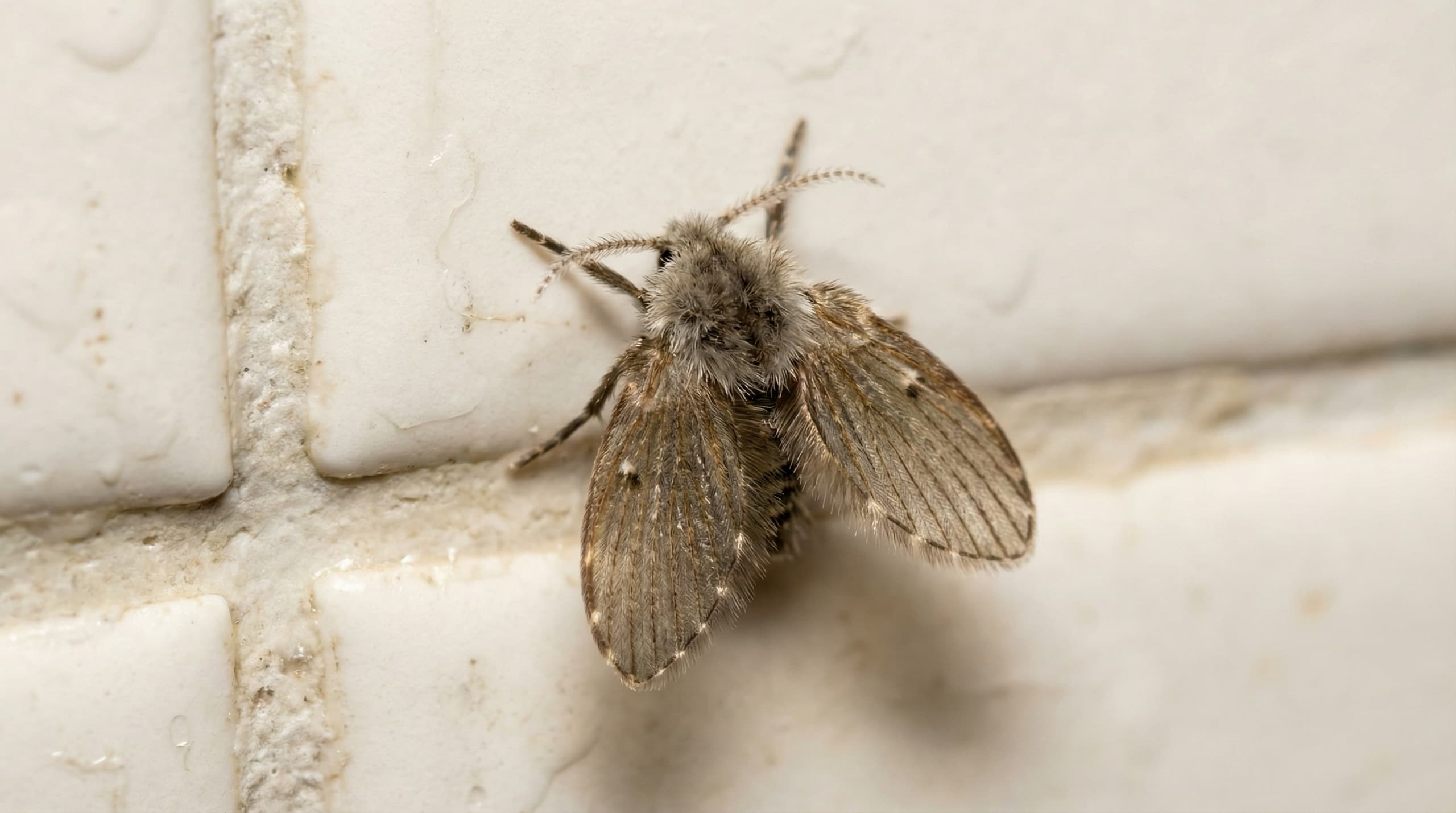
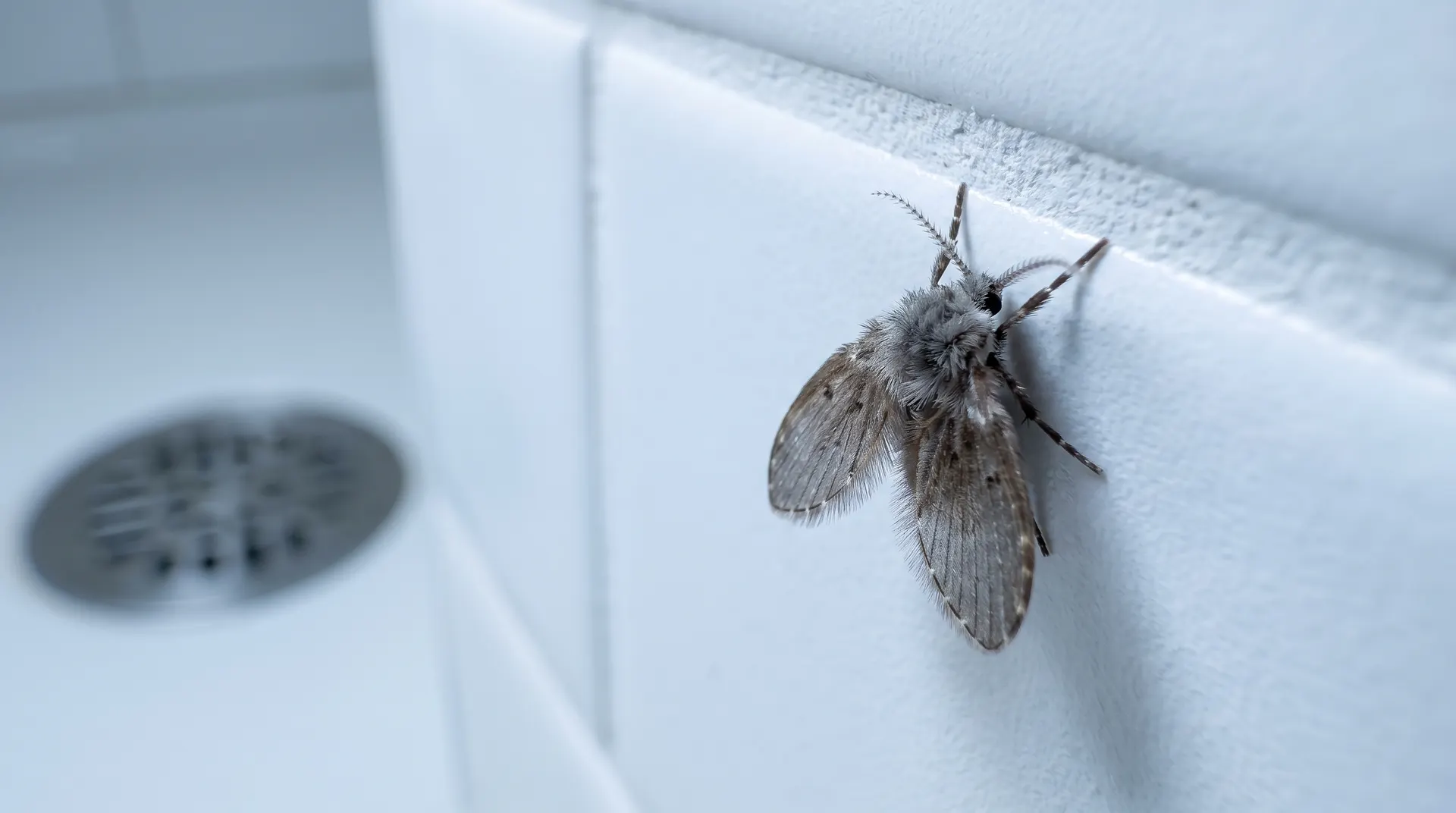
- Drain flies are 1/8 inch, gray-brown, and fuzzy with moth-shaped wings held tent-style over the body. They sit motionless on bathroom walls and tile, not around fruit.
- They breed in the biofilm inside pipes. If a drain is used less than once a day (guest bath, basement shower, laundry sink), it is a prime suspect.
- The clear-tape test finds the exact drain. Cover each drain overnight with sticky-side-down packing tape. Whichever tape has flies stuck to it in the morning is the breeding source.
- The fix is mechanical, not chemical. Physically scrub the pipe wall with a drain brush, then follow with an enzyme cleaner. Boiling water and bleach do not work long-term. Repeat weekly for 3 weeks to break the life cycle.
- Call a pro if you see drain flies in multiple rooms at once, if 2 weeks of treatment does not work, if you are on septic, or if they are coming from a broken sewer vent or AC condensate line. Our $49 first visit on a quarterly plan includes an inspection that finds the pipe you cannot reach.
In this article

The Fuzzy Little Bugs on Your Boise Bathroom Wall
You walk into your guest bathroom in mid-July, flip on the light, and there are half a dozen tiny fuzzy bugs sitting on the wall next to the shower. They look like miniature moths. They do not really fly when you try to shoo them. They just kind of hop a foot and land again.
Those are drain flies. Not fruit flies. Not gnats. And they are the number two summer bug question we get from Boise homeowners after fruit flies, especially from folks in older neighborhoods with plumbing that has seen a few decades.
Here is why this matters: a lot of people see small flies in the house and default to setting an apple cider vinegar trap. That works great for real fruit flies. It does absolutely nothing for drain flies, because drain flies do not eat fruit. They eat the slime lining the inside of your pipes. If you throw traps at them all summer, you will still be swatting bugs in September. This guide gets you the actual fix.
What Drain Flies Look Like (Tiny Moths, Not Flies)
Drain flies (Psychodidae, also called moth flies, sewer flies, sink flies, or filter flies) look almost nothing like a fruit fly once you know what to check for. Pull out a phone flashlight and get within a foot of one:
- Size. About 1/8 inch, roughly the width of a pencil eraser. Same size as a fruit fly.
- Color. Gray-brown, sometimes almost black. Dusty looking, not glossy.
- Texture. Fuzzy. The body and wings are covered in tiny hairs that give them a moth-like appearance. This is the fastest way to tell them apart from anything else.
- Wings. Held tent-style over the body when at rest, like a little pitched roof. Rounded, dark, and hairy. This is the moth wing shape.
- Behavior. They sit still on walls and tile for long stretches. When disturbed they only fly a foot or two in short jerky bursts, then land again. They are terrible fliers.
- Where you find them. On bathroom walls, shower tile, mirrors, the underside of the toilet tank lid, and the wall right above the sink. Almost never on kitchen counters or fruit.
Drain Flies vs. Fruit Flies vs. Fungus Gnats (Do Not Treat the Wrong One)
Homeowners who notice "little flies in the house" often have not identified the pest yet. The bugs look similar buzzing around in the air, but they breed in three completely different places. Treat the wrong one and you will chase them until October.
Here is the quick sort. If you are still not sure after reading, take a phone photo and text it to us.
- Drain flies. Fuzzy, gray-brown, moth-shaped wings held tent-style. Sit motionless on bathroom walls and tile. Fly in short jerky hops. Breed in the slime inside drains, especially drains used less than once a day.
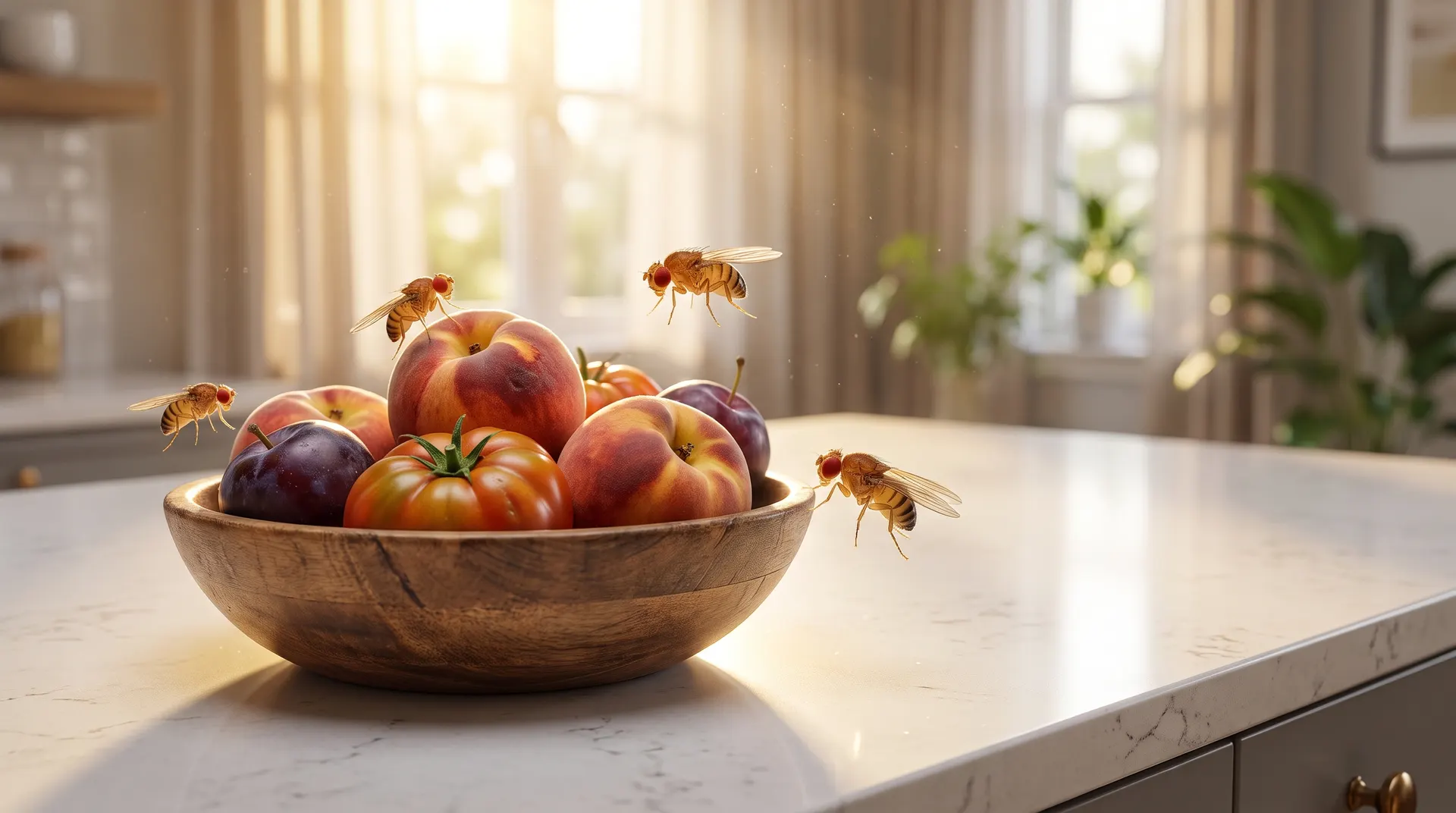
- Fruit flies. Tan body, bright red eyes, clear rounded wings. Hover in slow lazy circles right over ripe produce, wine bottles, and the kitchen trash. Never sit still on bathroom walls. Breed in fermenting fruit and un-rinsed recycling. See our Boise fruit fly guide for the fix.
- Fungus gnats. Slightly smaller, dark gray or black, delicate legs, weak fliers. Puff up in loose clouds when you water houseplants. Breed in the top inch of damp potting soil. If they are near your plants and not your drains, this is what you have.
Why Boise Homes Get Drain Flies in July and August
Drain flies live in Boise year-round because they live inside your plumbing, where the temperature never really drops. But July and August bring the biggest wave, for a few specific reasons:
- Heat speeds up biofilm growth. The slime layer inside your drains is bacteria, hair, soap scum, and skin cells. Warm indoor plumbing (70 to 75 degrees in summer) doubles the growth rate compared to winter. More biofilm means more places for eggs to hatch.
- Guest bathrooms sit unused during the day. Summer family schedules mean the master bath gets hammered while the guest bath drain sits still for weeks. Standing water in a P-trap plus zero flow equals perfect drain fly nursery.
- Basement showers and utility sinks. A lot of Boise homes have a basement bathroom that only sees use during summer pool parties and holidays. Same story: dry biofilm, then a burst of use that kicks up eggs.
- Older Boise plumbing. Homes built before 1985 (much of the North End, East End, Vista, and Garden City) often have cast iron or galvanized drains with rougher interior walls. Biofilm grabs hold faster and is harder to scrub out.
- Vacation homes and rentals. A house that sat empty for two weeks during a family trip gives biofilm a huge head start. Coming home to a swarm of drain flies is a common July return.
Where Drain Flies Actually Breed (It Is Almost Never What You Think)
A female drain fly lays about 30 to 100 eggs at a time, right on the slime lining the inside of your drain pipe. The eggs hatch in 32 to 48 hours. The whole life cycle from egg to breeding adult runs 1 to 3 weeks depending on temperature. That is why a drain fly problem seems to just appear one morning and get worse fast.
Here are the top breeding sites in Boise homes, starting with the most likely source:
- Shower and tub drain. Hair, soap, and body oil pack the drain wall. This is the number one source in the average home.
- Bathroom sink drain. Especially the guest or hall bath used less than daily. Toothpaste and hair build up fast.
- Toilet. Under the tank lid, inside the tank itself, or in the wax seal at the base if it is failing.
- Laundry sink or utility sink. Often the culprit in basements. Lint and detergent film make a perfect food source.
- Floor drain in the basement or garage. If a floor drain has dried out (no water in the trap), sewer gases and drain flies both come up.
- AC condensate drain line. A big one in Boise summers. The condensate pan and PVC line stay wet and biofilm builds fast, especially if the line does not slope well.
- Dishwasher air gap and drain line. The gap fitting on top of the sink can hold enough food residue for a colony.
- Sump pit. Standing water plus organic debris equals ideal conditions.
- Broken sewer vent or cracked drain pipe under a slab. Rare, but this is a likely cause when drain flies are coming from more than one room at once.
The Clear-Tape Test: Find the Exact Drain in One Night
You cannot fix a drain fly problem until you know which drain is producing them. Guessing wastes time. This test costs nothing and works overnight.
- Grab a roll of clear packing tape or wide clear shipping tape. Duct tape and painter's tape do not work as well because the drain flies just fly around them.
- Right before bed, cover every drain in the suspect area with a piece of tape stretched sticky-side-down across the opening. Do not press it down hard, you want a slight bulge so flies emerging get stuck on the underside.
- Tape the shower, tub, sink, floor drain, and toilet overflow if you have visible flies there. Also tape the AC condensate drain if you can reach it.
- Leave the tape overnight. Do not use any of those drains until morning.
- Check in the morning. Whichever tape has drain flies stuck to it is your breeding source. If two drains both have flies, treat both.
How to Get Rid of Drain Flies (The 4-Step Fix That Actually Works)
Once you know which drain is the problem, this whole plan takes about 20 minutes of active work. Do not skip step one. The biofilm has to physically come off the pipe wall, or the enzyme cleaner has nothing to grip and the flies come right back.
Step 1: Physically Scrub the Drain Pipe
This is the step that homeowners skip and pros never do. Chemistry alone will not work. You have to mechanically knock the biofilm off the pipe wall.
- Pick up a stiff nylon drain brush. Look for one 18 to 24 inches long with a flexible shaft. Home Depot, Lowes, and Amazon all sell them for under $15.
- Pull the drain cover or stopper. Wear a rubber glove. This will be gross.
- Push the brush down into the drain as far as it will go. Twist and scrub the pipe wall all the way around. Pull the brush out slowly and you will see the slime coming with it.
- Wipe the brush on a paper towel, rinse it under hot water, then repeat 3 or 4 times until the brush comes out mostly clean.
- Flush the drain with 2 or 3 quarts of hot tap water. Not boiling. PVC drain pipes can warp with straight boiling water, especially the older thin-wall stuff in Boise basement remodels.
Step 2: Pour in an Enzyme Drain Cleaner
Enzyme cleaners digest the organic film that drain flies feed on. They are not the fast-acting caustic drain openers (Drano, Liquid Plumr). Those are for clogs, not for pests, and they miss the biofilm the flies actually breed in.
- Buy an enzyme drain cleaner. Bio-Clean, InVade Bio Foam, and Green Gobbler Enzymes all work. Skip anything labeled "sewer smell" only. You want the words "enzyme" or "bacterial" on the bottle.
- Follow the label. Most call for 1/2 to 1 cup poured directly into the drain, right after step one, at the end of the day when the drain will not be used for 6 to 8 hours.
- Do not run water down the drain until morning. The enzymes need contact time to work.
- A foaming enzyme product is worth the extra couple of dollars because it expands and coats the top of the pipe wall, not just the bottom.
Step 3: Repeat Weekly for 3 Weeks
Drain fly eggs and pupae are tough. A single treatment cracks the population but almost never eliminates it. The life cycle is 1 to 3 weeks, so you have to hit the drain again before the next generation matures.
- Do the scrub-and-enzyme routine once a week for 3 straight weeks. Same day each week is easiest to remember.
- Redo the clear-tape test after week 2. Fly count should be down at least 80 percent. If it is not, you have another drain producing flies or a hidden source.
- After week 3, drop to monthly enzyme maintenance on the same drain (no scrub needed unless flies return).
Step 4: Run the Water in Every Unused Drain, Every Week
Standing water in a P-trap is fine. Sitting biofilm in an unused drain is the problem. Regular flow scrapes the pipe wall and washes eggs out.
- Run the guest bathroom shower for 60 seconds every week, even if no one is using it.
- Same for the laundry sink, basement shower, and utility sink.
- Pour a gallon of water down any floor drain (garage, basement, mechanical room) monthly to keep the P-trap sealed and flush the slime.
- On summer vacations longer than a week, have a neighbor run each drain for a minute once a week. This alone prevents most vacation-return drain fly swarms.
How to Keep Drain Flies From Coming Back
Once you have knocked the population down, keeping them out is mostly about consistent drain use and a monthly enzyme dose. A few habits go a long way:
- Add one enzyme drain treatment per month to your regular cleaning schedule. The first weekend of the month works well.
- Clean the hair out of every shower and tub drain monthly. Hair is 80 percent of the food source.
- Wipe out sink drain covers weekly. Toothpaste, shaving cream, and soap scum coat the underside faster than you think.
- Check your AC condensate line at the start of summer. If it drains sluggishly or the pan holds water, pour 1/4 cup vinegar down the line every 3 months during cooling season.
- If you have a rarely-used drain (basement bath, wet bar, mud room sink), cap it with a rubber drain cover between uses. This blocks emergence and cuts down on sewer smell.
- Fix slow drains fast. A partial clog holds standing water and food debris right where drain flies want it. See our pest-free home checklist for the full list of drain, seal, and moisture fixes.
When It Is Actually Time to Call a Pro
We will be straight: most Boise drain fly problems are a scrub-and-enzyme fix. You do not need us for a single guest bathroom drain that flares up in July. Save the money for the ice cream truck.
Call us when any of these are true:
- You have done the 4-step fix thoroughly for 2 full weeks and the flies are still coming. That usually means the breeding site is somewhere you cannot reach (broken pipe under a slab, sewer vent, or wall cavity).
- Drain flies are showing up in 2 or more rooms at the same time. That points at a shared vent stack or a hidden leak, not a single drain.
- You are on septic and the drain flies flare up after every rain or every laundry day. Your leach field or septic tank may need attention, and treating the drains alone will not fix it.
- You suspect the AC condensate drain, but you cannot reach it or you have a rooftop unit.
- You are also seeing sewer smell, gurgling drains, or slow drains at the same time. That is a plumbing issue plus a pest issue, and we work with a couple of Boise plumbers we trust to sort both.
- You are a restaurant, brewery, coffee shop, or food truck. Commercial floor drains and grease traps are drain fly heaven, and homeowner recipes do not fix them. Our commercial pest control team handles these every summer.
- You are a landlord or property manager with tenants complaining. We will find and treat the source so it does not become a repeat call.
How Green Guard Handles Drain Flies in Boise
Our $49 initial service was built for exactly this kind of "small bugs but I do not know where they are coming from" call. Here is what visit one looks like when drain flies are the suspect:
- Full inspection. We identify the pest for sure (drain fly, not fruit fly, not gnat), and we walk every drain in the house with a UV flashlight and a moisture meter to find the wet spots you cannot see.
- Drain treatment. When drains are the source, we treat them with a professional foaming enzyme (commercial-grade Bio-Foam) that expands to coat the top of the pipe wall. Different product than what you can buy at the store, and it holds contact time far longer than a poured liquid.
- Condensate line check. If your HVAC is the culprit, we clear the line and treat the pan. This alone solves a big share of "flies in the bathroom near the AC vent" calls in July.
- Interior spot treatment. Any bathroom with active adults gets a light treatment along baseboards and plumbing penetrations with our organic-based product. Same hospital-grade formulation used in daycares. Safe once dry (30 to 60 minutes).
- Exterior perimeter. A 3-foot-up, 3-foot-out barrier around the foundation keeps the next wave of summer pests outside. Not directly for drain flies, but included in the initial visit.
- Quarterly protection. Return visits every 90 days keep drain flies (and ants, spiders, and wasps) knocked down through the whole summer wave. If pests come back between visits, we come back free.
Ready to Get Your Bathroom Back?
Try the 4-step fix first. It is cheap and it usually works. If you are still seeing fuzzy little bugs on the wall after 2 weeks, you have a drain we have not found yet, and one visit is usually enough to nail it down.
Green Guard serves Boise, Meridian, Eagle, Nampa, Caldwell, Kuna, Star, and the rest of the Treasure Valley. Just $49 to start, no long sales pitch. Call (208) 297-7947 or book online. Same-day service is often available.
Frequently Asked Questions
Why am I suddenly getting drain flies?
Quick answerAlmost always because a drain you do not use often has built up a slime layer inside the pipe.
Guest bathrooms, basement showers, and laundry sinks are the usual suspects in Boise. A female drain fly laid eggs on that slime, the eggs hatched in about 2 days, and 10 to 14 days later a whole generation emerged at once. Summer indoor temperatures speed the whole thing up.
How do I permanently get rid of drain flies?
Quick answerTwo things have to happen.
First, mechanically scrub the biofilm off the pipe wall with a stiff drain brush. Chemistry alone does not remove it. Second, pour in an enzyme drain cleaner, wait 6 to 8 hours, and repeat weekly for 3 weeks to break the life cycle. Then run every drain in the house at least once a week and do a monthly enzyme dose. Skip either step and they come back.
Why are drain flies so bad this year?
Quick answerTwo Boise-specific reasons can make a summer drain fly problem worse.
First, indoor plumbing has been sitting at 72 to 75 degrees during the July heat, which roughly doubles biofilm growth compared to winter. Second, summer trips leave drains unused, and homes that sit empty for a week or two can come back to a huge emergence. If your neighbors also have them, both factors are probably at play.
What can be mistaken for drain flies?
Quick answerMostly fruit flies and fungus gnats.
Fruit flies have red eyes, hover around ripe produce, and are not fuzzy. Fungus gnats are darker, slimmer, and hang around houseplants. Drain flies are the only one of the three that looks like a tiny moth and sits still on bathroom walls. If you are not sure, snap a phone photo with flash. Fuzzy wings held tent-style equals drain fly.
Are drain flies dangerous or unsanitary?
Quick answerThey do not bite, they do not sting, and they do not directly spread disease.
But they emerge from sewer slime, so they can carry bacteria on their bodies. In a home bathroom that is a gross-out issue more than a health issue. In a restaurant, hospital, or commercial kitchen it is a real sanitation problem that needs professional treatment. People with asthma should also know that drain fly scales can trigger symptoms in a heavy infestation.
How long until drain flies are gone after treatment?
Quick answerYou will see the adult population drop by about 70 to 80 percent within 3 to 5 days of the first proper scrub and enzyme treatment.
Full elimination takes 2 to 3 weeks because you have to outlast the eggs and pupae already in the pipe. If you still see substantial fly activity after 2 weeks of weekly treatment, the source is somewhere you did not treat (or cannot reach) and it is time to call us.