Quick answer
Fruit flies in Boise explode in July and August because that is when garden produce ripens and Boise Farmers Market fruit sits on kitchen counters longer than usual. To kill an active batch fast, throw out anything overripe, set an apple cider vinegar trap with a drop of dish soap, and pour boiling water down every drain in the kitchen and bar sink. Most Boise fruit fly problems are a food storage issue, not a pest infestation. If flies keep coming back after a week of cleanup, you probably have drain flies (a different pest with a different fix).
Key Takeaways
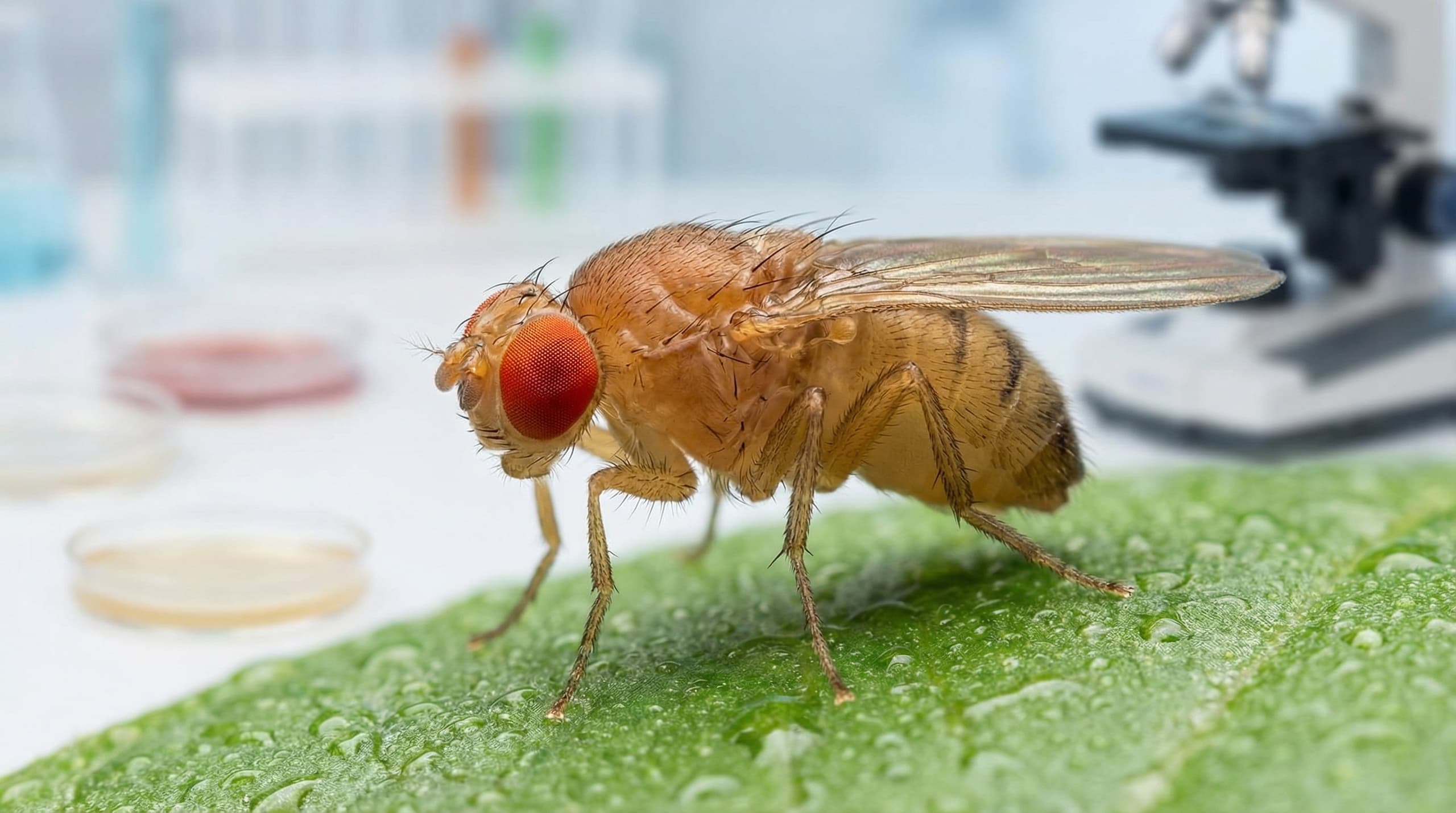
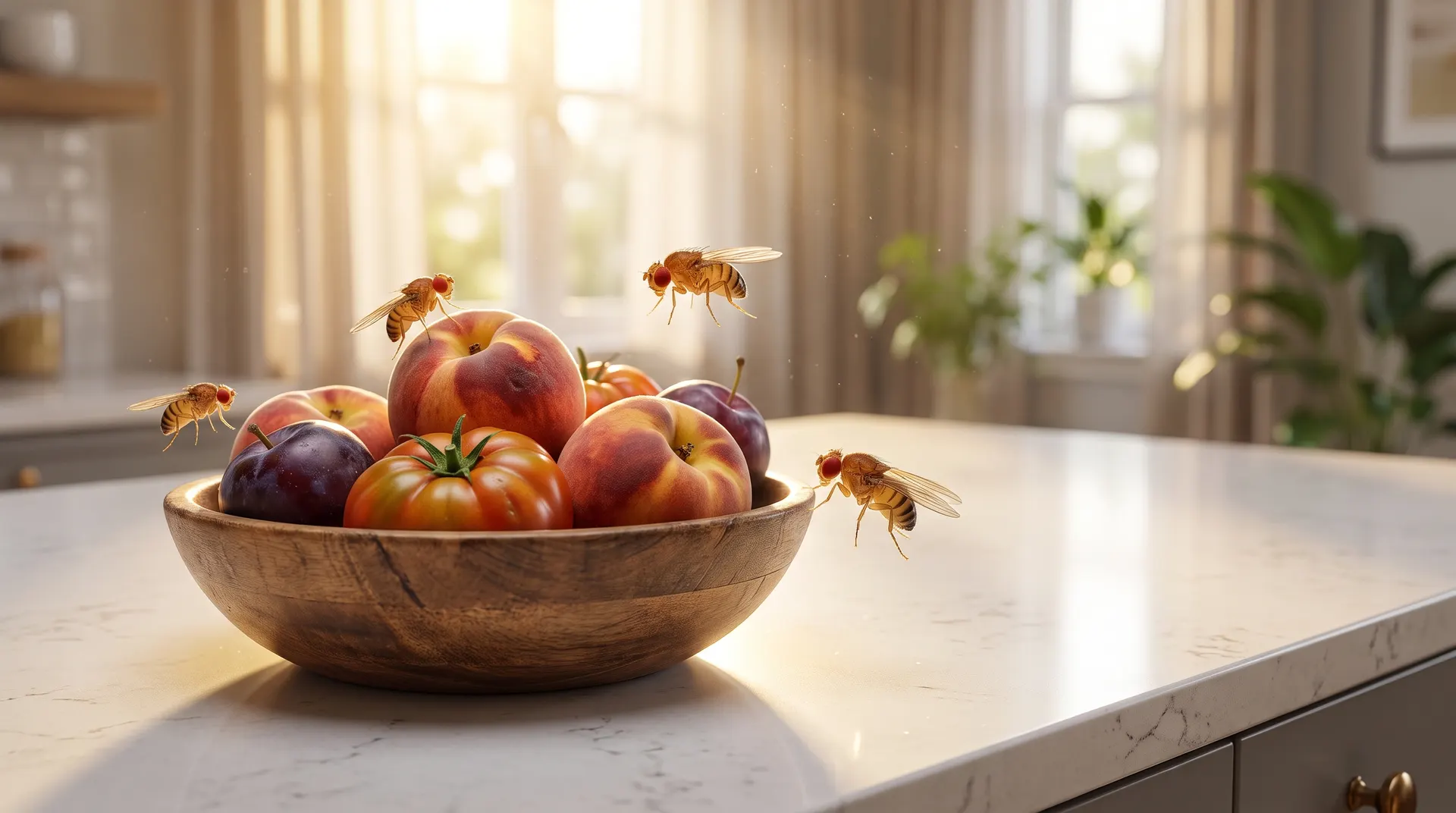
- Fruit flies are 1/8 inch long, tan or brown, with bright red eyes, and hover in slow lazy circles right over ripe produce.
- They are commonly confused with two other pests: fungus gnats (fly around houseplant soil) and drain flies (fuzzy, sit on walls near sinks). Different bugs, different fixes.
- The 3-step fast fix: remove the source (overripe fruit, open garbage, spilled juice), set an apple cider vinegar and dish soap trap, and treat kitchen and bar drains with boiling water plus an enzyme cleaner.
- Prevent them: refrigerate ripe fruit, empty the trash daily in summer, rinse cans and bottles before they hit the recycle bin, and grind ice and citrus peels through your garbage disposal weekly.
- If flies keep appearing after 7 to 10 days of cleanup, you are almost certainly dealing with drain flies, not fruit flies. Our $49 initial service includes the inspection that finds the real breeding source.
In this article

The July and August Fruit Fly Explosion in Boise
You bring home a flat of peaches from the Boise Farmers Market on Saturday morning. By Tuesday night, there is a slow, lazy cloud of tiny flies orbiting the fruit bowl. Wave your hand and they scatter. Turn around and they are right back.
Welcome to peak fruit fly season in the Treasure Valley.
Fruit flies are a classic July and August problem in Boise kitchens, and it makes sense. Idaho gardens are dumping tomatoes, peaches, plums, and zucchini right now. Farmers Market produce ripens faster on the counter than the store stuff you were used to in April. Kitchen doors open more (kids in and out to the pool). It is a perfect storm for a fly whose whole life strategy is finding ripe fruit fast.
Here is what makes this post worth the read: most fruit fly problems are a food storage issue, not a real pest infestation. You can knock them down in about 48 hours with three cheap steps. But sometimes what looks like fruit flies is actually a completely different pest, and if you attack the wrong one you will chase them all summer. This guide sorts it out.
What Fruit Flies Look Like (and How to Be Sure)
The common fruit fly (Drosophila melanogaster) is small, but it has a very specific look. Once you have it dialed in, you will not mistake it for anything else.
- Size. About 1/8 inch long. Roughly the size of the letter O on this page.
- Color. Tan or light brown body, sometimes with a slightly darker rear end.
- Eyes. Bright red. This is the giveaway. Under a phone flashlight the eyes glow like little rubies.
- Wings. Clear and rounded. They stick out slightly past the body when at rest.
- Flight pattern. Slow, hovering, lazy. They orbit fruit in loose figure eights and drift down when you shoo them.
- Where you see them. Kitchen counters, fruit bowls, open wine bottles, recycle bins, and right around the garbage disposal opening.
Fruit Flies vs. Fungus Gnats vs. Drain Flies (The Confusion That Ruins DIY Fixes)
When someone says "I have fruit flies I cannot get rid of," the culprit is often one of two other pests. The bugs look similar in the air, but they breed in completely different places. If you treat fruit flies while your drains are the real problem, you will still be swatting in October.
Here is the quick sort:
- Fruit flies. Tan body, red eyes, hover around ripe produce and garbage. Breed in fermenting fruit, spilled juice, wine and beer bottles, and rotting onions or potatoes. Fast fliers when disturbed.
- Fungus gnats. Slightly smaller, dark gray or black, delicate legs, weak fliers. Hang around houseplants and pop up in loose clouds when you water. Breed in the top inch of damp potting soil. If they are near your plants and not your fruit bowl, this is what you have.
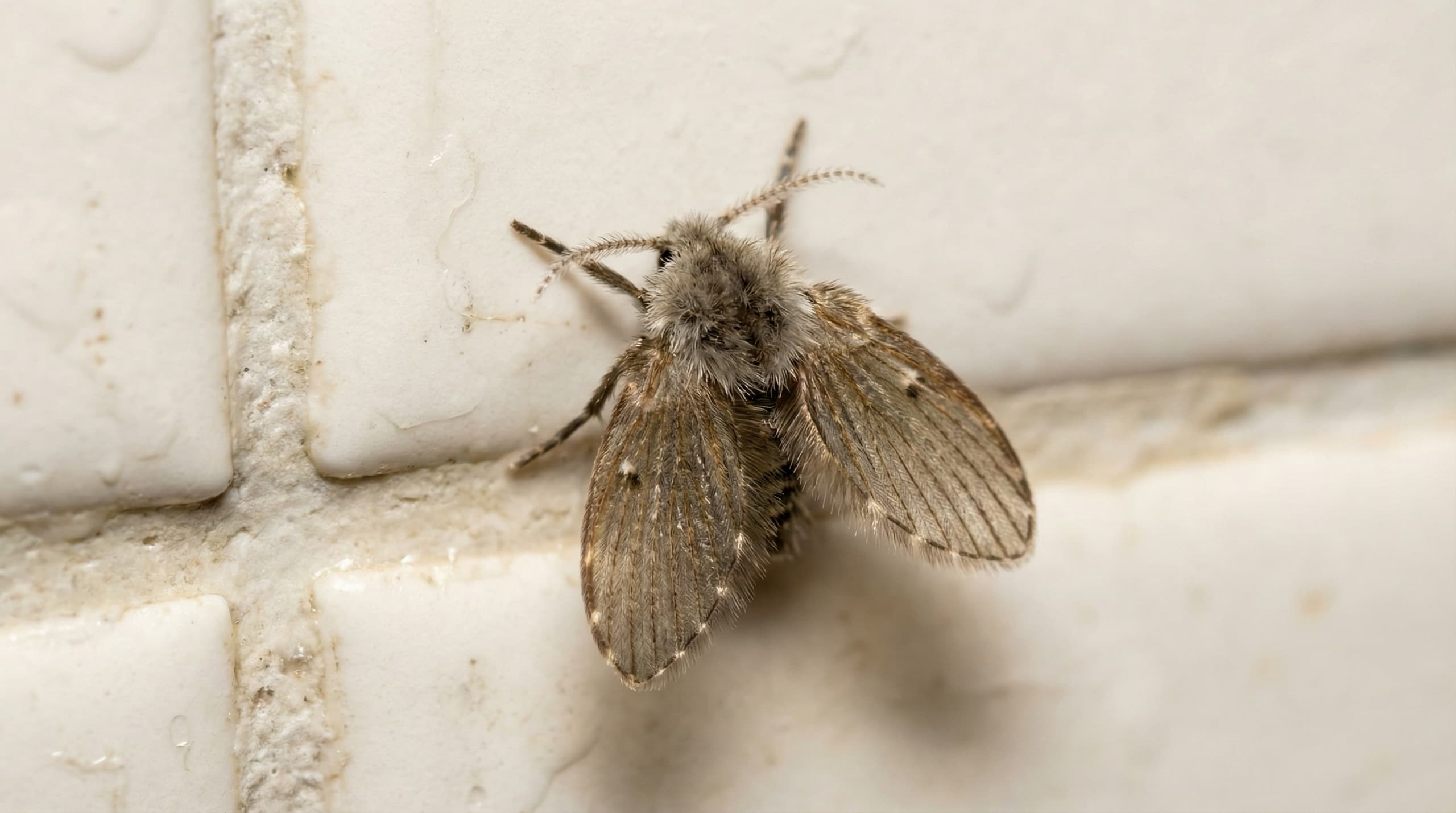
- Drain flies (also called moth flies or sink flies). Roughly the same size as a fruit fly but look completely different. Fuzzy, gray, held-together wings, moth-like. Sit motionless on bathroom walls, tile, or the side of the sink. They only fly in short, jerky bursts. Breed in the slime layer inside drain pipes, disposal grinders, dishwasher lines, and sump pits.
Why Fruit Flies Explode Across Boise in July and August
Fruit flies live year-round in the Treasure Valley, but the population climbs off a cliff between mid-July and Labor Day. (Other kitchen pests like pantry moths see similar July-August spikes across Boise too.) Four Boise-specific reasons drive it:
- Idaho garden harvest. Tomatoes, peaches, plums, cherries, apricots, zucchini, and summer squash all hit peak ripeness right now. A bowl of homegrown tomatoes on the counter is fruit fly bait in a way store tomatoes are not.
- Farmers Market produce. Fruit from the Capital City Public Market, Nampa Farmers Market, and Meridian Main Street Market is often picked closer to ripe and ripens fast on the counter. Two extra days of sitting out is enough for a fruit fly generation.
- Hot dry weather concentrates them indoors. Once daytime highs push past 95F, adult fruit flies dry out fast outside. Any open door or window becomes a doorway to your air-conditioned kitchen.
- Compost bins and recycling volume. Summer entertaining means more empty beer bottles, wine bottles, and canned drinks in the recycle bin. A single un-rinsed IPA bottle can start a colony.
Where Fruit Flies Actually Breed in Your Home
A single female fruit fly lays up to 500 eggs. The eggs hatch in about a day. The whole life cycle from egg to breeding adult is 8 to 10 days at Boise summer temperatures. That is why what looks like 10 flies on Monday feels like 200 by Friday.
To stop it, you have to find and kill the breeding site. Not the adults, the breeding site. Here is where to look, starting with the most likely spots:
- Fruit bowl and open produce. One peach with a soft spot is enough. Check the bottom of the pile.
- Garbage disposal. The rubber splash guard traps food scraps that ferment. This is the number one hidden source in modern Boise kitchens.
- Kitchen and bar drains. Especially any drain used less than once a day (guest bathroom, laundry sink, wet bar).
- Recycle bin. Un-rinsed beer, wine, kombucha, and soda cans. Even a tablespoon of residue is a breeding site.
- Under the fridge or dishwasher. Old spilled juice or dishwasher gasket gunk. Pull the kick plate and shine a flashlight.
- Onions and potatoes. One soft onion in a bag under the sink can support hundreds of flies. Check monthly in summer.
- Mop heads and dish rags. A wet mop head hanging in the garage or a rag left in the sink can support a colony overnight.
- Sponge holders. The tray under the kitchen sponge collects food debris and stays wet. Rinse and dry it weekly.
How to Get Rid of Fruit Flies Fast (3-Step Fix)
Done properly, this whole plan takes about 30 minutes of active work and knocks the population down by 90% in 48 hours. Skip any one of the three steps and it does not work.
Step 1: Kill the Source (Not Optional)
Adult fruit flies live about 8 to 15 days. If you remove the breeding sites, the visible cloud dies off on its own. Do this first, and do it thoroughly.
- Throw out every piece of soft, bruised, or overripe produce. Do not compost it indoors. Take the bag straight to the outside can.
- Wipe down the fruit bowl with hot soapy water and dry it completely.
- Pull open the recycle bin, rinse every bottle and can that had liquid in it, then wash the bin itself.
- Empty the trash. Rinse the can. Line with a fresh bag. Repeat daily for the next week.
- Check under and around the fridge, stove, and dishwasher. Wipe up any old spills or juice.
Step 2: Set an Apple Cider Vinegar Trap (Kills What Is Already Flying)
This is the classic fruit fly trap because it works. Vinegar smells like fermenting fruit, which is exactly what a fruit fly is programmed to find and lay eggs in.
- Pour about a half inch of apple cider vinegar into a small glass or jar. A shot glass or a mason jar both work.
- Add 2 to 3 drops of regular dish soap and gently stir. The soap breaks the surface tension so flies sink instead of walking on top.
- Cover the top with plastic wrap and secure it with a rubber band. Poke 5 or 6 holes with a toothpick. (Or skip the wrap and just leave it open, which also works, just a little messier.)
- Set one trap near the fruit bowl and one near the garbage. Leave them for 3 to 5 days. Empty and refresh when full.
Step 3: Treat Every Kitchen Drain
Even if you are sure it is fruit flies, treat the drains. It closes the door on the most common hidden breeding site and rules out drain flies at the same time.
- Bring a full kettle of water to a hard boil.
- Pour it slowly down the kitchen drain (and any bar or utility sink drain).
- Follow with 1/2 cup baking soda, then 1 cup white vinegar. Let it foam for 10 minutes.
- Flush with hot tap water for 60 seconds.
- For the garbage disposal: fill it with ice cubes, add a cup of rock salt and a cut-up lemon or lime, then run it for 30 seconds with cold water. This scrapes the grinder walls clean.
- Repeat once a week for the next month in summer.
How to Prevent Fruit Flies for the Rest of Summer
Boise summer runs through late September. That is another 8 to 10 fruit fly generations if you let them ride. A few weekly habits keep them out for good:
- Refrigerate any ripe produce that is not going to be eaten within a day. Peaches, tomatoes, and stone fruit lose a tiny bit of texture in the fridge, but you keep your kitchen fly-free.
- Empty the kitchen trash daily during July and August, even if the bag is only half full.
- Rinse every can and bottle before it hits the recycle bin. Store the bin in the garage, not the kitchen.
- Run the garbage disposal every time you use the sink, even if there is nothing visible in it. And do the ice-and-citrus trick weekly.
- Do not leave wet mop heads, sponges, or dishrags sitting in the sink overnight. Wring them out and dry them.
- Store onions and potatoes in a cool dry spot, not a plastic bag under the sink. Check monthly for softness.
- Screen any open windows and check that door sweeps still contact the threshold. If a sweep is worn, replace it. See our Idaho pest calendar for a full seasonal walk-through.
- If you compost outdoors, keep the bin at least 20 feet from the back door and turn it regularly.
When It Is Actually Time to Call a Pro
We will be straight with you: most Boise fruit fly problems are a food storage and cleanup issue, not a pest control call. A DIY vinegar trap and a clean recycle bin will solve 90% of cases without you spending a dime.
Call us when any of these are true:
- You have done the 3-step fix above thoroughly and the flies keep coming back after 7 to 10 days. You probably have drain flies, not fruit flies, and a real drain treatment is needed.
- You are seeing small flies but no obvious food source. That often means a hidden drain issue, a rotting subfloor from an old spill, or a broken sewer vent.
- You are a restaurant, brewery, coffee shop, taproom, or food truck. Commercial kitchens have drain and grease trap issues that a homeowner recipe will not fix. Our commercial pest control team handles these routinely.
- You are also seeing gnats around your houseplants (fungus gnats) or cockroaches at night (roaches). Overlapping infestations need a plan, not a single trap.
- You have a rental property with tenants complaining about flies and no clear source. We will find it.
How Green Guard Handles Small Flies in Boise Homes
Our $49 initial service was built for this exact kind of confusing pest problem. Here is what happens on visit one:
- Full inspection. We identify which small fly you actually have (fruit fly, drain fly, or fungus gnat) and find the real breeding source. This alone solves half the calls.
- Drain and grinder treatment. When drains are the culprit, we treat them with a professional foaming enzyme product that breaks down the biofilm inside the pipe. Not something you can buy at Home Depot.
- Interior spot treatment. Baseboards, plumbing penetrations, and any active fly zones get treated with an organic-based product. Same hospital-grade formulation used in daycares. Safe once dry (30 to 60 minutes).
- Exterior perimeter. A 3-foot-up, 3-foot-out barrier around the whole foundation keeps the next wave outside.
- Quarterly protection. Return visits every 90 days keep small flies (and the summer wave of ants, spiders, and wasps) knocked down. If pests come back between visits, we come back free.
Ready to Get Your Kitchen Back?
Try the 3-step fix first. It is free and usually enough. If you are still swatting flies a week later, you have a different problem, and we can find it in one visit.
Green Guard serves Boise, Meridian, Eagle, Nampa, Caldwell, Kuna, Star, and the rest of the Treasure Valley. Just $49 to start, no long sales pitch. Call (208) 297-7947 or book online. Same-day service is often available.
Frequently Asked Questions
Where do fruit flies come from all of a sudden?
Quick answerThey do not appear out of nowhere.
Almost every Boise case starts with a piece of produce that came in the door with fly eggs already on the skin, usually from a farmers market or a home garden. Warm indoor air hatches the eggs in about a day, and the population explodes from there. A single overripe peach can produce hundreds of flies in a week.
What kills fruit flies instantly?
Quick answerNothing kills the source instantly, but you can kill the adults on contact with a spray of glass cleaner or a fine mist of soapy water in a spray bottle.
That will not stop the problem, though. The eggs and larvae in the breeding site keep hatching. You have to remove the source (bad fruit, dirty drain, spilled juice) or the flies just keep coming.
Do apple cider vinegar traps actually work?
Quick answerYes, for real fruit flies.
Vinegar smells like fermenting fruit, which is exactly what fruit flies are hunting for. Add a couple drops of dish soap so they sink, and one trap on the counter catches most of the adults within 2 or 3 days. But vinegar traps do not work on drain flies or fungus gnats, so if you are catching nothing, you have a different pest.
How long does it take to fully get rid of fruit flies?
Quick answerIf you remove the breeding source and set a trap on day one, the visible fly cloud drops by roughly 90% in 48 hours and is essentially gone in 7 to 10 days.
Adult fruit flies only live 8 to 15 days, so once the source is dead, the population dies with them. If flies persist past 10 days, you almost certainly have drain flies (a different pest) and need to treat the pipes.
Should I call an exterminator for fruit flies?
Quick answerUsually no.
Most Boise fruit fly cases are a food storage and cleanup fix, not a pest control call. Call a pro when the 3-step fix has not worked in 7 to 10 days, when you cannot find the source, when it is a rental or commercial kitchen, or when you are seeing multiple types of small flies at once. Our $49 initial service includes the inspection that identifies exactly which fly you have and where it is breeding.
Are fruit flies dangerous or unsanitary?
Quick answerFruit flies are not dangerous in the medical sense.
They do not bite and do not carry the diseases that houseflies do. They can, however, spread bacteria like E. coli and salmonella from surface to surface, which is why they are a real problem in restaurant kitchens and around raw food prep areas. In a home kitchen it is more a gross-out issue than a health issue, but still worth solving.