Quick answer
Hobo spiders are common in older Treasure Valley homes, but they're far less dangerous than their reputation suggests. The CDC removed them from its venomous list in 2017, and bites are now considered minor. You can spot a hobo spider in Idaho by its solid (unbanded) brown legs, a faint herringbone belly, and funnel-shaped webs in cracks and woodpiles. Sealing entry points and a perimeter spray keep them out.
Key Takeaways
- A true hobo spider has solid, unbanded brown legs and a faint herringbone pattern. Banded legs usually mean a harmless look-alike.
- The CDC dropped hobo spiders from its venomous list in 2017. Bites are now considered minor.
- The 'aggressive house spider' name is a mistranslation. Hobo spiders run from people, they don't attack.
- They're most active June through September and love older Boise homes with stone foundations, woodpiles, and cluttered garages.
- Sealing entry points and a perimeter barrier spray are the most reliable way to keep them out.
In this article

Hobo Spiders in Idaho: The Quick Truth
You found a fast brown spider in your Boise basement, somebody said the words hobo spider, and now you're worried. Take a breath. The hobo spider in Idaho has a scary reputation that the science no longer backs up.
Here's the short version. Hobo spiders are common across the Treasure Valley, especially in older homes. They build funnel-shaped webs in cracks and woodpiles. And in 2017, the CDC removed them from its list of venomous spiders. A hobo spider bite is now considered minor, not the flesh-rotting wound the old rumors describe.
We've treated spiders in 2,500+ Treasure Valley homes. Many spiders people panic about as hobos turn out to be harmless look-alikes. This guide shows you how to tell the difference, what a bite really means, and how to keep them out for good.
What Does a Hobo Spider Look Like?
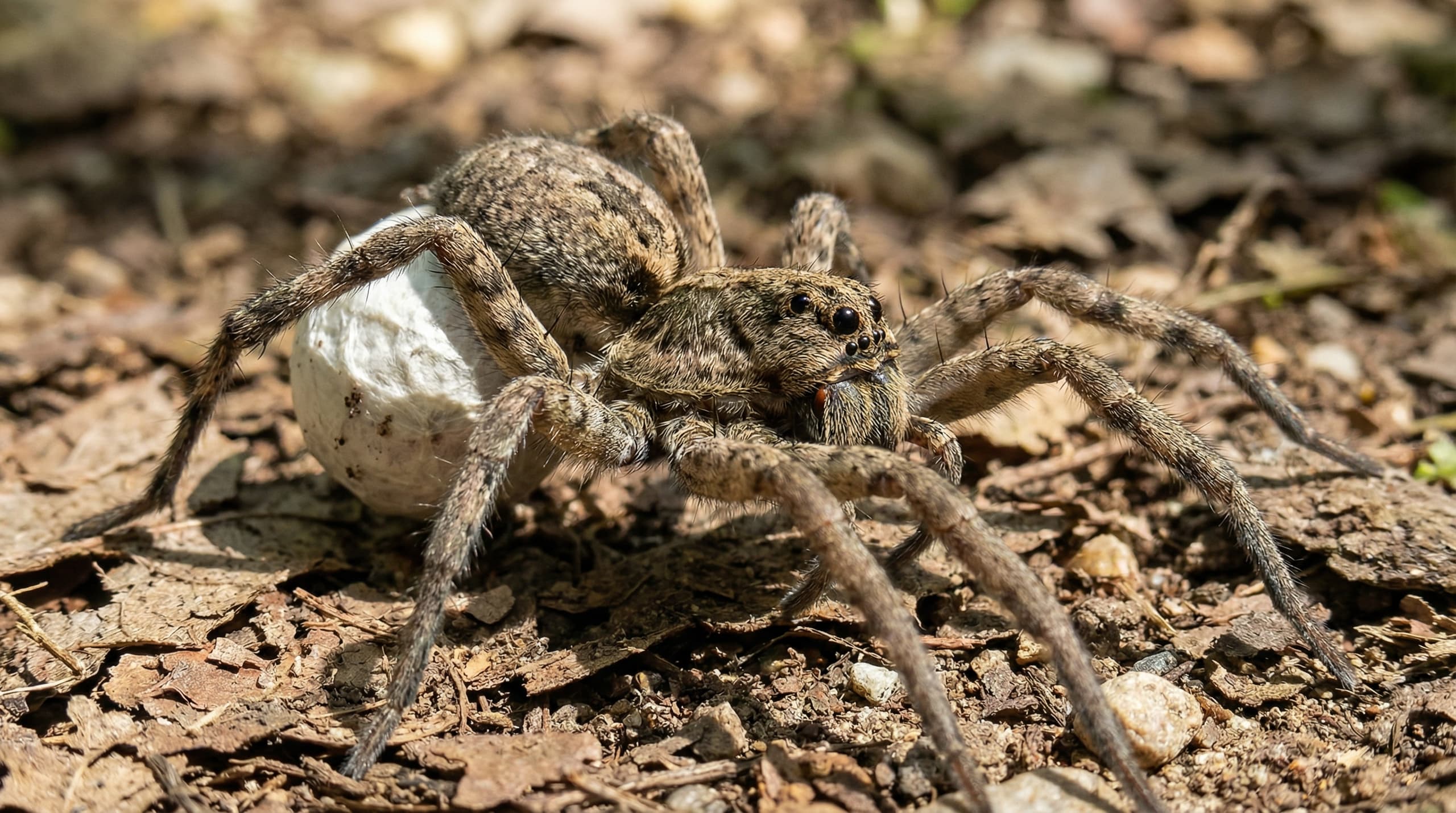
A hobo spider is brown, fast, and about the size of a quarter with its legs spread. The body runs roughly half an inch long. Three features separate a real hobo from the dozens of brown spiders running around the Valley.
- Solid, unbanded legs. A true hobo has plain brown legs with no dark rings or stripes. If the legs look banded or two-toned, it's almost certainly not a hobo.
- A herringbone belly. Look for faint chevron or V shapes pointing toward the head along the top of the abdomen.
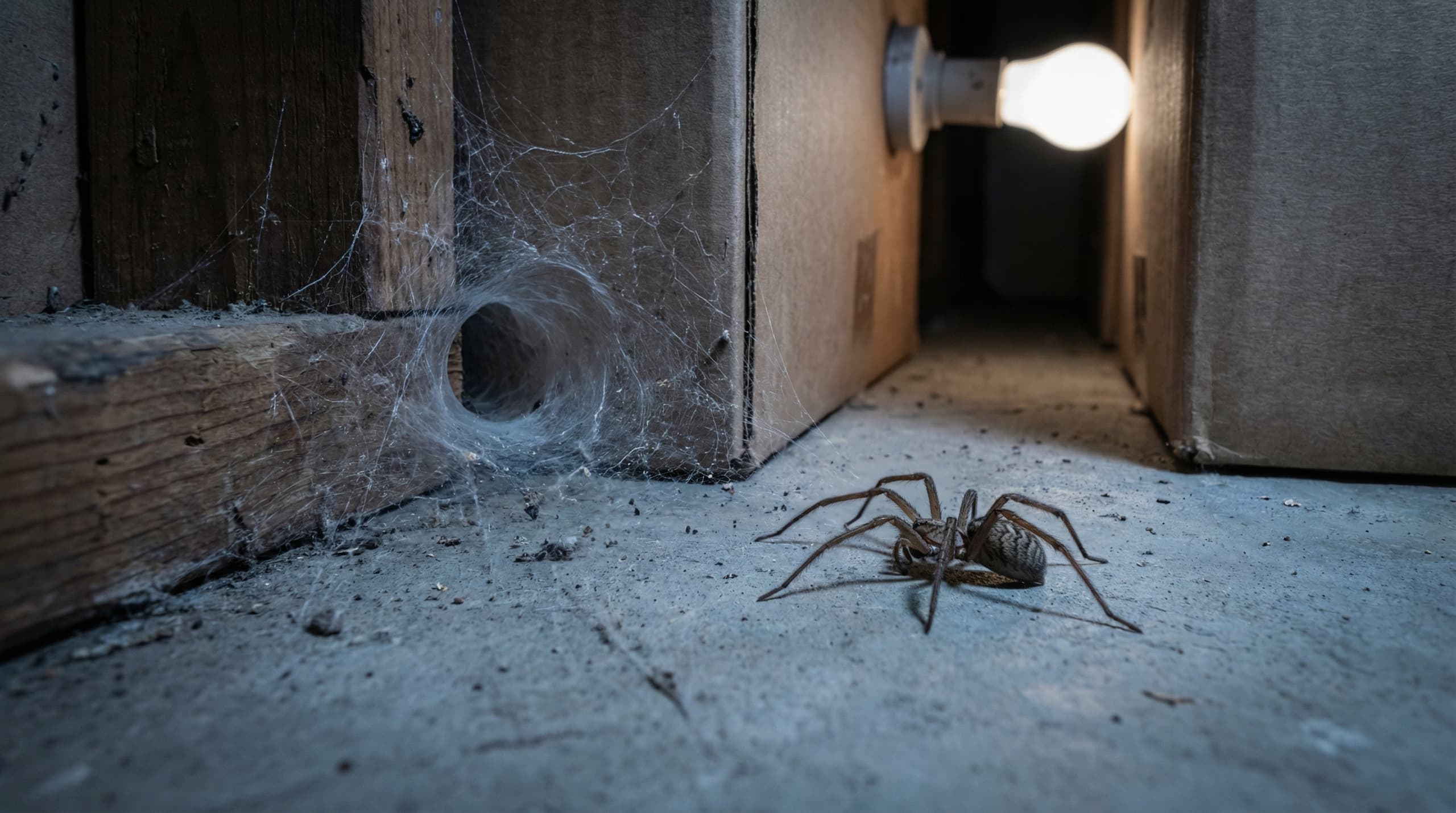
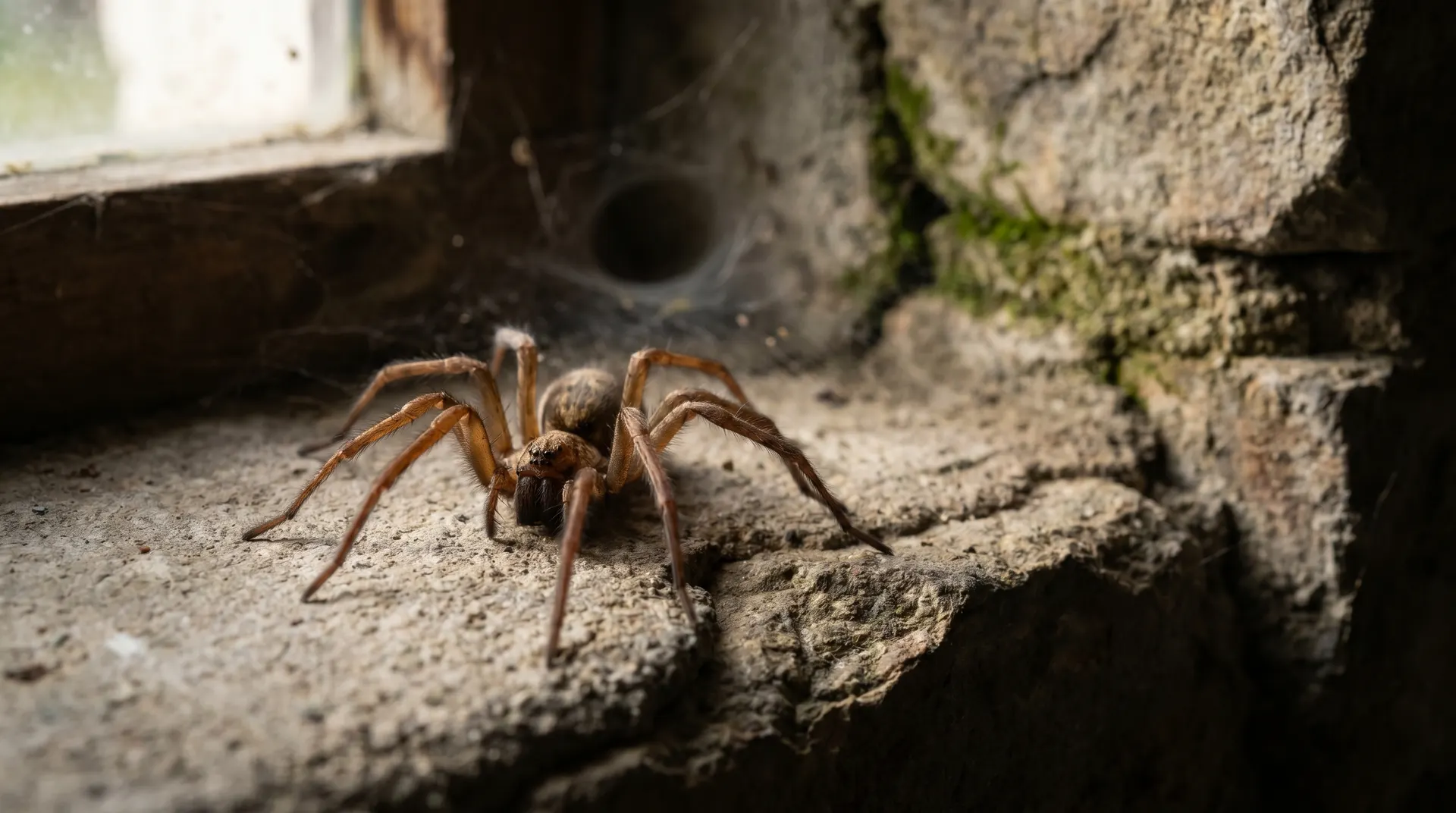
- Funnel webs, not orbs. Hobos don't spin pretty wheel-shaped webs. They build flat, messy funnel webs in cracks, woodpiles, and window wells, then wait at the narrow end.
- No violin mark to worry about. Idaho has no brown recluse population, so a 'violin' shape almost always means you've misread the markings.
Hobo Spider vs Black Widow: Side-by-Side
Use this comparison when you spot a spider around your home. If you can only remember one thing: shiny and black means keep your distance, and plain and brown means do not panic.
| Feature | Black Widow | Hobo Spider |
|---|---|---|
| Scientific name | Latrodectus hesperus | Eratigena agrestis |
| Color | Shiny jet-black | Tan to light brown |
| Body size | 1/4 to 3/8 inch | 1/4 to 5/8 inch |
| Key marking | Red hourglass on underside | Brown chevrons on top of abdomen |
| Legs | Glossy black, long, slender | Plain brown, no banding or rings |
| Web type | Irregular tangle in dark corners | Funnel-shaped sheet at ground level |
| Typical location | Valve boxes, woodpiles, under decks, garages | Window wells, basements, rock beds, retaining walls |
| Medically significant? | Yes. Neurotoxic venom. | No. Removed from CDC venomous list. |
| Bite symptoms | Severe pain, muscle cramps, nausea, sweating | Mild pain, temporary redness |
| Season in Idaho | May through October | Most sightings August through October |
| Climbing ability | Excellent climber | Poor climber on smooth surfaces |
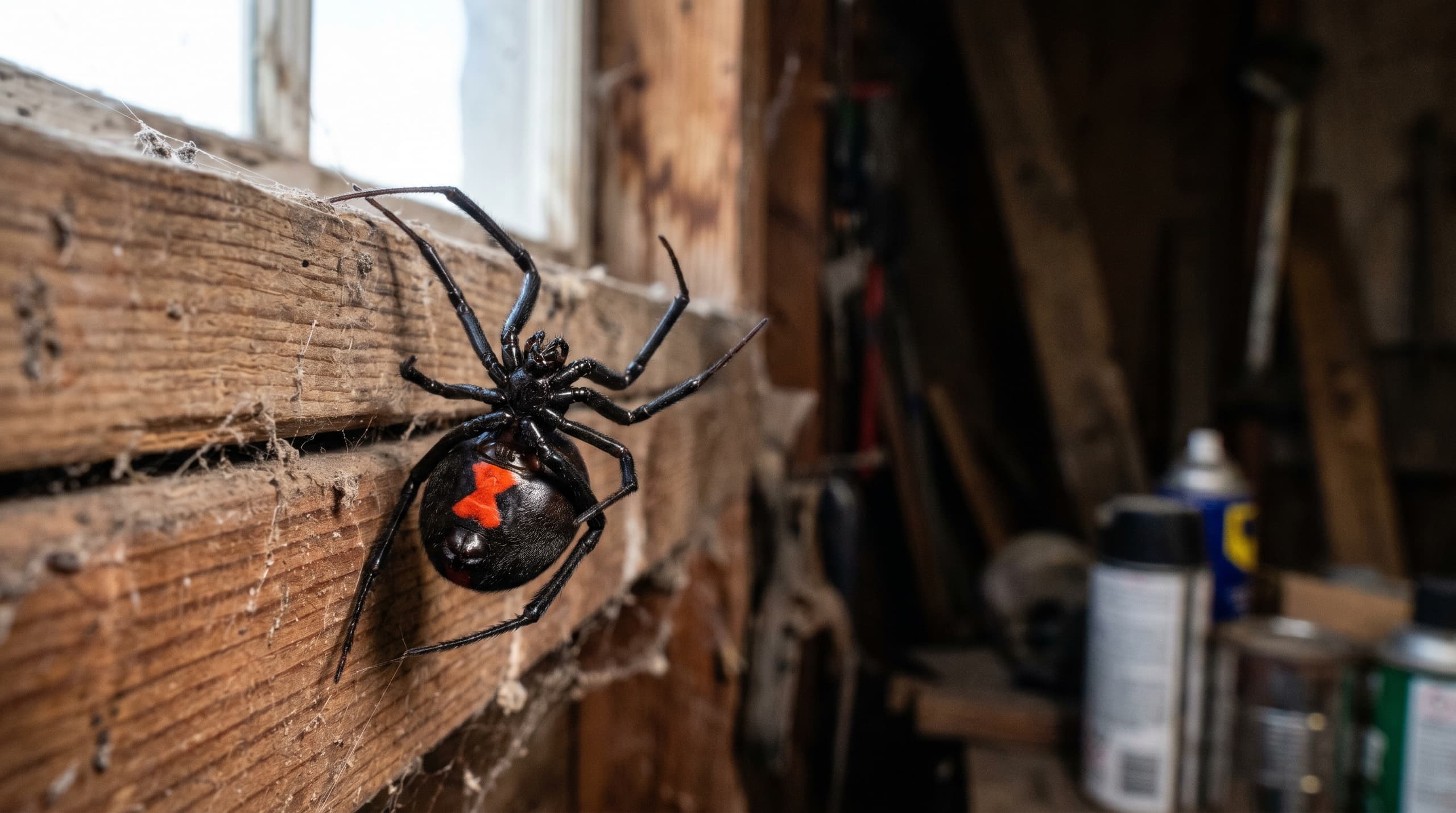
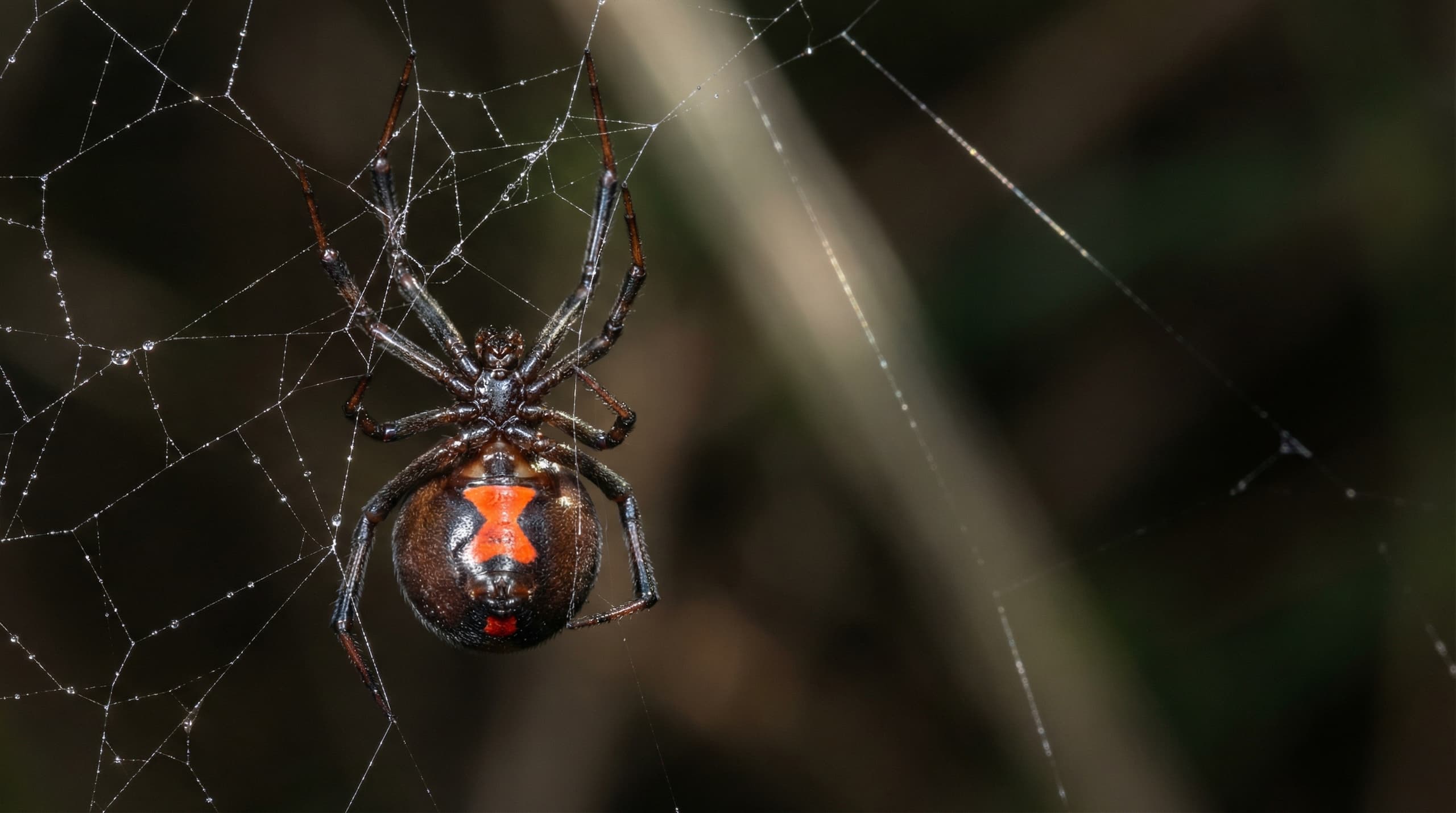
The western black widow is Idaho's only medically significant spider. The female's body is about the size of a marble, shiny jet-black, with a round, swollen abdomen. The red hourglass sits on the underside, so you see it when she hangs upside-down in her web. The legs are long, slender, and uniformly black. If a spider catches the light and almost looks wet, back away.
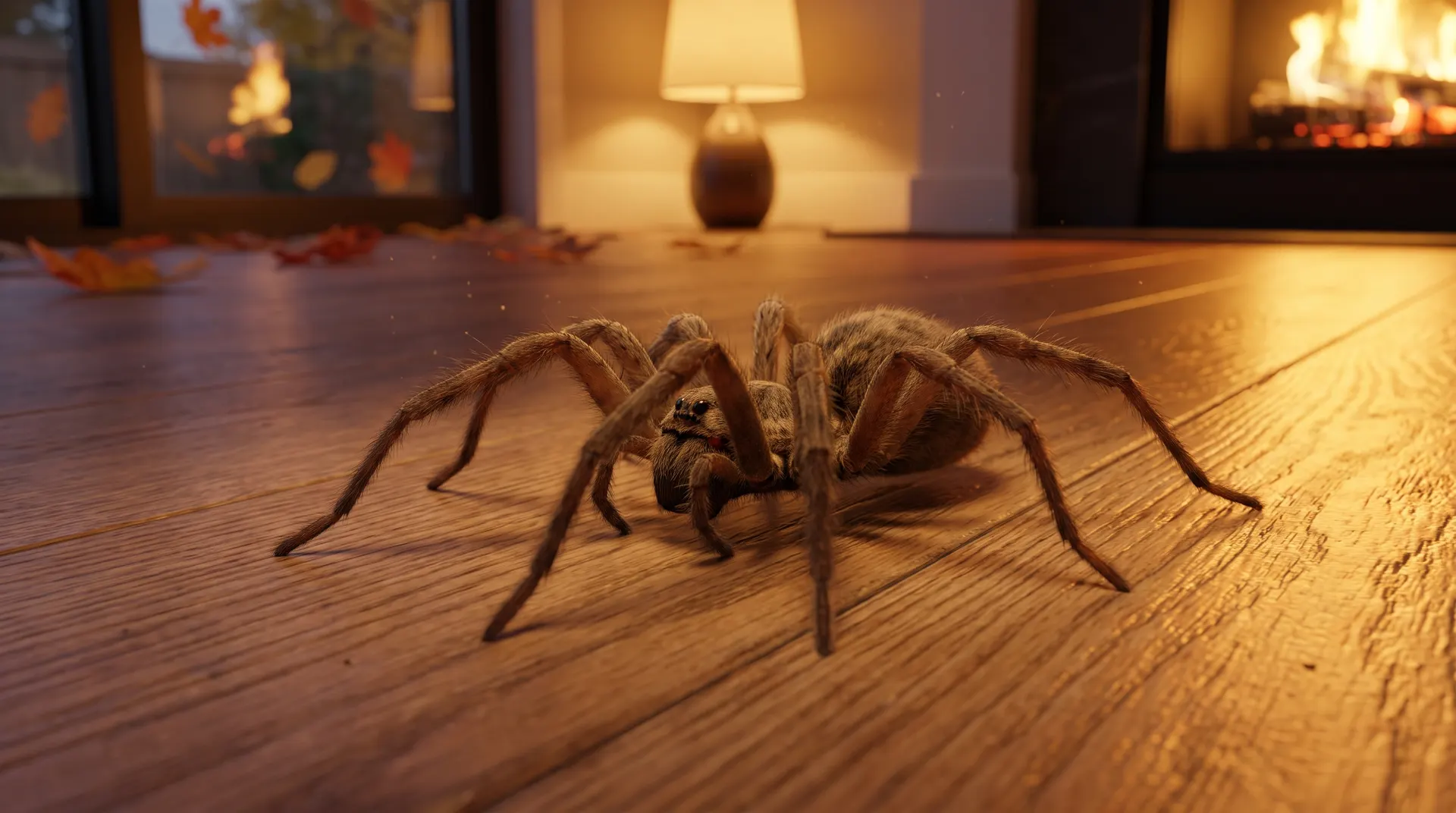
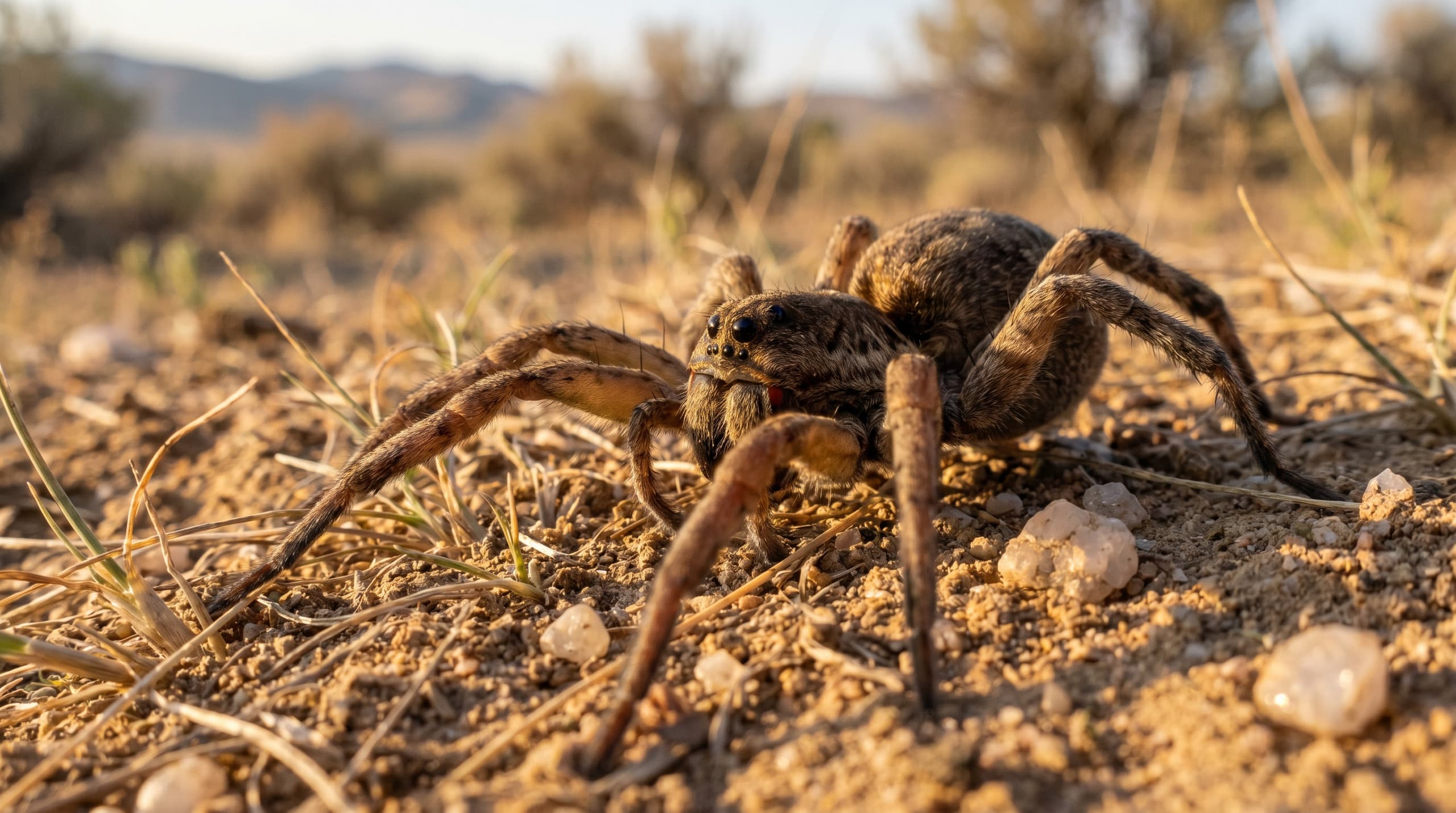
Hobo spiders also have short, fine hairs on their legs, unlike the longer, more visible hairs on wolf spiders. Males have enlarged palps near the head that look a bit like tiny boxing gloves. The overall impression is plain: no flash, no shine, no standout color.
Are Hobo Spiders Dangerous?
No, hobo spiders are not considered dangerous to people. That's the current science, not wishful thinking.
For years, hobo spiders took the blame for slow-healing, necrotic bites. Later studies couldn't reproduce those wounds, and in 2017 the CDC pulled the hobo spider from its venomous list. Today most experts agree a hobo bite causes mild, short-lived redness at worst.
Bites are rare on top of that. A hobo would rather run than fight, and its fangs aren't built to easily break human skin. For the species that actually deserve caution, see our full guide to dangerous spiders in Idaho.
Why the 'Aggressive House Spider' Name Is Misleading
The hobo spider's old nickname, 'aggressive house spider,' came from a misread of its scientific name, Eratigena agrestis. 'Agrestis' means 'of the field,' not aggressive.
In our experience, a cornered hobo bolts for the nearest crack. It isn't hunting you. The males do wander in late summer looking for mates, which is why you spot more of them from June through September.
Where the Hobo Spider's Reputation Came From
The scare started in 1987 when a researcher published a study claiming hobo spider venom caused necrotic (tissue-destroying) lesions in rabbits. Nobody could replicate those results. Follow-up studies through the 2000s and 2010s found hobo spider venom causes only minor, temporary symptoms in humans: localized pain, some redness, maybe a small welt. A 2011 study in the Journal of Medical Entomology concluded the hobo spider is not a spider of medical concern, and the CDC updated its guidance to match.
The myth persists for two reasons. Outdated pest control websites and old extension bulletins still call hobo spiders dangerous. And hobo spiders are fast runners that charge toward you when startled. They have poor eyesight and are trying to escape, but it feels threatening.
Black Widows Are the Spider That Deserves Caution
Black widow bites are medically significant and need professional medical attention. The venom is a neurotoxin roughly 15 times more potent than rattlesnake venom drop for drop. Symptoms typically start within an hour: intense pain at the bite site, muscle cramps that spread from the area, nausea, sweating, and elevated blood pressure. Fatal bites are extremely rare with modern medical treatment, and antivenom exists, but a bite still means a trip to urgent care or the ER.
Black widows are reclusive and do not hunt people. Almost every bite happens the same way: someone reaches into a dark space (a woodpile, a valve box, a pair of garden gloves) and presses against a hidden spider. Wearing gloves and looking before you reach is the simplest prevention. See our full black widow safety guide.
Where Hobo Spiders Hide in Boise Homes
Hobo spiders chase the same dark, undisturbed spots in homes across Boise, Meridian, and Nampa. Older houses with stone or rubble foundations give them endless cracks to nest in, which is why the North End and the Boise Bench see so many.
- Basements and crawl space edges where foundation cracks meet the floor. These damp spaces also harbor house centipedes, which hunt the same prey as hobos.
- Garages and utility rooms, especially behind boxes and along the base of walls.
- Woodpiles and rock walls stacked against the house. This is the number one outdoor hideout.
- Window wells, the space behind the water heater, and under stored stuff that hasn't moved in months.
Where Black Widows and Hobo Spiders Hide
Black widows and hobo spiders both live across the Boise metro area, but they pick very different real estate.
- Black widows choose dark, sheltered, undisturbed spaces. Irrigation valve boxes, meter covers, woodpiles, under deck railings, inside cinder block walls, and the back corners of garages. They are especially common in older Boise neighborhoods like the North End and Bench areas with mature landscaping, and rural properties around Kuna and Caldwell see them frequently too.
- Hobo spiders stick to ground level. They cannot climb smooth surfaces well, so you will rarely find one above the first floor. They show up in Meridian and Eagle subdivisions, especially homes with decorative rock landscaping that holds moisture.
- Web location is the fastest giveaway. Black widow webs are messy, irregular tangles tucked into dark recesses. Hobo spider webs are flat, funnel-shaped sheets built at ground level, with a silk tunnel the spider retreats into when disturbed.
What Attracts Hobo Spiders Into Your Home?
Hobo spiders come inside for two reasons: food and shelter. Mostly, they follow the bugs.
If your home has crickets, ants, earwigs, or box elder bugs, you're running a spider buffet. Clutter gives them cover, and gaps around your foundation, doors, and vents give them the door in. Cooling fall weather pushes the wandering males indoors, but the Valley's dry summers keep activity steady from June on.
What Gets Mistaken for a Hobo Spider?
Most of the spiders people call hobos aren't. Here are the usual suspects in Treasure Valley homes. None of them are spiders you want in the house, and our quarterly perimeter treatment keeps all of them out.
- Giant house spider. The most common mix-up. It's a close cousin, bigger, and harmless. It often shows slightly banded-looking legs, which a true hobo never does.
- Wolf spiders. Hairy, ground-hunting, and they don't build funnel webs. Big and intimidating, but not a threat.
- Black widows. Shiny black with a red hourglass. These actually do warrant caution. See the side-by-side comparison above to tell them apart.
- Plain old house spiders that are guilty of nothing except being brown and fast.
How to Keep Hobo Spiders Out
Keeping hobo spiders out comes down to closing doors and cutting off their food. Our full spider-proofing guide goes deeper, but these five moves cover most homes.
- Seal the entry points. Caulk foundation cracks, add door sweeps, and screen your vents and window wells.
- Declutter the dark zones. Clear out garage corners, basement piles, and storage boxes so there's nowhere to hide.
- Move the woodpile. Stack firewood off the ground and away from the house, ideally about 20 feet out.
- Vacuum up funnel webs when you spot them. It clears the web and tells the spider to move along.
- Get a perimeter barrier spray. A 3-foot band of organic-based product around your foundation kills the bugs hobos feed on, so the spiders have no reason to stick around.
Are There Brown Recluse Spiders in Idaho?
No. Idaho does not have an established brown recluse population. The brown recluse (Loxosceles reclusa) lives in the south-central United States, and an occasional specimen might hitch a ride in shipped goods, but there is no breeding population here.
Hobo spiders get misidentified as brown recluses constantly because both are brown and roughly the same size. The brown recluse has a violin-shaped marking on its head region and only six eyes arranged in three pairs. Most spiders, including hobo spiders, have eight eyes. If someone tells you they saw a brown recluse in Boise, they almost certainly found a hobo spider or a giant house spider. See our complete brown recluse identification guide.
When to Call a Pro
A single hobo spider in your basement is easy to handle. Relocate it outside or vacuum it up. A spider here and there is normal in the Treasure Valley, but some situations call for professional spider control, and if you just don't want to share your basement, it's time to bring in help.
- You found a black widow, especially with kids or pets around. One black widow usually means more are nearby in the same sheltered area.
- Spiders show up regularly. More than a couple per week points to a breeding population, not random strays. You may be finding funnel webs in every corner or spotting wandering males all summer.
- Webs keep returning. If you clear webs and they are back within days, the spiders are established.
- You spot egg sacs. A single black widow egg sac holds 200 to 900 spiderlings, and a hobo spider egg sac holds around 100.
- Your property borders open land. Homes near the Boise River, irrigation canals, or the undeveloped foothills face constant spider pressure from the surrounding habitat, and seasonal professional treatment keeps the count down.
Green Guard is locally owned right here in Boise, with 4.9 stars across 170+ reviews. Our organic-based, hospital-grade products are safe for kids and pets once they're dry. Most spider problems clear up within 24 to 48 hours, and the treatment keeps working for about 90 days.
Start with our $49 first treatment. It includes a full inspection, species ID, and an interior and exterior treatment. If pests come back between visits, so do we, free. Call (208) 297-7947 to get on the schedule.
Frequently Asked Questions
Are hobo spiders dangerous to humans?
Quick answerNo.
The CDC removed hobo spiders from its venomous list in 2017, and current research shows their bites cause minor, short-lived irritation at most. Bites are rare because hobo spiders flee rather than attack. If any bite blisters or spreads, see a doctor to rule out infection.
When are hobo spiders most active in Idaho?
Quick answerHobo spiders are most visible from June through September, when males wander in search of mates.
Cooling fall weather then pushes them indoors, so September and October bring the most sightings in Boise basements and garages.
How do you get rid of hobo spiders in a Boise home?
Quick answerSeal foundation cracks, declutter dark areas, move woodpiles away from the house, and vacuum up funnel webs.
A perimeter barrier spray cuts off the insects they eat, which is the most reliable fix. Green Guard's $49 first treatment handles all of it.
How much does spider control cost in Boise?
Quick answerGreen Guard's first treatment is $49 for subscription customers.
Quarterly plans run $119 to $159 per visit based on home size. That covers spiders plus 20+ other common Idaho pests, with a free re-service guarantee between visits.
How can you tell a black widow from a hobo spider?
Quick answerBlack widows are shiny jet-black with a red hourglass marking on the underside of the abdomen.
Hobo spiders are tan-brown with V-shaped chevron markings on top. Black widows have glossy black legs; hobo spiders have plain brown legs with no banding. Black widows spin messy tangle webs in sheltered dark spaces, while hobo spiders build funnel webs at ground level.
How common are black widows in Boise, Idaho?
Quick answerWestern black widows (Latrodectus hesperus) live throughout the Treasure Valley and are more common than most Boise residents realize.
They're especially prevalent in older neighborhoods with mature landscaping, near irrigation canals, and in rural areas around Kuna, Caldwell, and Nampa. Peak activity runs May through October.
Are there brown recluse spiders in Idaho?
Quick answerNo.
Idaho does not have an established brown recluse population. The brown recluse lives in the south-central U.S. The brown spiders people find in Boise-area homes are almost always hobo spiders or giant house spiders. The brown recluse has a violin-shaped marking and six eyes, while hobo spiders have chevron markings and eight eyes.