Quick answer
Here's how to protect your home from termites in the Treasure Valley: keep wood 6+ inches off soil, fix moisture and drainage issues fast, stack firewood 20+ feet from the house on a metal rack, keep a 12-inch vegetation-free zone at the foundation, learn the warning signs (mud tubes, swarmers, hollow-sounding wood), and schedule an annual termite inspection with a specialist. Green Guard doesn't treat termites, but we'll point you to a trusted one.
Key Takeaways
- Moisture is the #1 termite magnet. Fix leaks, drainage, and crawl-space humidity right away.
- Wood touching soil gives termites a hidden highway. Maintain at least 6 inches of clearance.
- Subterranean termites are the main type found around Boise and Meridian. They travel up through mud tubes from the soil.
- Annual professional inspections catch problems years before they show up as visible damage.
- Standard homeowner insurance does NOT cover termite damage in Idaho. Prevention is the cheapest play.
In this article
How Big Is the Termite Threat in Boise and the Treasure Valley?
Short answer: Idaho is a moderate-risk termite state, not a low-risk one. Subterranean termites are well established across Boise, Meridian, Nampa, and Eagle. The average termite repair runs $3,000 to $8,000, and standard homeowner insurance almost never covers it. That's why learning how to protect your home from termites matters here, not just in the Southeast.
In our years serving Treasure Valley homes, we've seen the same story over and over. A homeowner assumes Idaho is too dry or too cold for termites, skips prevention, and then finds mud tubes on a foundation wall during a remodel. By that point, the colony has usually been working for years.
Subterranean termites are the species we deal with locally. They live in the soil and build pencil-sized mud tubes to reach the wood framing in your home. A mature colony can hold hundreds of thousands of workers and chew through several pounds of wood a year. As of 2026, repair costs in the Boise market average $3,000 to $8,000, and prevention costs a tiny fraction of that.
What Termites Live in the Treasure Valley?
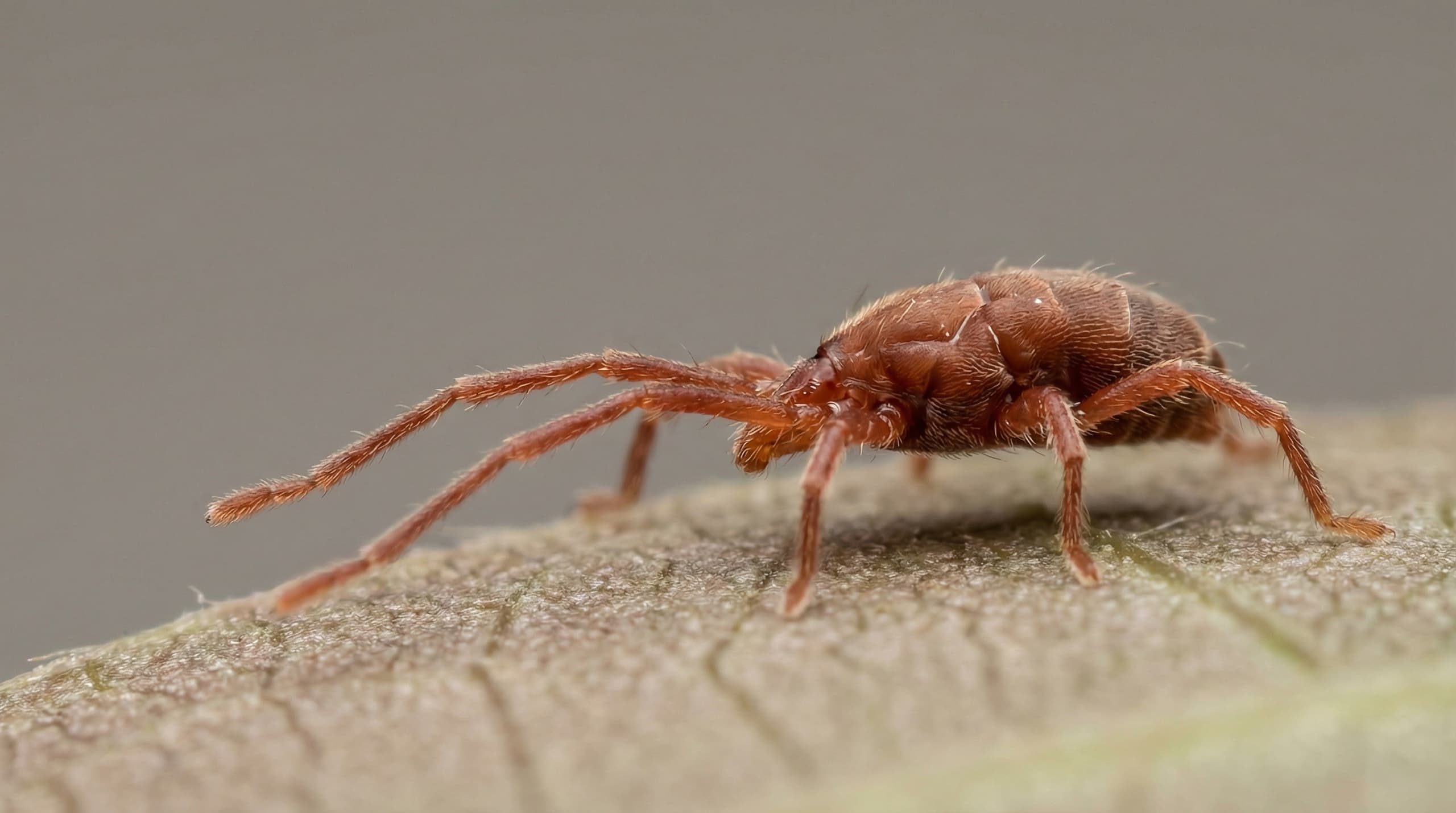
Two termite types matter here. Subterranean termites are the species behind most local damage, and dampwood termites turn up where wood stays wet. Drywood termites, the kind that infest furniture in California and Florida, do not survive Idaho winters.
- Subterranean termites. They live in the soil and build mud tubes up foundation walls to reach wood. Workers are small (1/8 inch), creamy white, and eyeless. Soldiers have a larger head with mandibles. Swarmers are dark bodied, about 1/4 inch, with wings.
- Dampwood termites. Larger and slower, and tied to wet wood such as fence posts, deck supports, and crawl space beams that stay damp.
- Where they show up. Older Boise neighborhoods like the North End, Bench, and Collister, where original sill plates sit close to grade. Irrigated yards in Eagle, Meridian, and Star, where ditch water keeps soil saturated for months. Any home with wood-to-soil contact at the foundation.
Step 1: Fix the Moisture Problems Termites Need
Moisture is the #1 thing attracting termites to a home. Dry it out and you take away their lifeline. This is the single highest-leverage step you can take.
Treasure Valley summers are bone-dry, but our homes still leak. It happens in foothills neighborhoods where irrigation runs all summer, and in older Boise bungalows where a slow plumbing drip has soaked the subfloor for years. Walk your perimeter after a sprinkler cycle. Anywhere water is pooling against the foundation, you have a problem.
- Fix plumbing leaks the day you find them. Even a slow drip under the kitchen sink creates the damp wood termites look for.
- Grade soil away from the foundation. Water should run away from the house, not pool against it. Check this after every big spring rain.
- Repair leaky outdoor faucets and irrigation. Sprinkler heads spraying siding are a common Treasure Valley culprit.
- Keep gutters clear and downspouts long. Drain water at least 3 feet out from the foundation.
- Ventilate crawl spaces. Closed, humid crawl spaces are termite paradise.
- Run a dehumidifier in damp basements or crawl spaces. Keep humidity below 50% year-round.
- Patch roof leaks fast. Wet attic wood is just as attractive to termites as wet foundation wood.
Step 2: Why Wood-to-Soil Contact Is a Termite Highway
Short answer: wood touching soil gives subterranean termites a hidden, moisture-rich path straight into your framing. Cut that path and you cut their easiest route in. When our techs walk a Boise foundation, this is the second thing we check after moisture.
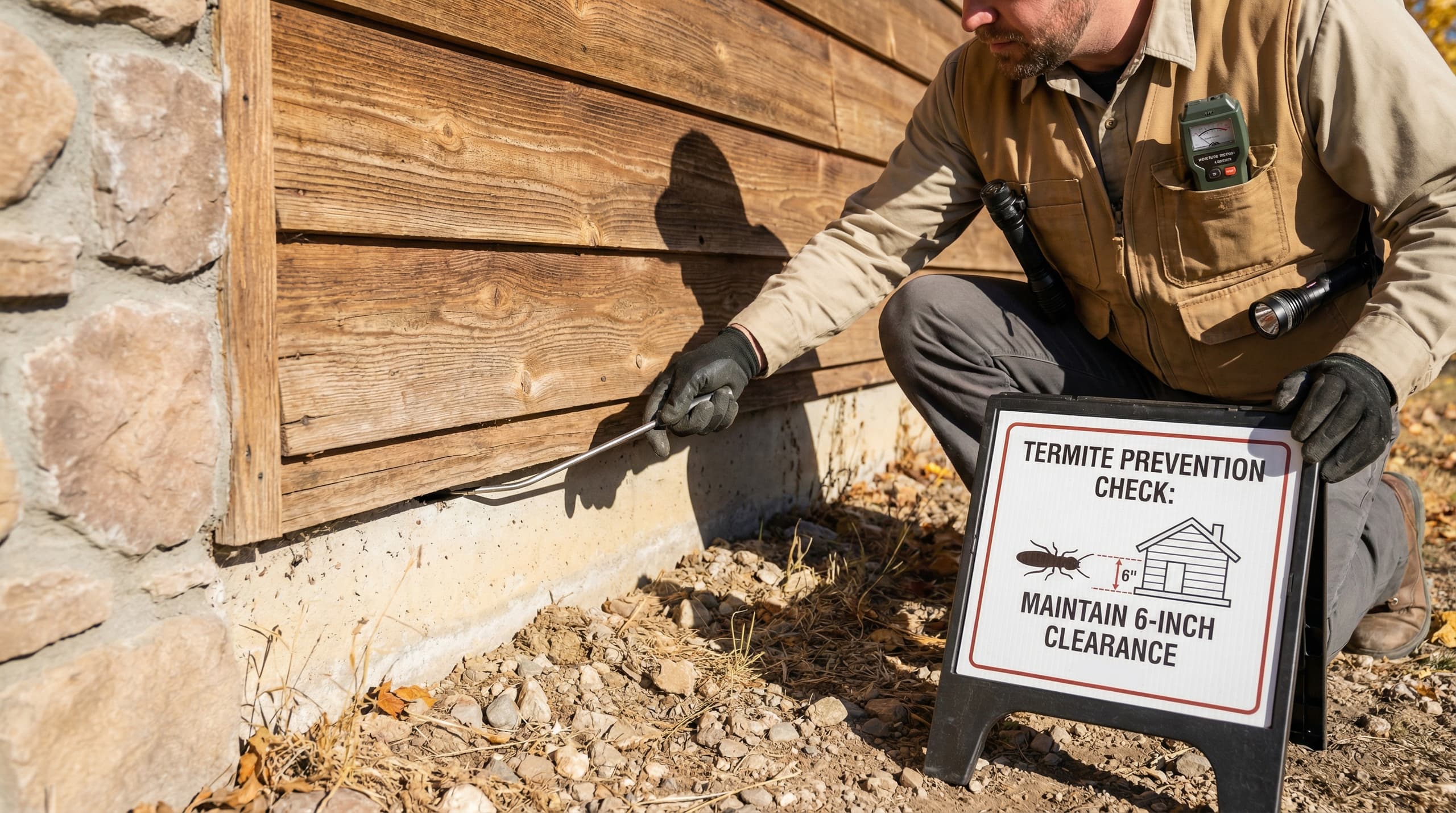
- Keep 6+ inches between soil and wood. Siding, door frames, and structural wood all need that gap.
- Use concrete or metal supports for decks, porches, and steps that meet the ground.
- Pull wood debris out of the soil. Construction scraps, buried lumber, and old roots against foundations are common offenders in newer Meridian subdivisions.
- Install termite shields (metal barriers) between foundation and wood framing where you can.
- Use treated lumber for ground contact. Pressure-treated wood resists termites (it isn't immune, though).
- Don't stack wood against the house even temporarily during a remodel or landscaping project.
What Are the Warning Signs of Termites in a Boise Home?
Short answer: mud tubes on the foundation, winged swarmers in spring, and hollow-sounding wood are the three big red flags. Early detection saves thousands in repairs. Here's the full checklist.
- Mud tubes. Pencil-sized tubes of mud running up foundation walls, along pipes, or through crawl spaces. That's the termite highway.
- Swarmers. Winged termites (or their shed wings) showing up indoors, especially in spring. A mature colony is nearby.
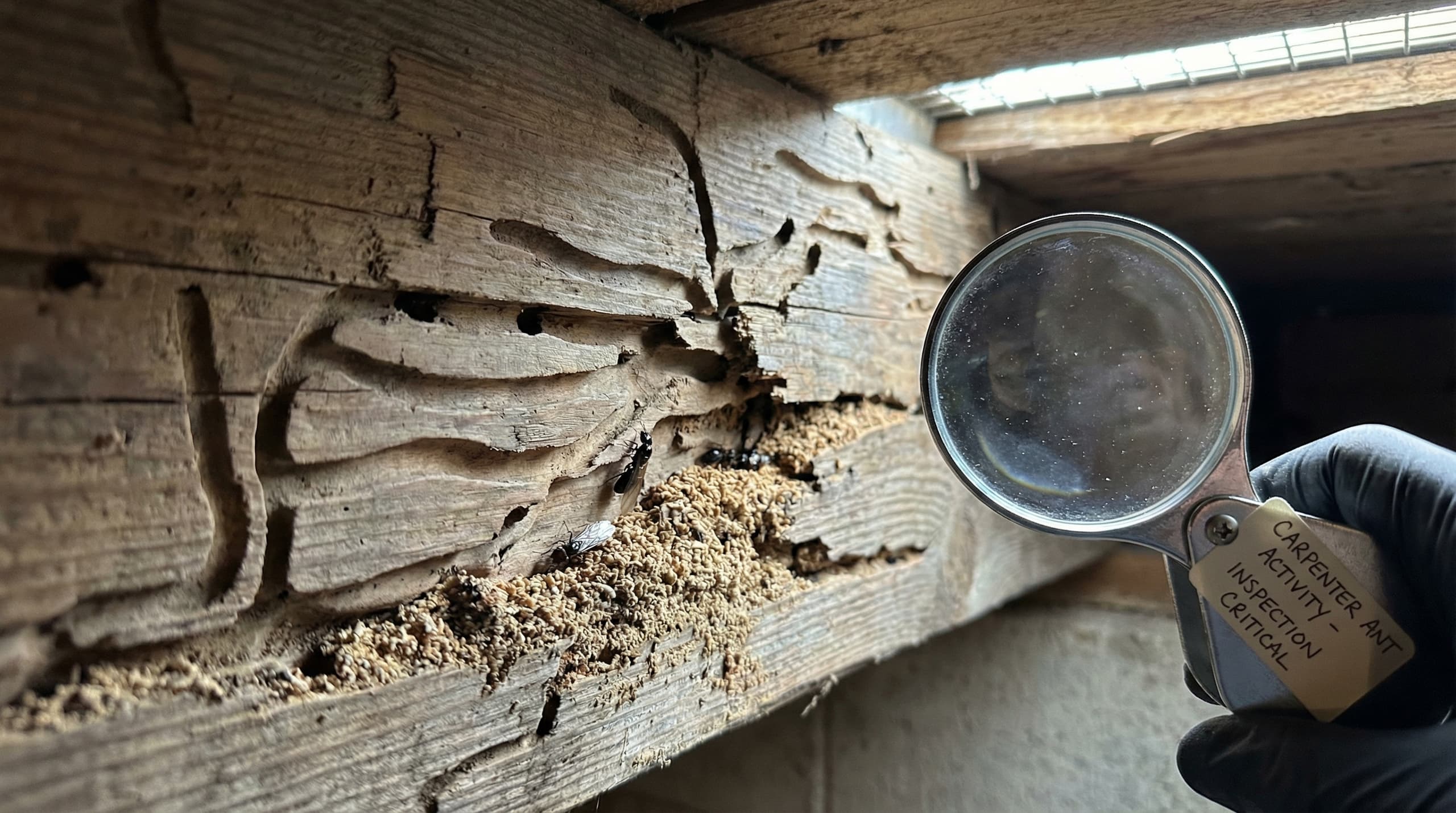
- Damaged wood. Wood that sounds hollow when tapped, or shows maze-like galleries when broken open.
- Blistering paint. Paint that looks bubbled or rippled often hides termite or moisture damage underneath.
- Frass. Drywood termite droppings look like tiny six-sided pellets (less common in Idaho, but worth knowing).
- Stuck doors and windows. Termite damage warps frames over time.
Termite or Carpenter Ant? How to Tell Them Apart
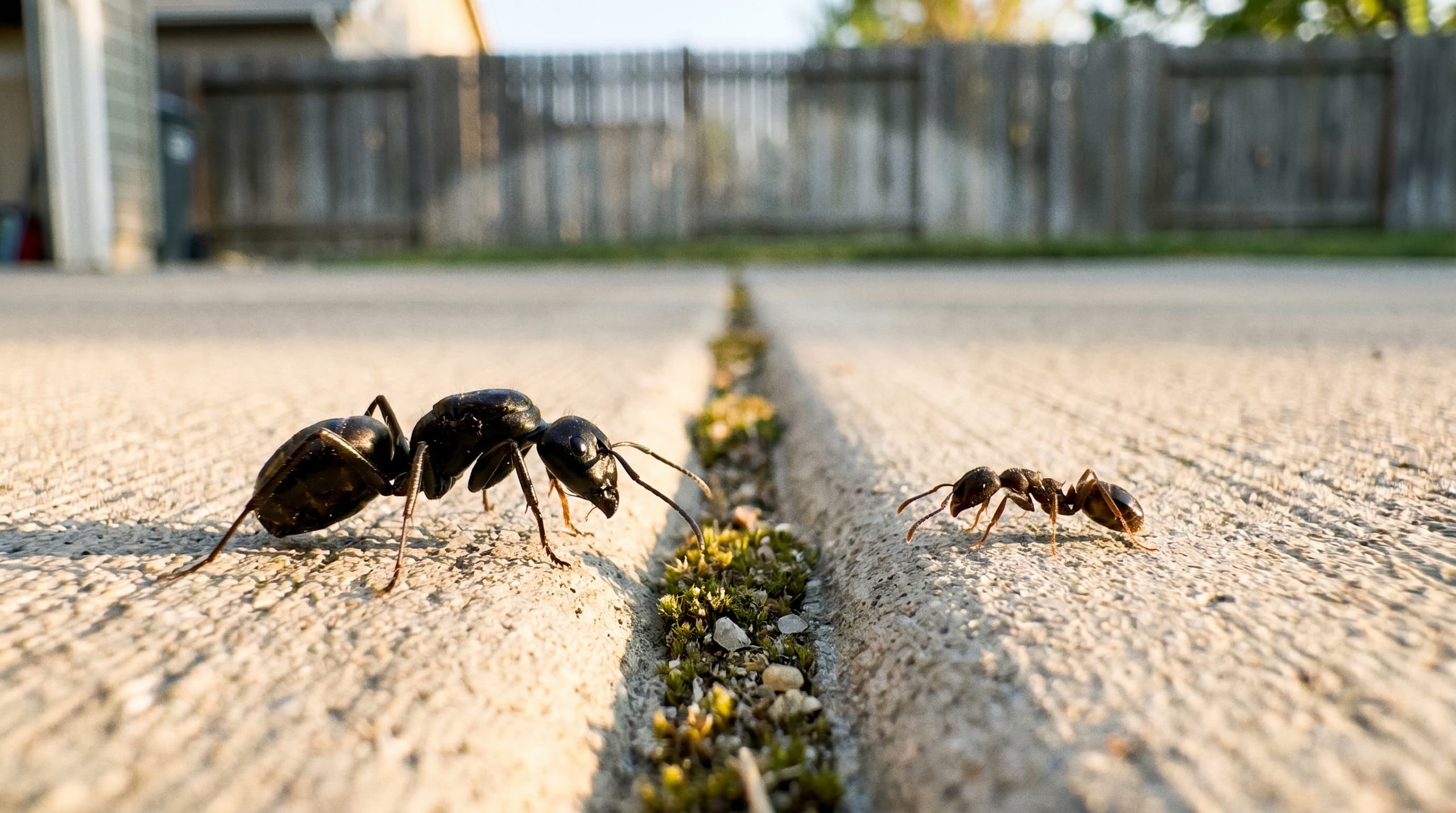
Carpenter ants are a common wood-damaging pest in Boise, and winged ants and winged termites get mistaken for each other every spring. Here is how to tell them apart.
- Antennae. Termites have straight, beaded antennae. Carpenter ants have elbowed (bent) antennae.
- Waist. Termites have a thick body with no defined waist. Carpenter ants have a narrow, pinched waist.
- Wings (swarmers). Termites have four equal-length wings. Carpenter ants have front wings longer than the back wings.
- Color. Termite workers are white or cream and swarmers are dark. Carpenter ants are usually black or bicolored.
- Size. Termite workers are tiny, about 1/8 inch. Carpenter ants are large, 1/4 to 1/2 inch.
- Damage. Termites eat wood. Their galleries have rough walls packed with soil, and the wood looks intact outside but is hollowed inside. Carpenter ants only excavate wood for nests. Their galleries are smooth and clean, with sawdust-like frass below the nest.
How Should You Landscape to Keep Termites Away?
Short answer: push wood and dense vegetation away from the house, and use rock or gravel instead of organic mulch right against the foundation. Your yard is the buffer zone, and small landscape choices make a big difference.
- Store firewood 20+ feet from the house and keep it elevated on a metal rack, not the bare ground.
- Pull dead trees, stumps, and old wood debris off the property. Decaying wood feeds the colonies that find your home next.
- Keep a 12-inch vegetation-free zone at the foundation. Plants and mulch right against the siding hide problems and trap moisture.
- Switch to non-wood mulch near the foundation. Gravel, rubber mulch, or river rock keep termites away from the perimeter.
- Trim tree branches back so nothing touches the roof or siding. Branches act as bridges.
- Inspect wooden structures like fences, decks, and sheds. Termites colonize those first and then move into the house.
Why Annual Professional Termite Inspections Pay Off
Short answer: a yearly inspection catches problems years before visible damage shows up. A trained termite inspector routinely finds subtle activity (a single mud tube in a crawl space corner, a soft spot in a sill plate) that a homeowner would never notice until repair costs hit five figures.
- Full property inspection. Foundation, crawl spaces, attic, and both sides of every exterior wall get checked.
- Trained eyes. Pros spot the subtle stuff: shed wings on a window sill, a faint mud spot behind a downspout.
- Moisture detection tools. Meters flag the damp conditions that attract termites long before damage starts.
- Detailed written report. You get documentation for your records (and for resale).
- Treatment options if needed. If activity turns up, you can act the same day.
- Resale peace of mind. Some buyers and lenders ask for a current inspection certificate.
When a Termite Inspection Matters Most
An annual inspection is the baseline. These are the moments when it matters most.
- Spring (April or May). Subterranean swarmers are most active in the Treasure Valley, and mud tubes are easiest to spot on wet soil.
- Buying or selling a home. A wood-destroying insect report is standard practice in Boise, Meridian, and Nampa, and many lenders require one, especially on VA and FHA loans. Termites are only part of the picture, since carpenter ants and other wood-boring insects turn up here too.
- A neighbor reports activity. Subterranean colonies extend dozens of feet underground, so what is on a neighbor's lot can become your problem.
- You find mud tubes or swarmers. Do not wait for the next annual visit.
What a Termite Specialist May Recommend
Green Guard does not treat or inspect for termites, so the treatment itself belongs to a specialist. Knowing the main options helps you compare plans and ask good questions when we connect you with a trusted specialist.
- Liquid barrier treatment. Termiticide is applied to the soil around the foundation, creating a continuous zone that termites cannot cross without picking up a lethal dose. It means trenching around the foundation and drilling through any concrete that abuts the home. Best for active infestations, new construction pre-treats, and homes near known activity.
- Baiting systems. Stations sit in the soil around the home and hold cellulose bait laced with a growth regulator. Workers share the bait through the colony. Best for homes where trenching is hard, such as poured patios on several sides or finished basements, and for homeowners who want documented annual records. Monitoring has to stay active to keep the protection going.
- Spot treatments. Termiticide is injected directly into infested wood or the soil at the active spot. Best for small, localized, accessible activity caught early.
Why Termite Treatment Is Not Part of Quarterly Pest Control
Termite work needs different products, different equipment, and a different warranty structure than a quarterly pest plan. It calls for trenching equipment, slab drilling, soil-applied termiticides, and a separate multi-year warranty, so it is priced as its own treatment plus an optional annual inspection. A standard quarterly service is a perimeter spray, eave sweep, and interior baseboard treatment built for crawling and flying pests.
If you suspect termite activity, the right call is a dedicated inspection from a specialist who carries the products and warranty paperwork. Call (208) 297-7947 and we will connect you with a trusted specialist, with no sales pitch from us.
When Should You Call a Termite Professional?
Short answer: the same day you spot mud tubes, swarmers, or hollow-sounding wood. Termite damage is silent and cumulative. By the time visible signs show up, thousands of dollars in damage are usually already done.
Don't sit on it. If you see any of the warning signs above, professional treatment shouldn't wait a week. Termites also warrant a professional inspection before you buy or sell a home, because the worst damage hides behind walls and in crawl spaces where only the right equipment finds it.
Green Guard serves Boise, Meridian, Nampa, Eagle, and the rest of the Treasure Valley. Call us at (208) 297-7947 and we'll point you to a trusted termite specialist for an inspection and treatment plan.
Frequently Asked Questions
Are termites common in the Boise area?
Quick answerYes.
Subterranean termites are well-established across Boise, Meridian, Nampa, and Eagle. Idaho isn't in the highest-risk zone, but local homes see termite damage every year. The moderate-risk label leads many homeowners to underestimate the threat until they're staring at a $5,000 repair bill.
Does homeowner insurance cover termite damage in Idaho?
Quick answerAlmost never.
Standard policies specifically exclude termite damage because insurers consider it preventable through maintenance. That's why prevention and early detection matter so much. The average Treasure Valley repair runs $3,000 to $8,000, and you'll be paying that out of pocket.
How much does termite treatment cost in the Treasure Valley?
Quick answerTermite treatment costs depend on the size of the infestation and the method used.
Preventive treatments and annual inspections are the affordable end. Treating an active colony costs more and varies with severity. A specialist can price the job after an inspection, and the sections above explain the main treatment options.
How often should I have a termite inspection?
Quick answerAnnual inspections by a licensed pro are the standard recommendation for Idaho homes.
Between visits, walk your own perimeter once a quarter looking for mud tubes on the foundation, soft or hollow-sounding wood, and any signs of moisture pooling near the house.
What's the difference between termites and carpenter ants?
Quick answerBoth damage wood, but they do it differently.
Termites actually eat wood. Carpenter ants only excavate it for nests. Termites have straight antennae and thick, uniform waists. Carpenter ants have elbowed antennae and narrow waists. Both need professional treatment. Call Green Guard at (208) 297-7947 for help with the ID. We treat carpenter ants and refer termite work to a trusted specialist.
Do I need a termite inspection when buying a home in Idaho?
Quick answerYes.
A wood-destroying organism inspection is standard practice when buying a home in Boise, Meridian, Nampa, or anywhere in the Treasure Valley. Many lenders require one. Termites are only part of the picture, since carpenter ants and other wood-boring insects turn up here too, and a single missed colony can mean thousands in repairs after closing.
What are mud tubes and what do they mean?
Quick answerMud tubes are pencil-thick tunnels made of soil and termite saliva that subterranean termites build to travel between their underground colony and the wood they eat.
You typically find them on foundation walls, crawl space piers, or basement walls. A mud tube on your foundation means active or recent termite activity. Don't knock it down. A professional needs to see it intact to gauge the size of the colony.
When do termites swarm in Idaho?
Quick answerSubterranean termite swarms in Idaho happen mainly from March through June, with warm, humid days right after rain the most common trigger.
If you see winged insects indoors during that window, save a few in a jar and call for an inspection. Winged ants and winged termites look alike at a glance, so the identification matters.
Is termite treatment included in quarterly pest control?
Quick answerNo.
Termite treatment is priced separately from general pest control because it needs different products, trenching equipment, slab drilling, and a multi-year warranty. Green Guard's quarterly pest plan ($49 initial, $119/quarter for homes up to 2,500 sq ft) covers the common Idaho household pests but not termites. If you suspect activity, we'll connect you with a trusted specialist.
When should I schedule a termite inspection in Idaho?
Quick answerSchedule it in spring (April or May) when subterranean termite swarmers are most active and mud tubes are easiest to spot on wet soil.
A spring inspection also pairs well with the kickoff of quarterly pest service.