Quick answer
Yes, you should get pest control before winter in Boise. A fall treatment puts a fresh barrier around your foundation right when mice, spiders, and box elder bugs start pushing inside, and it costs less than fixing an infestation later. Green Guard quarterly service runs $119 per treatment for homes up to 2,500 sq ft, versus $200 for a one-time emergency visit in January. Book before the end of October while soil and siding are still warm enough for products to bind well.
Key Takeaways
- A pre-winter treatment blocks pests on the outside of your walls, which is far easier than chasing them out of your walls in February
- Quarterly service is $119 per treatment (up to 2,500 sq ft). A single one-time emergency treatment is $200. Prevention wins on price
- Boise's average first hard freeze lands around mid-October, so late September through October is the booking window
- Fall is when rodents, hobo spiders, box elder bugs, and elm seed bugs all move toward heated buildings at once
- Your first treatment is $49 on a quarterly or bimonthly plan, and re-services between visits are free
In this article

Should You Get Pest Control Before Winter in Boise?
Yes. Getting pest control before winter in Boise is worth it because fall is the exact moment pests stop living in your yard and start trying to live in your house. A treatment in September or October puts a fresh barrier on your foundation while they are still outside it. Wait until January and you're paying to remove them instead of paying to keep them out.
It's a common September question. Somebody looks at the calendar, sees bug season winding down, and figures they can skip a round and save a payment.
It's a fair instinct. It's also backwards.
Insects get quiet in the Treasure Valley after the first freeze. They don't disappear. They relocate. And the place they relocate to is the warmest structure within crawling distance, which is your home.
What Does a Pre-Winter Pest Treatment Actually Do?
A fall treatment isn't the same job as a July treatment. In summer we're knocking down active populations. In fall we're building a wall.
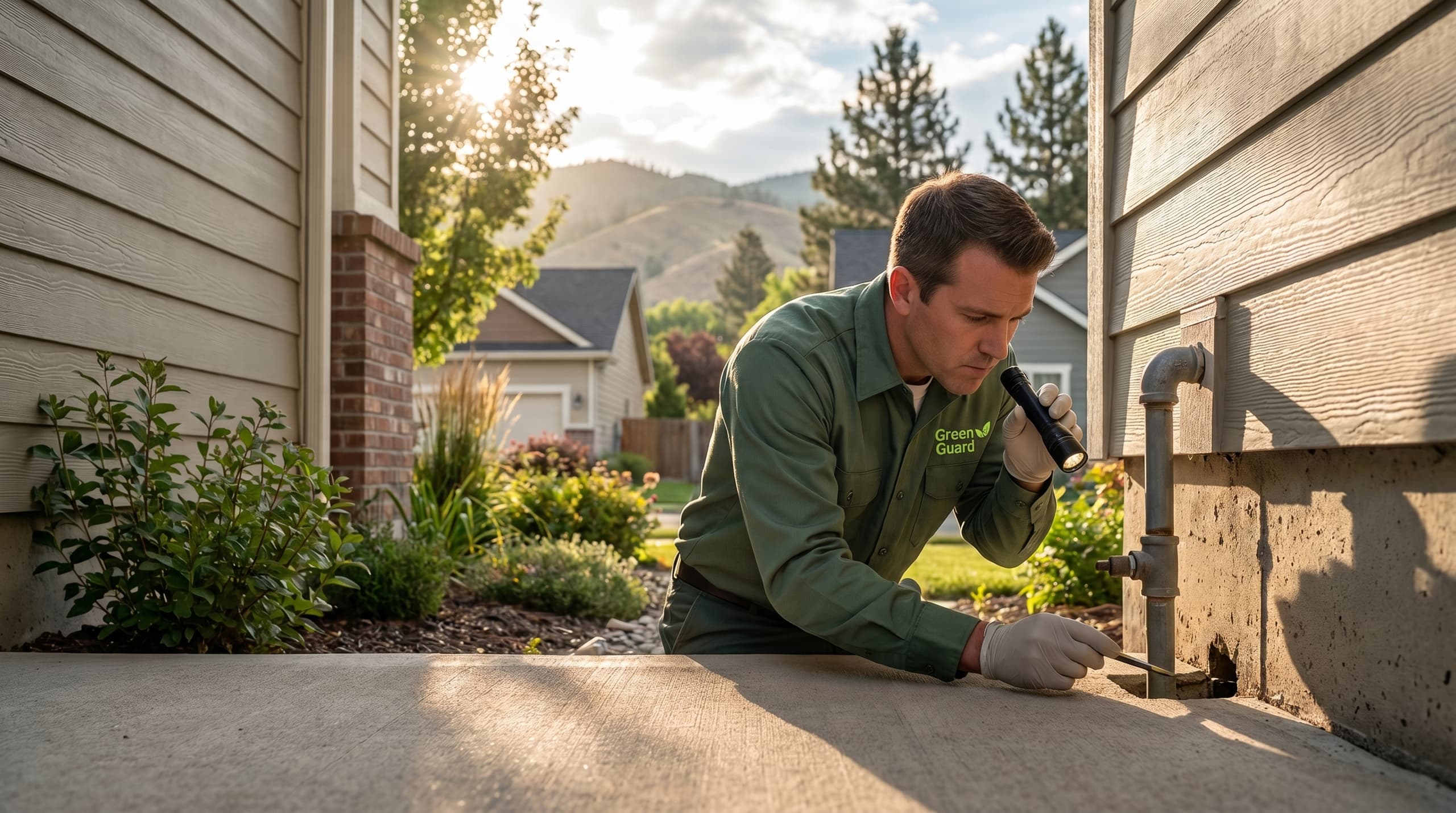
- Full exterior barrier. Products go 3 feet up the wall and 3 feet out from the foundation, which is the strip every overwintering pest has to cross
- Eave and soffit sweeping. Spider webs and egg sacs come down before the females tuck in for the season
- Entry point inspection. Our tech walks the perimeter looking for the dime-sized gaps mice use around dryer vents, hose bibs, and garage door corners
- Granular treatment in beds. Bark mulch and rock beds hold heat and hide box elder bugs, so those get their own pass
- Interior baseboard and crack treatment on request, mostly for garages, utility rooms, and unfinished basement rims
- Web and nest removal. Old wasp nests come off the eaves so the spring queens don't use them as a landmark
Pre-Winter Prevention vs. Emergency Treatment: The Cost Math
Here's the part most people actually want. As of September 2026, our Boise pricing looks like this.
Quarterly service on a home up to 2,500 sq ft is $119 per treatment. That's four visits a year, one of which is your fall barrier. Bimonthly runs $99 per treatment across six visits. Bigger homes step up to $139 and $159 per quarterly treatment depending on square footage.
A one-time treatment with no plan is $200 for that same 2,500 sq ft home. $225 up to 4,000 sq ft. $250 above that.
So the January panic call costs more than a scheduled fall visit, and it only carries a 30-day warranty. One emergency treatment is more expensive than the prevention visit that would have stopped it. That's the whole argument in one sentence.
There's a second cost nobody prices in. A mouse in a wall void chews wire insulation and drops contaminated nesting material in your attic joists. The cleanup and the electrical repair aren't pest control line items. They are your problem, and they aren't $200.
Does the $49 Initial Service Still Apply in Fall?
It does. New customers starting a quarterly or bimonthly plan get a $49 first treatment regardless of home size and regardless of the month. That first visit includes the full property inspection, species ID, the exterior barrier, and interior treatment if you want it.
Signing up in October means your $49 first visit is your pre-winter treatment. You're not paying extra for the seasonal timing. If you've been putting it off since spring, this is the cheapest possible month to start. See our full Boise pest control pricing page if you want every tier laid out.
Why You Should Book Before the End of October
Boise's average first hard freeze lands around the middle of October. That date drives everything about fall treatment timing.
Products bind best to warm, dry siding and soil. Once overnight lows sit in the twenties and the ground starts holding frost, the exterior barrier doesn't lay down the same way. Wet, frozen, or snow-covered surfaces cut how long the treatment holds.
The other issue is access. Foundation vents, crawl space openings, and window wells are easy to inspect in October. In December they are behind snowpack or frozen shut, and the tech is working around ice instead of finding entry points.
Late September through the end of October is the window. After Halloween we can still treat, and we do treat all winter, but you're trading away some of the value. The sections further down cover what pests do from December through February and what coverage looks like once you're past the freeze.
Which Boise Pests Are Moving Indoors Right Now?
Fall pressure in the Treasure Valley isn't one pest. It's five or six species making the same decision in the same three weeks.
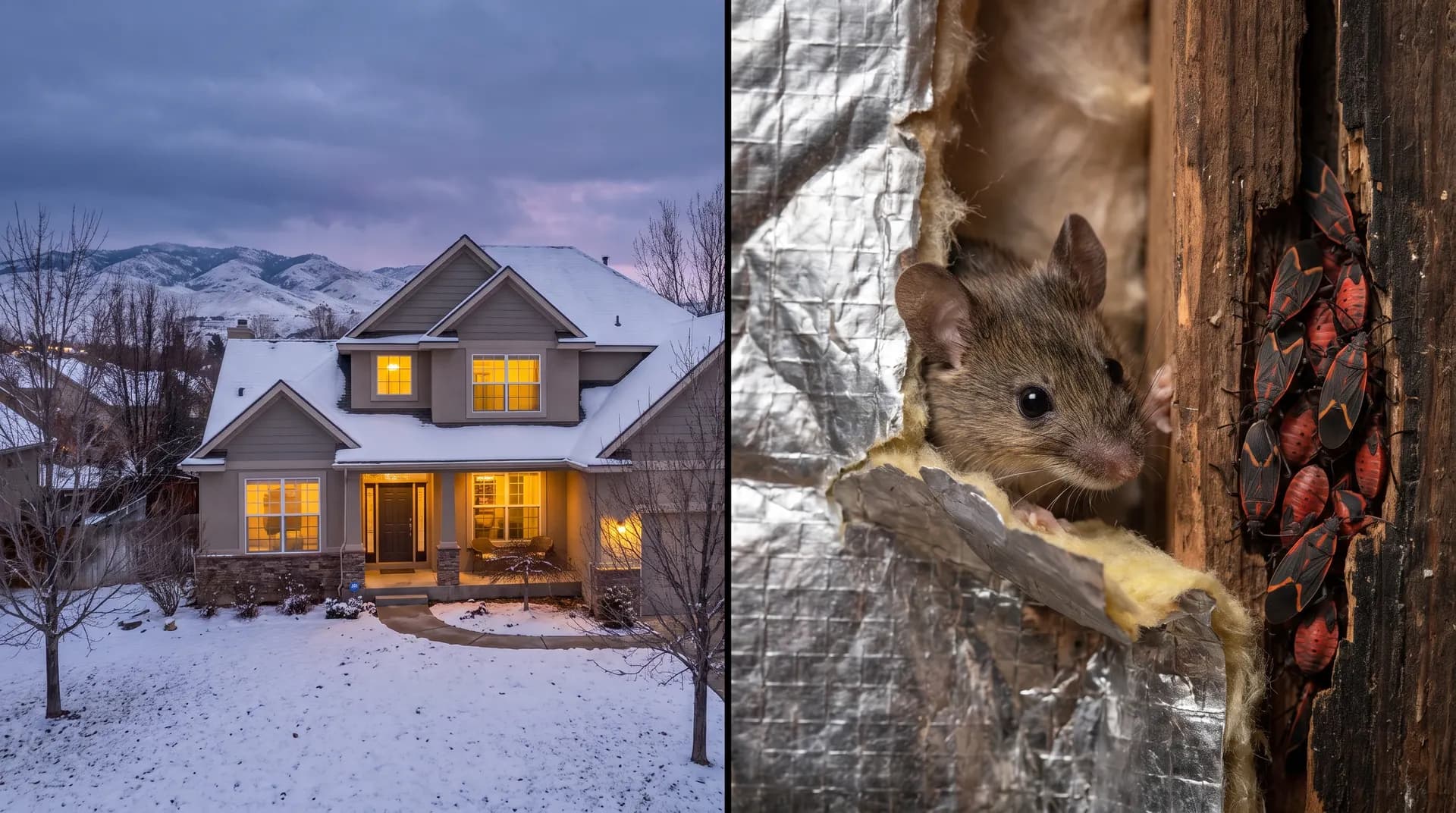
- Deer mice. Foothills homes from the Boise Bench up through Harris Ranch and Hidden Springs see the heaviest push. A mouse fits through a hole the size of a dime
- Hobo spiders. Males wander hard in September and October looking for females, which is why you suddenly find them in basements and garages
- Box elder bugs. They cluster on warm south and west-facing siding on sunny October afternoons, then slip behind the trim
- Elm seed bugs. A Treasure Valley specialty. They are relentless around window frames and they stink when crushed
- Overwintering wasp queens looking for a quiet attic corner or wall void, not the whole colony, just the founders for next spring
- Voles. They tunnel under lawns and mulch beds through the winter and you find the damage in April
Who Can Actually Skip a Pre-Winter Treatment?
We're not going to pretend every house needs this. Some don't.
If you live in a newer, tightly built home in a subdivision like the ones going up in south Meridian, you already have a sealed envelope, foam-sealed penetrations, and no mature landscaping pressed against the foundation. You have seen nothing all summer. You can reasonably wait for spring.
Skip it if all of that's true. Get the treatment if any of these are:
- Your home was built before 1990, especially the older North End and Nampa housing stock where foundation cracks and gappy crawl space vents are standard
- You back up to the foothills, a canal, a greenbelt stretch, or a farm field
- You found more than a couple spiders indoors in August or September
- You have a detached garage, a shed, or a woodpile within about 20 feet of the house
- You have ever had mice before, because mice follow the same scent trails their predecessors left
What Our Techs Look For on a Fall Visit
With 2,500+ Treasure Valley families on service since 2010, our fall walkthrough follows a pretty specific order.
We start at the utility penetrations. Dryer vents, AC line sets, hose bibs, and cable entries are the four spots where builders leave a gap and nobody ever checks. That's where most of the mouse calls trace back to.
Then the garage door. The rubber sweep on almost every Boise garage door is compressed or curled at the corners by year seven, and that leaves a gap you can slide a pencil through on both ends.
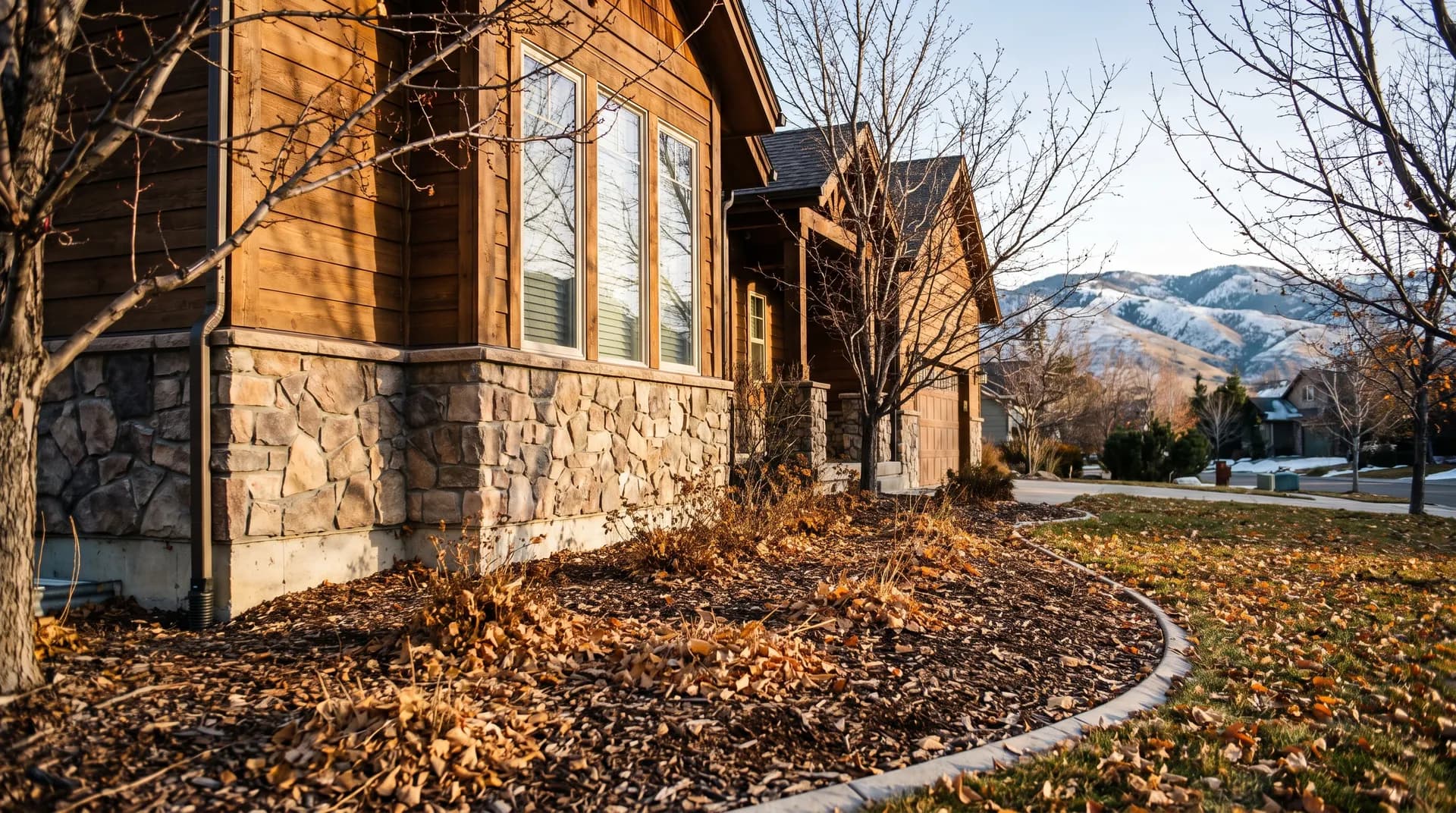
Last is the grade line. Where mulch, rock, or soil sits above the bottom of the siding, you have a covered highway straight to the sheathing. Homeowners never notice it because it looks like landscaping. To us it looks like a front door.
Fall Treatment vs. Spring Treatment: Which One Matters More?
They do different jobs, and the honest answer depends on what bugs you.
Spring treatment is offense. Ant colonies are expanding, wasp queens are picking nest sites, and knocking them down in April keeps the summer quiet. If ants on the kitchen counter are your recurring headache, April is your month.
Fall treatment is defense. Nothing is expanding in October. Everything is looking for a door. A fall barrier is the last thing standing between an overwintering population and your drywall.
The reason we push quarterly is that you get both, plus a summer knockdown and a late-winter visit ahead of February mouse breeding season. Skipping the fall round is the most expensive corner to cut, because the problems it prevents are the ones that show up inside your living space instead of out in the yard. We break the year-round math down further on our pricing page.
If You Missed the Fall Window
Fall is the best time, and winter treatment still works. In December and January we handle active problems, and the plan usually includes exterior treatment, interior work, and bait stations. February is the spring prep window. It is not too late for winter protection, and it sets up your spring service. Our early signs of mice checklist is worth a read before we arrive.
What Indoor Pests Do From December Through February
Once the cold settles in, the pest pattern moves indoors.
- December. Mice and rats reach peak indoor activity as outdoor survival gets hard. Spiders stay active in heated areas and are more visible because they are shut inside. Overwintering insects and cluster flies may emerge on warm sunny days, and pantry pests turn up in holiday baking supplies.
- January. The coldest month brings the highest indoor mouse activity of the year. Norway rats may be present in lower levels and crawl spaces, and Indian meal moths and beetles show up in stored grains and cereals. Many homeowners first notice rodents now, but the droppings, gnaw marks, and scratching in the walls usually trace back to fall.
- February. Rodents are still active indoors and may start exploring near the exterior on warm days. Spiders become more visible as spring approaches, early carpenter ants appear on warm afternoons, and cluster flies emerge more often in attics.
How Rodents Behave in Winter
Rodents are the primary winter pest concern in Idaho, and knowing how they behave helps with management.
- Rodents do not hibernate. They stay active all winter inside the home.
- Indoor populations can increase as breeding continues.
- Activity concentrates near food and warmth, in kitchens, basements, and attics.
- Signs include droppings, gnaw marks, grease trails along walls, and scratching sounds.
Winter Rodent Control
- Tamper-resistant bait stations. They lead the work and are safe for homes with pets and children.
- Snap traps, rarely. Only when a situation calls for it.
- Entry-point checks. Copper mesh goes into obvious new gaps. Bigger repairs are a job for you or a handyman.
- Sanitation improvements. Reducing the available food sources takes away the reason to stay.
Spiders in Winter
Spiders do not die in winter. The ones in your home stay active year-round in heated spaces.
- Common house spiders. Active throughout the home, especially in corners and storage areas.
- Black widows. Less active, but may be present in garages, basements, and crawl spaces.
- Hobo spiders. Continue their activity in the lower levels of homes.
- Wolf spiders. May enter seeking warmth and become visible in living spaces.
- Cellar spiders. Extremely common in Idaho basements year-round.
Winter Pantry Pests and How to Prevent Them
The holidays bring more pantry pest risk as we stock up on baking supplies and special foods. The usual suspects are Indian meal moths (the most common, with larvae that spin webbing in food), flour beetles (flour, cereal, and grain products), grain weevils (whole grains and rice), and drugstore beetles (a wide variety of stored products).
- Inspect new purchases. Check packaging for holes or webbing before buying.
- Use sealed containers. Transfer opened items to airtight containers.
- Rotate stock. Use older items first and do not let products sit for months.
- Clean spills immediately. Crumbs and spills attract and feed pests.
- Check stored items and holiday supplies. Look through boxes and decorations stored from last year for pest activity.
- Reduce humidity. A dehumidifier makes conditions less favorable for pests.
Get Your Pre-Winter Treatment Booked
If you're on the fence, the deciding factor isn't the bugs you see today. It's what's already testing your foundation for a way in.
Green Guard is locally owned in Boise, we run 4.9 stars across 170+ reviews, and every quarterly and bimonthly plan comes with a free re-service guarantee. If something comes back between visits, so do we, at no charge. Our products are organic-based and hospital-grade, safe for kids and pets once dry in 30 to 60 minutes.
Your first treatment is $49. Same-day service is often available.
Call (208) 297-7947 to get your fall barrier on the schedule. For more on what's heading your way this season, read the fall prep sections of our Idaho pest calendar and our Boise rodent control guide.
Frequently Asked Questions
What month is best for pest control in Boise?
Quick answerLate April and October are the two highest-value months.
April catches ant colonies and wasp queens as they wake up, and October puts a barrier in place before rodents and spiders move indoors. If you can only do one treatment a year, pick the one that matches your problem. If you get mice, treat in October.
Is $50 a month for pest control a lot?
Quick answerIt's on the high side for the Treasure Valley.
Our quarterly plan works out to about $40 a month for a home up to 2,500 sq ft ($119 per treatment, four times a year), and bimonthly runs about $50 a month for six visits. Anything above that should include extras like mosquito service or a much larger home.
Does pest control still work in cold weather?
Quick answerYes, but the exterior barrier performs best when it's applied to dry surfaces above freezing.
That's why we push people to book by the end of October. Once the ground freezes, we shift the focus to interior treatment, rodent stations, and entry point work instead of relying on the perimeter spray.
How much does a pre-winter pest control treatment cost in Boise?
Quick answerYour first treatment is $49 on a quarterly or bimonthly plan, no matter the size of your home.
After that, quarterly is $119 per treatment up to 2,500 sq ft, $139 up to 4,000 sq ft, and $159 up to 5,500 sq ft. A one-time treatment with no plan starts at $200.
Will one fall treatment last all winter?
Quick answerOur products hold for about 90 days under normal conditions, so an October treatment covers you through most of the winter.
Insects go dormant, which stretches it further. Rodent pressure doesn't stop, so homes with a mouse history do better on a plan than on a single visit.
Why am I seeing more mice in winter?
Quick answerMice that slipped in through fall gaps are now breeding in your home's warm, protected environment, and January is peak population growth.
You also notice them more because they are concentrated in the heated areas where you spend time. Learning the earliest signs of mice helps you catch the problem in October, not January.
Will bugs come out in winter in Idaho?
Quick answerOverwintering insects like box elder bugs, cluster flies, and stink bugs hide in wall voids and attic spaces, then reappear on warm sunny days.
Spiders never really shut down inside a heated home. Most homeowners see more indoor bug activity in winter than they expect, especially during warm January thaws.
Can I wait until spring for pest control?
Quick answerWaiting until spring means dealing with a mouse population that spent all winter breeding in your walls, and with overwintering insects emerging into your living spaces just when you notice them.
A fall treatment prevents both, and it costs the same $49 initial as a spring service. It is the better trade.