Quick answer
The six early signs of mice in a Boise home are: rice-grain droppings under sinks and along baseboards, pencil-tip gnaw marks on wires and food packaging, scratching in the walls between 9 PM and 2 AM, greasy rub marks along baseboards, shredded nesting material behind appliances, and a musky ammonia odor near cabinets. Catch even one of these in August, before deer mice start breeding for winter, and you can stop an infestation before it starts. Green Guard's rodent inspection comes with a $49 first visit on a quarterly or bimonthly plan, anywhere in the Treasure Valley.
Key Takeaways
- Rice-grain droppings (about 1/4 inch, dark, pointed on both ends) are the clearest first sign of mice in a Boise home.
- Scratching between 9 PM and 2 AM inside walls, ceilings, or above the pantry almost always means mice, not squirrels or birds.
- August is the earliest scouting window in the Treasure Valley. Deer mice come down from the foothills as the grass dries out.
- Never sweep or vacuum dry mouse droppings. Idaho deer mice can carry hantavirus, which becomes airborne when droppings are disturbed.
- One sign means scouting. Three or more signs means an active infestation. Call (208) 297-7947 to book a $49 first visit on a quarterly or bimonthly plan.
In this article

The 6 Signs You Already Have Mice in Your Boise Home
You almost certainly have mice if you find any of these six signs. Even one is worth acting on. Two or more together means the scouting window is closed and an active nest is forming.
Walk the house tonight with a flashlight and look for:
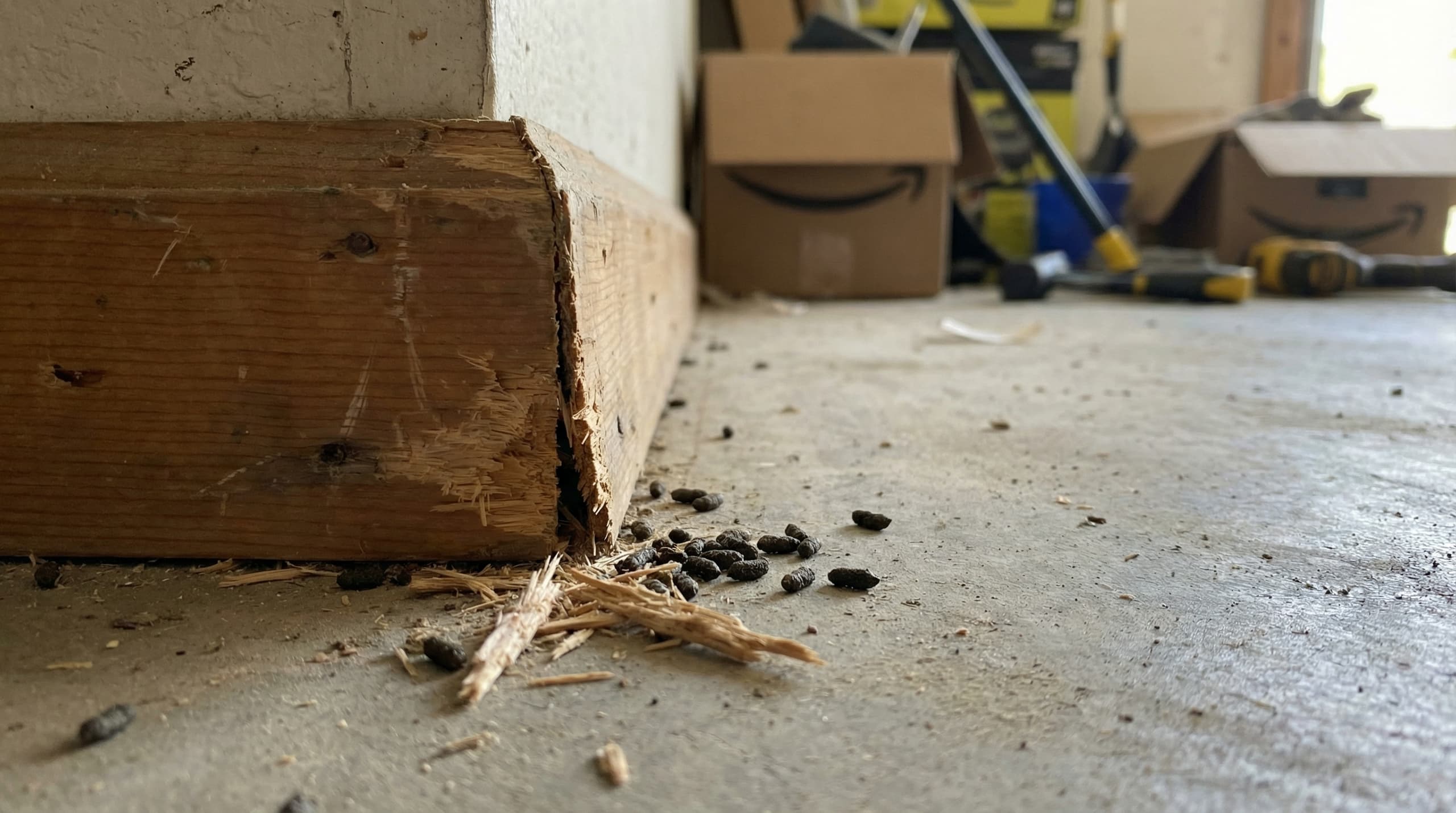
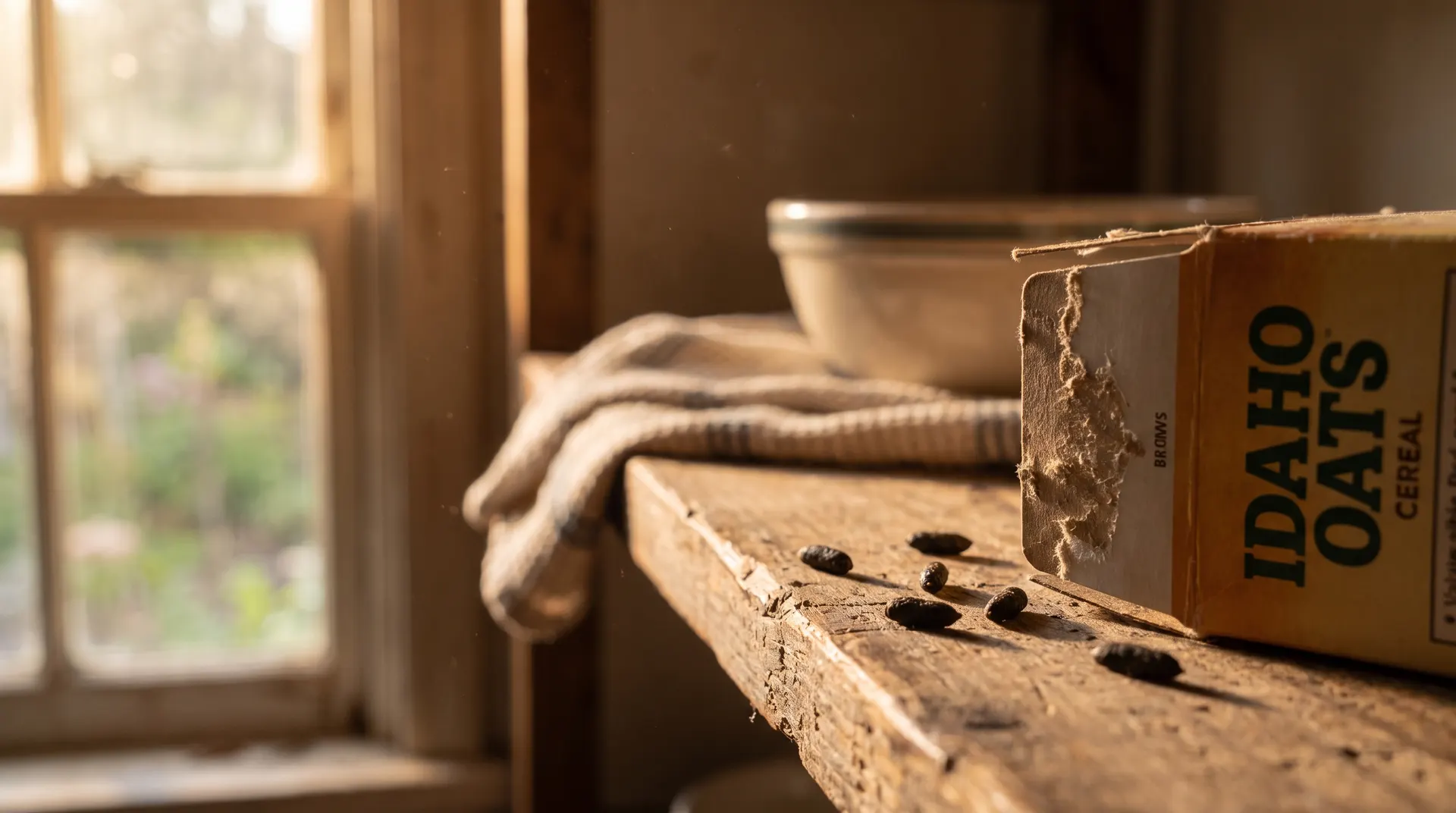
- Rice-grain droppings. About 1/4 inch long, dark brown or black, pointed on both ends. Under sinks, in the back of pantry shelves, and along baseboards.
- Gnaw marks on wires or food packaging. Twin scrape lines about 1 to 2 mm wide. Cereal boxes, dog food bags, cardboard, and the plastic sheathing on wires under the sink.
- Scratching in the walls at night. Between 9 PM and 2 AM. Most often above the ceiling, inside an interior wall, or behind the pantry.
- Greasy rub marks along baseboards. Dark smears where the wall meets the floor, especially at inside corners. Mice run the same path every night and leave body oil.
- Shredded nesting material. Balled-up insulation, paper, dryer lint, or fabric behind the fridge, under the range, or in a rarely-used closet.
- A musky, ammonia-like smell. Concentrated inside a lower kitchen cabinet, near a floor register, or in the pantry. Old droppings and urine build up fast in a warm space.
Mouse Droppings: What They Look Like and Where They Hide
Droppings are the single most reliable sign of mice. Mice defecate 50 to 75 times a day, so where they live, droppings pile up fast. A single fresh dropping is enough to confirm at least one mouse.
What to look for:
- Size and shape. House mouse droppings are 1/8 to 1/4 inch long, roughly rice-grain sized, with pointed ends. Deer mouse droppings look similar. Rat droppings are much larger (1/2 inch or bigger) and blunt.
- Color. Fresh droppings are dark brown or black and soft. Old droppings turn gray, dry out, and crumble when touched.
- Location. Back of pantry shelves, inside kitchen drawers, under sinks, along baseboards, on top of the fridge, in the garage near dog food, and in the back of hall closets.
- Trail patterns. Mice drop as they run. A line of droppings along a baseboard tells you the travel route. Follow it back to the entry point.
- Concentration spots. Where you see a cluster of 20 or more droppings in one place, that is a nest area. Look above it for gnaw marks or nesting material.
Gnaw Marks on Wires, Food Packaging, and Wood Trim
Mouse teeth never stop growing. A mouse has to chew constantly to keep its incisors filed down, which is why gnaw marks show up on things a mouse would never eat. The National Fire Protection Association attributes a meaningful share of unexplained house fires to rodent-chewed wiring, so this sign is not cosmetic.
Check these spots specifically:
- Wire sheathing. Under the sink, behind the fridge, and in the garage. Fresh chews show bright copper. Old chews look weathered.
- Cereal, cracker, and pet food packaging. Small holes with rough, torn edges. Look for a spray of food crumbs on the shelf below.
- Wood door bottoms and baseboards. Small scallop-shaped marks about the width of a match head. Common near the pedestrian door from garage to house.
- Corners of cardboard boxes in the garage or attic. Mice love cardboard for both chewing and nesting.
- Plastic storage bins. Mice can chew through thin plastic. Switch to metal or heavy-duty totes for anything stored long-term.
Scratching in the Walls Between 9 PM and 2 AM
If you hear scratching, scampering, or a soft thumping inside a wall or ceiling between about 9 PM and 2 AM, that is a mouse. Mice are nocturnal and most active in the first four to five hours after full dark. Fall and winter make the sound louder because mice move into insulated wall cavities where the noise carries.
Use the sound to locate the nest:
- Between the ceiling and the second floor usually means attic activity. Mice run the top plates of interior walls.
- Inside a first-floor wall often means they are traveling from crawlspace to attic, using the wall as a highway.
- Above the pantry or the range hood is a classic nest spot. Warm, dark, and food is right below.
- In the subfloor means crawlspace activity. Check crawlspace vents and access doors for gaps.
- Behind a bathroom vanity usually means plumbing penetrations under the sink are open. Mice climb the pipe up from the crawlspace.
Grease Trails, Rub Marks, and Nesting Material
Mice have oily fur and poor eyesight. They run the same path along walls and baseboards every single night, and that oil leaves a dark smear where the mouse touches the wall. Rub marks and nesting piles are two of the clearest signs of an active nest, not just a scout.
What to look for:
- Dark smudge lines along the bottom 1/2 inch of a baseboard. Most visible at inside corners and where the baseboard meets the floor. Wipe a spot with a paper towel; if it comes back dark, that is body oil.
- Greasy fingerprint-sized marks on the underside of a floor joist or a rafter. Common when you look up from a crawlspace or into the attic with a flashlight.
- Nesting material behind the fridge, under the range, or inside the back of a rarely-used cabinet. Shredded pink insulation, dryer lint, cotton, dog hair, and small strips of paper. Mice mix whatever soft material they can find.
- Shredded insulation in the attic or crawlspace. Small tunnels through the batting or holes chewed into blown insulation are a strong sign of a mature colony, not a single mouse.
- Cached food. Small piles of dry dog food or seeds in strange places (inside a boot, behind a piece of furniture, in a stored bag). Mice store food near the nest.
The Musky Ammonia Odor Most Homeowners Miss
An active mouse infestation smells like a mix of stale urine and a wet-dog musk. The odor is faint at first and easy to blame on a garbage can or a dog bed. Once it becomes obvious, the nest has usually been there for weeks.
Where to smell for it:
- Inside a lower kitchen cabinet, especially under the sink. Open the door, wait 30 seconds, and take a slow breath.
- At a floor register. Mice sometimes nest in ductwork, and the HVAC carries the smell into the room.
- In the pantry with the door closed for a day. A closed pantry concentrates the smell fast.
- In the laundry room behind the washer. The utility penetration for the water and gas lines is a common entry point in Boise homes.
- In the garage near the pedestrian door. Corner gaps at the garage door pull in mice, and the nest often ends up in stored boxes right next to the entry.
Why August Is When Boise Mice Start Scouting for Winter
Idaho mice do not wait until October to move indoors. They start scouting in mid-August, as soon as the foothill grasses lose their green and the ag fields around Kuna, Star, and Middleton get cut. The first mice inside your home in September are the ones that found their entry point in August.
Here is the seasonal pattern across the Treasure Valley:
- Mid-August: Deer mice come down from the Boise foothills as the grass dries. Scouts test entry points at night. Signs are subtle: a single dropping, one gnaw mark, no visible mouse.
- Early September: First indoor sightings. Nesting behavior starts. Signs multiply fast (droppings in more than one room, first scratching at night).
- October: Peak influx. Full nests forming. Homeowners call in a panic after hearing scratching for a week.
- November through February: Breeding season inside the walls. A single pair in October can produce 30 to 60 offspring by February.
- March: Emergence. Homeowners find droppings and damage after the mice come out of the walls to find water and new food.
What to Do Today: DIY Steps and When to Call a Pro
If you found even one sign on the walk tonight, do these three things this week. If you found three or more signs, skip step 1 and call for an inspection.
- Confirm and document. Take photos of every dropping cluster, every gnaw mark, and every rub line. This helps you track whether the problem is growing over the next two weeks.
- Cut off the food. Move any dry pet food into a metal or heavy-duty plastic bin with a locking lid. Move cereal, crackers, and grains into sealed containers. Do not leave dishes overnight.
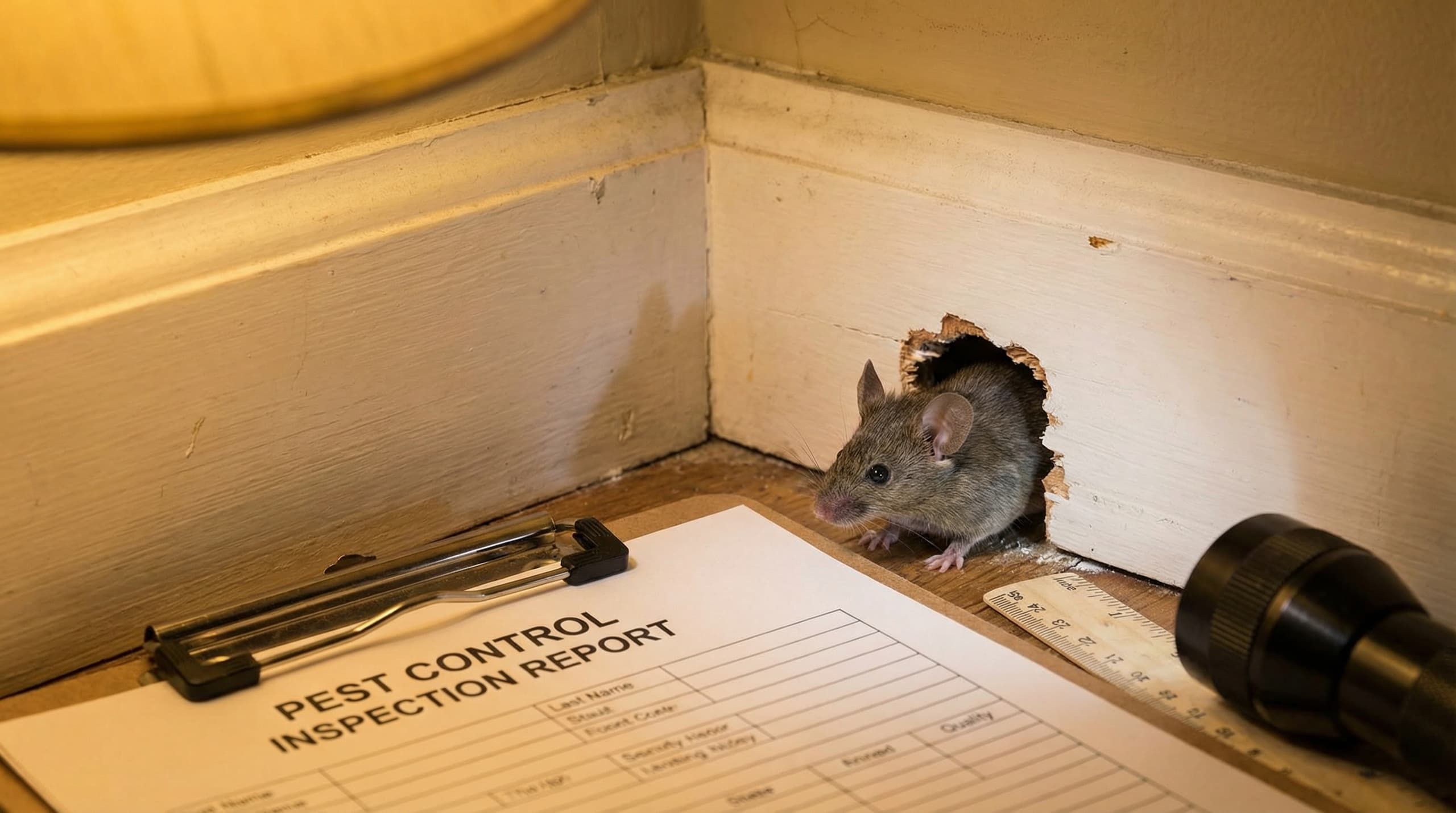
- Do the exterior walk. Every gap larger than 1/4 inch (a No. 2 pencil) is a mouse door. Our Boise rodent control guide covers the full entry-point checklist.
How Green Guard Handles Mice in Boise Homes
We've served 2,500+ Treasure Valley homes. Here is the straight process for mice, no upsell:
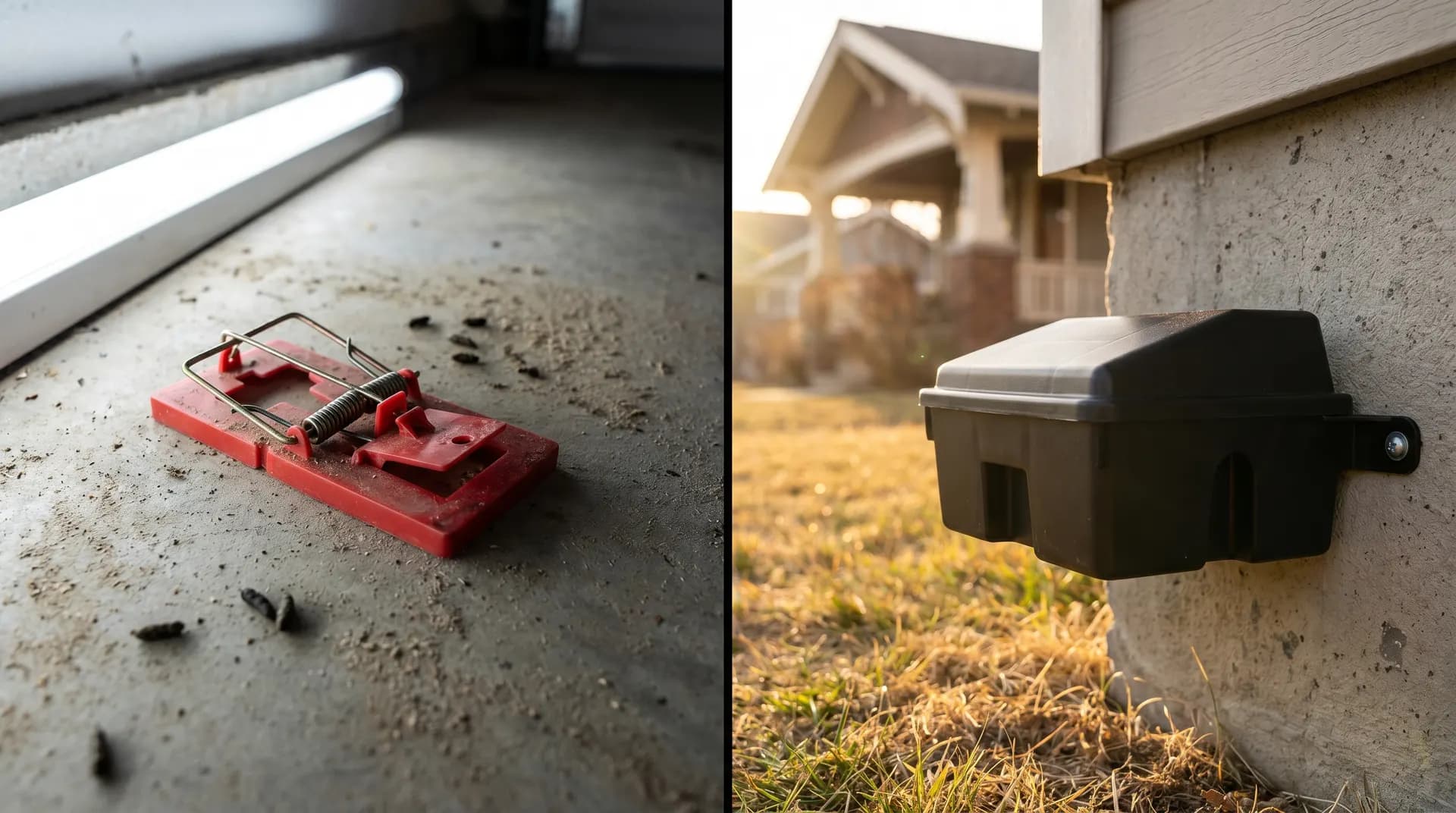
The first visit is a full property inspection: exterior entry points, interior activity check, and a treatment plan built around your home. That is the $49 initial service. It includes exterior barrier treatment, interior baseboard and crack-and-crevice treatment on request, and bait stations in the garage or at the crawl space entrance as needed. We don't treat attics, and our techs don't go into crawl spaces.
From there, you move to quarterly maintenance ($119 for homes up to 2,500 sq ft, $139 for 2,501 to 4,000, $159 for 4,001 to 5,500). Four visits a year keeps the perimeter treated, bait stations stocked, and any new activity caught early. Every subscription plan is backed by the free re-service guarantee. If mice come back between visits, we come back at no charge.
We use organic-based, hospital-grade products safe for kids and pets. No bug bombs, no foggers, no harsh chemicals. For a broader look at professional rodent work, see our complete Boise rodent control guide.
Caught One Sign? Call Before It Becomes Ten.
The August scouting window is the cheapest time to stop a mouse problem in Idaho. One sign now is a $49 first visit on a quarterly plan. Three signs in October can mean a much bigger problem, and sometimes wall and insulation repairs you'd need another contractor for.
Call (208) 297-7947 or request a same-day inspection online. We serve Boise, Meridian, Eagle, Nampa, Caldwell, Kuna, Star, and the rest of the Treasure Valley. Same-day service is often available. For the prevention side of the playbook, browse our related pieces on rodent control in Boise, including winter rodent problems and the fall prep sections of the Idaho pest calendar.
Frequently Asked Questions
What are the early signs that my house might have mice?
Quick answerThe earliest signs are usually rice-grain droppings under a sink or in the back of a pantry, small gnaw marks on food packaging, and scratching in the walls between 9 PM and 2 AM.
Rub marks along baseboards and shredded nesting material show up next. The first signs usually show up well before you see the mouse itself.
What is the 5-day mouse rule?
Quick answerThe 5-day mouse rule is a rough guideline that a single mouse becomes a full nest within about five days once it finds shelter and food.
It is not a scientific rule, but it captures how fast the problem escalates. A female house mouse can produce a litter of 5 to 12 pups every three weeks, so a five-day delay in acting can double the population you eventually have to remove.
Will mice go near sleeping humans?
Quick answerYes, mice will run within a few feet of a sleeping person, especially in a bedroom that has food crumbs or an open trash can.
They avoid direct contact and will not usually climb onto the bed, but they treat quiet, still bodies as part of the room. The good news is that mice do not bite sleeping people the way rats occasionally do. If you hear scratching in a bedroom wall at night, that is scouting behavior.
Will mice go away if I just keep my house clean?
Quick answerNo.
Cleaning helps by removing food cues, but it does not solve an active infestation. Mice can live on 3 grams of food a day (about a teaspoon of crumbs) and will nest in the cleanest home if entry points are open. Sealing 1/4-inch gaps and setting traps or bait stations is the only reliable way to stop them. Deep cleaning is a good complement, not a replacement.
How quickly can Green Guard treat mice in my Boise home?
Quick answerSame-day service is often available.
We cover Boise, Meridian, Eagle, Nampa, Caldwell, Kuna, Star, and the surrounding Treasure Valley. The $49 initial service includes a full property inspection, copper mesh in the obvious gaps, exterior barrier treatment, and bait station placement as needed. Call (208) 297-7947 to schedule.