Quick answer
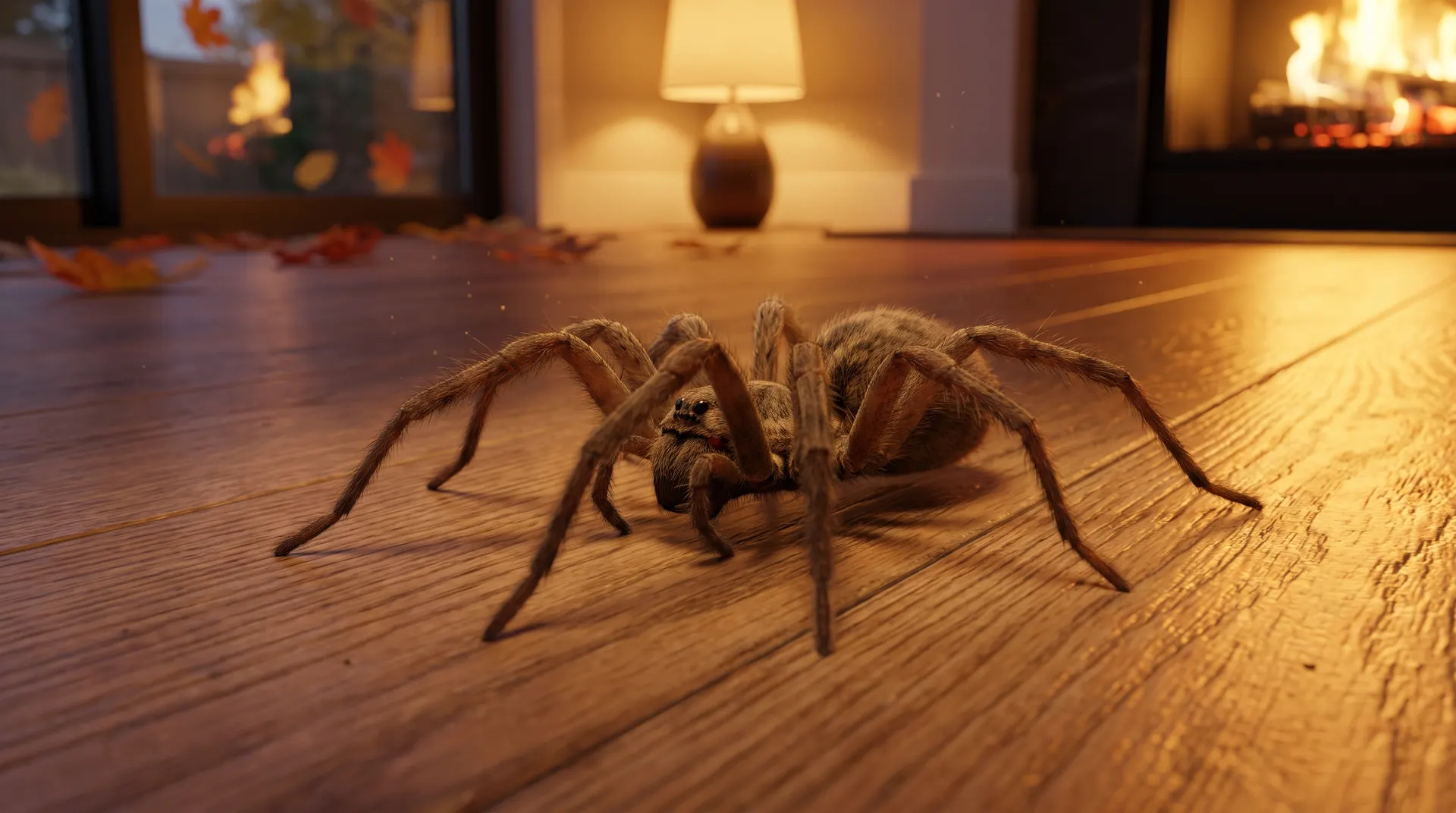
Seeing spiders in your house in winter in Boise is normal. Spiders don't hibernate like bears. They slow down in quiet, sheltered spots like garages, basements, closets and window wells, and egg sacs wait there for spring. A warm spell or a running furnace wakes them up for a while. Clear clutter, vacuum webs and egg sacs, set sticky monitors, and call Green Guard if you keep finding them in living spaces.
Key Takeaways
- A few spiders indoors from late November through February is normal in the Treasure Valley. Spiders in bedrooms every night is not.
- Spiders overwinter as slow adults, young spiders and egg sacs tucked into garages, basements, closets and window wells.
- Every egg sac you vacuum up this winter is one less batch of spiderlings in spring.
- Warm spells and furnace heat wake spiders up, which is why you can see one crossing the floor in January.
- Sticky monitors along basement and garage walls tell you which spiders you have and where they travel.
In this article
Where Do Spiders Go in an Idaho Winter?
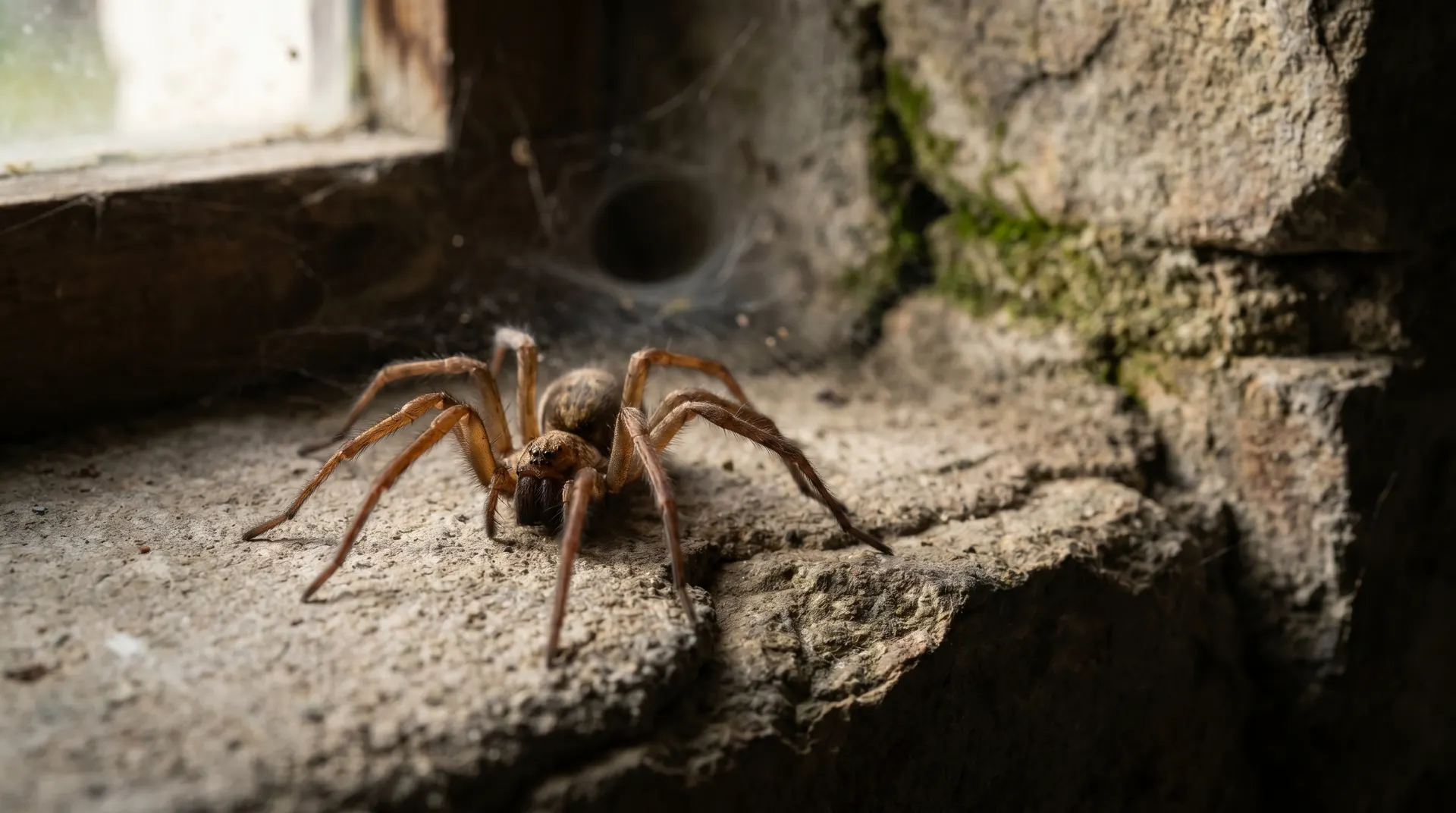
In an Idaho winter, spiders go still in the most sheltered spot they can find. That's often your garage, basement, a closet or a window well. If you're seeing spiders in your house in winter in Boise, you're looking at spiders that settled in during fall and are now waiting out the cold.
Spiders don't truly hibernate. Their bodies slow way down when it's cold, and they speed back up when it warms. So a spider that hasn't moved for weeks can suddenly walk across the laundry room floor.
The fall wave comes from males roaming to find mates, and we cover that in why spiders invade Boise homes every fall. This guide picks up where that one ends, from late November through February.
Where Do Spiders Hide in Your House in Winter?
Spiders hide where it's dark, still and rarely touched. In winter, that list gets shorter, so they bunch up in the same few places. Check these spots first.
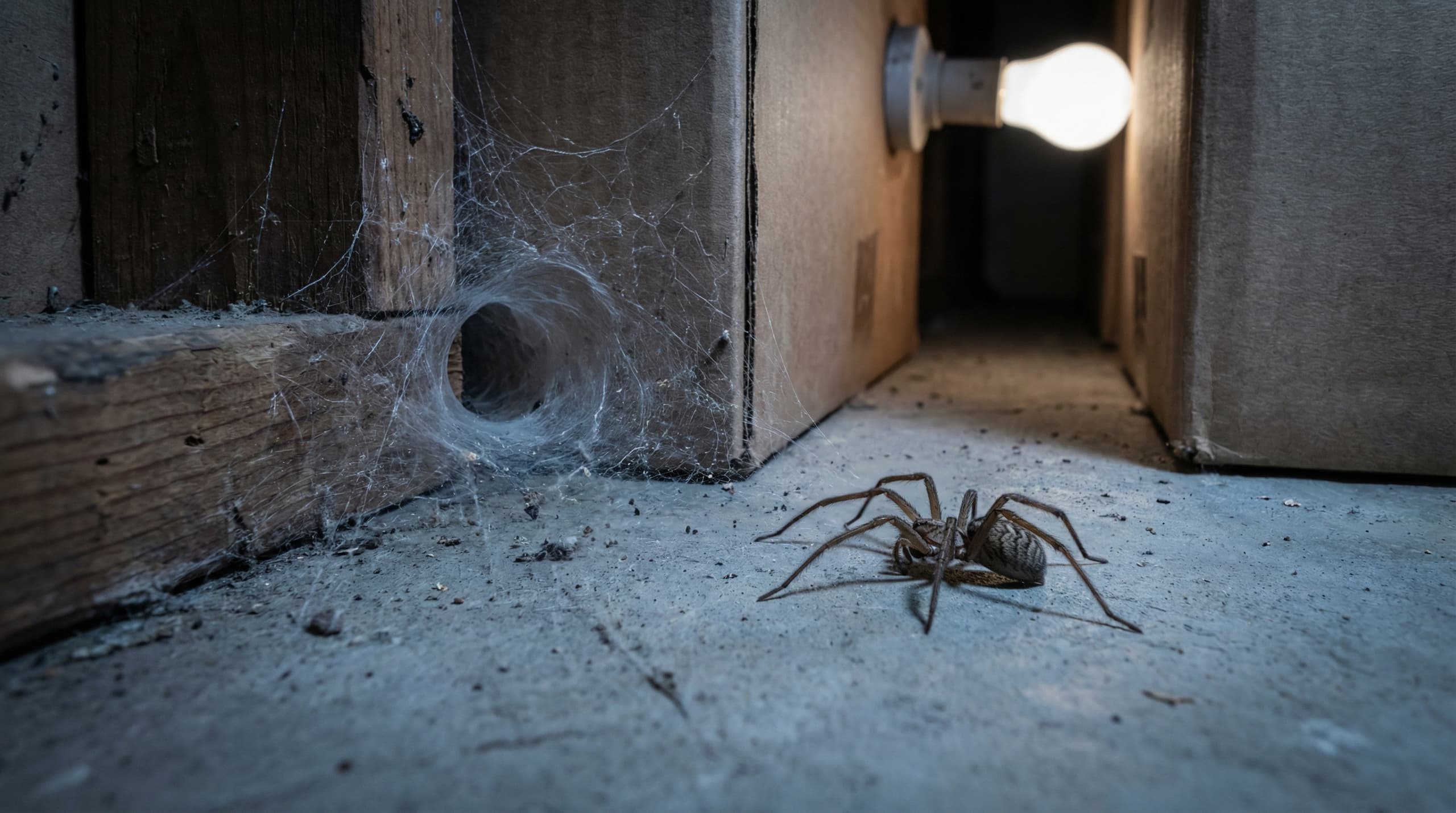
- The garage. It stays above outdoor temperatures and nobody cleans the corners in January. Look along the bottom of the walls and behind shelving.
- Basements and the area around the crawl space entrance, especially the corners where the floor meets the foundation.
- Closets and storage rooms. Coats you haven't worn in months and shoes on the floor make good cover.
- Behind and under stored boxes. Cardboard boxes of holiday decorations are a favorite, so check them before you carry them upstairs.
- Window wells. Snow and leaves pile up, and the gap around the window stays a little warmer than the yard.
- Near heat sources like the furnace, water heater and dryer vent, where it's warm and a few insects collect.
- Firewood stacked in the garage or by the back door. Spiders ride inside on the logs.
Which Spiders Are You Seeing in a Boise Winter?
In a Boise winter you'll mostly see common house spiders, black widows and young hobo spiders. Each one spends the cold months a little differently.
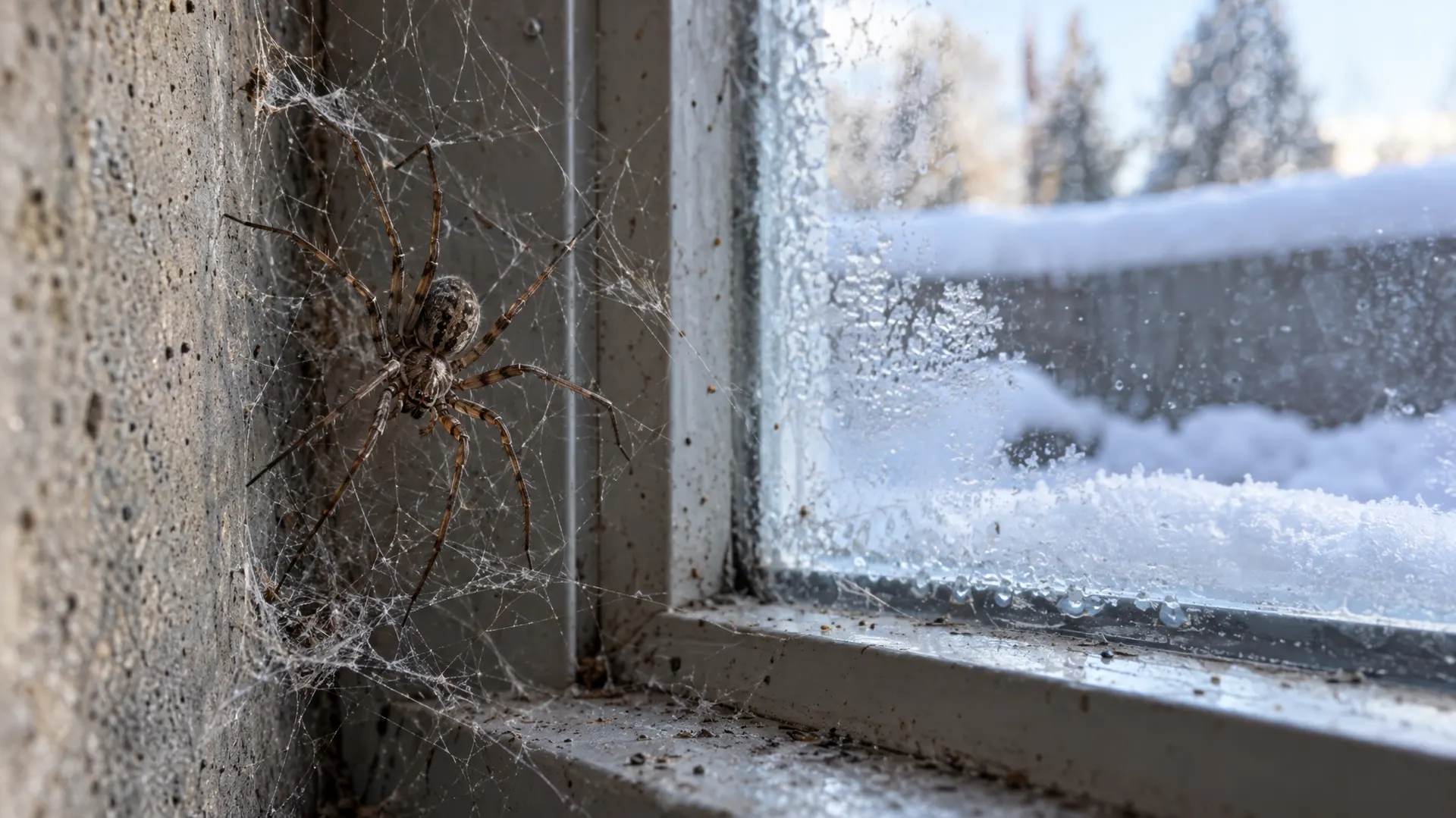
Common house spiders and cellar spiders can live their whole lives indoors. They keep their messy webs in basement corners and behind furniture all winter, so they're the ones you see most.
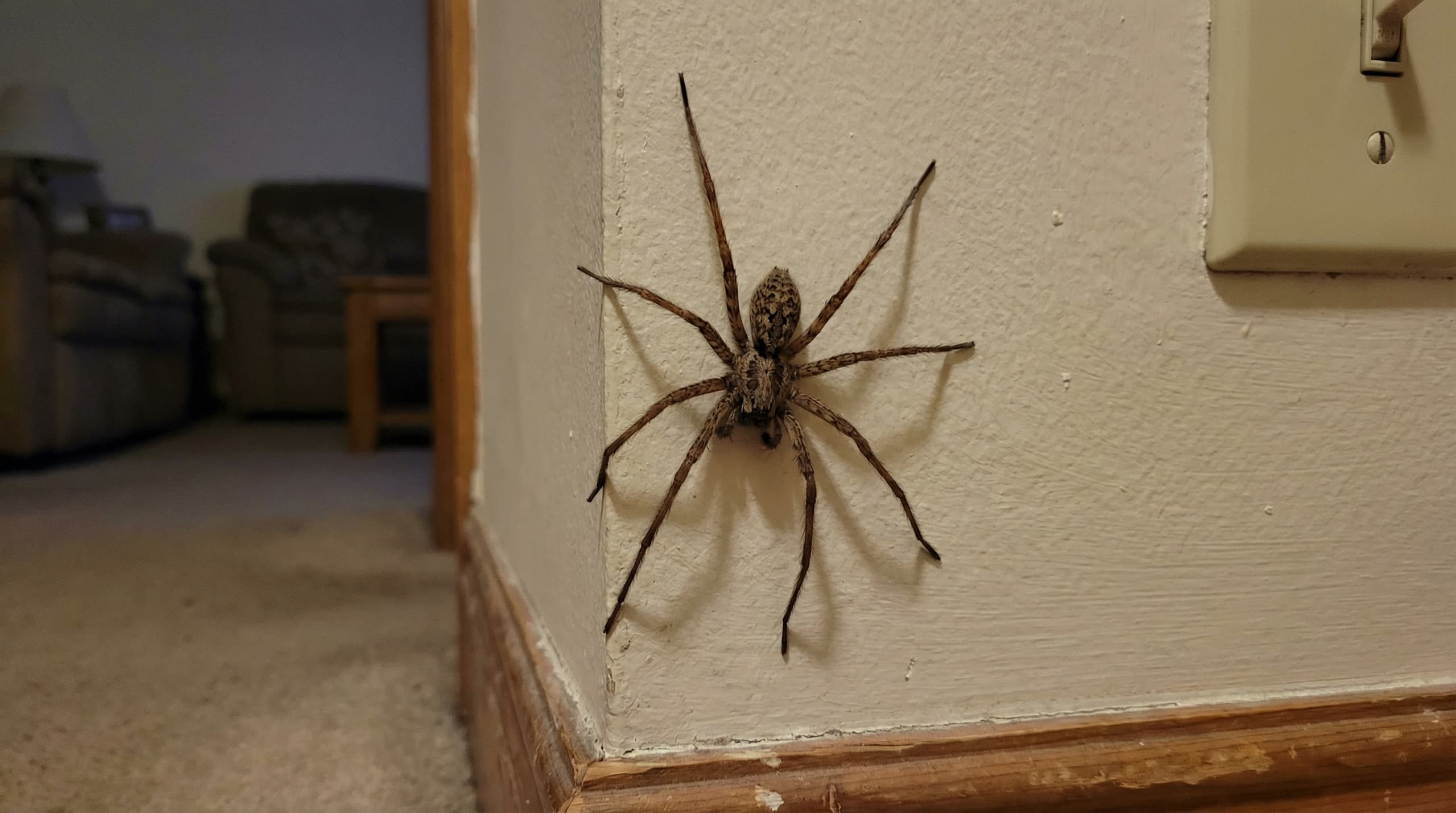
Hobo spiders work on a different schedule. Females lay egg sacs in fall, and most adults die off by late fall. What's left over winter is egg sacs and young spiders tucked low in basements, window wells and garages. Our hobo spider guide for Idaho covers how to identify them.
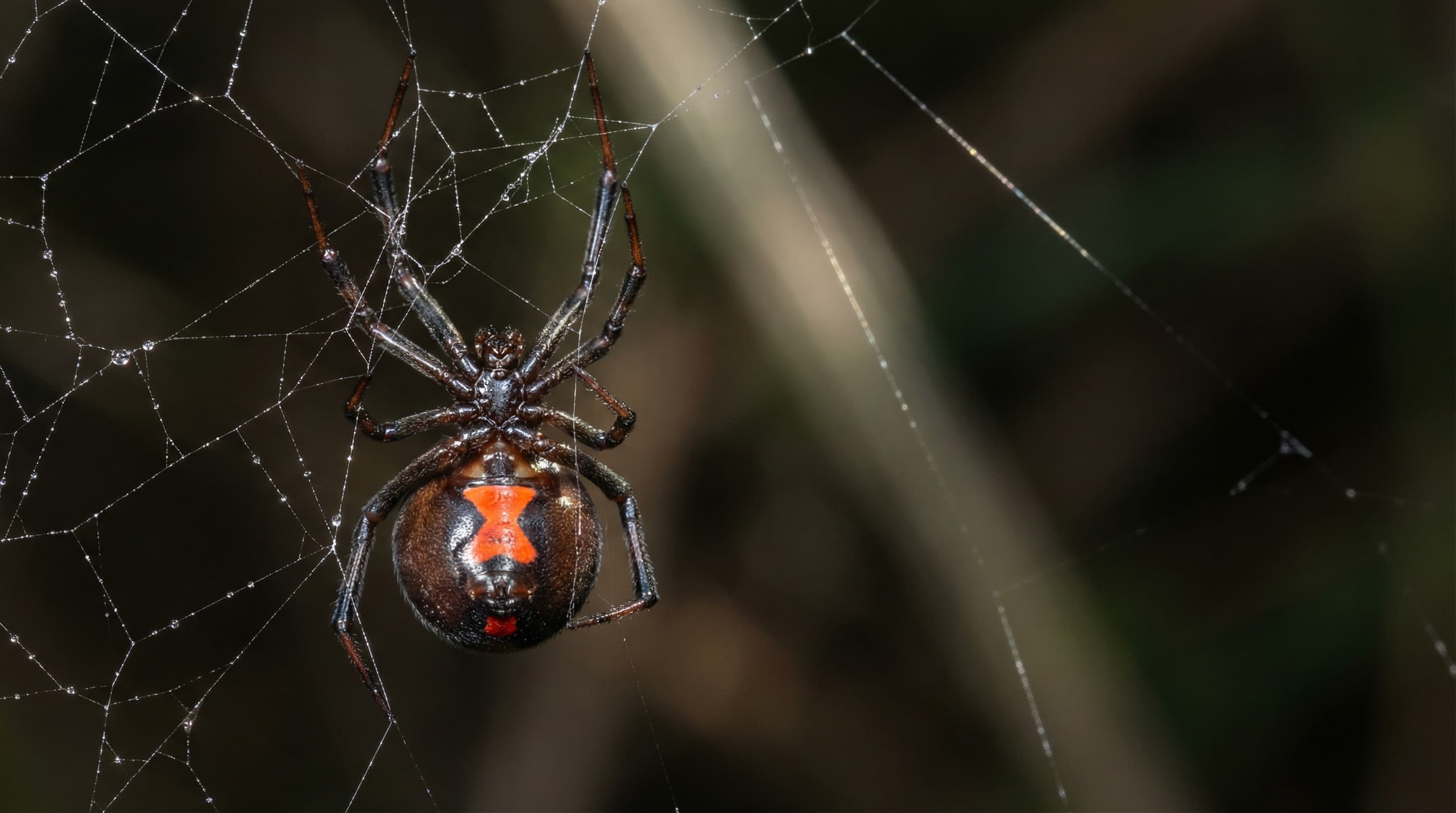
Black widows overwinter as adults in quiet, cluttered spots like garage corners, woodpiles and under patio furniture stored for the season. They don't wander much, so a widow you find in January has likely been there since fall.
Handle them with care, wear gloves when you move stored items, and read our black widow safety guide. Big wolf spiders mostly stay outside under leaf litter and rocks, though one can turn up in a basement.
Is It Normal to See Spiders in Your House in Winter?
Yes, seeing an occasional spider in winter is normal for Treasure Valley homes. What matters is where you see them and how often. Here's how to tell normal from a sign of something bigger.
- Normal: a spider in the garage or basement now and then, a few old webs in a corner, or one spider out on a warm afternoon.
- Worth a closer look: fresh webs that come back a few days after you clear them. That means spiders are living there and feeding.
- A bigger problem: spiders in bedrooms or living areas most nights, several egg sacs in one area, or black widows where kids or pets play.
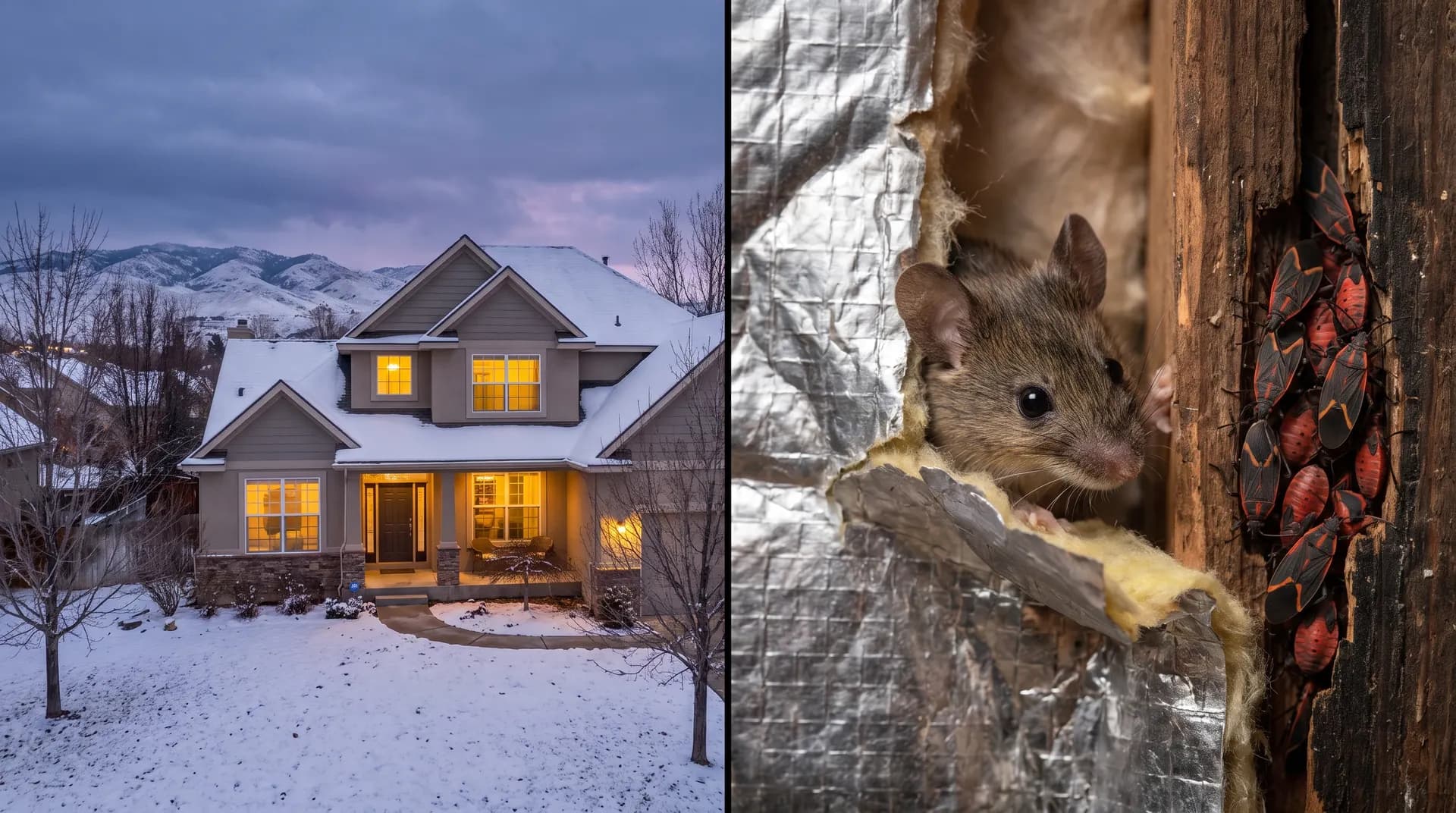
- Lots of spiders can also mean lots of insects for them to eat. If you're seeing crickets, box elder bugs or flies indoors too, the spiders are following that food.
What Do Spider Egg Sacs Look Like, and What Does Overwintering Mean?
Spider egg sacs are small silk pouches, usually white, cream or tan, tucked into a web or stuck under an object. Overwintering means the eggs sit there all winter and hatch when the weather warms in spring.
Black widow egg sacs are round and papery, about the size of a pea or a bit bigger, and hang inside the tangled web. Hobo spider sacs are flatter and often stuck to the underside of boxes, boards or shelves, sometimes covered in bits of dirt.
Common house spider sacs are brownish and shaped like a teardrop. Cellar spiders don't make a separate sac at all. The female carries a loose bundle of eggs in her jaws.
In practice, overwintering means the spiders you'll see next spring are already in your house right now, as eggs. One sac can hold a lot of spiderlings. That's why winter is the best time to find and remove them.
Why Does a Warm Spell Bring Spiders Out in Winter?
Spiders are cold-blooded, so warmth switches them back on. When Boise gets a mild stretch between cold snaps, or the furnace keeps the basement toasty for days, spiders in garages and basements start moving again.
A warm spell also wakes up the flies, box elder bugs and other insects hiding in your walls and attic edges. Spiders come out to hunt them. So if you see a burst of spiders and bugs on a warm January day, they didn't just come in. They were already inside, waiting.
For a bigger look at which bugs ride out the cold and which ones die off, see do pests die in an Idaho winter.
What Should You Do About Spiders in Your House This Winter?
Take away their hiding spots, remove the webs and egg sacs, and watch where they travel. Winter is a slow season for spiders, which makes it a good time to get ahead of spring.
- Cut the clutter. Get boxes off the basement and garage floor, and move what you can into lidded plastic bins.
- Vacuum webs and egg sacs in corners, closets, behind furniture and around window frames. Go slow along baseboards.
- Close up the gaps you missed in fall. A new door sweep, fresh weatherstripping or a bead of caulk around a pipe is easy indoor work on a cold weekend.
- Set sticky monitors along basement and garage walls and near the furnace. Check them every week or two to see where spiders show up.
- Shake out holiday decoration boxes in the garage before you bring them inside, and again when you pack them away.
- Bring in only the firewood you'll burn that day, and knock each log against the ground first.
- Clear leaves and snow out of window wells when you can.
When Should You Call a Pro About Winter Spiders in Boise?
Call a pro when spiders keep showing up in living spaces, fresh webs return after you clean, or you find black widows near where your family spends time. A few garage spiders don't need a service visit. A steady stream does.
Green Guard's spider control starts with an exterior barrier treatment along your foundation and around doors and windows, plus web sweeping at the eaves. If you'd like, our technicians also treat inside along baseboards and in cracks where spiders travel. We use organic-based products that are safe for kids and pets once dry.
Green Guard is locally owned in Boise, with 4.9 stars across 185 Google reviews, and we've served 2,500+ Treasure Valley families. Start with our $49 first service on a quarterly or bimonthly plan. Pests come back between visits? So do we. Free.
Call (208) 297-7947 and we'll help you get spiders out of your home before the spring hatch.
Frequently Asked Questions
Is it normal to see spiders in my house in winter?
Quick answerYes.
Spiders spend Idaho winters in sheltered spots like garages, basements and closets, and a warm day or a running furnace can bring them out. Spiders in bedrooms most nights, or webs that come right back after you clean, point to a bigger population.
Do spiders hibernate in winter in Idaho?
Quick answerNot exactly.
Spiders slow down in the cold and stay put in protected corners, but they never fully shut off. Many hobo spider adults die in late fall and leave egg sacs behind, while house spiders and black widows ride out the winter as adults.
Should I remove spider egg sacs I find in winter?
Quick answerYes.
Vacuum them up and take the bag or canister contents to the outside trash right away. Every sac you remove in winter is a batch of spiderlings that won't hatch in your house in spring.
How much does spider control cost in Boise?
Quick answerGreen Guard starts with a $49 first service on a quarterly or bimonthly plan.
Quarterly visits after that start at $119 for homes up to 2,500 sq ft and go up with home size. Call (208) 297-7947 and we'll help keep spiders out of your home this winter.