Quick answer
Some Idaho pests die in winter. Most do not. Wasps and yellow jacket workers die at the first hard frost (mid-to-late October in the Treasure Valley), and only fertilized queens survive. Ants, spiders, box elder bugs, and earwigs do not die. They go dormant underground, in wall voids, or as eggs. Mice never die off at all. They breed year-round and aggressively move indoors once nighttime lows crack 50°F. That is why quarterly pest control still matters through Idaho winters.
Key Takeaways
- Wasps and yellow jacket workers die at the first hard frost (October 10 to October 25 in Boise). Only fertilized queens survive.
- Ants do not die. They go dormant underground below the frost line and may reappear on warm 45°F January days.
- Mice never die off. They breed year-round and start moving indoors when overnight lows hit 50°F, which happens in late August in the foothills.
- Most spiders overwinter as eggs in sheltered spots. Some hobo and wolf spider adults survive inside wall voids and garages.
- Year-round pest control matters in Idaho because the pests that survive winter (mice, ants, spiders) are the ones causing damage inside your walls.
In this article

Do Pests Die in Idaho Winter? The Short Answer
Some Idaho pests die in winter. Most do not. Wasps, yellow jacket workers, and adult mosquitoes die at the first hard frost, which usually hits the Treasure Valley between October 10 and October 25. But ants, spiders, box elder bugs, and earwigs do not die at all. They go dormant, hibernate as eggs, or move into wall voids and attics. Mice never die off in winter. They breed year-round and aggressively seek indoor shelter once nighttime lows crack 50°F.
Idaho winters are cold enough (Boise averages 14 nights below 20°F) to knock down visible insect activity. That is why your yard looks bug-free in January. It is not why your house is.
Here is the pest-by-pest breakdown so you know what you're actually dealing with from November through March.
The 3 Ways Idaho Pests Survive Winter
Every pest in the Treasure Valley uses one of three strategies to get through winter. Once you know the strategy, you know what to expect.
- Die off (adults) and restart from eggs or queens. Wasps, yellow jackets, mosquitoes, and many spiders take this path. Adults freeze, but the species survives through a small number of fertilized queens or protected egg sacs.
- Go dormant in a protected spot. Ants drop below the frost line underground and slow their metabolism to almost nothing. Box elder bugs, stink bugs, and adult hobo spiders find wall voids, attic corners, and garage cracks. They are alive. They just are not moving much.
- Stay fully active and move indoors. Mice, voles, and rats do not slow down at all. Warm-blooded rodents breed through winter, and Idaho's cold is what pushes them into your house. This is the strategy homeowners underestimate the most.
Do Wasps Die in Idaho Winter?
Yes. Wasp and yellow jacket workers die after the first hard frost. In the Treasure Valley that usually happens between October 10 and October 25, once overnight lows drop below 28°F for several hours in a row. Workers freeze within 3 to 5 days. The old queen dies with them.
The only wasps that survive Idaho winter are next year's fertilized queens. Each mature colony produces 20 to 100 new queens in September. They mate, fatten up, and fly off alone to overwinter under loose tree bark, inside log piles, and in the corners of attics and soffits.
Come late March, those queens wake up and start the whole cycle over. That's why an old paper nest hanging under your eave in December is not a threat. Wasps do not reuse nests. But a queen sleeping inside your attic is next April's problem. Our wasp season timeline for Boise covers the full month-by-month cycle.
Do Ants Die in Idaho Winter?
No. Ants do not die in winter. Colonies drop below the frost line (about 20 to 30 inches deep in the Treasure Valley), huddle around the queen, and slow their metabolism to a crawl. They stop foraging. They stop breeding. But they do not die.
The colony is alive under your foundation, under your patio pavers, and along your driveway all winter. Odorous house ants, pavement ants, and carpenter ants all use the same dormancy strategy. Carpenter ants sometimes overwinter inside the wood they've already tunneled through, which means they may already be inside your walls right now.
Here is the part homeowners miss. On a warm 45°F January day (Boise gets several of these each winter), foraging workers from a wall-void carpenter ant colony can wake up and scout your kitchen. If you see a single ant walking across your counter in January, that's a colony living inside your home, not one that came in from outside.
Do Mice Die in Idaho Winter? (Short Answer: Never)
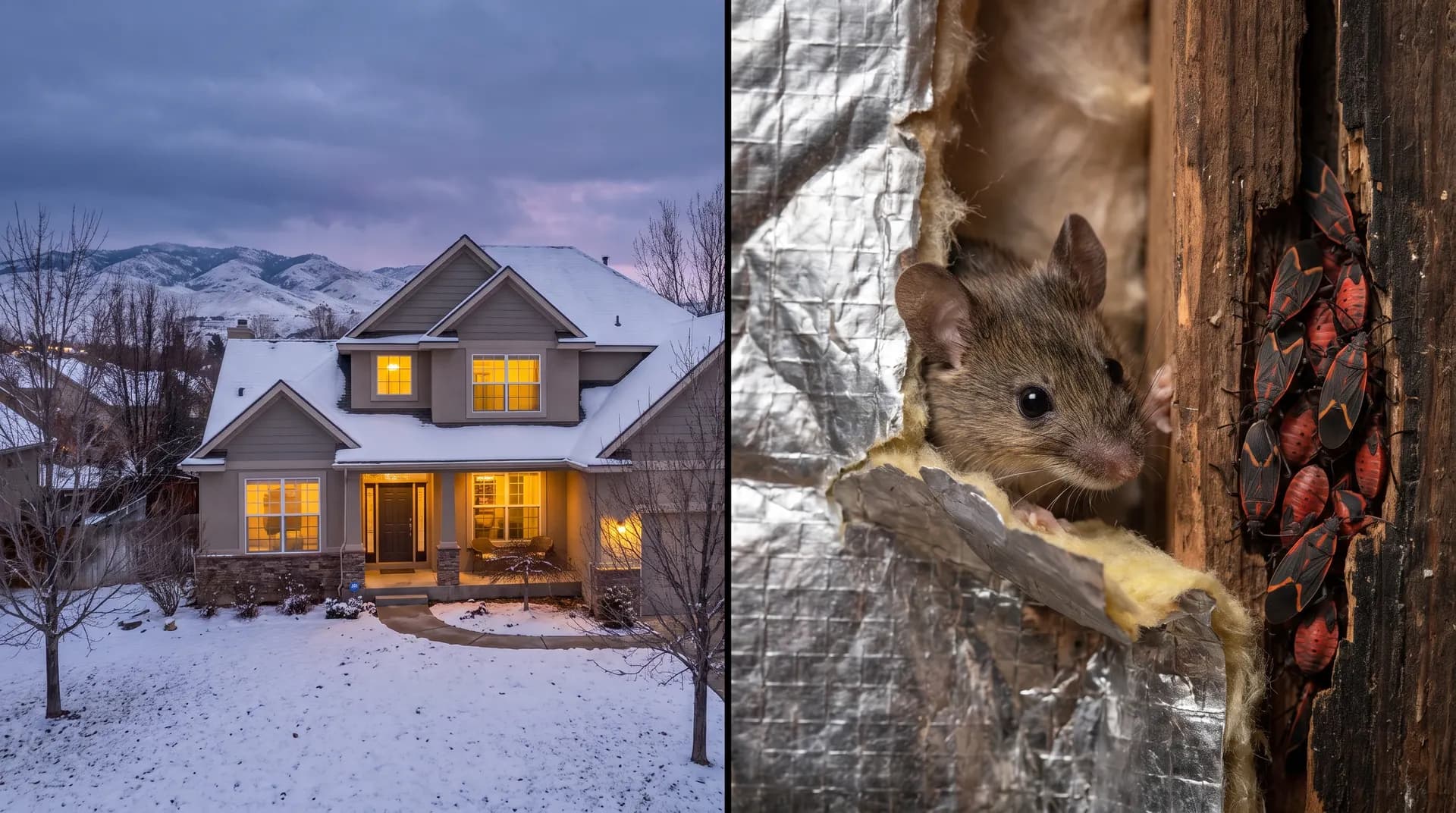
No. Mice never die off in winter. They breed year-round. Deer mice and house mice are warm-blooded, and Idaho winter is exactly what makes them your problem. Once overnight lows hit 50°F (which happens in the Boise foothills in late August and in the valley by mid-September), mice start actively hunting for indoor shelter.
A single female deer mouse can produce 5 to 10 litters of 3 to 8 pups per year. Give her a heated Boise attic and unlimited food (spilled pet food, birdseed, pantry crumbs), and one pair becomes 30 to 60 mice by March. That is not an exaggeration. That is deer mouse math.
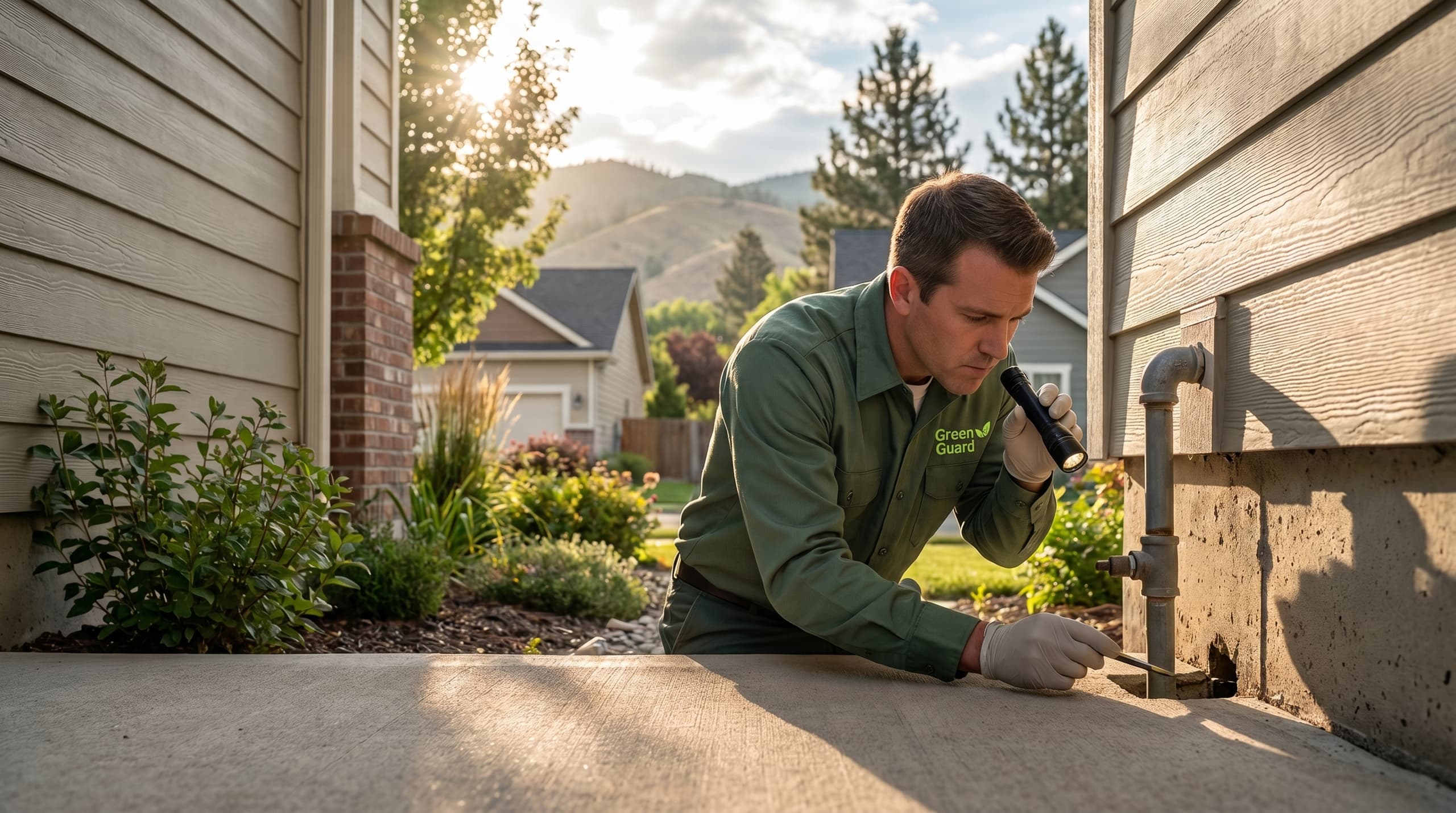
Mice can squeeze through openings the size of a dime. Common Idaho entry points include gaps around gas line penetrations, dryer vents, garage door corners, and the seam where the foundation meets the sill plate. Our signs of mice in the house guide walks through how to spot them early, and our Boise rodent control guide covers the entry-point checklist.
Do Spiders Die in Idaho Winter?
Most spider adults die in winter, but the species survives through egg sacs. A female hobo spider or wolf spider lays 50 to 100 eggs in a protected silk sac in September or October, tucks it into a garage corner or under a fence board, and dies. The eggs overwinter safely and hatch in March or April.
Some adult spiders do survive Idaho winter, and they are the ones you actually see. Hobo spiders, wolf spiders, and cellar spiders that make it indoors before the first freeze often live through winter in wall voids, basements, and unheated garages. They slow way down, but they do not die. On a warm winter day one might wander across your basement floor.
The species that migrates indoors most aggressively in Idaho is the hobo spider (September through October). Once inside, they stay. Our fall spider invasion guide covers exactly when this happens, and our hobo spider identification post shows what to look for.
Do Box Elder Bugs Die in Idaho Winter?
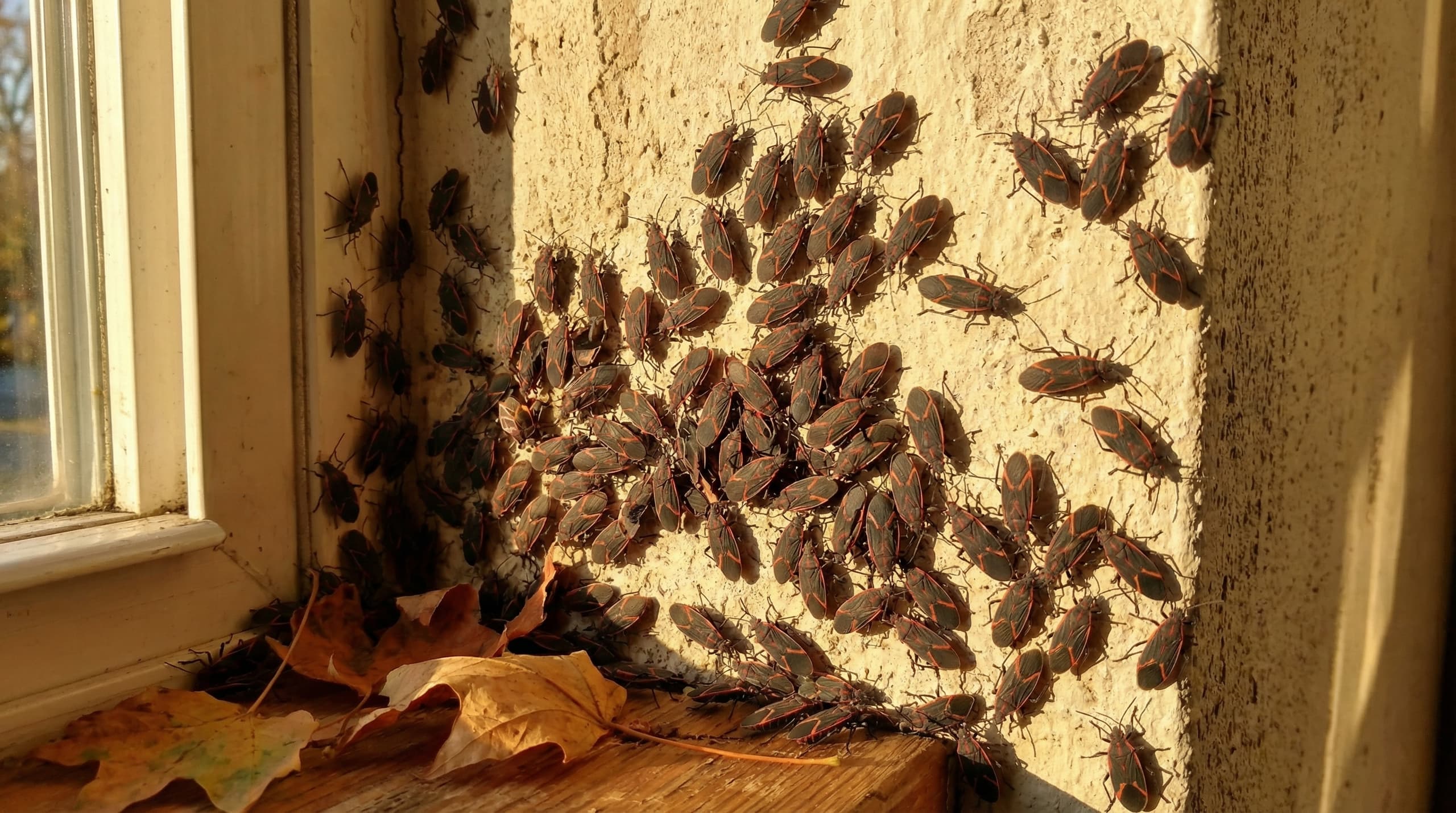
No. Box elder bugs do not die in winter. Adults overwinter inside your walls. Starting in mid-September, thousands of box elder bugs cluster on the sunny south and west sides of Boise homes. Then they squeeze into wall voids, attic insulation, and window frames to wait out the cold. They can survive freezing temperatures for short stretches, but they much prefer your warm insulation.
You'll see them again on the first 60°F day in February or early March. They wake up, get disoriented, and end up crawling on the inside of your windows trying to find their way back out. It's not an infestation. It's the same bugs that moved in last October waking up.
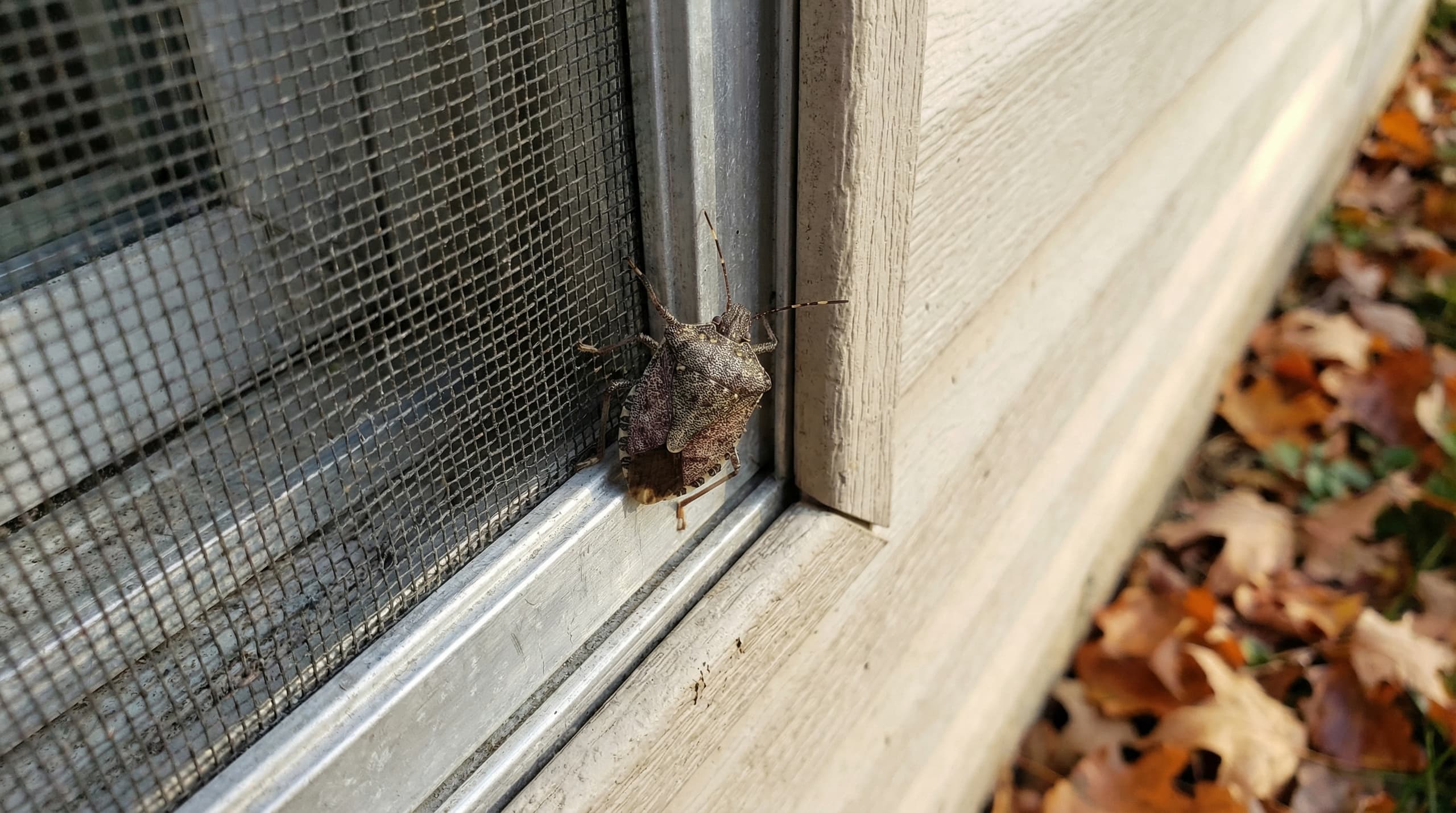
Stink bugs (specifically the brown marmorated stink bug, now confirmed in the Treasure Valley) do the exact same thing. See our box elder bug guide and Idaho stink bug post for full ID and sealing tips.
What About Earwigs, Yellow Jackets, and Everything Else?
The rest of the common Treasure Valley pest list splits along the same three strategies. Here is the quick reference:
- Earwigs. Adults die at hard frost. The next generation overwinters as eggs, laid 2 to 6 inches deep in Boise soil. Hatch in April.
- Yellow jackets. Same as wasps. Workers freeze at first hard frost. Only newly mated queens survive, hidden under bark or in attic corners.
- Mosquitoes. Most Idaho mosquito adults die at first frost. Some Culex species overwinter as adults in basements, sheds, and culverts along the Boise River. Eggs of other species (like Aedes) survive freezing.
- Crickets. House crickets and field crickets die at frost. Eggs overwinter in Boise soil and hatch in May.
- Silverfish. Adults are alive all winter, hidden in bathrooms, basements, and cardboard storage. They stay active year-round in heated homes.
- Cockroaches (rare in Boise). German cockroaches survive winter by staying indoors year-round. Not affected by cold.
- Voles. Same as mice. Active all winter. They tunnel under snow ("subnivean space") and shred lawns and root systems from underneath.
- Fleas and ticks. Adults die back sharply, but eggs, larvae, and pupae survive in leaf litter, carpet, and pet bedding. Warm homes keep flea populations alive year-round.
Why Year-Round Pest Control Matters Even in Idaho Winter
Here is the take-home. The pests that die at first frost (wasps, mosquitoes, adult crickets) are not the ones costing you money in winter. The pests that survive are.
Mice breed through the coldest months. Ants sit dormant under your foundation and inside your walls. Box elder bugs and stink bugs sleep in your insulation. Silverfish keep eating your cardboard storage. Adult hobo spiders stay in your basement. Every one of them is either doing damage or setting up for a spring explosion.
That's why quarterly pest control does not shut down in December. A November treatment locks in a barrier for the winter mouse migration. A February treatment hits ant colonies while they're still slow, before the spring surge starts in March. Skipping winter service isn't saving money. It's paying more in April.
If You're Dealing With Winter Pests Right Now, Call Us
A mouse in your ceiling in November. An ant on your counter in January. A stink bug on your window in February. None of that is normal, and every one of them is a species that survived winter for a reason (usually because it moved into your house).
Green Guard's $49 initial service for winter pests includes:
- Full interior and exterior inspection with pest ID
- Locked bait stations and copper mesh in obvious rodent gaps
- Interior baseboard treatment for ants, spiders, and silverfish
- Exterior perimeter treatment (still effective in winter for slow-moving overwinterers)
- Same-day scheduling often available in Boise, Meridian, Eagle, Nampa, Kuna, and Star
- Free re-service guarantee. If pests come back between visits, we come back free.
Frequently Asked Questions
What time of year do bugs start to die in Idaho?
Quick answerMost flying insect adults (wasps, yellow jackets, adult mosquitoes, crickets) die within 3 to 5 days of the first hard frost, which typically hits the Treasure Valley between October 10 and October 25.
Ground insects and rodents do not die at all. Ants go dormant underground, mice stay active and breed through winter, and box elder bugs move into wall voids to wait out the cold.
Do ants come back in the spring if they didn't die in winter?
Quick answerYes.
Ant colonies in the Treasure Valley go dormant below the frost line all winter and then scale up aggressively starting in mid-March. A colony you saw last September is the same colony you'll see next April. This is why treating in late winter (February) is one of the highest-impact times to hit ants, before workers wake up and start expanding.
Do I need pest control in winter in Boise?
Quick answerYes, for two reasons.
First, mice, voles, and rats stay fully active through Idaho winter and aggressively move indoors when nighttime lows drop below 50°F. Second, quarterly treatments in November and February hit overwintering ants, spiders, and box elder bugs while they're slow, which prevents a spring surge. Skipping winter service costs more in April than it saves in January.
Where do bugs go in winter in Idaho?
Quick answerThree places.
Underground below the frost line (ants, some beetles), inside wall voids and attic insulation (box elder bugs, stink bugs, adult hobo spiders, overwintering wasp queens), or as protected egg sacs in soil and sheltered corners (earwigs, most spider species, crickets). Warm-blooded rodents don't hide at all. They move into your house.
Why do I still see spiders in my basement in January?
Quick answerSome spider species (especially hobo spiders, wolf spiders, and cellar spiders) survive Idaho winter as adults by moving indoors in September and October.
They slow way down but stay alive in wall voids, basements, and unheated garages all winter. Seeing one on a January basement floor means it moved in last fall and never left.
What is the hardest pest to get rid of in the Treasure Valley in winter?
Quick answerMice.
Deer mice and house mice breed year-round, squeeze through openings the size of a dime, and reproduce fast enough that a single pair becomes 30 to 60 mice by March. The hardest part is not killing the ones inside. It's finding and sealing every entry point before more come in. Our techs set locked bait stations and plug obvious gaps with copper mesh. Sealing the rest, yourself or with a handyman, is what makes rodent control stick.