Quick answer
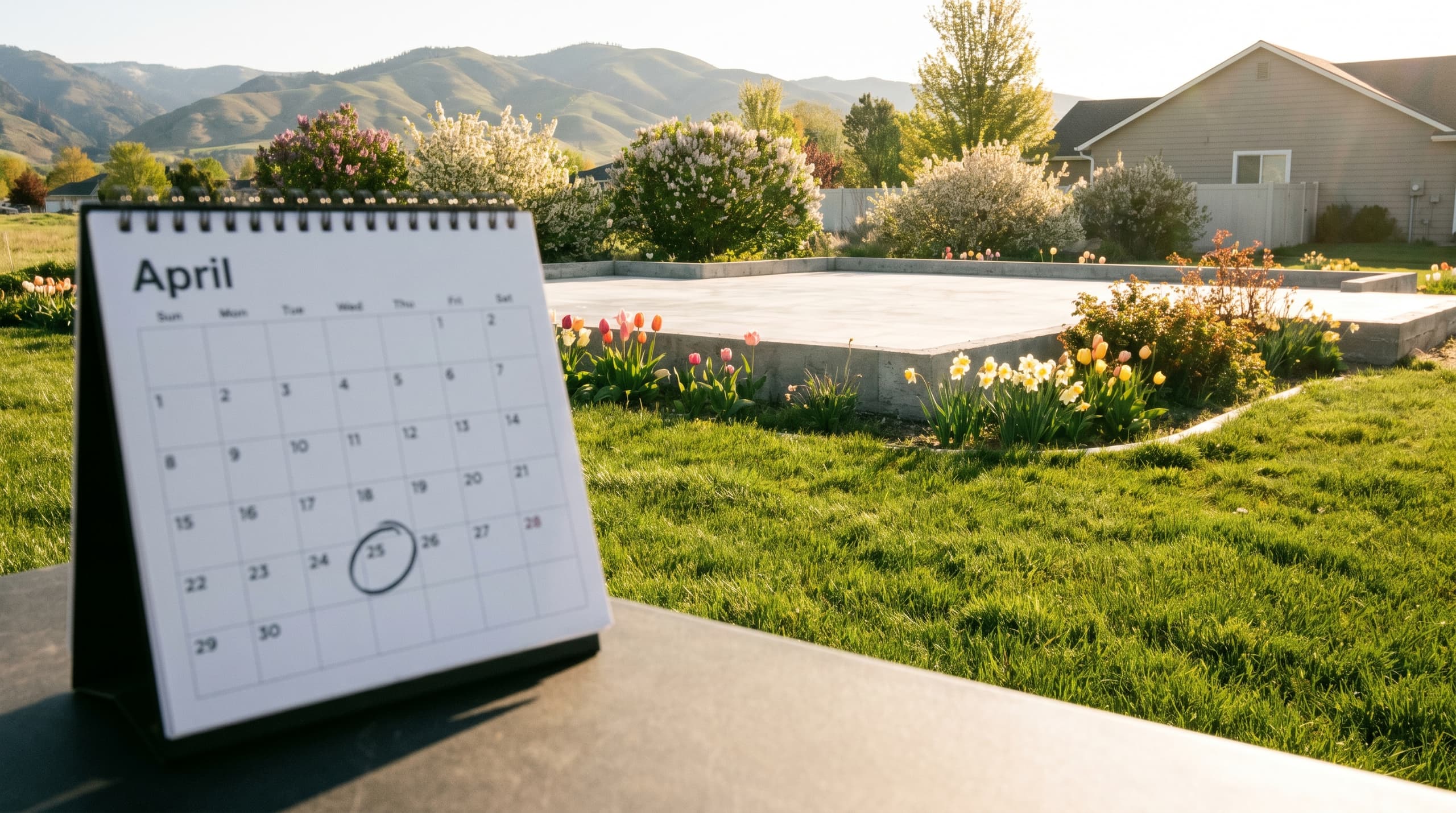
In Boise, the best time to start pest control is late April through May. Ant colonies are foraging but still small, wasp queens are building first nests, and spider populations have not peaked. A spring perimeter treatment now prevents the summer infestations that cost $200 or more to fix later. Green Guard's $49 initial service plus quarterly protection at $119 locks in coverage through August.
Key Takeaways
- Late April through May is the seasonal sweet spot in the Treasure Valley because pest colonies are active but still small
- One overwintered yellowjacket queen in April becomes a colony of 400 to 1,000 workers by August
- A first year of quarterly prevention ($49 initial + $119 per quarter) costs about the same as two $200 emergency treatments
- Professional barrier products last about 90 days, so a May treatment carries protection through prime summer
- Memorial Day weekend is the realistic cutoff for locking in spring-rate coverage before peak season pricing kicks in
In this article

Why Late April and May Are the Window Most Boise Homeowners Miss
Most Treasure Valley homeowners think pest control season starts when they see ants on the counter or wasps under the eaves. By the time you see them, you're already behind. Late April through May is the sweet spot in Boise because pest colonies are awake but still small. Treat now and they never explode in summer.
Here's the short answer: in Boise, the best time to start pest control is late April through May. Ant colonies are foraging but still small, wasp queens are building first nests, and spider populations have not peaked. A spring perimeter treatment now prevents the summer infestations that cost $200 or more to fix later.
That's the answer. The rest of this guide explains why the math works out that way, what each pest is actually doing right now, and how to time your first treatment so it carries you through August. For the month-by-month picture of every other month, see our Idaho pest calendar with the mid-2026 update.
What's Happening in the Treasure Valley Right Now (May 2026)
By early May, soil temperatures across Boise, Meridian, Eagle, and Nampa hit 55 to 60 degrees. That's the trigger every Idaho pest waits for. Ant scouts leave their winter colonies and start mapping food sources. Wasp queens that hibernated in attics, sheds, and woodpiles wake up and look for nest sites. Spider activity picks up as their food supply (other insects) gets going.
This is the window pros call the seasonal entry point. Populations are present but tiny. A perimeter spray right now reaches active colonies before they've spread, kills foraging scouts before they bring back reinforcements, and creates a barrier against the population explosions coming in June and July.
Starting service before Memorial Day sets a home up to stay pest-free through August. Waiting for a July emergency usually means paying more for less coverage. Our preventive pest control guide walks through the full year-round strategy and why the timing matters every 90 days.
The Wasp Math: One Queen in April Becomes Thousands by August
This part scares people, and it should. One overwintered yellowjacket queen you ignore in late April turns into a colony of 400 to 1,000+ workers by late summer. Paper wasps run smaller (15 to 40 workers per nest), but a single home in Eagle or Star can host five or six paper wasp nests by mid-July if nothing is done in spring.
Here is how the numbers grow:
- One yellowjacket queen in April = 400 to 1,000+ workers by August peak
- One paper wasp queen in April = 15 to 40 workers per nest by July
- One ant queen in May = 5,000+ workers in the colony by August
- One spider egg sac in May = 50 to 300 spiderlings hatching in early summer
Pre-Emptive vs Reactive: The Cost Comparison Most People Don't Run
Here's the math homeowners don't run until it's too late. A first year of quarterly prevention costs about the same as two emergency one-time treatments, before you add a few cans of hardware store spray.
| Approach | What You Pay | What You Get |
|---|---|---|
| Wait, then DIY when you see pests | $50 to $150 in store products per round | No barrier; products break down in days |
| Wait, then call for one-time service | $200 to $250 for a single treatment | One treatment, 30-day warranty, no follow-through |
| Start in late April or May | $49 initial + $119 per quarter (up to 2,500 sq ft) | Year of protection, free re-service guarantee |
For a typical Boise home up to 2,500 sq ft, a year of quarterly prevention runs a $49 first service plus three quarterly treatments at $119 each. That's $406 for a full year of coverage, plus a free re-service guarantee if pests come back between visits.
The same homeowner who waits and calls us in July when wasps are everywhere pays $200+ for one treatment, and still has the rest of summer ahead. Want the deeper breakdown? See our Boise pest control pricing page, which lays out every tier and answers the common pricing and quarterly plan questions.
Why Spring Treatment Outperforms Summer Treatment
Three reasons a spring perimeter treatment works better than waiting until summer.
- Populations are small. Killing 50 ants on the move is a different job than killing 5,000 in an established colony. Same product, dramatically better results.
- Products work pre-emergence. A perimeter barrier stops scouts before they cross your foundation. Once trails are established and pheromones are laid down, you're playing defense.
- The 90-day product residual carries you into peak season. Treat in early May and you're protected through late July without lifting a finger. Treat in July and the residual runs into October, but you've already lost the front half of summer.
Pest by Pest: When Each One Tips From Manageable to Out of Control
Each Idaho pest has a specific window where treatment goes from easy and cheap to expensive and frustrating. Here's where each one stands in early May. For the full month-by-month breakdown, see our year-round Idaho pest calendar.
- Ants. Manageable through May. Peak in June and July. Tough to fully eliminate by August once colonies are mature. See our spring ant guide if you've already seen winged ants this year.
- Wasps and yellow jackets. Single queens in April. Small starter nests now. Aggressive 400 to 1,000+ worker colonies in August. Pair this with our spring wasp control guide.
- Spiders. Building populations in May. Peak in late summer and fall. Black widow and hobo activity highest July through September. Our spring spider control article covers entry points specifically.
- Earwigs. Active by mid-May in mulch beds and damp foundations. Heavy invasions July and August.
- Ticks. Active in foothills and brushy yards from late April through June. See tick control in Idaho for the foothills-adjacent yard playbook.
- Mosquitoes. Hatching in standing water by mid-May. Peak in July.
What to Expect on Your First Visit
We've written a full walkthrough on what to expect at your first pest control service, but here's the short version. Your $49 initial visit takes 60 to 90 minutes.
- Inspection. A walk of your full perimeter to identify entry points and any active species.
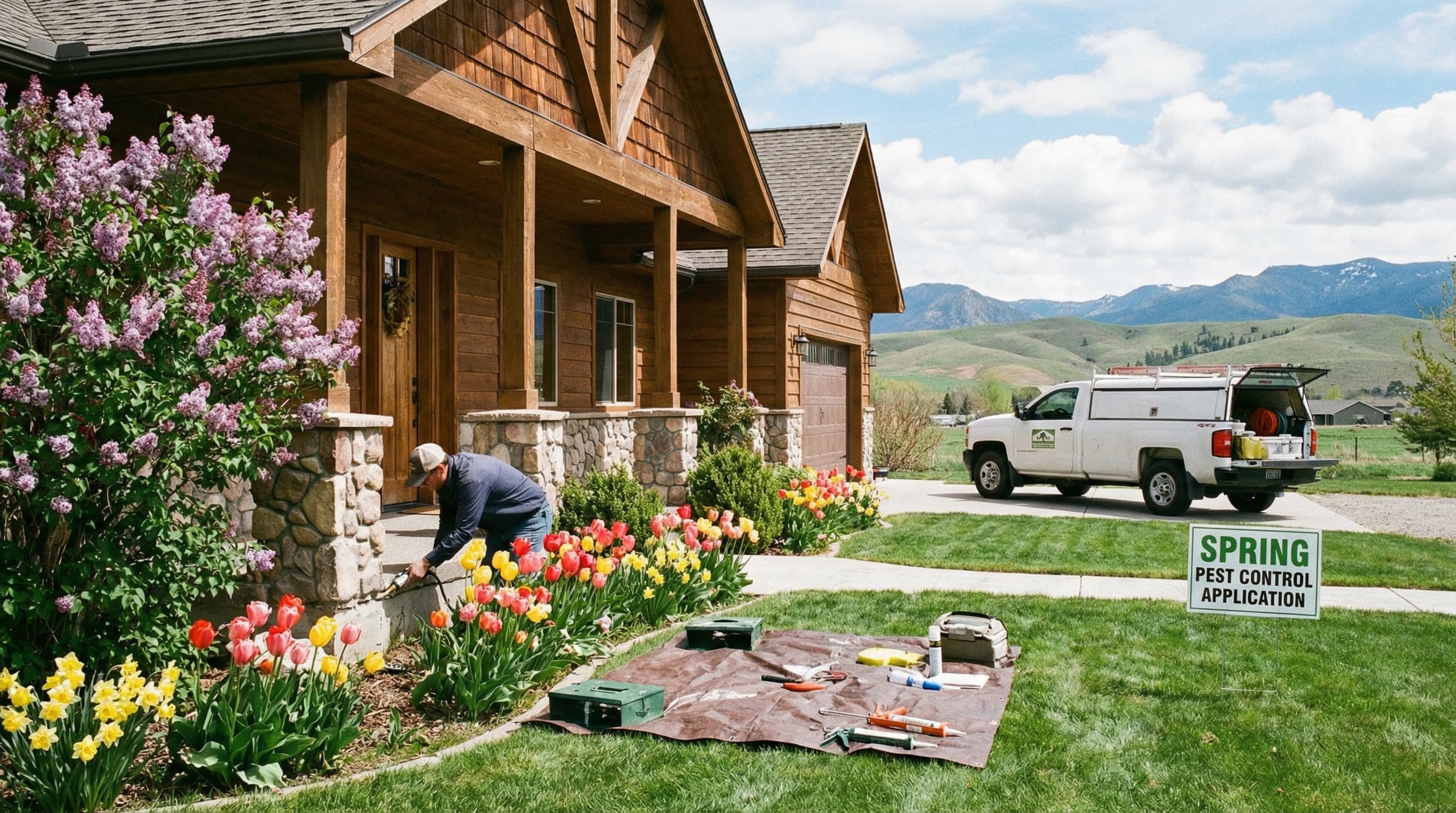
- Exterior barrier. An organic-based barrier sprayed 3 feet up and 3 feet out from your foundation. Same hospital-grade products used in daycares.
- Knock-down work. Accessible spider webs cleared from eaves, small wasp nests removed before they grow, granular treatment in landscape beds where pests harbor.
- Interior treatment on request. Baseboards, crack and crevice treatment, problem areas like under sinks. Optional, not pushed.
- Plan setup. Quarterly schedule locked in. No multi-year contracts. Just a 1-year agreement that locks in your rate, with free re-service if pests come back between visits.
What About DIY? An Honest Take
If you're handy and the problem is one or two ants in a kitchen, sure, a $20 bottle of bait gel and a tube of caulk will go a long way. We're not going to pretend otherwise.
But here's where DIY falls apart in May. The barrier products you can buy at Home Depot are formulated for broad consumer use, not Idaho-specific pest pressure. They lose effectiveness in 14 to 30 days. Professional-grade products run 60 to 90 days. That's a 3x to 6x difference in residual life, which is exactly why a single $119 quarterly treatment outperforms $80 of hardware store spray reapplied every two weeks.
The other gap is wasps. Spraying an established yellowjacket nest in your eaves in July is genuinely dangerous, and most homeowners who try it end up calling us anyway, only after a few stings and a bigger bill. For the full breakdown, read our Boise exterminator guide.
Book by Memorial Day to Lock in Your Spring Window
The realistic deadline for a true spring treatment in the Treasure Valley is Memorial Day weekend. After that, you're paying for summer pest control instead of preventing it.
The 90-day product residual is the reason. A treatment booked the week of May 25 carries protection through late August. Wait until early July, and the same product runs into late September, but you've already lost the front half of summer to colonies that grew unchecked.
If you've been on the fence, this is the call. Green Guard's $49 initial treatment is the lowest barrier to entry in the market, and the free re-service guarantee means there's no risk if pests come back between visits. Family-owned, Boise-based, organic-based products safe for kids and pets.
Call (208) 297-7947, or start with the $49 initial treatment online. Same-day service is often available. No multi-year contracts, just a 1-year agreement that locks in your rate.
Frequently Asked Questions
When should I start pest control in Boise?
Quick answerLate April through May is the best time to start pest control in Boise.
Ant colonies are foraging but still small, wasp queens are building first nests, and spider populations have not peaked. A spring perimeter treatment carries protection through August thanks to the 90-day product residual.
Is it too late to start pest control in May?
Quick answerNo.
Early to mid-May is still the sweet spot. The realistic cutoff for spring-rate, pre-emergence prevention in the Treasure Valley is Memorial Day weekend. After that, populations are larger and treatment shifts from prevention to active control, which takes more product and more time.
How much does it cost to start pest control in Boise?
Quick answerGreen Guard's initial treatment is $49 for any home size on a quarterly or bimonthly plan.
Quarterly treatments after the initial run $119 for homes up to 2,500 sq ft, $139 for 2,501 to 4,000 sq ft, and $159 for 4,001 to 5,500 sq ft. Your first year of quarterly protection runs about $406 for a typical Boise home.
Will one spring treatment really last all summer?
Quick answerOne spring treatment alone does not last all summer, but a quarterly plan starting in spring does.
Professional barrier products last about 90 days, so a May treatment is followed by a summer treatment in August. That schedule keeps continuous coverage through peak wasp and spider season without gaps.
What happens at a first pest control visit?
Quick answerThe $49 initial visit takes 60 to 90 minutes.
We inspect the full perimeter, identify entry points and active species, treat the exterior with an organic-based barrier 3 feet up and 3 feet out from the foundation, knock down accessible webs and small wasp nests, and treat interior trouble spots if requested. Products dry in 30 to 60 minutes.
Can I just wait until I see pests and call then?
Quick answerYou can, but it costs more and protects less.
A one-time emergency treatment in July runs $200 to $250 for one visit and a 30-day warranty. The same money on a quarterly plan starting in May covers the entire year, includes free re-service if pests come back, and prevents the infestations from establishing in the first place.