Quick answer
Wolf spiders are large, hairy, ground-dwelling hunters common across Idaho. They are not dangerous: bites are rare and no worse than a bee sting. They come inside Treasure Valley homes between May and August chasing prey or escaping temperature extremes. Seal ground-level entry points, reduce clutter within 3 feet of the foundation, and use a residual exterior barrier spray to keep them out.
Key Takeaways
- Wolf spiders are large, hairy, fast on the ground, and do not spin webs. They are the easiest big spider to ID in Idaho.
- Wolf spider bites in Idaho are not medically significant. They feel like a bee sting and clear in 24 to 48 hours.
- Most indoor activity happens between May and August. Wolf spiders follow prey insects, escape heat, or disperse from disturbed habitat.
- Seal ground-level gaps, clear clutter near the foundation, and apply a residual exterior barrier spray to keep them outside where they belong.
In this article

What Wolf Spiders Look Like (Quick ID)
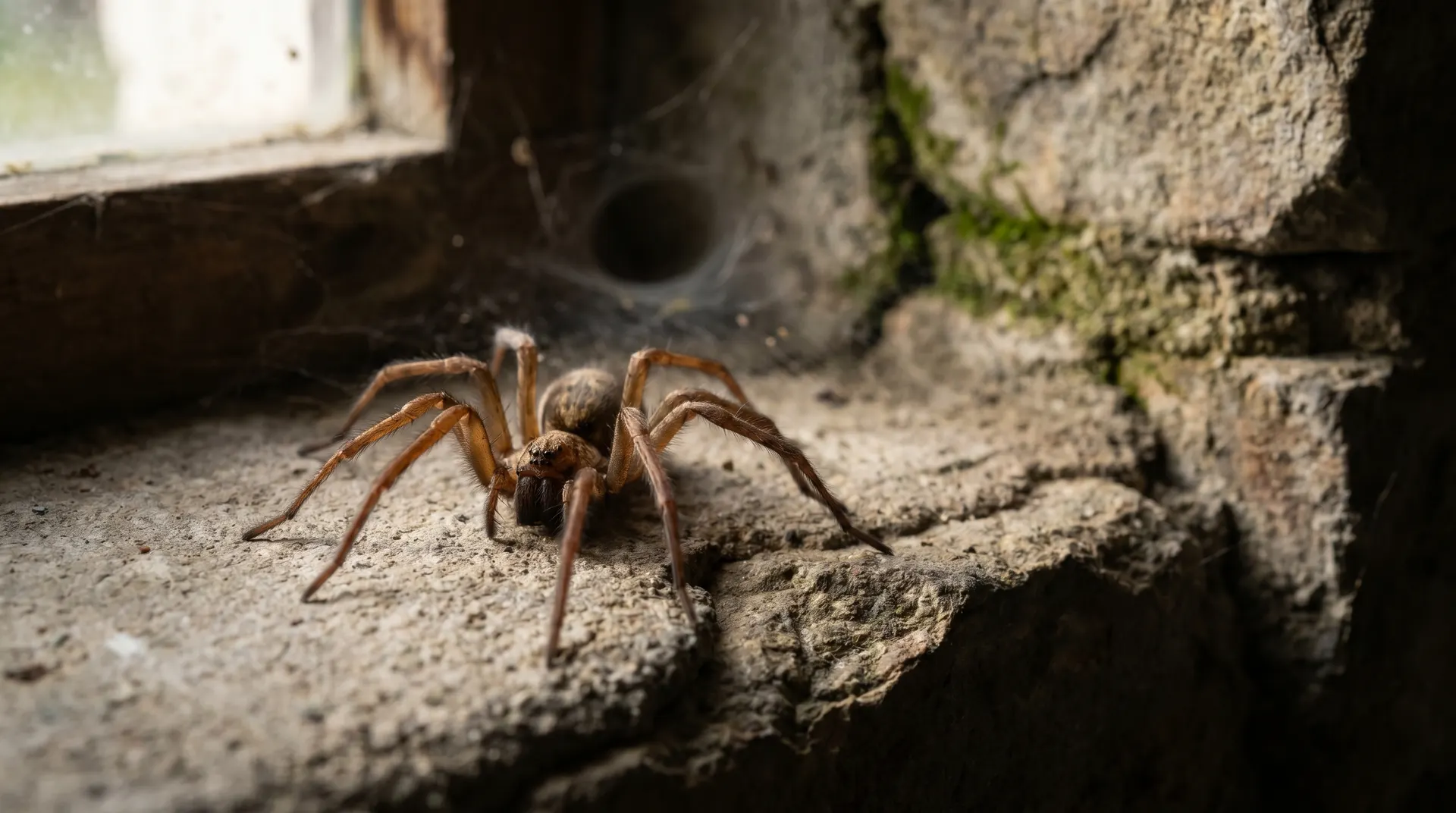
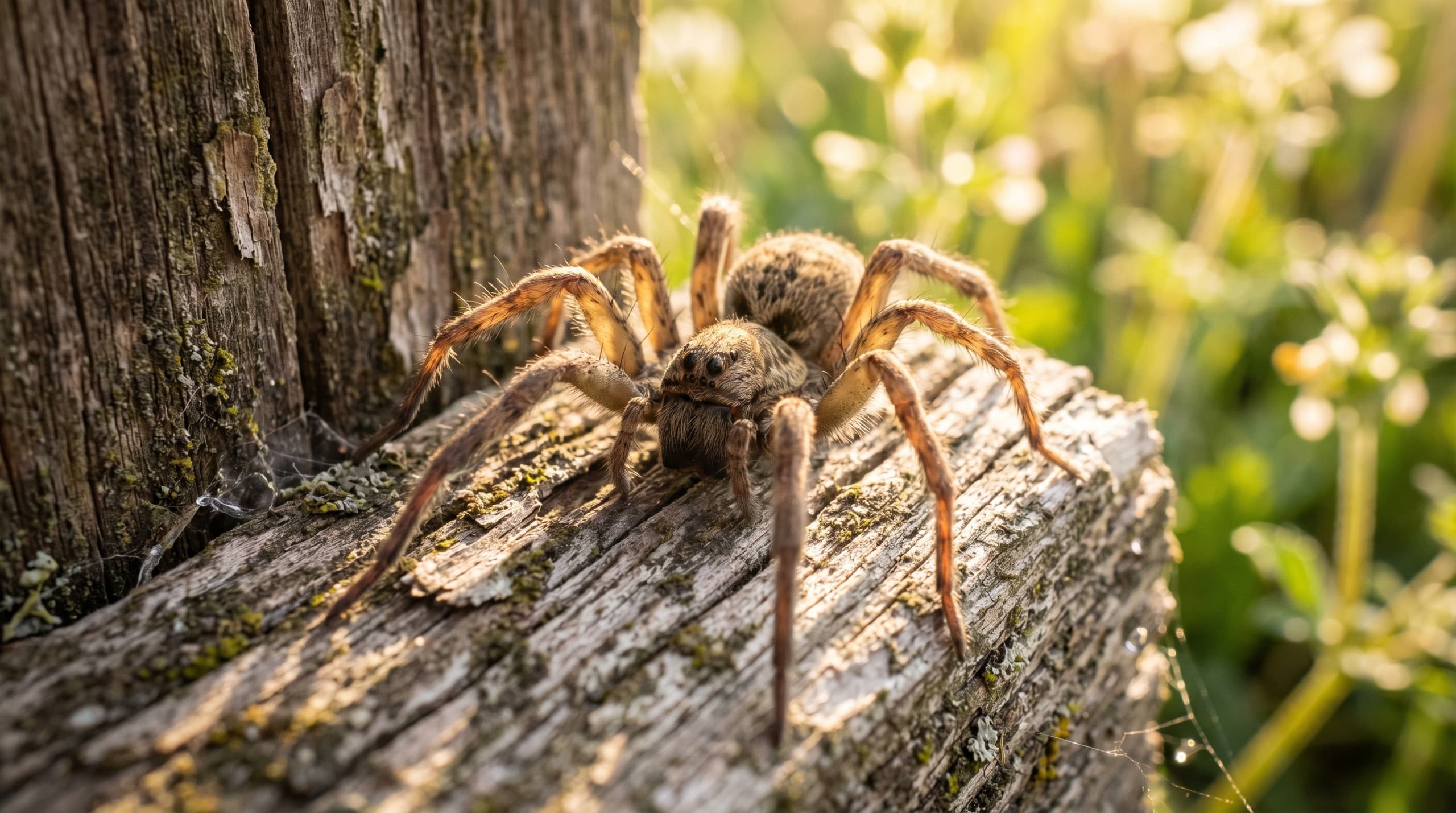
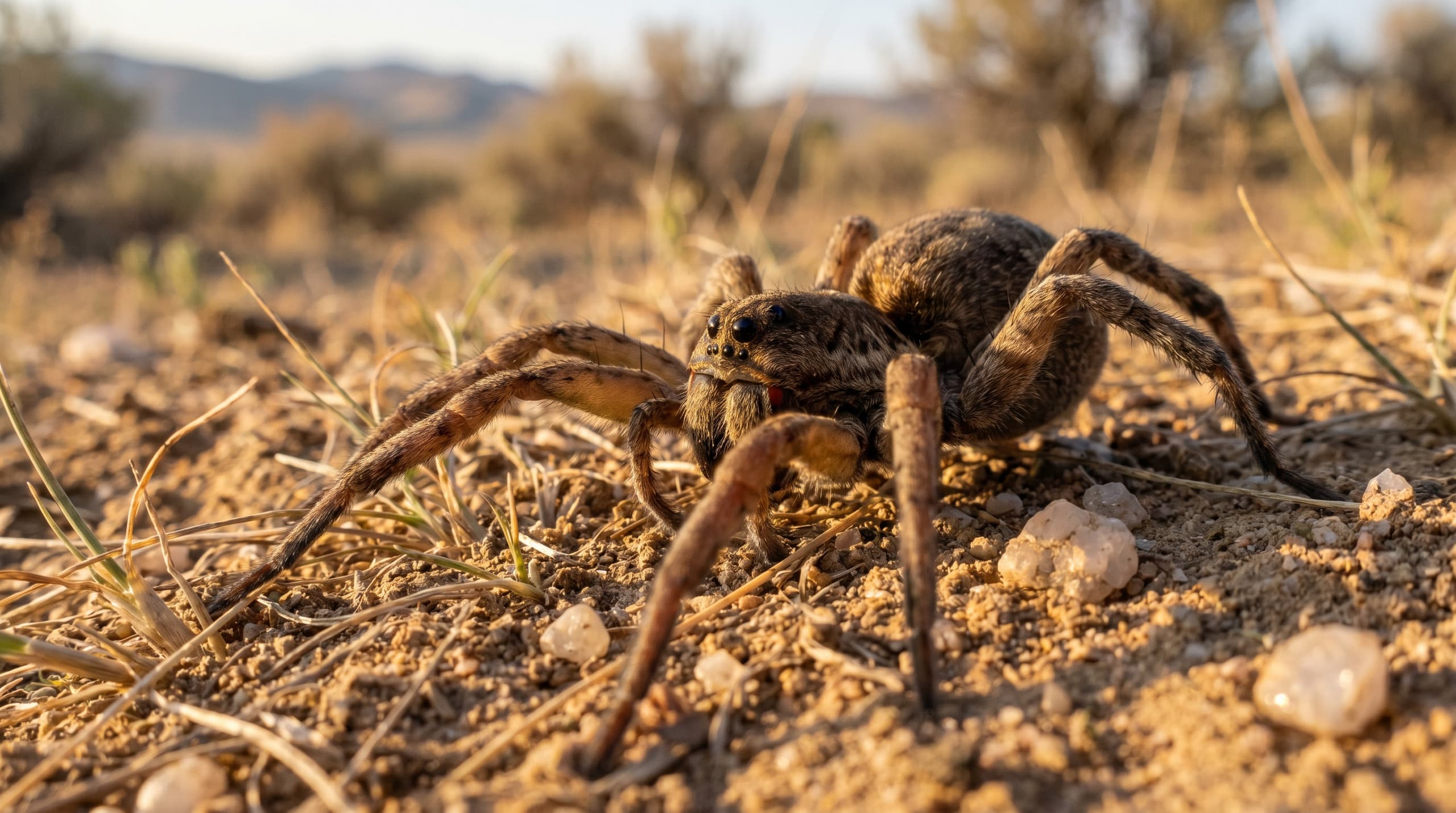
Wolf spiders are large, hairy, brown or gray spiders that hunt on the ground instead of spinning webs. In Idaho the most common species is Schizocosa mccooki, a stocky wolf spider that grows up to 2 inches across including the legs. Adults look intimidating. They are harmless to humans. You still don't want one darting across your living room, and our exterior barrier keeps them outside.
If a spider is sprinting across your garage floor at midnight, with two prominent eyes that catch your flashlight beam, you are almost certainly looking at a wolf spider. A fast, long-legged bug in the bathroom is a different story: that is usually a house centipede, which hunts spiders and silverfish.
The fast ID checklist:
- Size: Half an inch to 2 inches across, legs included. Females are bigger than males.
- Color: Earthy browns, grays, and tans with darker stripes or chevron markings down the back.
- Body: Stocky and visibly hairy. Bulkier than a house spider or a hobo.
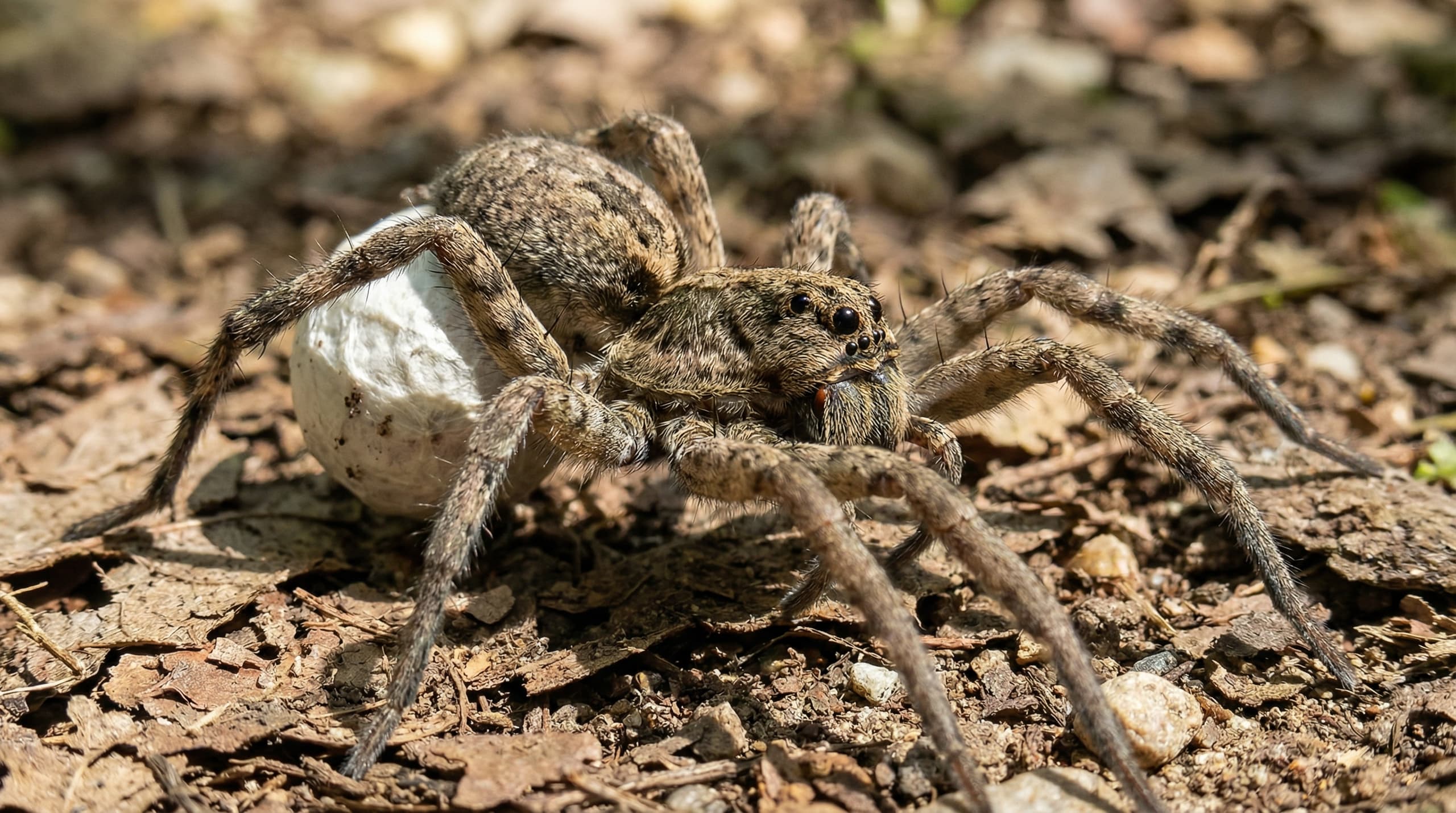
- Eyes: Eight eyes total, but two large prominent eyes that reflect light back at a flashlight. The eyeshine is the dead giveaway.
- Behavior: Fast. Sprints across floors, patios, and driveways. Never spins a web to catch prey.
- Babies: Females carry an egg sac attached to the spinnerets, then carry dozens of spiderlings on their back for a couple of weeks after they hatch.
That last detail is the one that startles people the most. If you flip over a board and find a fuzzy-looking spider that suddenly explodes into a hundred tiny spiders, you found a mama wolf spider with her brood. The little ones disperse within a week or two. They do not stay in your home.
Wolf Spider vs. Hobo Spider vs. Black Widow
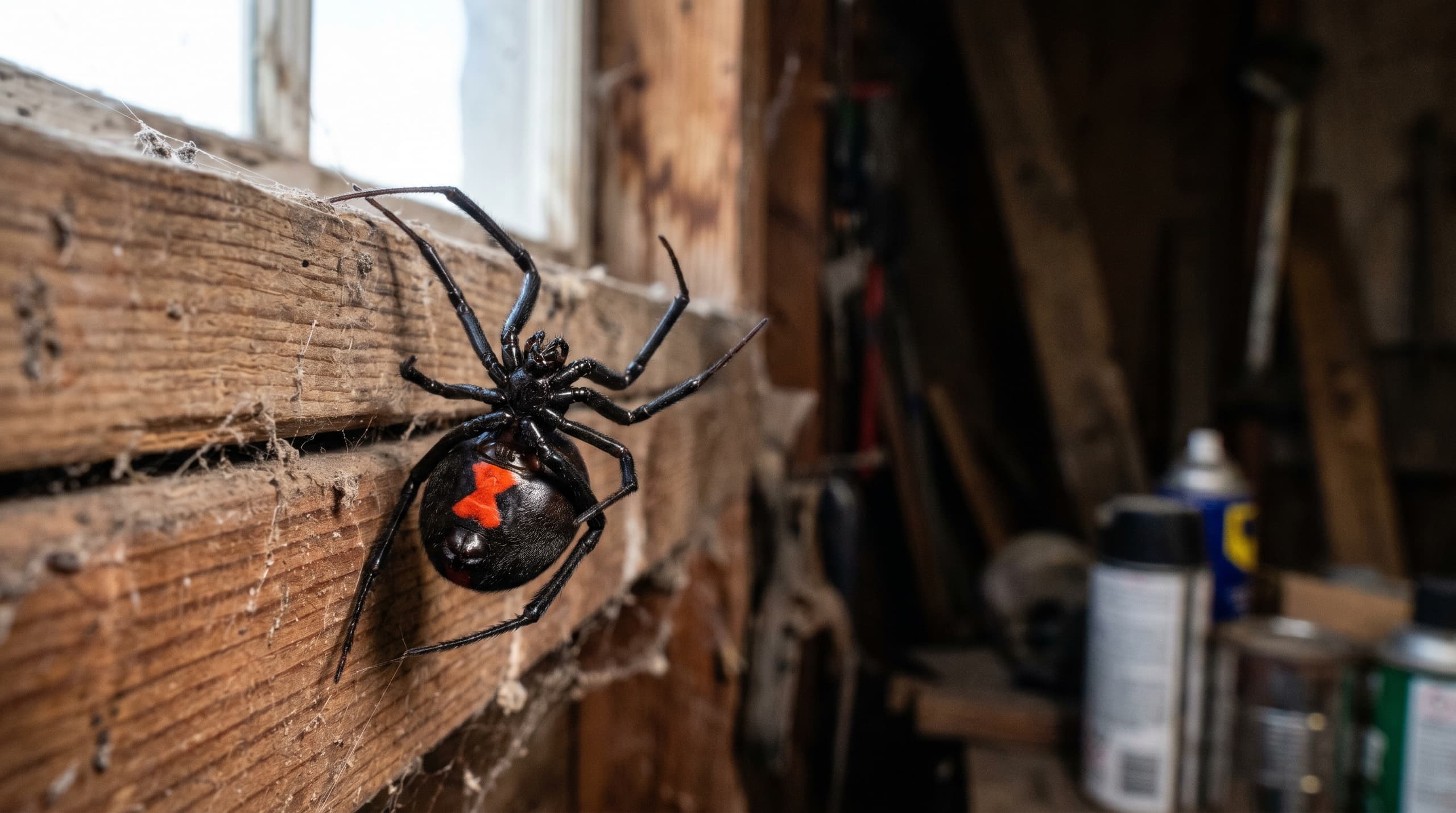
Wolf spiders are harmless ground hunters, hobo spiders are mid-sized funnel-web builders with a complicated bite reputation, and black widows are small shiny black spiders with a red hourglass and a genuinely medically significant bite. Telling them apart is mostly about size, color, and whether the spider builds a web at all.
Here is the side-by-side that matters in a Boise garage.
| Feature | Wolf Spider | Hobo Spider | Black Widow |
|---|---|---|---|
| Size (with legs) | 1/2 to 2 inches | 1 to 1.5 inches | 1/2 to 1.5 inches |
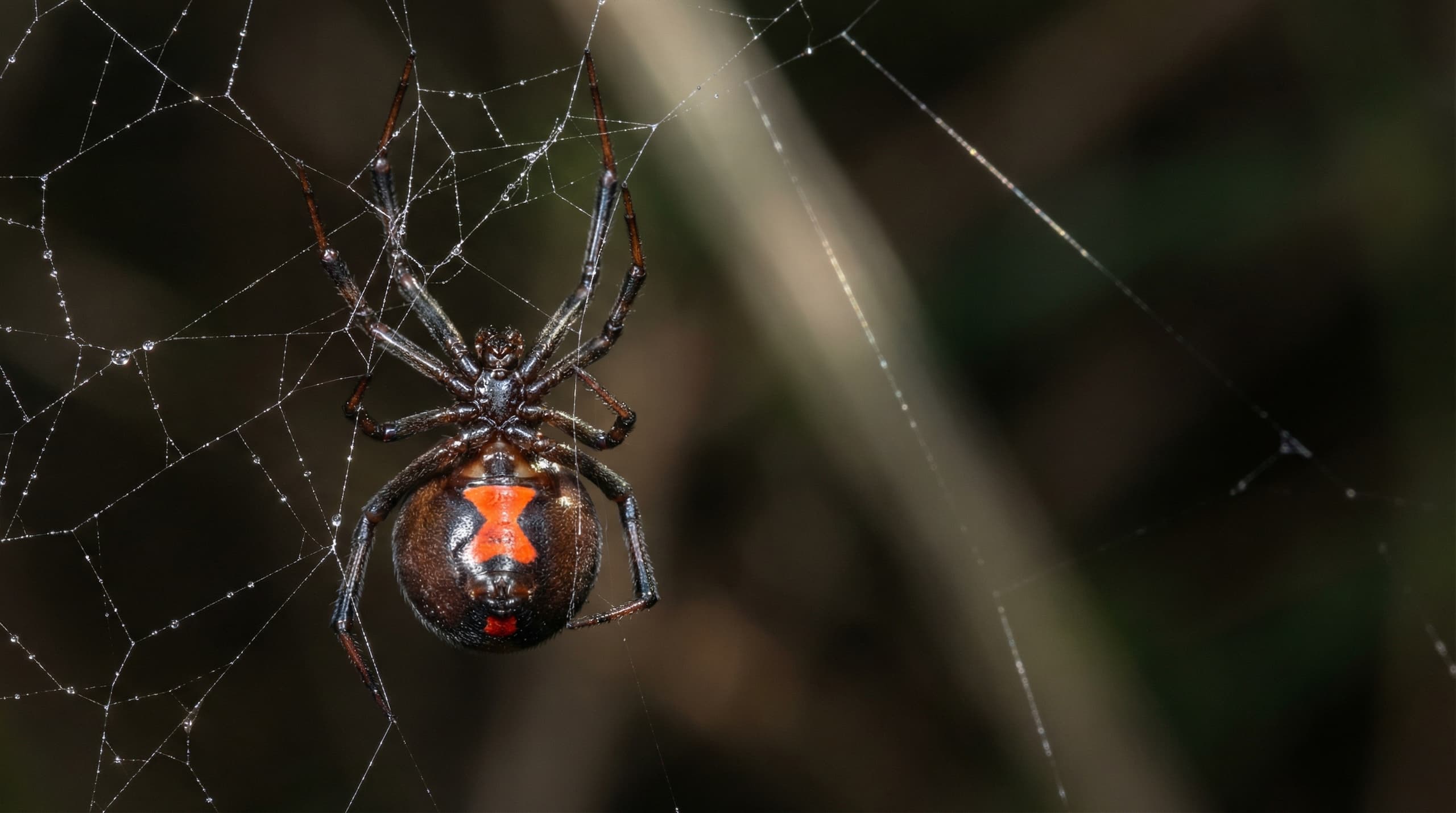
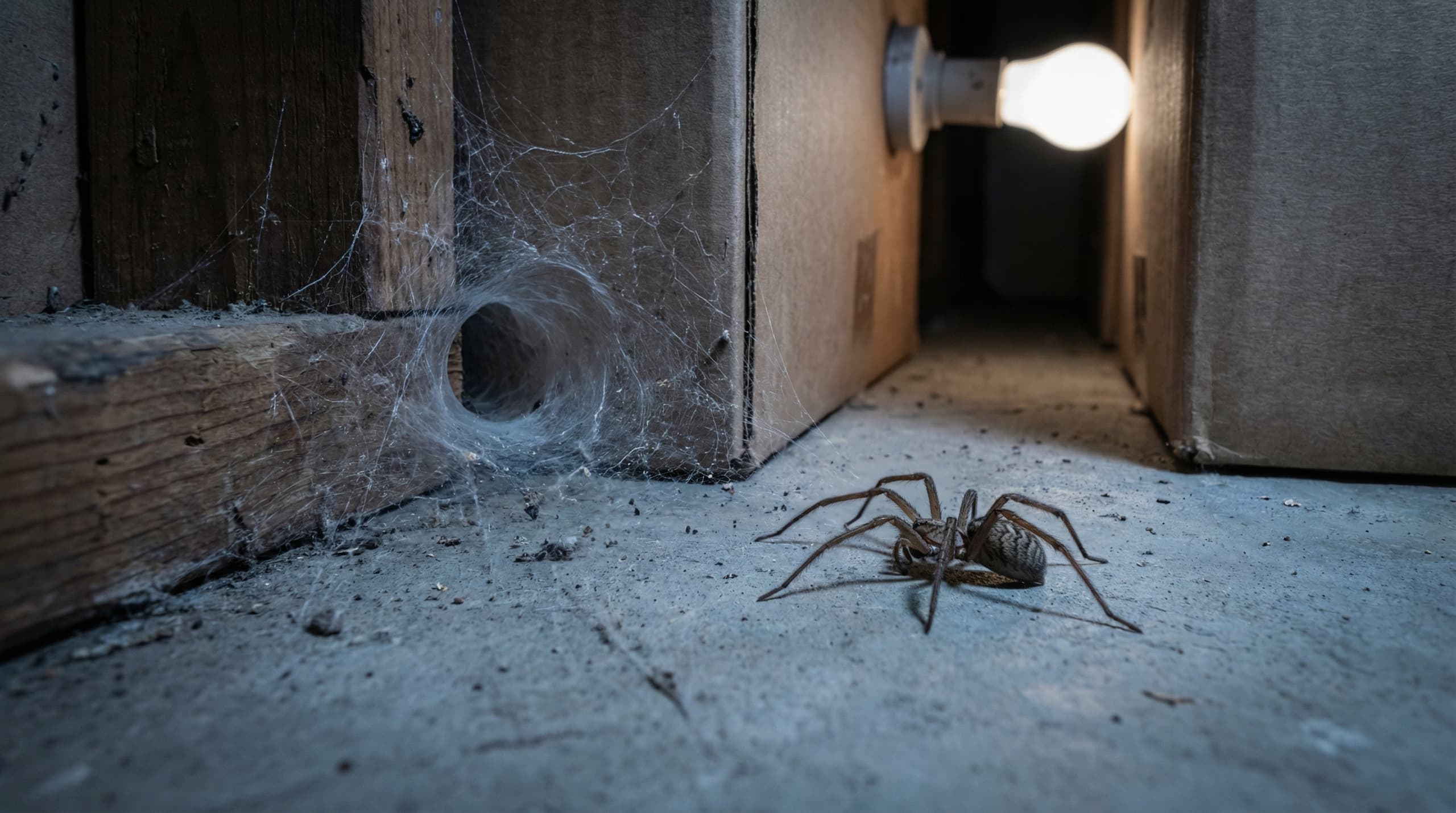
| Color | Brown, gray, tan with darker stripes | Brown with subtle herringbone pattern | Shiny jet black with red hourglass on underside |
| Body shape | Stocky, hairy, thick legs | Long-legged, slender, less hairy | Round bulbous abdomen, thin legs |
| Builds a web? | No. Hunts on the ground. | Yes. Flat funnel-shaped web in corners. | Yes. Messy tangle web in dark protected spots. |
| Eyeshine in a flashlight? | Yes, very obvious | No | No |
| Bite risk | Very low, like a bee sting | Disputed, mild local reaction in most cases | Medically significant, sometimes ER level |
| What to do | Capture and release, or leave alone | Trap, remove, seal entry points | Call us. Do not handle. |
If you want a full photo walkthrough of the two scary ones, our black widow vs. hobo spider guide covers ID, habitat, and bite signs in detail. The wolf spider is the easy one. It looks scariest of the three and is the least dangerous. It still doesn't belong in your house, and the same perimeter treatment that handles hobos keeps wolf spiders out too.
Where Wolf Spiders Live in the Treasure Valley
Wolf spiders thrive in irrigated farmland, canal banks, garages, basements, and ground-level landscaping across the Treasure Valley. The wetter and more vegetated the land, the more wolf spiders show up nearby. Pressure is heaviest on homes close to working farmland or open irrigation.
Wolf spiders cluster in a few predictable kinds of places:
- Farmland edges around Caldwell and Nampa. Alfalfa, mint, and sweet corn fields support massive insect populations. Wolf spiders follow that food into adjacent neighborhoods. Homes next to working farmland see the most activity.
- Canal and irrigation systems near Ten Mile, Lake Lowell, and Indian Creek. Year-round moisture plus abundant prey turn canal banks into wolf spider highways. New developments along Ten Mile Road and the Lake Hazel corridor sit on top of historic irrigation easements that still attract them. For homes along the Boise River, see our Garden City spider control guide.
- Garages and basements in older Boise neighborhoods. Older homes (North End, Bench, East End) tend to have foundation gaps and bare-soil crawlspaces that give ground-dwelling spiders an easy way in.
- Foothills properties from Hidden Springs to Harris Ranch. Dry sagebrush slopes hold a different wolf spider community, smaller and quicker on their feet. They push into homes mostly when summer hits triple digits.
- New construction in Star, Middleton, and south Meridian. Bulldozers expose burrowing wolf spiders that scatter into the closest dark, ground-level structure. Often that is a new home's garage.
Inside the house, wolf spiders almost always stay low. Garages, basements, mudrooms, laundry rooms, the bottom shelves of pantries. They do not climb up to the bedroom ceiling. If a spider is up high in a web, it is not a wolf spider.
Why Wolf Spiders Come Inside (May Through August)
Wolf spiders come inside Treasure Valley homes mostly between May and August because they are chasing prey, escaping heat, or following hunting routes through gaps near the ground. They do not enter houses to live there long-term. Most are passing through.
Three reasons they come indoors during the warm months:
- They are hunting other bugs. Wolf spiders eat what they can catch: crickets, beetles, earwigs, smaller spiders, even moths. If your garage has any insect activity at all, wolf spiders will follow that food source through any gap they find.
- They are escaping temperature extremes. A 100-degree afternoon in late July drives them under foundations and into cool concrete basements. A 45-degree May night sends them looking for warmth. Either way, your house becomes the most stable habitat on the block.
- They are dispersing from disturbed habitat. Construction, lawn mowing, canal cleaning, and tilling all displace wolf spiders. They walk in straight lines until they hit shelter. If that shelter is your open garage door, they walk right in.
Female wolf spiders also wander more in late spring while they are looking for mates, then again in midsummer while they are carrying egg sacs. That is why people who never see wolf spiders in March suddenly see one a week starting in May.
Are Wolf Spiders Dangerous?
No. Wolf spider bites in Idaho are rare and not medically significant. A bite typically feels like a bee sting and clears up within 24 to 48 hours. Wolf spiders are not aggressive toward people and have no interest in biting anything they cannot eat.
They bite only when trapped against skin: pinned under a shoe, rolled onto in a sleeping bag, or pressed inside a piece of clothing being put on. Even then, most bites are dry (no venom injected) because wolf spiders save venom for prey.
The genuinely dangerous spider in Idaho is the black widow, not the wolf spider. Black widow bites can cause muscle cramps, abdominal pain, sweating, and elevated blood pressure, and they sometimes require ER care. Our guide to dangerous spiders in Idaho walks through the bite symptoms that actually warrant a doctor visit.
What about the brown recluse? Brown recluse spiders do not have established populations in Idaho. If a Boise homeowner thinks they saw a brown recluse, it is almost always a hobo spider or a giant house spider. Wolf spiders get misidentified the same way.
How to Keep Wolf Spiders Out of Your Home
To keep wolf spiders out, seal ground-level entry points, reduce clutter in garages and basements, manage exterior insect populations, and apply a residual barrier spray around the foundation. Because wolf spiders enter low and hunt on the ground, every prevention step focuses on that bottom band of the house.
Here is what actually works on Treasure Valley homes:
- Replace worn garage door bottom seals. The single biggest entry point in most Boise homes. A 1/4-inch gap under the garage door is a wolf spider freeway. Replace the rubber seal every 2 to 3 years and the side weatherstripping when it cracks.
- Seal foundation gaps and dryer vents. Use foam sealant on cracks, hardware cloth over exterior dryer vents, and caulk where utility lines enter the house. Wolf spiders squeeze through any gap wider than 1/8 inch.
- Clear ground-level clutter. Stacked firewood, cardboard boxes, garden tools leaning on the siding, bags of mulch left on the patio. Move any of it at least 3 feet away from the foundation. Wolf spiders hide in those exact spots during the day.
- Trim vegetation back from siding. Bushes and grass touching the house give spiders a direct climb-up route. Keep about 12 inches of clearance between mulch beds and the foundation.
- Knock down the food source. Wolf spiders follow other insects. If you are seeing crickets, earwigs, or beetles in the garage, get those under control and the wolf spiders will move on too.
- Switch exterior lights to yellow or LED bug-resistant bulbs. White porch lights pull in moths and other flying insects, which in turn pull in wolf spiders waiting on the siding below.
- Apply a residual perimeter barrier spray. A professional-grade exterior treatment lasts about 90 days and creates a band of protection 3 feet up and 3 feet out from the foundation. This is the step that separates "I sealed a few gaps" from "I do not see wolf spiders anymore."
To see why spiders move indoors each fall and how to stop them, read our spider-proofing guide. If you are reading this in late winter or early spring and want to get ahead of the May surge, our spring spider control playbook covers timing in detail.
When to Call a Pro
Call a professional when you are seeing wolf spiders more than once a week, when they show up in living spaces (not just the garage), or when the activity makes the house feel unusable. One wolf spider a month is normal in the Treasure Valley. Five in a week is a treatable problem.
What we actually do on a first visit:
- Walk the perimeter. Identify entry points, harborage areas, and the conducive conditions feeding the activity (open mulch beds, woodpiles, gaps in trim).
- Treat the exterior 3 feet up and 3 feet out. CAUTION-labeled barrier spray on the foundation, eaves, door frames, and window casings.
- Spot-treat the interior on request. Garage edges, baseboards, mudroom corners, basement perimeters. Same organic-based products inside, safe for kids and pets once dry (30 to 60 minutes).
- Knock down food source insects. Crickets, earwigs, beetles, and other ground-level prey all get controlled in the same visit. No food, no wolf spiders.
- Set up the quarterly schedule. Products last about 90 days under Idaho weather. Quarterly service keeps the barrier alive year-round.
The first visit is $49 for new subscription customers, and that includes the full inspection, the exterior barrier treatment, and interior work on request. Quarterly visits after that run $119 to $159 depending on home size. If pests come back between visits, so do we (free re-service guarantee).
Call us at (208) 297-7947 or book online. We have served 2,500+ families across Boise, Meridian, Eagle, Nampa, Caldwell, Star, and Kuna, and wolf spider calls are some of the easiest pest problems to make go away.
Frequently Asked Questions
Are wolf spiders in Idaho poisonous?
Quick answerNo.
Wolf spiders in Idaho are not medically dangerous to humans. They do have venom (every spider does), but their bite affects people about the same as a bee sting and clears up within 24 to 48 hours. The black widow is the only Idaho spider whose bite actually warrants medical attention.
What is the largest spider in Idaho?
Quick answerThe wolf spider is the largest commonly seen spider in Idaho, with adult females of Schizocosa mccooki reaching about 2 inches across including the legs.
Giant house spiders can rival them in leg span but have skinnier bodies and less hair. Despite the intimidating size, neither species is dangerous.
Is it bad to find a wolf spider in your house?
Quick answerOne wolf spider in your house is normal in the Treasure Valley between May and August.
It usually wandered in chasing prey or escaping heat, and it will leave on its own. Seeing several wolf spiders in a single week means you have entry points and a food source insect problem. Both are fixable with sealing and a perimeter barrier spray.
Should I kill a wolf spider I find inside?
Quick answerThere is no need to.
Wolf spiders are beneficial because they eat other pest insects, and they are not aggressive toward people. Trap it under a cup, slide a piece of paper underneath, and release it outside at least 10 feet from the foundation. That said, you don't want them making a habit of coming inside. If you're finding one every week, call (208) 297-7947 and our exterior barrier will keep them out.