Quick answer
Yes, professional pest control can get rid of fleas. Flea control in Boise starts with a $49 first service from Green Guard, then $119 to $159 per quarterly visit by home size. The key is treating all three flea life stages (eggs, larvae, pupae, and adults) in both the interior of your home and your yard at the same time. Without a yard treatment the cycle restarts, which is the main reason DIY foggers and grocery-store sprays fail in Treasure Valley homes.
Key Takeaways
- Flea season in the Treasure Valley peaks July through September, when daytime highs sit in the 90s and yard activity for pets peaks at the same time
- Adults are only 5 percent of a flea population. The other 95 percent (eggs, larvae, pupae) live in your carpet, pet bedding, and the shaded edges of your yard
- Bug bombs and foggers can not kill flea eggs or sealed pupae, which is why a one-time DIY treatment almost always rebounds in 10 to 14 days
- Green Guard's $49 initial includes interior and yard treatment with pet-safe, hospital-grade products. Quarterly visits start at $119 with a free re-service guarantee
- Idaho winters knock flea pressure down but do not wipe it out. Sheltered crawl spaces, garages, and pet bedding keep small populations alive into spring
In this article

Can Pest Control Get Rid of Fleas in Boise? (Quick Answer)
Yes. Professional pest control gets rid of fleas in Boise homes when the treatment hits all four life stages (egg, larva, pupa, adult) in both the interior of the home and the yard at the same time. Green Guard's flea control in Boise starts with a $49 initial treatment, then $119 to $159 per quarterly visit depending on home size. Every quarterly plan includes a free re-service guarantee.
Most flea problems in the Treasure Valley start outside. A dog or cat brings adults in from the yard, the adults lay eggs in carpet and pet bedding inside the house, and within 10 days a second wave hatches. By the time you notice bites on your ankles, the population is already cycling. Killing the adults you can see (with a flea collar, a spray bottle, or a single bath) clears 5 percent of the actual population. The eggs, larvae, and pupae that make up the other 95 percent rebound within two weeks.
Flea pressure builds across Boise, Meridian, and Eagle yards in early summer. Peak season runs July through September. If you're seeing bites or watching your pet scratch, this is the right window to act. Call (208) 297-7947 or book online.
Are Fleas a Problem in Idaho? (Yes, Especially July to September)
Fleas are a real problem in Idaho, even though the dry climate gets credit for keeping them down. Boise summers stay hot enough and irrigated lawns stay humid enough to support full flea populations from late June through first hard frost. In the Treasure Valley, flea season peaks in July, August, and September.
Three things drive the local pattern:
- Irrigated lawns and shade. Cat fleas (the species responsible for about 95 percent of pet flea problems in the U.S.) need humidity in the 70 to 85 percent range to survive as larvae. The high desert dry air alone is hostile. But your shaded, irrigated Boise lawn under a maple tree on the south side of the house is not. Larvae thrive in cool, shaded, moist soil and mulch beds.
- Wildlife reservoirs. Rabbits, squirrels, ground squirrels, and feral cats all carry fleas through Boise neighborhoods. Yards backing to the Greenbelt, the foothills, or open lots near Lake Hazel and Hidden Springs get more wildlife traffic and more flea drops. Rodents in the crawl space or attic are another reservoir, which is why we always look for signs of rodent activity around the house on a flea call. See our complete Boise rodent control guide for the connection.
- Pet traffic in and out of yards. Dogs in the Treasure Valley spend more time outside in summer than almost any other season. Off-leash trips to Camel's Back, Esther Simplot, or the Greenbelt all expose pets to flea-carrying wildlife. The pet brings adults home, the adults lay eggs in your carpet, and the cycle starts.
The Flea Lifecycle (And Why Killing Adults Is Not Enough)
This is the single most important thing to understand about flea control. The adult fleas you see on your pet are about 5 percent of the actual population in your house. The other 95 percent are eggs, larvae, and pupae living in your carpet, your pet's bedding, and the soil and mulch beds around your home. Treat only the adults and the rest of the population hatches into a fresh adult wave within 10 to 14 days. That is why grocery-store sprays and one-shot pet baths almost always fail.
- Eggs (50 percent of the population). A single female adult lays 40 to 50 eggs per day. Eggs are smooth and white, so they roll off your pet onto your carpet, your couch, and the bedding wherever the pet sleeps. They hatch in 2 to 14 days depending on humidity.
- Larvae (35 percent). Tiny, worm-like, and they avoid light. Larvae burrow deep into carpet fibers and into the top inch of mulch beds and shaded soil outdoors. They feed on flea adult feces ("flea dirt") and organic debris.
- Pupae (10 percent). The toughest stage. Pupae spin a sticky silk cocoon that pulls carpet fibers and dust around it for camouflage. Cocoons are basically waterproof and bombproof. Most over-the-counter sprays and even some professional products can not penetrate the cocoon. Pupae can sit dormant for weeks or months until they sense vibration, body heat, or carbon dioxide nearby. That is why moving back into a vacant house can trigger a sudden flea swarm.
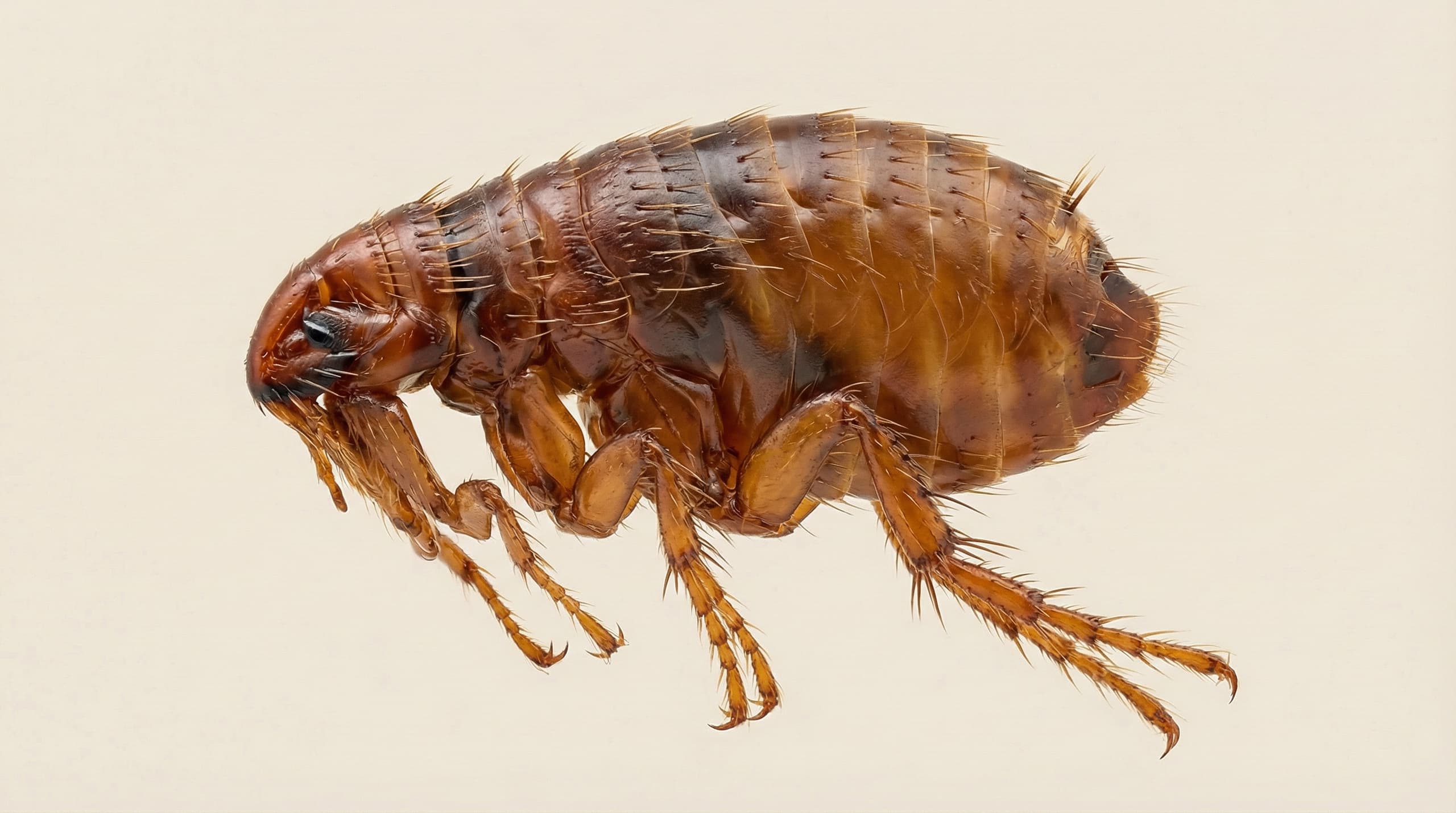
- Adults (5 percent). The fleas you actually see. They hatch from cocoons, jump onto a host, take a blood meal within hours, and start laying eggs within 24 to 48 hours. A single adult can produce 2,000 eggs in its lifetime.
How to Tell If You Have Fleas in Your Boise Home
Most homeowners don't catch fleas until the population is already cycling. The early signs are subtle. Here are the four checks we run on every flea inspection.
- Watch your pet's behavior. Sudden, frantic scratching at the base of the tail, behind the ears, or under the belly is the first tell. Cats often groom obsessively in one spot. Dogs may snap or chew at their hindquarters.
- Run a flea comb through your pet. A fine-tooth flea comb run from the head down to the tail will catch adults, but more importantly it catches flea dirt. Flea dirt is the digested-blood feces adults leave behind. It looks like ground black pepper. Drop what the comb picks up onto a damp white paper towel. If the specks dissolve into rust-red smears, that is flea dirt. That is the diagnostic test.
- Do the white-sock walk. Put on long white athletic socks pulled up over your pants and walk slowly through every carpeted room for 30 seconds each. Pay extra attention to spots where your pet sleeps. Adults jumping onto the socks (looking for a host) are visible against the white fabric. This is how we confirm an active population in 60 seconds during an inspection.
- Check your ankles and lower legs. Flea bites on humans cluster on the lower legs and ankles, usually in groups of three to five small red bumps with a red halo. They itch hard for 24 to 48 hours and then fade. Bites concentrated below the knee are very different from mosquito or spider bites, which can land anywhere.
Why DIY Flea Bombs and Foggers Don't Work in Idaho Homes
Bug bombs (also called total release foggers) are a common DIY flea attempt in Boise, and they usually fail. Homeowners buy three or four of them, set them off in the living room, leave for four hours, and come back to a house that looks treated. Two weeks later the fleas are back, often worse. Here is why.
- The aerosol doesn't reach where fleas live. Foggers spray a coarse mist that settles on top surfaces (the top of a couch, the top of a tile floor, the kitchen counter). Flea eggs, larvae, and pupae live deep in carpet fibers, under furniture, inside pet bedding, and in mulch and soil outdoors. The mist never gets there.
- Foggers can't penetrate the pupal cocoon. Even the best professional adulticides don't punch through the silk pupal case. Pupae sit through the treatment, hatch a week later, and the population restarts. Foggers usually have weaker active ingredients than professional products, and they have zero residual.
- No yard treatment. Foggers only treat indoors. The yard population (where the pet picked up the original adults) is untouched. The pet goes outside, picks up new adults, brings them in, and the cycle restarts within days.
- They drive surviving fleas into walls and crevices. Foggers act as a repellent before they kill. Adults and larvae sense the aerosol and burrow deeper into cracks, baseboards, and floor edges where the product can not reach. The population that survives is now in spots that are even harder to treat next time.
- They're a real safety risk. Foggers have started house fires by igniting on a pilot light. They also leave a chemical residue across every food prep surface, kid toy, and pet bowl that wasn't covered. We never use foggers and never recommend them.
Boise Flea Control: How Green Guard Treats Fleas (Interior and Yard, Both)
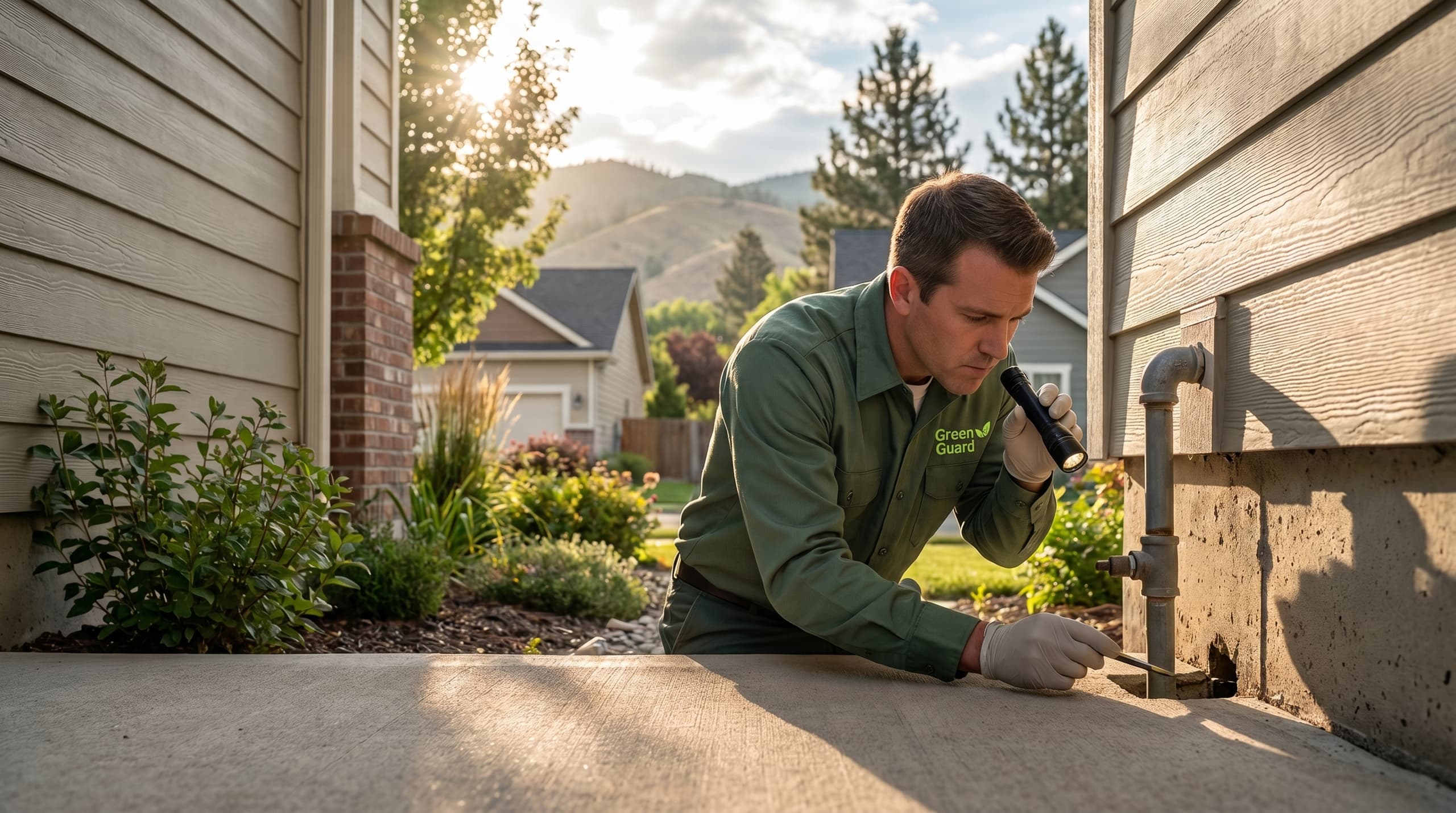
A flea call gets the same Green Guard $49 initial treatment as any other pest issue. The technician does a full perimeter walk, identifies the active flea zones inside and out, and treats them with organic-based, hospital-grade products. Here is what the visit covers.
- Indoor inspection. We run a white-sock check, comb the pet's primary sleeping spots, and identify the carpet rooms with active populations. Most Boise flea cases concentrate in one or two rooms (usually wherever the pet sleeps).
- Interior treatment with growth regulator. We treat carpet, pet bedding zones, baseboards, and crack-and-crevice spots with a professional adulticide combined with an insect growth regulator (IGR). The adulticide kills adults on contact. The IGR shuts down egg hatch and larva development for the rest of the 90-day cycle. This is the part DIY can not match.
- Yard treatment. We hit the shaded, irrigated zones where flea larvae live. That means under decks, along fence lines, around pet sleeping spots in the yard, under mature trees, and along mulch beds. We use granular treatment in landscape beds and a barrier spray three feet up and three feet out from the foundation.
- Entry point check. Crawl space vents and openings (from the outside), garage thresholds, pet door zones, and any wildlife corridors. If we find rodent activity (a common flea reservoir), we flag it and recommend pulling rodents into the treatment plan. See our complete Boise rodent control guide for what that looks like.
- 2-week follow-up window. The pupae hatching after treatment walk into the residual product and die before they can lay eggs. You'll see adult activity for the first 10 to 14 days as the remaining cocoons hatch. That's normal and expected. If activity is still climbing after day 14, that's what the free re-service guarantee is for. We come back, no charge.
What Flea Control Costs With Green Guard
| Plan | Home size | Price |
|---|---|---|
| Initial Service with a quarterly or bimonthly plan | Any home size | $49 |
| Quarterly Service | Up to 2,500 sq ft | $119 |
| 2,501 to 4,000 sq ft | $139 | |
| 4,001 to 5,500 sq ft | $159 | |
| Bimonthly Service | Up to 2,500 sq ft | $99 |
| 2,501 to 4,000 sq ft | $119 | |
| 4,001 to 5,500 sq ft | $139 | |
| One-Time Service | Up to 2,500 sq ft | $200 |
| 2,501 to 4,000 sq ft | $225 | |
| 4,001 to 5,500 sq ft | $250 |
Pet-Safe Flea Treatment: What You Should Know
This is the part homeowners worry about most, and rightly so. A flea problem only exists because of a pet, and any treatment that puts the pet at risk is the wrong treatment. Here is how we handle it.
Green Guard uses organic-based, hospital-grade products. Same active ingredient families used in hospitals and daycares. The interior application dries in 30 to 60 minutes, and once dry, the residual is safe for kids and pets. Your dog can lay on the carpet, your cat can groom on the couch, and it's fine. For the full breakdown of how we keep pets safe across every service, see our guide to pest control safety for kids and pets.
A few things to do on the day of service:
- Coordinate with your vet on the pet-side treatment. Our service treats the environment (the 95 percent of the population in your house and yard). The pet needs an oral or topical flea medication from your vet to handle the adults that jump back on. The two together break the cycle. One without the other rarely does.
- Wash pet bedding in hot water. Before the technician arrives, run pet beds, throw blankets, and any bedding the pet uses through a hot wash and high heat dry. The heat kills eggs and larvae. This is the single biggest DIY step that boosts a professional treatment.
- Vacuum carpets and upholstery thoroughly. Vacuum the day of treatment and once a day for the following two weeks. Vacuuming stimulates pupae to hatch (so the IGR and residual can kill them), and it pulls larvae and adults out of carpet fibers. Empty the canister into a sealed bag outside.
- Keep pets off treated surfaces until dry. 30 to 60 minutes. After that, no restrictions.
- Move bird cages and fish tanks if treating that room interior. Cover fish tanks and turn off air pumps for the dry window. Birds and fish are more sensitive to airborne residue. Pull bird cages into a different room for the dry time.
Year-Round Flea Prevention for Treasure Valley Homes
Treating an active infestation is one thing. Keeping fleas from coming back is another. A few habits cut your reinfestation risk to almost zero, even with pets that hike, swim, and spend half the summer in the yard. As of June 2026, peak Treasure Valley flea season is just starting, so locking in prevention now means you won't be calling for an emergency treatment in August.
- Keep your pet on year-round flea preventive. Talk to your vet about which product fits your pet. Most modern oral and topical products handle fleas and ticks together. A common mistake is stopping the preventive in November and starting again in April. Idaho winters knock flea pressure down but don't wipe it out. A break in pet-side protection lets a small surviving population re-establish.
- Stay on quarterly perimeter service. A quarterly Green Guard plan keeps the yard population suppressed before it ever reaches your pet. That matters most in spring and summer, when squirrels and voles carry fleas into the yard.
- Mow the shaded edges of your yard. Flea larvae need shade, humidity, and organic debris. Mowing under decks, along fence lines, and behind sheds (the spots people skip) removes the larval habitat.
- Address rodent activity early. Mice and voles bring fleas with them. If you see droppings in the garage or hear scratching in the walls, treat the rodents before the flea population builds. See our rodent control walkthrough for the playbook.
- Check after wildlife encounters. If your dog rolls in something dead in the foothills, swims with a beaver in the Boise River, or chases a ground squirrel into a den, run a flea-comb check that night. Catch a single adult and you can stop the cycle before it starts.
Get Fleas Out of Your Boise Home and Yard (Starting With a $49 First Service)
Flea problems escalate fast. A handful of adults on the dog this week is hundreds of eggs in your carpet next week. The $49 initial gets a Green Guard technician to your home, treats interior and yard in one visit, and starts the 90-day cycle that breaks the population at every life stage. Quarterly visits run $119 to $159 by home size with the free re-service guarantee built in. If pests come back between visits, we come back free. For yard treatment through the warm months, see our flea and tick control in Boise.
We are locally owned in the Treasure Valley, members of the Boise Metro, Meridian, and Nampa Chambers of Commerce, rated 4.9 stars across 170-plus Google reviews, and we have protected 2,500-plus families across the Valley. Same-day service is often available.
Call (208) 297-7947 or request a quote online. For pet-safety details on every Green Guard service, see our guide to pest control safety for kids and pets.
Frequently Asked Questions
Can pest control get rid of fleas?
Quick answerYes.
Professional pest control gets rid of fleas when the treatment hits all four life stages (egg, larva, pupa, adult) in both the interior of the home and the yard at the same time. A growth regulator combined with a residual adulticide breaks the cycle for the full 90 day cycle. The pet still needs an oral or topical preventive from your vet for the adults that jump back on, but the environmental side is what 95 percent of the population actually lives in.
How long does flea treatment take to work in a Boise home?
Quick answerYou'll see adult flea activity for the first 10 to 14 days after treatment.
That's the remaining cocoons hatching and walking into the residual product. The activity drops off sharply after day 14 and the population should be fully under control within 21 to 30 days. If activity is still climbing after day 14, that's what our free re-service guarantee is for. We come back, no charge.
Are fleas a problem in Idaho?
Quick answerYes, especially July through September.
Boise's dry desert air alone is hostile to flea larvae, but irrigated lawns, shaded mulch beds, and pet sleeping spots in shaded yards all hold the 70 to 85 percent humidity that flea larvae need. Wildlife reservoirs like squirrels, rabbits, and rodents push the problem further into Treasure Valley neighborhoods, particularly yards backing to the Greenbelt, the foothills, and open lots.
Do fleas live through Idaho winters?
Quick answerYes, in small numbers.
Hard frost kills exposed adult fleas, but pupae in carpet, in pet bedding, in crawl spaces, and inside garages can sit dormant for weeks or months and hatch when conditions warm up or when they sense body heat and vibration nearby. That's why coming home from a winter vacation can trigger a sudden flea swarm in a previously clean house. Year-round pet preventive and quarterly perimeter service handle this.
Is it worth getting professional pest control for fleas?
Quick answerFor an active infestation, yes.
The interior plus yard treatment with a professional growth regulator costs about the same as three or four rounds of grocery-store sprays plus replacement carpet shampoo plus the time you spend re-treating every two weeks. More importantly it actually works the first time because it hits all four life stages, not just the visible adults. Green Guard's $49 initial covers both interior and yard with no add-on fee for the yard portion.
Are your flea treatments safe for dogs and cats?
Quick answerYes.
Green Guard uses organic-based, hospital-grade products, the same active ingredient families used in hospitals and daycares. The interior application dries in 30 to 60 minutes. Once dry, the residual is safe for kids and pets. Keep pets off treated surfaces until dry, cover fish tanks during the dry window, and move bird cages to a different room for the dry time. After that there are no restrictions.