
Insects
Fruit Flies
Drosophila melanogaster
IdentificationHow to Identify Fruit Flies
Quick Answer
Fruit flies are tiny tan flies with bright red eyes, about 1/8 inch long. You'll spot them hovering around ripening fruit, vegetables, and anything fermenting.
Full identification notes
They seem to appear out of nowhere the day your bananas start to turn.
Free
Re-Service Between Visits
4.9/5
Google Rating
9 to 5
Office Hours, Mon to Fri
Fruit Flies Behavior & Habits
Understanding how fruit flies behave helps prevent infestations
Fruit flies are drawn to anything ripening or fermenting.
More about their habits
A single female lays up to 500 eggs, and the full lifecycle takes only 8 to 10 days, so a handful of flies turn into hundreds in a couple of weeks. They also breed in places you wouldn't expect: drain gunk, dirty mops, sticky cans in the recycling, even the gap under your dishwasher.
Fruit Flies Risks & Dangers
What fruit flies can do to your health and property
Health Risks
Fruit flies can carry bacteria from drains and trash onto food, counters, and dishes.
Property Damage
No structural damage.
Full health and property details
Health Risks
They're not as risky as house flies, but they're still a sanitation concern in any kitchen.
Property Damage
Their presence is just a sign there's organic material somewhere that needs to be cleaned up.
Signs of Fruit Flies Infestation
Look for these indicators in your home
Signs You Have Fruit Flies
What homeowners spot first
- Tiny tan flies hovering near the fruit bowl or counter
- Flies drifting up from the garbage or recycling when you open the lid
- A sudden cloud of flies the day produce starts to ripen
More signs to look for
- Flies clustered around the kitchen drain or garbage disposal
- Small flies near wet mops, sponges, or under the dishwasher
Fruit Flies in Boise & the Treasure Valley
Fruit fly calls in Boise pick up sharply from late August through September, right when garden tomatoes, peaches, and apricots start ripening across the Treasure Valley.
More on what we see locally
Older homes in the North End, Garden City, and the Boise Bench with backyard fruit trees see the heaviest waves. Farmer's market hauls and backyard produce are almost always the original source. You don't really catch fruit flies from outside; you bring them in.
How We Handle Fruit Flies
What our approach looks like
Fruit fly control comes down to finding and removing the breeding source.
Our full approach
No amount of spraying works without that step. We help locate the hidden spots (drains, recycling, forgotten produce in the back of a cabinet), set traps to knock down the adults you're seeing right now, and walk through prevention so the next bag of stone fruit doesn't bring them right back.
How to Prevent Fruit Flies
Steps you can take to reduce the risk of infestation
- Refrigerate ripe fruit instead of leaving it out on the counter
- Wipe up produce juice and spills the moment they happen
- Take the trash out every couple of days, especially in summer
More prevention steps
- Rinse cans and bottles before they go into the recycling bin
- Don't let dirty dishes sit out overnight
- Pour boiling water down the drain weekly to flush out organic gunk
Fruit Flies Questions Answered
Common questions about identification, prevention, and treatment
Call (208) 297-7947Where do fruit flies come from so suddenly?
Quick answerFruit flies usually ride in on produce as eggs or larvae, or slip through window screens drawn to the smell of ripening fruit.
Their 8 to 10 day lifecycle means a handful of flies turn into hundreds in about two weeks.
Do fruit fly traps really work?
Quick answerTraps knock down the adults you can see, but they won't end the infestation on their own.
The classic apple cider vinegar trap catches a lot of flies. Without finding and cleaning the breeding source, new ones keep hatching every few days.
Why do fruit flies keep coming back?
Quick answerYou probably haven't found every breeding source.
The spots people miss most are the rubber splash guard on the garbage disposal, the bottom of a recycling bin, a damp mop head in the closet, and the drip tray under the fridge. Fruit flies can breed in a teaspoon of fermenting goo, so it doesn't take much.
Similar Pests
Learn about other pests in this category
Related Guides
Expert articles related to fruit flies in Idaho
 Pest Identification
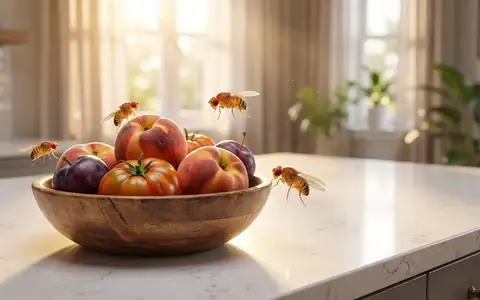
Fruit Flies in Boise: Why They Explode in July and August and How to Eliminate Them Fast (2026 Idaho Guide)
Read Article Seasonal Guide
Pest-Proofing Your Boise Backyard for Summer BBQs and Patio Season (2026 Idaho Guide)
Read Article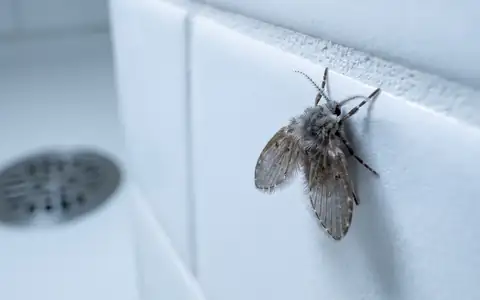 Pest Identification
Drain Flies in Boise: The Fuzzy Little Bugs in Your Bathroom and How to Get Rid of Them (2026 Idaho Guide)
Read Article
Think You Have Fruit Flies?
Call and we'll talk through your options. We usually get out within 24 to 48 hours.
Quarterly plans starting at
$119/quarter
- No-Obligation Quote
- Locally Owned
- Free Re-Service Between Visits
Our Pest Control Services
Complete pest protection. Professional solutions for every pest problem, on a quarterly plan or a one-time visit.
General Pest ControlLearn More
Year-round protection packages
Ant ControlLearn More
Carpenter & pavement ants
Spider ManagementLearn More
Black widows & hobo spiders
Rodent ControlLearn More
Mice, rats & voles
Wasp & HornetLearn More
Nest removal & prevention
Mosquito & OutdoorLearn More
Mosquitos, ticks & fleas
Eco-FriendlyLearn More
Pet & kid safe options
CommercialLearn More
Business & warehouse
Proudly Serving the Treasure Valley
Local technicians from the Treasure Valley, in Boise, Meridian, and surrounding communities.
Pest Control Resources
Expert tips & guides. Local pest knowledge from Boise's trusted exterminators