Quick answer
House flies and blow flies swarm Treasure Valley homes from July through early September because 95-degree heat cuts their egg-to-adult cycle to 7 days, and any garbage can, pet waste pile, or compost bin becomes a fly factory in a week. A cloud of shiny greenish or blue flies inside your house almost always means something died in the wall, attic, or crawlspace and needs to be found before you spray anything. The 4-step fix is remove the breeding source (trash, pet waste, dead animal), seal every screen and door sweep, hang UV light traps indoors, and treat the exterior perimeter to knock down adults at entry points. Green Guard handles the exterior treatment at $49 to start.
Key Takeaways
- House flies are the classic gray fly with 4 dark stripes on the thorax. Blow flies are shiny metallic green or blue. Cluster flies are dull gray with tan bristles. Different flies mean completely different problems.
- A sudden cloud of blow flies inside your house is a signal, not a pest problem. Something (a rodent, bird, or squirrel) died in the wall, attic, or crawlspace and the flies laid eggs on it. Find the carcass first.
- House fly egg-to-adult cycle takes 21 days at 60 degrees but only 7 days at 95 degrees. That is why what looks like 5 flies on July 1st becomes 500 by July 20th if you do nothing.
- The 4-step fix: remove the breeding source, seal screens and door sweeps, hang a UV light trap indoors, and treat the exterior perimeter. Skip any step and the flies come right back.
- Green Guard's $49 initial service includes a full exterior perimeter treatment that knocks down adult flies at the fence line and entry points, plus a re-service guarantee if they return between visits.
In this article

Why House Flies Are Everywhere in Boise Right Now
You open the sliding door to let the dog out on a July evening. Two flies come in. You swat one. By 9 PM there are eight bouncing off the kitchen window. By Saturday morning there is a small dark cloud on the outside of the screen every time the sun hits the west side of the house.
Welcome to peak fly control Boise season. From about the 4th of July through Labor Day, the Treasure Valley turns into a house fly and blow fly factory. Idaho summer heat, backyard grilling, an extra dog in the yard, an open compost bin, one dead vole under the deck. Any of it kicks off a fly explosion in under 10 days.
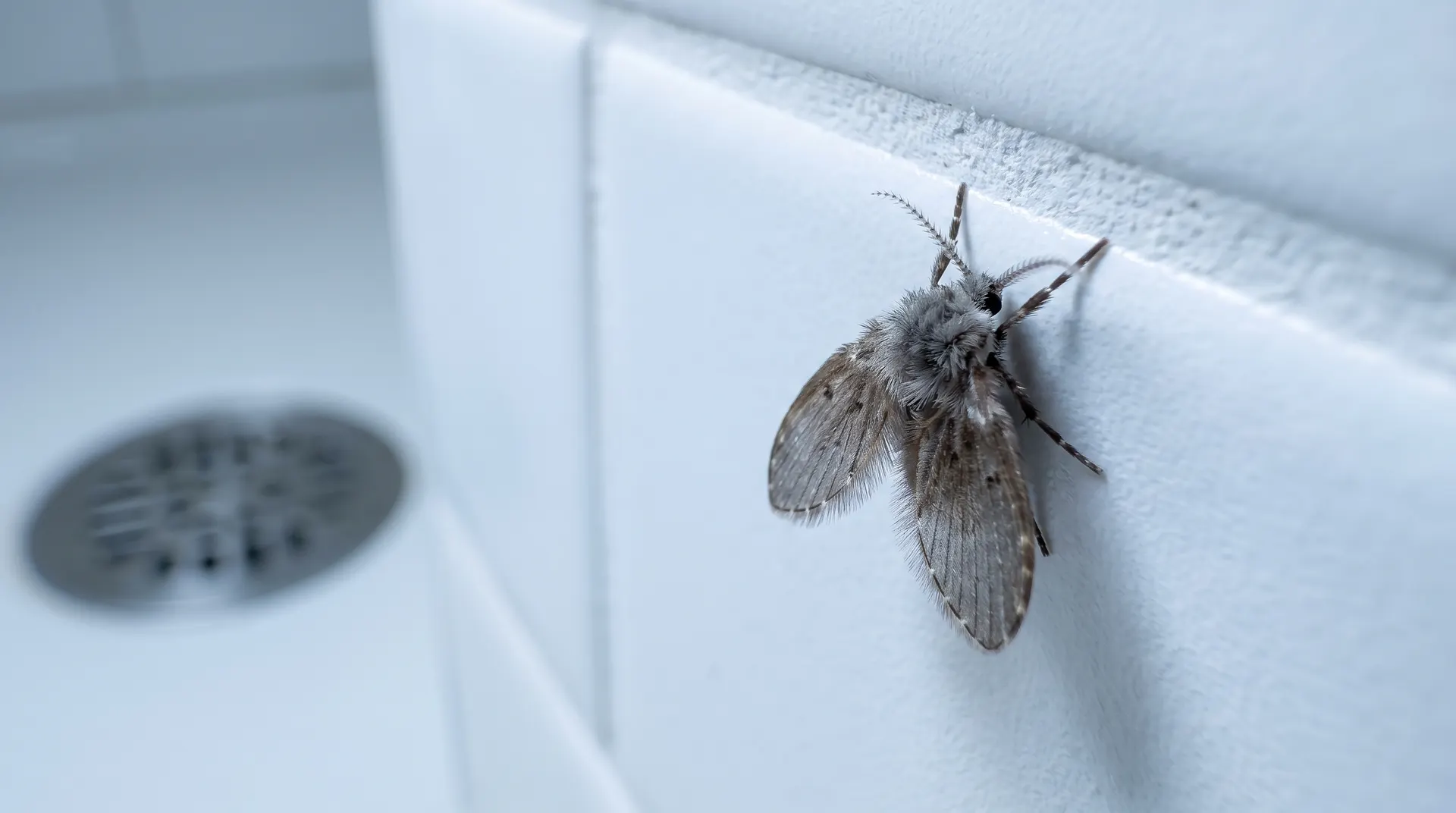
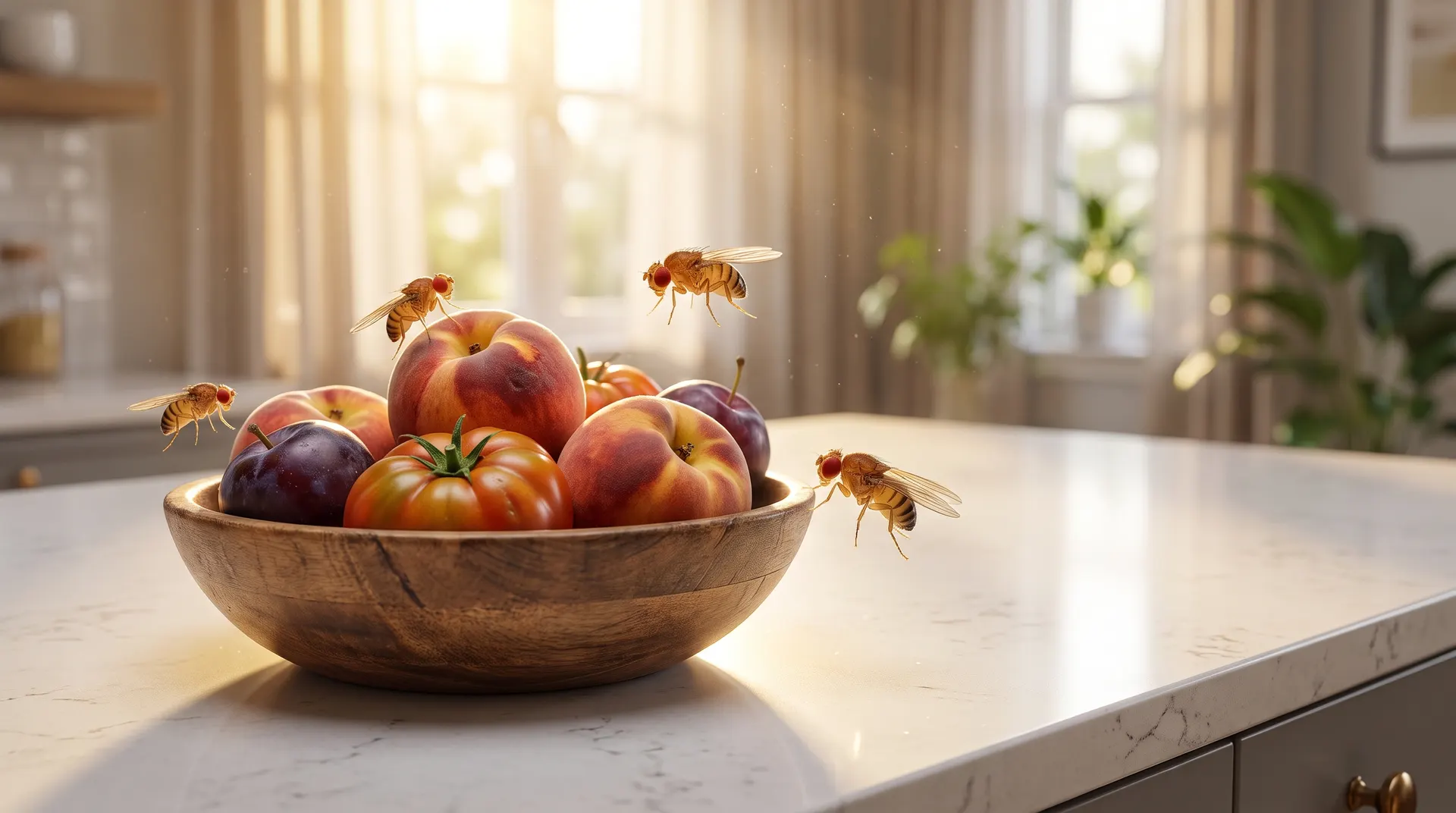
Here is what makes this post different from the ones on our site about fruit flies and drain flies: those posts cover the tiny kitchen flies that hover over your fruit bowl or sit on the bathroom tile. This one is about the big, fast, in-your-face flies. The gray-and-black ones that land on your burger. The shiny green-blue ones that suddenly appear inside a bedroom for no reason. Different pests, different fixes, different urgency. Let's sort it out.
House Fly vs Blow Fly vs Cluster Fly (The 60-Second ID)
Three big flies invade Boise homes in summer. They look similar at a glance but tell you completely different things about what is going on inside or outside your house. Get the ID right first, then pick the fix.
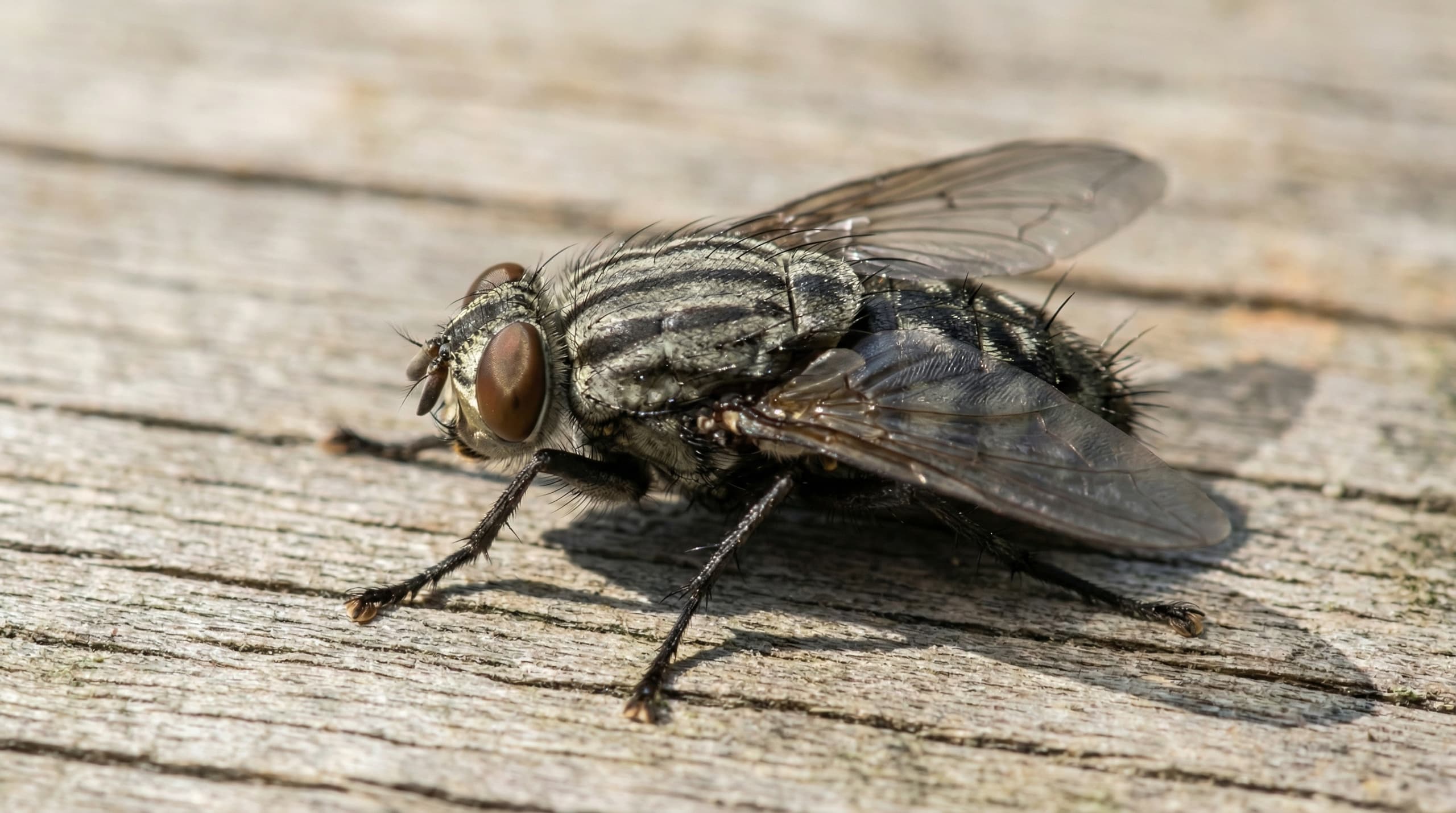
- House fly (Musca domestica). The classic. About 1/4 inch long, dull gray body with 4 dark stripes running down the thorax (the shoulder area behind the head). Red compound eyes. Lands on everything. Rubs its feet together when resting. This is 80% of what you see in a Boise kitchen or on a back patio in July.
- Blow fly (also called bottle fly or green bottle fly). Same size as a house fly but the abdomen is a shiny metallic green, blue, or copper. Looks polished, almost jewel-like. Slower flier. If you see a small handful of these inside your house with no obvious food source, keep reading. This is a signal, not a random visitor.
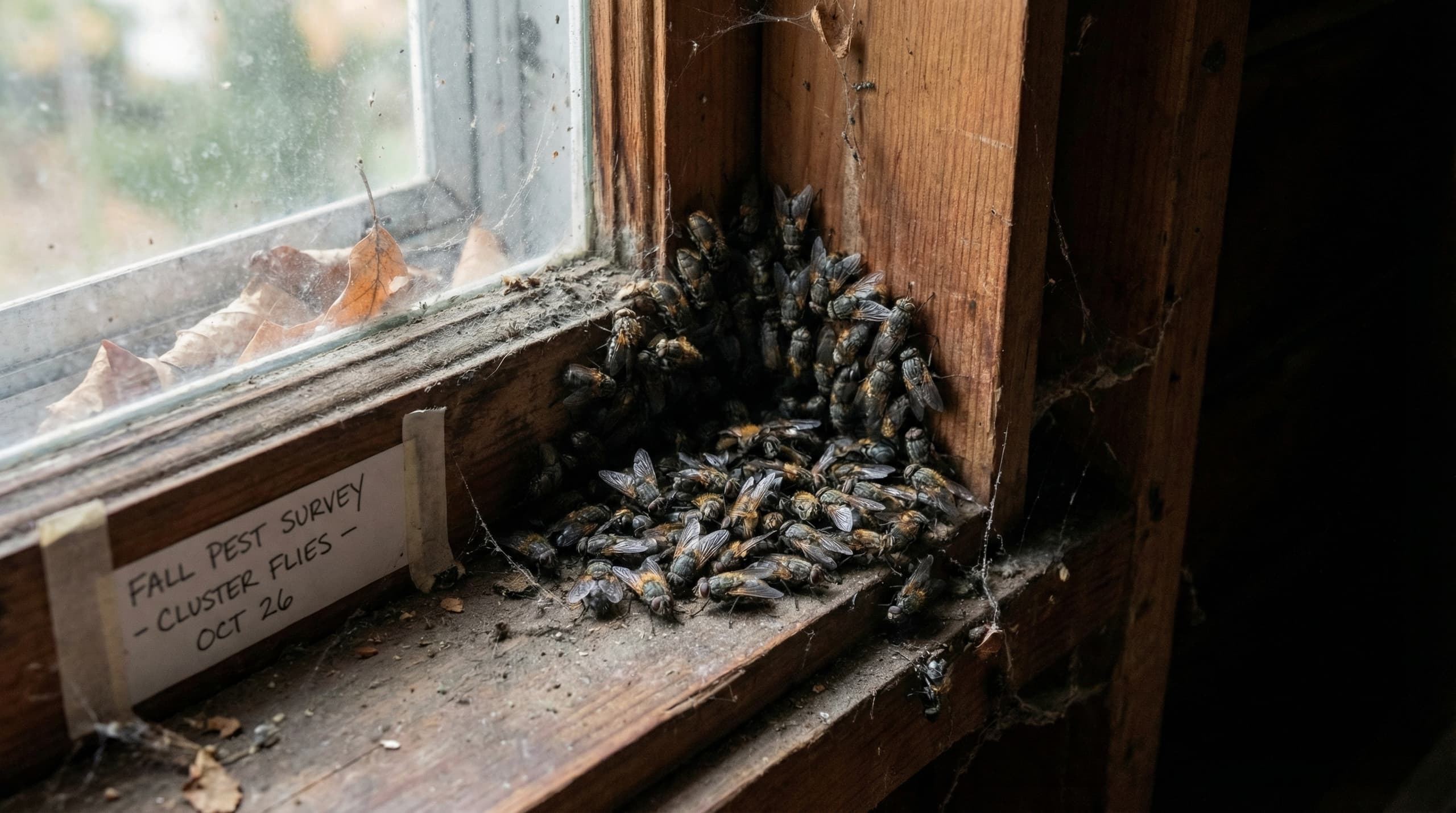
- Cluster fly. Slightly larger than a house fly, dull gray-black with fine golden or tan hairs on the thorax. Sluggish. Shows up in big groups on sunny south-facing windows and attic spaces in fall and early spring. Overwinters inside wall voids. If you have hundreds of slow flies on an upstairs window in September or April, this is what you have.
- Face fly. Nearly identical to a house fly but slightly larger with orange highlights on the abdomen. Common near cattle in Kuna, Middleton, and rural Nampa. Rarely a real home problem but confuses IDs in July.
- What you almost never have. Horse flies and deer flies live outdoors along the Boise River greenbelt and foothill trails. They bite. If it is inside your house biting you, it is almost certainly a stable fly (looks like a house fly, painful bite on the ankle), not a horse fly.
Why Fly Populations Explode Across Boise in July and August
Fly biology runs on temperature, and the Treasure Valley from mid-July through Labor Day is basically a fly incubator. A house fly egg laid in April takes 21 days to become a breeding adult. That same egg laid in July takes 7 days. Same fly, one third the time. That is the difference.
- 95-degree heat compresses the life cycle. Egg to breeding adult in 7 to 10 days at Boise summer temperatures. A single female lays 500 eggs across her life. Do the math on 500 eggs a week from every fly you see and you understand how a small problem becomes a huge one in 3 weeks.
- More time outdoors = more open doors. Kids in and out to the pool. Grill on the patio. Dogs on the deck. Every open door is a fly door. In our 10-plus years serving Treasure Valley homes, screen and door-sweep condition is one of the biggest variables in whether a home has a summer fly problem.
- Backyard fly factories. Boise summers turn dog waste, compost bins, open garbage cans, and forgotten grill drip pans into breeding sites in about 4 days. One un-scooped dog yard can produce thousands of flies a week.
- Foothill and canal corridor pressure. Homes backing up to the Boise foothills, Ridenbaugh Canal, or open ag land near Star and Kuna deal with more flies than downtown homes. Livestock, wildlife carcasses, and irrigation runoff all feed fly populations that then push into nearby yards.
- New construction disturbing rodent nests. As of 2026 Meridian and south Nampa are still building fast. Bulldozer work pushes voles, mice, and ground squirrels into surrounding yards. Some die in wall voids and crawlspaces and become blow fly breeding sites (see next section).
Where House Flies Actually Breed (It Is Almost Always Outside)
House flies do not breed inside your kitchen. They breed outside in something warm, wet, and rotting, then follow food smells indoors. If you want to stop the flies for real, you have to find the breeding site in the yard, not just spray the ones on the window. Starting with the most common at Boise homes:
- Dog waste in the yard. Usually the biggest source. Even a well-kept yard with a couple of dogs will breed thousands of flies a week if the yard is not scooped every 2 to 3 days in July.
- The outside garbage can. Especially if it sits in the sun on the west side of the house, is not lined with a bag, or does not get rinsed between pickups. Meat, dairy, and pet food scraps rot fast at 95 degrees.
- Open compost bins. Great for the garden, great for flies. Anything with a loose lid or an open top pile is a fly buffet. Turn compost weekly and keep meat, dairy, and pet waste out entirely.
- Recycling bins with unrinsed containers. Beer cans, kombucha bottles, and sports drink bottles left with residue are all house fly breeding sites. Store the recycle bin in the garage or shed.
- Grill drip pans and outdoor kitchen grease. Grease that drips into a pan or onto patio pavers under a grill is a hidden breeding site. Empty and scrub after every cookout.
- Standing water and irrigation puddles. Not a huge fly source on its own but combines with any organic matter (grass clippings in a low spot, leaves in a downspout basin) to breed fast.
- Chicken coops and rabbit hutches. Backyard chicken coops in Meridian and Eagle are a fly source if bedding is not changed weekly and manure is not managed.
- Dead rodents and wildlife. If a vole, mouse, ground squirrel, or bird dies under a deck, in a shed, in an attic, or in a wall void, blow flies find it within a day. This deserves its own section (keep reading).
If You Suddenly Have Shiny Green Flies Inside, Something Died
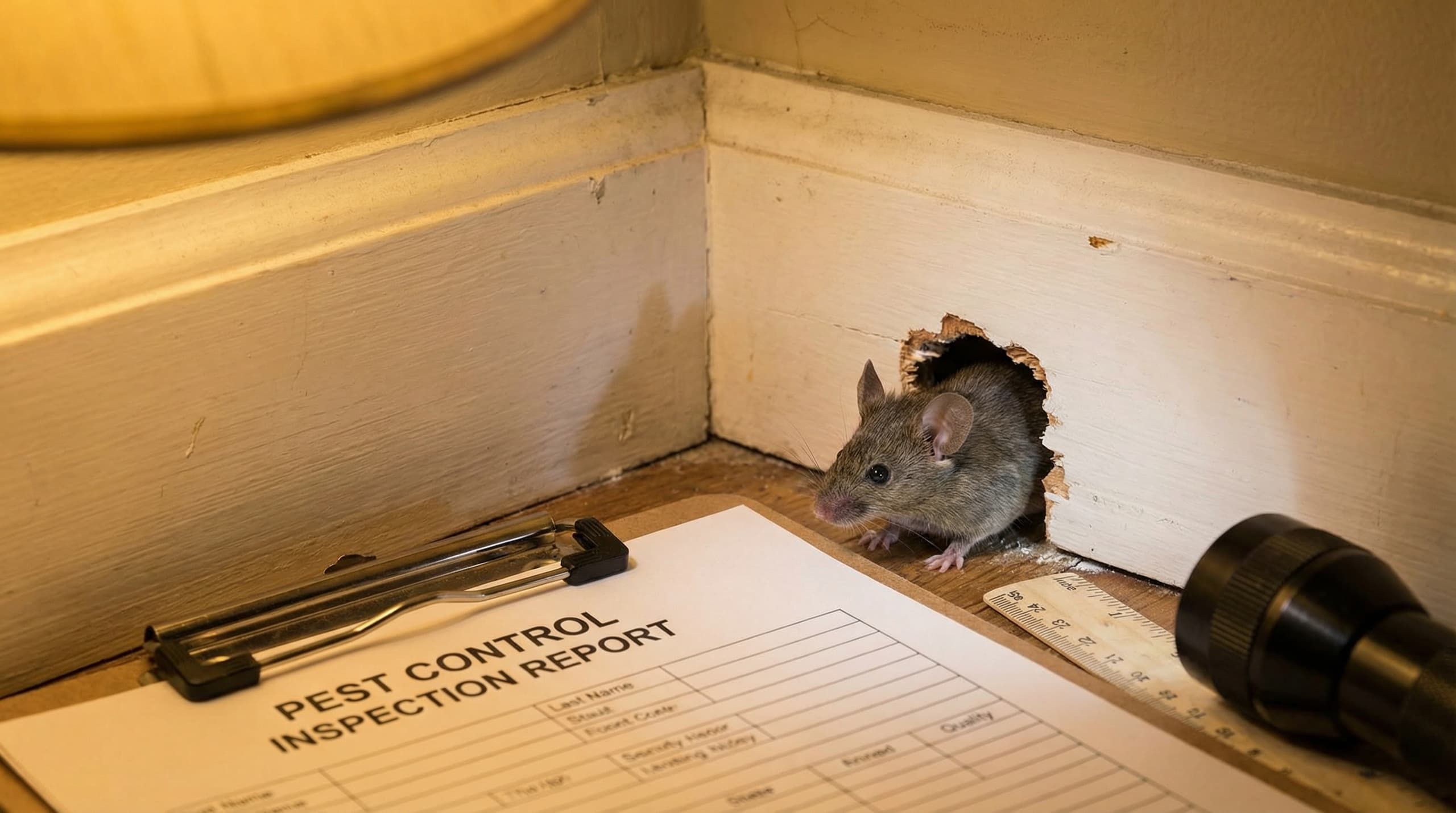
This is the part of the post you actually need to know. Blow flies inside a house, when there is no obvious garbage source and no dead animal you can see, almost always mean there is a dead rodent, bird, or squirrel in a wall void, attic, crawlspace, or duct.
Here is what happens: something dies. Within a few hours in summer heat, adult blow flies lay eggs on the body. In 3 to 5 days the eggs hatch, and roughly 7 to 10 days later, a batch of new adult blow flies emerges. Then a second batch. Then a third. Because the carcass is inside a wall or attic, the adults cannot easily fly back out, so they push toward the nearest light source (usually an upstairs window or a bathroom vent) and end up in your living space.
The tells we look for at Boise homes:
- 10 to 30 shiny green or blue flies showing up over 2 to 3 days in one specific room, usually against a window.
- A faint sweet-rotten smell that gets stronger on hot afternoons, then fades. Sometimes only noticeable in one closet, one bathroom, or near a specific vent.
- Small tan or cream-colored maggots appearing on the floor near a baseboard, ceiling vent, or bathroom fan. If you see maggots inside your house, there is a carcass somewhere nearby.
- Recent rodent activity that stopped suddenly. If you were setting mouse traps or hearing scratching and it went quiet, and now you have blow flies, one of the mice died where you cannot get to it.
- Recent bird or squirrel access. Attics, chimney chases, and disconnected bathroom vents are the most common entry points in Boise. Woodpeckers and starlings get in and cannot get out.
How to Get Rid of House Flies in Boise (The 4-Step Fix)
Done properly, this whole plan drops the fly count by 90% in 5 to 7 days and holds. Skip any one of the four steps and the flies come back inside a week. Here is the order that actually works.
Step 1: Find and Kill the Breeding Source
Nothing else matters until this is done. Adult house flies live about 15 to 25 days. If you cut off breeding, the population dies off on its own.
- Scoop the entire yard for dog waste. Bag it and take it straight to the outside can. Keep scooping every 2 to 3 days for the rest of summer.
- Rinse the outside trash can with a hose and a scoop of dish soap. Line it with a bag. Move it to a shaded spot if it currently sits in direct afternoon sun.
- Turn any compost pile, cover it with a tight lid or a layer of straw, and pull out anything meaty or dairy.
- Rinse every can and bottle before it hits the recycle bin. Store the bin in the garage or shed.
- Pull the grill drip pan and scrub it. Hose down the pavers or grass under the grill.
- Walk the perimeter of the house, deck, shed, and garage. Sniff for anything dead. Check any spot a small animal might have wedged into (behind AC units, under decks, inside shed corners).
Step 2: Seal Screens, Sweeps, and Door Gaps
Flies come inside through gaps you have gotten used to. This step takes 30 minutes and cuts indoor fly counts by more than half.
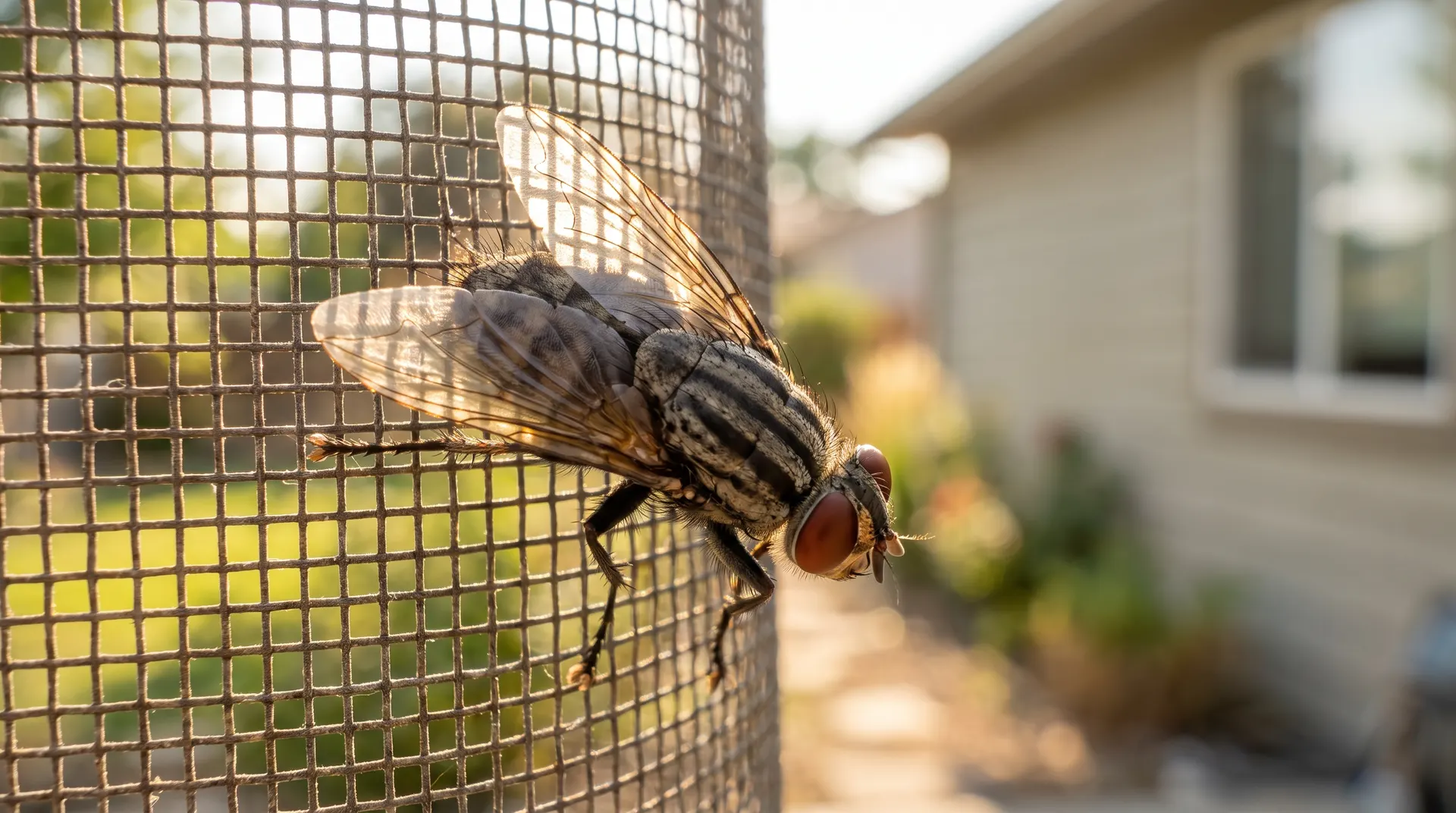
- Walk every window screen. Any hole bigger than a pencil eraser gets a screen patch (5 bucks at Ace Hardware) or a full screen replacement.
- Check door sweeps on every exterior door. If daylight is visible under a closed door, the sweep is worn. Replace it. This is the single most impactful fix in most Boise homes.
- Weatherstripping around the door frame, garage service door, and dryer vent should be intact. Replace anything crumbly.
- Check the seal around any window AC unit. Foam gaskets rot in Boise heat and become fly highways.
- Bathroom and kitchen vent fans should have functioning damper flaps. If a fly is getting in through the exhaust vent (very common in older Boise homes), install a $10 damper vent cover.
Step 3: Hang a UV Light Trap Indoors
A UV light fly trap (the small plug-in kind, not the outdoor bug zapper) knocks down the adult flies that are already inside without spraying anything in your kitchen. Cheap, silent, works overnight.
- Buy a plug-in UV light trap with a sticky glue board (Catchmaster, Vector, or DynaTrap indoor units all work). About 30 to 60 dollars.
- Plug it in near the biggest fly hot spot, usually a kitchen counter, a mudroom, or a bathroom vanity. Keep it at least 5 feet from any window (windows compete for attention and steal flies from the trap).
- Leave it on 24/7. Swap the glue board when it fills up.
- For a serious problem, add a second trap in the room with the most fly activity. Total cost is still under 100 dollars and you skip the fly swatter game.
Step 4: Treat the Exterior Perimeter
This is the step homeowners skip and pros do not. A treated 3-foot-up, 3-foot-out barrier around the entire foundation reduces the adult fly count landing on your siding, hovering around your doors, and pressuring your screens. Fewer flies at the door means fewer flies inside.
- Green Guard's general pest control treatment includes a full exterior barrier spray with an organic-based, hospital-grade product safe for kids and pets. Same products used in daycares.
- The barrier lasts about 90 days under normal Boise summer conditions. That covers you from mid-July through mid-October, right through peak fly season.
- For homes near foothill open space, canals, or livestock, we can add targeted treatment to trash can areas, dog runs, and compost zones.
- If pests come back between quarterly visits, we come back free. That is what re-service means.
How Green Guard Handles Fly Control in Boise Homes
Our $49 initial service was built for the summer fly wave. Here is what visit one looks like when you call us for flies:
- Full property walk. We ID which fly you have (house fly, blow fly, cluster fly, or something else), find the outside breeding source, and check the yard, trash zone, and any dog area.
- Blow fly heads-up. If we see blow flies inside, we'll tell you what they usually mean and where a carcass tends to end up. We don't go into attics or crawl spaces or check wall voids, so the search is yours or a specialist's. Finding the dead animal is the fastest way to fix a blow fly problem.
- Full exterior barrier treatment. 3 feet up the foundation, 3 feet out on the ground, all doorways, all window frames, all eaves. Organic-based product, safe once dry (30 to 60 minutes).
- Targeted spot treatments. Dog run, trash can pad, compost zone, and any active fly resting spots (usually south-facing siding in the afternoon sun).
- Interior treatment on request. Baseboards and crack-and-crevice work if you want it. Often optional for flies since the fix is outside, but available.
- Quarterly protection plan. Return visits every 90 days keep flies down all year. If pests come back between visits, we come back free.
When to Stop DIY and Call Someone
House flies are one of the pests most homeowners can knock down themselves with the 4-step plan above. Blow flies are the ones you want help with. Call us when any of these are true:
- You have 20-plus shiny green or blue flies showing up inside and you cannot find a carcass. That is a dead-animal-in-the-walls case and we find it faster than you will.
- You did the 4-step DIY plan thoroughly and the flies came back within a week. Something is being missed and a walk-through will find it.
- You have a rental property or vacation rental with tenants or guests complaining. The turnover time in July does not leave room for trial and error.
- You run a restaurant, brewery, coffee shop, food truck, or daycare. Our commercial pest control team handles the fly protocols that health inspectors expect.
- You have backyard chickens, rabbits, or a horse property and the fly load has gotten out of control. Livestock properties in Kuna, Middleton, and rural Eagle need a slightly different approach than suburban homes.
- Cluster flies are showing up in the fall or spring inside upstairs windows. Cluster flies overwinter inside your wall voids, and the fix is different from house flies (exterior perimeter treatment in late summer stops next year's population).
Ready to Get Your House Back?
Try the 4-step plan first. It is free and works for most Boise fly problems. If you are still swatting flies a week later, or if you are seeing shiny green blow flies inside with no obvious source, call us. We find the breeding site, treat the exterior perimeter, and back the visit with a free re-service if pests return.
Green Guard serves Boise, Meridian, Eagle, Nampa, Caldwell, Kuna, Star, and the rest of the Treasure Valley. Just $49 to start, organic-based products safe for kids and pets, and if pests come back between visits, we come back free. Call (208) 297-7947 or book online. Same-day service is often available.
Frequently Asked Questions
Why do I suddenly have so many flies in my house Boise?
Quick answerAlmost always one of three things.
First, an outside breeding source (unscooped dog waste, an open compost pile, or a hot uncovered trash can) suddenly took off in July heat and the population jumped in a week. Second, a screen or door sweep failed and the flies coming in from the yard have easy access. Third, if the flies are shiny green or blue, something died in a wall, attic, or crawlspace and blow flies are hatching in batches. Sort out which one you have first, then apply the fix.
What does a blow fly mean in my house Idaho?
Quick answerBlow flies inside a house almost always mean there is a dead rodent, bird, or squirrel in a wall, attic, or crawlspace.
Blow flies find carcasses within hours in summer heat, lay eggs, and the next batch of adults hatches in 7 to 10 days. If you see 10 or more shiny green or blue flies over a couple of days in one specific room, especially against a window, look for a faint sweet-rotten smell and check attics, crawlspaces, and wall voids near recent rodent activity. Killing the flies does nothing. Finding the carcass is the fix.
How do exterminators get rid of flies?
Quick answerA pro treatment for flies has 3 parts.
First, an inspection to ID the fly and find the outside breeding source (dog waste, compost, trash zone, dead animal). Second, a full exterior perimeter barrier treatment that knocks down the adult flies pressuring your doors and windows. Third, targeted spot treatments on trash pads, dog runs, and resting zones. Green Guard's $49 initial service covers all three, uses organic-based products safe for kids and pets, and includes a free re-service if flies return between visits.
Why are there so many flies in Idaho right now?
Quick answerTwo summer-specific reasons.
First, Boise and Treasure Valley temperatures from mid-July through Labor Day compress the house fly life cycle from 21 days down to 7 days, so populations triple or quadruple in a couple of weeks. Second, the same heat accelerates breeding in every backyard source: dog waste, compost, trash cans, grill drip pans, and dead wildlife under decks and sheds. It is a temperature-driven population wave that peaks in late July and August every year, and it fades in late September as nights cool.
What is the difference between a house fly and a blow fly?
Quick answerHouse flies are dull gray with 4 dark stripes on the thorax (the shoulder area behind the head) and red eyes.
Blow flies are the same size but their abdomen is a shiny metallic green, blue, or copper color. House flies breed in trash, dog waste, and compost outside. Blow flies breed on animal carcasses. If a small group of blow flies is inside your house with no obvious food source, that is a signal something died in a wall or attic, not a random visitor.
Do bug zappers work on house flies?
Quick answerOutdoor bug zappers are not effective for house flies and kill huge numbers of beneficial insects like moths, lacewings, and beetles instead.
Indoor UV light glue traps (the small plug-in kind) are far better for house flies because they use light wavelengths flies are drawn to and use a sticky board instead of an electric grid. A 30 to 60 dollar indoor UV trap in the kitchen or mudroom will out-perform any outdoor zapper for actual fly control.