
Rodents
House Mouse
Mus musculus
IdentificationHow to Identify House Mouse
Quick Answer
House mice are small rodents with dusty gray to light brown fur, oversized ears for their body, and long scaly tails about as long as their bodies. Adults weigh 1/2 to 1 ounce.
Full identification notes
Their droppings are rod-shaped, about 1/4 inch long, with pointed ends. They leave greasy rub marks along the paths they travel most.
Free
Re-Service Between Visits
4.9/5
Google Rating
9 to 5
Office Hours, Mon to Fri
House Mouse Behavior & Habits
Understanding how house mouse behave helps prevent infestations
Mice are curious and they'll check out anything new in your home.
More about their habits
They're mostly nocturnal and can squeeze through openings as small as 1/4 inch (about the width of a pencil). A single female produces 5-10 litters a year with 5-6 pups each. One pair can balloon into thousands of descendants in a single year. They stay close to food, usually within 10-25 feet of the nest.
House Mouse Risks & Dangers
What house mouse can do to your health and property
Health Risks
Mice contaminate way more food than they actually eat, through droppings and urine.
Property Damage
Mice do real damage by gnawing on wiring (a serious fire risk), insulation, stored items, and structural materials.
Full health and property details
Health Risks
They spread diseases like Salmonella, Hantavirus, and Lymphocytic Choriomeningitis (LCM). Their urine and dander trigger allergies and asthma, especially in kids. Mice also carry parasites like fleas, ticks, and mites.
Property Damage
They nest in insulation, which kills its R-value. They'll ruin a pantry's worth of food in a week.
Signs of House Mouse Infestation
Look for these indicators in your home
Signs You Have House Mouse
What homeowners spot first
- Droppings in drawers, cabinets, and along walls
- Gnaw marks on food packaging
- Scratching or scurrying sounds in walls at night
More signs to look for
- Greasy rub marks along baseboards
- Shredded paper, fabric, or insulation (nesting material)
- Musky odor, especially in enclosed areas
- Actual mouse sightings (indicates larger problem)
House Mouse in Boise & the Treasure Valley
In our experience across the Treasure Valley, house mouse calls climb hardest from October through February as temperatures drop and mice push indoors for warmth.
More on what we see locally
We see them in every kind of home, but older Boise neighborhoods like the North End, Hyde Park, and Vista tend to have more entry issues thanks to original foundations and aging garage door seals. Boise's dry climate also pushes mice toward indoor water sources year-round, so even newer builds in Meridian and Eagle aren't immune.
How We Handle House Mouse
What our approach looks like
Mice inside your home are covered by our pest plan.
Our full approach
We set locked, tamper-resistant bait stations where mice actually travel (including the crawl space entrance when needed), plug the obvious gaps with copper mesh, and give you a short list of sanitation fixes. Snap traps are rare. We don't go into attics or crawl into crawl spaces, and bigger repairs like foundation cracks are a job for you or a handyman. If mice show up between visits, we come back free.
How to Prevent House Mouse
Steps you can take to reduce the risk of infestation
- Seal any opening bigger than 1/4 inch (yes, that small)
- Install door sweeps on exterior doors and the garage door
- Store food in airtight containers, including the pet kibble
More prevention steps
- Keep the kitchen wiped down, especially at night
- Don't leave pet food bowls out overnight
- Clear yard clutter and weeds along the foundation
- Store firewood at least 20 feet away from the house
House Mouse Questions Answered
Common questions about identification, prevention, and treatment
Call (208) 297-7947I only saw one mouse. Is it really a problem?
Quick answerAlmost always, yes.
Mice are social and rarely alone, so if you spotted one there are usually several more behind the walls. With a female producing 5-10 litters a year, a small problem turns into a real infestation fast. Best to handle it early.
Do mice come inside during certain times of year?
Quick answerThey can invade year-round, but most Treasure Valley infestations kick off in fall as outdoor temperatures drop.
Mice push inside looking for warmth, food, and water. In Idaho, October and November are our busiest months for new mouse calls.
Can mice cause a house fire?
Quick answerYes, and it's more common than people think.
Mice love chewing on electrical wiring, which can expose conductors and spark. Rodent damage is a real cause of unexplained house fires, which is why we treat any mouse sighting seriously.
Similar Pests
Learn about other pests in this category



Related Guides
Expert articles related to house mouse in Idaho
 Cost & Value Guides
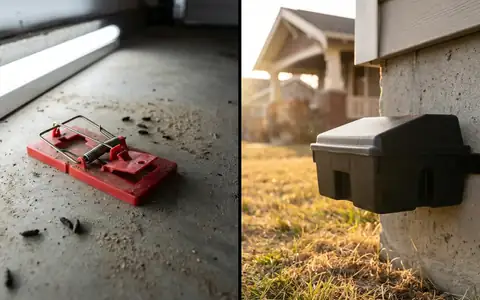
Mouse Exterminator vs. DIY Mouse Traps in Boise: When Pro Help Actually Saves Money (2026)
Read Article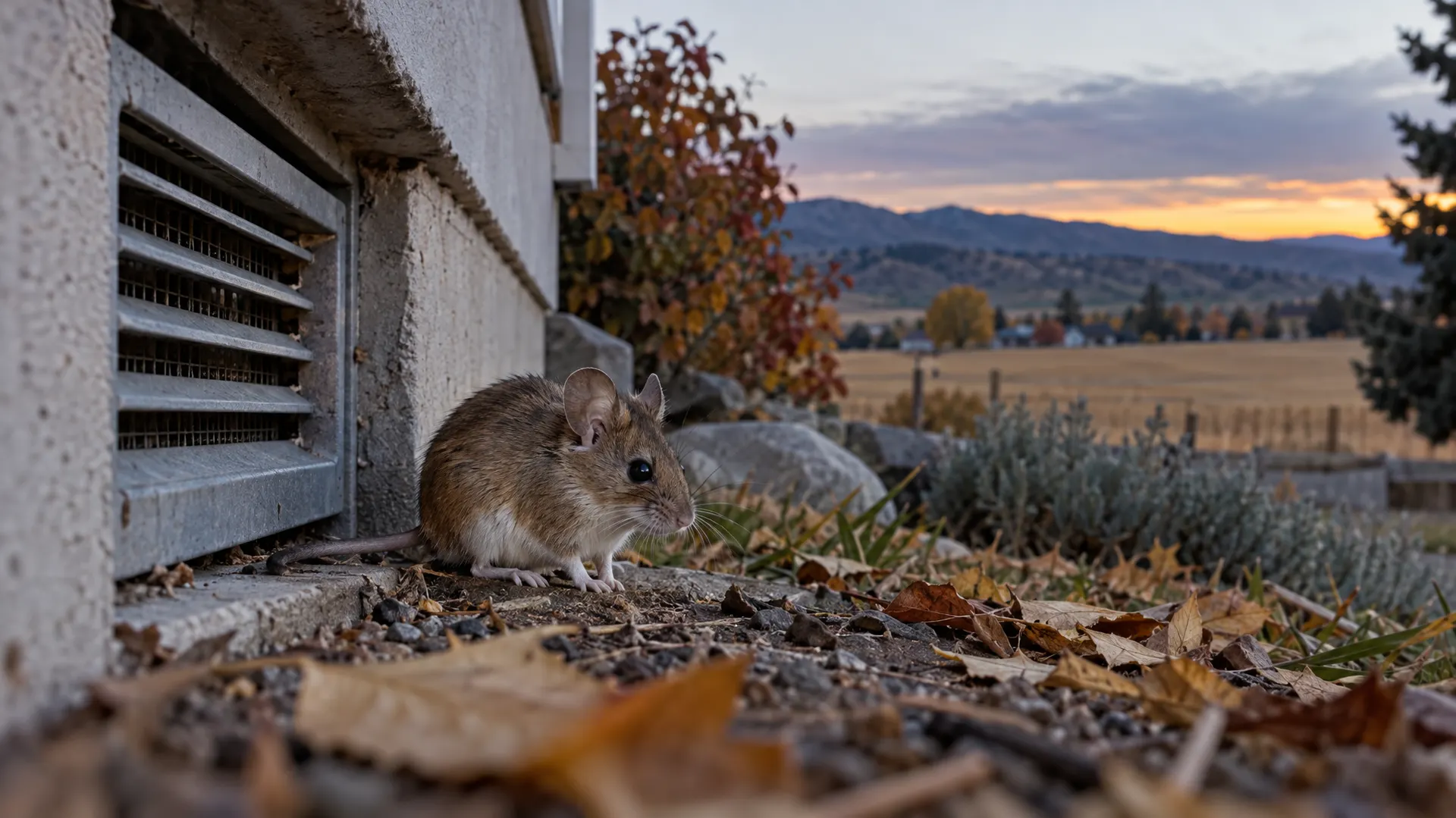 Seasonal Guide
Mouse Exterminator in Kuna: Why Mice Move Into Kuna Homes This Fall
Read Article Pest Identification
Signs You Already Have Mice in Your Boise Home: What to Do Before Fall Makes It Worse (2026)
Read Article
Think You Have House Mouse?
Call and we'll talk through your options. We usually get out within 24 to 48 hours.
Quarterly plans starting at
$119/quarter
- No-Obligation Quote
- Locally Owned
- Free Re-Service Between Visits
Our Pest Control Services
Complete pest protection. Professional solutions for every pest problem, on a quarterly plan or a one-time visit.
General Pest ControlLearn More
Year-round protection packages
Ant ControlLearn More
Carpenter & pavement ants
Spider ManagementLearn More
Black widows & hobo spiders
Rodent ControlLearn More
Mice, rats & voles
Wasp & HornetLearn More
Nest removal & prevention
Mosquito & OutdoorLearn More
Mosquitos, ticks & fleas
Eco-FriendlyLearn More
Pet & kid safe options
CommercialLearn More
Business & warehouse
Proudly Serving the Treasure Valley
Local technicians from the Treasure Valley, in Boise, Meridian, and surrounding communities.
Pest Control Resources
Expert tips & guides. Local pest knowledge from Boise's trusted exterminators