Quick answer
Pest control for renters in Boise, Idaho is usually the landlord's job. Idaho's implied warranty of habitability treats insect and rodent infestations as a habitability problem, and Idaho Code § 6-320 lets you give your landlord three days written notice to fix it. You cannot legally withhold rent in Idaho, so document everything in writing instead. If your landlord stalls or the pests are minor, renters can hire their own pest control. Green Guard treats apartments and rentals across the Treasure Valley with the landlord's permission, starting with a $49 first service.
Key Takeaways
- Idaho landlords are responsible for pest infestations that affect habitability, including mice, roaches, and anything present before you moved in
- Written notice is everything. Idaho Code § 6-320 requires three days written notice before you have any legal standing
- Idaho does NOT allow rent withholding or repair-and-deduct for pest problems. Doing it anyway can get you evicted
- Renters can hire their own pest control, but you need written landlord permission for any interior treatment
- Green Guard does not treat bed bugs. That is a landlord-level specialist job in multi-unit buildings
In this article

Who Pays for Pest Control for Renters in Boise, Idaho?
In most Idaho rentals, your landlord pays. Idaho's implied warranty of habitability requires a landlord to keep the place fit to live in, and courts treat serious insect and rodent infestations as a habitability problem. The main exception is when you clearly caused it.
That is the short version. The longer version matters, because Boise renters get pushed around on this constantly.
About 4 in 10 Boise households rent, and pest control for renters in Boise, Idaho follows different rules than it does for homeowners. We hear from those folks all the time. The story is almost always the same: mice in the kitchen, a landlord who says "just buy some traps," and a tenant who has no idea what the law actually says.
So here it is, straight, as of September 2026.
What Does Idaho Law Actually Require Your Landlord to Do?
Idaho doesn't have a statute that says the words "landlord must pay for pest control." What it has is Idaho Code § 6-320, which lets a tenant sue when a landlord fails to keep the premises in a habitable condition.
Idaho courts read habitability to cover significant infestations. A few sugar ants on the counter in July? Probably not. Mice living in your stove insulation? Yes.
Here is the part almost nobody tells renters. Before you have any legal standing at all, you have to serve written notice and give the landlord three days to start fixing it. Three days is one of the shortest landlord cure windows in the country, and it only starts counting when the notice is in writing.
A text message you sent in June does not count as your notice. Neither does a phone call. Neither does telling the on-site manager in the parking lot.
Which Pests Are the Landlord's Problem and Which Are Yours?
This is where most disputes actually land. The dividing line is cause, not pest type. (Renting out a place yourself? Our property manager pest checklist covers the other side of this.)
Generally the landlord owns it when:
- The pests were there before you moved in and a unit has to be pest-free at move-in, regardless of what the lease says
- The problem is structural, like a gap under the exterior door, a torn crawlspace vent, or a foundation crack letting mice in
- It's a shared or building-wide issue, which covers most German cockroach and mouse activity in multi-unit buildings
- Deferred maintenance caused it, such as a slow plumbing leak feeding a roach or silverfish population
- Anything serious enough to make the unit genuinely unhealthy to live in
When the Pest Problem Is Genuinely Your Fault
Fair is fair. Some of it is on the tenant.
If you leave dog food out on the patio, you're going to get ants and mice. If dishes sit for a week, you get fruit flies and roaches. If you brought a used couch home from a Boise Craigslist pickup and it came with passengers, that's yours.
Landlords will point at housekeeping first, every single time. Which is exactly why the documentation below matters so much.
How Do You Report a Pest Problem to Your Landlord?
Do it in writing, and build a record that would make sense to a judge who has never met you. Five steps:
- Photograph everything, with dates. Live pests, droppings, damage, the gap under the door. Video is better than stills for roaches and mice because it shows activity level
- Write down a timeline. First sighting, how often, which rooms, what you have already tried
- Send written notice that cites Idaho Code § 6-320 by name, lists the problem, and demands it be fixed. Email is fine. Certified mail is better
- Keep a copy of everything you send. Screenshot the sent email. If you hand-deliver, take a photo of it in the drop box
- Follow up in writing after the three days pass, even if you only say "I have not heard back"
What If Your Landlord Won't Do Anything?
Start with the thing you must not do.
Do not withhold rent. Idaho is not a rent-withholding state. Idaho also does not give you a general repair-and-deduct right (the one narrow exception is a non-functioning smoke detector). A lot of national "renters rights" articles get this wrong because they average all 50 states together.
If you stop paying rent over a mouse problem in Boise, you are the one who ends up in eviction court.
What you can actually do, roughly in order:
- File the § 6-320 action. After the three days, you can sue to force repairs and recover damages. Small claims handles a lot of these
- Call the city code compliance office. Boise has renter protections and a code compliance team that handles habitability complaints on rental property
- Contact the local health district if the infestation is a genuine health hazard, particularly rodents in a multi-unit building
- Talk to a local legal aid organization. Free or low-cost tenant help, and they know Ada County judges
- Ask to terminate the lease if the unit is truly not habitable and the landlord has abandoned the problem
Why Apartment Pest Problems Are Different
Renting an apartment changes the pest math in two ways, and both work against you.
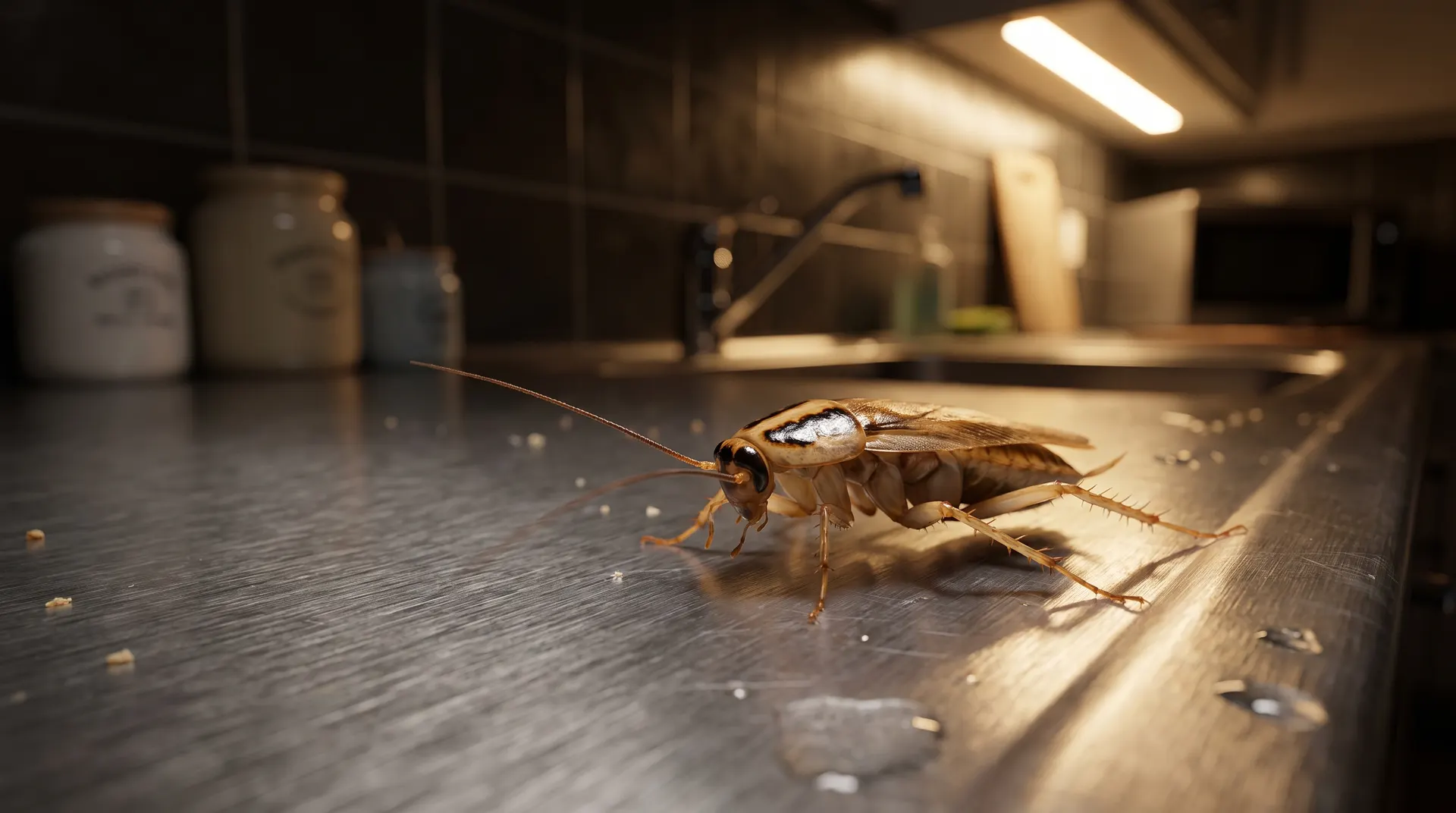
First, you share walls. German cockroaches move between units through plumbing chases, shared wiring, and outlet boxes. So do mice. Treating your unit alone while unit 4B goes untreated is throwing money away, and this is exactly why building-wide roach problems have to be handled at the landlord level, not the tenant level.
In Boise, roach problems mostly show up in older apartment buildings, not single-family homes.
Second, you can't fix the building. The single most effective thing anyone can do about mice is seal entry points, and a renter can't re-caulk a foundation or install a new door sweep without permission. Your best tools are the ones you own outright.
What Can Renters Do Without Landlord Permission?
Plenty, actually. None of it requires touching the structure.
- Put dry goods in hard containers. Cardboard and plastic bags mean nothing to a mouse
- Pull pet bowls at night. This is the single highest-impact thing renters skip
- Roll a towel against the bottom of your exterior door. Not permanent, not a modification, and it blocks the number one entry point
- Take trash out nightly, especially in summer. Shared dumpsters in Boise apartment complexes are ant and wasp magnets from June through September
- Vacuum spider webs off patios and window tracks. Removing webs discourages them from rebuilding in the same spot
- Keep a moisture log. If your bathroom stays damp, silverfish and roaches will find it, and a documented leak becomes the landlord's problem
When Should a Renter Hire Their Own Exterminator?
Sometimes paying for it yourself is the rational move, even when it's technically the landlord's job.
It makes sense when the problem is small and inside your unit (ants, spiders, earwigs, silverfish), when you'd rather not fight your landlord over a $200 issue, or when your landlord agrees to reimburse you but wants you to schedule it.
It does not make sense for building-wide roach or mouse infestations. Those need every unit treated at once, and you'll spend your own money for a few weeks of relief.
You need written landlord permission before any interior treatment. We ask renters for this every time. It protects you under your lease and it protects us. An email saying "yes, you may have pest control treat your unit" is enough.
For renters, Green Guard has two paths. Our $49 initial service comes with a quarterly or bimonthly plan, which works well if you're on a 12-month lease and want coverage the whole way through. Quarterly runs $119 per treatment for units up to 2,500 sq ft, and it includes our free re-service guarantee, so if the ants come back between visits we come back free.
If you don't want a service agreement, a one-time treatment is $200 for up to 2,500 sq ft with a 30-day warranty. We break the full price list down in our Boise pest control pricing page. Most Boise apartments fall well under that square footage.
Call us at (208) 297-7947 and tell us you're renting. We'll walk you through what we need from your landlord.
The One Renter Pest We Can't Help With
Bed bugs. Green Guard does not treat bed bugs, and we'd rather tell you that up front than sell you something that won't work.
Bed bugs in a rental are almost always a landlord-level job anyway. They spread between units, they need heat treatment or a multi-visit chemical protocol, and treating one apartment while the neighbors go untreated is a well-known way to waste money. Report it in writing, cite habitability, and push the landlord to bring in a bed bug specialist for the building.
We also don't handle termites or wildlife removal beyond rodents. Those need a specialist too. We don't treat attics, but crawl spaces are different: we put bait stations at the crawl space entrance for mice.
What we do cover is the everyday stuff renters actually call about: ants, spiders, wasps, earwigs, crickets, silverfish, box elder bugs, and mice. Roaches aren't a typical Green Guard service. When we take one on, a technician assesses the job and quotes it before any work.
Renting in the Treasure Valley? Here's Your Move
Put it in writing first. Always. A dated email citing Idaho Code § 6-320 costs you five minutes and changes the whole conversation with a landlord who was hoping you'd drop it.
Then decide whether this is a fight worth having or a $200 problem you'd rather just solve. Both are reasonable.
If you want it handled, we treat rentals and apartments across Boise, Meridian, Eagle, Nampa, Caldwell, Kuna, and Star. Organic-based, hospital-grade products, safe for kids and pets once dry in 30 to 60 minutes. We've protected 2,500+ Treasure Valley families and hold 4.9 stars across 170+ reviews.
Call (208) 297-7947. Just $49 to start, and bring your landlord's permission email. Same-day service is often available.
Frequently Asked Questions
Is my landlord responsible for pest control in Idaho?
Quick answerUsually, yes.
Idaho's implied warranty of habitability, enforced through Idaho Code § 6-320, requires landlords to keep rentals fit to live in, and significant insect or rodent infestations qualify. The landlord is clearly responsible if the pests predate your move-in or come from a structural or maintenance issue. If you caused the problem through housekeeping, it shifts to you.
Can I withhold rent in Idaho if my landlord won't handle a pest problem?
Quick answerNo.
Idaho does not allow rent withholding, and there is no general repair-and-deduct right (the only narrow exception is a non-functioning smoke detector). Withholding rent over pests will get you evicted. Serve written three-day notice under Idaho Code § 6-320 instead, then sue or file a complaint with the city code compliance office if nothing happens.
How much does pest control cost for a Boise apartment?
Quick answerGreen Guard's initial service is $49 when you start a quarterly or bimonthly plan.
Quarterly is $119 per treatment for units up to 2,500 sq ft, which covers virtually every Boise apartment. If you'd rather not sign a 1-year agreement, a one-time treatment is $200 with a 30-day warranty.
Can a renter hire their own exterminator without telling the landlord?
Quick answerYou should always get written permission first, and any reputable company will ask for it.
Most Idaho leases restrict what a tenant can do inside the unit, and interior treatment falls under that. A simple email from your landlord saying you may have pest control treat your unit is enough.
What should I do about roaches in my Boise apartment building?
Quick answerReport it in writing immediately and push for building-wide treatment.
German cockroaches travel between units through plumbing chases and shared walls, so treating your unit alone rarely holds. In Boise, roach problems mostly show up in older apartment buildings, where units share more infrastructure.