
Insects
Carpenter Ants
Camponotus species
IdentificationHow to Identify Carpenter Ants
Quick Answer
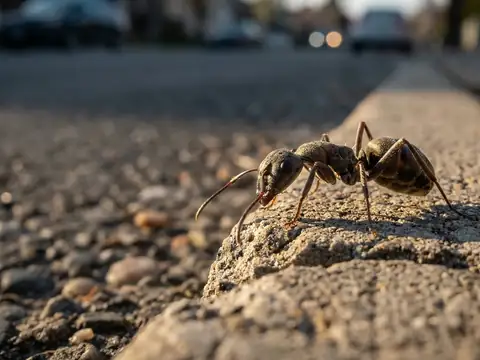
Carpenter ants are among the largest ants in North America, measuring 6-13mm long (about a quarter inch). Most around Boise are solid black, though some species in the foothills have a reddish-brown thorax.
Full identification notes
Look for a single node between the thorax and abdomen, an evenly rounded thorax, bent (elbowed) antennae, and a narrow waist. Those last two features are how you tell them apart from termites.
Free
Re-Service Between Visits
4.9/5
Google Rating
9 to 5
Office Hours, Mon to Fri
Carpenter Ants Behavior & Habits
Understanding how carpenter ants behave helps prevent infestations
Carpenter ants excavate galleries in wood to build nests.
More about their habits
They don't actually eat the wood, they remove it to expand the colony. Parent colonies usually sit in trees, stumps, or landscape timbers, with satellite colonies tucked inside walls, decks, and window frames. They're mostly nocturnal, so the big black ants you spot at 11 PM are the same ones quietly chewing through your trim during the day.
Carpenter Ants Risks & Dangers
What carpenter ants can do to your health and property
Health Risks
Carpenter ants can bite when handled or pressed against skin, but they rarely go after people unprovoked.
Property Damage
Carpenter ants cause real structural damage by hollowing out wood for nesting.
Full health and property details
Health Risks
They don't carry diseases. The bigger health concern is what their presence usually means: a hidden moisture problem in the wall, sub-floor, or roof line that's also feeding mold and wood rot.
Property Damage
The damage progresses slowly over years, not months like termites, but untreated colonies can compromise framing, deck posts, and window headers. Repair costs in the Treasure Valley depend on how long the colony went unnoticed.
Signs of Carpenter Ants Infestation
Look for these indicators in your home
Signs You Have Carpenter Ants
What homeowners spot first
- Large black ants inside home, especially at night
- Sawdust-like debris (frass) near wooden structures
- Faint rustling sounds inside walls
More signs to look for
- Winged ants emerging indoors (spring swarmers)
- Damaged wood with smooth, sandpapered galleries
- Ants trailing from trees or stumps toward house
Carpenter Ants in Boise & the Treasure Valley
Carpenter ants are one of the most common ant calls we run in the Treasure Valley, especially in the Boise foothills, North End, Hidden Springs, and along the river corridor in Eagle and Garden City.
More on what we see locally
Older 1950s-1970s ranch homes with cedar trim, wood decks, and big mature shade trees are the prime targets. Idaho's dry summers push the colonies toward any moisture source they can find, so we see most carpenter ant activity from late April through October, peaking when irrigation kicks on and crawlspace humidity rises.
How We Handle Carpenter Ants
What our approach looks like
Carpenter ant control means tracking down both the parent colony (usually outside in a tree or stump) and the satellite colonies hiding in your walls.
Our full approach
We combine targeted non-repellent baits the workers carry back to the queen with a full exterior perimeter spray. Full knockdown typically takes 2 to 4 weeks because the colony structure is layered. New customers start at $49 for the initial service, and our free re-service guarantee covers any callbacks between visits if the ants come back.
How to Prevent Carpenter Ants
Steps you can take to reduce the risk of infestation
- Eliminate wood-to-soil contact around foundation
- Fix all moisture problems and leaky pipes
- Replace water-damaged wood promptly
More prevention steps
- Trim tree branches away from roof
- Store firewood away from house and elevated
- Ensure proper drainage away from foundation
Carpenter Ants Questions Answered
Common questions about identification, prevention, and treatment
Call (208) 297-7947Are carpenter ants worse than termites?
Quick answerCarpenter ants cause damage more slowly than termites, but a colony left alone for two or three years can still compromise framing, deck posts, and window trim.
Unlike termites, they don't actually eat wood. They excavate it for nesting, so you'll see sawdust piles rather than mud tubes. Green Guard treats carpenter ants under our standard pest control plans; termites we don't treat and we refer those out.
How do I know if I have carpenter ants or regular ants?
Quick answerCarpenter ants are much larger than pavement or sugar ants (6-13mm vs. 2-4mm), usually solid black, and you may notice sawdust-like debris (frass) piled near baseboards, window sills, or deck posts.
If the ants you see are over a quarter-inch long and walking single file inside the house at night, they're almost always carpenter ants.
Can I treat carpenter ants myself?
Quick answerHardware-store sprays rarely wipe out a carpenter ant colony.
Spraying visible ants kills the foragers but signals the queen to relocate the satellite colony deeper into the wall, which usually makes the problem worse. Carpenter ants need non-repellent baits the workers carry back to the queen, plus a perimeter treatment outside. That's why we recommend a professional plan, starting with a $49 first service on a quarterly or bimonthly plan.
Similar Pests
Learn about other pests in this category
Related Guides
Expert articles related to carpenter ants in Idaho
 Pest Identification
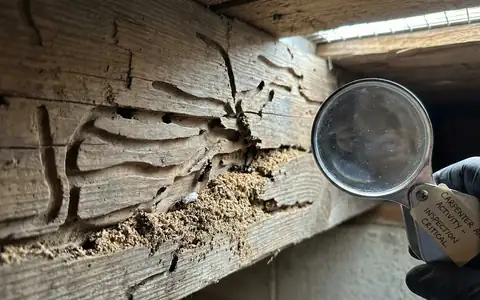
Carpenter Ant Damage in Idaho: Signs, Prevention, and Repair Costs
Read Article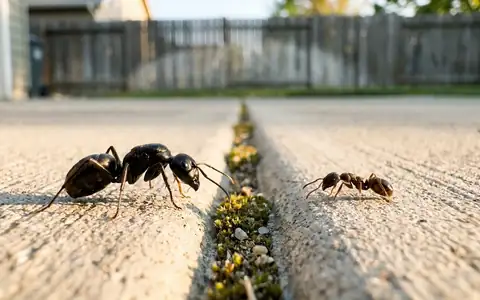 Pest Identification
Carpenter Ant vs Pavement Ant: How to Tell Them Apart in Boise (And Why It Matters)
Read Article Seasonal Guide
Pest-Proofing Your Boise Backyard for Summer BBQs and Patio Season (2026 Idaho Guide)
Read Article
Think You Have Carpenter Ants?
Call and we'll talk through your options. We usually get out within 24 to 48 hours.
Quarterly plans starting at
$119/quarter
- No-Obligation Quote
- Locally Owned
- Free Re-Service Between Visits
Our Pest Control Services
Complete pest protection. Professional solutions for every pest problem, on a quarterly plan or a one-time visit.
General Pest ControlLearn More
Year-round protection packages
Ant ControlLearn More
Carpenter & pavement ants
Spider ManagementLearn More
Black widows & hobo spiders
Rodent ControlLearn More
Mice, rats & voles
Wasp & HornetLearn More
Nest removal & prevention
Mosquito & OutdoorLearn More
Mosquitos, ticks & fleas
Eco-FriendlyLearn More
Pet & kid safe options
CommercialLearn More
Business & warehouse
Proudly Serving the Treasure Valley
Local technicians from the Treasure Valley, in Boise, Meridian, and surrounding communities.
Pest Control Resources
Expert tips & guides. Local pest knowledge from Boise's trusted exterminators