
Insects
Pavement Ants
Tetramorium caespitum
IdentificationHow to Identify Pavement Ants
Quick Answer
Pavement ants are small, dark brown to black ants measuring 2.5-4mm long (about half the size of a grain of rice). Under magnification you can see fine parallel grooves running across the head and thorax, which is the trait that separates them from sugar ants and odorous house ants.
Full identification notes
The easiest field tell, though, is the tiny dirt mound. If you spot small piles of displaced soil along a sidewalk seam, driveway edge, or foundation crack, that's almost always pavement ants.
Free
Re-Service Between Visits
4.9/5
Google Rating
9 to 5
Office Hours, Mon to Fri
Pavement Ants Behavior & Habits
Understanding how pavement ants behave helps prevent infestations
Pavement ants nest right under the concrete around your home.
More about their habits
Driveways, sidewalks, garage slabs, patio pavers, and foundation footings are all prime real estate. A single colony can hold 3,000 to 4,000 workers and multiple queens, so by the time you see ants on the kitchen counter the colony is usually well-established outside. Activity peaks in spring as the soil warms, then again in mid-summer when they push inside hunting grease, sweets, and water around the dishwasher and pet bowls.
Pavement Ants Risks & Dangers
What pavement ants can do to your health and property
Health Risks
Pavement ants are a nuisance pest, not a health threat.
Property Damage
Pavement ants don't damage wood or wiring.
Full health and property details
Health Risks
They don't sting, they don't transmit disease, and they don't bite unless handled. The real concern is food contamination, and the fact that any crack big enough for pavement ants is also big enough for spiders, earwigs, and other pests to follow the same trail inside.
Property Damage
Large, established colonies can move surprising amounts of soil out from under slabs and pavers though, and over several years that can show up as settled or uneven driveway sections, especially on Boise Bench and older Meridian homes with original 1970s concrete.
Signs of Pavement Ants Infestation
Look for these indicators in your home
Signs You Have Pavement Ants
What homeowners spot first
- Small dirt mounds along cracks in your driveway, sidewalk, or garage slab
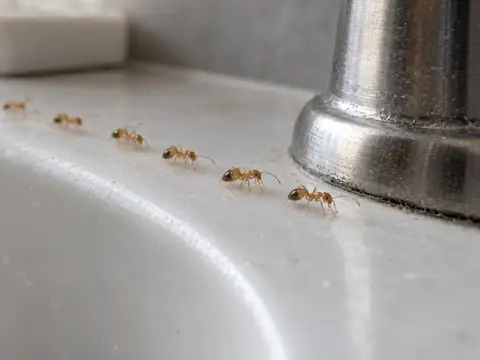
- Thin trails of tiny dark ants running along baseboards and countertops
- Ants clustered around pet food bowls or under the dishwasher
More signs to look for
- A line of ants leading from the kitchen sink back toward a wall outlet
- Loose soil pushed up between patio pavers or along the foundation seam
Pavement Ants in Boise & the Treasure Valley
Pavement ants are easily the most common ant call we run in the Treasure Valley.
More on what we see locally
We see them year after year in Meridian and Nampa subdivisions with lots of new concrete, in older Boise Bench and Vista neighborhoods where slab seams have started to widen, and around Garden City rentals where the driveway meets the garage floor. Activity ramps up in late March as the soil warms, peaks in June and July, and tapers off after the first hard frost. The pattern we see most: ants under the kitchen sink in May, on the back patio by Father's Day, and trailing in around the dishwasher when the August heat dries the lawn out.
How We Handle Pavement Ants
What our approach looks like
Pavement ant control means going after the whole colony under the concrete as well as the foragers on your counter.
Our full approach
We bait the trails so workers carry the active back to the queen, then run a full exterior barrier along the slab, foundation, and any sidewalk seams where the mounds are showing up. Most homes see foraging activity drop in 24 to 48 hours, and reaching the colony and queen takes 10 to 14 days. New customers start at $49 for the initial service, and our free re-service guarantee covers any callbacks between visits if the ants come back.
How to Prevent Pavement Ants
Steps you can take to reduce the risk of infestation
- Caulk the gap where your slab meets the foundation, and around hose bibs and utility pipes
- Wipe down counters every night, especially around the toaster and stove where grease lingers
- Take pet food bowls up between meals (this one fixes a lot of indoor ant calls on its own)
More prevention steps
- Fix slow leaks under the kitchen and bathroom sinks
- Pull mulch and bark back to at least 6 inches off the foundation
- Store firewood off the ground and well away from the house
Pavement Ants Questions Answered
Common questions about identification, prevention, and treatment
Call (208) 297-7947How do I know if I have pavement ants and not sugar ants or odorous house ants?
Quick answerPavement ants are dark brown to black and about 2.5 to 4mm long (roughly half a grain of rice).
The dead giveaway is the small dirt mound along a sidewalk crack, driveway seam, or foundation edge. Sugar ants and odorous house ants don't build those mounds and they don't nest under your slab. If you crush one and it smells like rotten coconut, that's an odorous house ant, not a pavement ant.
Why do pavement ants keep coming back even after I spray them?
Quick answerHardware-store sprays kill the few dozen foragers you can see, but the colony has 3,000 to 4,000 workers and multiple queens sitting under your driveway or slab.
Worse, some over-the-counter products cause the colony to "bud" and split into new nests, which spreads the problem. The fix is a bait the foragers carry back to the queen plus a perimeter barrier along the slab seam.
How much does professional pavement ant treatment cost in Boise?
Quick answerNew customers start at $49 for the initial service.
After that, ongoing protection is $99 per visit for bimonthly or $119 for quarterly on homes up to 2,500 sq ft. Pavement ants are covered under our standard general pest control plan, and our free re-service guarantee means if they come back between visits, so do we.
Similar Pests
Learn about other pests in this category
Related Guides
Expert articles related to pavement ants in Idaho
 Seasonal Guide
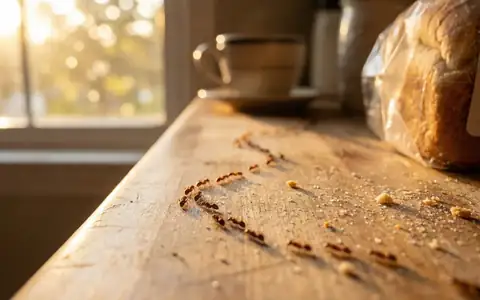
Why Ants Invade Boise Kitchens Every Spring (And How to Stop Them)
Read Article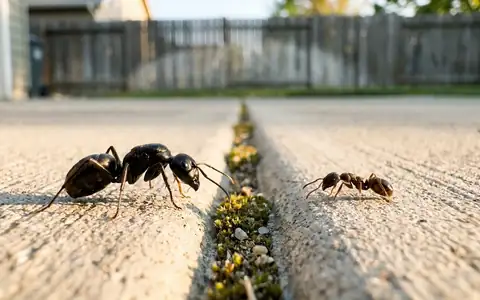 Pest Identification
Carpenter Ant vs Pavement Ant: How to Tell Them Apart in Boise (And Why It Matters)
Read Article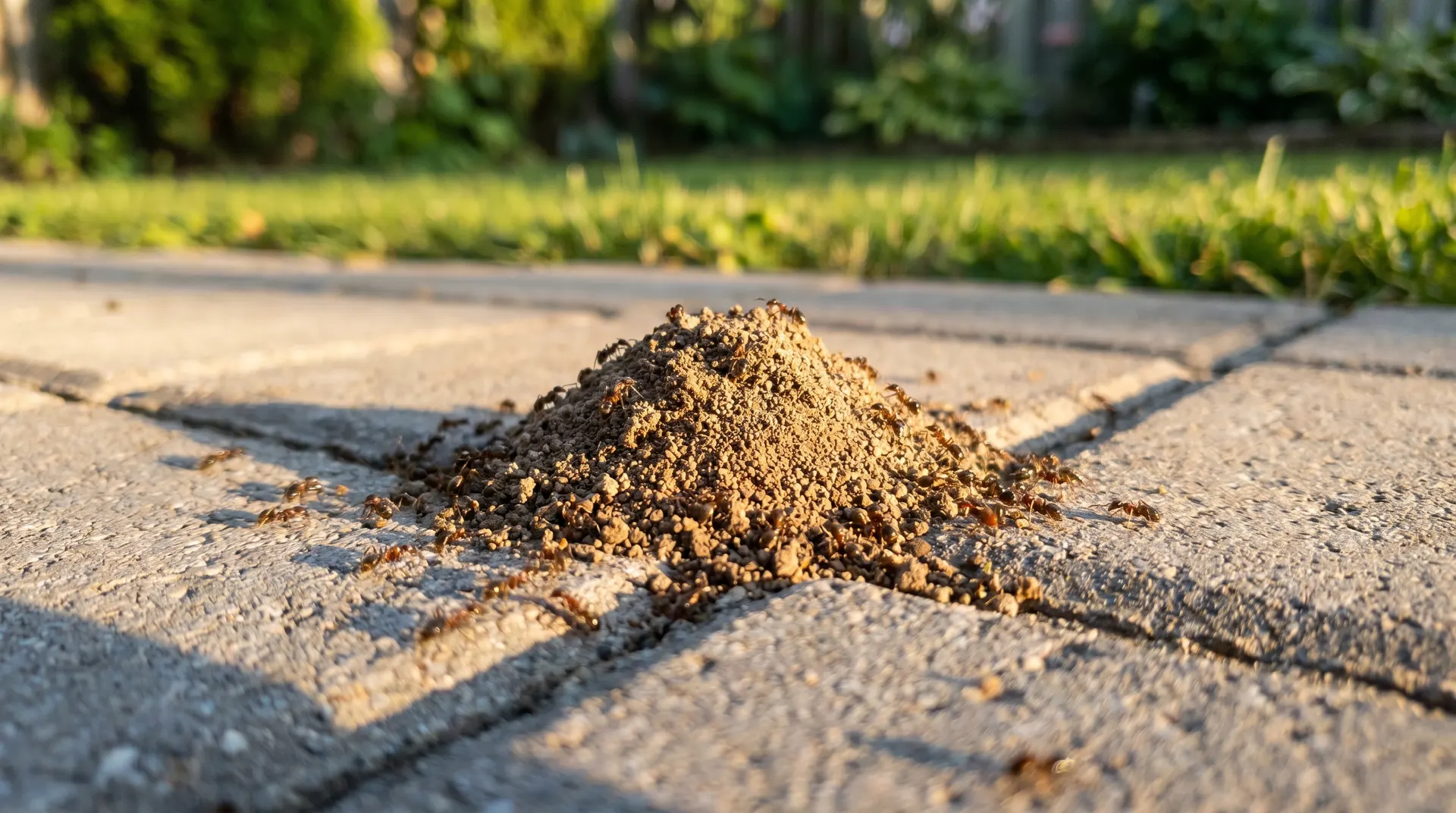 Pest Prevention
Ants in Your Patio Pavers? How Boise Homeowners Stop Pavement Ants Under Outdoor Stones
Read Article
Think You Have Pavement Ants?
Call and we'll talk through your options. We usually get out within 24 to 48 hours.
Quarterly plans starting at
$119/quarter
- No-Obligation Quote
- Locally Owned
- Free Re-Service Between Visits
Our Pest Control Services
Complete pest protection. Professional solutions for every pest problem, on a quarterly plan or a one-time visit.
General Pest ControlLearn More
Year-round protection packages
Ant ControlLearn More
Carpenter & pavement ants
Spider ManagementLearn More
Black widows & hobo spiders
Rodent ControlLearn More
Mice, rats & voles
Wasp & HornetLearn More
Nest removal & prevention
Mosquito & OutdoorLearn More
Mosquitos, ticks & fleas
Eco-FriendlyLearn More
Pet & kid safe options
CommercialLearn More
Business & warehouse
Proudly Serving the Treasure Valley
Local technicians from the Treasure Valley, in Boise, Meridian, and surrounding communities.
Pest Control Resources
Expert tips & guides. Local pest knowledge from Boise's trusted exterminators