Quick answer
To keep spiders out of your Idaho garage this fall, replace worn garage door weatherstripping, seal foundation cracks with silicone caulk, switch exterior lights to yellow bulbs, and get everything off the floor. Hobo spiders and western black widows are the two species Green Guard technicians find most often in Treasure Valley garages from August through October. A professional perimeter treatment in late summer stops them before they settle in.
Key Takeaways
- Your garage door seal is one of the biggest spider entry points. Replace worn weatherstripping before September.
- Hobo spiders invade garages during mating season (August through October), not just because of cold weather
- Black widows live in garages year-round, but encounters spike in fall when populations peak
- Yellow exterior bulbs attract fewer insects, which means fewer spiders following the food source
- A professional perimeter treatment in late August or September stops spiders before the October peak
In this article
Why Do Spiders Invade Idaho Garages Every Fall?
Spiders invade Idaho garages in fall because insects cluster near garage lights and warmth, and male hobo spiders leave their webs to find mates from August through October. Your garage is dark, cluttered, and right in their path.
Garages across Boise, Meridian, and Eagle follow the same pattern every September. Overnight lows drop below 50°F, insects pile up around exterior lights, and spiders follow the food source straight through gaps in the garage door. For homes along the river, see our Garden City spider control guide.
Attached garages (standard in most Treasure Valley homes built after 1990) create an extra problem. They give spiders a direct route from the garage into your living space. One gap under the house door, and that hobo spider in your garage becomes the hobo spider in your hallway. If you're not sure what you're looking at, our Idaho spider identification guide breaks down every species you'll find around Treasure Valley homes.
As of fall 2026, Green Guard Pest Control has treated 2,500+ homes across the Treasure Valley. Garages with poor door seals and ground-level clutter are a common source of spider problems between September and November. Starting spider prevention in spring is the most effective way to reduce fall garage invasions.
Which Spiders Show Up in Treasure Valley Garages?
The two species you need to know are hobo spiders (Eratigena agrestis) and western black widows (Latrodectus hesperus). Both are common in Boise-area garages, and they behave very differently.
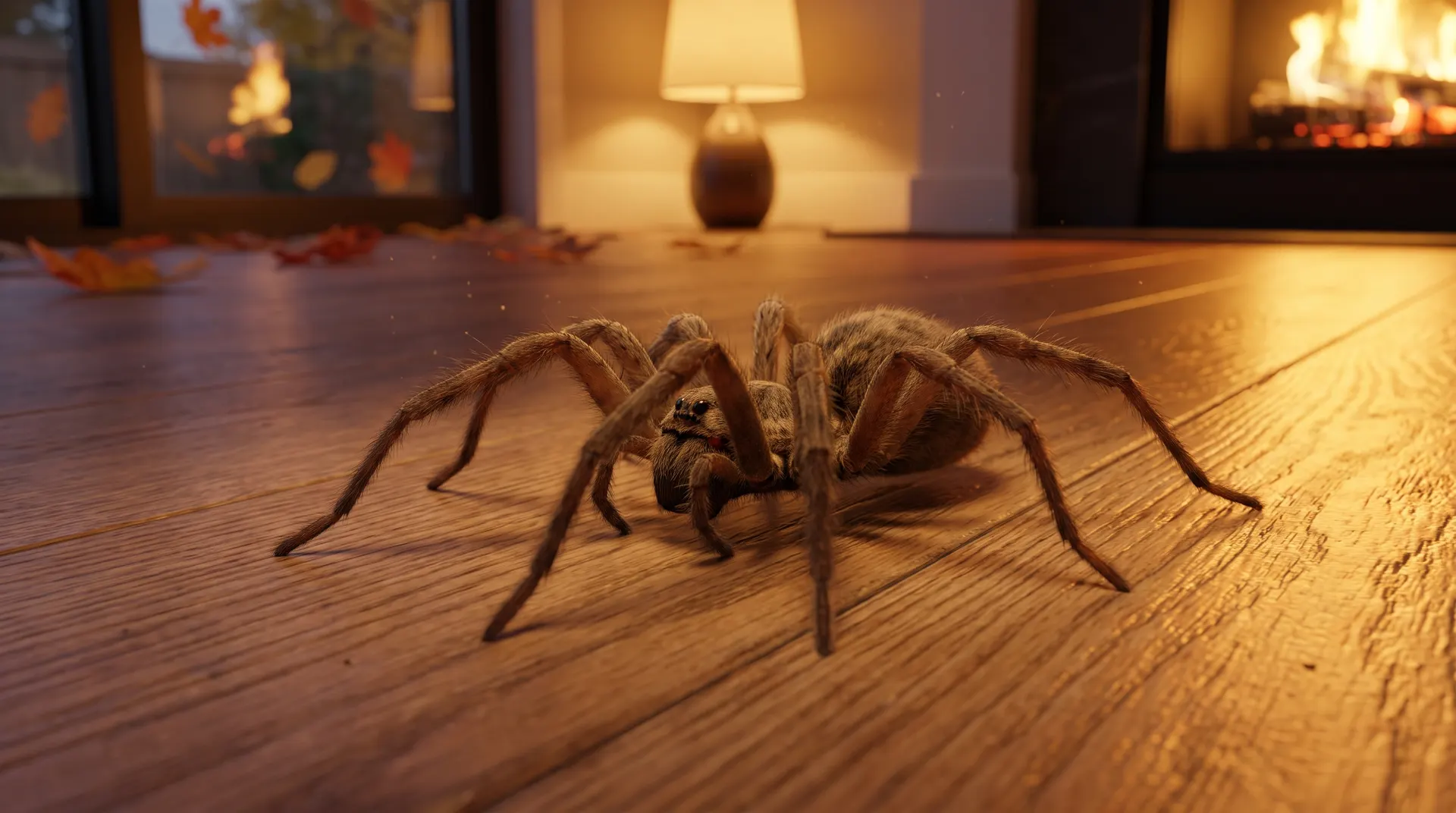
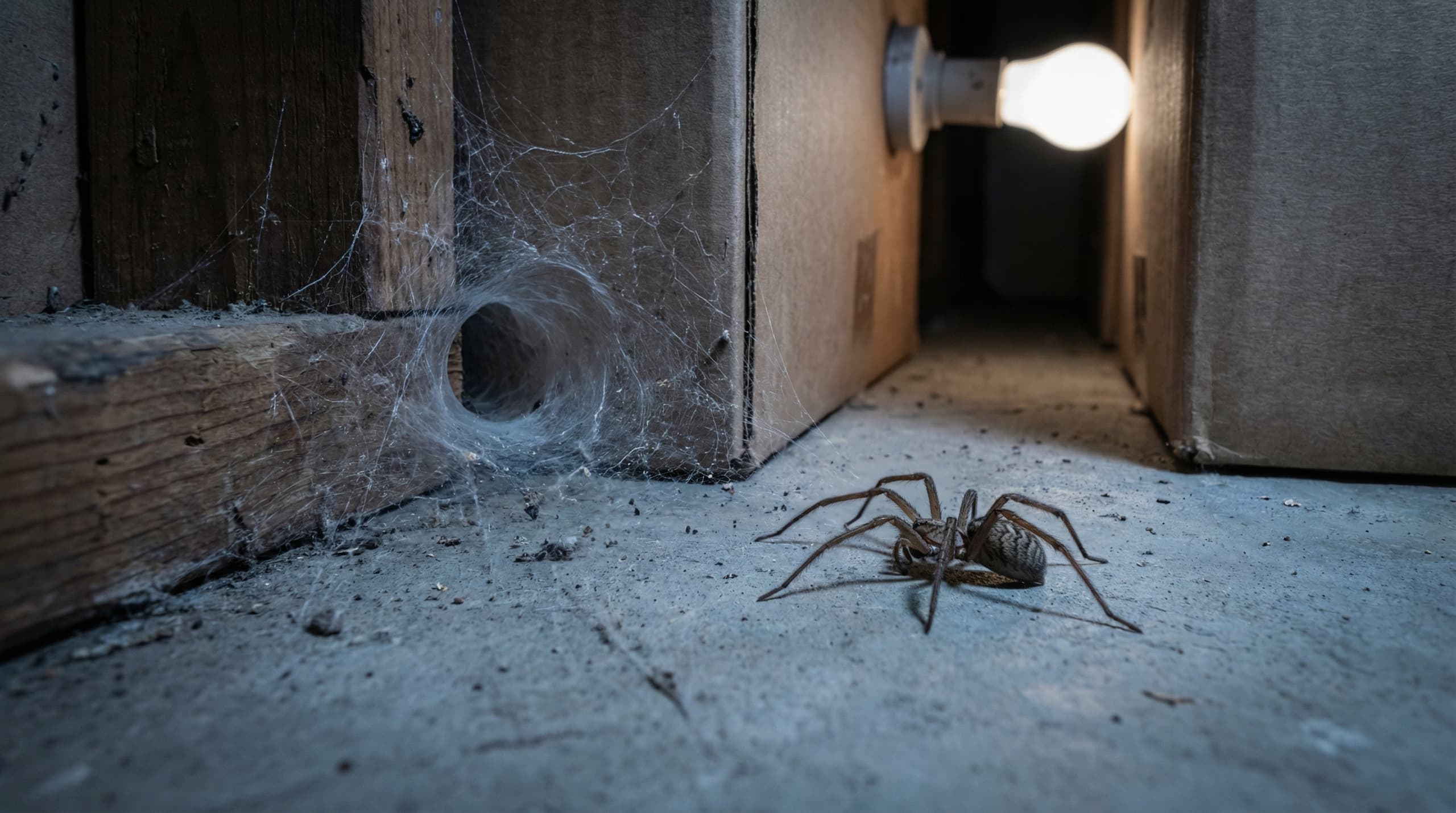
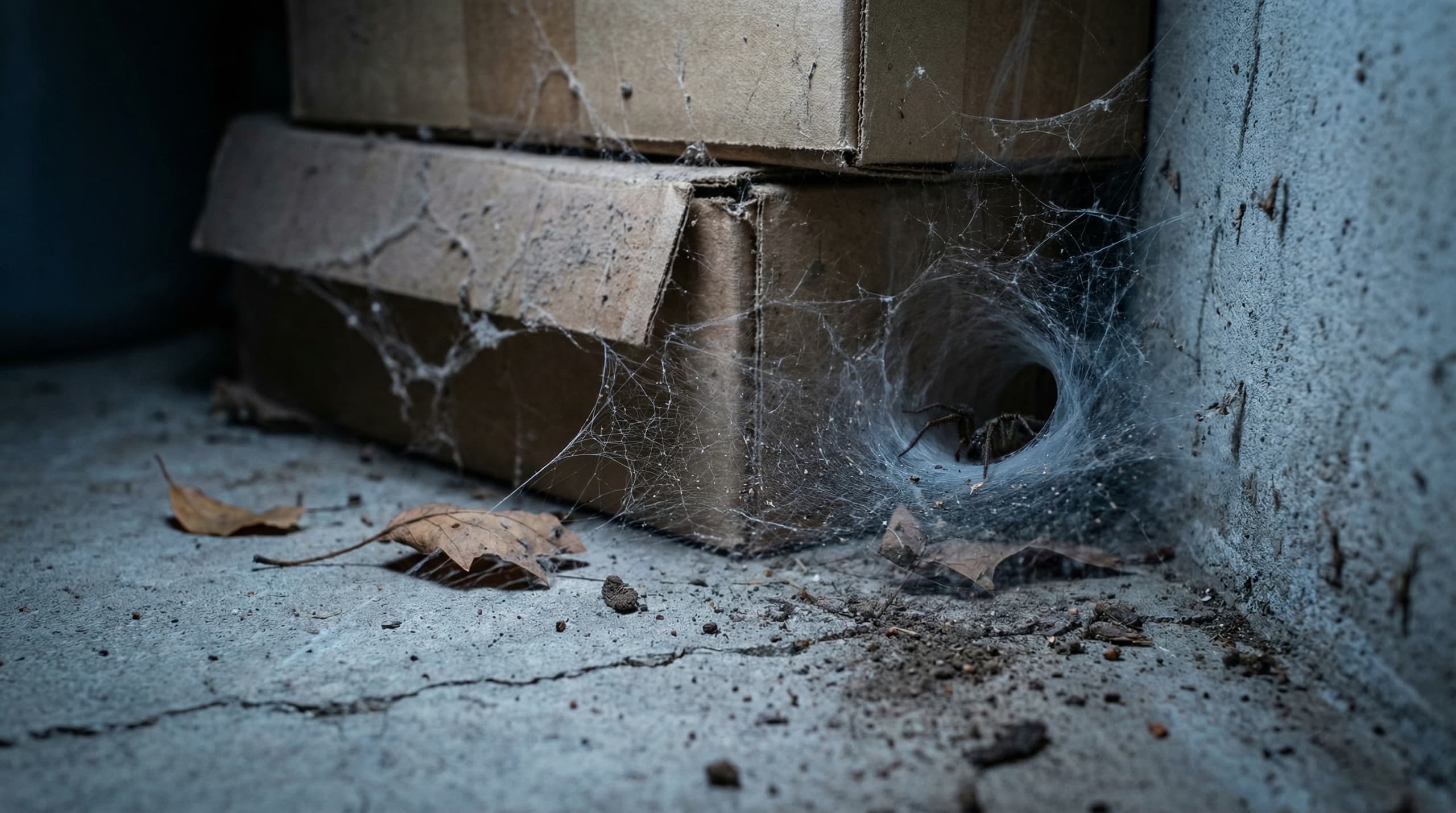
Hobo spiders are the most common fall garage invaders in Idaho. They build funnel-shaped webs at ground level, behind boxes, along walls, and in floor corners. Males wander during mating season and can't climb smooth surfaces, so they get trapped in garages, bathtubs, and window wells. Look for a brown spider with a chevron pattern on the abdomen and plain brown legs with no banding.
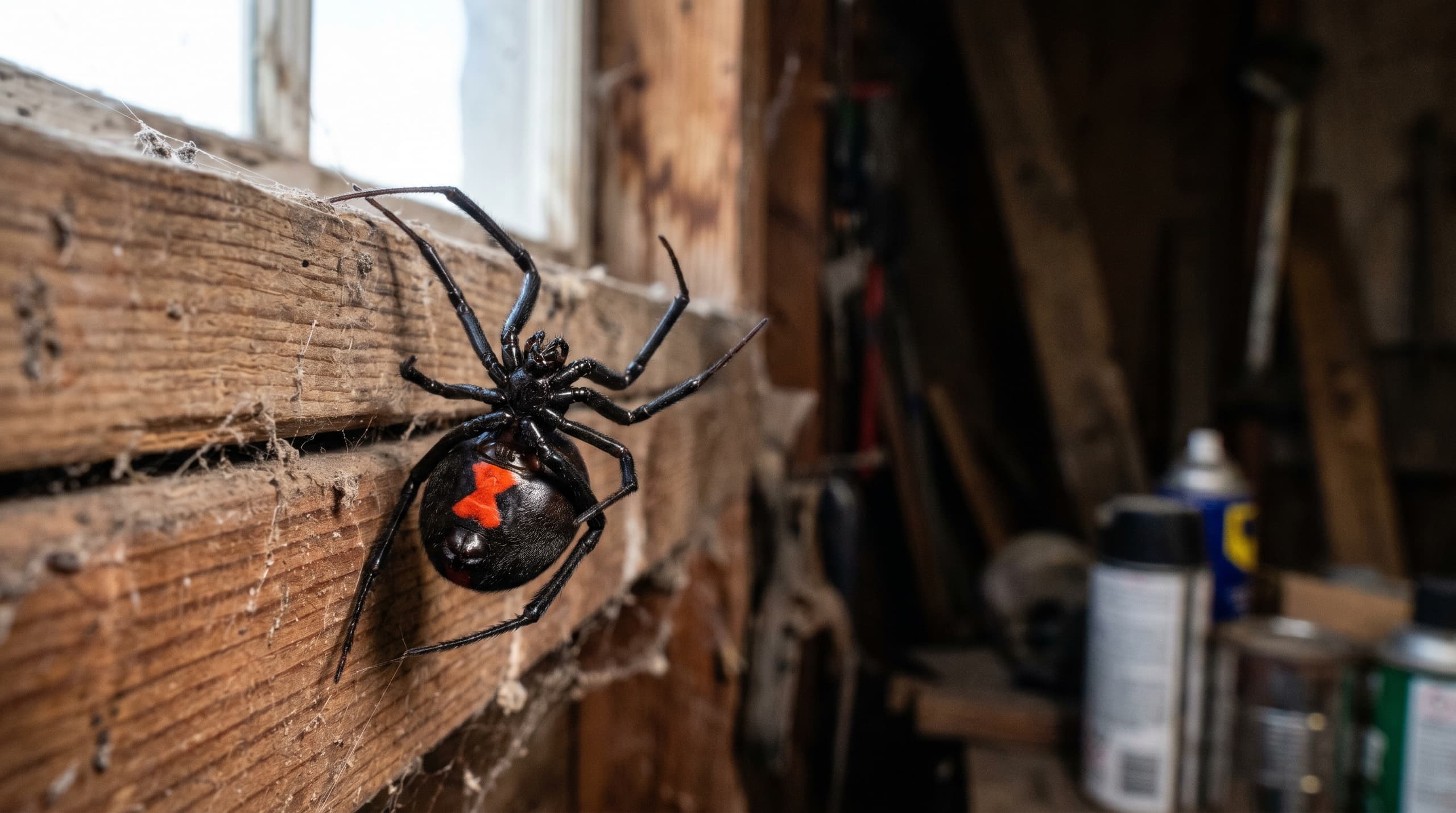
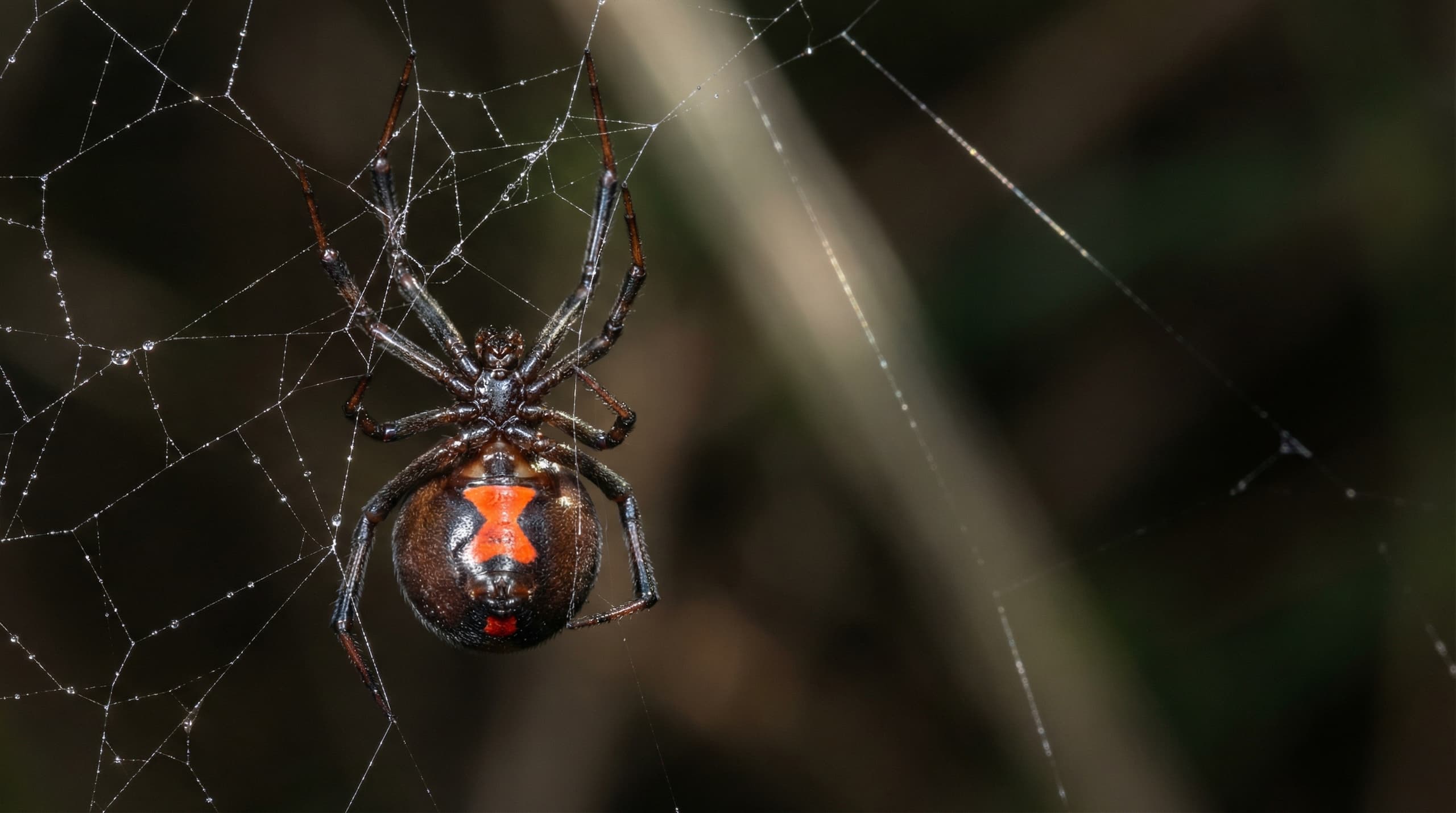
Western black widows are the real concern. They tuck under workbenches, inside seldom-opened cabinets, and behind items stored against walls. Fall is when summer breeding pays off and populations peak. Their bite is medically significant, especially for children and elderly family members.
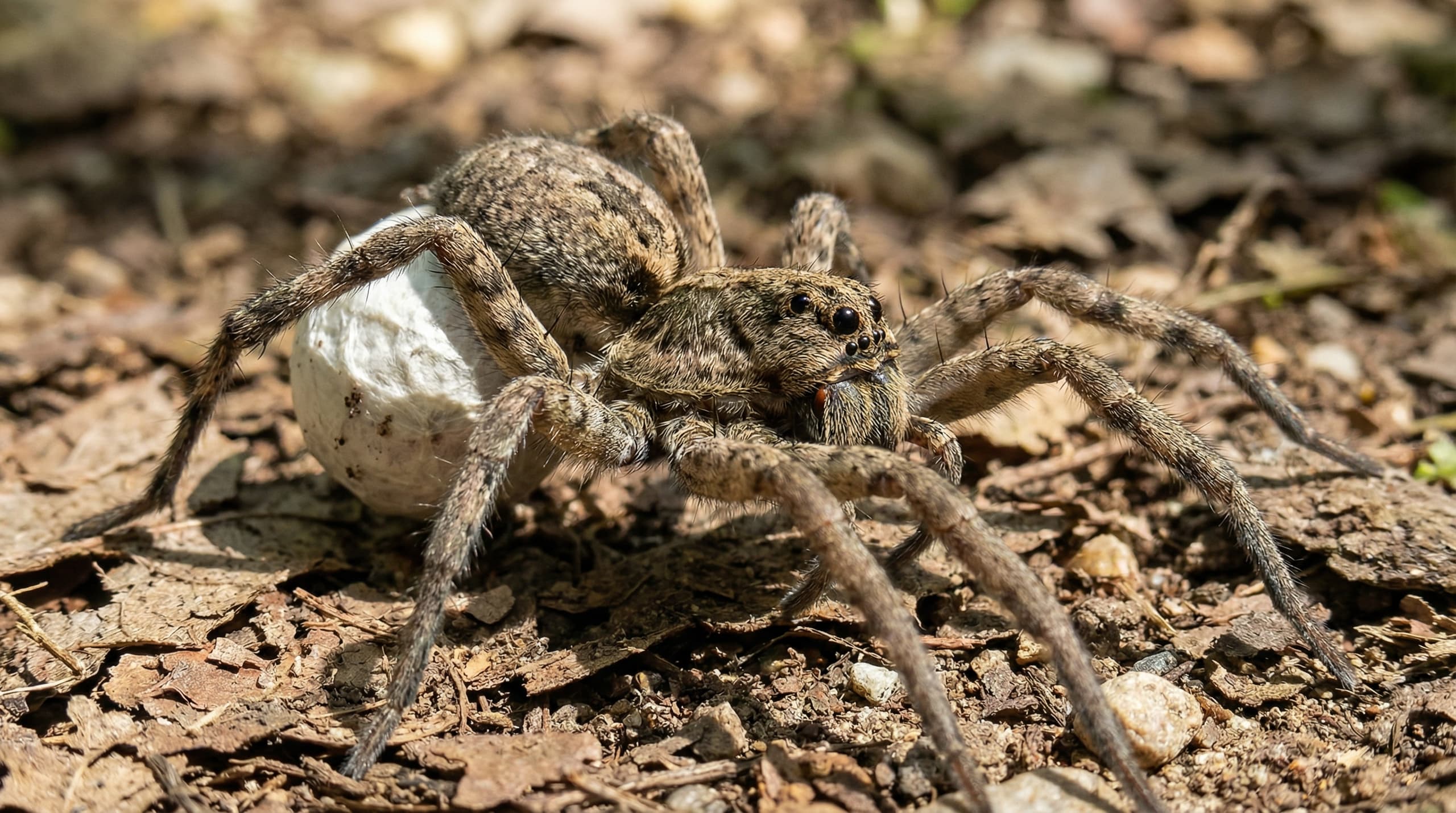
You'll also find wolf spiders (large, fast, harmless), giant house spiders (often confused with hobos), and cobweb spiders in upper corners. These are nuisance species, but lots of nuisance spiders signal a bigger insect problem attracting them. You don't want them in the garage either way. Our perimeter treatment goes after the spiders and the bugs they eat.
What Is the Single Best Way to Spider-Proof Your Garage Door?
Replace the bottom seal on your garage door. That gap is the single biggest entry point for ground-dwelling spiders like hobo spiders and wolf spiders in Idaho. In our experience treating 2,500+ Treasure Valley homes, a worn garage door seal is one of the biggest factors in garage spider problems.
Here is how to check every part of your garage door for spider-sized gaps:
- Bottom seal. Press a piece of paper under the closed door. If it slides through, spiders can too. Replace worn rubber or vinyl seals before August.
- Side weatherstripping. Look for gaps where the door meets the frame on both sides. Brush-style or rubber weatherstripping closes these off.
- Top seal. Most homeowners forget this one. Gaps at the top let in moths and beetles that attract spiders.
- Between panels. On sectional doors, the flexible seals between panels crack and fall out over time. Check them every spring and replace as needed.
What Other Entry Points Do Spiders Use in Idaho Garages?
After the garage door, the four biggest spider entry points are the foundation-to-slab joint, utility penetrations, the house door, and unscreened vents. Most Boise homeowners miss at least two of these.
- Foundation-to-slab joint. Where the garage floor meets the foundation wall is a classic hobo spider highway. Seal it with silicone caulk, not latex (silicone handles Idaho's temperature swings better).
- Utility penetrations. Every pipe, wire, and hose bib passing through your garage wall is a potential entry. Fill gaps with caulk or copper mesh.
- The house door. The entry from your garage into your home needs a tight door sweep. This is your last line of defense once spiders are in the garage.
- Vents and exhaust openings. Screen them with fine mesh (1/16 inch or smaller). Standard hardware cloth has gaps large enough for hobo spiders.
How Does Decluttering Keep Spiders Out of Your Idaho Garage?
Hobo spiders and black widows both build webs at ground level, so every box, tarp, and pile of shoes on your garage floor is a potential nest site. Getting items off the floor removes the habitat spiders need to establish themselves.
When Green Guard technicians inspect garages in Meridian and Eagle, the worst spider infestations are almost always in garages with cardboard boxes stacked directly on the concrete. Here is what to change:
- Switch to sealed plastic bins. Cardboard absorbs moisture and attracts silverfish, crickets, and earwigs. Spiders follow that prey. Plastic bins with snap-on lids break the food chain.
- Store everything on shelving. Get items at least 6 inches off the floor and a few inches from walls. Wire shelving works better than solid shelves because it has fewer hiding spots.
- Move firewood outside. Firewood stacked in the garage is a prime spider harborage. Store it at least 20 feet from any structure.
- Hang bikes, tools, and seasonal gear on wall-mounted hooks or ceiling racks. Anything on the floor is fair game for ground-dwelling spiders.
Does Changing Your Garage Lights Actually Reduce Spiders?
Yes. Switching exterior garage lights from white to yellow or amber bulbs cuts down the insect swarm that draws spiders to your garage door. Spiders aren't attracted to lights directly. The insects are, and spiders follow the food.
Standard white LED and fluorescent bulbs pull in moths, flies, beetles, and mosquitoes every evening. That nightly buffet is what keeps spiders building webs near your garage in Boise's warm fall evenings.
- Switch exterior bulbs to yellow or amber. These wavelengths attract far fewer insects than white or blue light. It is a $10 fix that makes a real difference.
- Move exterior lights away from the door. If you can mount a light on a post 15 to 20 feet from the garage, it pulls the insect swarm away from entry points.
- Use motion-sensor lights inside. Periodic light and activity make your garage less appealing to spiders, which prefer undisturbed darkness.
What Monthly Maintenance Prevents Garage Spiders?
A 20-minute monthly sweep through your garage during fall keeps spider populations from building up. Prevention is not a one-time project. The homes that stay spider-free are the ones where the homeowner stays consistent.
- Knock down webs weekly. Use a broom or shop vac. This destroys egg sacs and forces spiders to waste energy rebuilding, making your garage less attractive.
- Vacuum along baseboards and under workbenches. Hit the wall-floor junction where hobo spiders build funnel webs. A shop vac with a crevice attachment works best.
- Place sticky traps along walls. Glue traps in corners and along baseboards catch wandering male hobo spiders and tell you where activity is highest. Check them every two weeks.
- Fix moisture problems. Dripping faucets, poor drainage, and standing water breed insects. Insects bring spiders. Fix the water, and you cut the food chain.
DIY Spider Prevention vs. Professional Treatment: Which Works Better?
DIY prevention handles mild spider activity, but professional perimeter treatment is more effective for established populations or dangerous species like black widows. The two approaches work best together.
Sealing gaps, decluttering, and swapping light bulbs handle the basics. These steps reduce spider habitat and cut off entry points. For most Treasure Valley garages with just a few cobweb spiders, that is enough.
Professional treatment adds a residual barrier spray around your garage foundation, door frame, and exterior walls. That barrier lasts about 90 days, which covers the entire fall migration window from August through November. It also kills the insects that attract spiders in the first place. For why spiders move indoors each fall and how to stop them throughout your home (not just the garage), check out our spider-proofing guide.
In our experience, homes that combine DIY sealing with quarterly professional treatments see the best results. The sealing stops new entry, and the barrier eliminates anything that finds a gap you missed.
When Should You Call a Professional for Garage Spiders in Boise?
Call a professional if you find black widows, see spiders regularly despite prevention efforts, or notice egg sacs in your garage. These situations go beyond what DIY methods can handle safely.
Black widows are always a professional job. Don't try to remove them yourself. Their webs are often near egg sacs, and a single egg sac holds 200 to 900 spiderlings. One black widow in your garage usually means more are nearby.
Recurring spiders despite your best efforts usually mean a larger insect population is drawing them in. A perimeter barrier treatment handles that much more effectively than spraying individual spiders.
The best time for a professional treatment in Idaho is late August to mid-September, before the peak October invasion. Green Guard Pest Control's quarterly service covers spiders and 30+ other pests. Just $49 to start. Quarterly treatments run $119 per visit for homes up to 2,500 sq ft. If spiders come back between treatments, we come back free. That is our re-service guarantee.
Call the Green Guard team at (208) 297-7947 or schedule your first treatment online.
Frequently Asked Questions
Why are there suddenly so many spiders in my garage in fall?
Quick answerMale hobo spiders wander into garages during mating season from August through October.
At the same time, falling temperatures push insects indoors, and spiders follow the food. Boise's rapid temperature drop (from 80°F highs in September to 50°F in October) compresses this invasion into a short, intense window.
Are hobo spiders in Idaho garages dangerous?
Quick answerThe CDC removed hobo spiders from its venomous species list.
Multiple studies confirm their bites cause only localized pain and swelling, not the necrotic wounds once attributed to them. They are not considered medically significant like black widows. That said, if you can't identify a spider, treat it with caution and keep your distance.
Does peppermint oil actually keep spiders out of a garage?
Quick answerThere is little scientific evidence that peppermint oil repels spiders effectively in an open environment like a garage.
It may provide a temporary deterrent in small, enclosed spaces. Sealing entry points and reducing the insect population that attracts spiders are far more reliable long-term strategies.
How much does professional spider control cost in Boise?
Quick answerGreen Guard Pest Control's initial treatment is $49.
Quarterly treatments start at $119 per visit for homes up to 2,500 sq ft, covering spiders and 30+ other pests. A one-time treatment runs $200 to $250 by home size, and quarterly plans include free re-service between visits.
When is the best time to treat my garage for spiders in Idaho?
Quick answerLate August to mid-September is ideal.
This puts a residual barrier in place before hobo spider mating season peaks in October. The treatment lasts about 90 days, covering the entire fall migration window. Spring treatments in April or May also help by targeting both species before summer populations build.