Quick answer
The most common signs of mice in an Eagle, Idaho home are rice-sized droppings, scratching in the walls after dark, gnawed food packaging and a musky smell under sinks. Mice push indoors once Treasure Valley nights turn cold. Green Guard covers mice inside your home with locked bait stations and copper mesh in obvious gaps. Call (208) 297-7947 and start with the $49 first service.
Key Takeaways
- Droppings are the clearest sign of mice: small, dark and pointed, about the size of a grain of rice.
- Mice are mostly nocturnal, so scratching in the walls or ceiling after dark is a classic early warning.
- Deer mice around Eagle can carry hantavirus. Never sweep or vacuum droppings dry.
- Green Guard covers mice inside the home with locked bait stations and copper mesh in obvious gaps. We don't treat attics.
- Most homes see less mouse activity within 1 to 2 days. Allow 10 days to 2 weeks for it to clear.
In this article
What Are the Signs of Mice in an Eagle, Idaho Home?
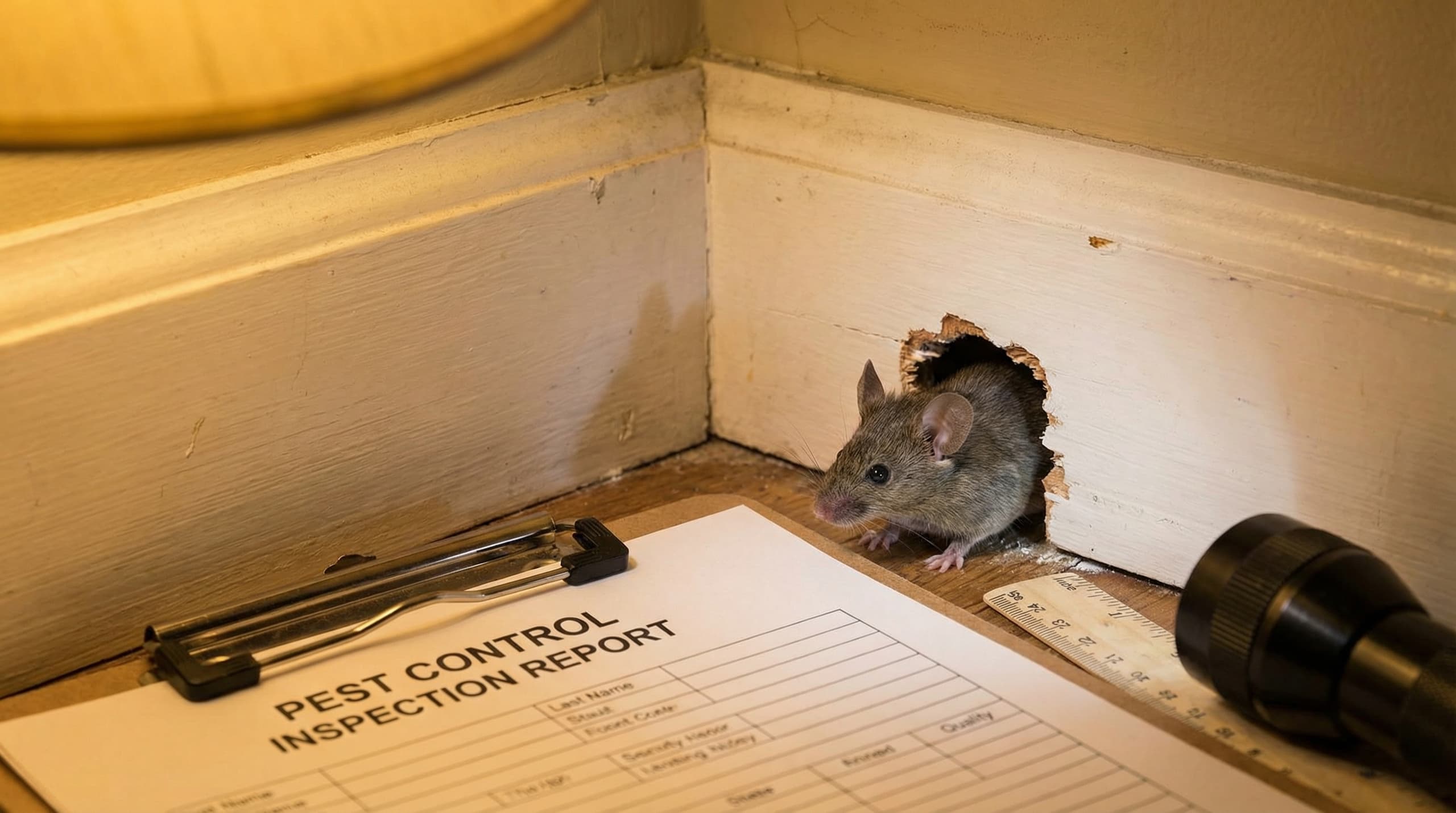
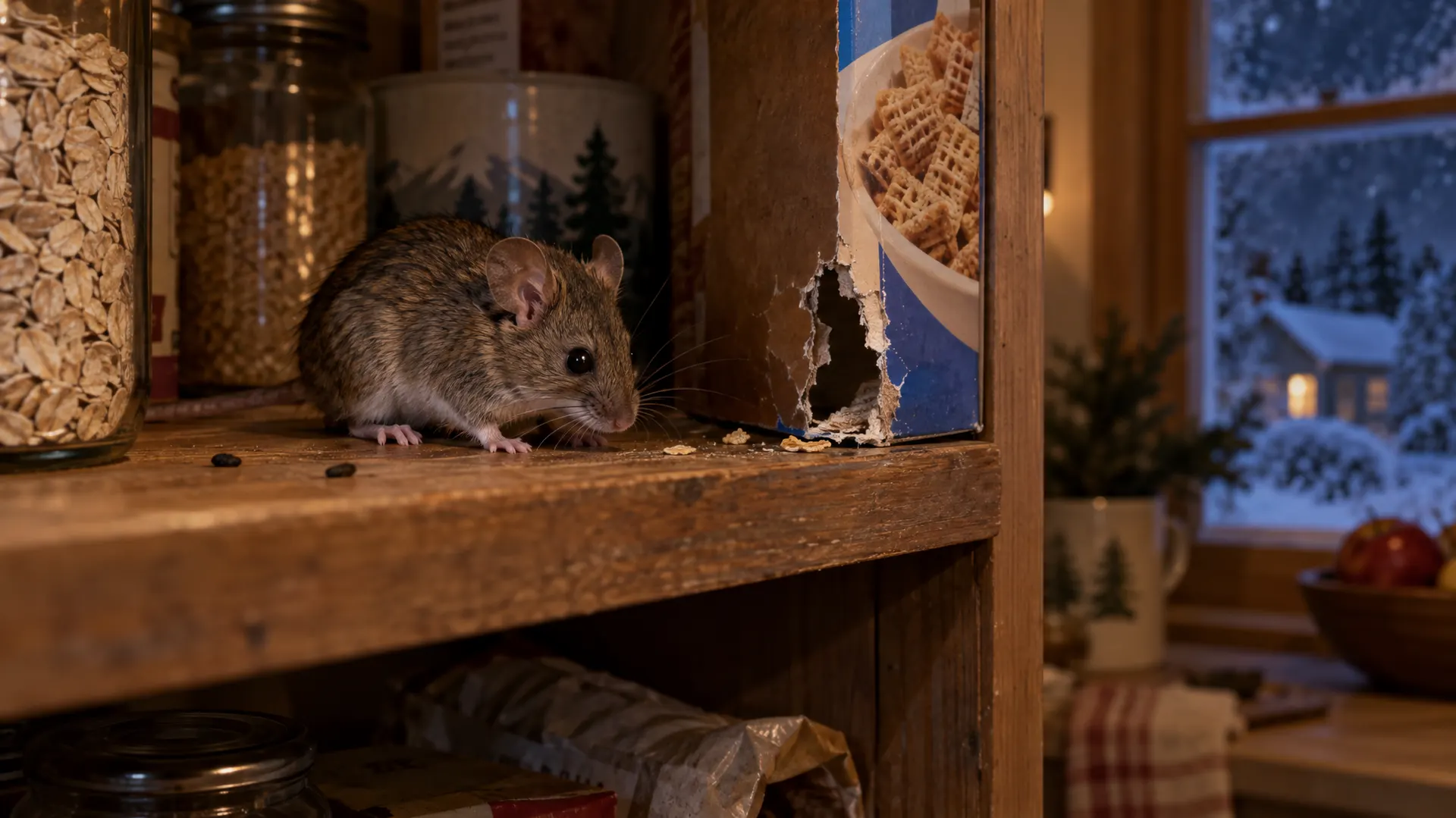
The top signs of mice in an Eagle, Idaho home are fresh droppings, scratching in the walls at night, gnawed packaging and a stale, musky smell. You usually notice one of these before you ever see a mouse. If you spot two or more, you've likely got more than a single visitor.
Here's what to check, starting with the spots mice love most.
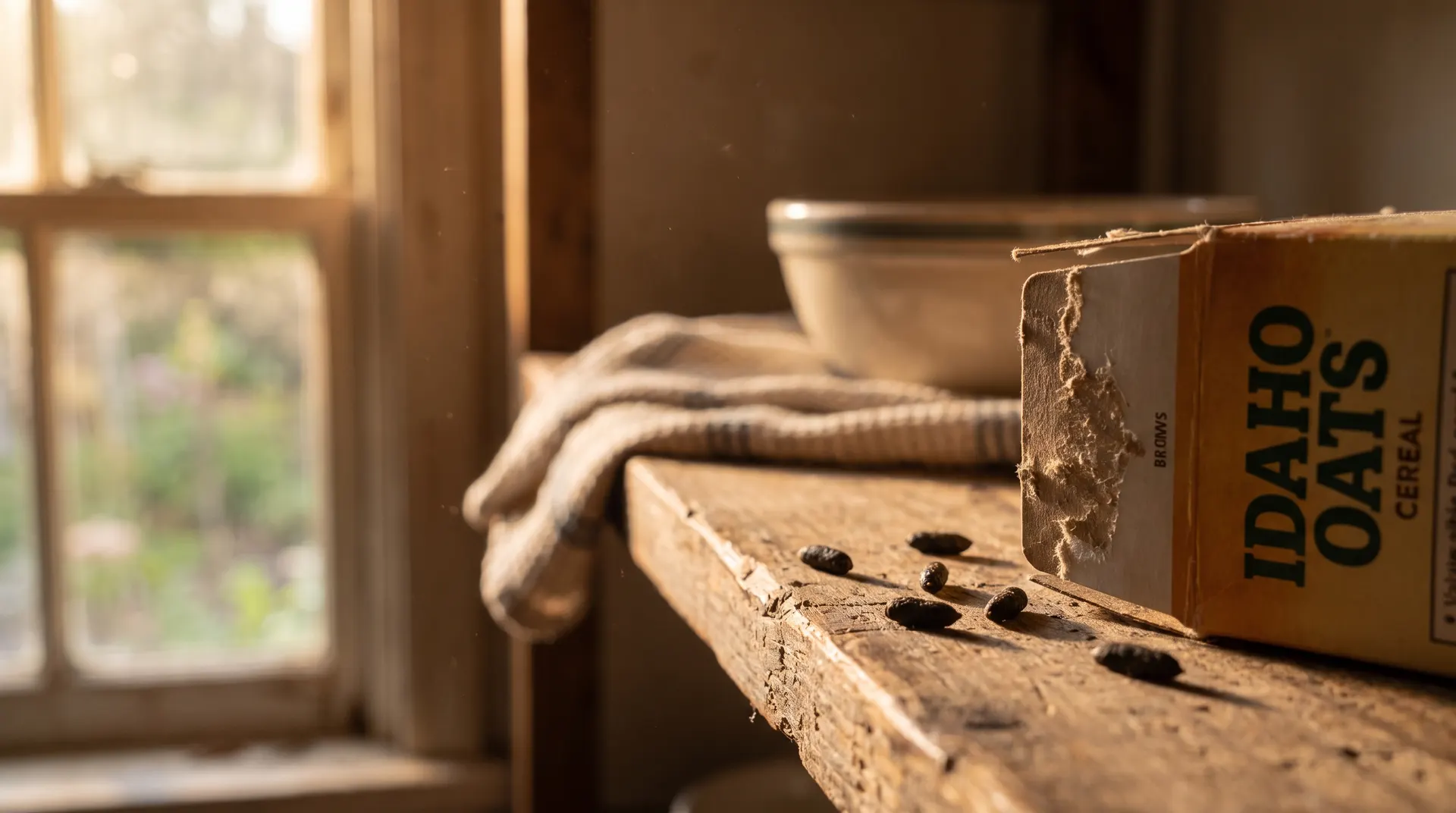
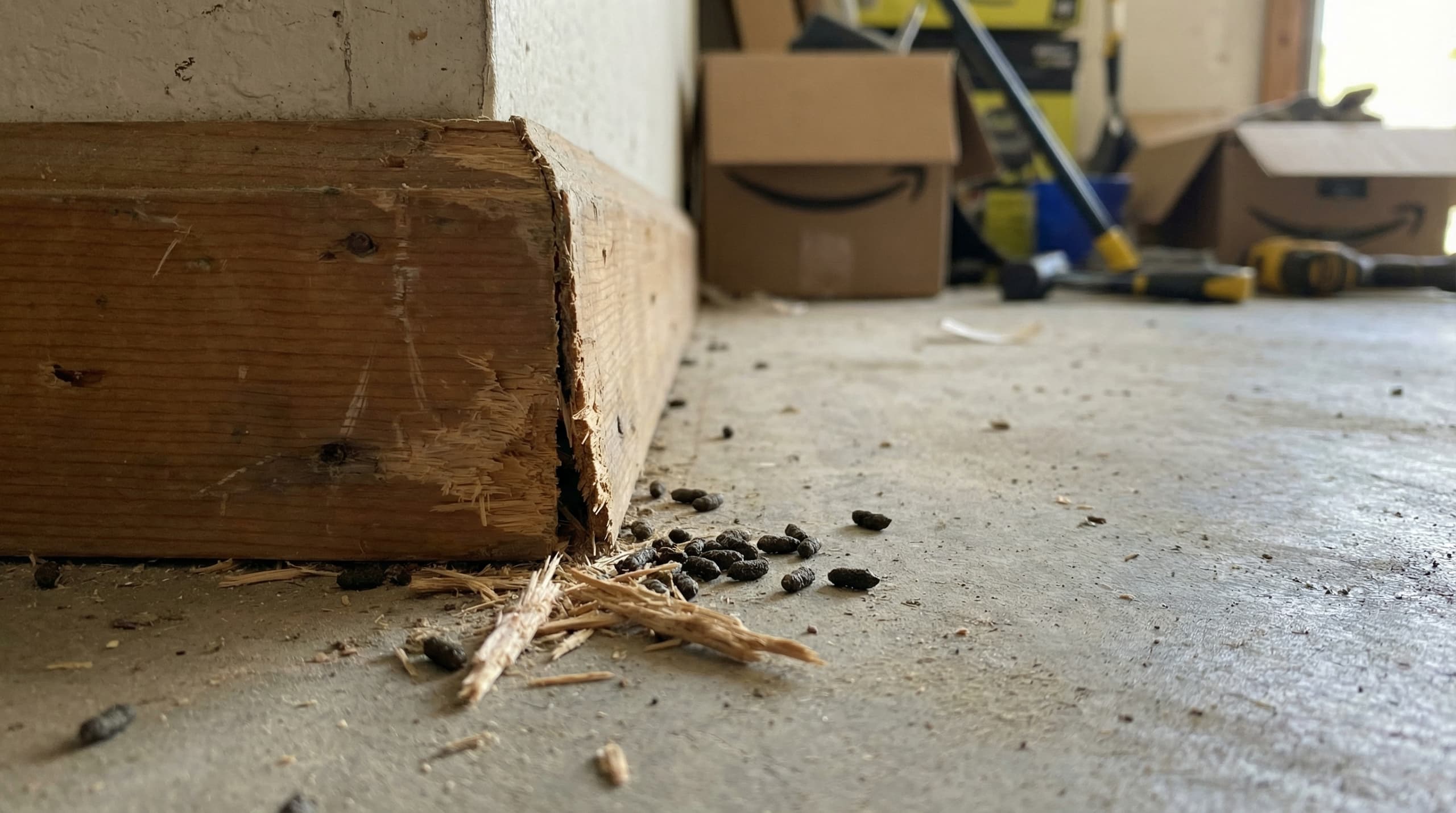
- Droppings. Small, dark and pointed at the ends, about the size of a grain of rice. Look under the kitchen sink, behind the stove, in pantry corners and along garage walls.
- Scratching after dark. Light, quick scurrying inside walls, ceilings or under the dishwasher, usually once the house goes quiet.
- Chewed cereal boxes, pet food bags or birdseed in the garage. Tiny teeth marks are the giveaway.
- Gnawed wires or insulation in the garage, the furnace closet or behind the washer and dryer.
- Shredded paper, fabric or insulation balled up in a drawer, a storage box or behind an appliance. That's a nest.
- Greasy rub marks along baseboards where mice run the same path night after night.
- A musky, ammonia-like smell in closed cabinets or the pantry.
Why Do Mice Move Into Eagle Homes in Winter?
Mice move indoors when Treasure Valley nights turn cold and outdoor food runs short. A warm garage, a pantry and a quiet wall cavity are everything a mouse needs to get through winter.
Eagle has plenty of places for mice to live outside before they come in. The Boise River corridor and Eagle Island have thick brush along the water. The foothills north of town have open sage and grass where deer mice thrive. On the west side, farm fields, pastures and horse properties hold grain and hay. When those fields are harvested and the weather cools, mice look for the closest warm building.
New subdivisions add pressure too. Grading and construction on former farmland push mice out of their old burrows, and the nearest homes are the obvious next stop.
This is a busy season for mice across our whole service area. We logged 35 calls and online requests where the pest was recorded as rodents from Jul to Sep 2026, and another 15 in Oct 2026. For more on how Eagle compares to the rest of the valley, see our Eagle pest control page.
How Do I Tell Mice From Rats or Voles?
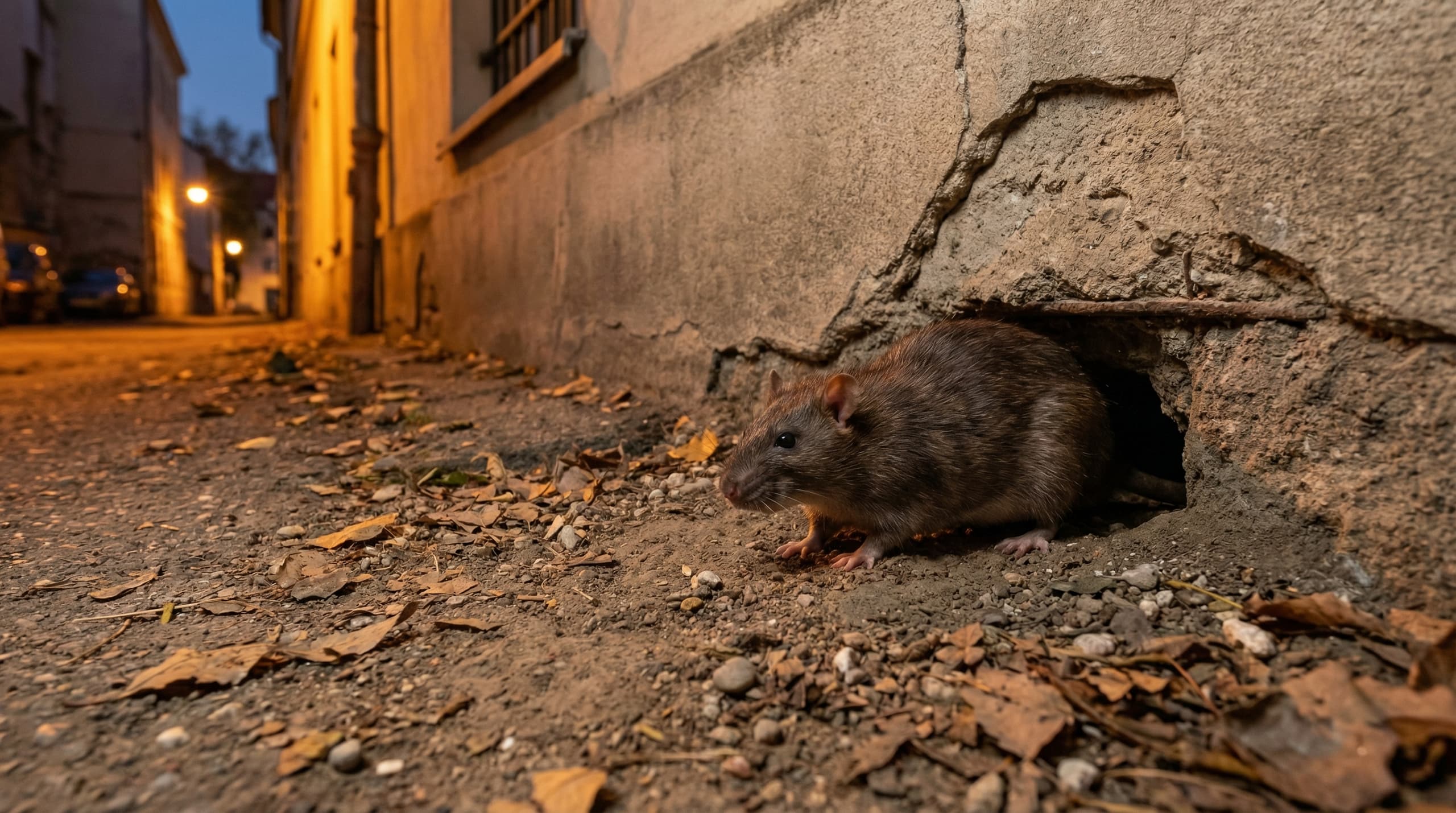
Mice leave rice-sized droppings and squeeze through gaps the size of a pencil. Rats leave droppings closer to 1/2 inch long and sound heavier. Voles mostly stay outside, tunneling through lawns and garden beds.
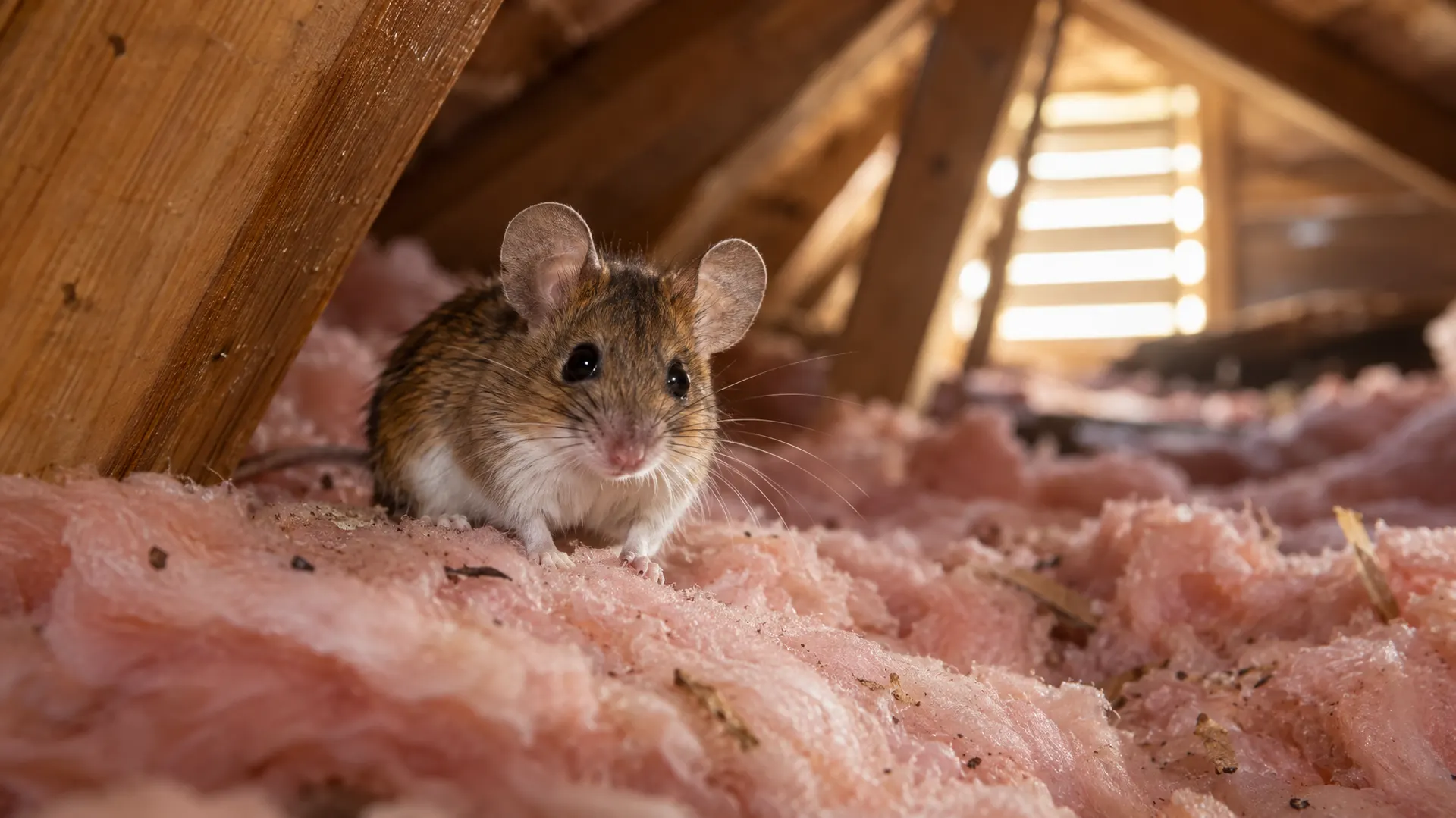
Around Eagle, two mice cause most indoor trouble. House mice are a plain gray-brown all over. Deer mice are brown on top with a bright white belly, white feet and a two-toned tail. Deer mice matter because they can carry hantavirus.
Rats are less common in Eagle homes, but Norway rats do show up near the river, ditches and outbuildings. If you hear thumping instead of scratching, or the droppings look big, call us so a tech can identify what you're dealing with. Our Idaho rodent identification guide has photos and side-by-side comparisons.
What Does a Green Guard Visit Cover for Mice?
Mice inside your home are covered by our regular pest control plan. Here's what our technicians do on a visit.
- Locked bait stations. Tamper-resistant boxes go where mice travel, like the garage, along the foundation and near utility areas. Kids and pets can't get into them.
- Copper mesh in obvious gaps. When a tech spots an obvious gap where mice are getting in, we pack it with copper mesh. It doesn't rust like steel wool.
- Bait stations at the crawl space entrance, which is a common route into the house.
- Snap traps, once in a while, when a bait station isn't a good fit.
- Free re-service between visits. Mice come back between visits? So do we. Free.
What Doesn’t Green Guard Do for Mice?
We don't treat attics, crawl into crawl spaces or open up wall voids. We'd rather you know that before you call.
If you've confirmed mice living in your attic, say so plainly when you call (208) 297-7947. A tech will assess your home and talk through the options, and we won't promise attic work we don't do. Often the fix starts downstairs, because attic mice still come down through the walls and garage for food and water. Our guide to mice in the attic covers what homeowners can do up top.
We also don't clean up droppings or nests, and we don't seal up whole houses. Copper mesh goes in obvious gaps. Bigger repairs are homeowner or contractor work. Voles and rodents living outside are a separate service with separate pricing, and we don't treat gophers or squirrels. For those, call us and we'll point you to a trusted specialist.
How Fast Will the Mice Be Gone?
Most homes see less mouse activity within 1 to 2 days of treatment. Allow 10 days to 2 weeks for activity to clear. Mice have to find the bait stations and feed, so the first few days still bring some noise.
There's no scheduled return visit during that window, because the product needs time to work. If you want us back sooner, call. Re-service between visits is always free.
Mice leave droppings everywhere they go, so keep an eye on the usual spots. If fresh droppings keep showing up after two weeks, call us and we'll come back out free.
How Do I Clean Up Mouse Droppings Safely?
Wet the droppings with disinfectant, wait, then wipe them up with gloves on. Never sweep or vacuum them dry. Dry sweeping can kick hantavirus particles from deer mouse droppings into the air.
- Open doors and windows and let the room or garage air out before you start.
- Put on rubber or plastic gloves. A mask adds protection.
- Spray droppings, urine spots and nests with a disinfectant or a mix of 1 part bleach to 10 parts water. Let it soak for about 5 minutes.
- Wipe everything up with paper towels and seal it in a plastic bag for the trash.
- Mop or wipe the area again with disinfectant, then wash your gloved hands before taking the gloves off.
Who Can Help With Mice in Eagle, Idaho?
Green Guard Pest Control treats mice inside Eagle homes as part of our regular pest control plan. We're locally owned in Boise and have served 2,500+ Treasure Valley families, with 4.9 stars across 185 Google reviews.
Our products are organic-based and EPA-approved. Safe for kids. Safe for pets. We can usually get out within 1 to 2 days, and same-day service is often available.
Call (208) 297-7947 and start with the $49 first service with a quarterly or bimonthly plan. We'll keep the mice out of your Eagle home this winter.
Frequently Asked Questions
How do you know if you have mice in your house?
Quick answerThe surest sign is droppings: small, dark and about the size of a grain of rice, usually under sinks, behind appliances or in the pantry.
Scratching in the walls at night, chewed food packaging and a musky smell are the other big clues. Two or more of these together usually means an active problem.
Are mice nocturnal?
Quick answerYes, mice are mostly active at night.
That's why most people hear them in the walls or ceiling after dark before they ever see one. Seeing a mouse in daylight can mean the population is crowded or food is scarce.
Will mice leave if there is no food?
Quick answerNot usually, especially in winter.
Mice need very little food and will chew into pet food, birdseed, crumbs or even soap. In winter they stay for the warmth, so cutting off food helps, but it won't clear them out by itself.
What is a mouse's worst enemy?
Quick answerIn nature, owls, hawks and cats are a mouse's main predators, and you'll find all of them around Eagle's fields and river bottoms.
Inside your home, the best defense is locked bait stations along mouse routes, copper mesh in obvious gaps and food stored in sealed containers.
How much does mouse control cost in Eagle, Idaho?
Quick answerMice inside your home are covered by our regular plan.
Start with the $49 first service, then quarterly visits start at $119 for homes up to 2,500 sq ft, with larger homes priced by size. Call (208) 297-7947 and we'll help keep mice out of your Eagle home.
Sources
Green Guard call and web request log, Jul to Sep 2026; Green Guard call and web request log, Oct 2026