Quick answer
Spider control in Eagle means stopping black widows and hobo spiders before they move into garages and homes in fall. The open sagebrush along Eagle's foothills feeds a huge insect population, and that feeds a huge spider population. When the days shorten and nights cool, spiders head for the nearest warm structure. Green Guard starts Eagle homes with a $49 first service. Call (208) 297-7947.
Key Takeaways
- Eagle homes near the foothills and open sagebrush (Dry Creek, Avimor, the north end of Floating Feather) sit right next to prime spider habitat.
- Black widows start looking for warm structures as the days shorten in late summer, and garages are the first stop.
- Male hobo spiders wander from late summer until the first hard frost, which is why they show up on garage and basement floors.
- The best fix is an exterior barrier 3 feet up and 3 feet out from the foundation, plus eave sweeping and spot work in garages.
- Green Guard spider control in Eagle starts with a $49 first service on a quarterly or bimonthly plan.
In this article

What Does Spider Control in Eagle Involve?
Spider control in Eagle is an exterior barrier treatment, web and egg sac removal, and spot work in garages and utility areas that keeps black widows and hobo spiders out of your home. Fall is when it matters most, because that's when spiders go looking for a warm place to spend the winter.
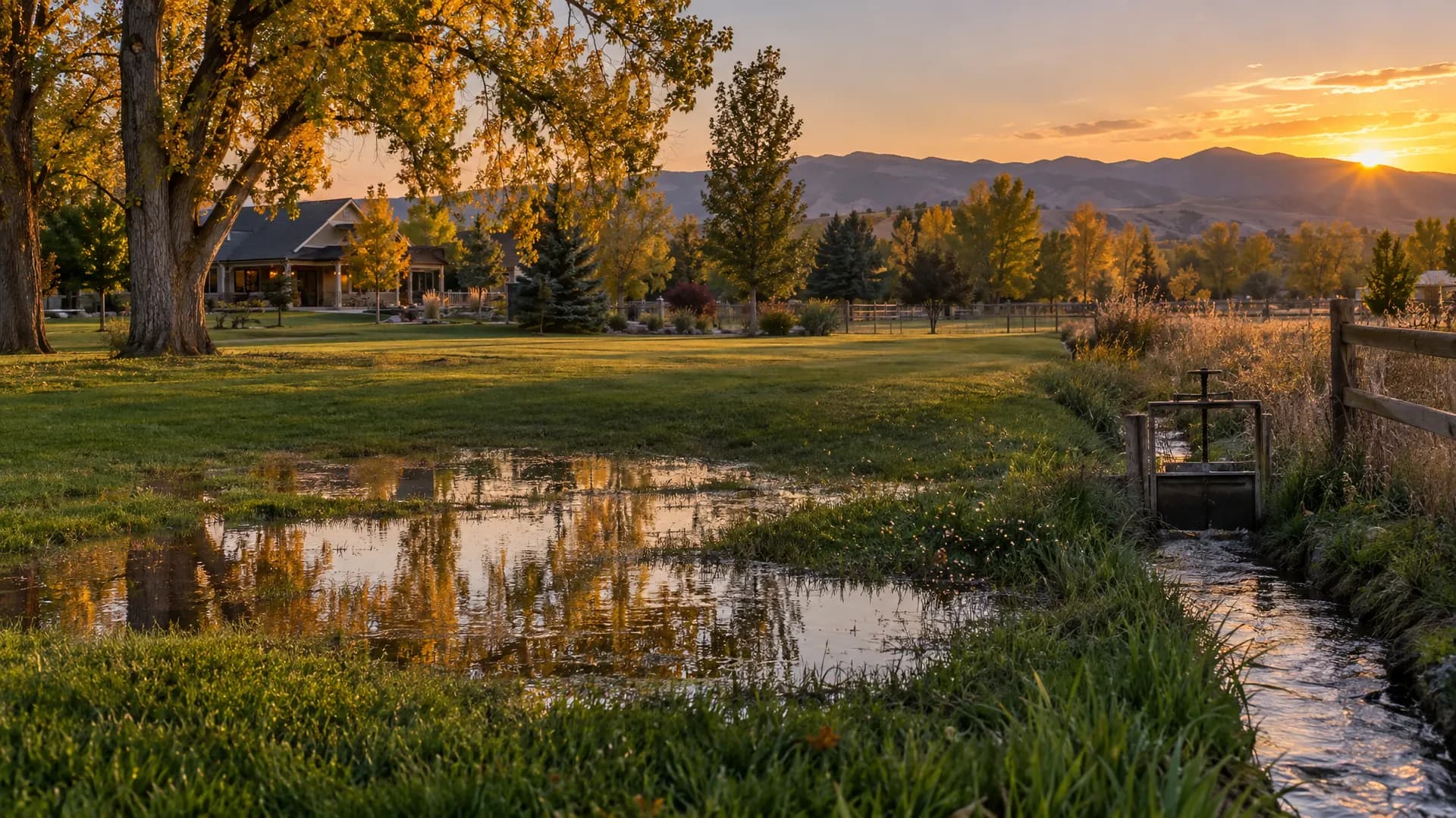
Eagle has a split personality. The south side runs along the Boise River and Eagle Island, with big shade trees and green yards. The north side climbs into open sagebrush and foothills.
Both sides grow spiders. The foothill edge just grows more of them. For the citywide picture, see our Eagle pest control page.
Why Do Eagle Foothill Homes See More Spiders in the Fall?
Eagle's foothill sagebrush is packed with crickets, moths and beetles, and all that food grows a lot of spiders. When the days shorten in late summer, those spiders go looking for the nearest warm building. For a lot of Eagle homes, that's your garage.
Neighborhoods off Dry Creek, out in Avimor and along the north end of Floating Feather back right up to the brush. There's no buffer of older yards between the brush and your foundation. Spiders that spent the summer fattening up in the sage don't have far to walk.
Cool nights speed it up. Bugs gather at warm walls and porch lights after dark, and spiders follow the food. By September, they're bigger, easier to spot and much closer to the door.
It's a Valley-wide pattern, not just an Eagle one. Across the Treasure Valley, we logged 28 calls and online requests where the pest was recorded as spiders in Aug 2026, and 26 in Oct 2026.
Do Homes Near the Boise River and Eagle Island Get Spiders Too?
Yes, but for a different reason. Down by the river, it's moisture and shade instead of sagebrush. The Boise River, its side channels and the irrigated lawns around Eagle Island and Banbury grow plenty of gnats, midges and flies at dusk.
That food draws orb weavers to eaves and porch lights, and hobo spiders to damp rock beds and landscape edging. Big mature trees drop leaf litter that gives spiders cover right up against the house.
So Eagle homeowners on both ends of town end up with the same fall problem. The foothill side just sees more black widows in garages, and the river side sees more webs on the porch. If you're also fighting bugs at dusk near the water, our Eagle mosquito control guide covers that side of the yard.
Which Spiders Are Common in Eagle Homes?
Black widows, hobo spiders and wolf spiders are the ones Eagle homeowners notice most. Here's the quick rundown, with a link to the full guide for each.
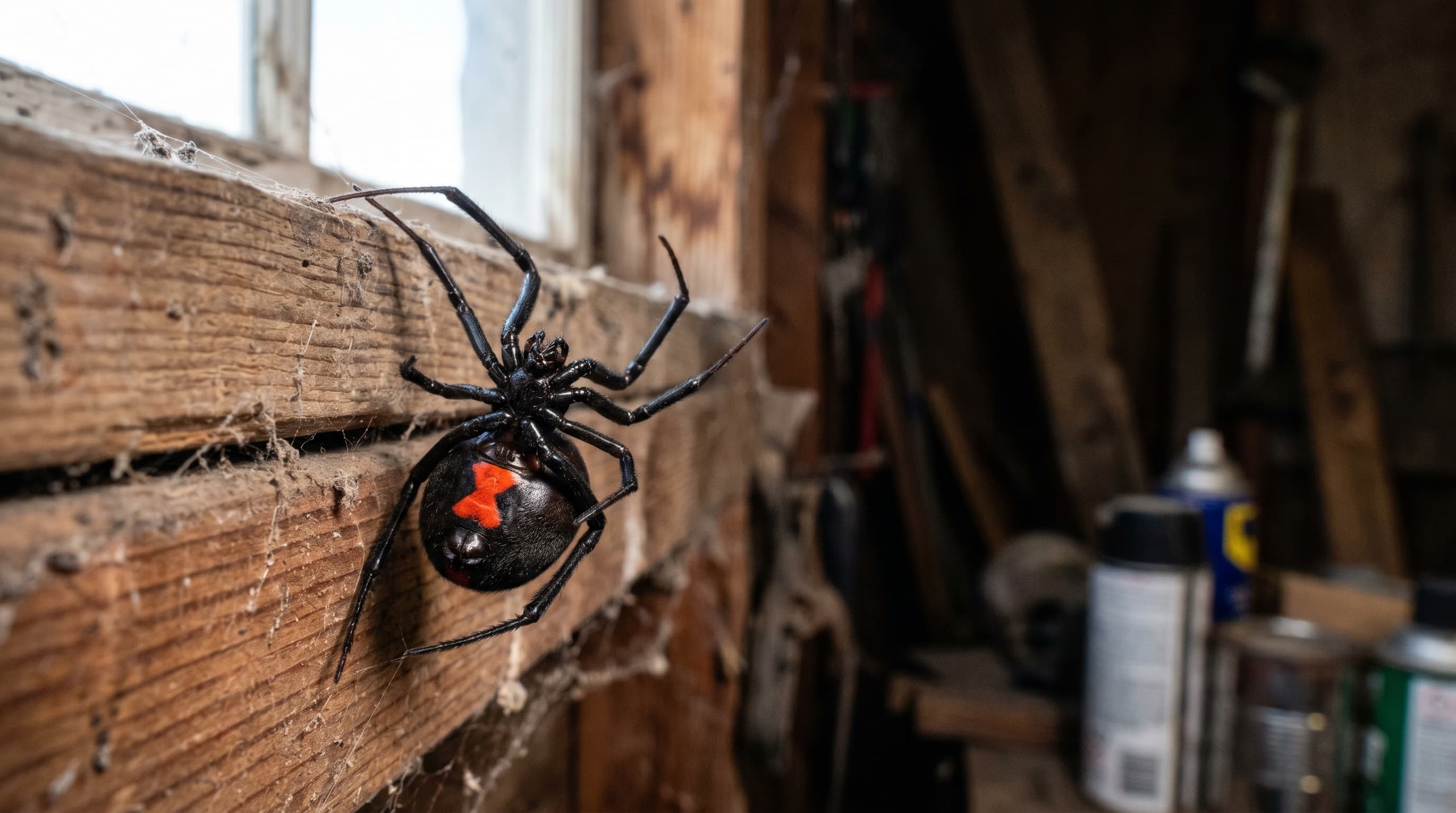
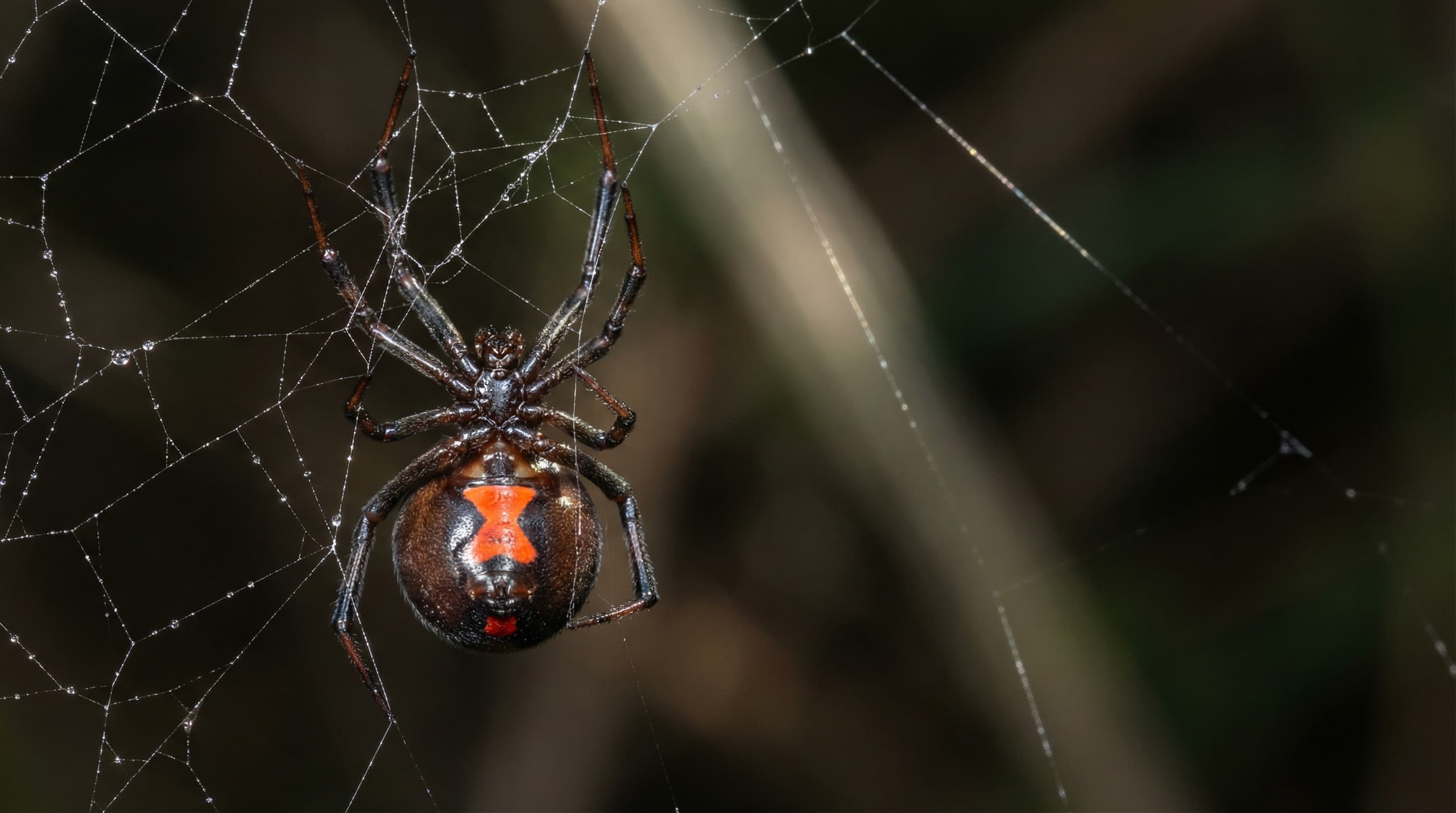
- Western black widows. The females are glossy black with a red hourglass on the belly. Their bite is medically significant, so these get our full attention around garages, irrigation boxes and woodpiles. Our black widow safety guide covers bite symptoms and where they hide in each Treasure Valley city.
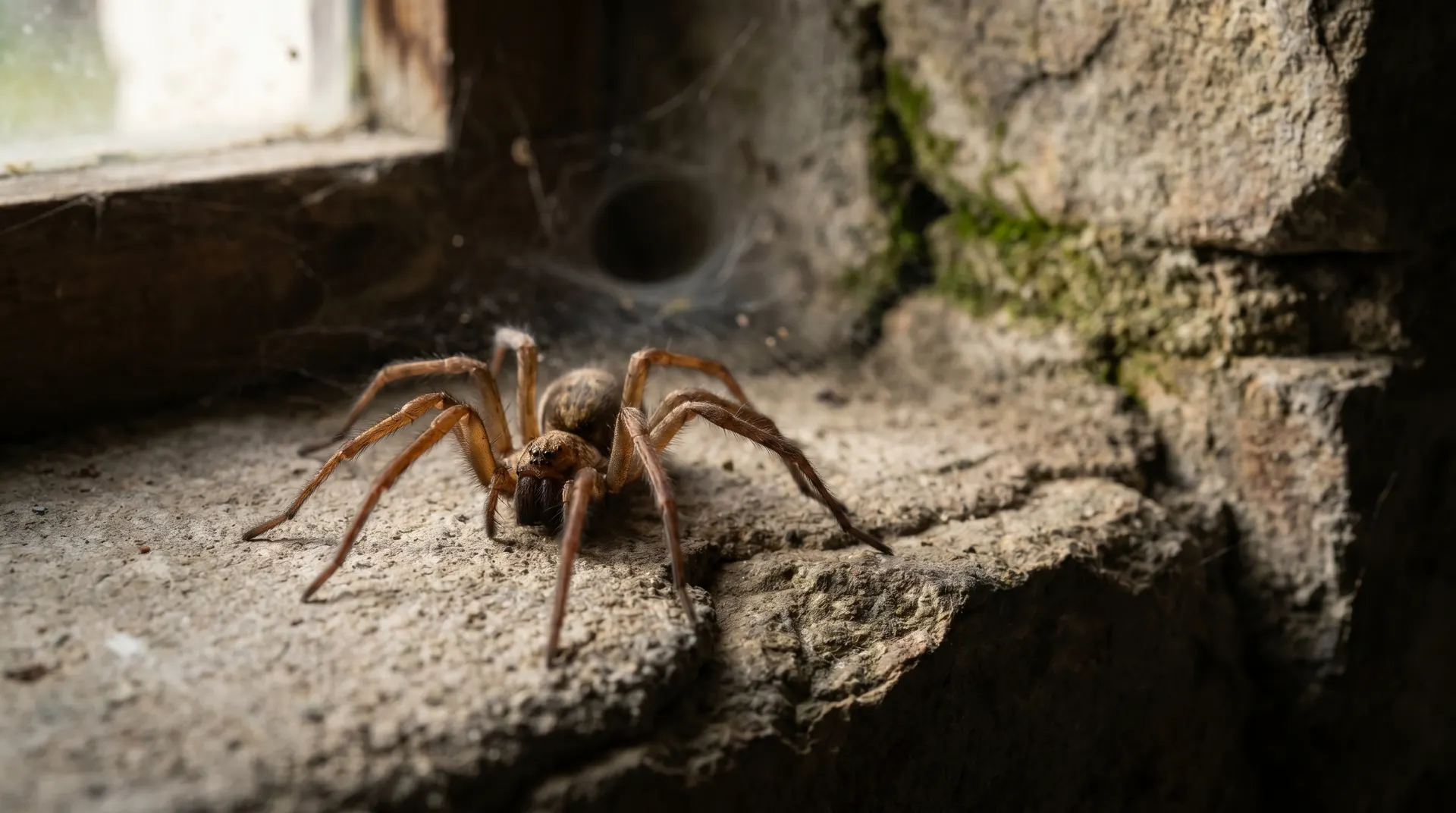
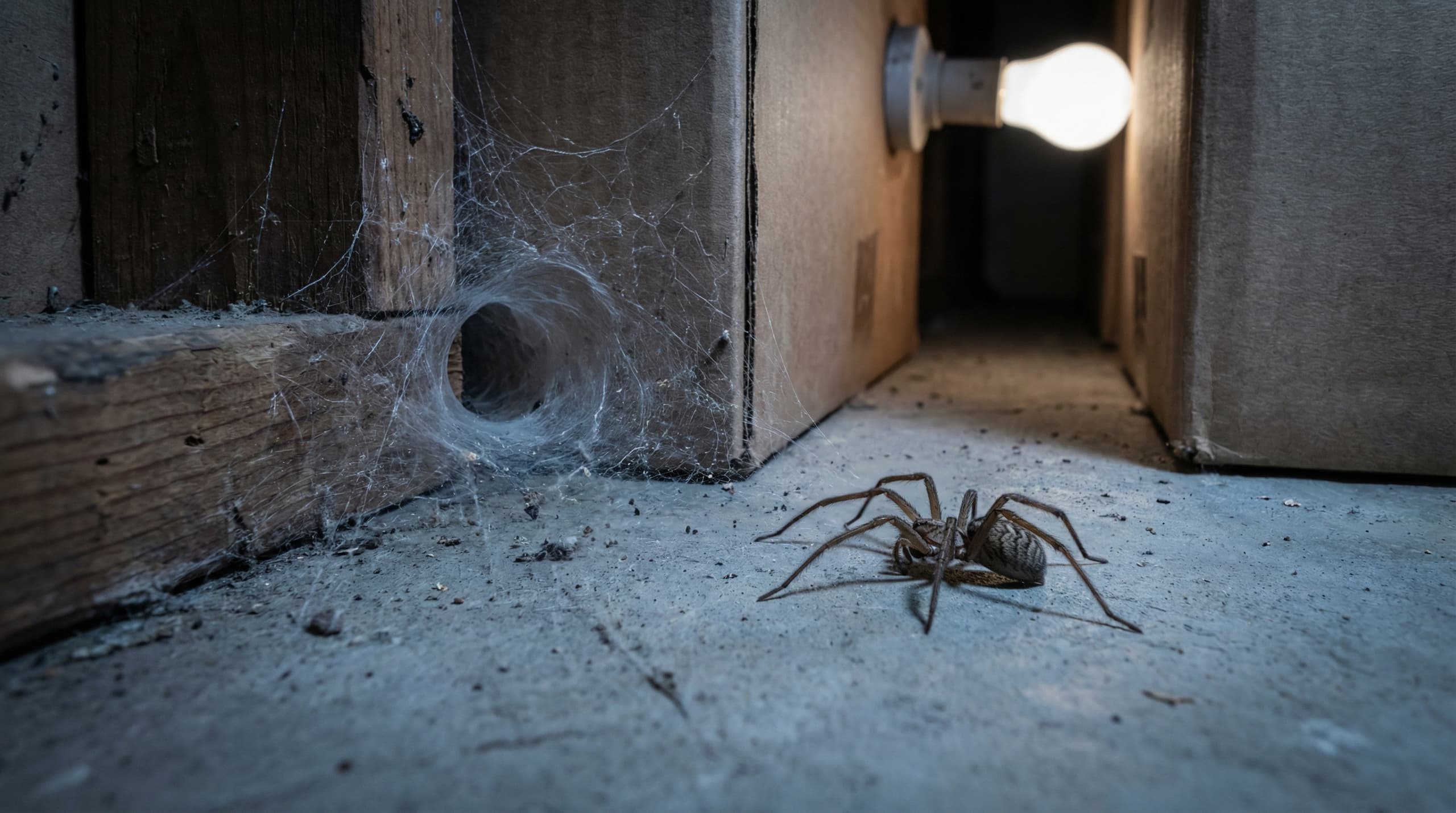
- Hobo spiders. Brown, fast and about half an inch long. They build funnel webs low to the ground, and Eagle subdivisions with decorative rock landscaping give them plenty of damp cover. Males wander from late summer into fall looking for mates. Read our hobo spider guide for identification.
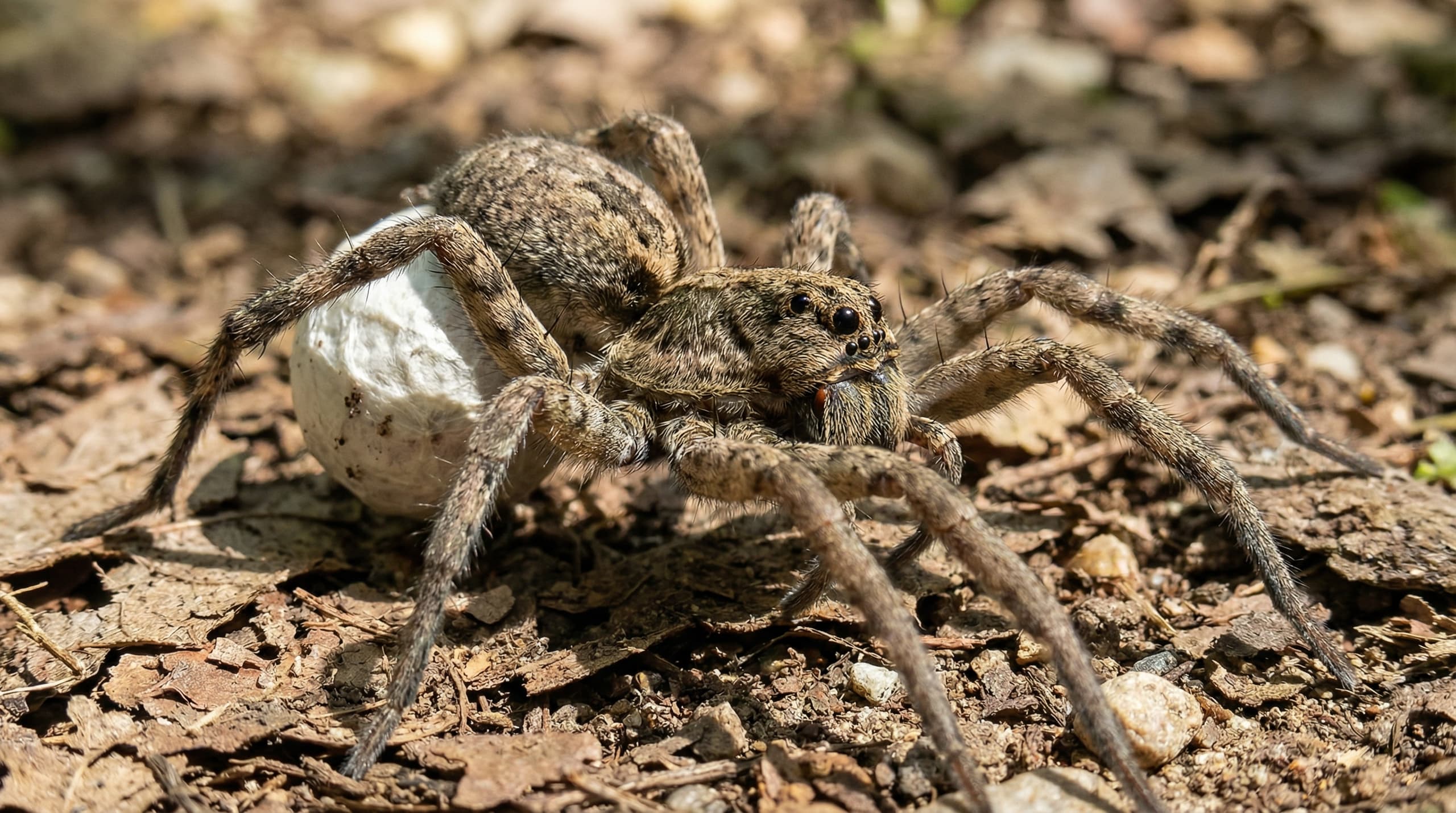
- Wolf spiders. The big hairy hunters that sprint across the garage floor at night, often straight in from the brush. They aren't a health threat, but nobody wants them inside, and Green Guard keeps them out. Our wolf spider guide covers the rest.
- Brown recluse? Almost certainly not. Idaho isn't part of their native range, and most sightings turn out to be another brown spider.
Where Do Spiders Hide on an Eagle Property?
Look low, dark and undisturbed. When our technicians walk an Eagle property in fall, these are the spots we check first.
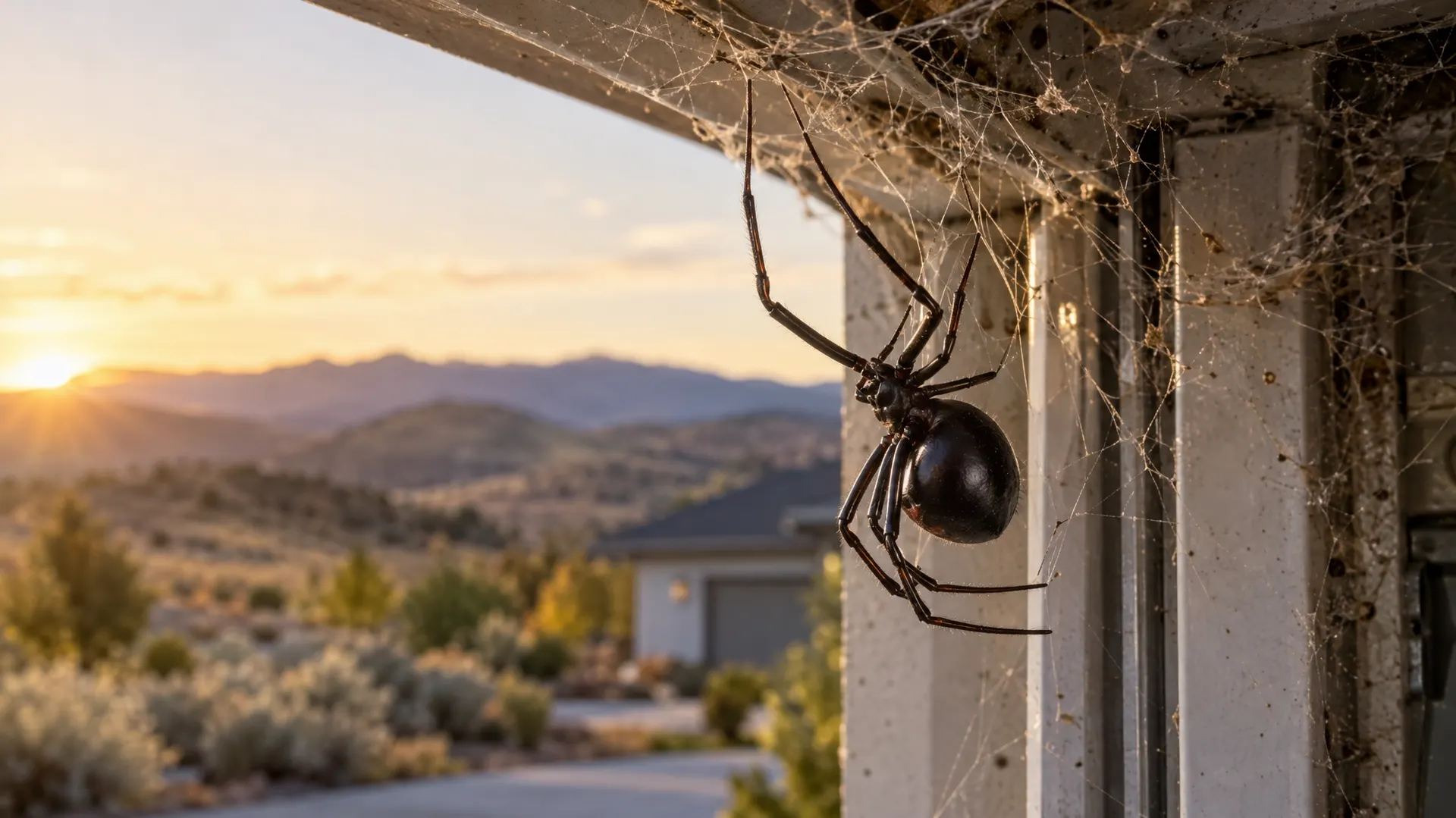
- Three-car garages. Back corners, storage shelves and the space behind bikes and gear. Black widows love a garage that stays dark and quiet.
- Irrigation valve boxes and meter covers. Lift the lid slowly. A messy, tangled web in the corner often means a black widow.
- Rock landscaping and boulder beds along the foundation, where hobo spiders build funnel webs in the gaps.
- Window wells and basement egress wells, especially on newer foothill homes with deep wells.
- Woodpiles, patio furniture and the undersides of decks that face open ground.
- Garage door seals and the gap along the bottom track. Hobo spiders walk right under a worn seal.
How Does Green Guard's Spider Barrier Treatment Work in Eagle?
We start outside, because that's where Eagle spiders live and hunt. Our technicians lay down a barrier spray 3 feet up the walls and 3 feet out from the foundation. On a foothill lot, that strip is the last thing a spider crosses between the sagebrush and your siding.
The eave sweep comes second. Tall entryways and high soffits on newer Eagle homes collect webs fast, so we clear webs and egg sacs from the rooflines, porch lights and window frames. Every egg sac we pull is a batch of spiders that won't hatch next spring.
After that, we hit the hot spots: deep window wells, valve boxes, boulder beds and the inside edges of the garage. We treat interior baseboards on request, and we'll push copper mesh into obvious gaps we find.
Our organic-based, hospital-grade, EPA-approved products are family and pet safe once dry, usually within an hour. Spiders and the bugs they feed on drop off within 1 to 2 days, and the barrier holds for about 3 months. Our spider control service page has the full rundown.
How Much Does Spider Control Cost in Eagle?
Spider control in Eagle starts with a $49 first service on a quarterly or bimonthly plan. Visits after that are priced by home size, and Eagle pays the same posted prices as the rest of the Treasure Valley. You sign a 1-year agreement that locks in your rate. If spiders show up between visits, we come back for free.
| Plan | Home size | Price |
|---|---|---|
| Initial Service with a quarterly or bimonthly plan | Any home size | $49 |
| Quarterly Service | Up to 2,500 sq ft | $119 |
| 2,501 to 4,000 sq ft | $139 | |
| 4,001 to 5,500 sq ft | $159 | |
| Bimonthly Service | Up to 2,500 sq ft | $99 |
| 2,501 to 4,000 sq ft | $119 | |
| 4,001 to 5,500 sq ft | $139 | |
| One-Time Service | Up to 2,500 sq ft | $200 |
| 2,501 to 4,000 sq ft | $225 | |
| 4,001 to 5,500 sq ft | $250 |
What Can Eagle Homeowners Do Themselves?
Cut down on light, clutter and gaps near the house. These steps help before spiders start moving in.
- Switch porch and garage lights to warm yellow LEDs. Fewer moths at the door means fewer spiders waiting for them.
- Keep a clear strip between the sagebrush and your foundation. Trim brush and tall grass back from the house where your lot meets open ground.
- Move firewood off the ground and away from the walls.
- Seal gaps yourself. Caulk around pipes and wires, patch torn window well covers and replace worn garage door seals. That's homeowner work, and it pays off.
- Keep the garage door closed at dusk, and store gear in sealed bins instead of cardboard boxes.
- Our guide to keeping spiders out of the garage has more ideas.
When Should You Call for Spider Control in Eagle?
Call now if you're seeing hobo spiders inside or black widows anywhere near the house. Fall is the best window in Eagle, before hard freezes send the last wave of spiders toward your garage. If you miss it, early spring catches the ones that wintered over.
We cover all of Eagle, from the foothill neighborhoods off Dry Creek and Avimor to the river side near Eagle Island and Banbury. Most Eagle visits happen within 1 to 2 days of your call, and same-day service is often available.
Call (208) 297-7947 to start with the $49 first service. You reach a local team, not a call center, and we'll keep the sagebrush spiders on the sagebrush side of your fence.
Frequently Asked Questions
Why are there so many spiders in Eagle in the fall?
Quick answerThe open sagebrush and foothills on Eagle's north side feed a big insect population all summer, so spiders eat well and grow.
When the days shorten and nights cool, they head for the nearest warm structure. Homes in Dry Creek, Avimor and the north end of Floating Feather sit right next to that open ground.
How much does spider control cost in Eagle, ID?
Quick answerGreen Guard starts Eagle homes with a $49 first service on a quarterly or bimonthly plan.
After that, quarterly visits start at $119 for homes up to 2,500 sq ft and bimonthly visits start at $99. Bigger foothill homes move up a home-size tier. A standalone one-time service is $200 for homes up to 2,500 sq ft.
Are black widows common in Eagle, Idaho?
Quick answerYes.
Western black widows live throughout the Treasure Valley, and Eagle homes near the foothills see plenty of them in garages, valve boxes and woodpiles from late summer into fall. Wear gloves when you reach into dark spots, and keep the area around your foundation clear.
How long does it take for spider treatment to work?
Quick answerMost spiders and the bugs they eat drop off within 1 to 2 days of treatment.
The barrier keeps working for about 3 months, which is why we treat on a quarterly or bimonthly schedule. If spiders come back between visits, so do we, at no charge.
Do you treat garages in Eagle?
Quick answerYes.
Garages are part of every visit, since they're the favorite black widow spot in Eagle. Our technicians treat the corners, door track and inside edges, then sweep webs and egg sacs. Call (208) 297-7947 and start with our $49 first service to keep spiders out.
Sources
Green Guard call and web request log, Aug 2026; Green Guard call and web request log, Oct 2026