Quick answer
Voles in Idaho are stout little rodents that live outside, eat grass and bark, and leave winding 1.5 to 2 inch trails across your lawn. Most of the damage happens under winter snow and shows up at spring snowmelt. Treatment is exterior only: tamper-resistant bait stations, snap traps on active runways, and habitat trims. At Green Guard, vole control is usually a separate service from the home plan, with its own pricing.
Key Takeaways
- Voles have stubby tails (1 to 2 inches), blunt faces, and tiny hidden ears. Mice have long thin tails, pointed snouts, and obvious ears.
- The vole signature is winding surface trails 1.5 to 2 inches wide with golf-ball-sized holes and no dirt mounds. Mounds mean gophers, not voles.
- Most vole damage in the Treasure Valley happens under winter snow and shows up in March or April. Yards along canals and foothills get hit hardest.
- Vole control is exterior only. At Green Guard it's usually a separate service from your home plan, with its own pricing.
In this article

What a Vole Actually Looks Like (and How to Tell It From a Mouse)
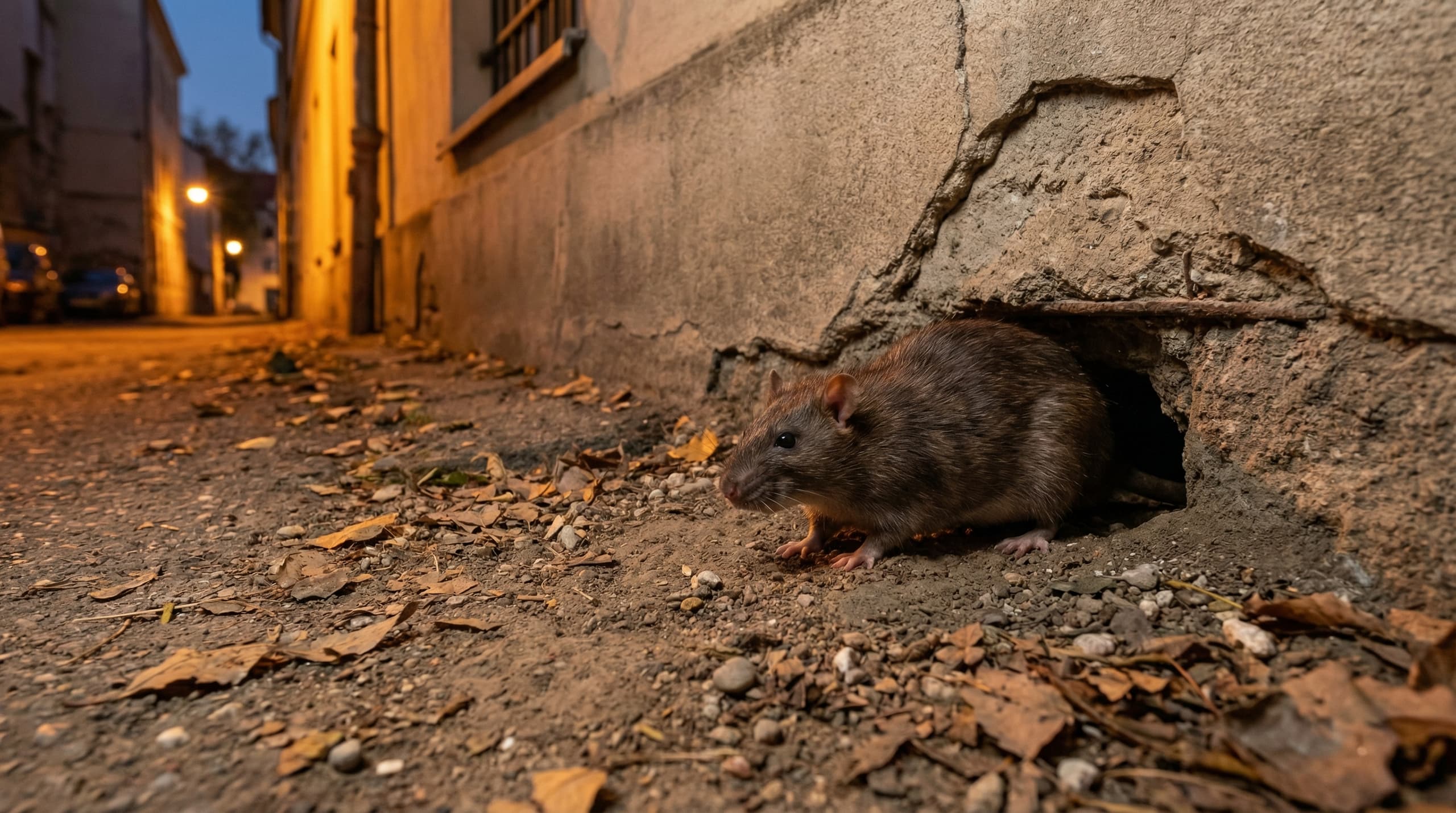
Voles in Idaho are small, stout, ground-dwelling rodents that live outside and eat plants. Homeowners in Boise and Meridian often think they have mice when they really have voles. Once you know the differences, you can tell them apart in two seconds.
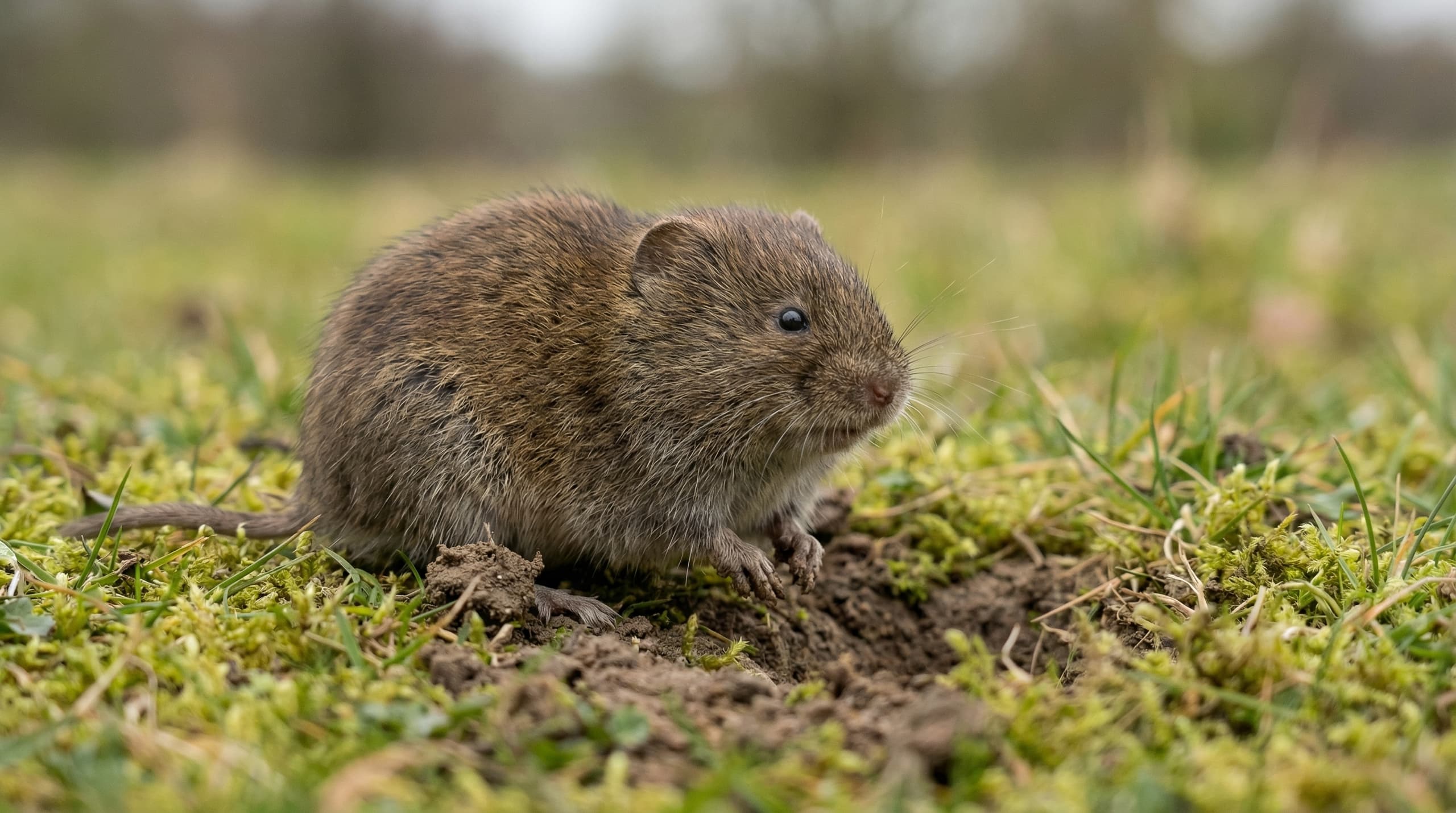
Voles are short and chunky. About 4 to 6 inches long including the tail. The body is heavy, the legs are short, and the whole animal looks like a furry little potato with a face.
Here is what separates a vole from a house mouse:
- Tail. Voles have a stubby tail 1 to 2 inches long, the same thickness top to bottom. House mice have a long, thin tail (2.5 to 6 inches) that tapers to a point.
- Face. Voles have a blunt, rounded face with small eyes mostly buried in fur. Mice have a pointed snout and obvious eyes.
- Ears. Vole ears are tiny and hidden in fur. Mouse ears are big and stick out from the head.
- Diet. Voles are vegetarian. Grass roots, plant stems, bark, bulbs. Mice eat almost anything and love human food.
- Habitat. Voles stay outside in dense vegetation and shallow tunnels. Mice push into your home looking for warmth and a free meal.
How Do You Know You Have Voles in Your Yard?
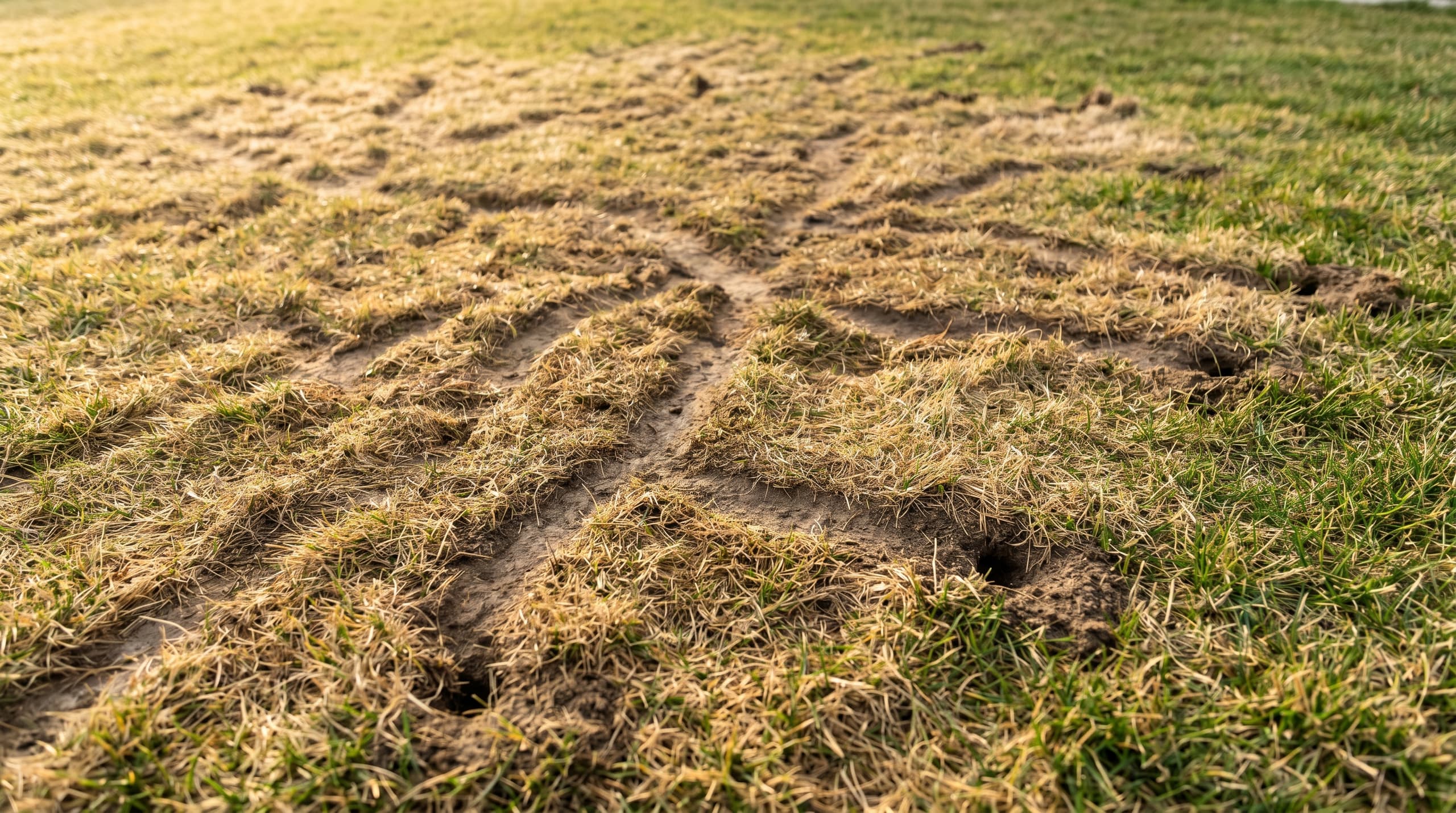
The smoking gun for voles isn't the animal itself. It's the trail pattern. Voles leave a network of surface runways across your lawn that look like someone dragged a stick through the grass in winding, criss-crossing lines. Once you've seen them, you can't unsee them.
Here is the full damage signature:
- Winding surface trails about 1.5 to 2 inches wide, cutting across otherwise healthy grass.
- Golf-ball-sized holes roughly 1 inch across at the ends of trails or hidden under shrubs and ground cover.
- No dirt mounds. This is the big one. Gophers push up cone-shaped piles of soil. Moles leave volcano mounds. Voles do neither.
- Chewed bark at the base of young trees and shrubs. Voles girdle bark right at soil level, sometimes wrapping the whole trunk and killing the plant in a single winter.
- Yellow or dead grass tracing the runway lines, where voles fed on the grass crowns and roots beneath the snow.
Why Treasure Valley Lawns Get Voles in the First Place
Voles need cover. Tall grass, dense ground cover, mulch beds, brush piles, weedy fence lines. They won't cross an open patch of dry dirt if they can help it, because hawks and owls eat them alive. Anywhere you have connecting strips of dense vegetation, you have a vole highway.
Three setups in the Treasure Valley practically guarantee vole pressure:
- Yards along the canal system. Kuna, Star, and parts of Meridian and Eagle have homes backing up to irrigation canals. Canal banks are weedy, rarely mowed short, and connect for miles. Voles use them like interstates.
- Foothill yards in Boise and Eagle. The transition zone between irrigated grass and dry sage holds high vole populations in mild winters. If your yard touches BLM ground or open foothills, expect consistent pressure.
- Heavily mulched landscaping. Thick mulch beds with dense shrub coverage, especially right against the foundation, give voles a place to nest and feed without ever crossing open ground.
Why Voles in Idaho Do Their Worst Damage Under Winter Snow
Most homeowners don't discover voles in January. They discover them in late March or April. Here's why.
Voles stay active all winter. They don't hibernate. Under a few inches of snow, they keep eating, breeding, and running their tunnel network across your lawn. The snow is perfect cover. Owls can't see them, coyotes can't easily dig them up, and you can't either. So they work on your grass crowns and tree bark uninterrupted from December through March.
When the snow melts, the damage shows up all at once. Dead grass trails. Chewed bark on young apple, crabapple, or maple trees. A maze of exposed runways across the yard. It's easy to think the lawn died from cold or salt damage. If there are surface runways under the dead patches, it was almost certainly voles feeding all winter under the snow.
If you saw nothing all winter and woke up to a trashed lawn in late March, that's the vole signature. The damage is already done by then, but the next generation is already setting up for another round. That's why fall and winter prevention beats spring panic.
When Voles Cross From Lawn Pest Into a Bigger Problem
Voles usually stay outside. They want grass roots, not your kitchen. But a few scenarios push vole problems into the more serious category:
- Population boom years. Vole numbers run on a natural 3 to 5 year cycle. In peak years populations explode and can push into mulch beds against the foundation, occasionally getting into garages or crawlspaces through open vents and gaps.
- Repeated tree damage. A 3-year-old fruit tree, ornamental crabapple, or new arborvitae hedge can be killed in one winter if voles girdle the bark all the way around. Replacing trees adds up fast.
- Flea and tick hosts. Voles carry the fleas and ticks that hop onto outdoor dogs and cats. They're not a major human disease vector in Idaho, but keep pet flea and tick prevention current if your yard has active runways.
- A lawn that won't recover. A bad year of vole feeding can require reseeding entire sections. Some yards end up with bare patches that take a full growing season to fill back in.
What Actually Stops Voles
Vole control is a different job than mouse control. You're working outdoors, in an area you can't seal off, against an animal that breeds fast and hides in dense vegetation. Five things actually move the needle.
- Cut the cover first. Mow short going into fall. Trim weedy fence lines. Pull mulch back at least 12 inches from foundations and tree trunks. Voles won't set up where they've got nowhere to hide.
- Tamper-resistant bait stations. Locked stations placed along travel paths and at the edge of cover. The bait stays sealed inside and kids and pets can't reach it. This is the workhorse of professional barrier treatment for voles.
- Trap lines on hot spots. Standard wooden snap traps set flat on the ground at a right angle to an active runway, baited with peanut butter, covered with a board or overturned pot to protect songbirds.
- Tree guards on young trees. A 1/4-inch mesh wire cylinder around the trunk, buried 1 to 2 inches into the soil, blocks winter girdling. Cheap, easy, and it saves trees worth hundreds of dollars.
- Ongoing prevention, not one-shot treatment. Canal-adjacent and foothill yards never stop getting fresh voles from neighboring habitat. Treatment has to be continuous, especially through late fall and winter when most damage happens.
How Green Guard Handles Voles in the Treasure Valley
Vole control is usually a separate Green Guard service, not part of the home plan, and it's priced on its own. Ask for a quote when you call.
Vole pressure tends to show up in a few kinds of places. New subdivisions around Kuna and elsewhere get hit hard the first year or two after construction, when fresh sod sits on top of former hay ground. Irrigated lawns that back up to open fields see runways after spring snowmelt. Boise hillside lots near the Foothills get pressure off the open BLM land to the east. Wherever voles show up, the pattern is consistent: irrigation berm, fence line, mulch bed, lawn.
Here is what a vole visit looks like on a Boise, Kuna, or Eagle property:
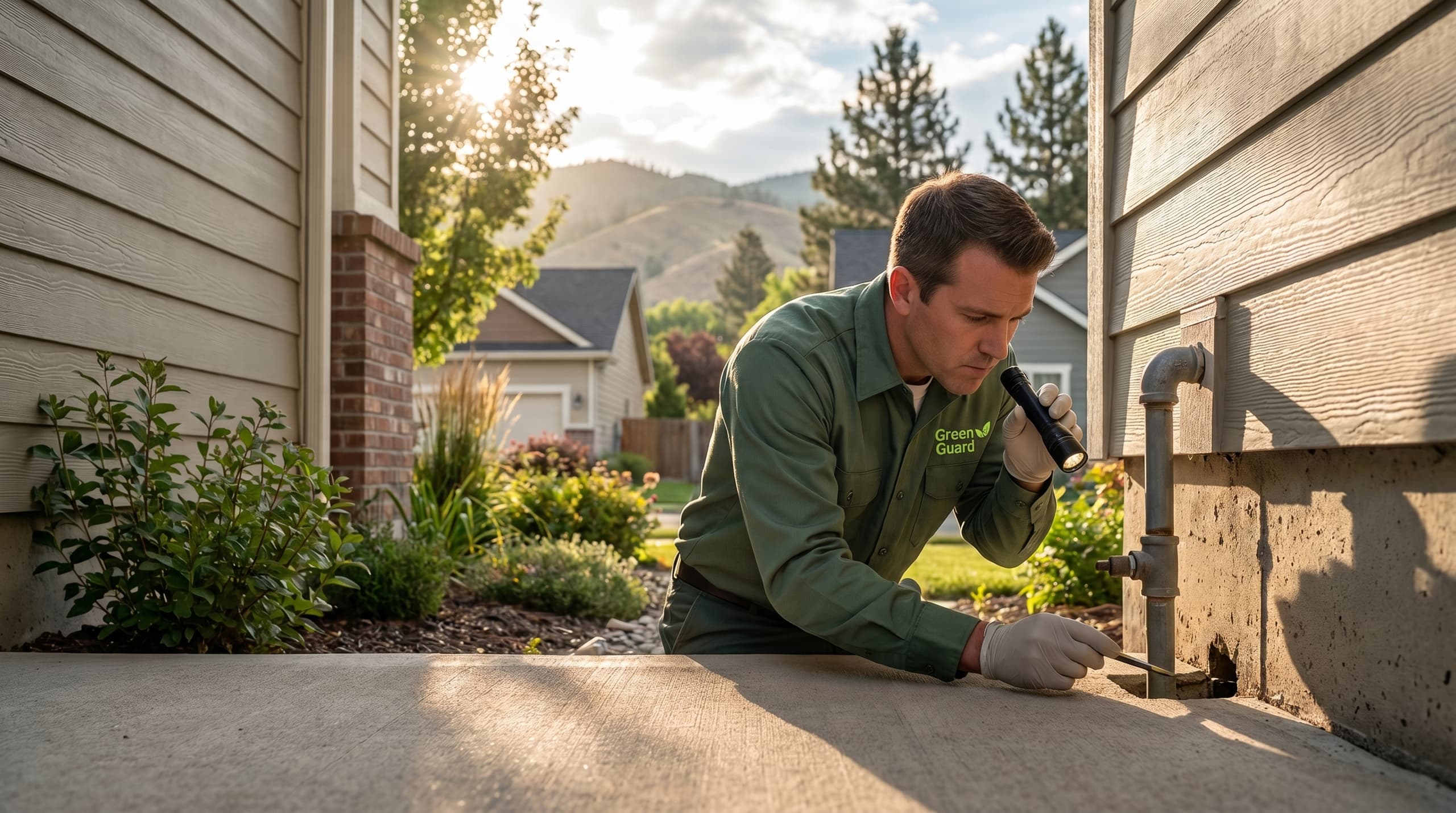
- Walk the property and find the active trails. We identify active runways, count entry holes, and figure out where the voles are pushing in from (canal bank, fence line, mulch bed).
- Place tamper-resistant bait stations along active travel paths and at the property edge where pressure comes in.
- Recommend tree guards and habitat trims for any trees or shrubs taking damage.
- Service the stations on every visit so they stay loaded and effective through the high-pressure months.
What Vole Control and Your Home Plan Cost
Vole control is usually a separate service from your home plan, priced on its own based on your yard. Call for a quote. Your home plan covers mice and rats inside the house, starting with a $49 first visit, and runs:
- Quarterly (4 visits per year): $119 for homes up to 2,500 sq ft, $139 for 2,501 to 4,000 sq ft, $159 for 4,001 to 5,500 sq ft.
- Bimonthly (6 visits per year): $99, $119, or $139 by the same size tiers. Better fit if you have heavy pressure from a canal or foothill edge.
- Free re-service guarantee. If covered pests come back between scheduled visits, we come back at no extra charge.
How to Repair a Vole-Damaged Lawn
The good news first: vole damage to a Treasure Valley lawn is almost never permanent. The grass crowns get chewed but the soil structure stays intact. With a little patience your yard will fill back in by mid-summer.
Four steps to repair the damage:
- Rake out the dead grass from the surface trails. This breaks up the matted thatch and exposes soil for new seed.
- Overseed the bare patches with the same grass mix you have. Most Treasure Valley lawns are Kentucky bluegrass or a tall fescue blend.
- Water it consistently for 2 to 3 weeks while the seed germinates. Damp soil, not soaking.
- Be patient. By July the surrounding grass grows into the trails and the damage disappears on its own.
Frequently Asked Questions
How do I tell voles from mice in my Idaho yard?
Quick answerVoles live outside and damage lawns.
House mice come inside and damage homes. Voles have stubby tails (1 to 2 inches), blunt faces, and tiny hidden ears. Mice have long thin tails (2.5 inches or more), pointed snouts, and obvious ears. If you see winding trails across the grass with no dirt mounds, that's voles.
When is vole damage worst in Idaho?
Quick answerVole damage usually shows up in March and April after the snow melts.
Voles stay active all winter under the snow, feeding on grass roots and tree bark unseen. By the time you spot the trails the winter damage is already done. That's why setting bait stations in late fall before snow flies matters more than reacting in spring.
Will voles come inside my house?
Quick answerUsually no.
Voles are committed outdoor rodents and prefer grass roots and bark over kitchen food. In heavy infestation years they sometimes push into garages or crawlspaces from mulch beds against the foundation. If you're finding mouse-like rodents inside, you almost certainly have house mice or deer mice, not voles. Our rodent identification guide for Idaho can help you tell them apart.
Are vole control products safe for kids and pets?
Quick answerWhen used in tamper-resistant locked bait stations, yes.
The bait stays sealed inside the station and only voles can access it. Green Guard never broadcasts bait across an open lawn. Our products are organic-based where possible, EPA-approved, and family-safe once the application dries (usually within 30 to 60 minutes).
How much does vole treatment cost in Boise?
Quick answerVole control is usually a separate service from your home plan, with its own price based on your yard and how much pressure you have.
Call (208) 297-7947 for a quote. Rodents inside your home are covered by our regular quarterly or bimonthly plan, which starts with a $49 first visit and runs $99 to $159 per visit depending on home size and schedule.
Can I just trap voles myself?
Quick answerFor a small problem in a small yard, yes.
Set wooden snap traps flat on the ground at a right angle to an active runway, bait with peanut butter, and cover with a board to protect songbirds and pets. Check the traps daily. For a half-acre yard or constant pressure from a canal bank, trapping alone can't keep up with the breeding rate. That's where professional bait stations earn their keep.