Quick answer
Bald-faced hornets in Idaho are big black wasps with a white face and three white tail stripes, larger than the yellow jackets people mix them up with. They build gray, football-shaped paper nests that hang from trees and eaves, usually three feet or more off the ground. They sting over and over and defend the nest as a group, so a mature nest is dangerous to remove yourself. Green Guard clears bald-faced hornets across the Treasure Valley starting with a $49 first service. Call (208) 297-7947.
Key Takeaways
- Bald-faced hornets are black with a chalk-white face and three white bands near the tail. At about 3/4 inch, they're bigger than yellow jackets.
- They aren't true hornets. They're aerial yellowjackets (Dolichovespula maculata) and Idaho Fish and Game lists them statewide.
- Look for a gray, football-shaped paper nest hanging in the open from a tree branch, eave, or shed, usually 3 feet or more up.
- They sting repeatedly without dying and can spray venom toward your eyes. The whole colony defends the nest at once.
- A late-May nest is golf-ball sized with one queen. By September it can be basketball-sized with 400 to 700 workers. Treat early.
In this article

What Does a Bald-Faced Hornet Look Like?
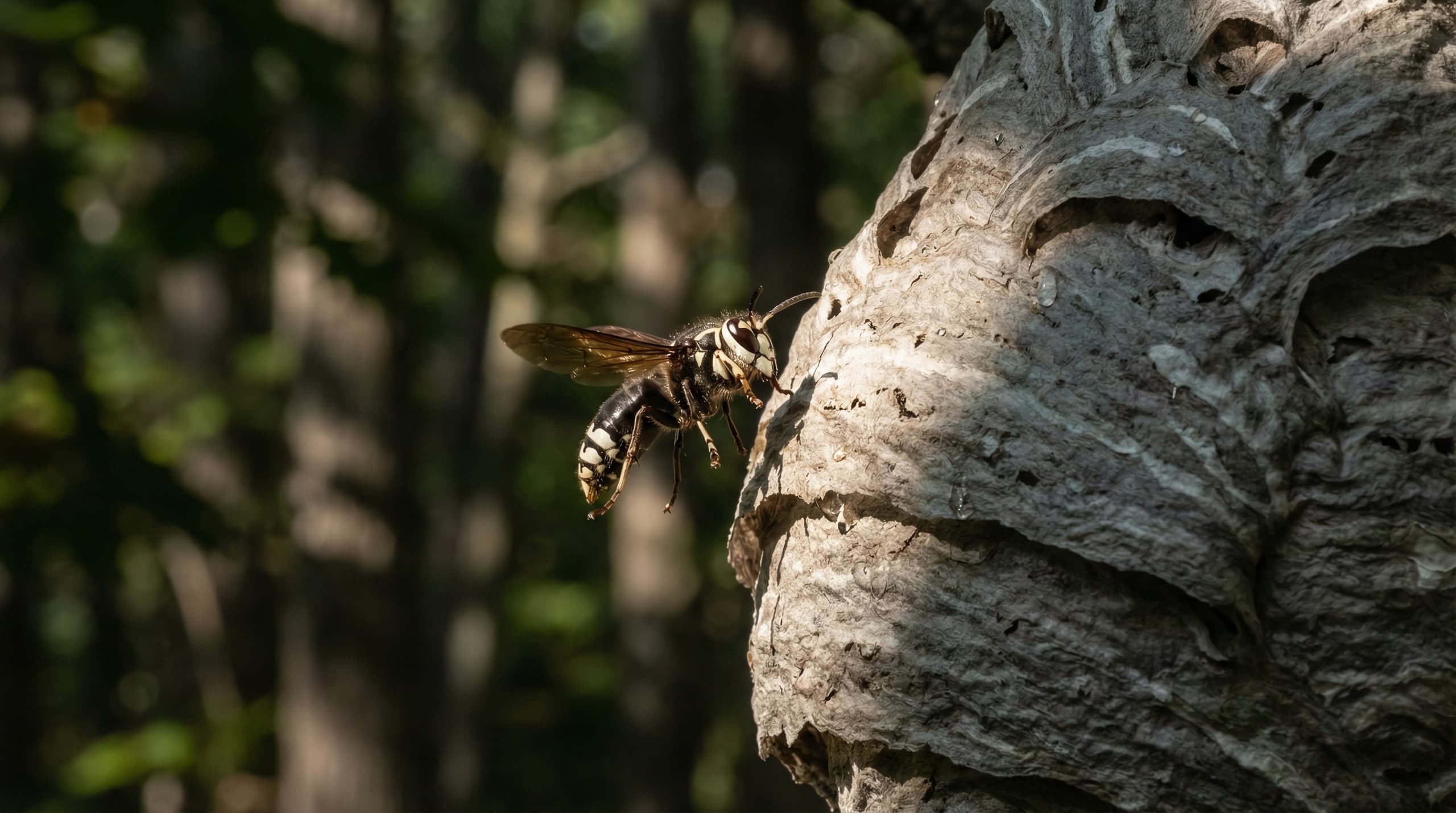
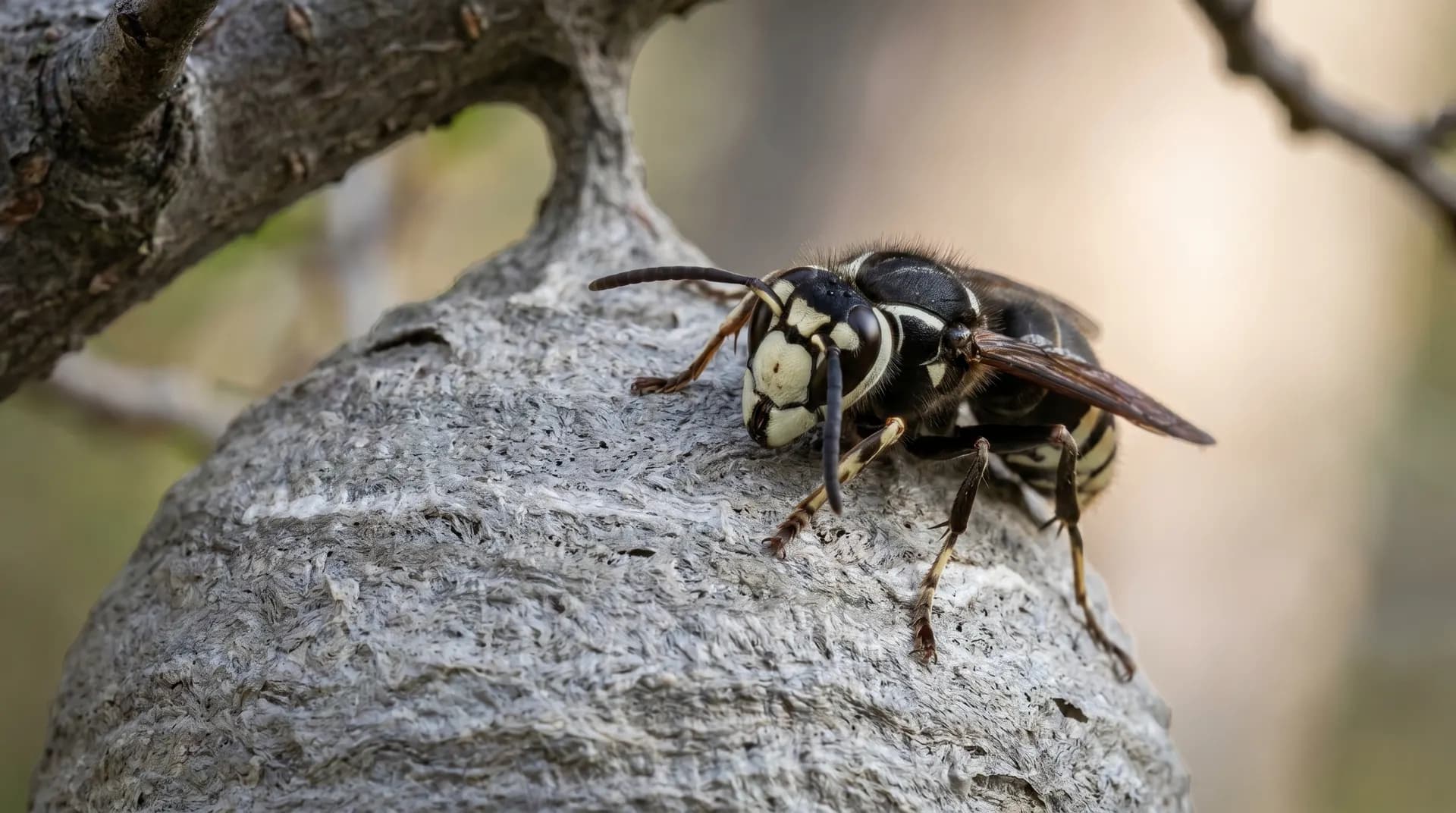
A bald-faced hornet is a big black wasp with an ivory-white face and three white bands near the tip of its abdomen. It runs about three-quarters of an inch long, noticeably bigger than the yellow jackets people mix it up with. White markings on a black body are the tell you can spot from a few feet away.
Here's the part that surprises most Idaho homeowners. The bald-faced hornet isn't a true hornet at all. It's an aerial yellowjacket, Dolichovespula maculata, and Idaho Fish and Game lists it in the state species catalog. They're active across the Treasure Valley from June through the first hard frost.
Up close, the face seals the ID. Yellow jackets have yellow faces and bright yellow-and-black bodies. A bald-faced hornet has that chalk-white face and a body that reads mostly black with white trim.
In our years pulling nests around Boise, Meridian, and Eagle, this is the stinging insect that scares homeowners the most on sight. It looks the part.
Where Do Bald-Faced Hornets Nest in Idaho?
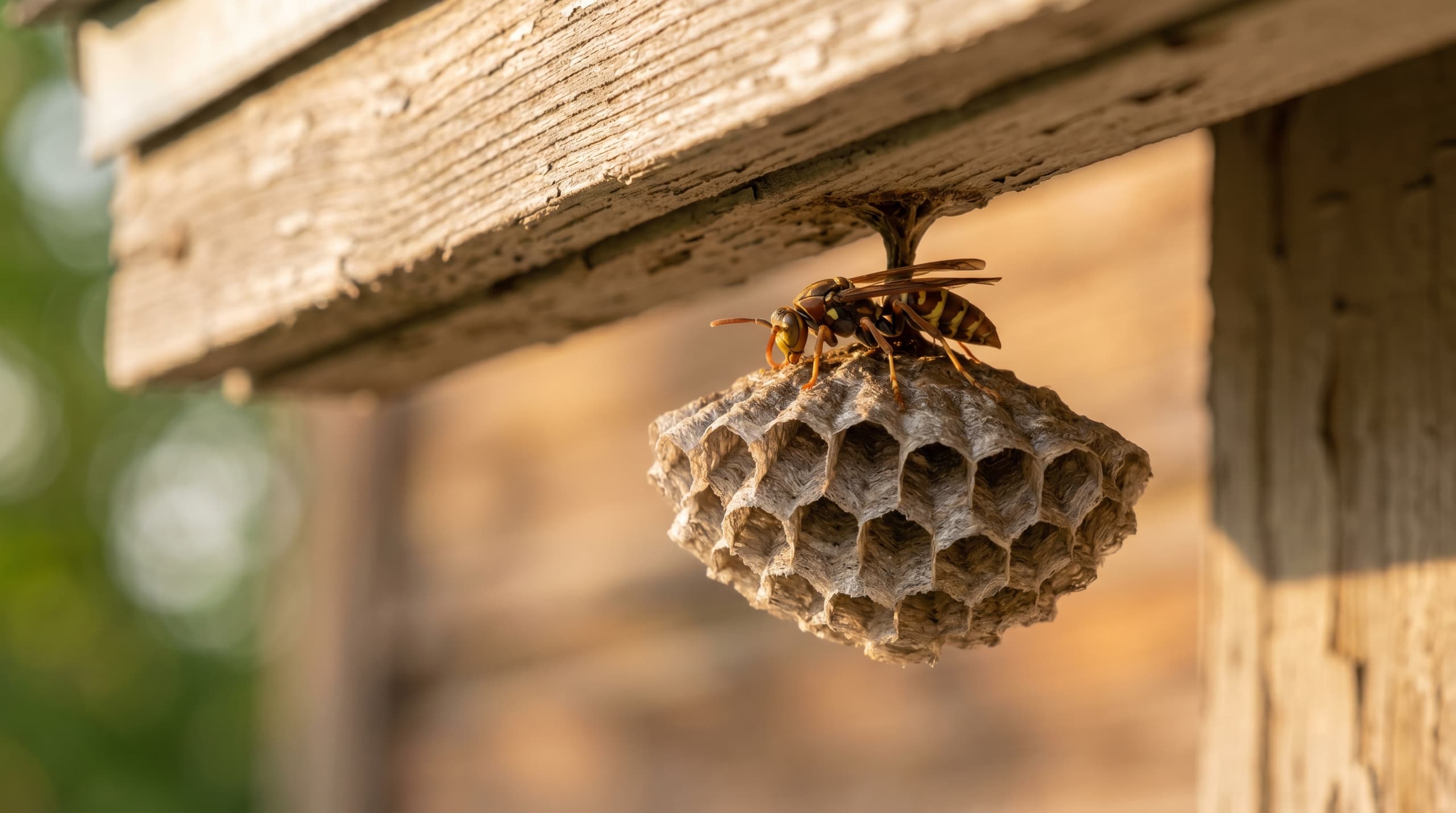
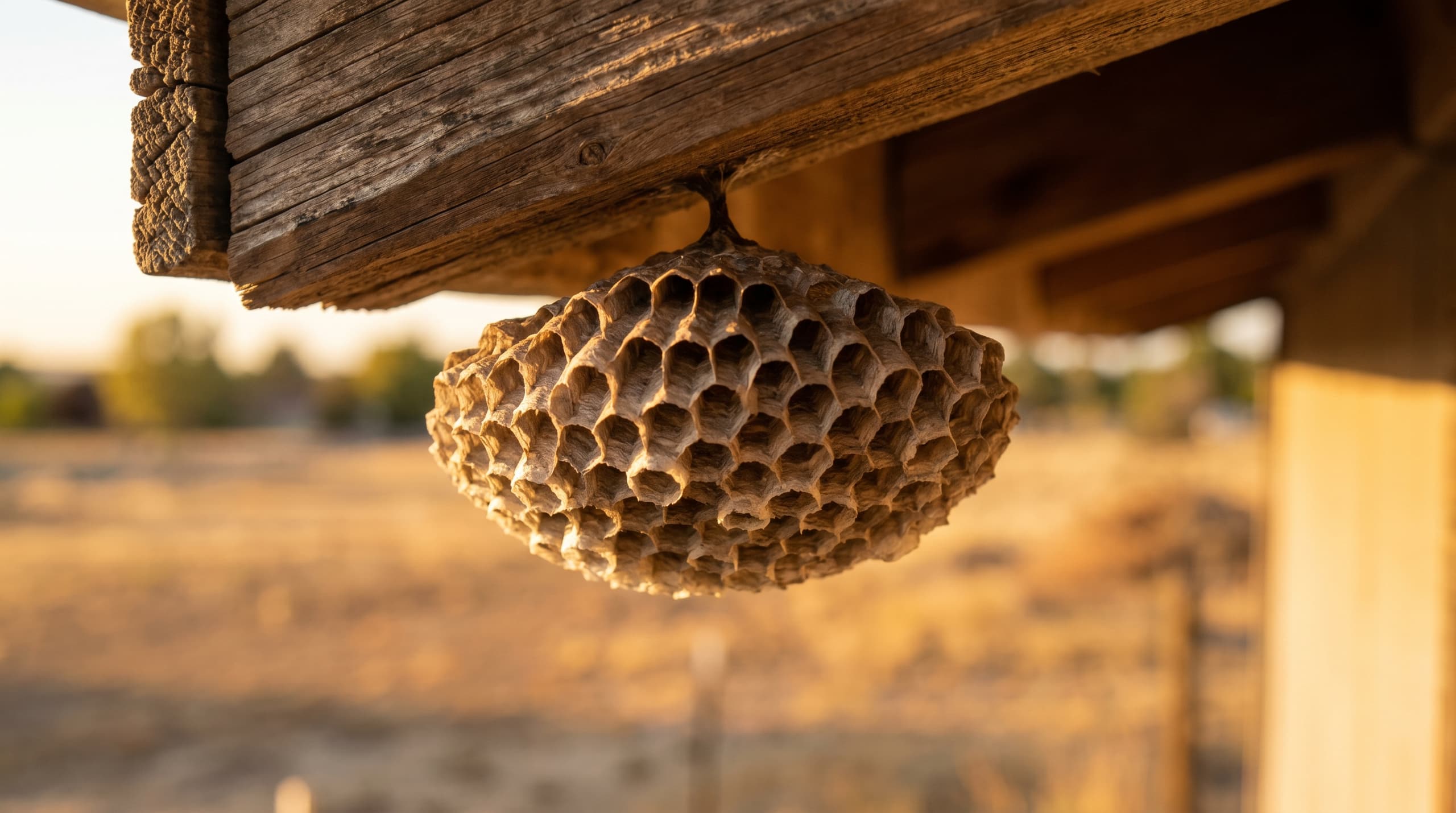
Bald-faced hornets build a gray, football-shaped paper nest that hangs out in the open, usually three feet or more off the ground. That aerial nest is the big difference from yellow jackets, which hide their nests in the ground or inside walls. If you can see a papery gray football hanging from a branch or eave, you're almost certainly looking at bald-faced hornets.
The nest starts small in spring and balloons through summer. A finished one can reach the size of a basketball, sometimes bigger.
- Tree branches and tall shrubs. The big shade trees in older neighborhoods like the Boise North End are prime real estate
- Under eaves, soffits, and roof overhangs. Second-story corners nobody looks at until fall
- Sheds, barns, and detached garages. Common on Eagle and Star properties with outbuildings
- Foothill backyards that back up to greenbelt and brush. More cover means more nests
- Utility poles, fence lines, and playsets. Anywhere with a sturdy anchor point a few feet up
Bald-Faced Hornet vs. Yellow Jacket vs. Paper Wasp
Getting the ID right matters, because the treatment is different for each one. Here's how the three stinging insects Treasure Valley homeowners call us about stack up side by side.
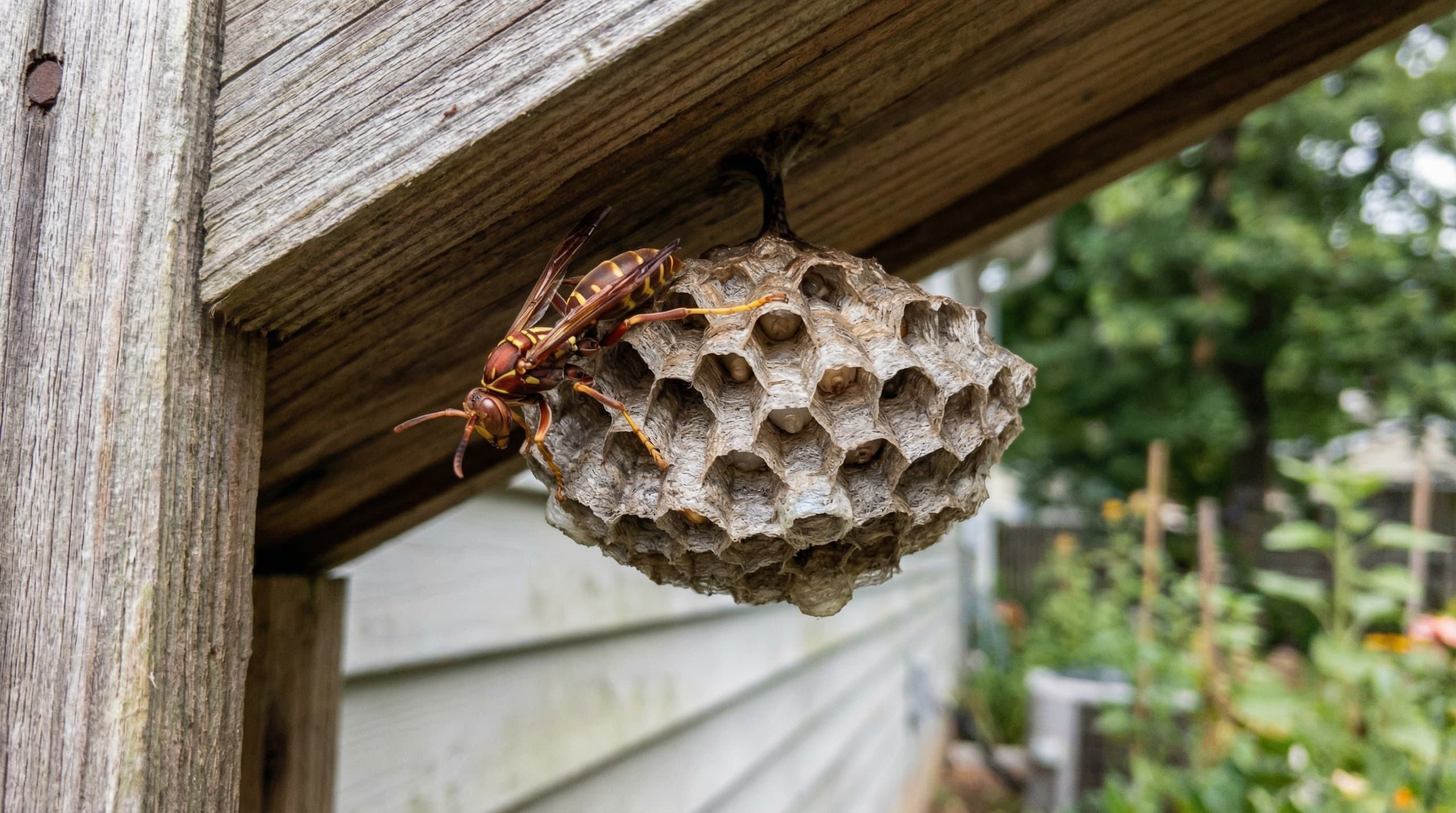
- Bald-faced hornet. Black with a white face, about 3/4 inch. Gray football nest hanging in the open. Aggressive at the nest and stings over and over.
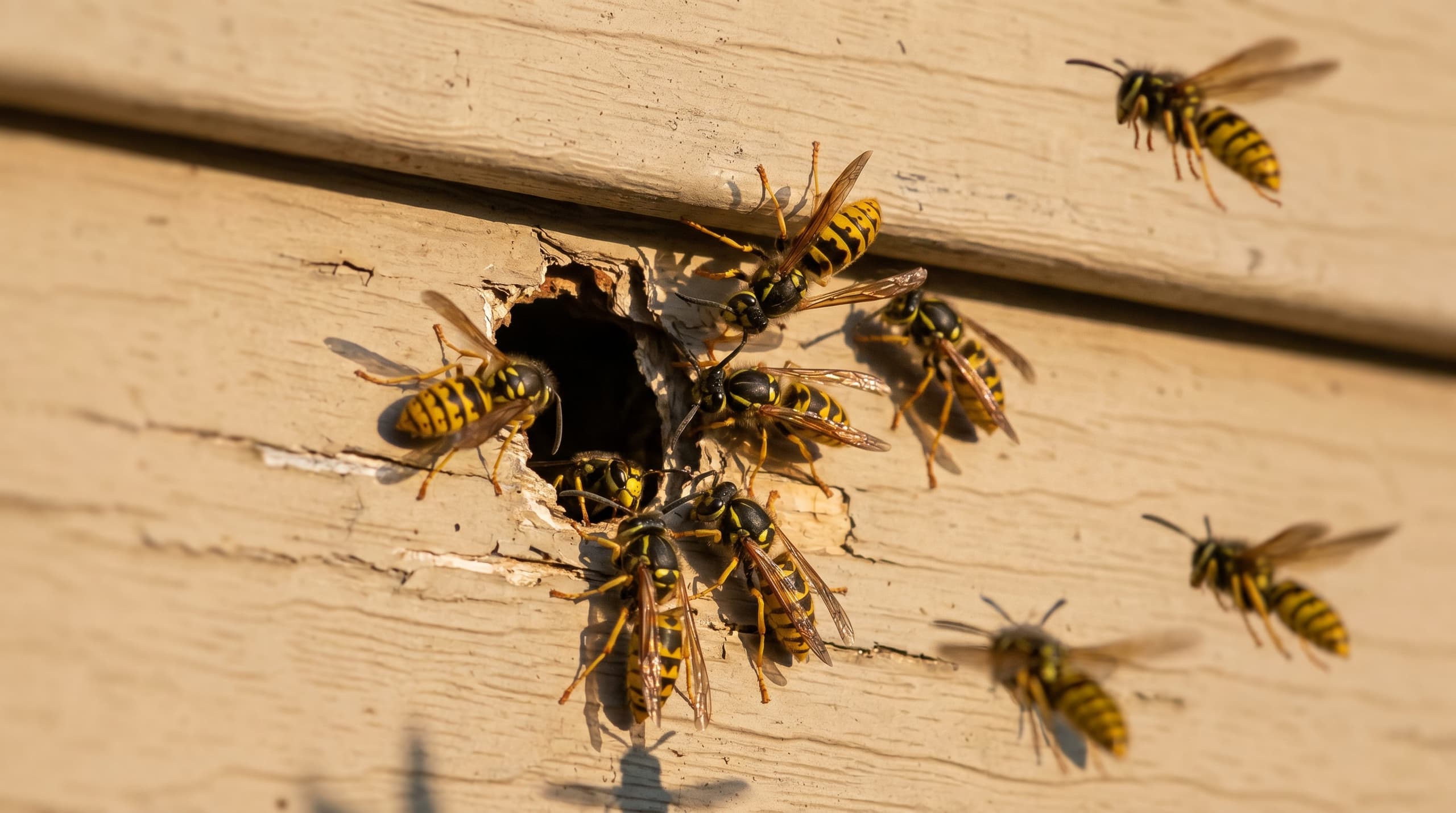
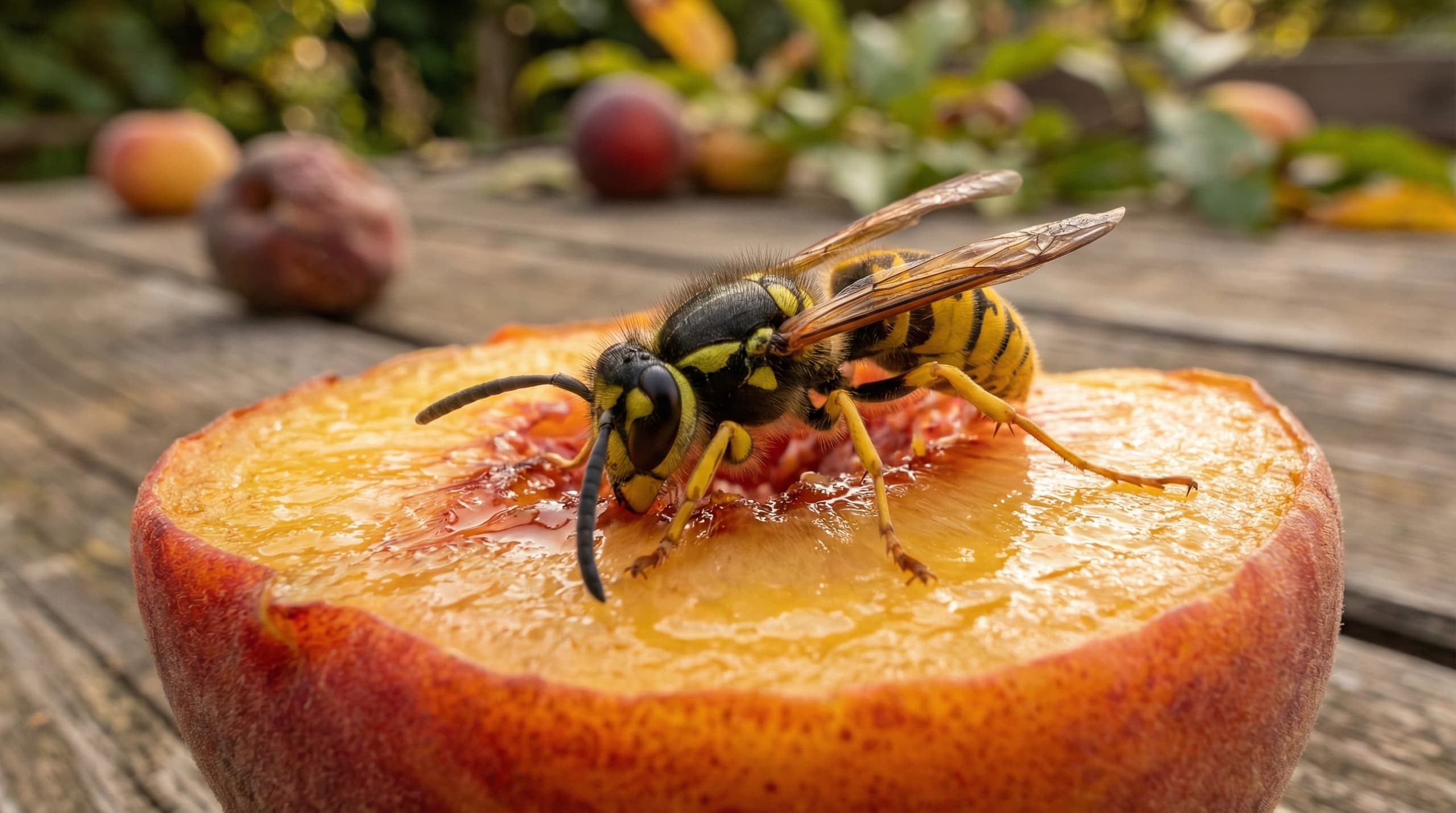
- Yellow jacket. Smaller, bright yellow and black, fast and direct in flight. Nests in the ground or inside walls and soffits. Very aggressive and swarms. See our yellow jacket ID guide.
- Paper wasp. Slender, brown with yellow, legs dangling in flight. Open umbrella nest under an eave with no outer shell. More laid back. Our paper wasp guide breaks it down.
Will Bald-Faced Hornets Sting You?
Yes. Bald-faced hornets will sting, and unlike a honeybee, they can sting again and again without dying. A bee loses its stinger and gives up its life in the process. A bald-faced hornet keeps a smooth stinger and uses it as many times as it wants.
They guard the nest hard. Get within a few feet, bump the branch, or run a mower or pressure washer nearby, and the colony pours out to defend. A single nest can hold hundreds of workers, and they don't come out one at a time.
One more nasty trick. Bald-faced hornets can spray venom from the stinger toward your eyes when they feel cornered, from several feet away. That's why a face full of angry hornets is so dangerous. The sting itself burns hot and swells for a day or two.
Why Late May Is the Best Time to Deal With a Nest
This is the part most people miss. A bald-faced hornet colony starts every spring with a single queen who survived the winter. In late May she's building the first layers of the nest by herself. Right now that nest is about the size of a golf ball, and there's one hornet on it.
Give it a few months. By August and September that same nest can be basketball-sized, with 400 to 700 workers defending it. Peak nest visibility in Idaho runs July through September, which is also when the colony is meanest.
The math is simple. One queen knocked down in late May is a colony of hundreds you never have to face in August. This is the easiest and safest treatment window of the whole season.
If you're already seeing a nest take shape on your property, don't wait for it to grow. Green Guard treats bald-faced hornets across the Treasure Valley, and same-day service is often available. Call (208) 297-7947 to get on the schedule.
Can You Remove a Bald-Faced Hornet Nest Yourself?
For anything past golf-ball size, don't. A mature bald-faced hornet nest is one of the few pest jobs we tell homeowners to leave alone completely. The whole colony defends at once, they sting repeatedly, and they aim for your face.
Here's why DIY goes sideways fast:
- The colony attacks as a group. Hit the nest with a spray can and hundreds of workers come out at the same moment.
- Most nests sit too high to reach safely. Add a wobbly ladder to a hornet swarm and you've got an ER trip waiting to happen.
- Store-bought sprays usually fall short. A football nest holds far more hornets than one can can handle, and a half-treated colony is a furious one.
- They can spray venom at your eyes. Even with a hat and glasses, a face full of hornets is no joke.
How Green Guard Clears Bald-Faced Hornets
Spot a gray football hanging from your tree or eave? That's our cue. The sooner we get to it, the smaller and calmer the colony.
We knock down every nest we can safely reach, treat it with an organic-based, hospital-grade formulation that's family-safe once dry, and spray a 3-foot barrier around your home so new queens don't set up shop next door. We cover Boise, Meridian, Eagle, Nampa, Caldwell, Kuna, and Star.
The first treatment is just $49. Quarterly plans run $119, $139, or $159 based on home size, and every plan comes with our free re-service guarantee. If they come back between visits, so do we, at no charge.
Call (208) 297-7947 or book online. Same-day service is often available. We're locally owned in Boise, 4.9 stars across 170+ Google reviews, with 2,500+ Treasure Valley families on the books.
Frequently Asked Questions
Will bald-faced hornets sting you?
Quick answerYes.
Bald-faced hornets sting repeatedly without dying, unlike honeybees, and they defend the nest in a group. They can also spray venom toward your eyes from a few feet away. Away from the nest they mostly leave you alone, but step within a few feet of the nest and the colony comes out.
Should I destroy a bald-faced hornet nest?
Quick answerIf it's on your house, in a tree near walkways, or anywhere people pass within several feet, yes, have it removed.
A mature nest holds hundreds of hornets and is a real hazard. Don't try to destroy a large nest yourself. Call a pro with the protective gear and reach to do it in one shot.
Are there bald-faced hornets in Idaho?
Quick answerYes.
Idaho Fish and Game lists Dolichovespula maculata in the state species catalog, and we treat them across the Treasure Valley every summer. They show up from June through the first hard frost, with nests most visible from July through September.
What kills bald-faced hornets instantly?
Quick answerA direct, long-range wasp-and-hornet aerosol can knock hornets down on contact, but it rarely clears a whole nest, and dousing a big nest just enrages the survivors.
There's no truly instant fix for a mature colony. Professional treatment with the right formulation and gear is the reliable way to clear one safely.
How much does bald-faced hornet nest removal cost in Boise?
Quick answerGreen Guard's first treatment is $49, which covers the nest plus a full perimeter barrier spray.
Quarterly plans run $119 to $159 depending on home size, all with a free re-service guarantee. Same-day service is often available when you call (208) 297-7947.