Quick answer
Wasp sting treatment for a normal sting (wasp, hornet, or yellow jacket): wash the area with soap and cool water, apply a cold compress for 10 to 20 minutes, take an oral antihistamine like Benadryl for itching, take ibuprofen for pain, and monitor for 30 to 60 minutes. Call 911 immediately if you see swelling spreading beyond the sting site, trouble breathing, throat tightness, dizziness, or a rapid pulse. Those are signs of anaphylaxis and need emergency care, even if you feel okay between waves.
Key Takeaways
- Five-step wasp sting first aid: wash with soap and cool water, cold compress for 10 to 20 minutes, oral antihistamine, ibuprofen, and monitor for 60 minutes
- Call 911 for any anaphylaxis signs: swelling beyond the sting site, trouble breathing, throat tightness, dizziness, hives anywhere on the body, or a rapid pulse
- Yellow jackets and bald-faced hornets are the worst stingers in Idaho. They can sting multiple times in seconds and account for most late-summer ER visits
- Most folk remedies (baking soda paste, vinegar, meat tenderizer) have no real evidence behind them. Cold, antihistamines, and time are the proven winners
- Prevention beats first aid. Treating nests early and removing food attractants stops most Boise summer stings before they happen. Call Green Guard at (208) 297-7947
In this article

Wasp Sting Treatment in 5 Steps (Start Here)
For a normal wasp, hornet, or yellow jacket sting, do these five things in order:
- Wash the sting site with soap and cool water.
- Apply a cold compress or an ice pack wrapped in a cloth for 10 to 20 minutes.
- Take an oral antihistamine (Benadryl, Claritin, or Zyrtec) for itching and local swelling.
- Take an over-the-counter pain reliever (ibuprofen for swelling and pain).
- Monitor for 30 to 60 minutes for any sign of a body-wide reaction.
If at any point you notice trouble breathing, swelling spreading beyond the sting site, dizziness, or hives on areas that were not stung, skip to the next section. That is a 911 call.
This guide covers the rest: the warning signs that mean emergency, how different Treasure Valley stingers compare, which home remedies actually work, and how to keep it from happening again. As of June 2026, we are at the front edge of peak wasp season in Boise. Stings climb every year from mid-June through early September.
When a Wasp Sting Is a 911 Call
Most wasp stings hurt for about an hour and then fade. Some do not. Roughly 3 percent of adults will have a serious allergic reaction (anaphylaxis) to an insect sting at some point in their life, and stinging insect reactions kill around 60 to 80 Americans every year. Most of those deaths happen because nobody recognized the warning signs in time.
Call 911 right away if the person who got stung shows any of these:
- Swelling spreading beyond the sting site. A swollen finger from a finger sting is normal. A swollen arm, face, lips, or tongue after one sting is not.
- Trouble breathing, wheezing, or throat tightness. Any sense that the airway is closing is an emergency.
- Lightheadedness, fainting, or a rapid pulse. These are early shock symptoms.
- Hives or a rash on parts of the body that were not stung. Body-wide skin reactions mean the immune system is reacting body-wide.
- Severe nausea, vomiting, stomach cramps, or diarrhea within minutes of the sting.
- Confusion, slurred speech, or trouble talking. The brain is not getting enough oxygen or blood pressure has crashed.
Paper Wasp vs Yellow Jacket vs Bald-Faced Hornet vs Honeybee
Treasure Valley homes get hit by four common stingers. They are not equal. Knowing which one got you changes what to expect over the next few hours.
| Species | Idaho Sting Risk | Multiple Stings? | Pain (1 to 4) | Typical Peak Reaction |
|---|---|---|---|---|
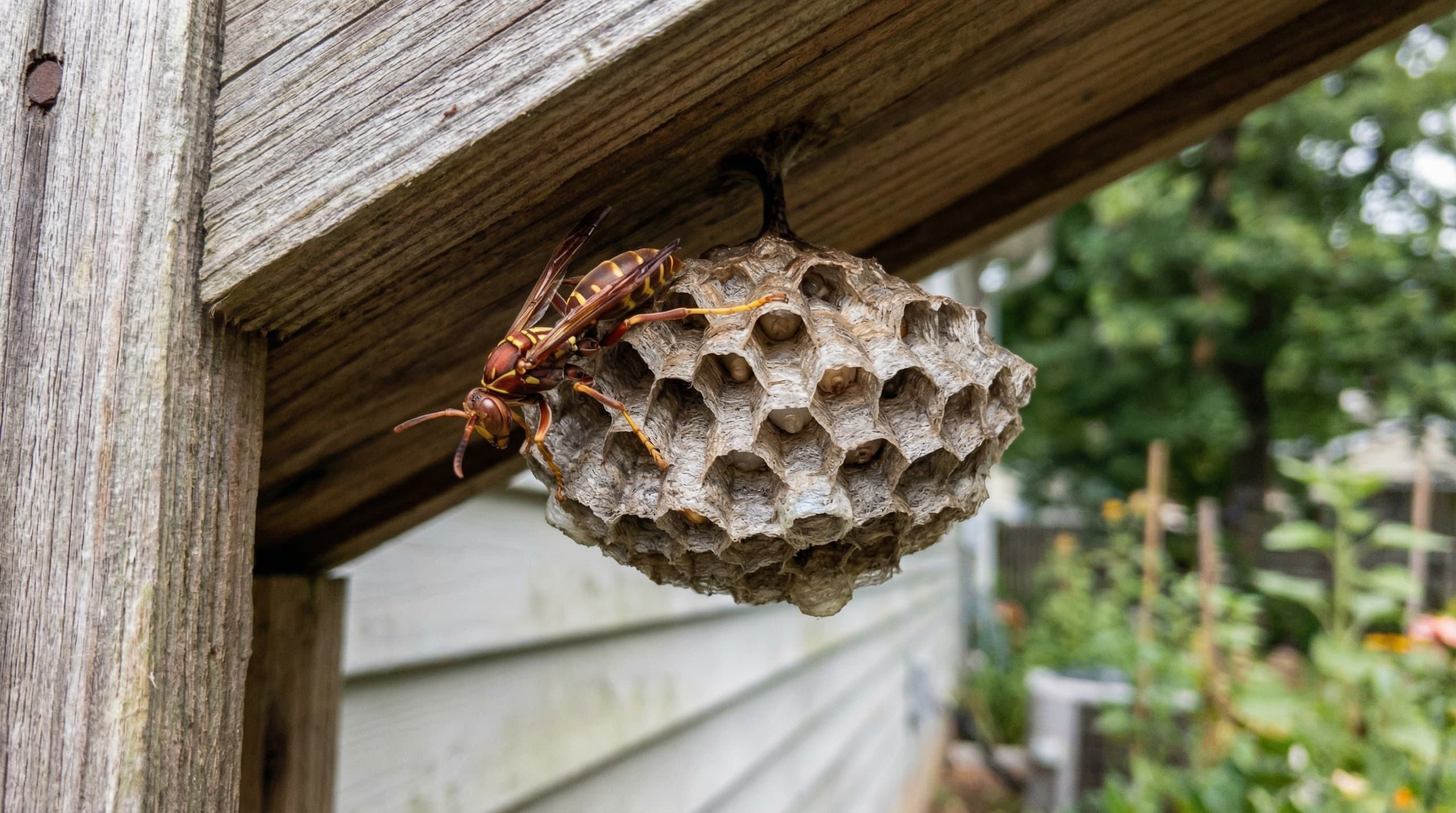
| Paper wasp | Moderate | Yes | 2 | 1 to 2 hours |
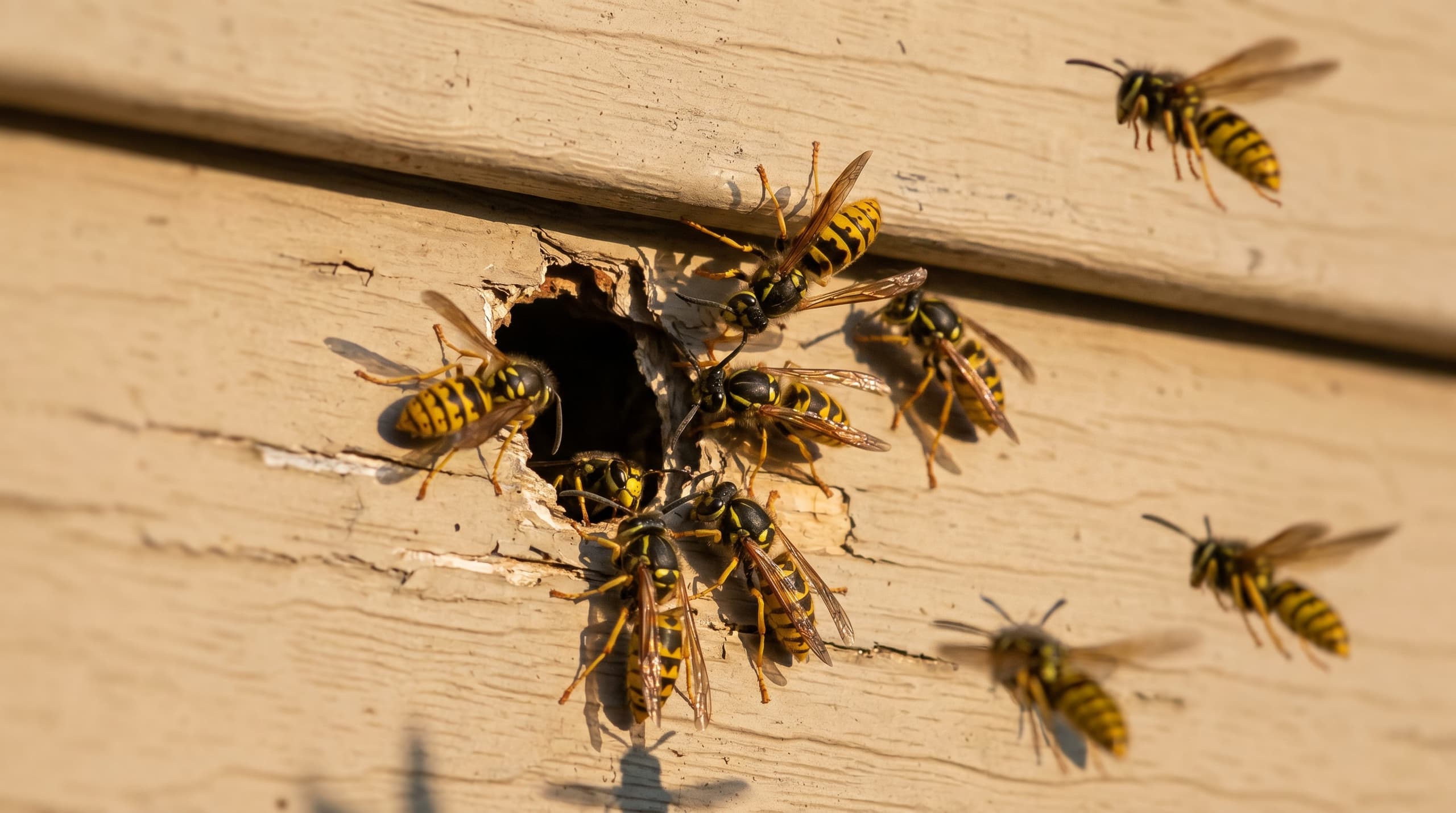
| Yellow jacket | High | Yes (often 5 to 10x) | 3 | 2 to 4 hours |
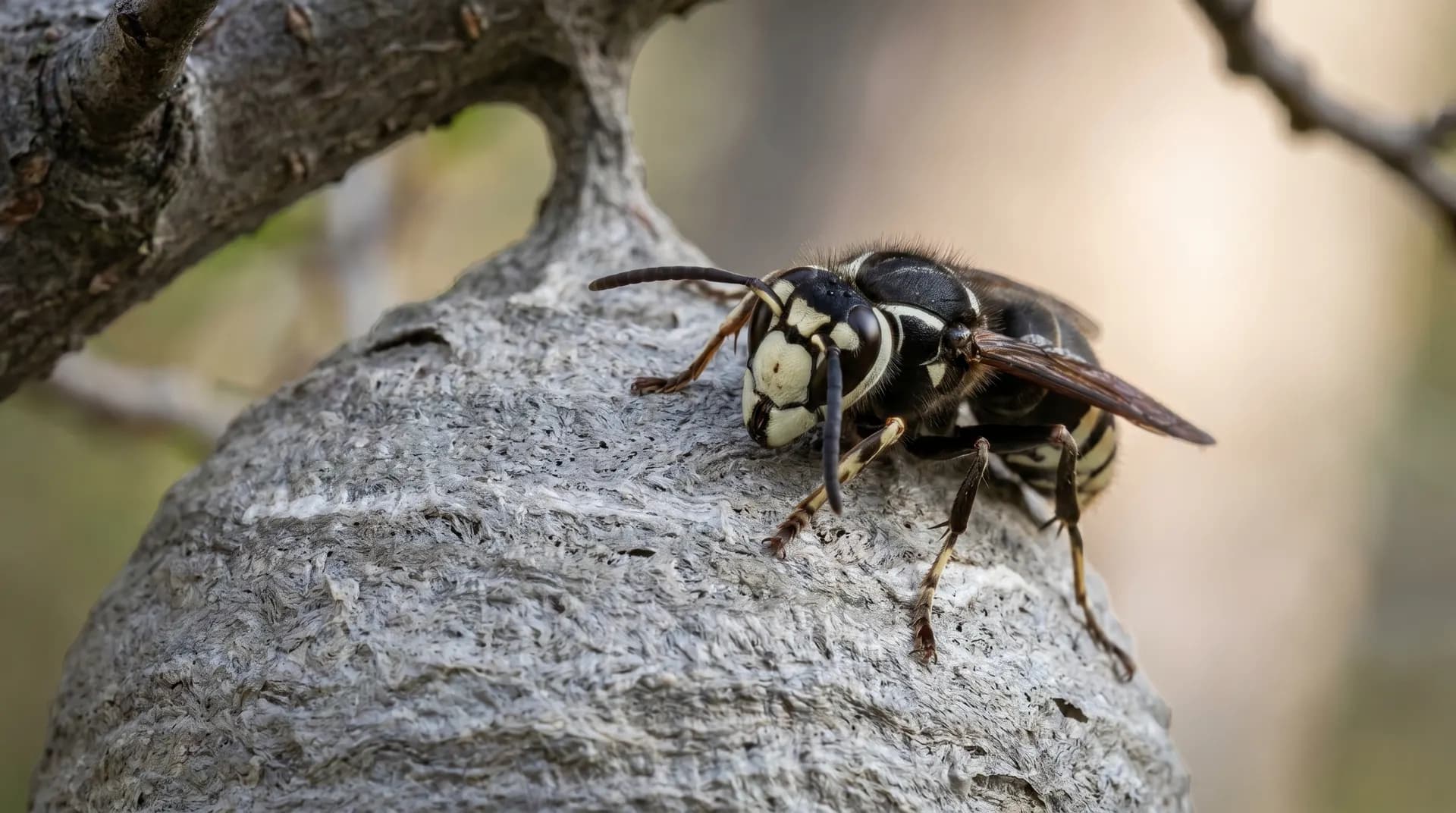
| Bald-faced hornet | Very high | Yes, in swarms | 4 | 4 to 12 hours |
| Honeybee | Low | No (stinger stays in skin) | 2 | 1 to 2 hours |
Two things to know about the differences:
- Honeybees leave the stinger behind. A barbed honeybee stinger pulls out of the bee and stays in your skin, where it keeps pumping venom for up to a minute. Scrape it out sideways with a credit card edge or fingernail. Do not pinch it with tweezers, that squeezes more venom in.
- Wasps, hornets, and yellow jackets do not leave stingers. Their stingers are smooth and they can sting repeatedly. Yellow jackets especially will sting in series, sometimes 5 to 10 times in seconds, if you disturb their nest.
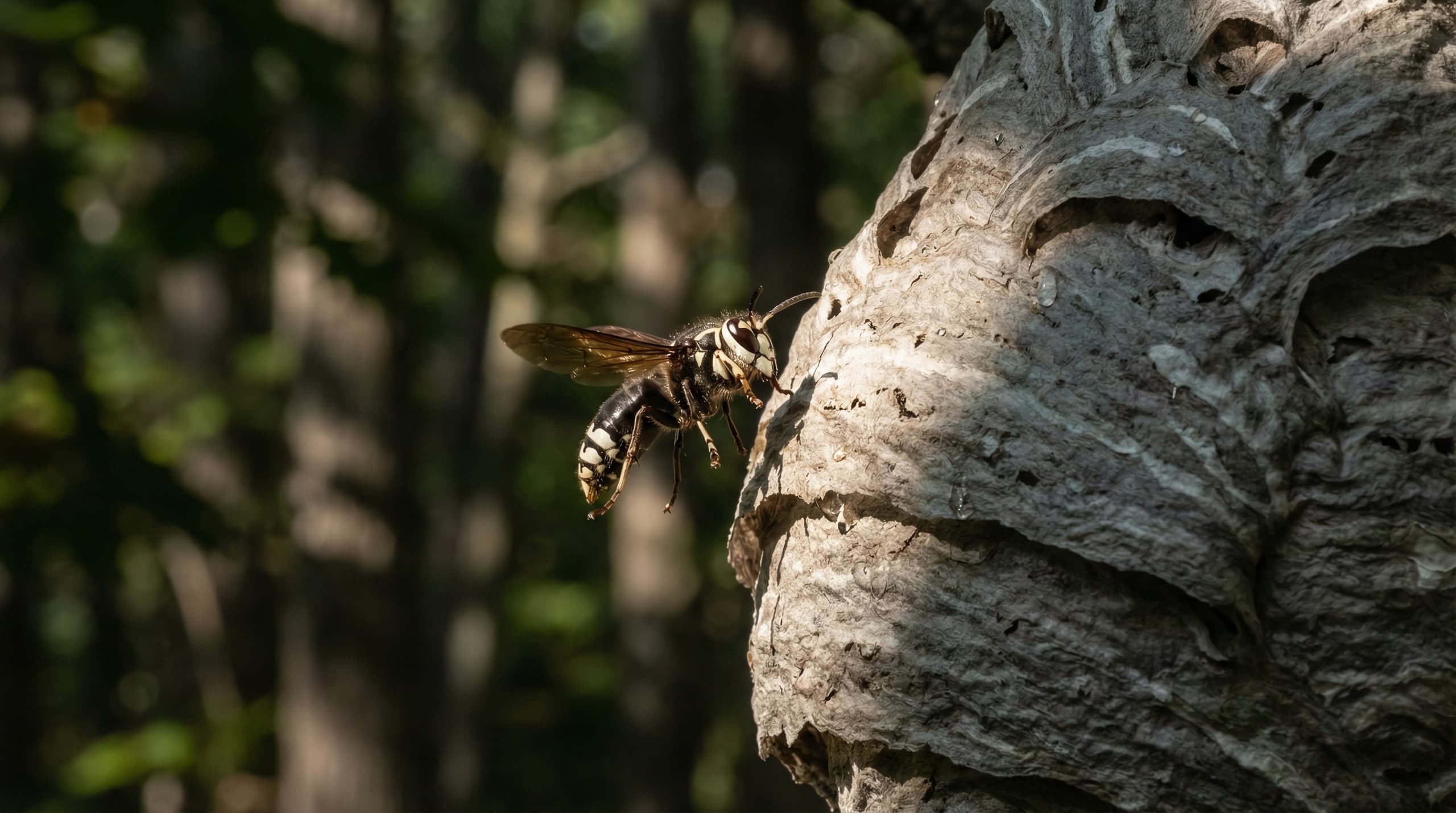
- Bald-faced hornets attack in groups. If you got hit by one, expect more incoming. Get inside or move at least 50 feet from the nest before doing first aid.
- Not sure which one stung you? Read our bee vs wasp identification guide. The species changes how aggressive the colony is and how soon you need to handle the nest.
Home Remedies That Actually Work
This is the short list of wasp sting treatments with real evidence behind them. Use this on a normal sting that does not need an ER.
- Cold compress. Ice in a thin cloth or a bag of frozen peas, applied for 10 to 20 minutes at a time. Cold constricts blood vessels and slows the local swelling. This is the single best thing you can do in the first hour.
- Oral antihistamine. Benadryl (diphenhydramine), Claritin (loratadine), or Zyrtec (cetirizine) all blunt the histamine reaction that drives the itch and local swelling. Follow the package dose for adults. For kids, use the pediatric chart on the box or call your pediatrician.
- 1 percent hydrocortisone cream. Apply a thin layer to the sting site twice a day for two or three days. Cuts down inflammation and the itch as the sting heals.
- Ibuprofen or naproxen. NSAIDs help with both pain and the local inflammation, which is why we usually lean toward them over acetaminophen if you can tolerate them. Always follow the dose on the bottle.
- Elevation. If you got stung on a hand, finger, foot, or ankle, raise it above heart level when you can. Helps drain the swelling.
- Time. Most stings fully resolve in 3 to 7 days even without any treatment. Be patient with the itch.
Home Remedies That Do Not Help (Even If Grandma Swore By Them)
The internet is full of folk treatments for wasp stings. A few are harmless. A few are unhelpful. None of these have the kind of evidence that puts them in an emergency room protocol.
- Baking soda paste. The theory is that baking soda (a base) neutralizes acidic venom. The catch: wasp venom is already alkaline, not acidic. Even on bee stings, the research shows no real benefit. Not harmful, just not useful.
- Vinegar. Same theory, opposite direction. Most peer-reviewed sources show no measurable benefit on wasp or bee stings. Skip it.
- Meat tenderizer (papain). The idea is that papain breaks down venom proteins. Studies are split. Modern emergency medicine does not recommend it. If it makes you feel better and you already have it on hand, fine. Do not delay real first aid to mix a paste.
- Toothpaste, mud, garlic, raw potato, copper coins. No evidence. Skip them.
- Suction venom extractors. By the time you grab one and use it, the venom is already absorbed locally. Not effective for wasp stings.
- Essential oils (tea tree, lavender, peppermint). Pleasant smelling. Not clinically useful for stings, and some can irritate broken skin. Be careful with these on kids.
How Long Does a Wasp Sting Last?
A normal sting follows a pretty consistent timeline. Knowing what to expect helps you decide whether you are healing on schedule or whether something is off.
- First 10 minutes. Sharp, burning pain. This is the worst of it. Apply the cold compress now.
- 1 to 2 hours. Pain shifts to a deep ache. The surrounding skin reddens and starts to swell.
- 4 to 12 hours. Local swelling peaks. The area may feel hot, itchy, and tender to the touch. Yellow jackets and hornets often peak on the later end of that window.
- 24 to 48 hours. Swelling starts to come down. Itching often picks up as the skin heals.
- 3 to 7 days. Most stings fully resolve. The skin may stay slightly pink for another week.
Watch for Infection on Day Three and After
Stings sometimes get infected, especially if you scratched at them or the skin broke open. Infection looks different from a normal healing sting.
Call your doctor or visit urgent care if you see any of these at the sting site after day three:
- Spreading redness with a clear border that gets larger day by day
- Pus or thick yellow drainage from the puncture
- New pain that is worse than day one
- A red streak running away from the sting site (this can be a sign of a spreading skin infection)
- Fever, chills, or feeling generally unwell
How to Avoid the Next Sting
The best wasp sting treatment is preventing the next one. Most stings in the Treasure Valley happen because of three things: walking too close to a hidden nest, attracting foragers to sweet drinks or floral scents, or trying to remove a nest the wrong way.
Here is what actually moves the needle in a Boise backyard:
- Watch where you step in late summer. Yellow jackets often nest in old rodent burrows in the lawn, hollow stumps, or gaps under landscape rock. If you see a steady stream of yellow-and-black wasps going into a hole, walk around it. Do not mow over it. See our yellow jacket ground and wall nest guide for what to do next.
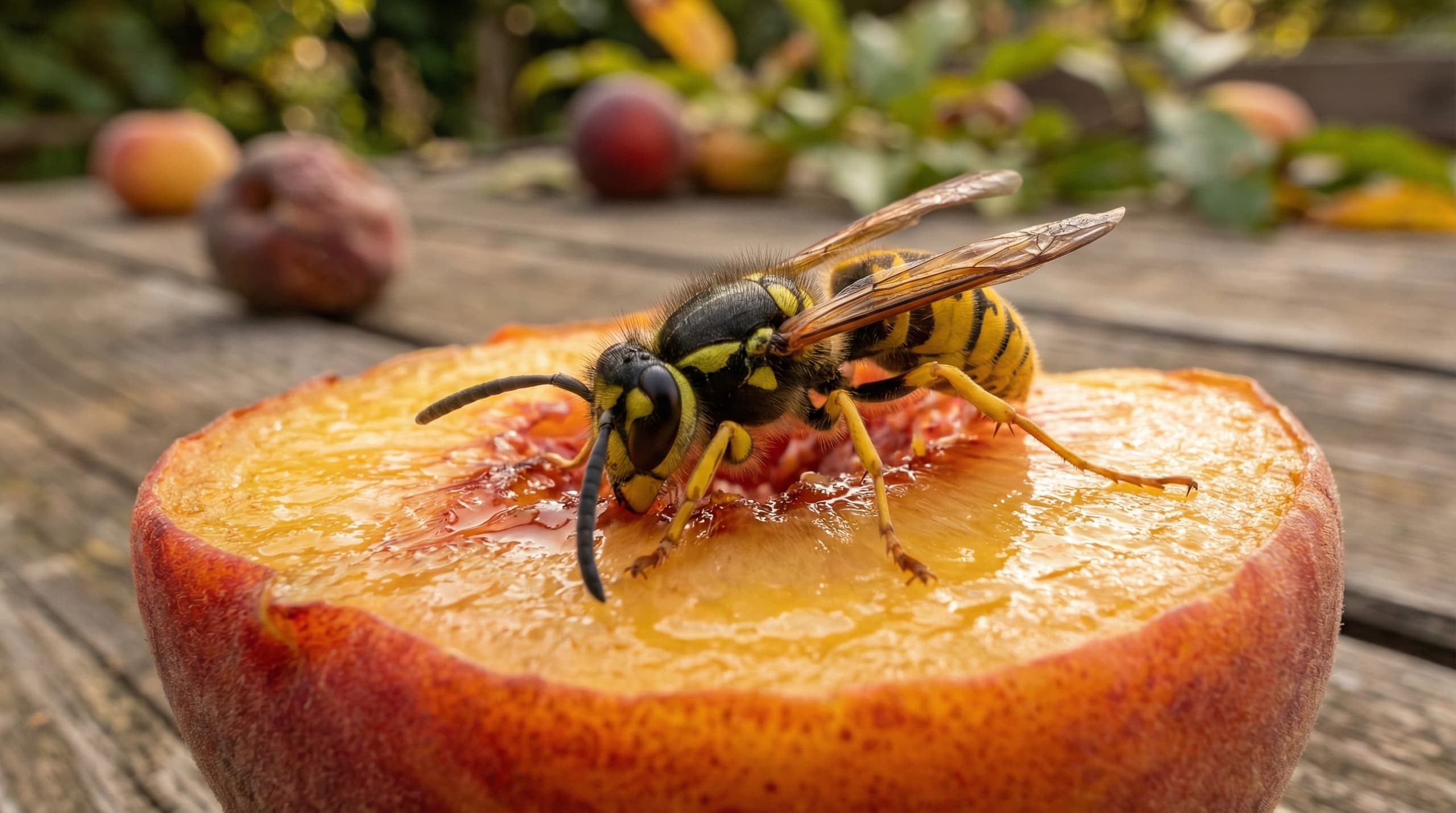
- Skip the strong floral scents at the picnic. Perfume, fabric softener sheets, and bright floral-scented sunscreens all read as flowers to wasps.
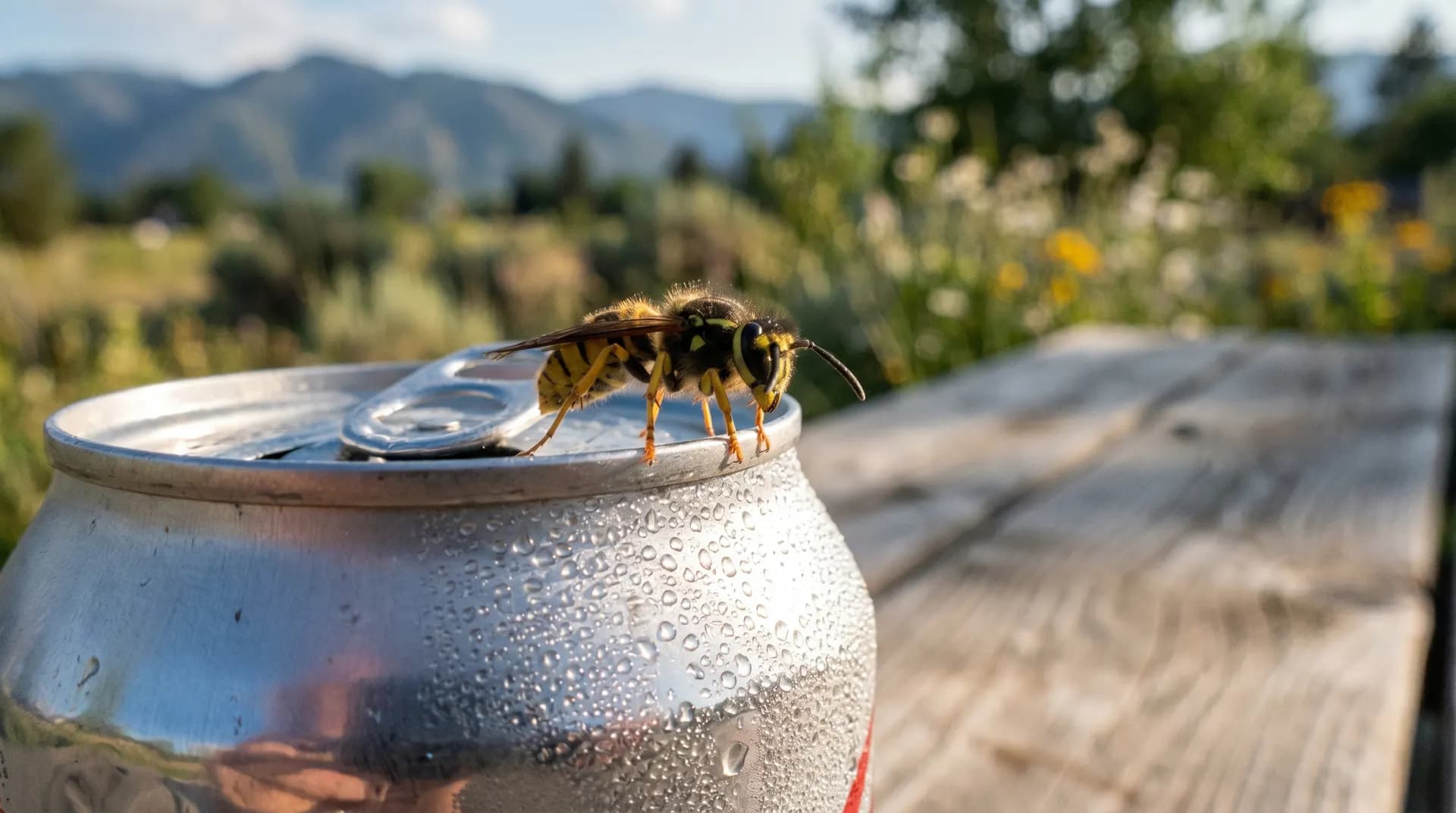
- Cover sweet drinks at outdoor meals. Yellow jackets crawl into open cans of soda, beer, and juice. Use cups with lids and straws from mid-July through early September.
- Bring in the hummingbird feeders during August if wasp pressure gets bad, or hang them at least 20 feet away from any door or patio.
- Knock down small starter nests in April and May. One queen, no workers, easy fix. Our wasp nest prevention guide covers the spring playbook.
- Identify before you act. Paper wasps and bald-faced hornets behave very differently. Compare nest shapes in our wasp nest identification guide before you decide whether to DIY or call.
- Treat the perimeter before peak season. A barrier spray applied in May or June makes eaves, shutters, and soffit corners far less attractive nest sites.
- For more on why this year feels especially bad in Boise, see why are there so many wasps this summer, our breakdown of the 2026 wasp boom.
When to Bring In a Pro (and What Green Guard Does)
Some nests are not safe to handle from a ladder with a hardware store can of wasp spray. Yellow jacket wall-void nests, ground nests, anything bigger than a softball, hornet nests at any size, and any nest you cannot reach from the ground are pro calls. Many stings happen during DIY removal attempts.
Green Guard handles wasp, hornet, and yellow jacket nests across Boise, Meridian, Eagle, Nampa, Caldwell, Star, and Kuna. Our quarterly plan starts with a $49 first treatment and includes our free re-service guarantee. If wasps come back between scheduled visits, we come back free. We use organic-based, hospital-grade products that are safe for kids and pets once the spray dries (about 30 to 60 minutes).
If you have an active nest right now, do not poke at it with a broom. Call us at (208) 297-7947 or book online. For deeper background on what removal actually looks like, see our wasp nest removal guide for Boise.
Frequently Asked Questions
How long does a wasp sting hurt?
Quick answerThe sharp burning pain from a wasp sting usually lasts the first 1 to 2 hours.
After that, it shifts to a dull ache with local swelling that peaks 4 to 12 hours after the sting. Most stings fully heal within 3 to 7 days. If pain or swelling is getting worse on day three instead of better, see a healthcare provider to rule out infection.
Should I take Benadryl for a wasp sting?
Quick answerAn oral antihistamine like Benadryl (diphenhydramine), Claritin (loratadine), or Zyrtec (cetirizine) is one of the few wasp sting treatments with real evidence behind it.
It cuts down the itching, redness, and local swelling. Adults should follow the dose on the package. For kids, use the pediatric chart on the box by age and weight, or call your pediatrician or a pharmacist for dosing help.
When is a wasp sting an emergency?
Quick answerCall 911 if the person who was stung has trouble breathing, throat tightness, a rapid pulse, dizziness, hives or rash anywhere on the body, or swelling that spreads well beyond the sting site (think a swollen arm or face after a single sting).
Those are signs of anaphylaxis, a body-wide allergic reaction that can be fatal without quick treatment. Use a prescribed epinephrine auto-injector if you have one, then call 911.
How do you treat a yellow jacket sting differently than a wasp sting?
Quick answerFirst aid is the same five-step routine: wash, cold compress, antihistamine, ibuprofen, monitor.
The catch with yellow jackets is that they usually sting multiple times in seconds, so you may be treating 5 to 10 sting sites at once. More venom means a higher chance of a large local reaction or a body-wide one. Watch the person closely for the first hour and head to an ER if any anaphylaxis signs show up.
How can I prevent wasps from stinging me?
Quick answerDo not crowd a nest, do not swat at foraging wasps (it triggers a defensive response), skip strong floral perfume and scented sunscreen at outdoor meals, cover sweet drinks, and watch the ground in late summer.
Yellow jackets often nest in old rodent burrows. If you have an active nest on your property, leave the removal to a pro. Most wasp stings happen during DIY removal.