Quick answer
Carpenter bees in Boise are the big, shiny black bees you see hovering around unpainted deck rails, fascia, and fence posts from late June through early September. They drill nearly perfect half-inch round holes into soft wood, then tunnel sideways to lay eggs. The fix is not spraying the bees you see. It is puffing insecticidal dust deep into every hole in the evening, waiting a week, then plugging holes with wood filler or dowels and painting or sealing the raw wood so next year's generation cannot start over. Green Guard handles the treatment at $49 to start if the damage covers multiple boards or you cannot reach the holes safely.
Key Takeaways
- Carpenter bees have a shiny black abdomen. Bumblebees have a fuzzy yellow-and-black abdomen. That is the fastest way to tell them apart from 6 feet away.
- The perfect 1/2-inch round hole in your deck joist, fascia board, or fence post is a carpenter bee entrance. Bees tunnel sideways from there, sometimes 6 to 10 inches into the wood.
- They almost never sting. Males dive-bomb your head but have no stinger. Females can sting but rarely do unless grabbed.
- Carpenter bees return to the same wood every year and the tunnels branch each generation. That is why year 3 damage looks 10 times worse than year 1.
- The real fix is insecticidal dust in the holes, then plugging and painting. Spraying the hovering bees does nothing. Green Guard handles the dusting with a $49 initial treatment if the damage is on eaves, fascia, or high fence lines you cannot reach. Plugging and painting stay with you or a handyman.
In this article

Those Big Black Bees Buzzing Your Deck Are Probably Carpenter Bees
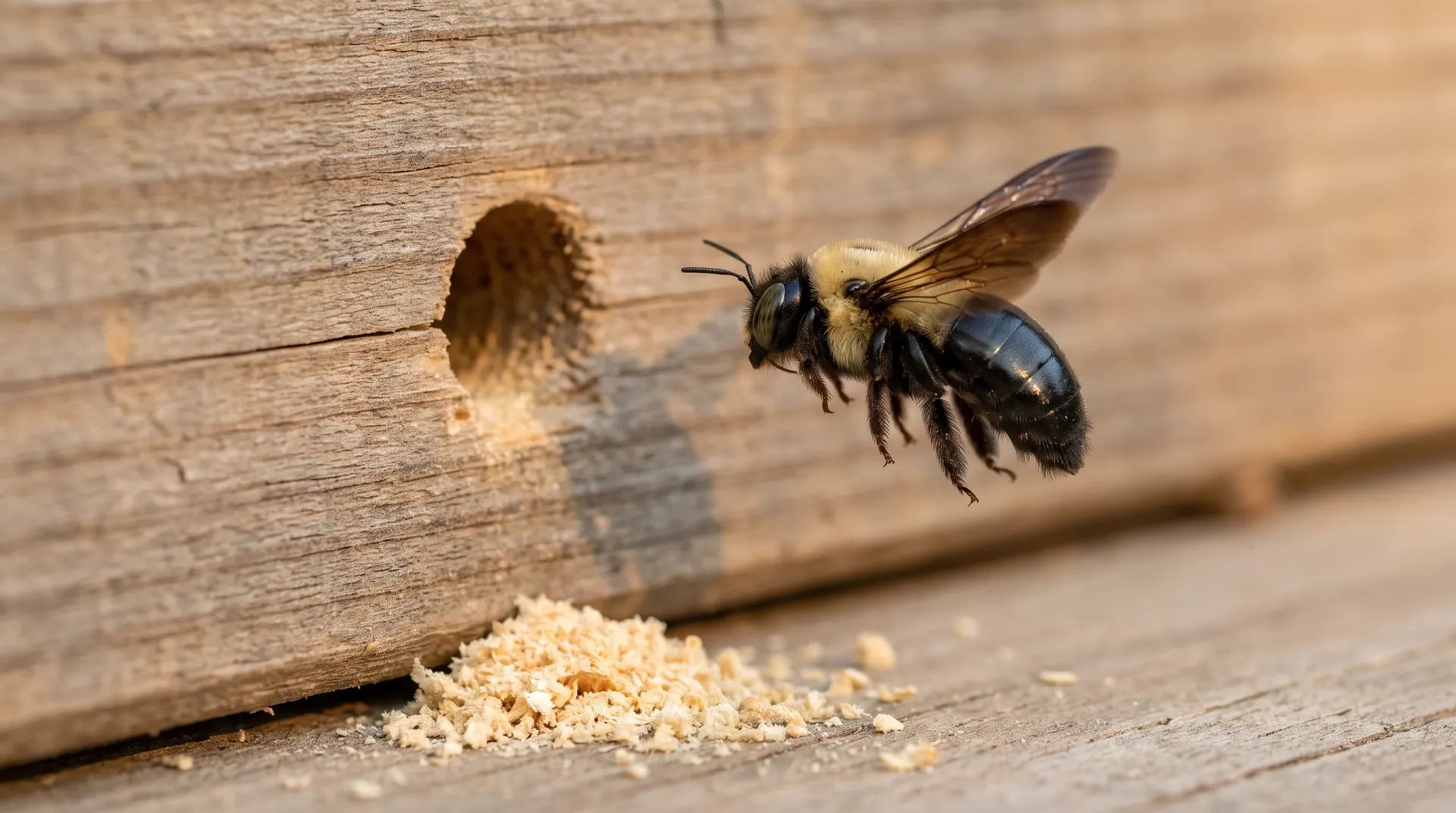
You're grilling burgers on the back deck in the last week of July. A big, chunky black bee comes cruising along the deck rail, hovers at eye level for a second, then bombs off. Ten minutes later it is back. You spot a bee-sized dot on the underside of the top rail. Then you crouch down and see it: a perfect round hole in the wood. Half an inch across. Clean edges. Like somebody drilled it with a bit.
Welcome to peak carpenter bees Boise season. From late June through early September, big black bees drill into decks, patio covers, sheds, fence posts, and the fascia boards up under the eaves. The Treasure Valley is prime carpenter bee country: hot summers, lots of unpainted cedar and pine, and plenty of foothill neighborhoods that back up to open land where the bees overwinter.
The good news is these bees almost never sting. The bad news is they cause real structural damage year after year if you do not stop them, and squishing the ones you see does absolutely nothing to fix it. Let's walk through what you actually have, what the damage looks like, and the July-to-September plan that ends the drilling.
Carpenter Bee vs Bumblebee: The 30-Second ID
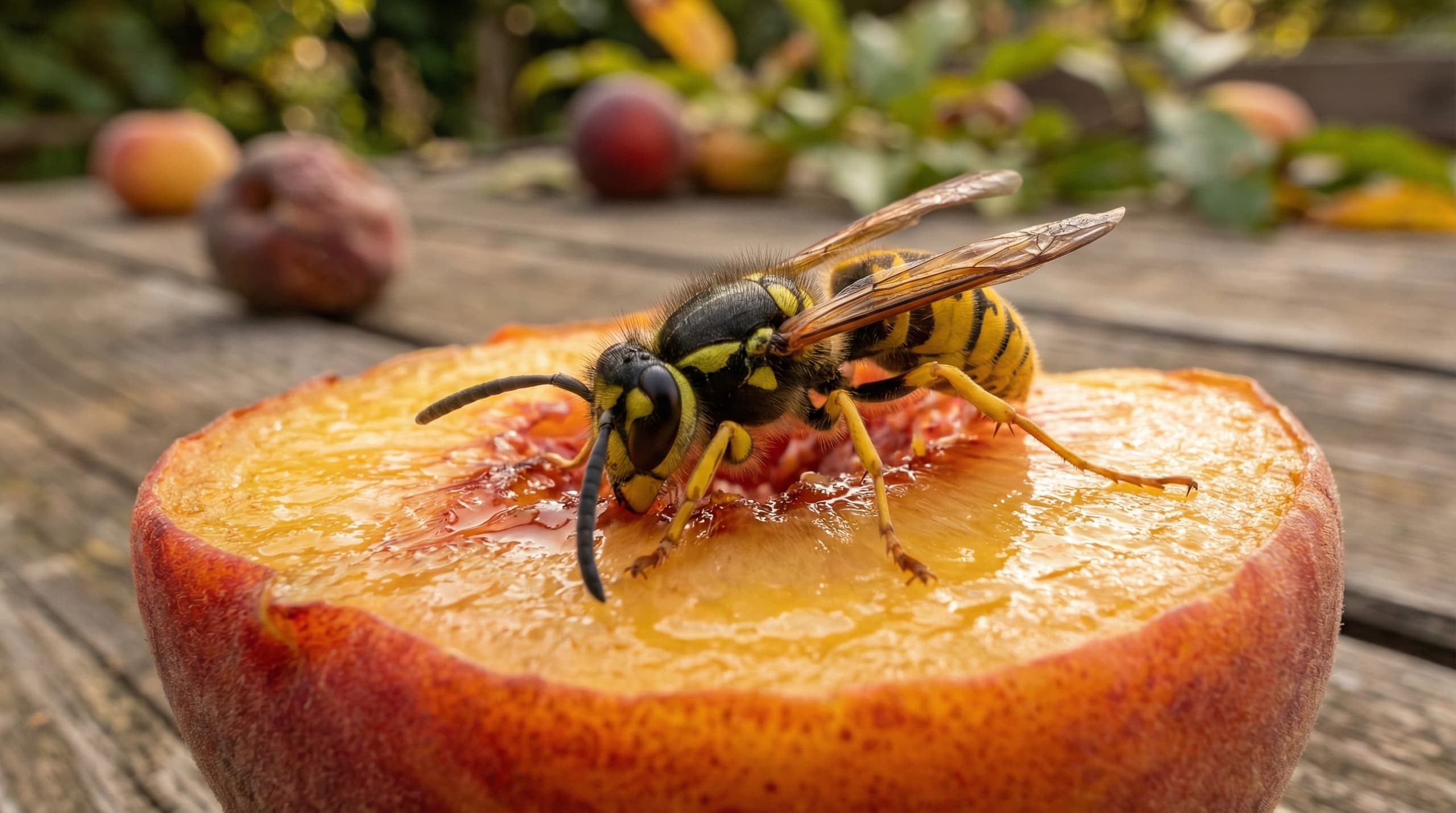
Many homeowners think they have huge bumblebees near the deck. Often it is actually a carpenter bee. They are the same size and shape, and both float in slow lazy circles. The abdomen is the giveaway.
- The abdomen. Carpenter bee: shiny, hairless, and black. Looks polished, almost plastic. Bumblebee: fuzzy, with obvious yellow and black stripes. If the back end of the bee looks bald and glossy, you have a carpenter bee.
- Size. Both are about 3/4 to 1 inch long. Big and thick, not the little honeybee shape.
- Where you see them. Carpenter bees hover next to wood: deck rails, fascia boards, fence posts, patio cover beams, sheds. Bumblebees hover over flowers, clover, and the vegetable garden. Location is a huge tell.
- Behavior. Carpenter bee males patrol a small territory (5 to 10 feet of wood) and dive-bomb anything that flies through, including you. Bumblebees generally ignore you and stick to blooms.
- The male face. If you can look one dead-on (they hover close), the male carpenter bee has a big pale yellow or white patch on its face. Male bumblebees do not.
- Holes in the wood. Only carpenter bees drill perfect round entrance holes about 1/2 inch across. If you see the bee AND the hole in the same 3-foot section of wood, ID is done.
What Carpenter Bee Damage Actually Looks Like
The entrance hole is the part everyone notices. But the real damage is inside the wood where you cannot see it. Here is what carpenter bees do to a piece of lumber, in the order it happens:
- The 1/2-inch entrance hole. The female drills straight in about an inch. The hole is remarkably round and clean, like a drill bit. Fresh holes often have a small pile of sawdust (frass) directly below on the deck boards, the concrete pad, or the grass. That sawdust is the ID clincher.
- The 90-degree turn. Once inside, she pivots and starts tunneling with the grain of the wood. These galleries run 4 to 10 inches per season. On a 2x6 fascia board, a single tunnel can span most of the width.
- Chambers and stains. She partitions the tunnel into 6 to 8 cells, one per egg, with chewed wood pulp walls. You will often see yellow or brown streaks running down the wood below the entrance hole. That is a mix of frass, larval waste, and pollen. It stains cedar, redwood, and painted trim.
- The reuse problem. The next year, her daughters do not drill fresh holes. They enlarge the existing tunnel or branch off it. What was 6 inches of tunnel in year 1 becomes 3 feet of interlocking galleries by year 4. This is when boards start to feel spongy, fascia boards sag, and fence posts snap in a windstorm.
- Woodpecker damage. Woodpeckers hear the larvae inside the wood and chisel them out. If you see long jagged tears in a fascia board next to round bee holes, that is a woodpecker cashing in on carpenter bee larvae. This is often the biggest visible damage of all.
The Wood They Target on Boise Homes
Carpenter bees are picky. They will not touch just any board. Once you know what they like, you can walk your property and predict every spot they will drill.
- Unpainted and unstained softwood. Cedar, redwood, pine, fir, and Douglas fir. Painted or heavily sealed wood is a strong deterrent because they cannot get a grip to start drilling.
- Weathered wood. A 10-year-old deck rail that has gone silver-gray is a magnet. Fresh construction with a factory-smooth finish gets targeted less.
- Deck joists and undersides of rails. They love the underside of horizontal boards. Look under your deck, under the top rail, and along the bottom edge of your fascia. Not the top surface.
- Fascia boards under the eaves. This is where the most expensive damage happens on Boise homes. Two-story fascia is out of reach for most homeowners to treat and it is a favorite carpenter bee target.
- Fence posts and rails. Cedar fence panels around a Boise pool or backyard, especially the 4x4 posts and the horizontal top rail, take hits every summer.
- Patio covers, pergolas, and sheds. Any exposed dimensional lumber that is not painted is fair game. Old barn wood on foothill and rural properties is a favorite.
- Trim around windows and door frames. On homes with wood trim rather than composite or vinyl, entrance holes show up above windows and along the header trim.
When Carpenter Bees in Boise Are Active (and When They Go Away)
Timing matters because the treatment window is narrow. If you spray at the wrong time of year, you waste product and change nothing.
- April to early May. Adult carpenter bees that overwintered in old tunnels come back out. Males start patrolling. Females look for nesting sites. This is when you first see drilling on a fresh piece of wood.
- Mid-May through June. Peak drilling and egg-laying. Females excavate galleries and provision each cell with a pollen ball. If you catch them here, you cut off the whole generation.
- Late June through August. Larvae are developing inside the wood. Adult activity outside slows down a bit. Woodpecker damage often starts here because the larvae are big enough to hear.
- Late August through early September. New adults emerge from the tunnels. These are the biggest, most active bees you see all year. They feed on late-summer flowers, mate, and then start looking for a tunnel to overwinter in. This is the second treatment window.
- October through March. Adults tuck into old tunnels for winter. Very little visible activity, but they are still in the wood. This is the best time to plug empty holes because you know nothing is developing inside.
How to Stop Carpenter Bees From Drilling (The Fix That Actually Works)
Here is the honest truth about carpenter bee control: spraying the bees flying around does almost nothing. The females spend most of their time inside the tunnel. The males you see hovering are decoys. The whole game is the holes. You have to get product deep into every hole, wait for the adults and larvae to walk through it, and then seal the tunnels off.
Here is the 4-step plan we run on Boise homes:
- Find every hole. Walk the deck, patio cover, eaves, fascia, sheds, fence, and any other exposed wood. Look for the round 1/2-inch entrance and the sawdust pile below. On two-story fascia, use binoculars. Mark each hole with a pencil dot or a bit of blue tape so you do not miss one at treatment time.
- Puff insecticidal dust into every hole. After dusk, when the females are inside for the night, puff a light shot of a labeled insecticidal dust (pyrethrin-based or similar, look for a wood-boring bee label at D&B Supply or a farm supply store) deep into each hole with a hand duster or a bulb duster. Do not spray a liquid, it does not carry into the tunnel. The dust coats the tunnel walls so every bee walking in or out picks it up.
- Wait 7 to 10 days. This is the step everybody wants to skip. You have to give the adults time to work in and out of the tunnels and let the larvae emerge into treated galleries. Do not plug the holes yet. Sealing an active tunnel forces bees to chew a fresh hole.
- Plug the holes. After 10 days with no fresh sawdust, plug each hole. Dab wood glue on a 1/2-inch dowel, tap it in, and cut it flush. Or fill the hole with paintable exterior wood filler. This step is critical. Unplugged holes are a homing beacon for next year's bees. They can smell the pheromones left from last year's tunnel.
- Paint or seal the raw wood. The permanent fix. Prime and paint any unpainted deck rails, fascia, or exposed trim within reach of ladders. Painted wood is 90% less attractive to carpenter bees. On a cedar deck you want to keep natural, a heavy solid stain works better than a thin translucent one.
When to Call Green Guard for Carpenter Bees
A single-story deck with 3 or 4 holes is a Saturday afternoon fix for a handy homeowner. But there are situations where doing this yourself is either dangerous, ineffective, or both. Call us when any of these are true:
- The holes are in your fascia, roofline, or two-story eaves. Ladder work on a 20-foot wall to puff dust into a soffit is not a DIY job. This is where the worst damage happens on Boise homes and it needs a technician with proper ladder gear.
- You count more than 10 active holes. This means you have 2 or 3 generations of tunneling and the galleries are branching. Getting product into every branch takes a professional-grade duster with an extension wand. See our related wasp nest removal guide for a similar high-access approach.
- Woodpecker damage is already happening. Jagged tears in the fascia mean the larvae are large enough that birds are chiseling them out. You need to treat, plug, and often repair damaged boards before the next spring. We handle the treatment. Plugging and board repair are a job for you or a handyman.
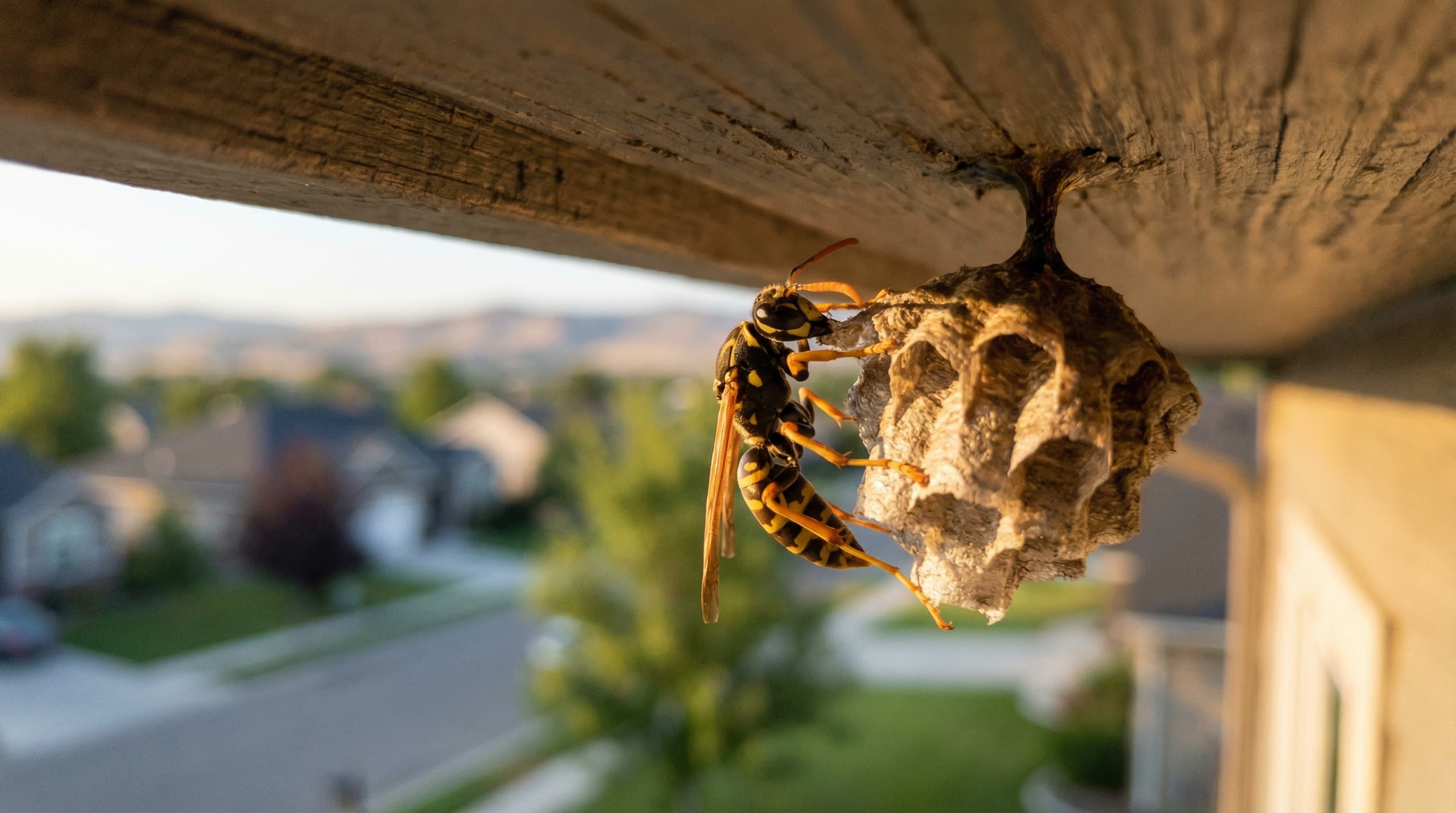
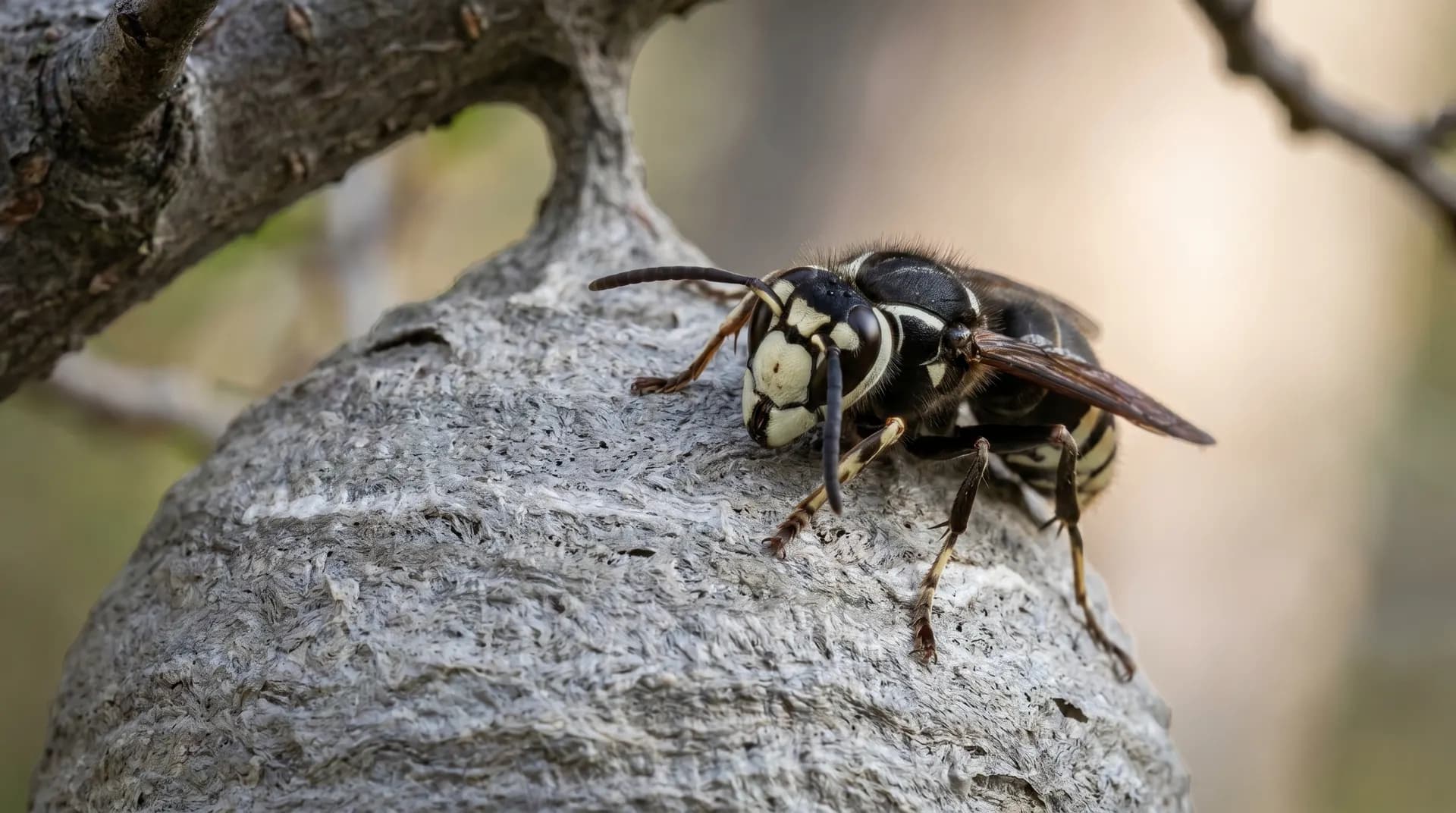
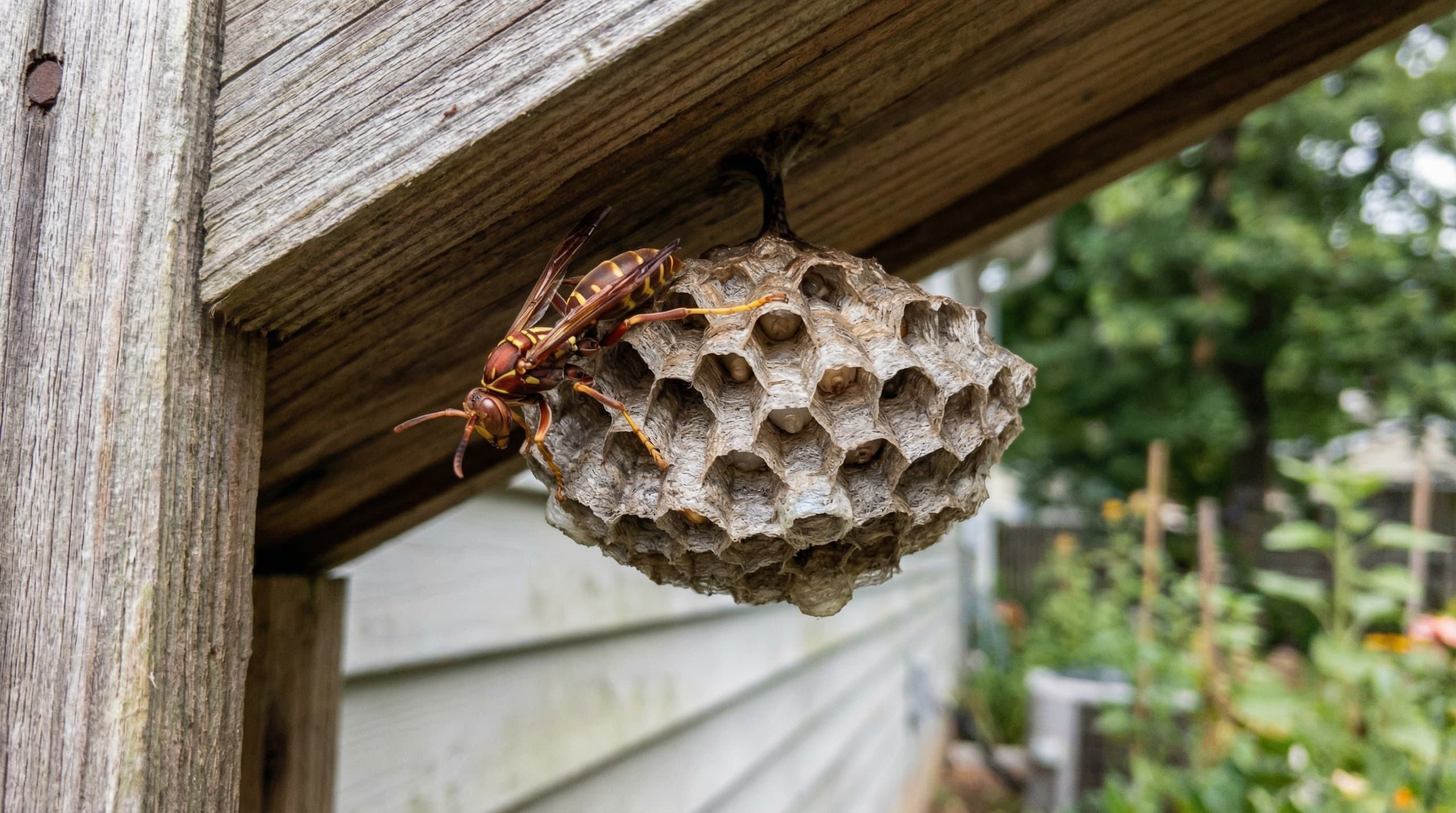
- You have wasps or hornets in the same area. Paper wasps or bald-faced hornets sometimes nest near carpenter bee holes because the wood is already compromised. See our bald-faced hornet guide if you spot large gray paper nests up under the eaves. Treating both at once is safer than a homeowner mixing product types.
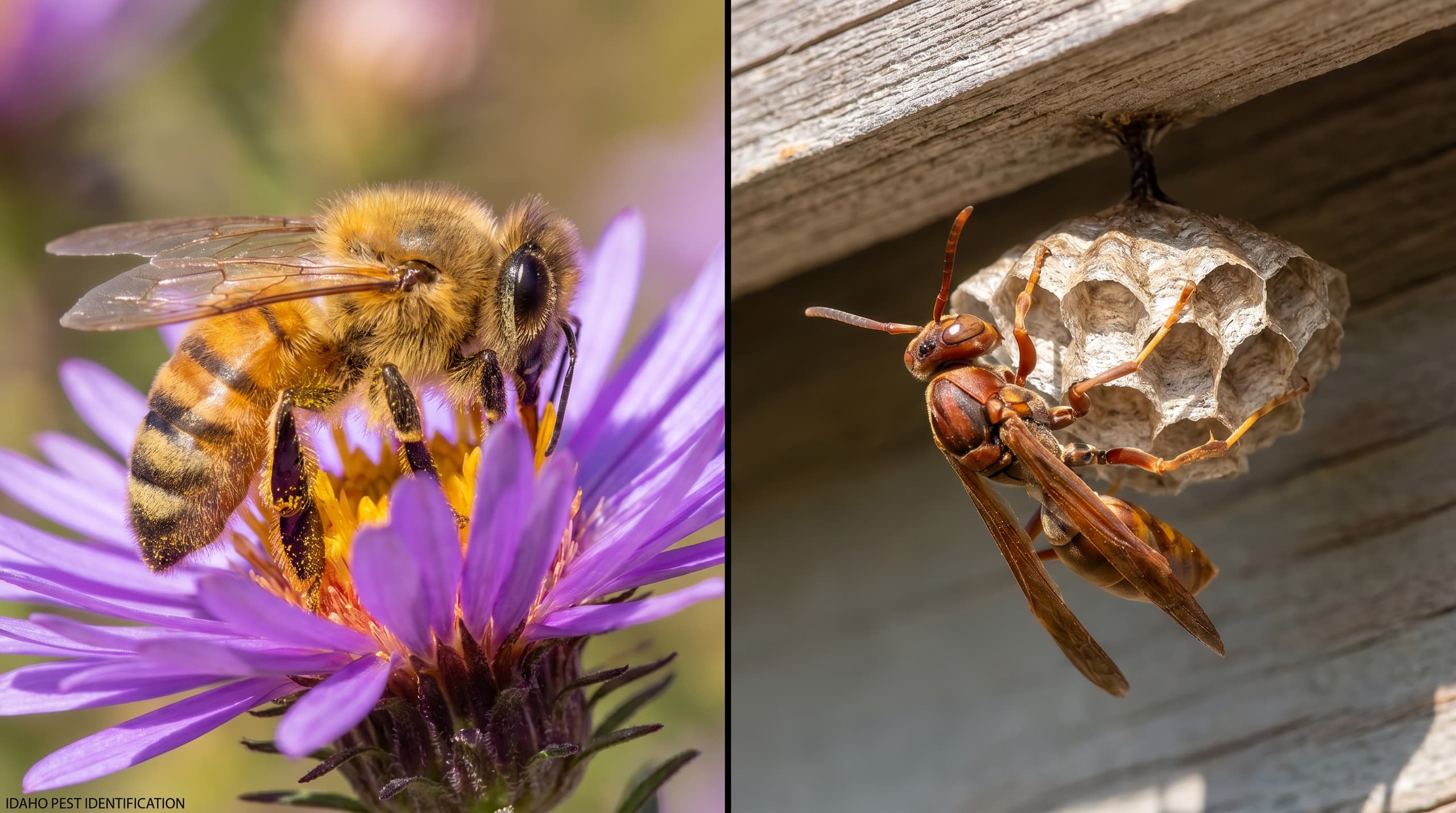
- You are not sure what you have. If the ID is off, the treatment is wrong. Bumblebees, honeybees, and carpenter bees look similar to a lot of people. Killing a honeybee nest is not what anyone wants. Our full bee and wasp ID guide covers the differences, and a technician on-site can confirm in 2 minutes.
- The holes are near a pool, sandbox, or where kids play. Even though carpenter bees rarely sting, no one wants dive-bombing bees over a birthday party. A pro treatment before the party is the calm option.
What a Green Guard Carpenter Bee Visit Includes
Our $49 initial service is built for exactly this kind of localized structural problem. Here is what visit one looks like:
- Full property walk. Every deck, patio cover, fence line, shed, garage trim, and fascia board gets inspected. Homeowners usually spot a few holes. A full walk usually turns up more.
- Species confirmation. Carpenter bee, bumblebee, or honeybee. If we find honeybees, we do not treat. Idaho honeybees are protected and we refer you to a local beekeeper for removal.
- Targeted dust application in every hole. We use a professional bulb duster with an extension wand to reach eave and fascia holes safely from a ladder. Organic-based product, hospital-grade, safe for kids and pets once dry.
- Exterior perimeter treatment. The standard barrier spray around the foundation catches any bees exiting and reduces overall pest pressure on the property.
- Plugging is on you (or a handyman). Give the dust 7 to 10 days to work, then plug the holes with dowels and wood filler. We don't plug or seal holes, but we're glad to walk you through it.
- Quarterly protection. Our 90-day cycle keeps a fresh barrier in place through spring emergence next April. If bees drill fresh holes between visits, we come back free.
How to Never Deal With Carpenter Bees Again
Once you stop this year's generation, a few permanent changes make your home a bad target long term:
- Paint or heavily stain every unpainted wood surface. This is the single biggest deterrent. Cedar fence tops, deck rails, fascia, patio cover beams. Solid stain works. Thin transparent stains do not.
- Plug every old hole. Even holes from years ago that look empty. Pheromones left in old galleries call new females back. Dowels or wood filler, painted over.
- Swap old wood for composite where you can. If you are already replacing a rotted fascia board or a deck rail, use composite or PVC trim instead of cedar. Carpenter bees ignore both.
- Inspect every April. Walk the property in the first warm week of the year. Look for last year's holes, listen for the buzz, and treat any fresh drilling immediately. Catching it in April prevents the whole summer's generation.
- Do not leave scrap lumber against the house. Old fence boards, deck offcuts, and rough pine leaning against a shed are the first thing they colonize. Break it down or store it in a sealed shed.
- Consider a year-round pest control plan. Our quarterly service keeps a spring-emergence barrier in place at the exact window carpenter bees come out. The math is easy: $119 per quarter costs less than one summer of woodpecker fascia damage.
Big Black Bee, Big Round Hole, Big Headache. We Can Fix It.
If you're looking at drilled holes in your deck rail or hearing bees buzzing behind your fascia, don't spray the ones you see and hope for the best. That is the trap most Boise homeowners fall into, and it is why the damage doubles every summer. Treat the holes, wait, plug the tunnels, seal the wood. That is the plan that ends the cycle.
If the damage is on your eaves, if you count more than a handful of holes, or if you just don't want to spend a Saturday on a ladder with a duster, we handle the treatment. Plugging the holes and sealing the wood stay with you or a handyman. Green Guard serves Boise, Meridian, Eagle, Nampa, Caldwell, Kuna, Star, and the rest of the Treasure Valley. Just $49 to start, organic-based products safe for kids and pets, and if the bees come back between visits, we come back free. Call (208) 297-7947 or book online. Same-day service is often available.
Frequently Asked Questions
What is making perfect round holes in my wood deck in Boise?
Quick answerCarpenter bees.
If the holes are almost perfectly round, about 1/2 inch across, and there is a small pile of sawdust below them, that is a carpenter bee entrance. Look for a big shiny black bee hovering nearby. The holes go straight in about an inch, then turn 90 degrees and tunnel with the grain. Carpenter bees are a common source of summer wood damage in the Treasure Valley from late June through September.
Carpenter bee vs bumblebee in Idaho: how do I tell them apart?
Quick answerThe abdomen.
Carpenter bees have a shiny, hairless, glossy black abdomen. Bumblebees have a fuzzy yellow-and-black striped abdomen. Both are about the same size. If you spot the bee near a piece of unpainted wood (deck, fence, fascia), it is almost certainly a carpenter bee. If it is working the flower beds or clover, it is a bumblebee.
How do I stop carpenter bees from drilling into my deck?
Quick answerPuff insecticidal dust deep into every existing hole after dusk, wait 7 to 10 days, then plug the holes with a wood dowel or exterior wood filler.
Finally, paint or heavily stain the raw wood to make it unattractive next year. Do not spray the bees you see flying, they spend most of their time inside the tunnel. And do not plug active holes without treating first, or bees will chew a new exit hole nearby.
What month do carpenter bees go away in Idaho?
Quick answerAdult carpenter bee activity drops off in October in the Treasure Valley when night temperatures fall below freezing.
But they do not really leave. They overwinter as adults inside old tunnels in your fascia, deck, or fence, and come back out in April. That is why plugging every hole in fall is a great prevention move: it forces them out before winter and they lose their protected spot.
Are carpenter bees dangerous? Will they sting?
Quick answerThey almost never sting.
Male carpenter bees are the aggressive-looking ones that dive-bomb your head, and males do not have a stinger. They physically cannot sting you. Females can sting but rarely do unless you grab one. The real danger from carpenter bees is not the bees, it is the structural wood damage that adds up year after year, and the woodpecker damage that follows when birds hunt the larvae.
Why are there so many carpenter bees at my Boise house this year?
Quick answerTwo big reasons.
First, carpenter bees return to and reuse tunnels every year, and the number of adults multiplies each generation. Year 3 usually has 5 to 10 times more bees than year 1. Second, hot dry Idaho summers accelerate their development. If your fascia, deck, or fence has been drilled in past summers and never plugged and treated, this year will be worse than last.