Quick answer
If you have caught one mouse in a snap trap and have not seen another sign in two weeks, DIY is fine. Call a Boise mouse exterminator when you see droppings in two or more rooms, hear scratching in the walls at night, or find chewed wires or food packaging. At that point, a single mouse has usually become a small breeding colony, and a year of DIY (about $130 in supplies plus 10 hours of your time) often costs more than Green Guard's $49 initial visit plus $119 per quarter, which covers every other pest at the same time.
Key Takeaways
- One mouse, one room, no scratching in the walls: try snap traps first. Two or more rooms, chewed wires, or droppings that keep showing up after a week of trapping: time for a mouse exterminator.
- A real DIY year for an active infestation runs about $60 in snap traps, $40 in bait stations, $30 in enzyme cleaner, plus 6 to 12 hours of your own labor. That is before you count a callback if the mice come back.
- Green Guard's $49 initial mouse service includes the inspection, locked exterior bait stations, and copper mesh in the obvious gaps. Quarterly service at $119 per visit (homes up to 2,500 sq ft) handles every other Boise pest at the same time.
- What a pro does that DIY cannot: a trained eye for hidden entry points, species ID (deer mouse vs house mouse matters for hantavirus risk), and locked bait stations placed along actual mouse highways and checked on quarterly visits.
- Boise has two mouse species worth knowing: house mice in established neighborhoods and deer mice on the rural edges of Eagle, Kuna, Star, and the Boise Bench. They need different treatment plans. If you are unsure whether you have mice or <a href="/blog/rats-vs-mice-boise-idaho">rats</a>, that distinction matters even more for your treatment strategy.
In this article

Quick Test: DIY or Call a Mouse Exterminator?
The right call depends on how far the problem has gone. Run through this scoring guide before you spend money in either direction. As of June 2026, this is the same triage our techs use over the phone when a Boise homeowner calls about mice.
DIY is usually fine when:
- You have seen one live mouse, or caught one mouse in a snap trap.
- Droppings are in one location only (under one sink, in one pantry corner, in one garage spot).
- No scratching in the walls or ceiling at night.
- You set traps, catch one or two, and the activity stops within a week.
Call a mouse exterminator in Boise when any of these are true:
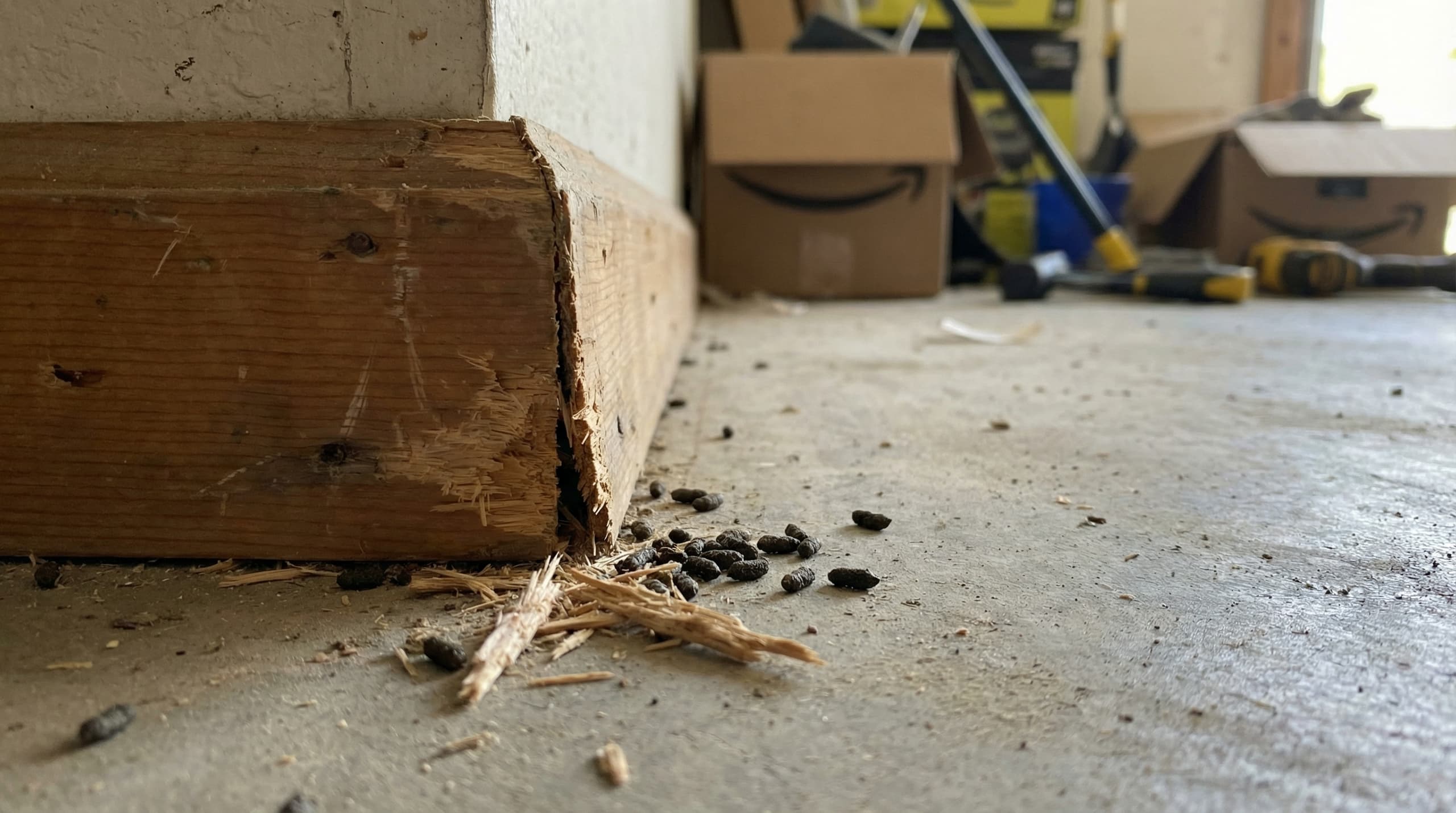
- Fresh droppings in two or more rooms.
- Scratching, scurrying, or thumping in the walls or ceiling between dusk and 2 AM.
- Chewed wires, chewed insulation, or chewed food packaging in the pantry.
- You have been trapping for more than a week and the catches are not slowing down.
- Greasy smudge marks along baseboards or pipe entries (those are mouse highways).
- Your cat or dog is fixating on a stretch of wall or the base of the stove.
The reason for the cutoff is biology, not marketing. One mouse in a garage in June is a wanderer. Three rooms of droppings in June means a colony already settled in, and house mice breed every 3 weeks with 5 to 8 pups per litter. You will not out-trap that math with a $14 four-pack.
What DIY Mouse Control Actually Costs in Year One
The hardware store sells you the parts. It does not sell you the time, the trial and error, or the second wave of mice three weeks after the first die-off. Here is what a realistic DIY year looks like for a Boise home with an active mouse problem, not a single random sighting.
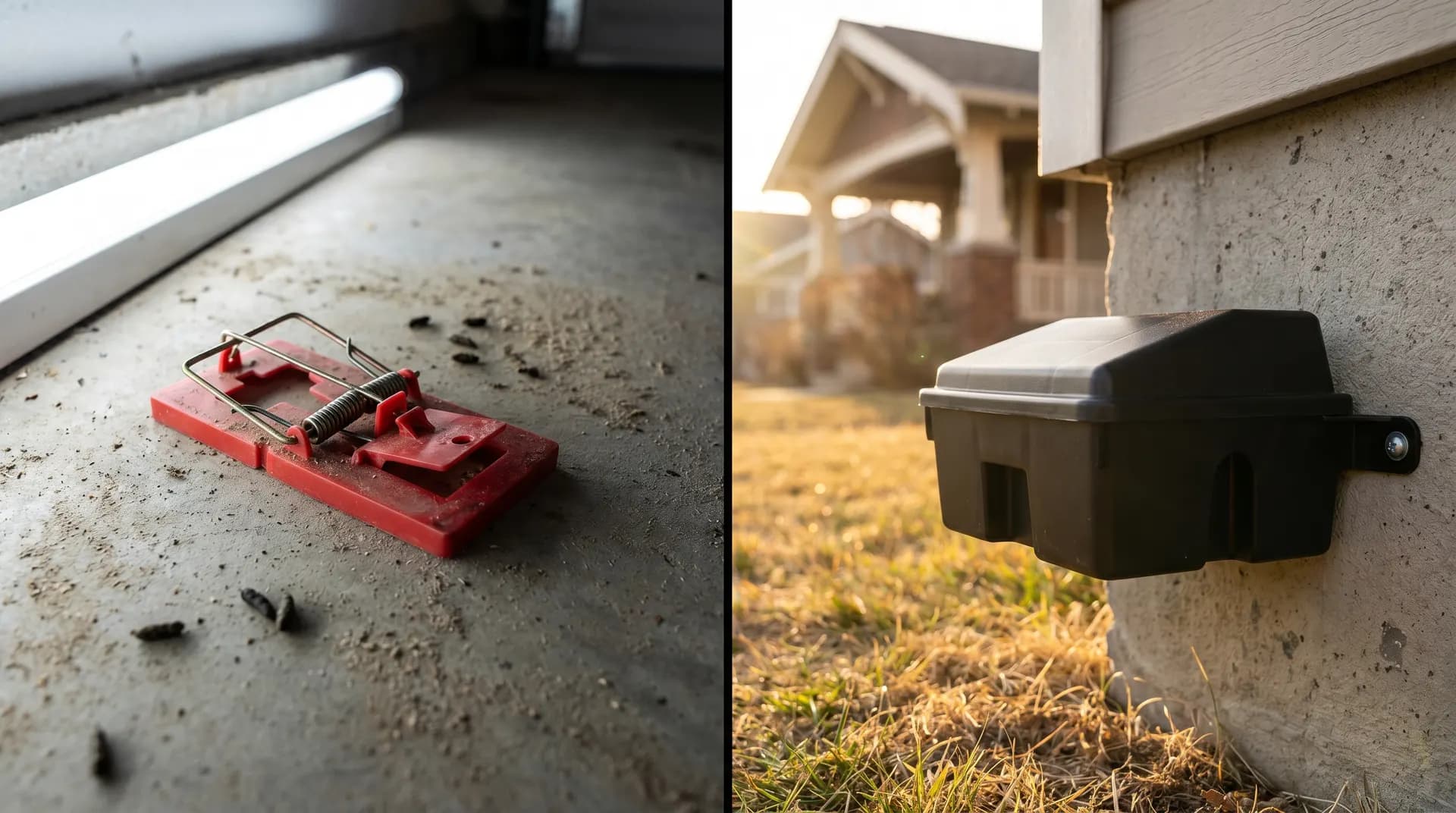
- Snap traps and electronic traps (about $60). A pack of 12 plastic snap traps runs around $24. Most active infestations chew through them or trap-shy after a few weeks, so you usually re-buy or upgrade to electronic. Add a Victor Multi-Kill or two and you are at $60 fast.
- Bait stations and rodenticide ($40). Two outdoor tamper-resistant stations plus a 4 lb bucket of bait blocks lands around $35 to $45. Refills run another $15 to $20 if the problem stretches past three months.
- Enzyme cleaner and urine remover ($30). Mouse urine soaks into drywall, insulation, and cabinetry. You need an enzyme cleaner (not bleach, which just masks it) to actually break down the proteins. A gallon runs around $25 to $35.
- Steel wool, caulk, and copper mesh ($25). The materials for sealing entry points are cheap. The labor is not. Plan on $20 to $30 in supplies if you do the sealing yourself.
- Your time: 6 to 12 hours minimum. Setting traps, baiting, checking, disposing of carcasses, scrubbing surfaces, sealing gaps. If you crawl your own crawlspace or pull insulation in the garage, double that.
- The wall-cavity surprise (priceless). About one in three DIY poison cases produces a dead-mouse-in-wall smell that runs 1 to 3 weeks. Some homeowners cut drywall to fish it out. Not free.
What a Boise Mouse Exterminator Does That DIY Cannot
The label "exterminator" sounds dramatic, but the actual job is mostly inspection and finding how mice get in, not just laying traps. Here is what a professional mouse service includes that you almost never replicate with a hardware-store kit.
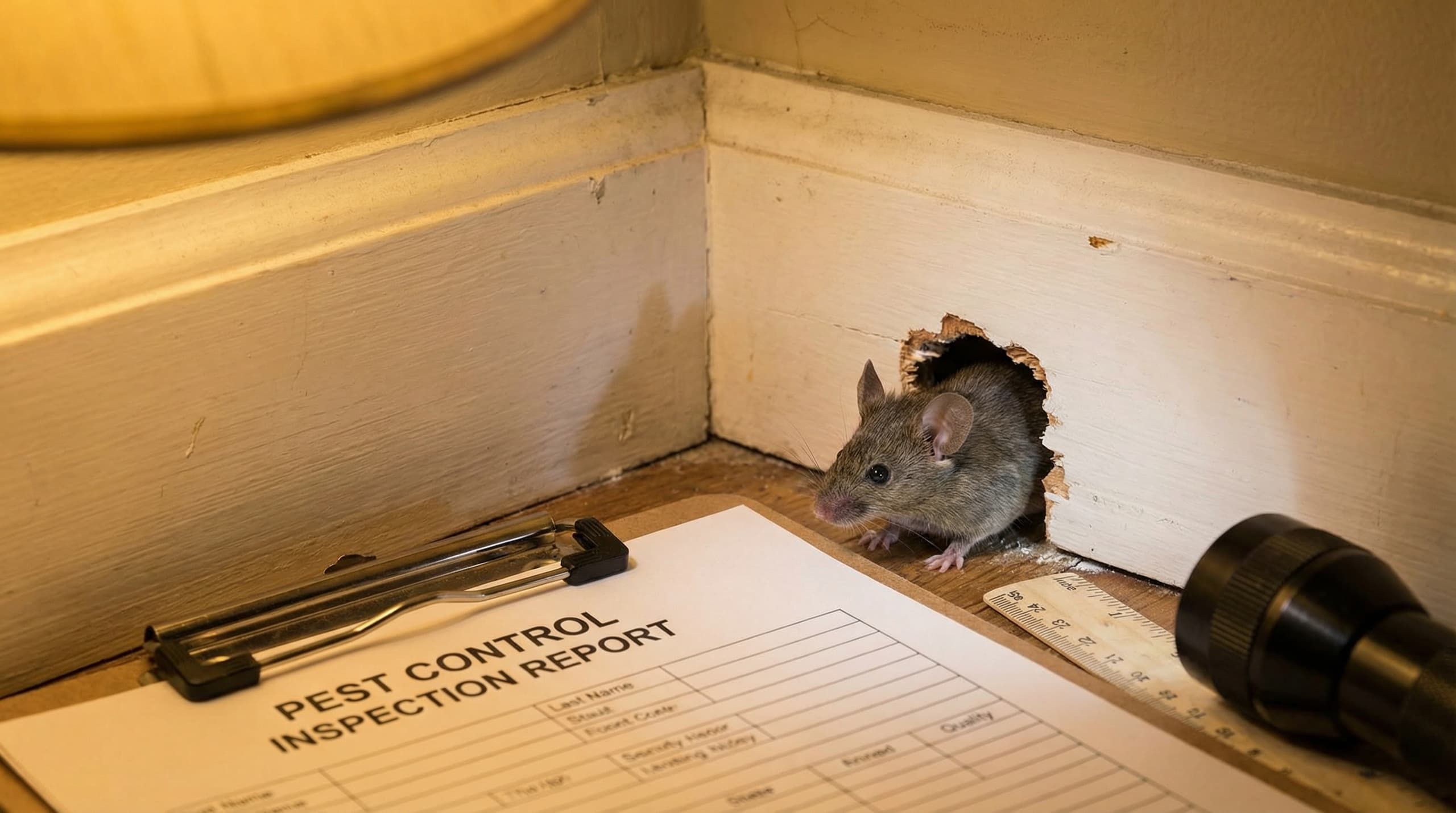
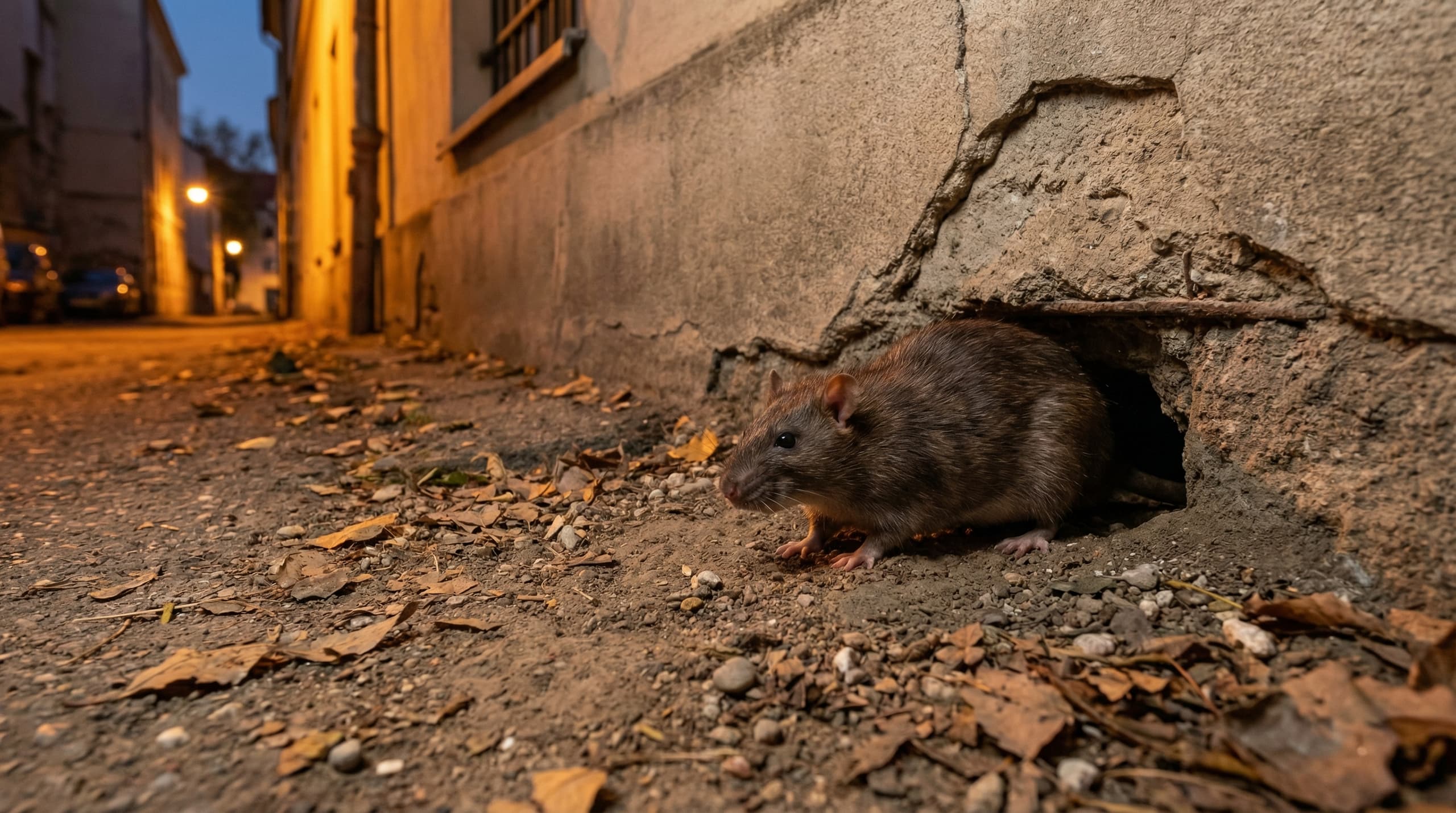
- Entry-point inspection of the whole envelope. Mice get in through gaps the size of a dime (about 1/4 inch). A trained tech walks the foundation, dryer vent, weep holes, garage door seals, utility penetrations, and eave soffits, and packs copper mesh into the obvious gaps. Bigger repairs are a job for you or a handyman.
- Species identification. House mice and deer mice need different plans. Deer mice carry hantavirus, so how you clean up droppings and where we put bait stations both change when we ID a deer mouse on day one. You can read our Idaho rodent identification guide for the visual differences.
- Snap traps only when a situation calls for it. We use them rarely. Mice run walls, not open floors, so when we do set one, it goes perpendicular to the baseboard, behind the stove, or against the garage wall, never in the middle of a kitchen floor where package directions say. Wrong placement is why most DIY traps sit untouched for weeks.
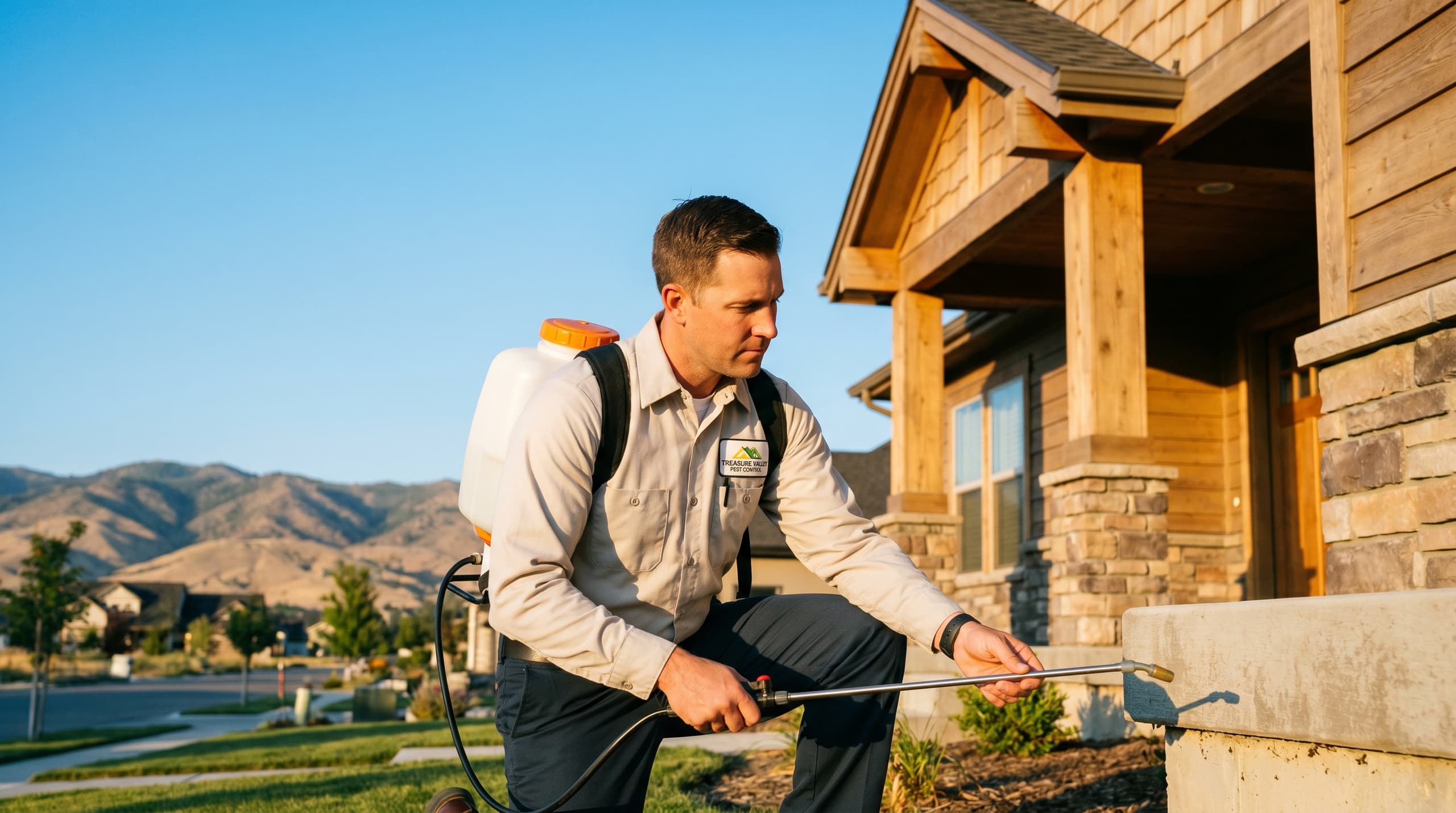
- Tamper-resistant exterior bait stations. Locked, anchored, and placed every 25 to 50 feet around the perimeter. They pull mice out before they reach the house. Kids and pets cannot get to the bait. Most DIY bait stations are not locked, and putting loose bait blocks in the garage is how poisoned mice end up dying inside the wall.
- Stations facing the source. Mice come from somewhere. A field, a woodpile, an abandoned outbuilding, a neighbor's open compost bin. Placing locked bait stations on the side of the house that faces that source is how we thin them out before they reach your walls. DIY almost always misses this step.
- Stations checked every visit. Your bait stations get checked and refilled on quarterly visits, which shows us where pressure is building. That is how we catch a new wave before it turns into a wall full of scratching.
Common Objections to Calling a Pro (and the Honest Answers)
We hear the same four objections all the time. They are reasonable on their face. Here is what we tell people who are genuinely on the fence.
"Mice are easy to trap. I can handle it myself."
You can. For one mouse. A single mouse that wandered in from a garage door left open in fall is a snap-trap problem, and we will tell you that on the phone. The catch is that an established population is not the same animal. Mice live in nesting groups of 5 to 20 in residential settings. They breed every 3 weeks. If you have been catching one mouse per week for a month and the catches are not slowing, you are not winning. You are buying time while the colony rebuilds underneath you.
"I'll just block the holes myself."
Honestly, do it. Sealing entry points is the most valuable thing a homeowner can do for long-term rodent prevention. Our Boise rodent control guide walks through the exact steps. The catch is that the worst gaps are the ones you don't think to check, like the dryer vent flap that has not closed in two years. On our visits, we pack copper mesh into the obvious gaps we see. The bigger repairs stay with you or a handyman. Both approaches work better together than either alone.
"Poison from the hardware store is cheaper than hiring someone."
It is cheaper to buy. It is rarely cheaper to live with. Over-the-counter anticoagulant bait is designed to kill the mouse within 4 to 10 days of consumption, and by then the mouse is usually back in a wall void looking for water. You get the smell for 1 to 3 weeks per dead mouse, you do not know the body count, and the bait blocks are a real hazard for pets and non-target wildlife if you put them in the open. Pro service leads with locked, tamper-resistant stations outside, where kids, pets, and wildlife can't get to the bait. Snap traps come out only rarely, when a situation calls for it.
"It is summer. Won't the mice leave on their own?"
No. Indoor mice do not leave. They have food, water, climate control, and shelter. Outdoor pressure ramps up in fall, so a mid-summer infestation almost always gets worse from August on. Treating in June or July is much easier than waiting until October when the deer-mouse migration into homes peaks across the Treasure Valley.
A Typical Boise Scenario: Deer Mice from a Field in Eagle
Here is a typical fall case. A homeowner on the rural edge of Eagle, Kuna, or out toward Star backs up to an alfalfa field, a sagebrush stretch, or an empty lot. Late September the field gets cut or the first cold snap hits. Two weeks later the homeowner finds droppings in the laundry room.
They buy four snap traps at D&B and catch three deer mice in the first night. Great start. Two weeks later they are still catching one or two per week and now there are droppings in the pantry. By Halloween there is scratching in the master closet ceiling.
What went wrong is not the trapping. The trapping worked. What went wrong is that nobody sealed the four entry points along the back foundation where the irrigation line goes through, where the dryer vent flap is stuck open, where the garage door corner has a quarter-inch gap, and where the AC line set comes through the wall. As long as those four gaps stay open, the field will keep feeding mice into the house all winter.
A mouse exterminator on day one would have spotted those four entry points during the inspection, packed the obvious ones with copper mesh, and put two locked bait stations on the field-facing side of the property to thin the outdoor source population. The dryer vent flap and the garage door corner would still be homeowner fixes. The traps were fine. The stations and the mesh were what was missing. Problem ends in 2 to 3 weeks instead of dragging into March.
The other common version of this scenario plays out on the Boise Bench, in the older Vista and Depot Bench neighborhoods. Houses from the 1940s and 50s have stone foundations, settled siding, and original utility penetrations. The population builds up slowly over winter in the crawlspace, and the homeowner notices in February when breeding season peaks and the noise gets loud at night. Same fix, different season.
When DIY Genuinely Is the Right Call
We will be the first ones to tell you when not to hire us. Here is when a hardware-store kit is the better answer than a pro visit.
- One mouse, one room, caught on day one. Garage door left open during a move. Backpack from a camping trip set in the garage. A single mouse trapped, no further signs after a week. You are done. Skip the call.
- Seasonal field mouse that found the woodpile. If you store firewood against the house and one mouse came along for the ride, the fix is moving the woodpile 20 feet from the foundation and setting two snap traps. Not a pest control visit.
- You actually enjoy the sealing work. If you are handy and willing to crawl the crawlspace with a flashlight and a tube of caulk, you can handle the sealing side yourself. That's a homeowner or handyman job either way. Our Boise rodent control guide is the playbook.
- Your home is brand new and well sealed. Homes built in the last 5 years with foam-sealed penetrations and good weatherstripping rarely get established mouse populations. A wanderer here and there, sure, but not a colony.
What Green Guard's $49 First Visit Includes for Mice in Boise
The $49 initial visit is the lead-in to our quarterly subscription plan. Here is exactly what shows up on the truck and what gets done that first day.
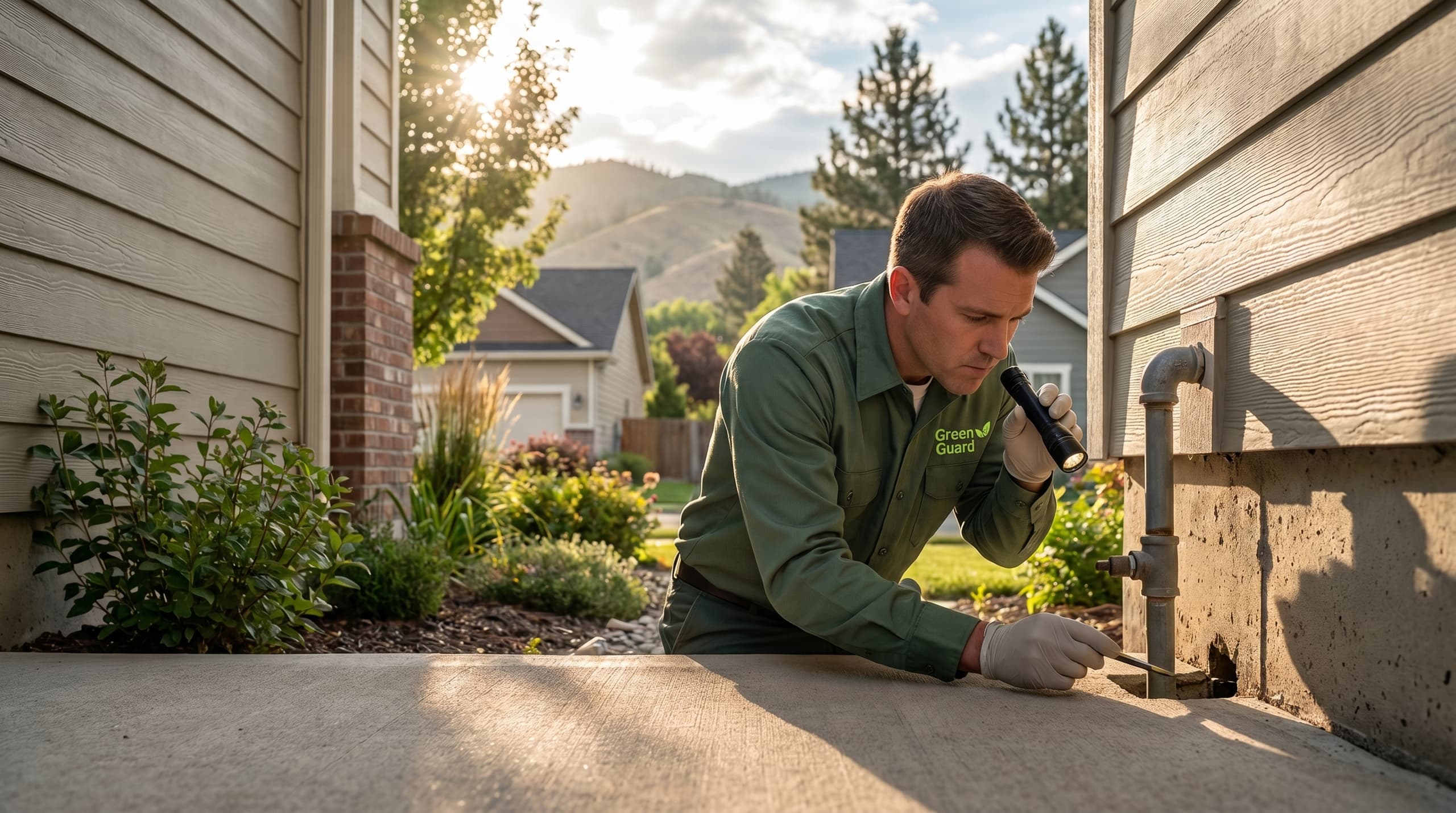
- Full property inspection (30 to 45 minutes). Foundation walk, utility penetrations, vents, garage and door seals, and a quick interior check of common nesting spots.
- Species identification. We tell you whether you have house mice, deer mice, or both, and adjust the plan accordingly. This matters for cleanup safety.
- Snap traps only if needed. We rarely use them. When a situation calls for one, it goes where mice actually travel, not where the package says.
- Exterior tamper-resistant bait stations. Locked stations placed around the perimeter, anchored, and out of reach of kids, pets, and non-target wildlife.
- Copper mesh in the obvious gaps. We stuff it into any obvious gaps and holes we see while we're there. The bigger repairs are yours or a handyman's, and our Boise rodent control guide walks you through them.
- General pest treatment included. The exterior barrier spray that handles ants, spiders, wasps, earwigs, and box elder bugs goes on at the same visit. You are not paying extra for the other pests.
Side-by-Side: DIY vs. Mouse Exterminator Cost in Boise
The honest comparison, no spin. Numbers are based on an active infestation in a typical Boise home up to 2,500 sq ft as of June 2026.
DIY mouse control, Year 1:
- Snap traps and electronic traps: about $60
- Bait stations and rodenticide: about $40
- Enzyme cleaner: about $30
- Sealing supplies: about $25
- Your time: 6 to 12 hours minimum
- Cash total: about $155, mouse-only, not counting your labor
Green Guard, Year 1:
- $49 initial visit (inspection, bait stations, copper mesh in the obvious gaps)
- $119 per quarterly visit x 3 more visits = $357
- Free re-service between visits if mice come back
- Covers ants, spiders, wasps, earwigs, box elder bugs, and every other Boise pest at the same time
- Cash total: $406, all pests, no DIY labor
The gap is about $250. If you value your time at even $30/hour and you put in 12 hours of DIY work, the labor alone more than closes it. Add one wall-cavity poison incident or one missed entry point that brings the mice back in February, and the pro option is straightforwardly cheaper. For a deeper comparison across pest types, our Boise exterminator guide covers ants, spiders, and wasps the same way.
Green Guard Plan Prices by Home Size
| Plan | Home size | Price |
|---|---|---|
| Initial Service with a quarterly or bimonthly plan | Any home size | $49 |
| Quarterly Service | Up to 2,500 sq ft | $119 |
| 2,501 to 4,000 sq ft | $139 | |
| 4,001 to 5,500 sq ft | $159 | |
| Bimonthly Service | Up to 2,500 sq ft | $99 |
| 2,501 to 4,000 sq ft | $119 | |
| 4,001 to 5,500 sq ft | $139 | |
| One-Time Service | Up to 2,500 sq ft | $200 |
| 2,501 to 4,000 sq ft | $225 | |
| 4,001 to 5,500 sq ft | $250 |
Ready to End the Mouse Problem in Your Boise Home?
If you have read this far and you fit the call-a-pro side of the test at the top, call us at (208) 297-7947. The $49 first visit on a quarterly or bimonthly plan covers the full inspection, locked exterior bait stations, and copper mesh in the obvious gaps. You'll know exactly what you're dealing with from day one.
Same-day service is often available, and we usually get out within 24 to 48 hours. Free re-service between visits if mice come back. Locally owned in Boise, organic-based products safe for kids and pets, and over 2,500 Treasure Valley families served since we opened. See our Boise rodent control service for plan details.
Want to read more first? Start with our complete Boise rodent control guide or jump to the Idaho rodent identification guide if you are still not sure what you are dealing with.
Frequently Asked Questions
Is it worth getting an exterminator for mice in Boise?
Quick answerYes, when you have droppings in two or more rooms, scratching in the walls, or DIY trapping that has not slowed after a week.
For one mouse caught in a snap trap with no follow-up signs, DIY is usually fine. Green Guard's $49 first visit on a quarterly or bimonthly plan includes the inspection, so you know what you actually have from day one.
How much does a mouse exterminator cost in Boise?
Quick answerGreen Guard's $49 initial mouse service visit includes inspection, locked exterior bait stations, and copper mesh in the obvious gaps.
Ongoing quarterly service runs $119 per visit for homes up to 2,500 sq ft, $139 for 2,501 to 4,000 sq ft, and $159 for 4,001 to 5,500 sq ft. One-time service without a subscription is $200 to $250 by home size.
What is the average cost to get rid of mice DIY?
Quick answerA realistic DIY year for an active Boise mouse infestation runs about $155 in supplies: $60 in snap and electronic traps, $40 in bait stations and rodenticide, $30 in enzyme cleaner, and $25 in sealing materials.
That does not count 6 to 12 hours of your own labor or the cost of a wall-cavity poison incident if one happens.
Will a mouse go near a sleeping human at night?
Quick answerYes, mice often forage in bedrooms after the house quiets down, but they almost never make contact with a person on purpose.
They are looking for crumbs, water, and dark cover, not warmth. If you are hearing activity in the bedroom or finding droppings on the nightstand, that is a sign the population has spread beyond the original entry zone and is worth a professional inspection.
How fast can a mouse exterminator get rid of mice?
Quick answerMost Treasure Valley mouse infestations clear in 2 to 3 weeks with a proper plan: locked exterior bait stations and copper mesh in the obvious gaps, all at once.
Snap traps come out only rarely, when a situation calls for it. Severe infestations in older homes or rural properties can take 4 to 6 weeks. Activity drops the most in the first week, and noise in the walls usually stops within 10 days.
Are mouse exterminator baits safe for kids and pets?
Quick answerOur exterior bait stations are tamper-resistant, locked, and anchored so kids and pets cannot access the bait.
In the rare case we set a snap trap, it goes behind an appliance or somewhere else pets do not reach. The general pest products we use on the same visit are organic-based and hospital-grade, the same formulations used in daycares and hospitals. Tell us about kids or pets at the initial visit and we adjust placement accordingly.