Quick answer
Wasp season in Boise runs from late March through the first hard frost in mid-to-late October, with colonies peaking in size and aggression during August and early September. Yellow jacket colonies can hit 5,000 workers by late August, natural food is drying up, and every worker is on defense. Once overnight lows crack 28°F (usually between October 10 and October 25 in the Treasure Valley), workers die within days and only fertilized queens survive to overwinter under bark, in log piles, and inside attic corners. If a nest is on your property this week, do not wait for October. Call Green Guard at (208) 297-7947, and same-day service is often available. Nest removal is included in our quarterly and bimonthly plans, which start with a $49 first visit.
Key Takeaways
- Wasp season in Boise runs late March through late October, ending with the first hard frost (typically October 10 to October 25 in the Treasure Valley)
- Colonies peak in size and aggression in August and early September, with western yellow jackets reaching 1,000 to 5,000 workers
- All workers die at the first hard frost, but fertilized queens survive winter under bark, in log piles, and inside attic corners
- August is the wrong month to DIY a mature nest. Colony peak and food scarcity make wasps defensive from 10 to 20 feet away
- Green Guard removes accessible nests on the $49 first visit of a quarterly or bimonthly plan. Same-day scheduling in Boise is often available. (208) 297-7947
In this article

When Does Wasp Season End in Boise?
Wasp season in Boise ends after the first hard frost, which usually hits the Treasure Valley between October 10 and October 25. Once overnight lows drop below about 28°F for a few hours in a row, adult workers and old queens die within 3 to 5 days. The only wasps that survive are next year's fertilized queens, and they head off to overwinter under bark, in log piles, or in the corner of your attic.
The season starts back up in late March when those queens wake up and fly out to build the first walnut-sized starter nests. Between March and late October, we get one full colony cycle in Idaho. Right now (August 2026), we are sitting inside the peak of that cycle.
Here is the part homeowners miss. The season "ending" doesn't mean wasps become harmless. From now until that first frost, colonies are the biggest, hungriest, and most defensive they will be all year. Waiting for October to deal with a nest that's causing trouble in August is not a plan. It's 6 to 10 weeks of dodging stings on your own property.
The Complete Boise Wasp Lifecycle in 8 Steps
Every yellow jacket and paper wasp colony in the Treasure Valley follows the same 8-month cycle. Colonies are annual in Idaho. They don't overwinter as a group, and old nests aren't reused the next year.
Here is the whole cycle in one place:
- Late March. Queens wake up. Single mated queens that survived winter under bark or in an attic corner fly out and scout for a nest site.
- April. Queens build alone. Each queen constructs a starter nest of 6 to 10 paper cells and lays the first eggs herself. Nest is golf-ball sized.
- May. First workers emerge. The queen stops leaving the nest and lets the first 5 to 15 daughters take over foraging.
- June. Colony scales. Workers expand the nest and feed the next brood. Nest reaches softball size for paper wasps. Yellow jacket colonies are still hidden underground.
- July. Vertical growth. Yellow jacket colonies hit 100 to 500 workers. Paper wasp nests hit 20 to 40 workers. Nests near doorways start to feel dangerous.
- August (right now). Peak. Western yellow jacket colonies reach 1,000 to 3,000-plus workers. Colony food demand outpaces the natural insect supply, and wasps start scavenging your grill.
- September. Peak plus reproduction. Colony hatches next year's new queens and males. Old queen and workers defend the nest from a wider radius every day.
- Mid-to-late October. First hard frost. Workers freeze within days. Old queen dies. Newly mated queens fly off alone to find sheltered overwintering spots. Cycle resets.
Month-by-Month Idaho Wasp Timeline: What You Will Actually See
The lifecycle above is the biology. Here is the ground-level version of what shows up in your Boise yard each month.
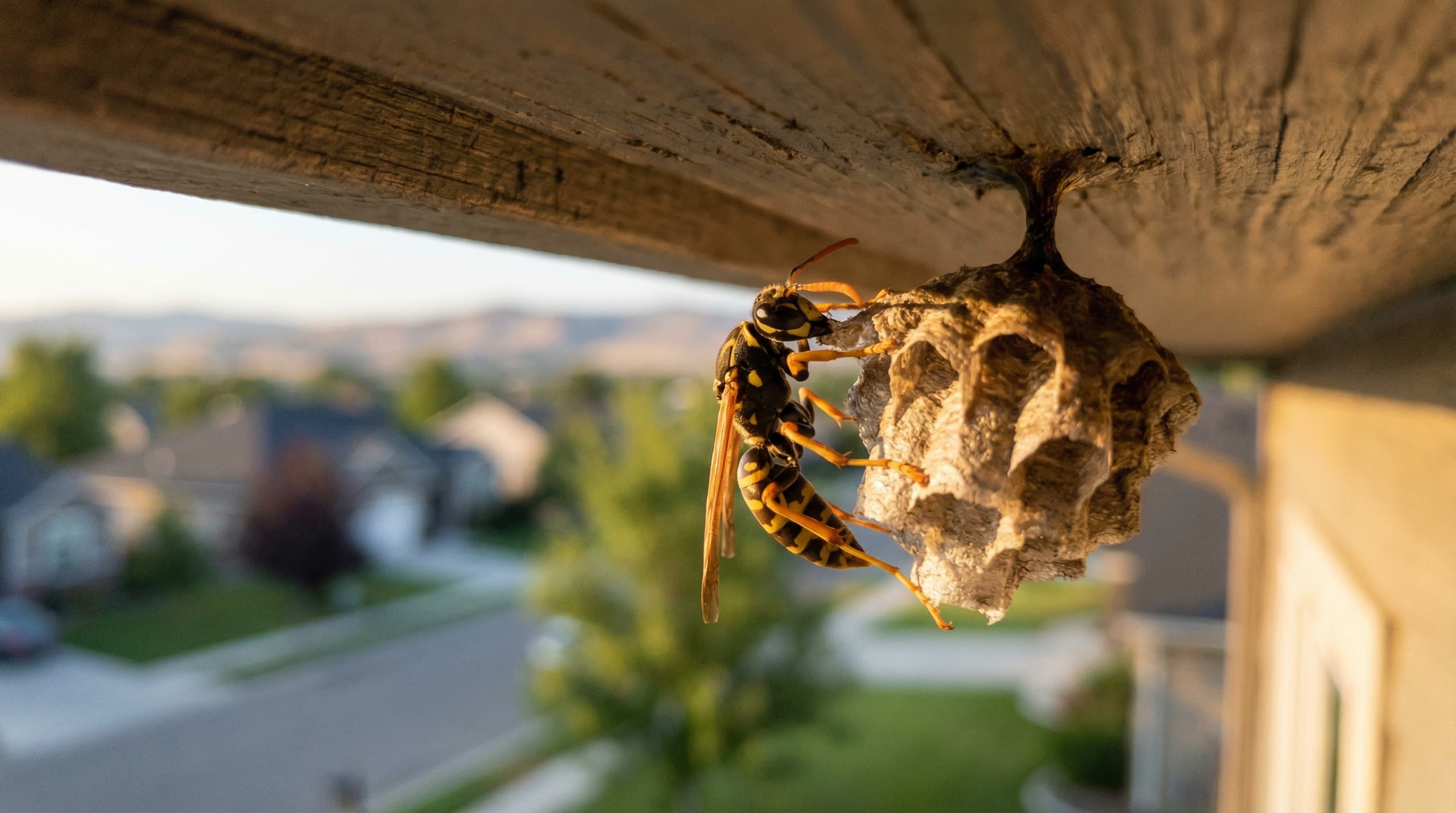
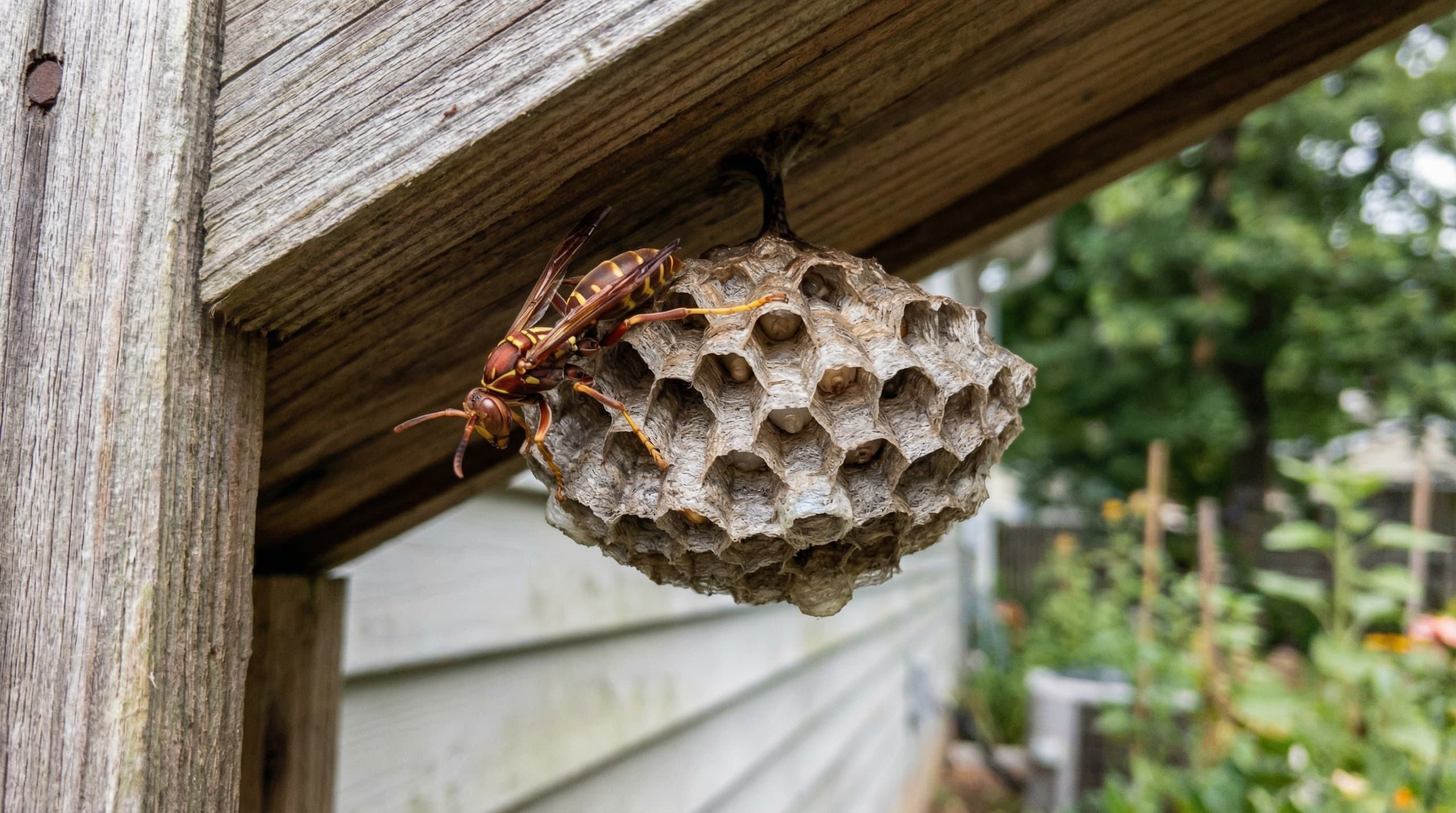
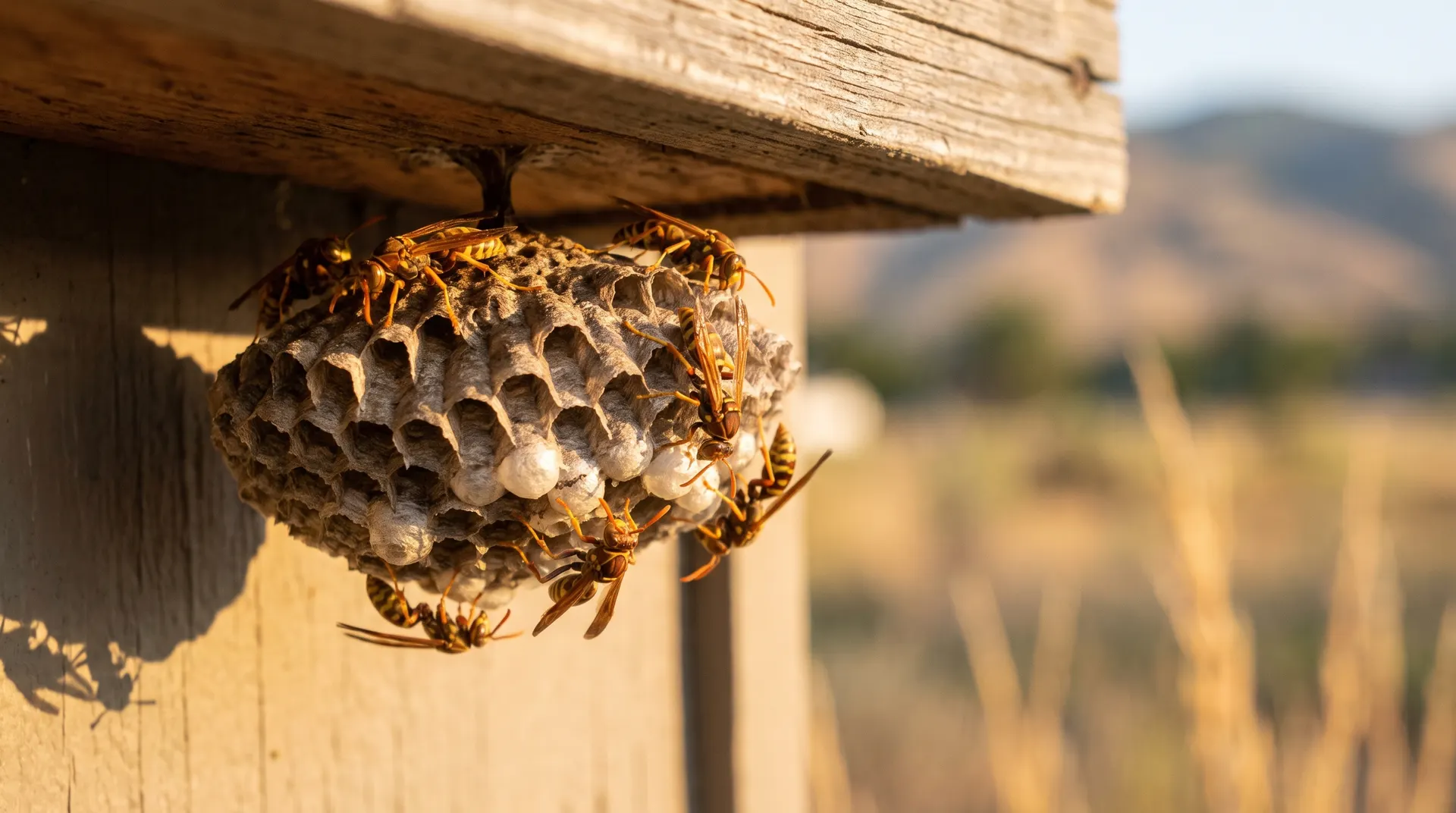
March through May. You might see a single wasp hovering around your eaves. That is a queen scouting or building a starter nest. Paper wasp queens pick porch ceilings, deck rails, and the underside of gutters. Yellow jacket queens go underground into old rodent burrows. This is the safest and cheapest window to knock down starter nests. A queen alone cannot muster much defense.
June. First workers are alive. The nest is still small (maybe 30 cells) but is now defended. DIY spraying gets riskier this month, especially for yellow jackets.
July. Visible wasp activity around your yard triples. Paper wasps are hanging under eaves and decks. Yellow jackets start showing up at outdoor meals and hummingbird feeders.
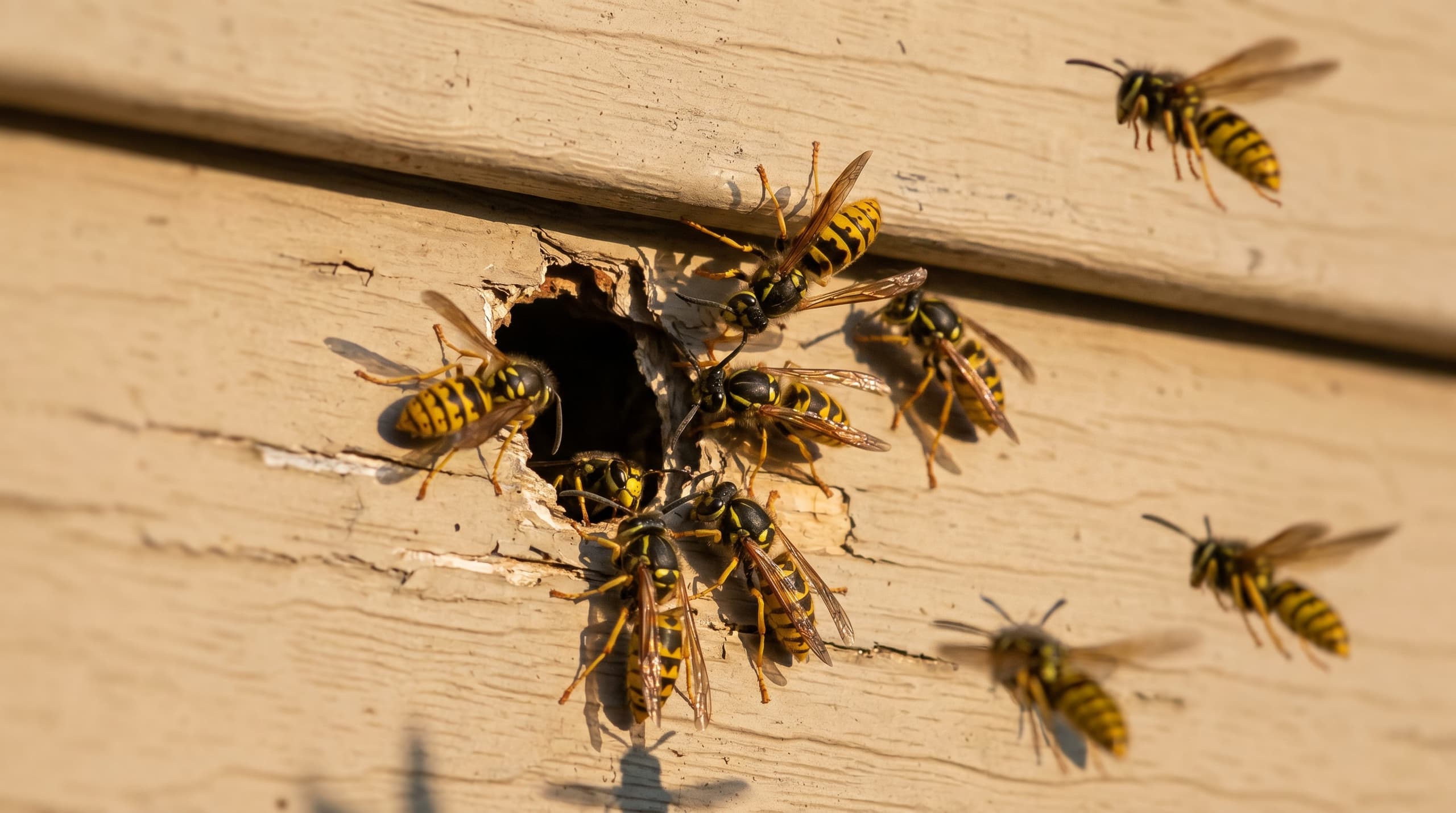
August. Every yard party is a wasp party. Colonies are at peak size. Yellow jackets swarm garbage cans, grills, pet food, and open drinks. Ground-nest colonies defend their entry hole from 10 to 15 feet away. Lawn mowers and weed eaters set them off. This is the worst month to disturb a nest without professional gear.
September. Aggression maxes out. New queens hatching means the colony doubles down on defense. Even walking past a wall-void yellow jacket nest at 20 feet can trigger a response. Our late-summer Boise wasp control guide breaks down the food-scarcity trigger that drives this.
October. The first hard frost typically hits the Boise area between October 10 and October 25 (per NOAA freeze data for the Treasure Valley). Once overnight lows crack 28°F, workers die within 3 to 5 days. You will see a sudden drop-off in yard activity.
November through February. Only new queens survive, and they are hidden. No visible colony activity. This is the quiet part of the cycle.
Why August Is the Most Dangerous Wasp Month (Not September or October)
Most people assume peak wasp season means peak sting risk, and they are right, but not for the reason they think. August is not more dangerous because there are more nests. Nests were built in April. It is more dangerous because every nest that was already there is now huge, and every worker is hungry.
Two things stack up this month:
- Colony peak. A single western yellow jacket ground nest in south Boise, Meridian, or Eagle right now can hold 3,000-plus workers. That was maybe 200 workers in early July.
- Food scarcity. Wild insect prey has been thinning since mid-August. Overripe fallen fruit is drying up. The colony has to raise a final wave of reproductive queens with fewer natural resources, so it sends every free worker out looking for protein and sugar.
What to Do About Wasps RIGHT NOW (August 2026)
This is the act-today part. If you have a nest on your property in August, here is the correct order of operations.
- Do NOT spray a mature nest with a hardware-store can. Those cans have a 20-foot spray range for a reason, and yellow jacket defensive response is 20 feet. Basic math says you are getting stung.
- Do NOT plug a ground-nest entry hole. Sealing the hole traps workers, and they chew a new exit right through your wall, foundation, or lawn.
- Do NOT knock a nest down at night without a plan. Yes, wasps are less active in the dark, but a mature August colony still has 500-plus workers guarding it. A flashlight sets them off.
- DO call a professional if the nest is over a doorway, near a play set, on the deck, next to your grill, or on any high-traffic surface.
- DO book same-day service if you can. Same-day wasp removal is often available in Boise, Meridian, Eagle, Nampa, Kuna, and Star.
- DO seal food and garbage bins. A tight-lid trash can is one of the highest-impact August prevention moves you can make.
What to Do When Wasp Season Ends (October)
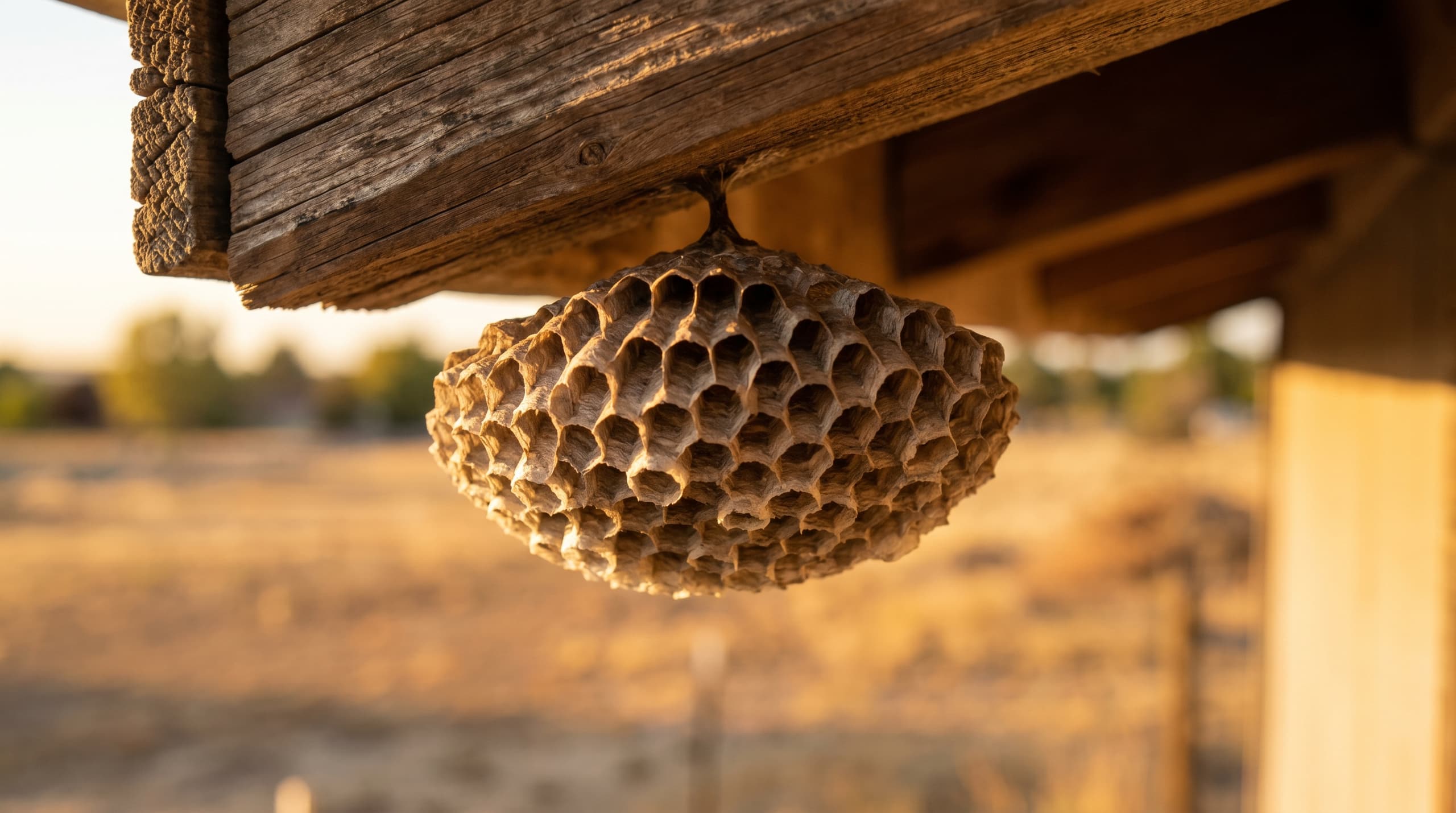
October is a completely different playbook. Once the first hard frost hits and workers die off, an inactive nest isn't going to reactivate. Wasps don't reuse old nests, so that gray paper globe hanging under your eave in November is a decoration, not a threat.
But there is one thing you should do in October that is easy to miss: hunt for overwintering queens before they settle in for winter.
- Check firewood piles. Don't stack fresh cord wood tight against your house. Queens crawl into log stacks in mid-October to hibernate.
- Seal attic and soffit gaps. Queens can crawl through openings as small as 3/16 inch. Fall is when they enter Boise houses through roof vents, gable ends, and the gaps around dryer vents.
- Inspect the underside of loose tree bark. Especially old cottonwood, maple, and oak in the North End and along the Boise River. If you find a queen tucked in for the winter, one boot solves next April.
- Knock down last year's paper wasp nests in November. This does not kill the queens (they are already gone), but it removes hiding scent that some species use to relocate the next spring.
Where Do Wasp Queens Overwinter in the Treasure Valley?
Fertilized wasp queens in Idaho survive winter in three main spots. Understanding where they hide is the fastest way to break next year's cycle before it starts.
- Under loose tree bark. Especially aged cottonwood, maple, and oak trees along the Boise River, in the North End, and in older Meridian and Nampa neighborhoods with mature trees.
- In log piles and dry wood. Firewood stacks, brush piles, and abandoned lumber are queen magnets in October. Any pile within 20 feet of your house is a risk.
- Inside your attic, wall voids, and soffit corners. This is the one that matters most. Queens crawl through soffit gaps, roof vents, and around window frames looking for insulated cavities. Then they hibernate solo through December, January, and February.
Wasp or Bee? Know What You Are Looking At Before You Treat
One quick note before you call anyone. If the insect on your eave is fuzzy, chubby, and carrying yellow pollen on her legs, that is a bee, not a wasp. Bees are protected pollinators. In Idaho, honey bees and native bumblebees should be relocated by a beekeeper, not treated.
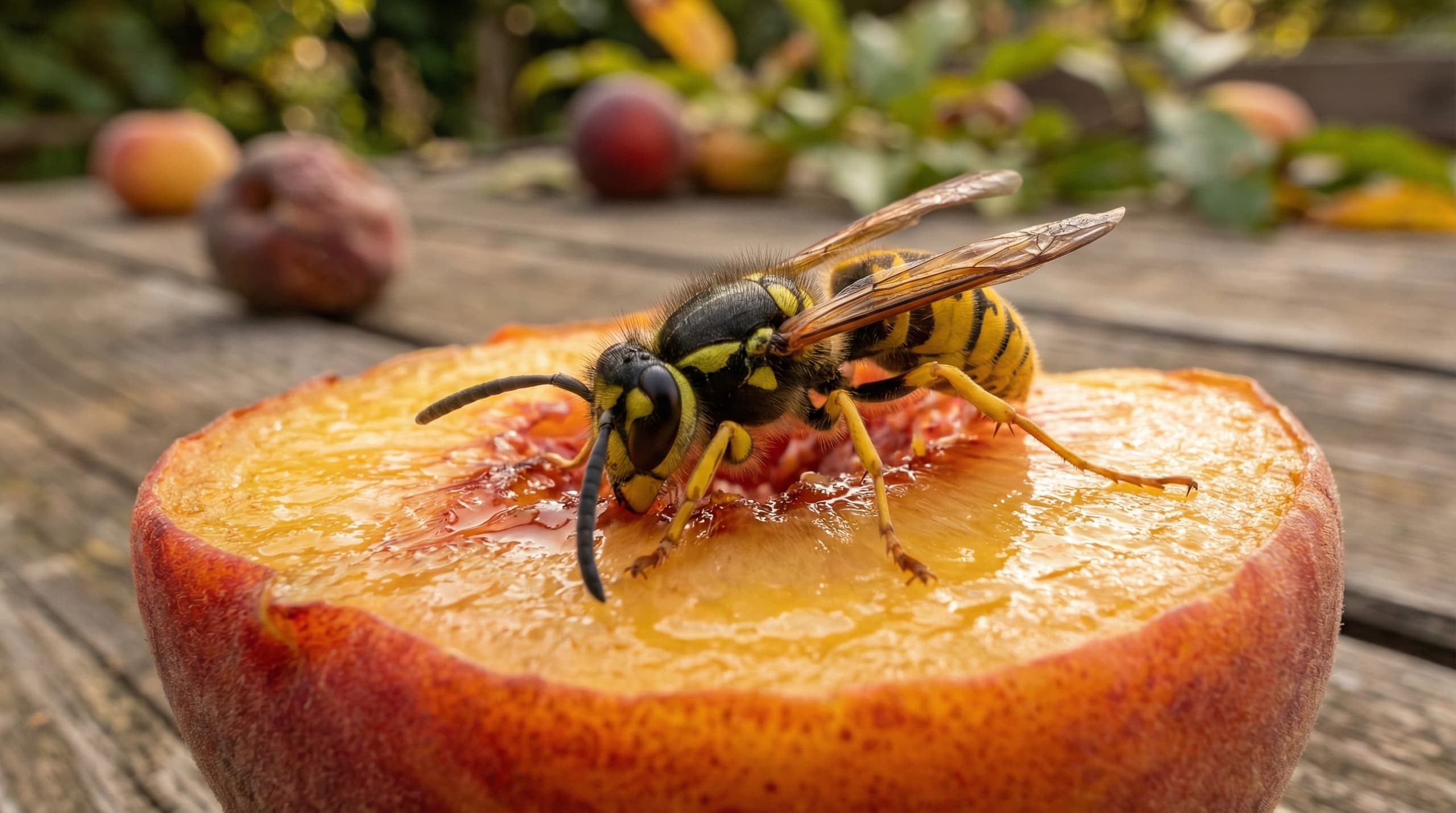
Wasps are slim, hairless, and shiny. Yellow jackets are compact with sharp yellow and black bands. Paper wasps have long dangling legs when they fly. If you are not sure, our bee vs wasp ID guide for Idaho has photos side by side. Our yellow jacket identification post covers yellow jacket nests in walls and the ground in detail.
Green Guard does not treat honey bee colonies. If you have a swarm, we will refer you to a local Treasure Valley beekeeper for free relocation.
If You Have Wasps This Week, Call Us
If a nest is active on your property right now, don't wait for October. That's 6 to 10 weeks of stings, ruined BBQs, and real risk for anyone with a venom allergy. See our wasp nest removal in Boise for how a visit works.
Green Guard's $49 initial service includes:
- Full property wasp inspection
- On-site nest removal for accessible nests
- Exterior barrier treatment around eaves, soffits, and entry points
- Identification of hidden ground or wall-void nests
- Same-day scheduling often available in Boise, Meridian, Eagle, Nampa, Kuna, and Star
Frequently Asked Questions
When do wasps die in Idaho?
Quick answerWasps in Idaho die shortly after the first hard frost, which typically hits the Treasure Valley between October 10 and October 25.
Once overnight lows drop below about 28°F for several hours, workers and old queens die within 3 to 5 days. The only survivors are next year's fertilized queens, and they overwinter alone under tree bark, in log piles, or inside attic corners.
How long does wasp season last in Boise?
Quick answerWasp season in Boise runs about 7 months, from late March through late October.
Queens emerge and start building in March, the colony grows through the summer, peak size and aggression hit in August and early September, and the whole colony collapses at the first hard frost in mid-to-late October. We get one full colony cycle in Idaho each year.
Why are wasps so aggressive in August?
Quick answerAugust aggression is driven by two things stacking at the same time.
Colonies hit peak size (yellow jacket nests can hold 1,000 to 5,000 workers), and the natural food supply of caterpillars and wild insects is drying up. Hungry wasps defending a huge colony scavenge harder and defend the nest from a wider radius. That is why one yellow jacket sting in late August usually turns into several stings from her sisters.
Should I treat a wasp nest in August or wait for the season to end?
Quick answerDo not wait if the nest is causing problems in August.
A nest in a high-traffic spot (over a doorway, near a play set, next to the grill) will not become safer between now and October. It will get bigger and more defensive. Waiting is 6 to 10 more weeks of sting risk. Book professional removal now. A nest 15-plus feet up in a tree and nowhere near people is lower risk. You still don't want an active colony on your property, so point it out to your technician on your next visit.
What smells do wasps hate the most?
Quick answerWasps stay away from strong essential oil smells, especially peppermint, clove, and eucalyptus.
A few drops on cotton balls placed near eaves can help discourage a new queen from building a starter nest in April. But this does almost nothing for a mature August colony of 500-plus workers. For any established nest, smell-based repellents are a waste of time. Professional removal is the only reliable answer once workers are on defense.
Are there giant wasps in Idaho?
Quick answerThe largest wasps you'll see in the Treasure Valley are western cicada killers (up to 1.5 inches) and bald-faced hornets (about 3/4 inch, but with a huge gray football-shaped nest).
Neither is the Asian giant hornet, which has never been confirmed in Idaho. Cicada killers look scary but rarely sting people. Bald-faced hornets are aggressive and defend nests from 20-plus feet away. If you see a large gray paper nest hanging from a tree branch or eave in Boise, call (208) 297-7947 before you get close.
Sources
Green Guard call and web request log, Jul 2026; Green Guard call and web request log, Jun 2026