
Rodents
Pocket Gophers
Thomomys spp.
IdentificationHow to Identify Pocket Gophers
Quick Answer
Pocket gophers are medium-sized burrowing rodents with small eyes and ears, large front teeth, and external fur-lined cheek pouches (the "pockets") for carrying food. Their front claws are long and powerful for digging.
Full identification notes
You'll almost never see one above ground because they spend their entire life inside the tunnel system.
Free
Re-Service Between Visits
4.9/5
Google Rating
9 to 5
Office Hours, Mon to Fri
Pocket Gophers Behavior & Habits
Understanding how pocket gophers behave helps prevent infestations
Gophers are solitary, territorial rodents that build extensive burrow networks.
More about their habits
They eat roots, bulbs, and vegetation pulled underground from below, and a single gopher can push out 200+ mounds per year across tunnel systems covering 2,000 square feet. One animal means one animal's worth of damage, but a vacated territory often gets recolonized from a neighboring lot within a few weeks.
Pocket Gophers Risks & Dangers
What pocket gophers can do to your health and property
Health Risks
Gophers rarely contact humans directly.
Property Damage
Gophers cause extensive damage to lawns, gardens, and agricultural crops.
Full health and property details
Health Risks
They can carry plague in some regions and may host fleas and ticks.
Property Damage
They eat roots and vegetation, undermine foundations and driveways, damage underground utilities, and their mounds create trip hazards and damage mowing equipment.
Signs of Pocket Gophers Infestation
Look for these indicators in your home
Signs You Have Pocket Gophers
What homeowners spot first
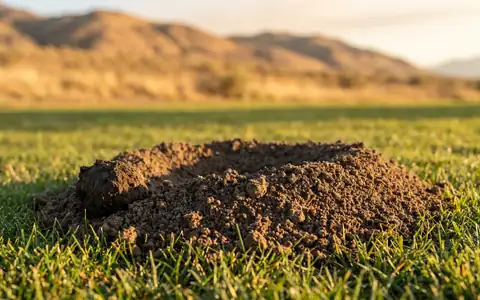
- Fan or crescent-shaped soil mounds (not conical like mole hills)
- Plugged tunnel openings (unlike open mole holes)
- Dead plants pulled partway underground or with chewed roots
More signs to look for
- Gnawed drip lines or underground irrigation pipes
- Sunken areas from collapsed tunnels under turf
Pocket Gophers in Boise & the Treasure Valley
Pocket gophers thrive across the Treasure Valley anywhere soil stays workable, which is most of our service area once irrigation kicks in.
More on what we see locally
Gophers are heaviest in newer subdivisions carved from old farm ground in south Meridian, Kuna's edge-of-town lots, and the agricultural fringes of Star and Eagle, where sandy loam soils and active irrigation create perfect tunneling conditions. Mound activity surges twice a year: spring (March through May) once snowmelt softens the ground, then again in fall (September through November) when temperatures drop and gophers push fresh dirt to the surface before winter.
How We Handle Pocket Gophers
What our approach looks like
Green Guard doesn't treat pocket gophers.
Our full approach
Gopher control is a trapping job in the active burrow runs, and gophers from neighboring lots can move in fast, so it takes a specialist. Call (208) 297-7947 and we'll connect you with a trusted specialist.
How to Prevent Pocket Gophers
Steps you can take to reduce the risk of infestation
- Install underground 1/2-inch hardware cloth along garden bed edges
- Use gopher baskets when planting new trees and shrubs
- Clear out bulbs, tubers, and root crops that gophers target
More prevention steps
- Cut back irrigation overlap, since gophers prefer consistently moist soil
- Walk property edges every 2-3 weeks during spring and fall for fresh mounds
- Call us at the first mound rather than after the lawn is checkered with them
Pocket Gophers Questions Answered
Common questions about identification, prevention, and treatment
Call (208) 297-7947How can I tell gopher mounds from mole mounds in my Treasure Valley lawn?
Quick answerGopher mounds are fan or crescent-shaped with a plug of darker soil offset from the center.
Mole mounds are conical (volcano-shaped) with open holes pushed straight up. Gophers push soil out to the side as they dig laterally; moles shove soil straight up as they tunnel.
Will one gopher really cause that much damage to my yard?
Quick answerYes.
A single gopher can push 1-3 fresh mounds per day, move over a ton of soil per year, and chew through enough roots to kill mature shrubs and young fruit trees. Because they are territorial, one gopher means that area is locked down by one animal, and the damage scales fast across an irrigated Treasure Valley lawn.
Do gopher sonic repellers and vibration stakes actually work?
Quick answerResearch shows ultrasonic and vibration devices are largely ineffective for gopher control.
Gophers habituate to the sound and vibration within days and keep tunneling right past them. Targeted trapping in the active burrow runs is the most reliable method. We don't treat gophers ourselves, so call (208) 297-7947 and we'll connect you with a trusted specialist.
Similar Pests
Learn about other pests in this category
Related Guides
Expert articles related to pocket gophers in Idaho
 Pest Identification
Pocket Gophers in Boise: How to Identify Tunnels, Stop Lawn Damage, and When to Call for Help (2026)
Read Article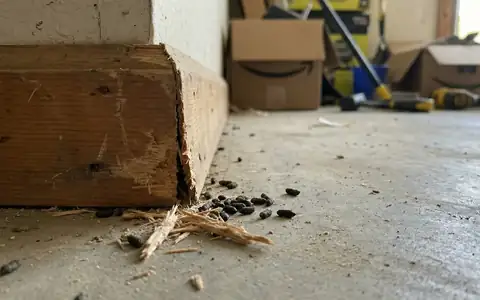 Pest Identification
Idaho Rodent Identification: Types of Mice, Rats, and Voles
Read Article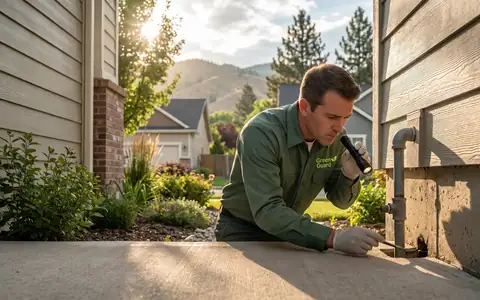 Local Guide
Rodent Control in Boise, Idaho: The Complete 2026 Guide Before Fall Season
Read Article
Think You Have Pocket Gophers?
Call and we'll talk through your options. We usually get out within 24 to 48 hours.
Quarterly plans starting at
$119/quarter
- No-Obligation Quote
- Locally Owned
- Free Re-Service Between Visits
Our Pest Control Services
Complete pest protection. Professional solutions for every pest problem, on a quarterly plan or a one-time visit.
General Pest ControlLearn More
Year-round protection packages
Ant ControlLearn More
Carpenter & pavement ants
Spider ManagementLearn More
Black widows & hobo spiders
Rodent ControlLearn More
Mice, rats & voles
Wasp & HornetLearn More
Nest removal & prevention
Mosquito & OutdoorLearn More
Mosquitos, ticks & fleas
Eco-FriendlyLearn More
Pet & kid safe options
CommercialLearn More
Business & warehouse
Proudly Serving the Treasure Valley
Local technicians from the Treasure Valley, in Boise, Meridian, and surrounding communities.
Pest Control Resources
Expert tips & guides. Local pest knowledge from Boise's trusted exterminators